

Correlation between Epilepsy and Attention Deficit Hyperactivity Disorder: A Population-Based Cohort Study
Open accessThe DOI matches its Crossref record; 26 of the 26 references it cites were found in a registry or an index.
Abstract
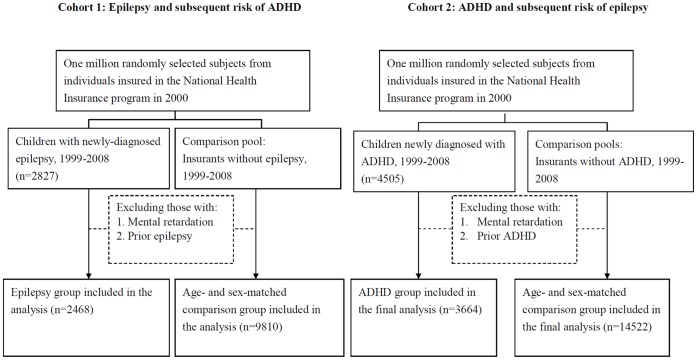
BACKGROUND: This study presents an evaluation of the bidirectional correlation between attention deficit hyperactivity disorder (ADHD) and epilepsy using 2 cohorts from the same population database. METHODS: We used data from the Taiwan National Health Insurance Research Database to establish 2 separate cohort studies with participants <19 years old. We subdivided Cohort 1 in 2 groups: (1) 2468 patients initially diagnosed with epilepsy during the period 1999-2008, and (2) 9810 randomly selected sex- and age-matched non-epileptic controls. We subdivided Cohort 2 into 2 groups: (1) 3664 patients with newly diagnosed ADHD and (2) 14 522 sex- and age-matched non-ADHD patients. We evaluated the risk of subsequent ADHD in relationship to epilepsy and vice versa in the 2 cohorts at the end of 2008. RESULTS: The ADHD incidence in Cohort 1 was 7.76 in patients with epilepsy and 3.22 in those without epilepsy (per 1000 person-years) after a median follow-up of 7-7.5 years. The adjusted hazard ratio (HR) for ADHD was 2.54 (95% CI 2.02-3.18) in the epilepsy group compared to the non-epilepsy group. In Cohort 2, the incidence of epilepsy was 3.24 in patients with ADHD and 0.78 in those without ADHD (per 1000 person-years) after a median follow-up of 3-3.5 years and an HR of 3.94 (95% CI 2.58-6.03). CONCLUSION: This study shows a bidirectional association between ADHD and epilepsy in the 2 cohort studies. Causative factors may be common between these 2 disorders, leading to a cascade of transcriptional changes in the brain that alter behavior or cognition prior to seizures.
Overview
The claims and statistics of this paper haven’t been checked yet.
Free: it reads the open-access text and checks the first 5 claims that cite a source we can check. Create a free account to check every claim.
Integrity signals
Registry
Cites
Statistics
Figures
Verification
Claims the paper makes
The claims and statistics of this paper haven’t been checked yet.
Free: it reads the open-access text and checks the first 5 claims that cite a source we can check. Create a free account to check every claim.
Claims other papers make about this one
Each is checked against this paper’s own text: does it say what the citing paper says it does?
The cited source says what the claim attributes to it.
In the citing paper
“A population-based cohort study of over 900,000 Danish children found that epilepsy was associated with a 2.7-fold increased risk for ADHD (Bertelsen et al., 2016). Another population-based cohort study, of over 12,000 Taiwanese, reported that epilepsy was associated with a 2.5-fold increased risk for ADHD. Conversely, a linked cohort study of over 18,000 Taiwanese found ADHD was associated with a”
From The World Federation of ADHD International Consensus Statement: 208 Evidence-based conclusions about the disorder (2021) · cites this paper as Chou et al., 2013
Self-check
Percentages, sums and reported differences re-computed from the paper’s own numbers.
The self-check needs the paper’s full text.
Citations
Cites
The worldwide prevalence of ADHD: a systematic review and metaregression analysis
Polanczyk, G., de Lima, M. S., Horta, B. L., Biederman, J., & Rohde, L. A. (2007) · American Journal of Psychiatry · doi:10.1176/ajp.2007.164.6.942 · Cited by 5,346 · cited 1×
“05%–1%, respectively [14–17].”
Bush, G., Valera, E. M., & Seidman, L. J. (2005) · Biological Psychiatry · doi:10.1016/j.biopsych.2005.01.034 · Cited by 714
Structural Brain Imaging of Attention-Deficit/Hyperactivity Disorder
Seidman, L. J., Valera, E. M., & Makris, N. (2005) · Biological Psychiatry · doi:10.1016/j.biopsych.2004.11.019 · Cited by 676
Attention-deficit hyperactivity disorder and hyperkinetic disorder
Swanson, J., Sergeant, J., Taylor, E., Sonuga-Barke, E., Jensen, P., & Cantwell, D. (1998) · The Lancet · doi:10.1016/s0140-6736(97)11450-7 · Cited by 601 · cited 1×
“Similarly, ADHD has severe and persistent symptoms, such as inattention, over-activity, and impulsiveness, which initially manifest in early childhood but are associated with long-term educational and social disadvantages [4].”
Attention-deficit hyperactivity disorder and hyperkinetic disorder
Swanson, J. M., Sergeant, J. A., Taylor, E., Sonuga-Barke, E. J. S., Jensen, P. S., & Cantwell, D. P. (2001) · Attention Deficit Hyperactivity Disorders · doi:10.4324/9781315054315-2 · Cited by 572
Rubia, K., Smith, A. B., Brammer, M. J., Toone, B., & Taylor, E. (2005) · American Journal of Psychiatry · doi:10.1176/appi.ajp.162.6.1067 · Cited by 537 · cited 1×
“A frontostriatal network dysfunction is related to ADHD without epilepsy [22–25], whereas evidence of frontal lobe dysfunction appears in both focal-onset and the generalized-onset types of epilepsy.”
Does Universal Health Insurance Make Health Care Unaffordable? Lessons From Taiwan
Lu, J.-F. R., & Hsiao, W. C. (2003) · Health Affairs · doi:10.1377/hlthaff.22.3.77 · Cited by 529 · cited 1×
“Data Source The Taiwan National Health Insurance Research Database (NHIRD), an electronic claims database of the Taiwan National Health Insurance (NHI) program, covers 99% of the 23 million population of Taiwan and contracts with more than 90% of national health care facilities [12,13].”
Behavior Problems in Children Before First Recognized Seizures
Austin, J. K., Harezlak, J., Dunn, D. W., Huster, G. A., Rose, D. F., & Ambrosius, W. T. (2001) · Pediatrics · doi:10.1542/peds.107.1.115 · Cited by 379 · cited 1×
“This finding is consistent with the hypothesis that the possibility of acquiring ADHD increases in epileptic children and is independent of the effects of seizures or their treatment [20].”
ADHD as a Risk Factor for Incident Unprovoked Seizures and Epilepsyin Children
Hesdorffer, D. C., Ludvigsson, P., Olafsson, E., Gudmundsson, G., Kjartansson, O., & Hauser, W. A. (2004) · Archives of General Psychiatry · doi:10.1001/archpsyc.61.7.731 · Cited by 348 · cited 1×
“For example, ADHD antedated the diagnosis of epilepsy in 82% of cases [21].”
Attention Deficit–Hyperactivity Disorder
Rappley, M. D. (2005) · New England Journal of Medicine · doi:10.1056/nejmcp032387 · Cited by 281
Research works printed but not linked: 2
- Aicardi J (1996) Epilepsy as a non-paroxysmal disorder. Acta Neuropediatrica 2: 249– 57.
- Austin JK, Harezlak J, Dunn DW, Huster GA, Rose DF, et al (2001) Behavior problems in children before first recognized seizures. Pediatrics 107: 115– 122. 11134444 · DOI · Paper page
Cited by
Faraone, S. V., Banaschewski, T., Coghill, D., Zheng, Y., Biederman, J., Bellgrove, M. A., Newcorn, J. H., Gignac, M., Al Saud, N. M., Manor, I., et al. (2021) · Neuroscience & Biobehavioral Reviews · doi:10.1016/j.neubiorev.2021.01.022 · Cited by 1,545
“Conversely, a linked cohort study of over 18,000 Taiwanese found ADHD was associated with a fourfold increase in epilepsy (Chou et al., 2013).”
Epilepsy in Asia: Disease burden, management barriers, and challenges
Trinka, E., Kwan, P., Lee, B., & Dash, A. (2019) · Epilepsia · doi:10.1111/epi.14458 · Cited by 238
“Data from the Taiwan National Health Insurance Research Database showed a bidirectional association between epilepsy and attention‐deficit/hyperactivity disorder (Table 3).(40,42,43,45,48,49,55) The evidence described in this and the next section is heterogeneous in nature.”
MethodComorbidity of Physical and Mental Disorders in the Neurodevelopmental Genomics Cohort Study
Merikangas, K. R., Calkins, M. E., Burstein, M., He, J.-P., Chiavacci, R., Lateef, T., Ruparel, K., Gur, R. C., Lehner, T., Hakonarson, H., et al. (2015) · Pediatrics · doi:10.1542/peds.2014-1444 · Cited by 128
Auvin, S., Wirrell, E. C., Donald, K. A., Berl, M. M., Hartmann, H., Valente, K. D. R., Bogaert, P. V., Cross, J. H., Ōsawa, M., Kanemura, H., et al. (2018) · Epilepsia · doi:10.1111/epi.14549 · Cited by 134
“94 times more in children with ADHD than in control children without ADHD.(5)”
BackgroundCommon psychiatric comorbidities in epilepsy: How big of a problem is it?
Salpekar, J. A., & Mula, M. (2018) · Epilepsy & Behavior · doi:10.1016/j.yebeh.2018.07.023 · Cited by 130
“The presence of either ADHD or epilepsy increased the odds for the subsequent development of the other condition (79).”
BackgroundReed, V. A., Buitelaar, J. K., Anand, E., Day, K. A., Treuer, T., Upadhyaya, H. P., Coghill, D. R., Kryzhanovskaya, L. A., & Savill, N. C. (2016) · CNS Drugs · doi:10.1007/s40263-016-0349-0 · Cited by 113
Brikell, I., Ghirardi, L., D’Onofrio, B. M., Dunn, D. W., Almqvist, C., Dalsgaard, S., Kuja-Halkola, R., & Larsson, H. (2018) · Biological Psychiatry · doi:10.1016/j.biopsych.2017.08.006 · Cited by 85
Effects of a ketogenic diet on ADHD-like behavior in dogs with idiopathic epilepsy
Packer, R. M. A., Law, T. H., Davies, E. S., Zanghi, B. M., Pan, Y., & Volk, H. A. (2016) · Epilepsy & Behavior · doi:10.1016/j.yebeh.2015.11.014 · Cited by 94
“94) [8].”
Childhood epilepsy, febrile seizures, and subsequent risk of ADHD
Bertelsen, E. N., Larsen, J. T., Petersen, L., Christensen, J., & Dalsgaard, S. (2016) · Pediatrics · doi:10.1542/peds.2015-4654 · Cited by 82
Helmstaedter, C., Aldenkamp, A. P., Baker, G. A., Mazarati, A. M., Ryvlin, P., & Sankar, R. (2013) · Epilepsy & Behavior · doi:10.1016/j.yebeh.2013.11.010 · Cited by 88
“may also reveal a bidirectional relationship between the two conditions [53].”
BackgroundDrug Treatment of Epilepsy Neuropsychiatric Comorbidities in Children
Holmes, G. L. (2020) · Pediatric Drugs · doi:10.1007/s40272-020-00428-w · Cited by 70
Psychiatric Comorbidities in Pediatric Epilepsy
Dagar, A., & Falcone, T. (2020) · Current Psychiatry Reports · doi:10.1007/s11920-020-01195-8 · Cited by 65
Kittel‐Schneider, S., Arteaga-Henríquez, G., Vásquez, A. A., Asherson, P. J., Banaschewski, T., Brikell, I., Buitelaar, J. K., Cormand, B., Faraone, S. V., Freitag, C. M., et al. (2021) · Neuroscience & Biobehavioral Reviews · doi:10.1016/j.neubiorev.2021.10.035 · Cited by 66
Comorbidity of childhood epilepsy
Wei, S.-H., & Lee, W. (2015) · Journal of the Formosan Medical Association · doi:10.1016/j.jfma.2015.07.015 · Cited by 63
Mutation of Elfn1 in Mice Causes Seizures and Hyperactivity
Dolan, J., & Mitchell, K. J. (2013) · PLoS ONE · doi:10.1371/journal.pone.0080491 · Cited by 48
“and overlapping genetic etiology [92,93,94,95]; the prevalence of”
BackgroundNewcorn, J. H., Harpin, V., Huss, M., Lyne, A., Sikirica, V., Johnson, M., Ramos‐Quiroga, J. A., van Stralen, J., Dutray, B., Sreckovic, S., et al. (2016) · Journal of Child Psychology and Psychiatry · doi:10.1111/jcpp.12492 · Cited by 36
“However, given that the incidence of epileptic events is reported to be elevated in children and adolescents with ADHD (Chou et al., 2013), and the lack of a mechanism to explain this event, it remains uncertain whether the seizure observed in this participant was causally related to GXR.”
BackgroundADHD in childhood epilepsy: Clinical determinants of severity and of the response to methylphenidate
Rheims, S., Herbillon, V., Villeneuve, N., Auvin, S., Napuri, S., Cancès, C., Berquin, P. C., Castelneau, P., Tich, S. N. T., Villega, F., et al. (2016) · Epilepsia · doi:10.1111/epi.13420 · Cited by 41
“Idiopathic focal epilepsy 46 (28) 28 (26) 18 (30)”
Non-invasive imaging modalities to study neurodegenerative diseases of aging brain
Annavarapu, R. N., Kathi, S., & Vadla, V. K. (2018) · Journal of Chemical Neuroanatomy · doi:10.1016/j.jchemneu.2018.02.006 · Cited by 45
Epilepsy and Attention Deficit Hyperactivity Disorder: Connection, Chance, and Challenges
Fan, H., Chiang, K.-L., Chang, K., Chen, C., & Tsai, J. (2023) · International Journal of Molecular Sciences · doi:10.3390/ijms24065270 · Cited by 46
Ye, P., Chiu, A. T. G., Li, V. W. Y., Zhang, X., Yeung, W. L., Chan, H. S., & Tun, H. M. (2023) · Frontiers in Neurology · doi:10.3389/fneur.2023.1109469 · Cited by 38
Aricò, M., Arigliani, E., Giannotti, F., & Romani, M. (2020) · Epilepsy & Behavior · doi:10.1016/j.yebeh.2020.107448 · Cited by 39
Cognitive Function in Childhood Epilepsy: Importance of Attention Deficit Hyperactivity Disorder
Kang, S. H., Yum, M., Kim, E.-H., Kim, H., & Ko, T. (2015) · Journal of Clinical Neurology · doi:10.3988/jcn.2015.11.1.20 · Cited by 34
He, Z., Yang, X., Li, Y., Zhao, X., Li, J., & Li, B. (2024) · Epilepsia Open · doi:10.1002/epi4.12939 · Cited by 36
Wirrell, E. C., Bieber, E. D., Vanderwiel, A., Kreps, S., & Weaver, A. L. (2020) · Epilepsia · doi:10.1111/epi.16618 · Cited by 33
Behavioural changes in dogs with idiopathic epilepsy
Watson, F. C. E., Packer, R. M. A., Rusbridge, C., & Volk, H. A. (2019) · Veterinary Record · doi:10.1136/vr.105222 · Cited by 29
Enterovirus Encephalitis Increases the Risk of Attention Deficit Hyperactivity Disorder
Chou, I., Lin, C.-C., & Kao, C. (2015) · Medicine · doi:10.1097/md.0000000000000707 · Cited by 29
Self-citationChildhood epilepsy and ADHD comorbidity in an Indian tertiary medical center outpatient population
Choudhary, A., Gulati, S., Sagar, R., Sankhyan, N., & Sripada, K. (2018) · Scientific Reports · doi:10.1038/s41598-018-20676-8 · Cited by 31
Approach to Evaluating and Managing Adult Attention-Deficit/Hyperactivity Disorder in Primary Care
Huang, H. Y., Huang, H., Spottswood, M., & Ghaemi, S. N. (2020) · Harvard Review of Psychiatry · doi:10.1097/hrp.0000000000000248 · Cited by 28
Attention Deficit Hyperactivity Disorder in Adolescents With Epilepsy
Kwong, K. L., Lam, D. S. Y., Tsui, S., Ngan, M., Tsang, B., & Lam, S. M. (2016) · Pediatric Neurology · doi:10.1016/j.pediatrneurol.2015.12.022 · Cited by 29
Sharma, P., Wright, D. K., Johnston, L. A., Powell, K. L., Wlodek, M. E., Shultz, S. R., O'Brien, T. J., & Gilby, K. L. (2017) · Neurobiology of Disease · doi:10.1016/j.nbd.2017.04.022 · Cited by 24
Uliel‐Sibony, S., Chernuha, V., Latzer, I. T., & Leitner, Y. (2023) · Frontiers in Human Neuroscience · doi:10.3389/fnhum.2023.1021605 · Cited by 24
van der Schans, J., Pleiter, J. C., de Vries, T. W., Schuiling‐Veninga, C. C. M., Bos, J., Hoekstra, P. J., & Hak, E. (2016) · Annals of Allergy Asthma & Immunology · doi:10.1016/j.anai.2016.05.025 · Cited by 20
Increased risk of epilepsy in children with Tourette syndrome: A population-based case-control study
Wong, L., Huang, H.-L., Weng, W., Jong, Y., Yin, Y.-J., Chen, H.-A., Lee, W., & Ho, S. (2015) · Research in Developmental Disabilities · doi:10.1016/j.ridd.2015.10.005 · Cited by 22
“The comorbidities of Tourette syndrome are associated with an increased risk of epilepsy (Chou et al., 2013; Lhatoo & Sander, 2001; Tuchman & Rapin, 2002).”
BackgroundRelationship between Attention Deficit Hyperactivity Disorder and epilepsy: a literature review
Ahmed, G. K., Darwish, A. M., Khalifa, H., & Haridy, N. A. (2022) · The Egyptian Journal of Neurology Psychiatry and Neurosurgery · doi:10.1186/s41983-022-00482-w · Cited by 22
da Costa, C. R. C. M., Oliveira, G. D. M., Gomes, M. D. M., & Filho, H. D. S. M. (2015) · Arquivos de Neuro-Psiquiatria · doi:10.1590/0004-282x20140219 · Cited by 21
Gender and psychiatric disorders in children with epilepsy. A meta-analysis
Lax-Pericall, M. T., Bird, V., & Taylor, E. A. (2019) · Epilepsy & Behavior · doi:10.1016/j.yebeh.2019.02.014 · Cited by 18
Attention-deficit/hyperactivity disorder in children with overactive bladder; a case-control study
Yousefichaijan, P., Sharafkhah, M., Rafiei, M., & Salehi, B. (2016) · Journal of Renal Injury Prevention · doi:10.15171/jrip.2016.41 · Cited by 16
“Based on the studies, ADHD can be significantly associated with a variety of chronic diseases (4-6), depression (6), behavioral, emotional, language, and hearing disorders (7,8) and even illnesses such as epilepsy (5) and abnormal electroencephalogram in children (9).”
BackgroundBurns, T. G., Ludwig, N. N., Tajiri, T. N., & DeFilippis, N. A. (2016) · Applied Neuropsychology Child · doi:10.1080/21622965.2016.1241177 · Cited by 16
“However, the comorbidity of attentional concerns in this population was 28%, which is fairly equivalent to what is expected in the general population (Chou et al., 2013).”
ResultMethylphenidate for attention problems in epilepsy patients: Safety and efficacy
Leeman-Markowski, B. A., Adams, J., Martin, S. P., Devinsky, O., & Meador, K. J. (2020) · Epilepsy & Behavior · doi:10.1016/j.yebeh.2020.107627 · Cited by 19
“2–14% prevalence of seizures in children with ADHD [10,12].”
BackgroundMiller, D., Komanapalli, H., & Dunn, D. W. (2024) · Epilepsy & Behavior Reports · doi:10.1016/j.ebr.2024.100651 · Cited by 17
“An additional cohort study first identifying patients with ADHD who develop epilepsy showed a hazard ratio of 2.54 compared to healthy controls, and patients with epilepsy who develop ADHD had a hazard ratio of 3.24 compared to healthy controls [11].”
BackgroundInfluentialZhao, Q. J., Wang, M., Kang, H., & Zhu, S. (2018) · Epilepsy & Behavior · doi:10.1016/j.yebeh.2018.10.001 · Cited by 14
Sharma, P., Dedeurwaerdere, S., Vandenberg, M., Fang, K., Johnston, L. A., Shultz, S. R., O'Brien, T. J., & Gilby, K. L. (2016) · Epilepsy & Behavior · doi:10.1016/j.yebeh.2016.08.022 · Cited by 16
Quantifying the deficit-imaging neurobehavioural impairment in childhood epilepsy.
Yoong, M. M. (2015) · Europe PMC (PubMed Central) · doi:10.3978/j.issn.2223-4292.2015.01.06 · Cited by 16
“Conversely three studies by a group led by Hermann compared children with epilepsy alone to children with epilepsy and ADHD but did not include a group of children without epilepsy but with ADHD for comparison.”
BackgroundInfluentialAttention-Deficit/Hyperactivity Disorder in Children Undergoing Peritoneal Dialysis
Yousefichaijan, P., Sharafkhah, M., Vazirian, S., Seyedzadeh, A., Rafeie, M., Salehi, B., Amiri, M., & Ebrahimi-Monfared, M. (2015) · Nephro-Urology Monthly · doi:10.5812/numonthly.24427 · Cited by 13
“ADHD can be significantly associated with a variety of childhood chronic disease (11-13), depression (13), behavioral, emotional, language, and hearing disorders (14, 15), and even illnesses such as epilepsy (11, 12) and abnormal findings in electroencephalogram of children (16).”
BackgroundOverlapping Etiology of Neurodevelopmental Disorders
Kelleher, E., & Corvin, A. P. (2015) · Wiley eBooks · doi:10.1002/9781118524947.ch2 · Cited by 13
Reed, C., Cortese, S., Larsson, H., Galéra, C., Cotton, J., & Brandt, V. C. (2023) · Journal of the American Academy of Child & Adolescent Psychiatry · doi:10.1016/j.jaac.2023.06.016 · Cited by 11
Sharafkhah, M., Yousefichaijan, P., Salehi, B., & Rafiei, M. (2016) · Saudi Journal of Kidney Diseases and Transplantation · doi:10.4103/1319-2442.174077 · Cited by 12
Ahmed, G. K., Darweesh, A. E. D. M., Khalifa, H., & Khashbah, M. A. (2020) · Epilepsy Research · doi:10.1016/j.eplepsyres.2020.106505 · Cited by 10
Ono, K. E., Bearden, D. J., Lee, S. M., Moss, C. M., Kheder, A., Cernokova, I., Drane, D. L., & Gedela, S. (2022) · Epilepsy & Behavior · doi:10.1016/j.yebeh.2022.108872 · Cited by 11
Datta, A. (2023) · PubMed Central · Cited by 21
Xi, X.-J., Tang, J., Zhang, B.-B., Xiao, X., Hu, X., Wan, Y., Zhou, C., & Lin, H. (2020) · Epilepsy & Behavior · doi:10.1016/j.yebeh.2020.107192 · Cited by 9
Attention deficit hyperactivity disorder in children with early stages of chronic kidney disease.
Chaijan, P. Y., Sharafkhah, M., Salehi, B., & Rafiei, M. (2015) · PubMed Central · Cited by 12
Considerations for ADHD in the child with epilepsy and the child with migraine
Downs, J., Giust, J., & Dunn, D. W. (2017) · Expert Review of Neurotherapeutics · doi:10.1080/14737175.2017.1360136 · Cited by 8
Epilepsy and its Management in Relation to Psychiatry
(2014) · International Journal of Neurorehabilitation · doi:10.4172/2376-0281.1000121 · Cited by 7
“There is an increased incidence of Attention Deficit Hyperactivity Disorder (ADHD) in patients with epilepsy which is estimated to be about 7.76 cases per 1000 person-years compared with an incidence of 3.22 in patients without history of epilepsy.”
BackgroundInfluentialBüyükkaragöz, B., Acar, A. Ş. S., Ekim, M., Bayrakçı, U. S., Bülbül, M., Yılmaz, A. Ç., & Bakkaloglu, S. A. (2022) · Journal of Nephrology · doi:10.1007/s40620-022-01382-1 · Cited by 5
“Although it can be an isolated entity, association with different childhood chronic diseases [22], including neurofibromatosis type 1 [23], cystic fibrosis [24], atopic disorders [25], diabetes [26], behavioral, emotional, language and hearing disorders [3], migraine [27], and epilepsy [28] has been reported.”
BackgroundSilva, M., Gonçalves‐Pinho, M., Ferreira, A. R., Seabra, M., Freitas, A., & Fernandes, L. P. N. S. (2023) · Epilepsy & Behavior · doi:10.1016/j.yebeh.2023.109447 · Cited by 7
Neuropsychological profiles of two patients with differing SCN8A-pathogenic variants
Medlin, L. C., Bello‐Espinosa, L. E., & MacAllister, W. S. (2020) · Applied Neuropsychology Child · doi:10.1080/21622965.2020.1807983 · Cited by 5
“ADHD is quite common in children with epilepsy, irrespective of SCN8A (Chou et al., 2013; Hermann et al., 2007).”
BackgroundPan, G., Han, Y., Wang, T., Chen, Z., Wang, X., Sun, H., Liu, Y.-H., Wang, Q., Lin, W., Li, J., et al. (2024) · World Journal of Pediatrics · doi:10.1007/s12519-024-00813-2 · Cited by 7
Epilepsy and Attention Deficit Hyperactivity Disorder: Is There a Link?
Su, I. C. B. (2015) · Journal of Psychological Abnormalities in Children · doi:10.4172/2329-9525.1000135 · Cited by 3
“Data revealed that part of this increase is due to a bidirectional relationship between ADHD and epilepsy [9].”
BackgroundAttention, Executive Function, and Attention Deficit Hyperactivity Disorder
Dunn, D. W., & Kronenberger, W. G. (2015) · Neuropsychiatric symptoms of neurological disease · doi:10.1007/978-3-319-22159-5_13 · Cited by 3
Auvin, S. (2019) · Revue Neurologique · doi:10.1016/j.neurol.2018.11.003 · Cited by 2
Li, Y. W., Chen, H. J., & Hung, K. L. (2018) · Neuropsychiatry · doi:10.4172/neuropsychiatry.1000391 · Cited by 5
Brikell, I. (2018) · Figshare · Cited by 2
Comorbilidades psiquiátricas en epilepsia
Krauskopf, V., & Viviana Herskovic, M. (2026) · Revista Médica Clínica Las Condes · doi:10.1016/j.rmclc.2026.01.002 · Cited by 1
Batty, G. D., Gissler, M., Mousavi, S. E., Warrier, V., Ford, T. J., & Keski‐Säntti, M. (2026) · Molecular Psychiatry · doi:10.1038/s41380-026-03700-6 · Cited by 1
Mehr als Anfälle und Antiepileptika
von Spiczak, S., & Stephani, U. (2014) · Clinical Epileptology · doi:10.1007/s10309-013-0355-x · Cited by 1
Comorbidities and childhood epilepsy
Şanlıdağ, B., & Dirik, M. A. (2019) · Gazzetta Medica Italiana Archivio per le Scienze Mediche · doi:10.23736/s0393-3660.18.03907-4 · Cited by 1
Medici, D., Morales‐Suárez‐Varela, M., & Pérez-Elvira, R. (2020) · Revista de Fomento Social · doi:10.24875/rmn.20000154 · Cited by 1
Rogač, Ž., Stevanović, D., Bečanović, S., Dimitrijević, A., Andrić, I., Božić, L., & Nikolić, D. (2023) · Journal of Attention Disorders · doi:10.1177/10870547231187150 · Cited by 1
“It is pres-ent up to three to six times more often than in children without diagnosed epilepsy and more frequently than other symptoms (e.g., Camfield & Camfield, 2015; Chou et al., 2013).”
BackgroundAttention deficit hyperactivity disorder
Lazar, S. M., & Voigt, R. G. (2024) · Elsevier eBooks · doi:10.1016/b978-0-12-824060-1.00017-1 · Cited by 1
Neuropsychiatric Consequences of Epilepsy
Krishnamoorthy, E. S., Natarajan, S., & Misra, V. (2017) · Epilepsy · doi:10.1017/9781139547918.009 · Cited by 1
SINTOMAS DO DEFICIT DE ATENÇÃO COM HIPERATIVIDADE EM PACIENTES ADULTOS COM EPILEPSIA
Machado, G. D. S. (2013) · Americanae (AECID Library)
Purushothaman, P. (2013) · Child and Adolescent Psychopharmacology News · doi:10.1521/capn.2013.18.4.1
Chou, I., & Kao, C. (2016) · Diabetologia · doi:10.1007/s00125-016-3999-z
Self-citationTourette’s Syndrome: Medical, Educational And Behavior Therapy
Dzeng, A., & Wei, M.-H. (2015) · Journal of Behavior Therapy And Mental Health · doi:10.14302/issn.2474-9273.jbtm-15-794
Krishnamoorthy, E. S., Shorvon, S. D., & Schachter, S. C. (2017) · Epilepsy · doi:10.1017/9781139547918.007
Neurocognitive Comorbidities in Pediatric Epilepsy
., A. H. (2021) · European Journal of Molecular & Clinical Medicine
Şahin, S., Kamaşak, T., Arslan, E. A., Durgut, B. D., Dilber, B., Kandil, S. T., & Cansu, A. (2019) · Güncel Pediatri · doi:10.4274/jcp.2019.0006
“Bununla birlikte, benzer patofizyolojik mekanizmalarla ortaya çıkıp çıkmadıkları bilinmemektedir (1).”
InfluentialÇam, Y., Orgun, L. T., Soysal-Acar, A. S., Gücüyener, K., & Elbasan, B. (2024) · Journal of Pediatric Epilepsy · doi:10.1055/s-0044-1786770
Effect of sex on neuropsychiatric comorbidities in childhood epilepsy
Krant, N., Krueger, C. D., Homick, A. C. L., Tarrant, C. A., & Holmes, G. L. (2025) · Epilepsy & Behavior · doi:10.1016/j.yebeh.2025.110328
Şahin, S. (2025) · Selçuk Tıp Dergisi · doi:10.30733/std.2025.01806
Behavioral, Cognitive, and Social Implications of Childhood Epilepsy
Desai, J. D., & Kahan, M. D. (2025) · Elsevier eBooks · doi:10.1016/b978-0-443-10944-7.00102-5
Huang, C., Kang, Y., Peng, R., Zhong, H., Zeng, N., Zhang, L., Chen, X., & Du, S. (2026) · BMC Neurology · doi:10.1186/s12883-026-04677-z
“Regarding ADHD, a population-based cohort study has shown that the prevalence of ADHD in epilepsy is higher than that in normal children, suggesting that common neurobiological mechanisms may be present in epilepsy and ADHD [25].”
Investigating neuropsychological functions in pediatric epilepsy: a cross-sectional study
Busch, A. H., Østergaard, M., Vium, E. S., Brix, N., Evald, J., Sørensen, L. T., Hansen, J., Amidi, A., Boxill, M. F., Skals, R. G., et al. (2026) · Disability and Rehabilitation · doi:10.1080/09638288.2026.2627654
Dubrovskaya, A. A., & Vlasov, P. N. (2026) · Russian Journal of Child Neurology · doi:10.17650/2073-8803-2026-21-1-32-43
Xu, T., Zhang, D., Zeng, X., & Baomin, L. (2026) · Research Square · doi:10.21203/rs.3.rs-11336751/v1
Metadata
- Authors
- Chou, I.-C., Chang, Y.-T., Chin, Z.-N., Muo, C.-H., Sung, F.-C., Kuo, H.-T., Tsai, C.-H., & Kao, C.-H.
- Affiliations
- China Medical University (TW)
- China Medical University Hospital (TW)
- Asia University (TW)
- Corresponding author
- Kao, Chia-Hung
- Venue
- PLoS ONE
- Publisher
- Public Library of Science (PLoS)
- Published
- 2013-03-06
- Volume
- 8
- Issue
- 3
- Pages
- e57926
- ISSN
- 1932-6203 (ISSN-L)
- PMC
- PMC3590288
- OpenAlex
- W2128205202
- Cited by
- 87
- References
- 26
- Citations by year
- 2026: 6 · 2025: 3 · 2024: 6 · 2023: 7 · 2022: 3 · 2021: 3 · 2020: 10 · 2019: 5 · 2018: 8 · 2017: 5 · 2016: 12 · 2015: 13 · 2014: 2 · 2013: 4
- FWCI
- 7.32
- Type
- journal article
- Language
- en
- Open access
- gold
- doi.org
- Locations
- PLoS ONE (publishedVersion, cc-by)
- Europe PMC (PubMed Central) (publishedVersion, other-oa)
- PubMed Central (publishedVersion, cc-by)
- PubMed (publishedVersion)
- RePEc: Research Papers in Economics (submittedVersion)
- DOAJ (DOAJ: Directory of Open Access Journals) (submittedVersion, cc-by-sa)
- Funders
- National Science Council (DOH102-TD-B-111-004, NSC101-2911-I-002-303, DOH102-TD-C-111-005)
- Division of Materials Research
- Topics
- Health Sciences › Medicine › Psychiatry and Mental health › Attention Deficit Hyperactivity Disorder
- Health Sciences › Medicine › Clinical Neurology › Epilepsy research and treatment
- Life Sciences › Neuroscience › Cognitive Neuroscience › Autism Spectrum Disorder Research
- Keywords
- epilepsy, attention deficit hyperactivity disorder, bidirectional relationship, comorbidities, neurodevelopmental disorders
- MeSH terms
- Adolescent, Attention Deficit Disorder with Hyperactivity, Child, Child, Preschool, Demography, Epilepsy, Female, Humans, Infant, Infant, Newborn, Male, Risk Factors, Taiwan, Cohort Studies, Incidence, Proportional Hazards Models
About these checks
Registry, retraction, Cites and statistics results are computed, not judged, with one exception: a printed reference that no index lists is read once by a model before it counts as a citation error. Claims are extracted by a model and kept only when their quote appears verbatim in the text; each cited source is then checked, with a model’s help, for whether it says what the claim relies on. Those verdicts can be wrong — read the claim’s quote and the cited source before relying on one.
Statistics and arithmetic are recomputed, not judged.
Confidence bands are shown only for fields calibrated on our annotated test set. None is calibrated yet, so no band is shown.
What counts as a claim ›How we measure confidence ›How we check this ›
Are you an author, or do you see a problem with this page? Request a review
Data sources
Bibliographic data: Semantic Scholar, OpenAlex, Crossref.
Contains information from the Semantic Scholar Academic Graph Datasets, made available under the ODC Attribution License (ODC-BY 1.0).
Semantic Scholar’s data is described in: Kinney, R., et al. (2023). The Semantic Scholar Open Data Platform. arXiv:2301.10140.
