

The DOI matches its Crossref record; 78 of the 78 references it cites were found in a registry or an index.
Efficacy and Safety of A Liposome-Based Vaccine against Protein Tau, Assessed in Tau.P301L Mice That Model Tauopathy
Open accessAbstract
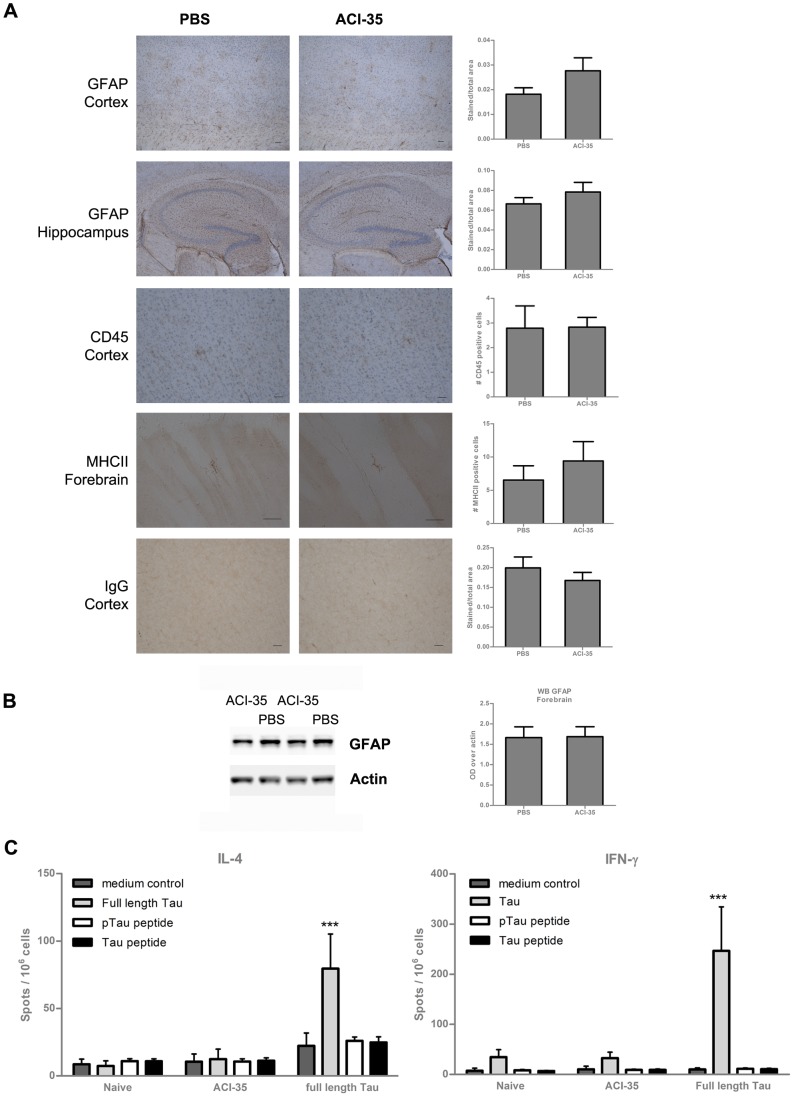
Progressive aggregation of protein Tau into oligomers and fibrils correlates with cognitive decline and synaptic dysfunction, leading to neurodegeneration in vulnerable brain regions in Alzheimer's disease. The unmet need of effective therapy for Alzheimer's disease, combined with problematic pharmacological approaches, led the field to explore immunotherapy, first against amyloid peptides and recently against protein Tau. Here we adapted the liposome-based amyloid vaccine that proved safe and efficacious, and incorporated a synthetic phosphorylated peptide to mimic the important phospho-epitope of protein Tau at residues pS396/pS404. We demonstrate that the liposome-based vaccine elicited, rapidly and robustly, specific antisera in wild-type mice and in Tau.P301L mice. Long-term vaccination proved to be safe, because it improved the clinical condition and reduced indices of tauopathy in the brain of the Tau.P301L mice, while no signs of neuro-inflammation or other adverse neurological effects were observed. The data corroborate the hypothesis that liposomes carrying phosphorylated peptides of protein Tau have considerable potential as safe and effective treatment against tauopathies, including Alzheimer's disease.
Overview
The claims and statistics of this paper haven’t been checked yet.
Run the check — free, no account needed. It reads the open-access text and checks the sources it cites.
Integrity signals
Registry
Cites
Statistics
Figures
Verification
Claims the paper makes
The claims and statistics of this paper haven’t been checked yet.
Run the check — free, no account needed. It reads the open-access text and checks the sources it cites.
Claims other papers make about this one
Each is checked against this paper’s own text: does it say what the citing paper says it does?
In the citing paper
“Active tau immunization has been shown to reduce tau pathology by targeting single185, 187, 189–193 or multiple194 phospho-epitopes, the amino terminus195, full-length normal and mutant tau196, 197, or aggregated tau198.”
From Tau-targeting therapies for Alzheimer disease (2018) · cites this paper as [190]
Self-check
Percentages, sums and reported differences re-computed from the paper’s own numbers.
The self-check needs the paper’s full text.
Citations
Cites
Neuropathological stageing of Alzheimer-related changes.
Braak, H., & Braak, E. (1991) · Acta Neuropathologica · doi:10.1007/bf00308809 · Cited by 16,123 · cited 2×
“be high in cognitively normal individuals [7,9–11].”
BackgroundA protein factor essential for microtubule assembly
Weingarten, M. D., Lockwood, A. H., Hwo, S. Y., & Kirschner, M. W. (1975) · Proceedings of the National Academy of Sciences · doi:10.1073/pnas.72.5.1858 · Cited by 3,089 · cited 1×
“transport [1–4].”
Neurofibrillary tangles but not senile plaques parallel duration and severity of Alzheimer's disease
Arriagada, P. V., Growdon, J. H., Hedley-Whyte, E. T., & Hyman, B. T. (1992) · Neurology · doi:10.1212/wnl.42.3.631 · Cited by 2,668 · cited 1×
“be high in cognitively normal individuals [7,9–11].”
Neurovascular regulation in the normal brain and in Alzheimer's disease
Iadecola, C. (2004) · Nature Reviews Neuroscience · doi:10.1038/nrn1387 · Cited by 2,213 · cited 2×
“Moreover, in AD and other neurological disorders, the BBB is compromised which might allow antibodies to enter the CNS more readily [47–53].”
BackgroundBard, F., Cannon, C., Barbour, R., Burke, R.-L., Games, D., Grajeda, H., Guido, T., Hu, K., Huang, J., Johnson-Wood, K., et al. (2000) · Nature Medicine · doi:10.1038/78682 · Cited by 2,012 · cited 2×
“Moreover, in AD and other neurological disorders, the BBB is compromised which might allow antibodies to enter the CNS more readily [47–53].”
BackgroundTransmission and spreading of tauopathy in transgenic mouse brain
Clavaguera, F., Bolmont, T., Crowther, R. A., Abramowski, D., Frank, S., Probst, A., Fraser, G., Stalder, A. K., Beibel, M., Staufenbiel, M., et al. (2009) · Nature Cell Biology · doi:10.1038/ncb1901 · Cited by 1,803
An english translation of alzheimer’s 1907 paper, “über eine eigenartige erkankung der hirnrinde”
Stelzmann, R. A., Norman Schnitzlein, H., & Reed Murtagh, F. (1995) · Clinical Anatomy · doi:10.1002/ca.980080612 · Cited by 1,455 · cited 1×
“up 80% of the tauopathy that is typically detected as argyrophilic deposits in post-mortem brain sections [6–9].”
BackgroundNeuropathology of human Alzheimer disease after immunization with amyloid-β peptide: a case report
Nicoll, J. A. R., Wilkinson, D., Holmes, C., Steart, P., Markham, H., & Weller, R. O. (2003) · Nature Medicine · doi:10.1038/nm840 · Cited by 1,397
Subacute meningoencephalitis in a subset of patients with AD after Aβ42 immunization
Orgogozo, J.-M., Gilman, S., Dartigues, J.-F., Laurent, B., Puel, M., Kirby, L. C., Jouanny, P., Dubois, B., Eisner, L., Flitman, S., et al. (2003) · Neurology · doi:10.1212/01.wnl.0000073623.84147.a8 · Cited by 1,356 · cited 2×
“Moreover, the composition of the liposomes obviates the need for extra adjuvants, which in AD patients have shown to cause considerable side-effects [19,20,42–44].”
BackgroundClinical effects of Aβ immunization (AN1792) in patients with AD in an interrupted trial
Gilman, S., Koller, M., Black, R. S., Jenkins, L., Griffith, S. G., Fox, N. C., Eisner, L., Kirby, L., Rovira, M. B., Forette, F., et al. (2005) · Neurology · doi:10.1212/01.wnl.0000159740.16984.3c · Cited by 1,329 · cited 3×
“Many clinical trials have been abrogated for lack of efficacy, and for safety reasons [19,20].”
Background
Cited by
Sorted by citations
Items 201–260 of 260
Wauters, E., Sleegers, K., Cruts, M., & Broeckhoven, C. V. (2017) · Elsevier eBooks · doi:10.1016/b978-0-12-805120-7.00009-9 · Cited by 6
Dual Aβ/tau epitope vaccines: a poorly explored strategy for Alzheimer's disease immunotherapy
León‐Arcia, K., Pérez-Leal, G., Quintero-Álvarez, H., Zamora-Loyarte, D. I., López-Armenteros, M., Sánchez-Quesada, A. D. L. C., & Vázquez‐Mojena, Y. (2025) · Vaccine · doi:10.1016/j.vaccine.2025.127414 · Cited by 4
Senolytic Vaccines from the Central and Peripheral Tolerance Perspective
Vasilieva, M., Shatalova, R. O., Matveeva, K. S., Shindyapin, V. V., Minskaia, E., Ivanov, R. A., & Shevyrev, D. (2024) · Vaccines · doi:10.3390/vaccines12121389 · Cited by 5
Elshazly, A. M., Sinanian, M. M., Elimam, D. M., & Zakaria, S. (2023) · Neuroglia · doi:10.3390/neuroglia4030014 · Cited by 5
Tau-Targeted Immunotherapy for Alzheimer's Disease: Insight into Clinical Trials
Kadmiri, N. E. (2024) · OBM Neurobiology · doi:10.21926/obm.neurobiol.2403238 · Cited by 4
Overk, C., Fiorini, E., Babolin, C., Vukicevic, M., Morici, C., Madani, R., Eligert, V., Kosco‐Vilbois, M. H., Roberts, A. J., Becker, A., et al. (2023) · Frontiers in Neuroscience · doi:10.3389/fnins.2023.1202208 · Cited by 4
“Insoluble and soluble fractions This method has been previously described (Theunis et al., 2013).”
MethodSelf-citationTau clearance reverses touch neuron dysfunction in both young and aged C. elegans
Carroll, T., Johnson, G. V. W., & Nehrke, K. W. (2025) · Journal of Alzheimer s Disease · doi:10.1177/13872877251392935 · Cited by 3
In Vitro and In Vivo Evaluation of Small-Molecule Disassemblers of Pathological Tau Fibrils
Pan, H., Cheng, X., Zhang, J., Hou, K., Murray, K. A., Manglani, K., Zhu, C., Hsu, H., Mekkittikul, M., Halladay, T., et al. (2026) · ACS Chemical Neuroscience · doi:10.1021/acschemneuro.5c00940 · Cited by 3
Silva, J. G. D. M., Barros, W. D. M., Prado-Lopes, N., & Bellozi, P. M. Q. (2026) · Progress in Neuro-Psychopharmacology and Biological Psychiatry · doi:10.1016/j.pnpbp.2026.111640 · Cited by 3
Saini, M., Rohilla, S., & Kumar, R. (2025) · Current Aging Science · doi:10.2174/0118746098376646250715094707 · Cited by 3
Molecular Pathways in Alzheimer’s Disease and Cognitive Function
Chen, X., Reichert, M. C., & Gan, L. (2016) · Elsevier eBooks · doi:10.1016/b978-0-12-802851-3.00005-x · Cited by 3
Sigurdsson, E. M. (2016) · Methods in pharmacology and toxicology · doi:10.1007/978-1-4939-3560-4_8 · Cited by 3
Neurodegenerative Diseases as Protein Folding Disorders
Baker, J. D., Webster, J. M., Shelton, L. B., Koren, J., Uversky, V. N., Blair, L. J., & Dickey, C. A. (2018) · Elsevier eBooks · doi:10.1016/b978-0-12-811304-2.00009-2 · Cited by 3
Tau protein aggregation: A therapeutic target for neurodegenerative diseases
Duggal, A., Mahindru, D., Baghel, K., Mehrotra, S., & Prajapati, V. K. (2025) · Advances in protein chemistry and structural biology · doi:10.1016/bs.apcsb.2024.11.012 · Cited by 2
Advances in Diagnostics and Treatments for Alzheimer’s Disease
Sunderland, A., Thatcher, A. L., Rackley, E. V., & Kuruvilla, T. (2025) · British Journal of Hospital Medicine · doi:10.12968/hmed.2025.0492 · Cited by 4
RNA-based therapeutics for Alzheimer’s disease and related tauopathies: challenges and opportunities
Rajbanshi, B., Brentari, I., Denti, M. A., Cummings, J. L., & Guruacharya, A. (2026) · The Journal of Prevention of Alzheimer s Disease · doi:10.1016/j.tjpad.2026.100585 · Cited by 2
“Most current therapeutic strategies focus on targeting abnormal tau protein through immunotherapies [5,6], small molecules [7], or inhibitors of tau-related post-translational modifications [8,9].”
“Current and emerging drug therapies in Alzheimer’s disease: A pathophysiological Perspective”
Aparajita, A., Jain, U., & Srivastava, P. (2024) · Neuroscience · doi:10.1016/j.neuroscience.2024.11.078 · Cited by 2
Advancing Care in Alzheimer’s Disease: Current Treatments and Their Impact on Quality of Life
Yashaeva, L., Montoya, M., Joshi, J., Stephens, A., McNulty, O., & Kaur, G. (2025) · Cureus · doi:10.7759/cureus.90527 · Cited by 5
“ACI-35 (JNJ-64042056) is a liposome-based vaccine targeting tau that is in a phase 2/3 clinical trial [140].”
InfluentialNovel Drug Delivery Systems for Immunotherapeutics
Baxi, K., Momin, M. M., & Sawarkar, S. P. (2020) · Springer eBooks · doi:10.1007/978-981-15-9038-2_7 · Cited by 2
Noninfectious Disease Vaccines
El-Turabi, A., & Bachmann, M. F. (2017) · Elsevier eBooks · doi:10.1016/b978-0-323-35761-6.00040-7 · Cited by 2
Tau Pathology and Neurodegenerative Disorders
Takashima, A., Soeda, Y., Koike, R., & Maeda, S. (2022) · Springer eBooks · doi:10.1007/978-981-16-7977-3_22 · Cited by 2
Frontotemporal lobar degeneration
Kim, B., Viera-Ortiz, A., Phan, J. M., Irwin, D. J., & Lee, E. B. (2022) · Elsevier eBooks · doi:10.1016/b978-0-323-85654-6.00041-1 · Cited by 3
Vasconcelos, B., Bird, M., Stancu, I., Terwel, D., & Dewachter, I. (2017) · Elsevier eBooks · doi:10.1016/b978-0-12-805120-7.00006-3 · Cited by 2
Neuroprotektive Therapien bei Tauopathien
Respondek, G., Krey, L., Huber, M. K., Pflugrad, H., Wegner, F., & Höglinger, G. U. (2021) · Der Nervenarzt · doi:10.1007/s00115-021-01210-0 · Cited by 3
Tau-Centric Therapies for Treating Alzheimer’s Disease
Quraishe, S., Cowan, C. M., & Mudher, A. K. (2017) · Elsevier eBooks · doi:10.1016/b978-0-12-803690-7.00005-3 · Cited by 1
Immunotherapy of Alzheimer’s Disease
Tondo, G., Marchi, F. D., Anselmi, M., & Comi, C. (2024) · Springer eBooks · doi:10.1007/978-3-031-68237-7_51 · Cited by 1
Treatment options for Alzheimer’s Disease: An overview of the amyloid, tau, and alternate hypotheses
Eroltu, K. (2023) · Journal of High School Science · doi:10.64336/001c.89250 · Cited by 1
Tinker, C. L. (2016) · Springer theses · doi:10.1007/978-3-319-39534-0_8 · Cited by 1
Therapeutic Strategies in Neurodegenerative Diseases
Eid, A. M., Faridar, A., & Appel, S. H. (2024) · Springer eBooks · doi:10.1007/978-3-031-68237-7_39 · Cited by 1
Anti-Tau-Therapien – was können wir erwarten?
Fließbach, K., McCormick, C., Kaulen, B., & Schneider, A. (2019) · Der Nervenarzt · doi:10.1007/s00115-019-0758-7 · Cited by 1
Therapeutic Vaccines Targeting Alzheimer’s Disease
Takeda, S. (2019) · Springer eBooks · doi:10.1007/978-981-32-9628-2_2 · Cited by 1
Current and Prospective Treatments for Alzheimer's Disease (and Other Neurodegenerative Diseases)
Pedrini, S., Morici, M., & Martins, R. N. (2019) · Wiley eBooks · doi:10.1002/9781119356752.ch14 · Cited by 1
MAPT Splicing Modulators as a Therapeutic Strategy for TauopathiesPreprint
Silva, M. C., Lindmeier, H., Pigini, P., Laughlin, J., Yu, Y., Morrill, C., Arnold, M. A., Barraza, S. J., Saadipour, K., Dieterich, M., et al. (2025) · bioRxiv (Cold Spring Harbor Laboratory) · doi:10.1101/2025.05.06.652428 · Cited by 1
Tau Clearance Reverses Neuronal Dysfunction in Both Young and Aged C. elegansPreprint
Carroll, T., Johnson, G. V. W., & Nehrke, K. W. (2025) · bioRxiv (Cold Spring Harbor Laboratory) · doi:10.1101/2025.06.23.661052 · Cited by 1
Nanoscale Imaging and Characterisation of Amyloid-β
Tinker, C. L. (2016) · Springer theses · doi:10.1007/978-3-319-39534-0
Active immunotherapy options for Alzheimer's
Winblad, B. G., Graf, A., Riviere, M., Andreasen, N., & Ryan, J. M. (2014)
Kilimann, I., Grothe, M. J., Thyrian, J. R., & Teipel, S. J. (2016) · InFo Neurologie + Psychiatrie · doi:10.1007/s15005-016-1588-9
“thetischer Tau-Fragmente, die den pathologischen Phosphorylierungszustand aufweisen, und daher insbesondere eine Immunantwort gegen hyperphosphoryliertes Tau-Protein bewirken sollen [22].”
BackgroundSubstanz(en) Firma/Institution Studienname Phase/Status Teilnehmer (Anzahl) Ergebnisse Referenzen
Janssen, B., Lilly, S. E., & Uni, W. (2016)
Alzheimer’s Disease: A Look at Current and Future Treatment Options
Miller, H. M. (2014) · Research Exchange (Washington State University)
Pathogenesis of Alzheimer’s disease and its treatments: A systematic review
Lou, Y., Sun, S., & Tan, J. (2021) · E3S Web of Conferences · doi:10.1051/e3sconf/202130802012
Sun, Y., Guo, Y., Feng, X., Jia, M., Ai, N., Dong, Y., Zheng, Y., Fu, L., Yu, B., Zhang, H., et al. (2019) · doi:10.21203/rs.2.17109/v1
“Given that typical amyotrophy and dyskinesia occur in P301S Tg mice, grip strength test, accelerating rotarod test, and stride length test are widely used methods to evaluate the efficiency of tau-targeting AD drugs in tau Tg mice [27,32,40,41].”
MethodResultBioinspired functional molecular constructs
Prakash, V. S., & Ramakrishnan, V. (2022) · Elsevier eBooks · doi:10.1016/b978-0-323-99917-5.00003-2
Synthesis and Biological Use of Nanomaterials
Hatipoglu, M. K., & Süt, P. A. (2022) · Topics in applied physics · doi:10.1007/978-3-030-93460-6_29
Immunotherapies for Alzheimer’s Disease
Guo, H. J. (2022) · Advances in Social Science, Education and Humanities Research/Advances in social science, education and humanities research · doi:10.2991/978-2-494069-31-2_344
Nove terapije u liječenju Alzheimerove bolesti
Perković, R., Tomić, S., Jurić, S., Gudelj, E., & Hrvoić, L. (2023) · Medicina Fluminensis · doi:10.21860/medflum2023_292445
Noninfectious Disease Vaccines
Speiser, D. E., El-Turabi, A., & Bachmann, M. F. (2023) · Elsevier eBooks · doi:10.1016/b978-0-323-79058-1.00042-6
Mechanisms of Thai medicinal plant extracts on the attenuation of glutamate-mediated neurotoxicity
Prasansuklab, A. (2017) · Chula Digiverse · doi:10.58837/chula.the.2017.156
Hsueh, S. C. C., Nijland, M., Aina, A., & Plotkin, S. S. (2024) · Journal of Chemical Information and Modeling · doi:10.1021/acs.jcim.3c01556
Pharmacochemical Strategies and Advances in Alzheimer's Disease Drug Development
Chen, J. (2025) · Highlights in Science Engineering and Technology · doi:10.54097/qbjryc26
“Monoclonal antibodies and vaccines against both Tau proteins and Aβ are hot topics of research today, ACI-35 is a liposome-based vaccine that targets phosphorylated Tau proteins thereby reducing phosphorylated Tau protein aggregation [13].”
Nonamyloid-beta active immunization for the treatment of Alzheimer’s disease
Triplett, O., Varda, N., Decourt, B., & Sabbagh, M. N. (2025) · Expert Opinion on Investigational Drugs · doi:10.1080/13543784.2025.2551352
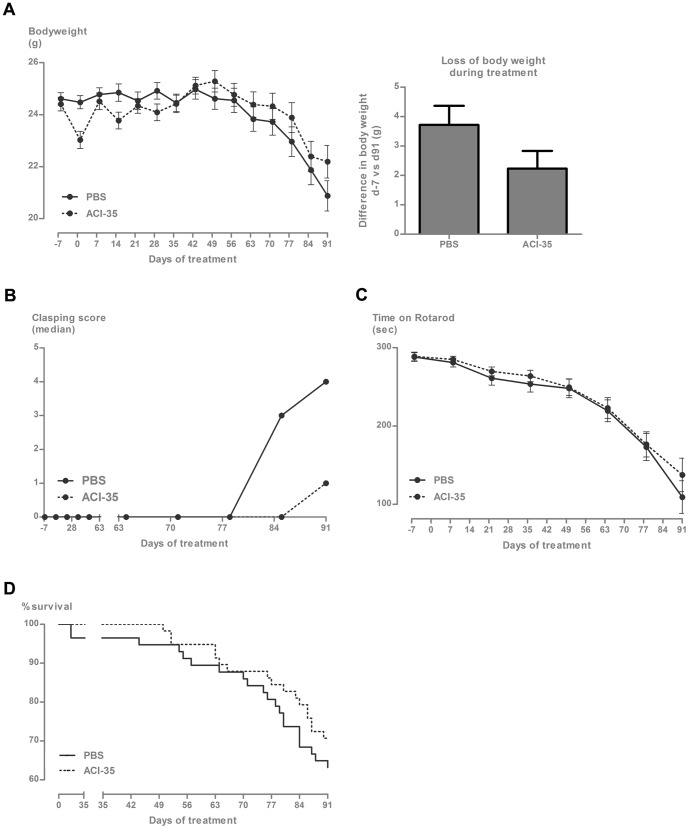
“It also demonstrated improvements in the clinical parameters of retained body weight, delayed onset of a clasping motor phenotype, and endured lifespan in mouse studies [41].”
Goswami, S., Verma, Y., & Rana, S. V. S. (2026) · Springer eBooks · doi:10.1007/978-981-95-5088-3_14
Caractérisation d'anticorps à domaine unique dirigés contre la protéine Tau
Danis, C. (2018) · theses.fr (ABES) · doi:10.70675/c783a062zb57bz4024z85d0z509baaed8a1b
“This trial compares the effect of two doses of ACI-35 in people with mild-to-moderate AD to investigate its safety, tolerability and immunogenicity (Theunis et al. 2013; Congdon and Sigurdsson 2018).”
BackgroundRole of T-cell immunity in the pathophysiology of Alzheimer’s disease and other Tauopathies
Matta, K. (2024) · theses.fr (ABES) · doi:10.70675/cea4fe5ez67c3z4445z92f7z39af62ba059b
Neri, L., Anderson, C. A., Fallot, L. B., Mannini, B., & Limbocker, R. (2026) · Elsevier eBooks · doi:10.1016/b978-0-323-99507-8.00045-7
McFall-Boegeman, H., Talbot, C., Montalbano, M., Puangmalai, N., Wang, K.-W., Kannan, M., Shi, J., Linning‐Duffy, K., Nick, S., Yan, L., et al. (2026) · ACS Omega · doi:10.1021/acsomega.6c00852 · Cited by 1
Active Vaccination Strategies for Alzheimer's Disease: An Expanded Review
Comitato, A., Neri, A., & Cossarizza, A. (2026) · European Journal of Immunology · doi:10.1002/eji.70250
Metadata
- Authors
- Theunis, C., Crespo-Biel, N., Gafner, V., Pihlgren, M., López-Deber, M. P., Reis, P., Hickman, D. T., Adolfsson, O., Chuard, N., Ndao, D. M., Borghgraef, P., Devijver, H., Van Leuven, F., Pfeifer, A., & Muhs, A.
- Affiliations
- KU Leuven (BE)
- AC Immune (Switzerland) (CH)
- Venue
- PLoS ONE
- Publisher
- Public Library of Science (PLoS)
- Published
- 2013-08-19
- Volume
- 8
- Issue
- 8
- Pages
- e72301
- ISSN
- 1932-6203 (ISSN-L)
- PMC
- PMC3747157
- OpenAlex
- W2090968981
- Cited by
- 259
- References
- 78
- Citations by year
- 2026: 9 · 2025: 16 · 2024: 25 · 2023: 17 · 2022: 22 · 2021: 23 · 2020: 25 · 2019: 23 · 2018: 27 · 2017: 22 · 2016: 19 · 2015: 13 · 2014: 16 · 2013: 1
- FWCI
- 11.37
- Type
- journal article
- Language
- en
- Open access
- gold
- doi.org
- Locations
- PLoS ONE (publishedVersion, cc-by)
- Europe PMC (PubMed Central) (publishedVersion, cc-by)
- PubMed Central (publishedVersion, cc-by)
- PubMed (publishedVersion)
- DOAJ (DOAJ: Directory of Open Access Journals) (submittedVersion, cc-by-sa)
- Topics
- Life Sciences › Neuroscience › Cellular and Molecular Neuroscience › Alzheimer's disease research and treatments
- Life Sciences › Neuroscience › Neurology › Neuroinflammation and Neurodegeneration Mechanisms
- Health Sciences › Medicine › Psychiatry and Mental health › Dementia and Cognitive Impairment Research
- Keywords
- tau protein, tau immunotherapy, tauopathy, Alzheimer's disease, vaccine safety, neuroinflammation, tau aggregation
- MeSH terms
- Animals, Brain, Disease Models, Animal, Humans, Liposomes, Mice, Transgenic, Peptides, Phosphoproteins, Phosphorylation, Psychomotor Performance, Vaccination, tau Proteins, Treatment Outcome, Alzheimer Vaccines, Tauopathies, Mice, Antibodies, Neutralizing
About these checks
Registry, retraction, Cites and statistics results are computed, not judged, with one exception: a printed reference that no index lists is read once by a model before it counts as a citation error. Claims are extracted by a model and kept only when their quote appears verbatim in the text; each cited source is then checked, with a model’s help, for whether it says what the claim relies on. Those verdicts can be wrong — read the claim’s quote and the cited source before relying on one.
Statistics and arithmetic are recomputed, not judged.
Confidence bands are shown only for fields calibrated on our annotated test set. None is calibrated yet, so no band is shown.
What counts as a claim ›How we measure confidence ›How we check this ›
Are you an author, or do you see a problem with this page? Request a review
