

The DOI matches its Crossref record; 1 of the 1 references it cites were found in a registry or an index.
Trans-Kingdom Horizontal DNA Transfer from Bacteria to Yeast Is Highly Plastic Due to Natural Polymorphisms in Auxiliary Nonessential Recipient Genes
Open accessAbstract
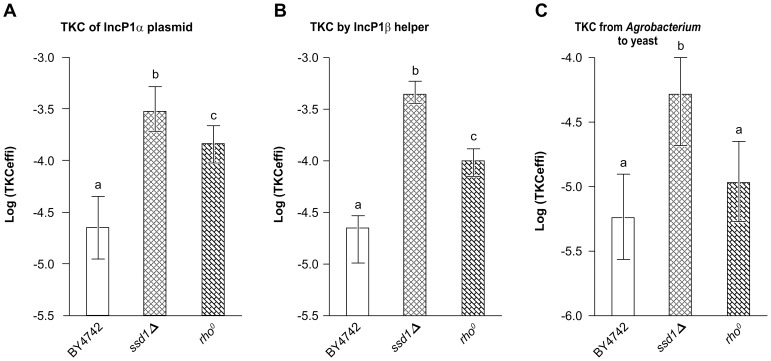
With the rapid accumulation of genomic information from various eukaryotes in the last decade, genes proposed to have been derived from recent horizontal gene transfer (HGT) events have been reported even in non-phagotrophic unicellular and multicellular organisms, but the molecular pathways underlying HGT remain to be explained. The development of in vitro HGT detection systems, which permit the molecular and genetic analyses of donor and recipient organisms and quantify HGT, are helpful in order to gain insight into mechanisms that may contribute to contemporary HGT events or may have contributed to past HGT events. We applied a horizontal DNA transfer system model based on conjugal gene transfer called trans-kingdom conjugation (TKC) from the prokaryote Escherichia coli to the eukaryote Saccharomyces cerevisiae, and assessed whether and to what extent genetic variations in the eukaryotic recipient affect its receptivity to TKC. Strains from a collection of 4,823 knock-out mutants of S. cerevisiae MAT-α haploids were tested for their individual TKC receptivity. Two types of mutants, an ssd1 mutant and respiratory mutants, which are also found in experimental strains and in nature widely, were identified as highly receptive mutants. The TKC efficiency for spontaneously accrued petite (rho (-/0)) mutants of the functional allele (SSD1-V) strain showed increased receptivity. The TKC efficiency of the ssd1Δ mutant was 36% for bacterial conjugation, while that of the petite/ssd1Δ double mutants was even higher (220% in average) compared to bacterial conjugation. This increased TKC receptivity was also observed when other conjugal transfer systems were applied and the donor bacterium was changed to Agrobacterium tumefaciens. These results support the idea that the genomes of certain eukaryotes have been exposed to exogenous DNA more frequently and continuously than previously thought.
Overview
The claims and statistics of this paper haven’t been checked yet.
Run the check — free, no account needed. It reads the open-access text and checks the sources it cites.
Integrity signals
Registry
Cites
Statistics
Figures
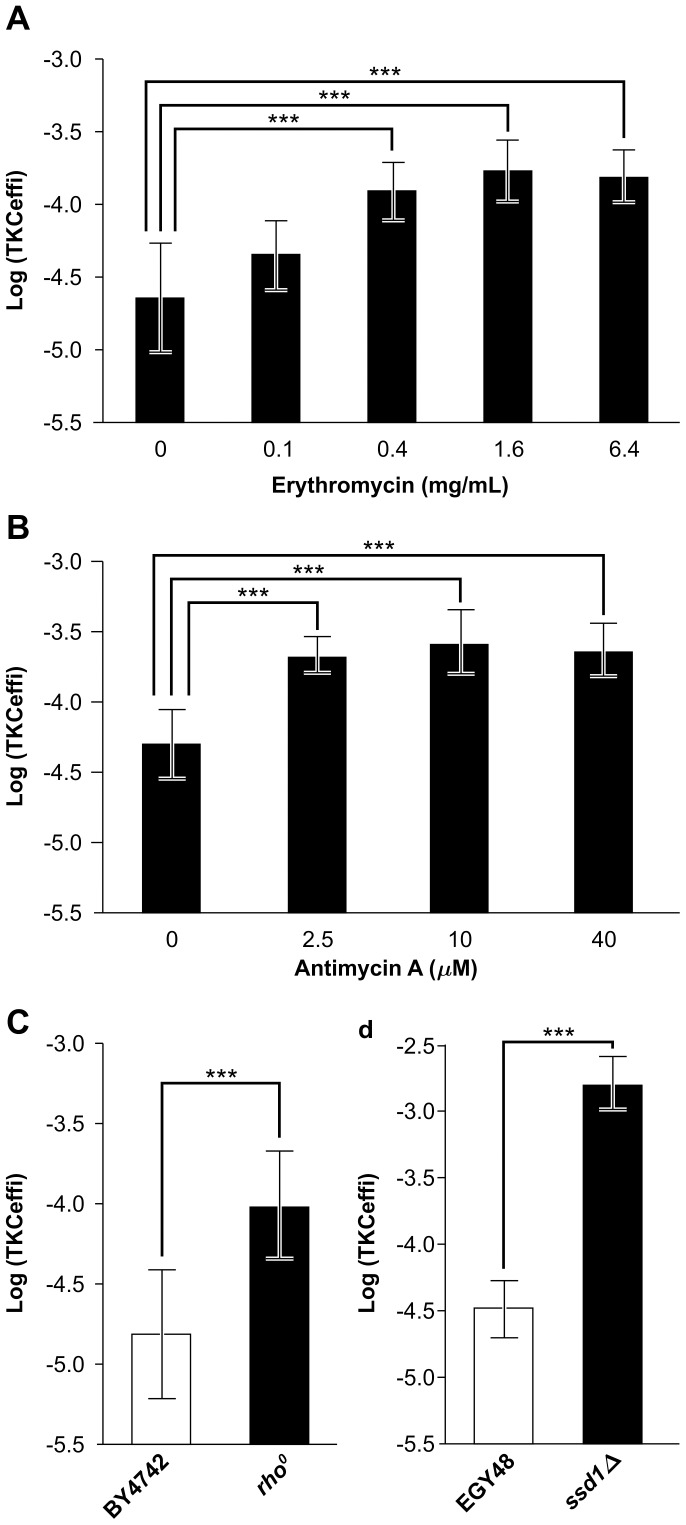
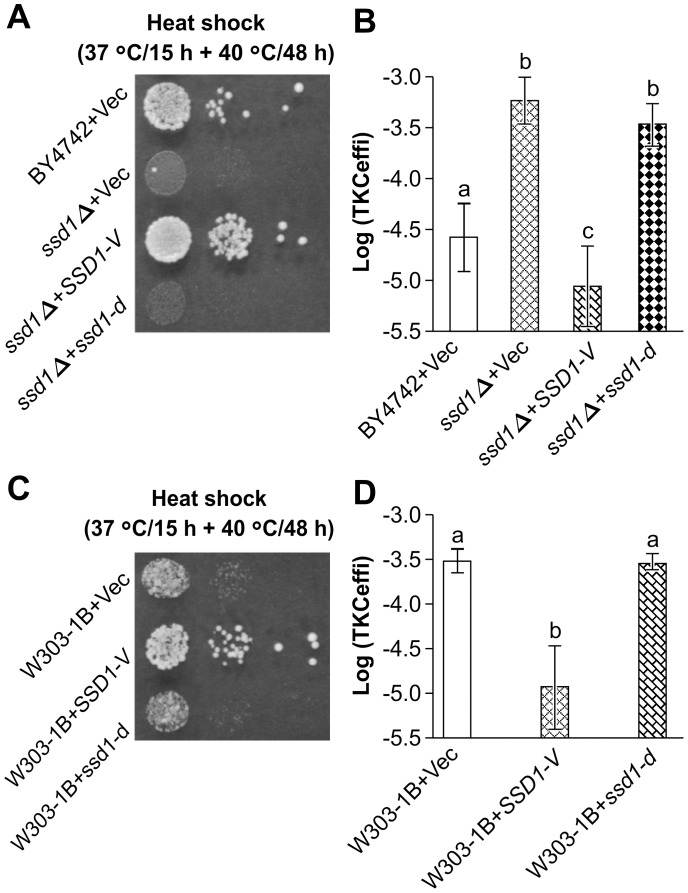
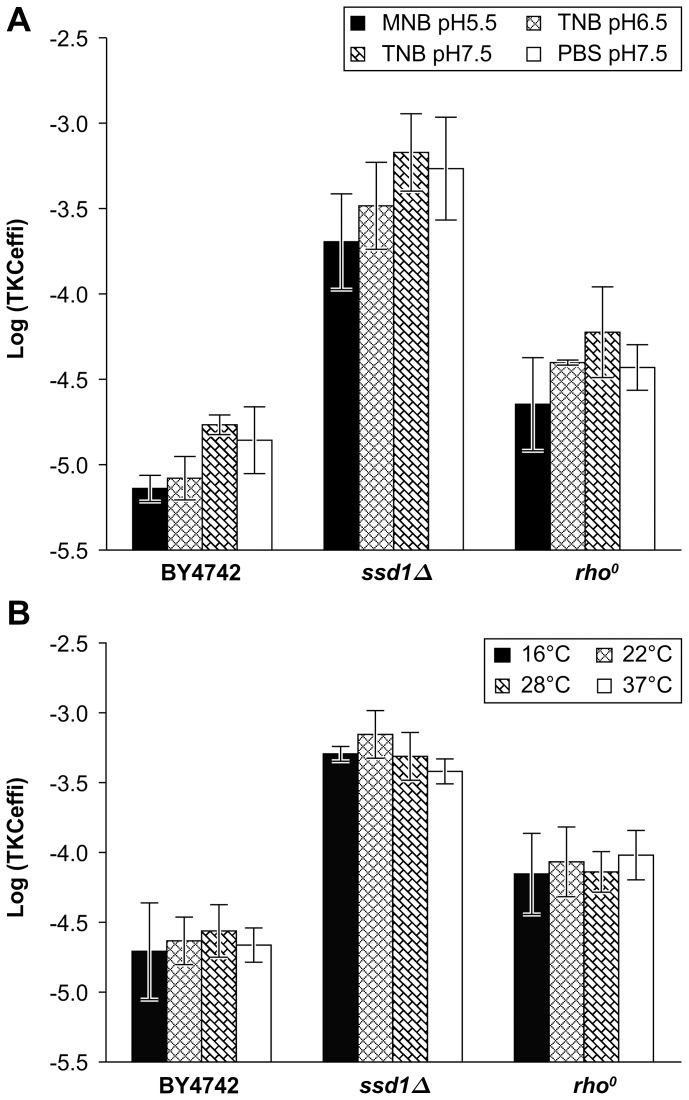
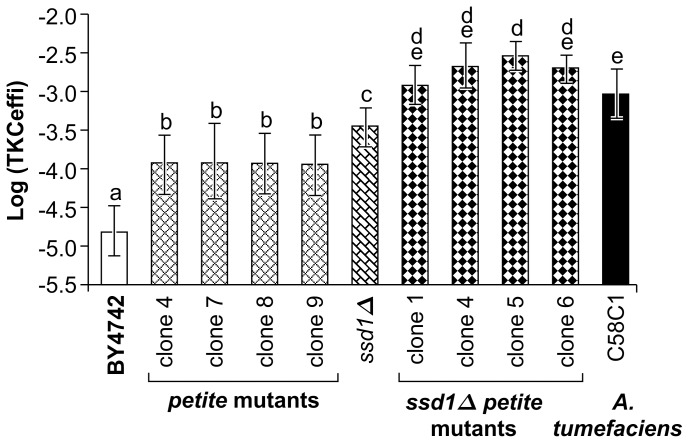
Verification
Claims the paper makes
The claims and statistics of this paper haven’t been checked yet.
Run the check — free, no account needed. It reads the open-access text and checks the sources it cites.
Claims other papers make about this one
Each is checked against this paper’s own text: does it say what the citing paper says it does?
The cited source doesn’t support the claim as written.
In the citing paper
“horizontal gene transfer, albeit occurring more frequently in fungi than thought earlier, is significantly less frequent in yeasts, as compared to their prokaryotic counterparts, due to their more complex genome organisation (Fitzpatrick 2012; Moriguchi et al. 2013; Richards et al. 2011).”
From Biocontrol yeasts: mechanisms and applications (2019) · cites this paper as Moriguchi et al. 2013
Checked by a reasoning model — may be wrong.
Experimental — accuracy not yet measured
Self-check
Percentages, sums and reported differences re-computed from the paper’s own numbers.
The self-check needs the paper’s full text.
Citations
Cites
Horizontal gene transfer in eukaryotic evolution
Keeling, P. J., & Palmer, J. D. (2008) · Nature Reviews Genetics · doi:10.1038/nrg2386 · Cited by 1,355
Research works printed but not linked: 40
- EV Koonin, 2001, Horizontal gene transfer in prokaryotes: quantification and classification, Annu Rev Microbiol, 55, 709, 10.1146/annurev.micro.55.1.709 · DOI · Paper page
- H Ochman, 2000, Lateral gene transfer and the nature of bacterial innovation, Nature, 405, 299, 10.1038/35012500 · DOI · Paper page
- CG Kurland, 2006, Genomics and the irreducible nature of eukaryote cells, Science, 312, 1011, 10.1126/science.1121674 · DOI
- MJ Stanhope, 2001, Phylogenetic analyses do not support horizontal gene transfers from bacteria to vertebrates, Nature, 411, 940, 10.1038/35082058 · DOI
- C Bowler, 2008, The Phaeodactylum genome reveals the evolutionary history of diatom genomes, Nature, 456, 239, 10.1038/nature07410 · DOI
- EA Gladyshev, 2008, Massive horizontal gene transfer in bdelloid rotifers, Science, 320, 1210, 10.1126/science.1156407 · DOI
- C Hall, 2005, Contribution of horizontal gene transfer to the evolution of Saccharomyces cerevisiae, Eukaryot Cell, 4, 1102, 10.1128/EC.4.6.1102-1115.2005 · DOI
- TA Richards, 2009, Phylogenomic analysis demonstrates a pattern of rare and ancient horizontal gene transfer between plants and fungi, Plant Cell, 21, 1897, 10.1105/tpc.109.065805 · DOI
- E Cascales, 2003, The versatile bacterial type IV secretion systems, Nat Rev Microbiol, 1, 137, 10.1038/nrmicro753 · DOI
- R Fronzes, 2009, The structural biology of type IV secretion systems, Nat Rev Microbiol, 7, 703, 10.1038/nrmicro2218 · DOI
- JA Heinemann, 1989, Bacterial conjugative plasmids mobilize DNA transfer between bacteria and yeast, Nature, 340, 205, 10.1038/340205a0 · DOI
- M Mizuta, 2012, Screening for yeast mutants defective in recipient ability for transkingdom conjugation with Escherichia coli revealed importance of vacuolar ATPase activity in the horizontal DNA transfer phenomenon, Microbiol Res, 167, 311, 10.1016/j.micres.2011.10.001 · DOI
- VL Waters, 2001, Conjugation between bacterial and mammalian cells, Nat Genet, 29, 375, 10.1038/ng779 · DOI
- TJ Schmidhauser, 1985, Regions of broad-host-range plasmid RK2 involved in replication and stable maintenance in nine species of gram-negative bacteria, J Bacteriol, 164, 446, 10.1128/JB.164.1.446-455.1985 · DOI
- Z Gojkovic, 2004, Horizontal gene transfer promoted evolution of the ability to propagate under anaerobic conditions in yeasts, Mol Genet Genomics, 271, 387, 10.1007/s00438-004-0995-7 · DOI
- Y Ohyama, 2010, Saccharomyces cerevisiae Ssd1p promotes CLN2 expression by binding to the 5′-untranslated region of CLN2 mRNA, Genes Cells, 15, 1169, 10.1111/j.1365-2443.2010.01452.x · DOI
- H Ito, 1983, Transformation of intact yeast cells treated with alkali cations, J Bacteriol, 153, 163, 10.1128/JB.153.1.163-168.1983 · DOI
- L Lefebvre-Legendre, 2003, F1-catalysed ATP hydrolysis is required for mitochondrial biogenesis in Saccharomyces cerevisiae growing under conditions where it cannot respire, Mol Microbiol, 47, 1329, 10.1046/j.1365-2958.2003.03371.x · DOI
- MS Rodeheffer, 2003, Multiple interactions involving the amino-terminal domain of yeast mtRNA polymerase determine the efficiency of mitochondrial protein synthesis, J Biol Chem, 278, 18695, 10.1074/jbc.M301399200 · DOI
- S Kawai, 2004, Molecular insights on DNA delivery into Saccharomyces cerevisiae, Biochem Biophys Res Commun, 317, 100, 10.1016/j.bbrc.2004.03.011 · DOI
- G Bernardi, 1979, Petite Mutation in Yeast. (Translated from English), Trends Biochem Sci, 4, 197, 10.1016/0968-0004(79)90079-3 · DOI
- Y Uesono, 1997, Ssd1p of Saccharomyces cerevisiae associates with RNA, J Biol Chem, 272, 16103, 10.1074/jbc.272.26.16103 · DOI
- KD Gank, 2008, SSD1 is integral to host defense peptide resistance in Candida albicans, Eukaryot Cell, 7, 1318, 10.1128/EC.00402-07 · DOI
- JI Ibeas, 2001, Resistance to the plant PR-5 protein osmotin in the model fungus Saccharomyces cerevisiae is mediated by the regulatory effects of SSD1 on cell wall composition, Plant J, 25, 271, 10.1046/j.1365-313x.2001.00967.x · DOI
- H Lee, 2010, Use of the plant defense protein osmotin to identify Fusarium oxysporum genes that control cell wall properties, Eukaryot Cell, 9, 558, 10.1128/EC.00316-09 · DOI
- S Tanaka, 2009, The Colletotrichum orbiculare SSD1 mutant enhances Nicotiana benthamiana basal resistance by activating a mitogen-activated protein kinase pathway, Plant Cell, 21, 2517, 10.1105/tpc.109.068023 · DOI
- RT Wheeler, 2003, A Saccharomyces cerevisiae mutant with increased virulence, Proc Natl Acad Sci U S A, 100, 2766, 10.1073/pnas.0437995100 · DOI
- HP Phatnani, 2004, Expanding the functional repertoire of CTD kinase I and RNA polymerase II: novel phosphoCTD-associating proteins in the yeast proteome, Biochemistry, 43, 15702, 10.1021/bi048364h · DOI
- A Sutton, 1991, The SIT4 protein phosphatase functions in late G1 for progression into S phase, Mol Cell Biol, 11, 2133, 10.1128/MCB.11.4.2133 · DOI
- P Jorgensen, 2002, High-resolution genetic mapping with ordered arrays of Saccharomyces cerevisiae deletion mutants, Genetics, 162, 1091, 10.1093/genetics/162.3.1091 · DOI
- HB McDonald, 2002, Mutational analysis reveals a role for the C terminus of the proteasome subunit Rpt4p in spindle pole body duplication in Saccharomyces cerevisiae, Genetics, 162, 705, 10.1093/genetics/162.2.705 · DOI
- E Baruffini, 2007, A single nucleotide polymorphism in the DNA polymerase gamma gene of Saccharomyces cerevisiae laboratory strains is responsible for increased mitochondrial DNA mutability, Genetics, 177, 1227, 10.1534/genetics.107.079293 · DOI
- K Suzuki, 2002, Tobacco plants were transformed by Agrobacterium rhizogenes infection during their evolution, Plant J, 32, 775, 10.1046/j.1365-313X.2002.01468.x · DOI
- E Nevoigt, 2000, Cells of the yeast Saccharomyces cerevisiae are transformable by DNA under non-artificial conditions, Yeast, 16, 1107, 10.1002/1097-0061(20000915)16:12<1107::AID-YEA608>3.0.CO;2-3 · DOI
- K Moriguchi, 2013, Trans-kingdom genetic transfer from Escherichia coli to Saccharomyces cerevisiae as a simple gene introduction tool, Appl Environ Microbiol, 79, 4393, 10.1128/AEM.00770-13 · DOI
- S Yamamoto, 2007, Identification of pTi-SAKURA DNA region conferring enhancement of plasmid incompatibility and stability, Genes Genet Syst, 82, 197, 10.1266/ggs.82.197 · DOI
- M Nishikawa, 1992, DNA integration into recipient yeast chromosomes by trans-kingdom conjugation between Escherichia coli and Saccharomyces cerevisiae, Curr Genet, 21, 101, 10.1007/BF00318467 · DOI
- W Pansegrau, 1994, Complete nucleotide sequence of Birmingham IncP alpha plasmids, Compliation and comparative analysis, J Mol Biol, 239, 623, 10.1006/jmbi.1994.1404 · DOI
- M Nishikawa, 1990, Structural and functional stability of IncP plasmids during stepwise transmission by trans-kingdom mating: promiscuous conjugation of Escherichia coli and Saccharomyces cerevisiae, Jpn J Genet, 65, 323, 10.1266/jjg.65.323 · DOI
- M Nishikawa, 1998, Trans-kingdom conjugation offers a powerful gene targeting: tool in yeast, Genet Anal, 14, 65, 10.1016/S1050-3862(97)10003-1 · DOI
Cited by
Sorted by citations
Origins, structures, and functions of circulating DNA in oncology
Thierry, A. R., El Messaoudi, S., Gahan, P. B., Anker, P., & Stroun, M. (2016) · Cancer and Metastasis Reviews · doi:10.1007/s10555-016-9629-x · Cited by 818
Biocontrol yeasts: mechanisms and applications
Freimoser, F. M., Rueda-Mejia, M. P., Tilocca, B., & Migheli, Q. (2019) · World Journal of Microbiology and Biotechnology · doi:10.1007/s11274-019-2728-4 · Cited by 462
Metadata
- Authors
- Moriguchi, K., Yamamoto, S., Tanaka, K., Kurata, N., & Suzuki, K.
- Affiliations
- Hiroshima University (JP)
- National Institute of Genetics (JP)
- Corresponding author
- Moriguchi, Kazuki
- Venue
- PLoS ONE
- Publisher
- Public Library of Science (PLoS)
- Published
- 2013-09-13
- Volume
- 8
- Issue
- 9
- Pages
- e74590
- ISSN
- 1932-6203 (ISSN-L)
- PMC
- PMC3772842
- OpenAlex
- W2020206150
- Cited by
- 25
- References
- 1
- Citations by year
- 2026: 1 · 2025: 3 · 2024: 1 · 2022: 1 · 2021: 2 · 2020: 4 · 2019: 3 · 2018: 1 · 2017: 1 · 2016: 3 · 2015: 4
- FWCI
- 1.05
- Type
- journal article
- Language
- en
- Update notices
- correction (2015-04-13)
- Open access
- gold
- doi.org
- Locations
- PLoS ONE (publishedVersion, cc-by)
- Europe PMC (PubMed Central) (publishedVersion, other-oa)
- PubMed Central (publishedVersion, cc-by)
- PubMed (publishedVersion)
- DOAJ (DOAJ: Directory of Open Access Journals) (submittedVersion, cc-by-sa)
- Figshare (submittedVersion, cc-by)
- Funders
- U.S. Department of Agriculture
- Agricultural Research Service
- Japan Society for the Promotion of Science (20570221, 21510209)
- Topics
- Life Sciences › Biochemistry, Genetics and Molecular Biology › Molecular Biology › Fungal and yeast genetics research
- Life Sciences › Biochemistry, Genetics and Molecular Biology › Genetics › Bacterial Genetics and Biotechnology
- Life Sciences › Biochemistry, Genetics and Molecular Biology › Genetics › Chromosomal and Genetic Variations
- Keywords
- Escherichia coli, Saccharomyces cerevisiae, Ssd1, petite mutants, rho- mutants, respiratory mutants, Agrobacterium tumefaciens, gene transfer efficiency
- MeSH terms
- Conjugation, Genetic, DNA, Bacterial, Escherichia coli, Genes, Bacterial, Genetic Complementation Test, Genetic Testing, Mitochondria, Models, Genetic, Mutation, Phenotype, Polymorphism, Genetic, Saccharomyces cerevisiae, Gene Transfer, Horizontal, Genetic Loci
About these checks
Registry, retraction, Cites and statistics results are computed, not judged, with one exception: a printed reference that no index lists is read once by a model before it counts as a citation error. Claims are extracted by a model and kept only when their quote appears verbatim in the text; each cited source is then checked, with a model’s help, for whether it says what the claim relies on. Those verdicts can be wrong — read the claim’s quote and the cited source before relying on one.
Statistics and arithmetic are recomputed, not judged.
Confidence bands are shown only for fields calibrated on our annotated test set. None is calibrated yet, so no band is shown.
What counts as a claim ›How we measure confidence ›How we check this ›
Are you an author, or do you see a problem with this page? Request a review
