

The DOI matches its Crossref record; 42 of the 42 references it cites were found in a registry or an index.
Low 2012–13 Influenza Vaccine Effectiveness Associated with Mutation in the Egg-Adapted H3N2 Vaccine Strain Not Antigenic Drift in Circulating Viruses
Open accessAbstract
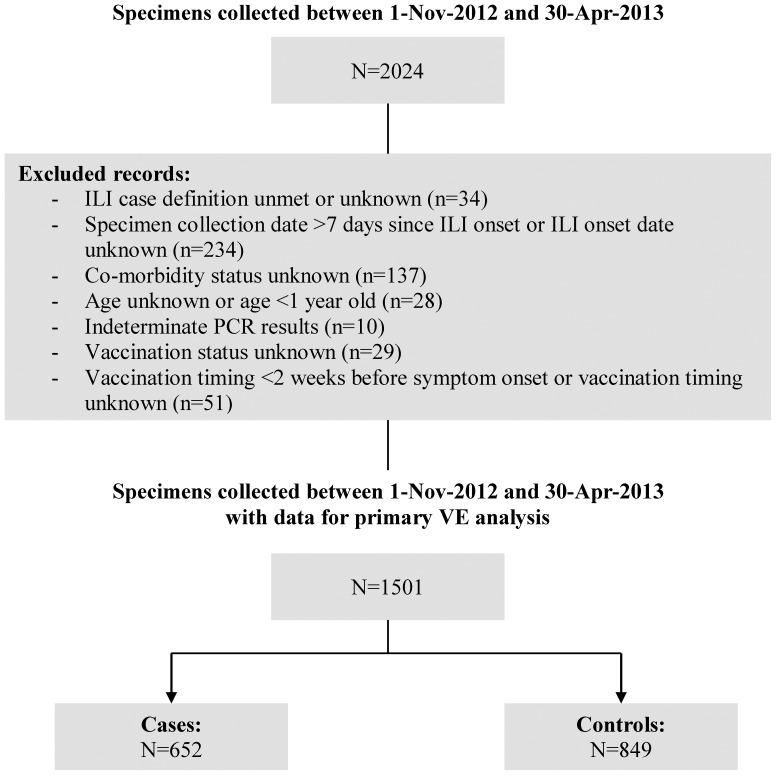
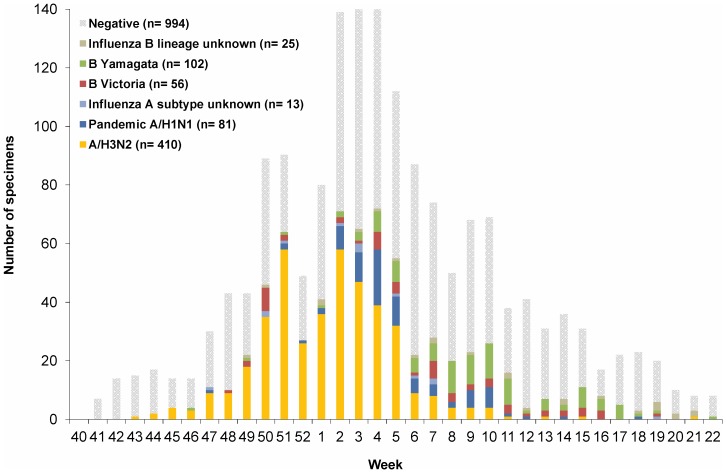
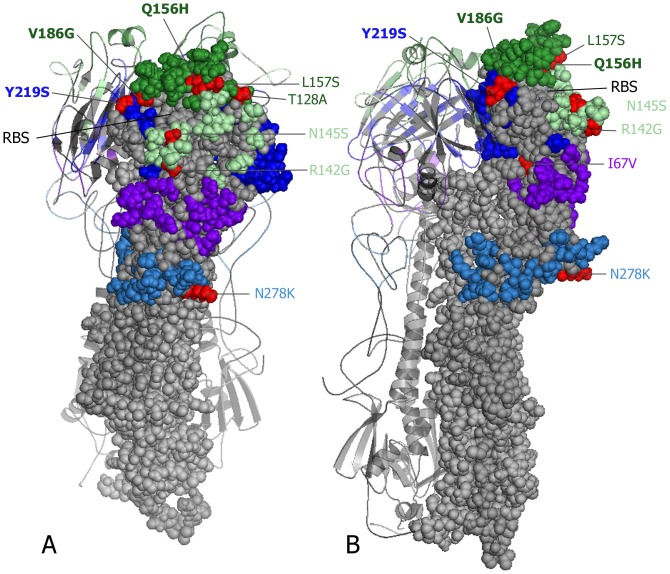
BACKGROUND: Influenza vaccine effectiveness (VE) is generally interpreted in the context of vaccine match/mismatch to circulating strains with evolutionary drift in the latter invoked to explain reduced protection. During the 2012-13 season, however, detailed genotypic and phenotypic characterization shows that low VE was instead related to mutations in the egg-adapted H3N2 vaccine strain rather than antigenic drift in circulating viruses. METHODS/FINDINGS: Component-specific VE against medically-attended, PCR-confirmed influenza was estimated in Canada by test-negative case-control design. Influenza A viruses were characterized genotypically by amino acid (AA) sequencing of established haemagglutinin (HA) antigenic sites and phenotypically through haemagglutination inhibition (HI) assay. H3N2 viruses were characterized in relation to the WHO-recommended, cell-passaged vaccine prototype (A/Victoria/361/2011) as well as the egg-adapted strain as per actually used in vaccine production. Among the total of 1501 participants, influenza virus was detected in 652 (43%). Nearly two-thirds of viruses typed/subtyped were A(H3N2) (394/626; 63%); the remainder were A(H1N1)pdm09 (79/626; 13%), B/Yamagata (98/626; 16%) or B/Victoria (54/626; 9%). Suboptimal VE of 50% (95%CI: 33-63%) overall was driven by predominant H3N2 activity for which VE was 41% (95%CI: 17-59%). All H3N2 field isolates were HI-characterized as well-matched to the WHO-recommended A/Victoria/361/2011 prototype whereas all but one were antigenically distinct from the egg-adapted strain as per actually used in vaccine production. The egg-adapted strain was itself antigenically distinct from the WHO-recommended prototype, and bore three AA mutations at antigenic sites B [H156Q, G186V] and D [S219Y]. Conversely, circulating viruses were identical to the WHO-recommended prototype at these positions with other genetic variation that did not affect antigenicity. VE was 59% (95%CI:16-80%) against A(H1N1)pdm09, 67% (95%CI: 30-85%) against B/Yamagata (vaccine-lineage) and 75% (95%CI: 29-91%) against B/Victoria (non-vaccine-lineage) viruses. CONCLUSIONS: These findings underscore the need to monitor vaccine viruses as well as circulating strains to explain vaccine performance. Evolutionary drift in circulating viruses cannot be regulated, but influential mutations introduced as part of egg-based vaccine production may be amenable to improvements.
Overview
The claims and statistics of this paper haven’t been checked yet.
Run the check — free, no account needed. It reads the open-access text and checks the sources it cites.
Integrity signals
Registry
Cites
Statistics
Figures
Verification
Claims the paper makes
The claims and statistics of this paper haven’t been checked yet.
Run the check — free, no account needed. It reads the open-access text and checks the sources it cites.
Claims other papers make about this one
Each is checked against this paper’s own text: does it say what the citing paper says it does?
In the citing paper
“Another issue that is increasingly recognized is egg adaptation, whereby the vaccine strain of virus becomes adapted to the egg used for production, leading to key mutations that mean it is not well matched to, and does not protect against, the circulating viral strain114.”
From A guide to vaccinology: from basic principles to new developments (2021) · cites this paper as [114]
Self-check
Percentages, sums and reported differences re-computed from the paper’s own numbers.
The self-check needs the paper’s full text.
Citations
Cites
The PyMOL Molecular Graphics System
DeLano, W. L. (2002) · Medical Entomology and Zoology · Cited by 18,147
Efficacy and effectiveness of influenza vaccines: a systematic review and meta-analysis
Osterholm, M. T., Kelley, N. S., Sommer, A., & Belongia, E. A. (2012) · The Lancet Infectious Diseases · doi:10.1016/s1473-3099(11)70295-x · Cited by 1,789
Koel, B. F., Burke, D. F., Bestebroer, T. M., van der Vliet, S., Zondag, G. C. M., Vervaet, G., Skepner, E., Lewis, N. S., Spronken, M. I. J., Russell, C. A., et al. (2013) · Science · doi:10.1126/science.1244730 · Cited by 634
Structural Basis of Preexisting Immunity to the 2009 H1N1 Pandemic Influenza Virus
Xu, R., Ekiert, D. C., Krause, J. C., Hai, R., Crowe, J. E., & Wilson, I. A. (2010) · Science · doi:10.1126/science.1186430 · Cited by 601
Predicting the Evolution of Human Influenza A
Bush, R. M., Bender, C. A., Subbarao, K., Cox, N. J., & Fitch, W. M. (1999) · Science · doi:10.1126/science.286.5446.1921 · Cited by 524
Tricco, A. C., Chit, A., Soobiah, C., Hallett, D. C., Meier, G., Chen, M. H., Tashkandi, M. F., Bauch, C. T., & Loeb, M. B. (2013) · BMC Medicine · doi:10.1186/1741-7015-11-153 · Cited by 399
Variable efficacy of repeated annual influenza vaccination
Smith, D. J., Forrest, S., Ackley, D. H., & Perelson, A. S. (1999) · Proceedings of the National Academy of Sciences · doi:10.1073/pnas.96.24.14001 · Cited by 396
Sauter, N. K., Hanson, J. E., Glick, G. D., Brown, J. H., Crowther, R. L., Park, S. J., Skehel, J. J., & Wiley, D. C. (1992) · Biochemistry · doi:10.1021/bi00155a013 · Cited by 343
Skowronski, D. M., Serres, G. D., Crowcroft, N. S., Janjua, N. Z., Boulianne, N., Salway, T. J., Rosella, L. C., Dickinson, J. A., Gilca, R., Sethi, P., et al. (2010) · PLoS Medicine · doi:10.1371/journal.pmed.1000258 · Cited by 297
Self-citationOrenstein, E. W., Serres, G. D., Haber, M., Shay, D. K., Bridges, C. B., Gargiullo, P. M., & Orenstein, W. A. (2007) · International Journal of Epidemiology · doi:10.1093/ije/dym021 · Cited by 254
Cited by
Sorted by citations
Items 401–411 of 411
Vaccine Research and Development in India for COVID-19 and Influenza
Kanjo, K., Ghadiyaram, C., & Varadarajan, R. (2024) · Springer eBooks · doi:10.1007/978-981-97-0896-3_6
Kishida, N., Imai, M., Ainai, A., Asanuma, H., Saito, R., Fujisaki, S., Shirakura, M., Nakamura, K., Kuwahara, T., Takashita, E., et al. (2024) · Microbiology and Immunology · doi:10.1111/1348-0421.13179
Elkochri, S., Touil, N., Abi, R., Malki, H. C., Tagajdid, M. R., Elannaz, H., Elannaz, H., Kassmi, Z., Amraoui, F., Benaissi, Y., et al. (2025) · International Journal of Clinical Virology · doi:10.29328/journal.ijcv.1001065
Guo, Z., Rowe, T., Chang, J. C., Carney, P. J., Steel, J., & Stevens, J. (2025) · npj Vaccines · doi:10.1038/s41541-025-01282-y
Yoon, Y., Jeong, H. S., Oh, K., Choe, Y. J., Kang, H. M., Park, J. Y., Kim, H. Y., & Kim, Y.-K. (2026) · Vaccines · doi:10.3390/vaccines14010070
Okoli, G. N., Sullivan, S. G., Harper, D. M., Tsang, T. K., & Cowling, B. J. (2026) · Vaccine · doi:10.1016/j.vaccine.2026.128956
Advances in clinical immunogenicity evaluation of influenza vaccines
Xu, N., Wang, L., Zhao, C., Shen, Y., Zhao, Z., & Nie, J. (2026) · Vaccine · doi:10.1016/j.vaccine.2026.128989
Directional antigenic drift forecasts influenza vaccine effectiveness and guides strain selectionPreprint
Arhami, O., & Rohani, P. (2026) · bioRxiv (Cold Spring Harbor Laboratory) · doi:10.64898/2026.08.27.747648
Sequence-Aware Antigenic Alignment and SRID Potency Interpretation in Influenza Vaccines
Jeong, O., Kim, P.-K., Oh, H., Lee, K., & Nam, J.-H. (2026) · Vaccine · doi:10.1016/j.vaccine.2026.129191
Immunogenicity testing of a recombinant N1 vaccine candidate in vivo
Krammer, F. (2024) · ImmPort · doi:10.21430/m32jmcqp66
Metadata
- Authors
- Skowronski, D. M., Janjua, N. Z., De Serres, G., Sabaiduc, S., Eshaghi, A., Dickinson, J. A., Fonseca, K., Winter, A.-L., Gubbay, J. B., Krajden, M., Petric, M., Charest, H., Bastien, N., Kwindt, T. L., Mahmud, S. M., Van Caeseele, P., & Li, Y.
- Affiliations
- University of British Columbia (CA)
- BC Centre for Disease Control (CA)
- Public Health Ontario (CA)
- University of Calgary (CA)
- University of Toronto (CA)
- Institut National de Santé Publique du Québec (CA)
- University of Manitoba (CA)
- Corresponding author
- Skowronski, Danuta M.
- ORCID
- Venue
- PLoS ONE
- Publisher
- Public Library of Science (PLoS)
- Published
- 2014-03-25
- Volume
- 9
- Issue
- 3
- Pages
- e92153
- ISSN
- 1932-6203 (ISSN-L)
- PMC
- PMC3965421
- OpenAlex
- W2043925105
- Cited by
- 416
- References
- 42
- Citations by year
- 2026: 17 · 2025: 16 · 2024: 27 · 2023: 14 · 2022: 25 · 2021: 31 · 2020: 46 · 2019: 37 · 2018: 47 · 2017: 43 · 2016: 44 · 2015: 41 · 2014: 26
- FWCI
- 38.79
- Type
- journal article
- Language
- en
- Open access
- gold
- doi.org
- Locations
- PLoS ONE (publishedVersion, cc-by)
- Europe PMC (PubMed Central) (publishedVersion, other-oa)
- PubMed Central (publishedVersion, cc-by)
- PubMed (publishedVersion)
- DOAJ (DOAJ: Directory of Open Access Journals) (submittedVersion, cc-by-sa)
- Figshare (submittedVersion, cc-by)
- Funders
- Pfizer
- GlaxoSmithKline
- Sanofi
- British Columbia Centre for Disease Control
- Sanofi Pasteur
- Canadian Institutes of Health Research (90193_1)
- Institute of Infection and Immunity
- Topics
- Health Sciences › Medicine › Epidemiology › Influenza Virus Research Studies
- Health Sciences › Medicine › Epidemiology › Respiratory viral infections research
- Health Sciences › Medicine › Epidemiology › Virology and Viral Diseases
- Keywords
- influenza vaccine effectiveness, H3N2, antigenic drift, vaccine strain mismatch, hemagglutination inhibition, antigenic determinants, influenza B, A(H1N1)pdm09
- MeSH terms
- Adolescent, Adult, Aged, Aged, 80 and over, Canada, Child, Child, Preschool, DNA, Viral, Female, Humans, Immunization, Infant, Infant, Newborn, Influenza, Human, Influenza Vaccines, Male, Middle Aged, Molecular Sequence Data, Mutation, Protein Conformation, Seasons, Case-Control Studies, Hemagglutinin Glycoproteins, Influenza Virus, Influenza A Virus, H3N2 Subtype, Young Adult
About these checks
Registry, retraction, Cites and statistics results are computed, not judged, with one exception: a printed reference that no index lists is read once by a model before it counts as a citation error. Claims are extracted by a model and kept only when their quote appears verbatim in the text; each cited source is then checked, with a model’s help, for whether it says what the claim relies on. Those verdicts can be wrong — read the claim’s quote and the cited source before relying on one.
Statistics and arithmetic are recomputed, not judged.
Confidence bands are shown only for fields calibrated on our annotated test set. None is calibrated yet, so no band is shown.
What counts as a claim ›How we measure confidence ›How we check this ›
Are you an author, or do you see a problem with this page? Request a review
