

N-Acetyl Cysteine (NAC)-Directed Detoxification of Methacryloxylethyl Cetyl Ammonium Chloride (DMAE-CB)
Open accessThe DOI matches its Crossref record; 30 of the 30 references it cites were found in a registry or an index.
Abstract
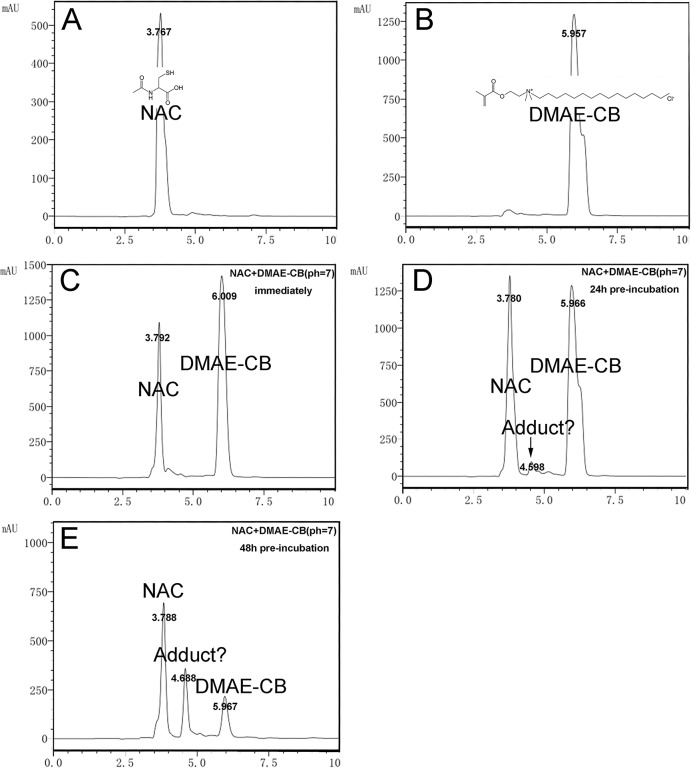
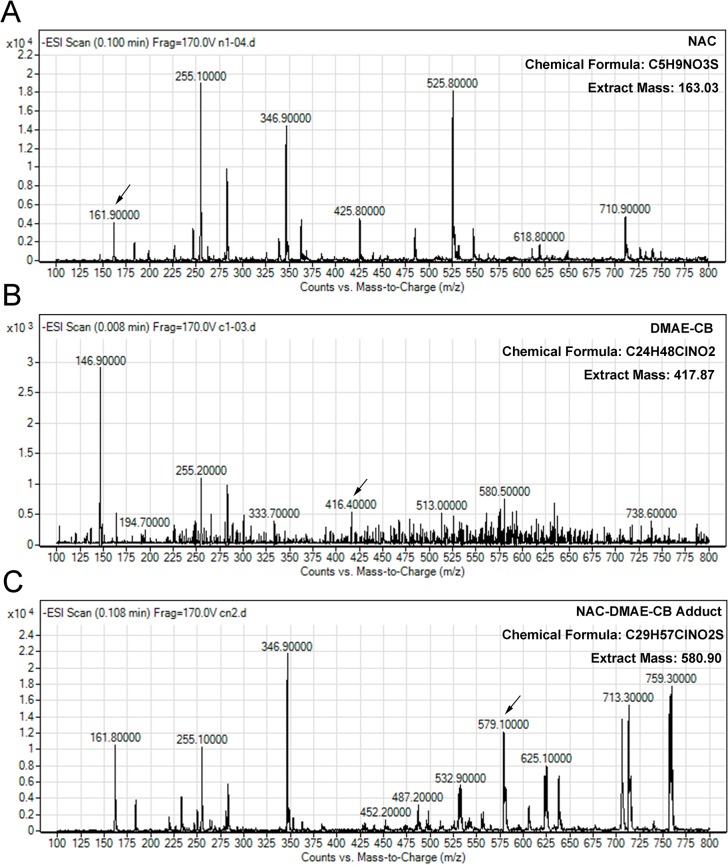
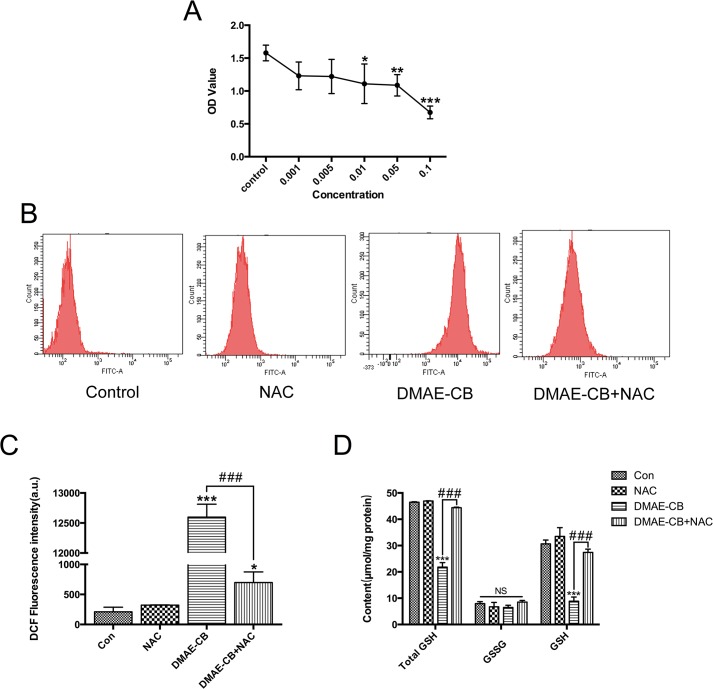
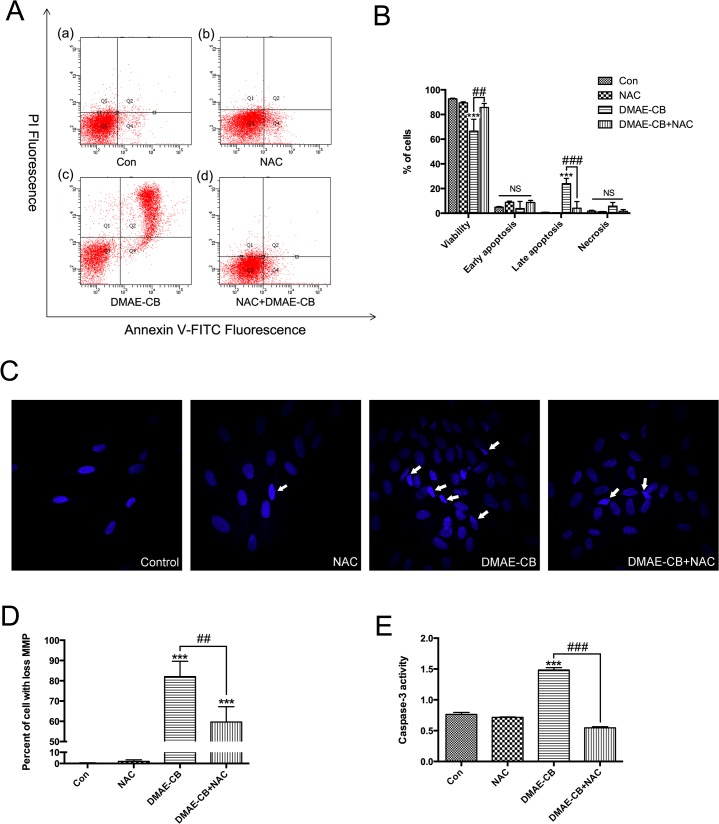
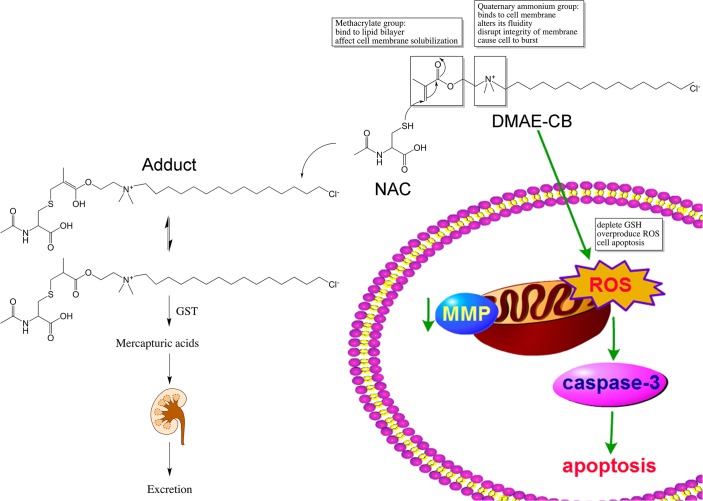
Methacryloxylethyl cetyl ammonium chloride (DMAE-CB) is a polymerizable antibacterial monomer and has been proved as an effective strategy to achieve bioactive bonding with reliable bacterial inhibitory effects. However, the toxicity of DMAE-CB may hamper its wide application in clinical situations. Thus, this study was designed to investigate the toxicity of DMAE-CB and explore the possible protective effects of N-acetyl cysteine (NAC). High performance liquid chromatography (HPLC) and liquid chromatography-mass spectrometry (LC-MS) analysis showed that chemical binding of NAC and DMAE-CB occurred in a time dependent manner. Pre-incubation of fourty-eight hours is required for adequate reaction between DMAE-CB and NAC. DMAE-CB reduced human dental pulp cells (hDPCs) viability in a dose-dependent manner. The toxic effects of DMAE-CB were accompanied by increased reactive oxygen species (ROS) level and reduced glutathione (GSH) content. NAC alleviated DMAE-CB-induced oxidative stress. Annexin V/ Propidium Iodide (PI) staining and Hoechst 33342 staining indicated that DMAE-CB induced apoptosis. Collapsed mitochondrial membrane potential (MMP) and activation of caspase-3 were also observed after DMAE-CB treatment. NAC rescued hDPCs from DMAE-CB-induced apoptosis, accompanied by lower level of MMP loss and caspase-3 activity. This study assists to elucidate the mechanism underlying the cytotoxic effects of DMAE-CB and provides theoretical supports for the searching of effective strategies to reduce toxicity of quaternary ammonium dental monomers.
Overview
The claims and statistics of this paper haven’t been checked yet.
Free: it reads the open-access text and checks the first 5 claims that cite a source we can check. Create a free account to check every claim.
Integrity signals
Registry
Cites
Statistics
Figures
Verification
Claims the paper makes
The claims and statistics of this paper haven’t been checked yet.
Free: it reads the open-access text and checks the first 5 claims that cite a source we can check. Create a free account to check every claim.
Claims other papers make about this one
Each is checked against this paper’s own text: does it say what the citing paper says it does?
In the citing paper
“antioxidants such as N-acetyl cysteine (NAC) have been used for scavenging ROS and antioxidants to reduce the cytotoxicity of QACs [53], [60].”
From Quaternary ammonium-based biomedical materials: State-of-the-art, toxicological aspects and antimicrobial resistance (2017) · cites this paper as [60]
Self-check
Percentages, sums and reported differences re-computed from the paper’s own numbers.
The self-check needs the paper’s full text.
Citations
Cites
Control of inositol 1,4,5-trisphosphate-induced Ca2+ release by cytosolic Ca2+
Bootman, M. D., Missiaen, L., Parys, J. B., De Smedt, H., & Casteels, R. (1995) · Biochemical Journal · doi:10.1042/bj3060445 · Cited by 5,120
Genetic and Cellular Toxicology of Dental Resin Monomers
Schweikl, H., Spagnuolo, G., & Schmalz, G. (2006) · Journal of Dental Research · doi:10.1177/154405910608501001 · Cited by 571
Relation Between Mitochondrial Membrane Potential and ROS Formation
Suski, J. M., Lebiedzinska, M., Bonora, M., Pinton, P., Duszynski, J., & Wieckowski, M. R. (2012) · Methods in Molecular Biology · doi:10.1007/978-1-61779-382-0_12 · Cited by 522
Incorporation of bacterial inhibitor into resin composite
Imazato, S., Torii, M., Tsuchitani, Y., McCabe, J. F., & Russell, R. R. B. (1994) · Journal of Dental Research · doi:10.1177/00220345940730080701 · Cited by 316 · cited 7×
“They found that NAC only slightly reduced the cytotoxicity of MDPB when it is mixed with MDPB and used to treat cells immediately.”
BackgroundInfluentialKrifka, S., Spagnuolo, G., Schmalz, G., & Schweikl, H. (2013) · Biomaterials · doi:10.1016/j.biomaterials.2013.03.019 · Cited by 289
Stanislawski, L., Lefeuvre, M., Bourd, K., Soheili‐Majd, E., Goldberg, M., & Périanin, A. (2003) · Journal of Biomedical Materials Research Part A · doi:10.1002/jbm.a.10600 · Cited by 233
ER stress induces caspase-8 activation, stimulating cytochrome c release and caspase-9 activation
Jimbo, A., Fujita, E., Kouroku, Y., Ohnishi, J., Inohara, N., Kuida, K., Sakamaki, K., Yonehara, S., & Momoi, T. (2003) · Experimental Cell Research · doi:10.1016/s0014-4827(02)00033-2 · Cited by 189
Zhang, K., Cheng, L., Imazato, S., Antonucci, J. M., Lin, N. J., Lin-Gibson, S., Bai, Y., & Xu, H. H. K. (2013) · Journal of Dentistry · doi:10.1016/j.jdent.2013.02.001 · Cited by 162
Inácio, Â. S., Mesquita, K. A., Baptista, M., Ramalho-Santos, J., Vaz, W. L. C., & Vieira, O. V. (2011) · PLoS ONE · doi:10.1371/journal.pone.0019850 · Cited by 141 · cited 1×
“Since quaternary ammonium compounds kill bacteria by disrupting the integrity of the bacterial cell membrane, we believe that the quaternary ammonium group in DMAE-CB could also solubilize the membrane of hDPCs and thus cause cell death[32, 33].”
BackgroundKrifka, S., Hiller, K., Spagnuolo, G., Jewett, A., Schmalz, G., & Schweikl, H. (2012) · Biomaterials · doi:10.1016/j.biomaterials.2012.04.013 · Cited by 123
Research works printed but not linked: 5
- Sai M, Le-qun S, Yu-hong X, Fang L, Li H, Shen L, et al The cytotoxicity of methacryloxylethyl cetyl ammonium chloride, a cationic antibacterial monomer, is related to oxidative stress and the intrinsic mitochondrial apoptotic pathway. Brazilian Journal of Medical and Biological Research. 2011; 44(11): 1125– 33. 22002093 · DOI · Paper page
- Nocca G, D'Antò V, Desiderio C, Rossetti DV, Valletta R, Baquala AM, et al N-acetyl cysteine directed detoxification of 2-hydroxyethyl methacrylate by adduct formation. Biomaterials. 2010; 31(9): 2508– 16. 10.1016/j.biomaterials.2009.12.015 20022629 · DOI
- Samuelsen J, Kopperud H, Holme J, Dragland I, Christensen T, Dahl J. Role of thiol‐complex formation in 2‐hydroxyethyl‐methacrylate‐induced toxicity in vitro. Journal of Biomedical Materials Research Part A. 2011; 96(2): 395– 401. 10.1002/jbm.a.32993 21171159 · DOI
- Spagnuolo G, Desiderio C, Rivieccio V, Amato M, Rossetti DV, D’Antò V, et al In vitro cellular detoxification of triethylene glycol dimethacrylate by adduct formation with N-acetylcysteine. Dental Materials. 2013; 29(8): e153– e60. 10.1016/j.dental.2013.04.023 23764026 · DOI
- Stanislawski L, Lefeuvre M, Bourd K, Soheili‐Majd E, Goldberg M, Périanin A. TEGDMA‐induced toxicity in human fibroblasts is associated with early and drastic glutathione depletion with subsequent production of oxygen reactive species. Journal of Biomedical Materials Research Part A. 2003; 66(3): 476– 82. 12918029 · DOI · Paper page
Cited by
Jiao, Y., Niu, L.-N., Ma, S., Li, J., Tay, F. R., & Chen, J.-H. (2017) · Progress in Polymer Science · doi:10.1016/j.progpolymsci.2017.03.001 · Cited by 639
Self-citationBiological Activities and Potential Oral Applications of N‐Acetylcysteine: Progress and Prospects
Pei, Y., Liu, H., Yang, Y., Yang, Y., Jiao, Y., Tay, F. R., & Chen, J. (2018) · Oxidative Medicine and Cellular Longevity · doi:10.1155/2018/2835787 · Cited by 165
Self-citationAntibacterial quaternary ammonium agents: Chemical diversity and biological mechanism
Dan, W., Gao, J., Qi, X., Wang, J., & Dai, J. (2022) · European Journal of Medicinal Chemistry · doi:10.1016/j.ejmech.2022.114765 · Cited by 135
Jiao, Y., Ma, S., Wang, Y., Li, J., Shan, L., Liu, Q., Liu, Y., Song, Q., Fan, Y., Yu, H., et al. (2016) · PLoS ONE · doi:10.1371/journal.pone.0147858 · Cited by 60
Self-citationBiomaterials for human space exploration: A review of their untapped potential
Jemison, M. C., & Olabisi, R. M. (2021) · Acta Biomaterialia · doi:10.1016/j.actbio.2021.04.033 · Cited by 43
Effect of an Antibacterial Monomer on the Antibacterial Activity of a Pit-and-Fissure Sealant
Fan, Y., Yu, H., Lin, P., Dong, Y., Zhang, L., Sun, X., Liu, Z., Guo, H., Huang, L. Z., & Chen, J. (2016) · PLoS ONE · doi:10.1371/journal.pone.0162281 · Cited by 37
Self-citationHuang, L. Z., Fan, Y., Sun, X., Dong, Y., Lin, P.-T., Yu, H., Xiao, Y., Chai, Z., Xing, X., & Chen, J. (2016) · Scientific Reports · doi:10.1038/srep33858 · Cited by 37
Self-citationJariyamana, N., Chuveera, P., Dewi, A., Leelapornpisid, W., Ittichaicharoen, J., Chattipakorn, S. C., & Srisuwan, T. (2021) · Clinical Oral Investigations · doi:10.1007/s00784-020-03721-7 · Cited by 23
Lei, Q., Lai, X., Zhang, Y., Li, Z., Li, R., Zhang, W., Ao, N., & Zhang, H. (2020) · ACS Applied Bio Materials · doi:10.1021/acsabm.0c00837 · Cited by 22
Zhan, Y., Guo, Z., Zheng, F., Zhang, Z., Li, K., Wang, Q., Wang, L., Cai, Z., Chen, N., Wu, S., et al. (2020) · Environmental Toxicology · doi:10.1002/tox.23001 · Cited by 22
Zhang, Y., Xiao, J.-F., Yang, H.-F., Jiao, Y., Cao, W.-W., Shi, H.-M., Cun, J.-F., Tay, F. R., Ping, J., & Xiao, Y.-H. (2019) · Oxidative Medicine and Cellular Longevity · doi:10.1155/2019/1301736 · Cited by 22
Self-citationProtection against HEMA-Induced Mitochondrial Injury In Vitro by Nrf2 Activation
Jiao, Y., Niu, T., Liu, H., Tay, F. R., & Chen, J. (2019) · Oxidative Medicine and Cellular Longevity · doi:10.1155/2019/3501059 · Cited by 18
Self-citationNew adhesive system based in metals cross-linking methacrylate
Cocco, A. R., da Rosa, W. L. D. O., Peralta, S. L., Maske, T. T., da Silva, A. F., Hartwig, C. A., Mesko, M. F., Piva, E., & Lund, R. G. (2017) · Journal of the mechanical behavior of biomedical materials/Journal of mechanical behavior of biomedical materials · doi:10.1016/j.jmbbm.2017.10.010 · Cited by 14
Kaufman, G., & Škrtić, D. (2020) · International Journal of Molecular Sciences · doi:10.3390/ijms21197318 · Cited by 14
NAC ameliorates dental composite-induced DNA double-strand breaks and chromatin condensation
Styllou, P., Styllou, M., Hickel, R., Högg, C., Reichl, F., & Scherthan, H. (2017) · Dental Materials Journal · doi:10.4012/dmj.2016-316 · Cited by 14
Yang, H., Qiu, L., Zhang, L., Lv, G., Li, K., Yu, H., Xie, M., & Lin, J. (2016) · Tumor Biology · doi:10.1007/s13277-016-4977-2 · Cited by 12
Jiao, Y., Ma, S., Wang, Y., Li, J., Shan, L., Sun, J., & Chen, J. (2016) · International Journal of Biological Sciences · doi:10.7150/ijbs.14578 · Cited by 11
“To investigate these mechanisms, human dental pulp cells (hDPCs) from primary cultures were used as model cells, which previously have been demonstrated to be sensitive to DMAE-CB-induced cytotoxicity [12].”
BackgroundSelf-citationQiu, L., Yang, H., Lv, G., Li, K., Liu, G., Wang, W., Wang, S., Zhao, X., Xie, M., & Lin, J. (2017) · European Journal of Pharmacology · doi:10.1016/j.ejphar.2017.06.035 · Cited by 10
Soares-Cardoso, C., Leal, S. M., Sá, S. I., Dantas-Barros, R., Dinis‐Oliveira, R. J., Faria, J., & Barbosa, J. (2024) · Pharmaceuticals · doi:10.3390/ph17060796 · Cited by 7
Rose, S., & Bennuri, S. C. (2018) · Springer eBooks · doi:10.1007/978-981-10-5311-5_5 · Cited by 2
Sharova, A. (2020) · RESEARCH RESULTS IN BIOMEDICINE · doi:10.18413/2658-6533-2020-6-4-0-11 · Cited by 2
The proresilients in multimodal programmes for the prevention of premature ageing
Vitautas, R., Piatryshcha, T., Анатольевна, Р. О., Elena, V., & Alena, G. (2022) · RESEARCH RESULTS IN BIOMEDICINE · doi:10.18413/2658-6533-2020-6-3-0-9
Current Concepts and Emerging Technologies in Restorative Dentistry
KOÇYİĞİT, F. B., GÜLDİBİ, M., ÖZCAN, C. A., Bilce, M., ŞAHİN, M. A., Karaduman, Y. D., SÖNMEZ, Z. S., Akgül, N., Bittar, A., YILMAZ, E., et al. (2026) · Bidge Yayınları eBooks · doi:10.70269/kmwyn7moye3c
УРОВЕНЬ ГЕРОНТОЛОГИЧЕСКИХ ЗНАНИЙ МЕДИЦИНСКИХ РАБОТНИКОВ
Викторовна, Б. О., Анатольевна, Р. О., Михайлович, К. О., & Витальевна, Ф. Э. (2020) · Open Access Repository (Belgorod State National Research University) · doi:10.24411/2312-2935-2020-00087
Metadata
- Authors
- Jiao, Y., Ma, S., Li, J., Shan, L., Wang, Y., Tian, M., Yang, Y., Sun, J., Ban, J., & Chen, J.
- Affiliations
- Air Force Medical University (CN)
- Xijing Hospital (CN)
- Tang Du Hospital (CN)
- Stomatology Hospital (CN)
- Corresponding author
- Chen, Jihua
- Venue
- PLoS ONE
- Publisher
- Public Library of Science (PLoS)
- Published
- 2015-08-14
- Volume
- 10
- Issue
- 8
- Pages
- e0135815
- ISSN
- 1932-6203 (ISSN-L)
- PMC
- PMC4537128
- OpenAlex
- W1750341556
- Cited by
- 22
- References
- 30
- Citations by year
- 2024: 1 · 2022: 2 · 2021: 2 · 2020: 4 · 2019: 2 · 2018: 2 · 2017: 4 · 2016: 5
- FWCI
- 1.67
- Type
- journal article
- Language
- en
- Open access
- gold
- doi.org
- Licence
- Locations
- PLoS ONE (publishedVersion, cc-by)
- Europe PMC (PubMed Central) (publishedVersion, cc-by)
- PubMed Central (publishedVersion, cc-by)
- PubMed (publishedVersion)
- DOAJ (DOAJ: Directory of Open Access Journals) (submittedVersion, cc-by-sa)
- Figshare (submittedVersion, cc-by)
- Funders
- National Natural Science Foundation of China (IRT13051, 81130078)
- Fourth Military Medical University
- Program for Changjiang Scholars and Innovative Research Team in University (IRT13051)
- Topics
- Life Sciences › Immunology and Microbiology › Applied Microbiology and Biotechnology › Antimicrobial agents and applications
- Life Sciences › Pharmacology, Toxicology and Pharmaceutics › Pharmacology › Drug-Induced Hepatotoxicity and Protection
- Life Sciences › Pharmacology, Toxicology and Pharmaceutics › Toxicology › Bioactive Compounds and Antitumor Agents
- Keywords
- N-acetylcysteine, quaternary ammonium monomers, antibacterial monomer, oxidative stress, apoptosis, reactive oxygen species, glutathione, dental pulp cells, caspase-3, mitochondrial membrane potential, detoxification, dental adhesion
- MeSH terms
- Acetylcysteine, Adolescent, Adult, Quaternary Ammonium Compounds, Cells, Cultured, Chromatography, High Pressure Liquid, Dental Pulp, Female, Humans, Male, Methacrylates, Mass Spectrometry, Apoptosis, Oxidative Stress, Caspase 3
About these checks
Registry, retraction, Cites and statistics results are computed, not judged, with one exception: a printed reference that no index lists is read once by a model before it counts as a citation error. Claims are extracted by a model and kept only when their quote appears verbatim in the text; each cited source is then checked, with a model’s help, for whether it says what the claim relies on. Those verdicts can be wrong — read the claim’s quote and the cited source before relying on one.
Statistics and arithmetic are recomputed, not judged.
Confidence bands are shown only for fields calibrated on our annotated test set. None is calibrated yet, so no band is shown.
What counts as a claim ›How we measure confidence ›How we check this ›
Are you an author, or do you see a problem with this page? Request a review
Data sources
Bibliographic data: Semantic Scholar, OpenAlex, Crossref.
Contains information from the Semantic Scholar Academic Graph Datasets, made available under the ODC Attribution License (ODC-BY 1.0).
Semantic Scholar’s data is described in: Kinney, R., et al. (2023). The Semantic Scholar Open Data Platform. arXiv:2301.10140.
