

What Prevents Quality Midwifery Care? A Systematic Mapping of Barriers in Low and Middle Income Countries from the Provider Perspective
Open accessThe DOI matches its Crossref record; 72 of the 76 references it cites were found in a registry or an index; 44 of the 202 sources its claims cite were checked for support.
Abstract
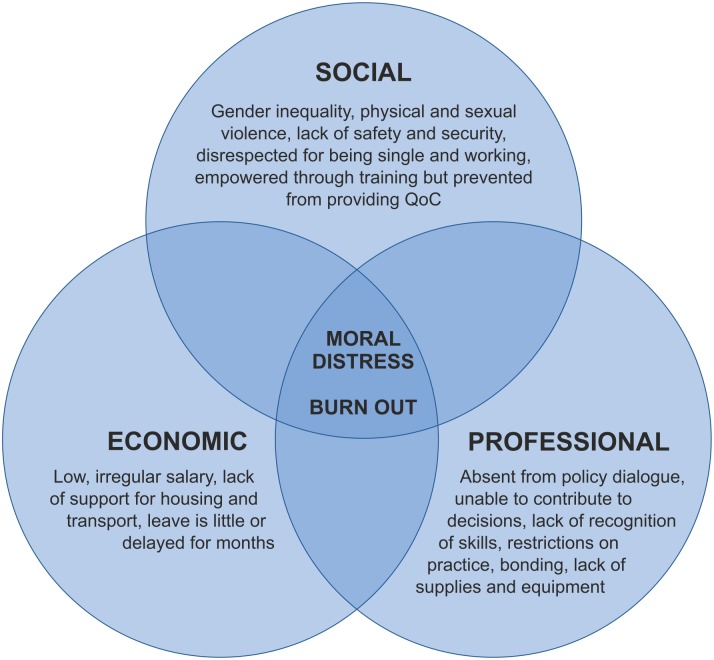
BACKGROUND: Quality of care is essential for further progress in reducing maternal and newborn deaths. The integration of educated, trained, regulated and licensed midwives into the health system is associated with improved quality of care and sustained decreases in maternal and newborn mortality. To date, research on barriers to quality of care for women and newborns has not given due attention to the care provider's perspective. This paper addresses this gap by presenting the findings of a systematic mapping of the literature of the social, economic and professional barriers preventing midwifery personnel in low and middle income countries (LMICs) from providing quality of care. METHODS AND FINDINGS: A systematic search of five electronic databases for literature published between January 1990 and August 2013. Eligible items included published and unpublished items in all languages. Items were screened against inclusion and exclusion criteria, yielding 82 items from 34 countries. 44% discussed countries or regions in Africa, 38% in Asia, and 5% in the Americas. Nearly half the articles were published since 2011. Data was extracted and presented in a narrative synthesis and tables. Items were organized into three categories; social; economic and professional barriers, based on an analytical framework. Barriers connected to the socially and culturally constructed context of childbirth, although least reported, appear instrumental in preventing quality midwifery care. CONCLUSIONS: Significant social and cultural, economic and professional barriers can prevent the provision of quality midwifery care in LMICs. An analytical framework is proposed to show how the overlaps between the barriers reinforce each other, and that they arise from gender inequality. Links are made between burn out and moral distress, caused by the barriers, and poor quality care. Ongoing mechanisms to improve quality care will need to address the barriers from the midwifery provider perspective, as well as the underlying gender inequality.
Overview
CoChat Summary
TL;DR
This systematic mapping of 82 items from 34 low- and middle-income countries identifies social, economic, and professional barriers that prevent midwifery personnel from providing quality care. The authors propose that these barriers overlap, arise from gender inequality, and can lead to burnout, moral distress, and poor-quality care.
Key findings
- Professional barriers were most commonly reported (76/82 items, 93%), followed by economic barriers (34/82, 42%) and social barriers (31/82, 38%).
- Social and cultural barriers, though least reported, were described as instrumental in preventing quality midwifery care, including low status of midwifery as “women’s work,” social isolation, safety risks, and cultural resistance to facility-based or evidence-based practices.
- Economic barriers included low, delayed, or absent wages; informal or unreliable user-fee reimbursement; and need for additional non-midwifery employment.
- The authors link the interaction of barriers to burnout and moral distress, which they associate with poor quality care and poor retention of maternity staff.
Methods
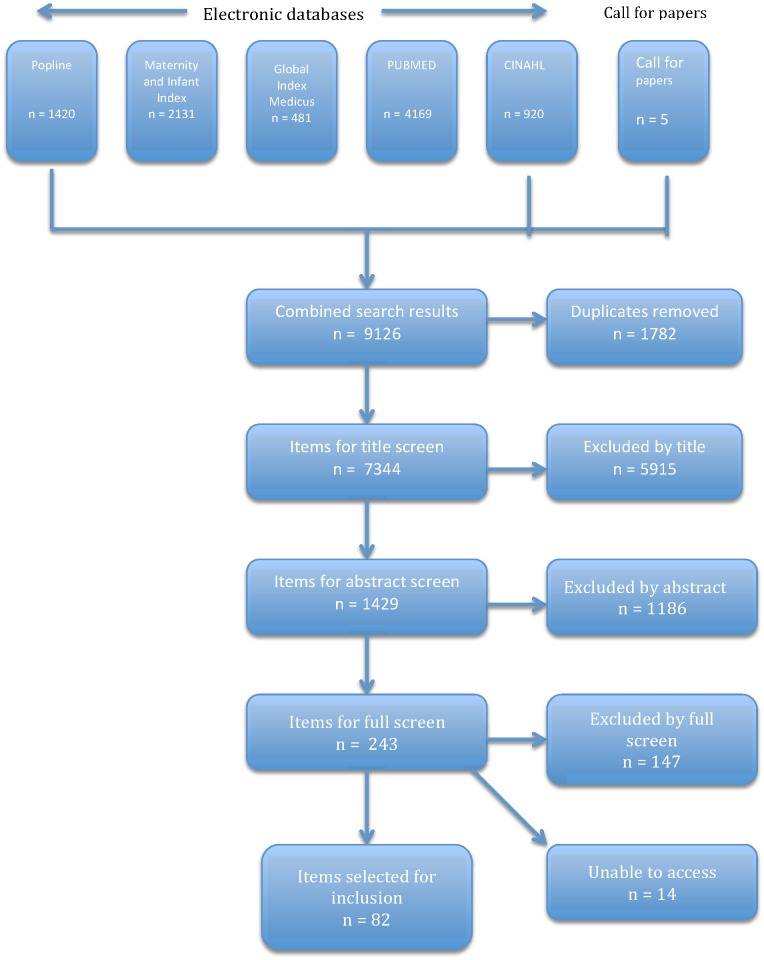
- Systematic mapping of literature published January 1990–August 2013, searching five electronic databases plus a call for papers; published and unpublished items in all languages were eligible.
- Inclusion focused on LMICs and midwifery personnel meeting the WHO/ICM/FIGO skilled birth attendant definition; items exclusively about medical professionals or traditional birth attendants were excluded.
- Screening yielded 82 items from 34 countries; data were extracted and presented in narrative synthesis and tables, categorized into social, economic, and professional barriers.
Limitations
- The authors state that search terms may have omitted relevant concepts, categorization remained subjective, no grey literature was identified, 14 items could not be accessed for full-text screening, and the search ended in August 2013 due to finite resources.
- Evident from the text: items were not assessed for quality or excluded by study design, and most included research articles were descriptive, with only one intervention study, limiting causal inference.
- The authors state they could not establish a link between the barriers and mistreatment of women during childbirth.
Model-written summary. Check it against the paper before relying on it.
Integrity signals
Registry
Cites
Statistics
Figures
Verification
Claims the paper makes
34 Valid · 1 Not valid · 69 Not checked · 34 Own results and interpretations
At least one cited source doesn’t support this claim or points to a different paper, and none confirmed it — see the verdicts below.
In the paper
“In Senegal, midwifery personnel linked their inadequate remuneration with low motivation, low self-esteem and low job satisfaction [53].”
§ What Prevents Quality Midwifery Care? A Systematic Mapping of Barriers in Low and Middle Income Countries from the Provider Perspective > Findings > Economic barriers
What the sources say
- Disputedcites [53] Rouleau D, Fournier P, Philibert A, Mbengue B, Dumont A. The effects of midwives’ job satisfaction on burnout, intention to quit and turnover: a longitudinal study in Senegal. Human Resources for Health. 2012; 10; 9; 10.1186/1478-4491-10-9 22546053 PMC3444355 sourceExperimental — accuracy not yet measured
Our copy does show Senegalese midwives were least contented with 'remuneration' (Abstract, Results; Discussion, job-facet paragraph), but it contradicts the rest of the claim. The Results ('Job satisfaction and Diminished Personal Accomplishment') report that NO job-satisfaction facet, including remuneration, was significantly correlated with diminished personal accomplishment, and the Discussion ('Burned-out midwives') states that the large proportion of 'high' personal-accomplishment scores (51.9%) means stressful working conditions 'do not seem to negatively affect midwives' self-evaluated sense of competence and achievement at work'. Likewise midwives reported themselves MOST satisfied with the 'morale' facet (quality and outcomes of their work), so 'low motivation' and 'low self-esteem' are the opposite of what this paper found; remuneration dissatisfaction was instead linked to emotional exhaustion and job search. (LLM, conf=0.78)
Checked by a reasoning model — may be wrong.
plainstates an association- Asserted: passes — The authors put it forward as true.
- Checkable: passes — It can be checked against evidence.
- Load-bearing: unclear — It is unclear whether the paper’s conclusions depend on it.
- Based: passes — The paper gives a reason why it holds.
- Disputed
The cited sources support only part of this claim — read each source’s verdict below.
In the paper
“A study from Ghana found that 70% of mothers ignored professional advice regarding care of the umbilical cord, deferring instead to their grandmothers’ guidance [31].”
§ What Prevents Quality Midwifery Care? A Systematic Mapping of Barriers in Low and Middle Income Countries from the Provider Perspective > Findings > Social barriers
What the sources say
- Partly supportedcites [31] Moyer C, Akawire Aborigo R, Logonia G, Affah G, Rominski S, Adongo PB, et al Clean delivery practices in rural northern Ghana: a qualitative study of community and provider knowledge, attitudes, and beliefs. BMC Pregnancy Childbirth. 2012; 12; 50 10.1186/1471-2393-12-50 22703032 PMC3482570 sourceExperimental — accuracy not yet measured
The Results section 'Disconnect between providers and the community' supports the numeric core: providers 'unilaterally say that they tell women to put nothing on the cord. Yet more than 70% of the women in our sample said they dressed the cord of their newborn with one of a variety of substances' (Table 3 gives 25/35 = 71.4%). However, the paper does not attribute that non-adherence to grandmothers' guidance: it frames the 70% as a patient-provider disconnect, citing health workers 'perceived to be judgmental, so a lot of people stay away'. Grandmothers are described separately as social gatekeepers and sources of advice (Discussion; Results 'Grandmother's role'; grandmother quotes in Cord dressing), but no passage links the 70% cord-dressing figure to deferring to grandmothers. (LLM, conf=0.78)
plain- Asserted: passes — The authors put it forward as true.
- Checkable: passes — It can be checked against evidence.
- Load-bearing: unclear — It is unclear whether the paper’s conclusions depend on it.
- Based: passes — The paper gives a reason why it holds.
- Partly supported
The cited sources support only part of this claim — read each source’s verdict below.
In the paper
“A global report and items concerning Zimbabwe and Afghanistan, suggested that cultural influences construct a perception of assisting childbirth as low skilled and inherently ‘women’s work’ [24, 26].”
§ What Prevents Quality Midwifery Care? A Systematic Mapping of Barriers in Low and Middle Income Countries from the Provider Perspective > Findings > Social barriers
What the sources say
- Not checked yetcites [24] Currie S, Azfar P, Fowler RC. A bold new beginning for midwifery in Afghanistan Midwifery. 2007; 23; 226– 234. 17707765
- Partly supportedcites [26] Fauveau V, Sherratt DR, de Bernis L. Human resources for maternal health: multi-purpose or specialists? Human Resources for Health. 2008; 6; 21 10.1186/1478-4491-6-21 18826600 PMC2569064 sourceExperimental — accuracy not yet measured
The Background subsection 'Why have the critical midwifery competencies been so neglected?' does state the gendered, cultural devaluation: midwifery 'does what is predominantly considered "women's work"' and, where women's status is low, 'assisting childbirth is seen as low status or culturally unclean'. However, the source frames this as low status / culturally unclean (and, adjacent to it, skills treated as 'accessory, or add-on'), not as a perception of being 'low skilled' as the citing sentence puts it. Moreover, the country material the citing sentence invokes is not tied to that point in our copy: the Zimbabwe passage (Expanding numbers of professional midwives...) cites attrition, inadequate tutors, midwifery 'not seen as a lucrative post graduation career' and 'no recognition for the profession', while the Afghanistan passage (Creating/promoting a specialist midwifery cadre) only reports re-opened midwifery schools and 1300 graduates. (LLM, conf=0.70)
hedgedstates a cause- Asserted: passes — The authors put it forward as true.
- Checkable: passes — It can be checked against evidence.
- Load-bearing: unclear — It is unclear whether the paper’s conclusions depend on it.
- Based: passes — The paper gives a reason why it holds.
The sources with a verdict support this claim; the rest weren’t checked yet, have no full text we could read, or their verdicts aren’t rated yet.
In the paper
“This can be explained by a lack of quality maternity care [3, 4].”
§ What Prevents Quality Midwifery Care? A Systematic Mapping of Barriers in Low and Middle Income Countries from the Provider Perspective > Introduction
What the sources say
- Not checked yetcites [3] Graham WJ, Varghese B. Quality, quality, quality: gaps in the continuum of care. The Lancet. 2012; 379; 9811, 10.1016/S0140-6736(10)62267-2 21474173 source
- Supportedcites [4] Tunçalp O, Were WM, MacLennan C, Oladapo OT, Gülmezoglu AM, Bahl R, et al Quality of care for pregnant women and newborns—the WHO vision. BJOG; 2015; 122; 8; 1045– 1049. 10.1111/1471-0528.13451 25929823 PMC5029576 source
The opening paragraph (p. 1) states that despite a decade of efforts to increase skilled birth attendance (56% to 68% in developing countries) and higher facility birth rates, maternal and newborn deaths remain unacceptably high, and that in this context 'poor quality of care (QoC) in many facilities becomes a paramount roadblock in our quest to end preventable mortality and morbidity'. The body (p. 1-2) reinforces this: 'it is necessary to go beyond maximising coverage of essential interventions to accelerate reductions in maternal and perinatal mortality', and the closing paragraph ties increased coverage of skilled attendance to the need to now target quality domains. Together these support the paraphrase that the quality shortfall explains the disappointing mortality return on expanded skilled attendance. (LLM, conf=0.85)
plainstates a cause- Asserted: passes — The authors put it forward as true.
- Checkable: passes — It can be checked against evidence.
- Load-bearing: passes — The paper’s conclusions depend on it.
- Based: passes — The paper gives a reason why it holds.
The cited sources support only part of this claim — read each source’s verdict below.
In the paper
“In some contexts where midwifery has been professionalized, midwifery personnel experienced prejudice for being regarded as too educated and transgressing traditional gender roles [39, 41, 42].”
§ What Prevents Quality Midwifery Care? A Systematic Mapping of Barriers in Low and Middle Income Countries from the Provider Perspective > Findings > Social barriers
What the sources say
- Not checked yetcites [39] Wood ME, Farooq Mansoor G, Hashemy P, Namey E, Fatima Gohar F, Fayeq Ayoubi S, et al Factors influencing the retention of midwives in the public sector in Afghanistan: A qualitative assessment of midwives in eight provinces. Midwifery. 2013; 29; 10; 1137– 1144. 10.1016/j.midw.2013.07.004 23948184 source
- Partly supportedcites [41] Turkmani S, Currie S, Mungia J, Assefi N, Rahmanzai A J, Azfar P, et al Midwives are the backbone of our health system: Lessons from Afghanistan to guide expansion of midwifery in challenging settings. Midwifery. 2013; 29; 10; 1166– 1172. 10.1016/j.midw.2013.06.015 23916402 sourceExperimental — accuracy not yet measured
Our copy supports the general point that midwifery personnel faced prejudice in a setting where midwifery was being professionalised: the 'Barriers to provision of care/challenges to impact' section reports that 'the majority of practicing midwives reported feeling discriminated against by other providers, especially doctors', with open insults, treatment 'like dayees (traditional birth attendants)' and scope-of-practice restrictions driven by 'professional jealousy and lack of information on the part of the clinicians' (Discussion likewise refers to 'the reported discrimination of the clinicians and facility managers towards the midwives'). However, the two reasons the claim attributes are not in this paper: the education-related grievance runs the opposite way — 'their education programme was belittled by their peers, particularly the length of training' (i.e. seen as under-educated, not too educated) — and no passage reports prejudice for transgressing traditional gender roles; on the contrary, all midwives were female 'per cultural preference' and the Discussion reports communities becoming 'eager to send their daughters and wives to the midwifery programme', with only general insecurity and occasional male-relative disapproval of schooling noted as barriers (The beneficiaries' view). The 'too educated' and 'gender-role transgression' elements of the claim are therefore unsupported by this source. (LLM, conf=0.72)
- Not checked yetcites [42] Hurley EA, Warren NE, Doumbia S, Winch PJ. Exploring the connectedness of rural auxiliary midwives to social networks in Koutiala, Mali. Midwifery. 2013; 30; 1; 123– 129. 10.1016/j.midw.2013.03.002 23623030 source
plainstates a cause- Asserted: passes — The authors put it forward as true.
- Checkable: passes — It can be checked against evidence.
- Load-bearing: unclear — It is unclear whether the paper’s conclusions depend on it.
- Based: passes — The paper gives a reason why it holds.
67 more claims · 26 with their cited sources checked
Create a free account to see all 138 claims and to verify the 158 references still open.
- Probably not a substantial claim. 20
- It may state two separate claims as one. 56
Claims other papers make about this one
Each is checked against this paper’s own text: does it say what the citing paper says it does?
The cited source says what the claim attributes to it.
In the citing paper
“Such tensions were reported in Afghanistan, possibly reflecting a lack of recognition of the role of midwives who are re-emerging as a profession in Afghanistan, as well as gender inequality [55, 56].”
From The role and scope of practice of midwives in humanitarian settings: a systematic review and content analysis (2019) · cites this paper as [56]
Self-check
Percentages, sums and reported differences re-computed from the paper’s own numbers.
Each contradiction between two passages listed here was confirmed by an independent check.
Rated minor: it would not touch a result — a value no result rests on, a p-value that stays on the same side of the significance level, or a conflict that is clerical, resolved elsewhere in the paper, or outside its own findings.
In the paper
§ What Prevents Quality Midwifery Care? A Systematic Mapping of Barriers in Low and Middle Income Countries from the Provider Perspective > Introduction
“The recently released Global Strategy for Women’s, Children’s and Adolescent Health (2016–2020) highlights the need for further progress to be based on gender responsive, equity driven and rights based approaches [17].”
§ What Prevents Quality Midwifery Care? A Systematic Mapping of Barriers in Low and Middle Income Countries from the Provider Perspective > Conclusion
“The new Global Strategy for Women’s, Children’s and Adolescents Health (2016–2030) [17] builds upon guiding principles that include a gender responsive, equity driven and human rights based approach.”
Citations
Cites
Too far to walk: Maternal mortality in context
Thaddeus, S., & Maine, D. (1994) · Social Science & Medicine · doi:10.1016/0277-9536(94)90226-7 · Cited by 3,240 · cited 1×
“The “three delays”model [1994] identified barriers to accessing care from the perspective of childbearing women; (1) delay in the decision to seek care; (2) delay in arriving at a health facility and (3) delay in the provision of adequate care at the facility [6].”
BackgroundThe Burnout Companion to Study and Practice: A Critical Analysis
Schaufeli, W., & Enzmann, D. (2020) · CRC Press eBooks · doi:10.1201/9781003062745 · Cited by 2,172 · cited 1×
“Burn out is defined as the expenditure of energy, effort and time on work without adequate time or environment to recover physically and emotionally [11].”
BackgroundBohren, M. A., Vogel, J. P., Hunter, E. C., Lutsiv, O., Makh, S. K., Souza, J. P., Aguiar, C., Saraiva Coneglian, F., Diniz, A. L. A., Tunçalp, Ö., et al. (2015) · PLOS Medicine · doi:10.1371/journal.pmed.1001847 · Cited by 1,656
Renfrew, M. J., McFadden, A., Bastos, M. H., Campbell, J., Channon, A. A., Cheung, N. F., Silva, D. R. A. D., Downe, S., Kennedy, H. P., Malata, A., et al. (2014) · The Lancet · doi:10.1016/s0140-6736(14)60789-3 · Cited by 1,297 · cited 2×
“Global research has concluded that midwifery care has a pivotal role in the reduction of preventable maternal and newborn mortality and morbidity [1].”
BackgroundQuality of care for pregnant women and newborns—the WHO vision
Tunçalp, Ӧ., Were, W., MacLennan, C., Oladapo, O., Gülmezoglu, A., Bahl, R., Daelmans, B., Mathai, M., Say, L., Kristensen, F., et al. (2015) · BJOG: An International Journal of Obstetrics & Gynaecology · doi:10.1111/1471-0528.13451 · Cited by 1,101 · cited 1×
“This can be explained by a lack of quality maternity care [3, 4].”
BackgroundMoral Distress, Moral Residue, and the Crescendo Effect
Epstein, E. G., & Hamric, A. B. (2009) · The Journal of Clinical Ethics · doi:10.1086/jce200920406 · Cited by 909 · cited 1×
“This is associated with frustration, anger, guilt, anxiety, perceived lack of control, feeling belittled or unintelligent, and negative physical symptoms [12].”
BackgroundGender Planning and Development: Theory, Practice and Training
Moser, C. (2012) · Routledge eBooks · doi:10.4324/9780203411940 · Cited by 761
International Confederation of Midwives
WOODVILLE, L. (1964) · Bulletin of the American College of Nurse-Midwifery · doi:10.1111/j.1542-2011.1964.tb00484.x · Cited by 547
Browser, D., & Hill, K. E. (2015) · Cited by 203
Rouleau, D., Fournier, P., Philibert, A., Mbengue, B., & Dumont, A. (2012) · Human Resources for Health · doi:10.1186/1478-4491-10-9 · Cited by 154 · cited 4×
“Just to survive, some midwifery personnel had to take on additional, non-midwifery employment [46, 53].”
BackgroundInfluential
Research works printed but not linked: 2
- Women Deliver 2013 Conference. Available: http://www.womendeliver.org/conferences/2013-conference/.
- de la Gente A. Midwifery in the Philippines: 'a laudable service' but there are issues and challenges. International Midwifery. 2008; 4; 21– 23.
Cited by
Items 301–323 of 323
Ayawine, A., Asaarik, M. J. A., & Atinga, R. A. (2024) · Figshare · doi:10.6084/m9.figshare.26705763
Ayawine, A., Asaarik, M. J. A., & Atinga, R. A. (2024) · Figshare · doi:10.6084/m9.figshare.25596558
Galle, A., Manaharlal, H., Griffin, S., Osman, N., Roelens, K., & Degomme, O. (2020) · Figshare · doi:10.6084/m9.figshare.13114791
Kabakian‐Khasholian, T., Makhoul, J., & Ghusayni, A. (2022) · Figshare · doi:10.6084/m9.figshare.21285729
Afulani, P. A., Ongeri, L., Kinyua, J., Temmerman, M., Mendes, W. B., & Weiss, S. J. (2021) · Figshare · doi:10.6084/m9.figshare.14175878
Matsui, M., Saito, Y., Po, R., Taing, B., Nhek, C., Tung, R., Masaki, Y., & Iwamoto, A. (2021) · Figshare · doi:10.6084/m9.figshare.14759780
Ayawine, A., Asaarik, M. J. A., & Atinga, R. A. (2024) · Figshare · doi:10.6084/m9.figshare.25596405
Welsh, J., Hounkpatin, H., Gross, M. M., Hanson, C., & Moller, A.-B. (2022) · London School of Hygiene & Tropical Medicine · doi:10.6084/m9.figshare.21340396
Kabakian‐Khasholian, T., Makhoul, J., & Ghusayni, A. (2022) · Figshare · doi:10.6084/m9.figshare.21285726
Patient directed social media use among participants of centering pregnancy groups
Ayadi, A. M. E., Diamond‐Smith, N., Schuman, M., & Weil, L. (2025) · Journal of Health Population and Nutrition · doi:10.1186/s41043-025-01159-9 · Cited by 2
Ba, A., Asiedu, A., Théra, I., Acheampong, E., Hanson, F., Ba, H., Nanka-Bruce, P., Doggett, E., Terfa, M., Hyre, A., et al. (2026) · SSM - Health Systems · doi:10.1016/j.ssmhs.2026.100167 · Cited by 1
Khadka, K. B., Paudel, D., Sharma, B. B., Adhikari, R. P., Poudel, A., Baral, U., Magar, K. R., Banstola, B., Froeschl, G., & Ivanova, O. (2026) · Journal of Midwifery & Women s Health · doi:10.1111/jmwh.70096
“These issues are consistent with challenges in other low-income and middle-income countries, 45 where reports also highlight a disconnect between the production of graduates and the availability of formal deployment pathways, 46 risking undermining efforts…”
Beyond Numbers of Midwives – A Call for True and Honest Professionalism: A Literature Review
Kalanda, B. F. (2026) · Journal of Community Medicine and Health Solutions · doi:10.29328/journal.jcmhs.1001070
Tappis, H., Iwu, E., Abdullahi, H., Maina, C. P., Mohammed, A., & Elnakib, S. (2026) · Women s Health · doi:10.1177/17455057261438787
“8,9 18 Prospective nursing and midwifery cohort studies in high-income countries (e.g., United Kingdom, Australia, New Zealand, and Sweden) have provided valuable insights to strengthen both education and professional support and development efforts.”
Takei, T., Timalsena, D., Negi, B. S., & Kotera, S. (2026) · Discover Health Systems · doi:10.1007/s44250-026-00398-9
“In many LMICs, insufficient competence among healthcare professionals has been recognized as a substantial contributing factor to substandard maternity care [8–10].”
Setyowati, L., Lasiyono, U., & Iskandar, Y. (2026) · Women, Education, and Social Welfare · doi:10.70211/wesw.v3i2.493
“This interpretation is consistent with evidence that quality midwifery depends on relational, organizational, and professional conditions — not merely clinical knowledge or the availability of commodities [1], [2], [3].”
Resilience in practice: Experiences of midwives in geographically isolated and disadvantaged areas
Calampiano, M. B., Asupardo, N. F., Tapel, C. C., Funa, A. A., Reyes, M. A. F. D., Perdigon, M. J. D., Jamisola, R., Gabay, R. A. E., Latonero, J. D., & Garcia‐Carillo, K. M. (2026) · Next research. · doi:10.1016/j.nexres.2026.102111
Katushabe, E., Steen, M., & Musa-Maliki, A. U. (2026) · BMC Health Services Research · doi:10.21203/rs.3.rs-10296307/v1
Marufu, S., Silang, J. P. B., Hariharan, V., Ogunbanjo, O. A., Khalifa, S. B., Ibrahem, R. A. S., & Jesus, D. H. D. (2026) · Iranian Journal of Nursing and Midwifery Research · doi:10.4103/ijnmr.ijnmr_204_25
“[10,11] Clinical decision‑making was primarily led by obstetricians, even for low‑risk pregnancies, and the establishment of midwifery as a distinct, woman‑centered model of care was not fully realized.”
Planning, Development, and Maintenance of the MCH Workforce
Okusanya, B. O., & Ehiri, J. E. (2026) · Springer eBooks · doi:10.1007/978-1-0716-5436-1_4
Making continuity of midwife care implementable across health systems: A global qualitative study
Zarbiv, G., Clark, R. R. S., & Ellen, M. (2026) · International Journal of Nursing Studies · doi:10.1016/j.ijnurstu.2026.105704
Suermann, M. A., & Pilot, E. (2026) · International Journal of Environmental Research and Public Health · doi:10.3390/ijerph23101264
Nayak, P. P., Tomar, A., & Tiwari, R. (2026) · The Indian Journal of Medical Research · doi:10.25259/ijmr_535_2026
Metadata
- Authors
- Filby, A., McConville, F., & Portela, A.
- Affiliations
- National Health Service (GB)
- World Health Organization (CH)
- Corresponding author
- Filby, Alex
- McConville, Fran
- Portela, Anayda
- Venue
- PLOS ONE
- Publisher
- Public Library of Science (PLoS)
- Published
- 2016-05-02
- Volume
- 11
- Issue
- 5
- Pages
- e0153391
- ISSN
- 1932-6203 (ISSN-L)
- PMC
- PMC4852911
- OpenAlex
- W2346727233
- Semantic Scholar
- 36e52730d18c0fefedadbbff7e597cd22dfa4379
- Cited by
- 323
- References
- 76
- Citations by year
- 2026: 15 · 2025: 32 · 2024: 31 · 2023: 44 · 2022: 45 · 2021: 48 · 2020: 34 · 2019: 26 · 2018: 24 · 2017: 17 · 2016: 6
- FWCI
- 3.77
- Type
- journal article
- Language
- en
- Open access
- gold
- doi.org
- Licence
- Locations
- PLoS ONE (publishedVersion, cc-by)
- PubMed Central (publishedVersion, cc-by)
- PubMed (publishedVersion)
- RePEc: Research Papers in Economics (submittedVersion)
- DOAJ (DOAJ: Directory of Open Access Journals) (submittedVersion, cc-by-sa)
- Figshare (submittedVersion, cc-by)
- Funders
- United States Agency for International Development
- Topics
- Health Sciences › Medicine › Pediatrics, Perinatology and Child Health › Global Maternal and Child Health
- Health Sciences › Medicine › Public Health, Environmental and Occupational Health › Global Health Workforce Issues
- Health Sciences › Medicine › Obstetrics and Gynecology › Maternal and Perinatal Health Interventions
- Keywords
- midwifery care quality, barriers to quality care, midwives, low- and middle-income countries, provider perspectives, social barriers, economic barriers, professional barriers, gender inequality, burnout, moral distress, maternal mortality, neonatal mortality, childbirth practices
- MeSH terms
- Burnout, Professional, Developing Countries, Female, Health Services Accessibility, Humans, Infant, Newborn, Midwifery, Morals, Nurse Midwives, Pregnancy, Quality of Health Care, Developed Countries
About these checks
Registry, retraction, Cites and statistics results are computed, not judged, with one exception: a printed reference that no index lists is read once by a model before it counts as a citation error. Claims are extracted by a model and kept only when their quote appears verbatim in the text; each cited source is then checked, with a model’s help, for whether it says what the claim relies on. Those verdicts can be wrong — read the claim’s quote and the cited source before relying on one.
The claim verdicts this report counts are experimental: their accuracy is not yet measured.
A language model drew the claims from the paper on 2026-10-10, under version 3 of the claim definition (model deepseek-v4.1-flash, prompt extract-v3).
A second model labelled each claim on 2026-10-10 (model jev-1.13-20260917, definition revision gold-guideline-v0.2).
Cited sources are checked with a language model’s help (qwen3.8-omni-flash).
Statistics and arithmetic are recomputed, not judged.
Confidence bands are shown only for fields calibrated on our annotated test set. None is calibrated yet, so no band is shown.
What counts as a claim ›How we measure confidence ›How we check this ›
Are you an author, or do you see a problem with this page? Request a review
Data sources
Bibliographic data: Semantic Scholar, OpenAlex, Crossref.
Contains information from the Semantic Scholar Academic Graph Datasets, made available under the ODC Attribution License (ODC-BY 1.0).
Semantic Scholar’s data is described in: Kinney, R., et al. (2023). The Semantic Scholar Open Data Platform. arXiv:2301.10140.
