

The DOI matches its Crossref record; 113 of the 118 references it cites were found in a registry or an index.
Predictive Big Data Analytics: A Study of Parkinson’s Disease Using Large, Complex, Heterogeneous, Incongruent, Multi-Source and Incomplete Observations
Open accessAbstract
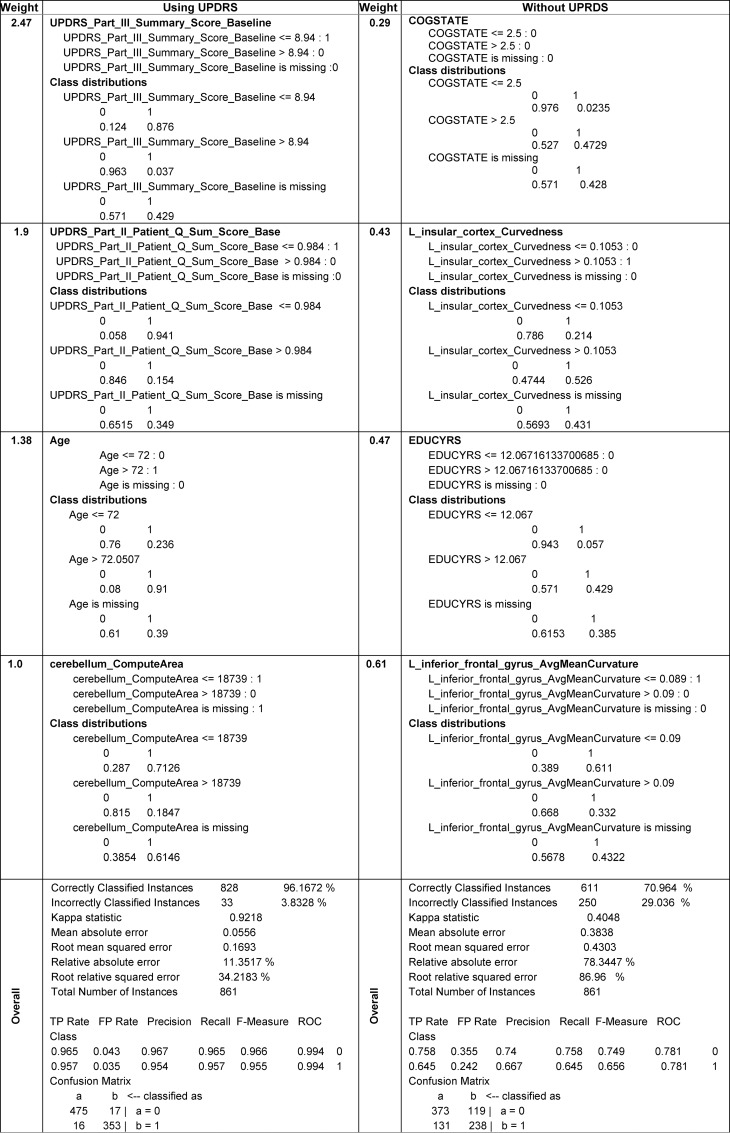
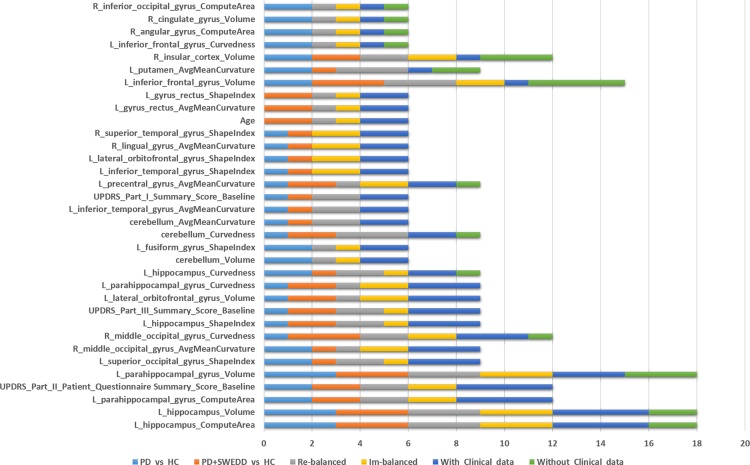
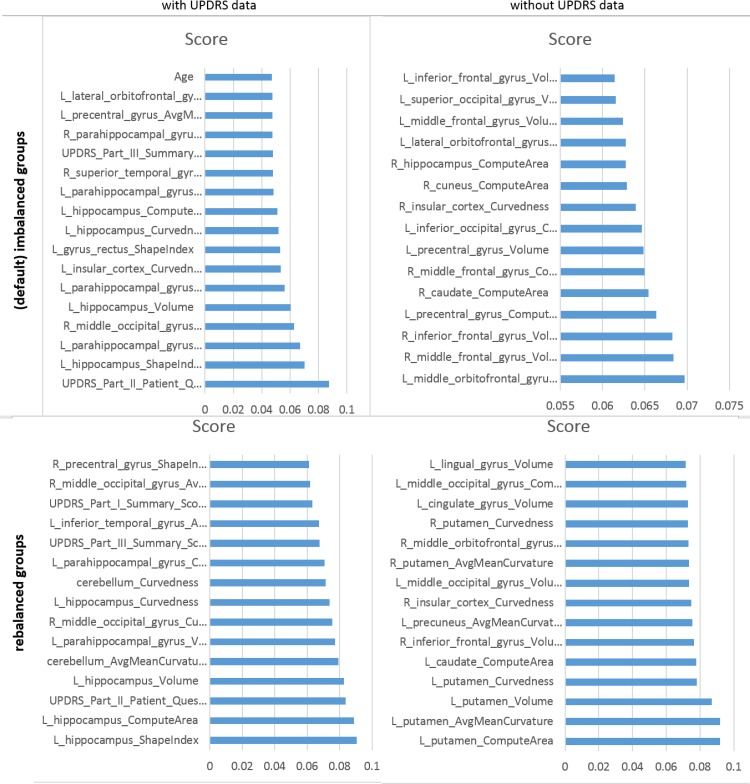
BACKGROUND: A unique archive of Big Data on Parkinson's Disease is collected, managed and disseminated by the Parkinson's Progression Markers Initiative (PPMI). The integration of such complex and heterogeneous Big Data from multiple sources offers unparalleled opportunities to study the early stages of prevalent neurodegenerative processes, track their progression and quickly identify the efficacies of alternative treatments. Many previous human and animal studies have examined the relationship of Parkinson's disease (PD) risk to trauma, genetics, environment, co-morbidities, or life style. The defining characteristics of Big Data-large size, incongruency, incompleteness, complexity, multiplicity of scales, and heterogeneity of information-generating sources-all pose challenges to the classical techniques for data management, processing, visualization and interpretation. We propose, implement, test and validate complementary model-based and model-free approaches for PD classification and prediction. To explore PD risk using Big Data methodology, we jointly processed complex PPMI imaging, genetics, clinical and demographic data. METHODS AND FINDINGS: Collective representation of the multi-source data facilitates the aggregation and harmonization of complex data elements. This enables joint modeling of the complete data, leading to the development of Big Data analytics, predictive synthesis, and statistical validation. Using heterogeneous PPMI data, we developed a comprehensive protocol for end-to-end data characterization, manipulation, processing, cleaning, analysis and validation. Specifically, we (i) introduce methods for rebalancing imbalanced cohorts, (ii) utilize a wide spectrum of classification methods to generate consistent and powerful phenotypic predictions, and (iii) generate reproducible machine-learning based classification that enables the reporting of model parameters and diagnostic forecasting based on new data. We evaluated several complementary model-based predictive approaches, which failed to generate accurate and reliable diagnostic predictions. However, the results of several machine-learning based classification methods indicated significant power to predict Parkinson's disease in the PPMI subjects (consistent accuracy, sensitivity, and specificity exceeding 96%, confirmed using statistical n-fold cross-validation). Clinical (e.g., Unified Parkinson's Disease Rating Scale (UPDRS) scores), demographic (e.g., age), genetics (e.g., rs34637584, chr12), and derived neuroimaging biomarker (e.g., cerebellum shape index) data all contributed to the predictive analytics and diagnostic forecasting. CONCLUSIONS: Model-free Big Data machine learning-based classification methods (e.g., adaptive boosting, support vector machines) can outperform model-based techniques in terms of predictive precision and reliability (e.g., forecasting patient diagnosis). We observed that statistical rebalancing of cohort sizes yields better discrimination of group differences, specifically for predictive analytics based on heterogeneous and incomplete PPMI data. UPDRS scores play a critical role in predicting diagnosis, which is expected based on the clinical definition of Parkinson's disease. Even without longitudinal UPDRS data, however, the accuracy of model-free machine learning based classification is over 80%. The methods, software and protocols developed here are openly shared and can be employed to study other neurodegenerative disorders (e.g., Alzheimer's, Huntington's, amyotrophic lateral sclerosis), as well as for other predictive Big Data analytics applications.
Overview
The claims and statistics of this paper haven’t been checked yet.
Run the check — free, no account needed. It reads the open-access text and checks the sources it cites.
Integrity signals
Registry
Cites
Statistics
Figures

Verification
Claims the paper makes
The claims and statistics of this paper haven’t been checked yet.
Run the check — free, no account needed. It reads the open-access text and checks the sources it cites.
Claims other papers make about this one
Each is checked against this paper’s own text: does it say what the citing paper says it does?
The source backs part of the claim, not all of it — or backs it for a different population, condition or comparison.
In the citing paper
“Sample imbalances were often ignored, which results in biased models and misleading performance metrics75,151.”
From Multimodal machine learning in precision health: A scoping review (2022) · cites this paper as [75]
Experimental — accuracy not yet measured
Self-check
Percentages, sums and reported differences re-computed from the paper’s own numbers.
The self-check needs the paper’s full text.
Citations
Cites
SMOTE synthetic minority over-sampling technique
Chawla, N. V., Bowyer, K. W., Hall, L. O., & Kegelmeyer, W. P. (2002) · Journal of Artificial Intelligence Research · doi:10.1613/jair.953 · Cited by 32,865
Gelman, A., Carlin, J. B., Stern, H. S., & Rubin, D. B. (2003) · doi:10.1201/9780429258480 · Cited by 27,276
Multiple Imputation for Nonresponse in Surveys
Rubin, D. B. (1987) · Wiley Series in Probability and Statistics · doi:10.1002/9780470316696 · Cited by 20,701
Seel, N. M. (2012) · Springer eBooks · doi:10.1007/978-1-4419-1428-6_5195 · Cited by 19,482
Nearest neighbor pattern classification
Cover, T., & Hart, P. (1967) · IEEE Transactions on Information Theory · doi:10.1109/tit.1967.1053964 · Cited by 16,936
Jolliffe, I. T. (2005) · Wiley eBooks · doi:10.1002/0470013192.bsa501 · Cited by 14,522
mice: Multivariate Imputation by Chained Equations in R
Buuren, S. V., & Groothuis-Oudshoorn, K. (2011) · Journal of Statistical Software · doi:10.18637/jss.v045.i03 · Cited by 13,870
Introduction to information retrieval
(2009) · Choice Reviews Online · doi:10.5860/choice.46-2715 · Cited by 12,278
Introduction to Information Retrieval
Manning, C. D., Raghavan, P., & Schütze, H. (2008) · doi:10.1017/cbo9780511809071 · Cited by 11,288
A Study of Cross-Validation and Bootstrap for Accuracy Estimation and Model Selection
Kohavi, R. (1995) · Zenodo · doi:10.5281/zenodo.19712698 · Cited by 10,909
Research works printed but not linked: 1
- MA Nalls, 2015, Diagnosis of Parkinson's disease on the basis of clinical and genetic classification: a population-based modelling study, The Lancet Neurology
Cited by
Sorted by citations
Patient Subtyping via Time-Aware LSTM Networks
Baytaş, İ. M., Xiao, C., Zhang, X., Wang, F., Jain, A. K., & Zhou, J. (2017) · ACM SIGKDD Conference on Knowledge Discovery and Data Mining (KDD) · doi:10.1145/3097983.3097997 · Cited by 682
Multimodal machine learning in precision health: A scoping review
Kline, A., Wang, H., Li, Y., Dennis, S., Hutch, M., Xu, Z., Wang, F., Cheng, F., & Luo, Y. (2022) · npj Digital Medicine · doi:10.1038/s41746-022-00712-8 · Cited by 528
Machine Learning for the Diagnosis of Parkinson's Disease: A Review of Literature
Mei, J., Desrosiers, C., & Frasnelli, J. (2021) · Frontiers in Aging Neuroscience · doi:10.3389/fnagi.2021.633752 · Cited by 441
Early Detection of Parkinson’s Disease Using Deep Learning and Machine Learning
Wang, W., Lee, J., Harrou, F., & Sun, Y. (2020) · IEEE Access · doi:10.1109/access.2020.3016062 · Cited by 423
Big Data Analytics in Medicine and Healthcare
Ristevski, B., & Chen, M. (2018) · Berichte aus der medizinischen Informatik und Bioinformatik/Journal of integrative bioinformatics · doi:10.1515/jib-2017-0030 · Cited by 376
A Systematic Review on Healthcare Analytics: Application and Theoretical Perspective of Data Mining
Islam, M. S., Hasan, M. M., Wang, X., Germack, H. D., & Noor‐E‐Alam, M. (2018) · Healthcare · doi:10.3390/healthcare6020054 · Cited by 286
Gao, C., Sun, H., Wang, T., Tang, M., Bohnen, N. I., Müller, M. L. T. M., Herman, T., Giladi, N., Kalinin, A. A., Spino, C., et al. (2018) · Scientific Reports · doi:10.1038/s41598-018-24783-4 · Cited by 183
Self-citationBig data in IBD: a look into the future
Olivera, P., Danese, S., Jay, N., Natoli, G., & Peyrin-Biroulet, L. (2019) · Nature Reviews Gastroenterology & Hepatology · doi:10.1038/s41575-019-0102-5 · Cited by 151
Ming, C., Viassolo, V., Probst-Hensch, N. M., Chappuis, P. O., Dinov, I. D., & Katapodi, M. C. (2019) · Breast Cancer Research · doi:10.1186/s13058-019-1158-4 · Cited by 131
Self-citationA scoping review of artificial intelligence-based methods for diabetes risk prediction
Mohsen, F., Al-Absi, H. R. H., Yousri, N. A., El Hajj, N., & Shah, Z. (2023) · npj Digital Medicine · doi:10.1038/s41746-023-00933-5 · Cited by 125
Zhang, J. (2022) · npj Parkinson s Disease · doi:10.1038/s41531-021-00266-8 · Cited by 109
A systematic perspective on the applications of big data analytics in healthcare management
Kamble, S., Gunasekaran, A., Goswami, M., & Manda, J. (2018) · International Journal of Healthcare Management · doi:10.1080/20479700.2018.1531606 · Cited by 107
Early detection of Parkinson’s disease through patient questionnaire and predictive modelling
Prashanth, R., & Roy, S. D. (2018) · International Journal of Medical Informatics · doi:10.1016/j.ijmedinf.2018.09.008 · Cited by 105
Zhang, X. S., He, L., Chen, K., Luo, Y., Zhou, J., & Wang, F. (2018) · Europe PMC (PubMed Central) · doi:10.48550/arxiv.1805.08801 · Cited by 93
Silverio, A., Cavallo, P., Rosa, R. D., & Galasso, G. (2019) · Frontiers in Medicine · doi:10.3389/fmed.2019.00036 · Cited by 71
Alzheimer's disease digital biomarkers multidimensional landscape and AI model scoping review
Qi, W., Zhu, X., Wang, B., Shi, Y., Dong, C., Shen, S., Li, J., Zhang, K., He, Y., Zhao, M., et al. (2025) · npj Digital Medicine · doi:10.1038/s41746-025-01640-z · Cited by 78
“Improper data handling, such as neglecting sample imbalances or ignoring methods for missing data imputation, can result in biased or misleading performance metrics 161 .”
Harmonization of Respiratory Data From 9 US Population-Based Cohorts
Oelsner, E. C., Balte, P., Cassano, P. A., Couper, D. J., Enright, P., Folsom, A. R., Hankinson, J., Jacobs, D. R., Kalhan, R., Kaplan, R. C., et al. (2018) · American Journal of Epidemiology · doi:10.1093/aje/kwy139 · Cited by 61
P4 medicine approach to obstructive sleep apnoea
Lim, D. C., Sutherland, K., Cistulli, P. A., & Pack, A. I. (2017) · Respirology · doi:10.1111/resp.13063 · Cited by 64
Arowoogun, J. O., Babawarun, O., Chidi, R., Adeniyi, A. O., & Okolo, C. A. (2024) · World Journal of Advanced Research and Reviews · doi:10.30574/wjarr.2024.21.2.0590 · Cited by 57
Rhon, D. I., Clewley, D. J., Young, J. L., Sissel, C. D., & Cook, C. E. (2018) · BMC Medical Informatics and Decision Making · doi:10.1186/s12911-018-0588-8 · Cited by 59
Martinez-Eguiluz, M., Arbelaitz, O., Gurrutxaga, I., Muguerza, J., Perona, I., Murueta‐Goyena, A., Acera, M., Pino, R. D., Tijero, B., Gómez‐Esteban, J. C., et al. (2022) · Neural Computing and Applications · doi:10.1007/s00521-022-07256-8 · Cited by 54
Ames, C. P., Smith, J. S., Pellisé, F., Kelly, M. P., Gum, J. L., Alanay, A., Acaroglu, E. R., Pérez-Grueso, F. J. S., Kleinstück, F. S., Obeid, I., et al. (2019) · Spine · doi:10.1097/brs.0000000000003031 · Cited by 54
Analytic Considerations for Repeated Measures of eGFR in Cohort Studies of CKD
Shou, H., Hsu, J. Y., Xie, D., Yang, W. P., Roy, J. A., Anderson, A. H., Landis, J. R., Feldman, H. I., Parsa, A., Jepson, C., et al. (2017) · Clinical Journal of the American Society of Nephrology · doi:10.2215/cjn.11311116 · Cited by 52
Chemical Risk Assessment: Traditional vs Public Health Perspectives
Gwinn, M. R., Axelrad, D. A., Bahadori, T., Bussard, D., Cascio, W. E., Deener, K., Dix, D. J., Thomas, R. S., Kavlock, R. J., & Burke, T. A. (2017) · American Journal of Public Health · doi:10.2105/ajph.2017.303771 · Cited by 54
Mining genetic and transcriptomic data using machine learning approaches in Parkinson’s disease
Su, C., Tong, J., & Wang, F. (2020) · npj Parkinson s Disease · doi:10.1038/s41531-020-00127-w · Cited by 56
Modeling and prediction of pressure injury in hospitalized patients using artificial intelligence
Anderson, C., Bekele, Z., Qiu, Y. J., Tschannen, D. J., & Dinov, I. D. (2021) · BMC Medical Informatics and Decision Making · doi:10.1186/s12911-021-01608-5 · Cited by 53
Self-citationSalazar-Reyna, R., Aleu, F. G., Gutiérrez, E. M. A. G., Díaz-Ramírez, J., Garza‐Reyes, J. A., & Kumar, A., V (2020) · Management Decision · doi:10.1108/md-01-2020-0035 · Cited by 56
Varrecchia, T., Castiglia, S. F., Ranavolo, A., Conte, C., Tatarelli, A., Coppola, G., Lorenzo, C. D., Draicchio, F., Pierelli, F., & Serrao, M. (2021) · PLoS ONE · doi:10.1371/journal.pone.0244396 · Cited by 49
Machine Learning Models for Parkinson Disease: Systematic Review
Tabashum, T., Snyder, R. C., O’Brien, M. K., & Albert, M. V. (2024) · JMIR Medical Informatics · doi:10.2196/50117 · Cited by 57
Xu, J., & Zhang, M. (2019) · ACS Chemical Neuroscience · doi:10.1021/acschemneuro.9b00207 · Cited by 48
Ming, C., Viassolo, V., Probst-Hensch, N. M., Dinov, I. D., Chappuis, P. O., & Katapodi, M. C. (2020) · British Journal of Cancer · doi:10.1038/s41416-020-0937-0 · Cited by 48
Self-citationAjayi, A., Oyedele, L. O., Akinadé, O. O., Bilal, M., Owolabi, H. A., Akanbi, L., & Delgado, J. M. D. (2020) · Safety Science · doi:10.1016/j.ssci.2020.104656 · Cited by 46
Bhidayasiri, R., Sringean, J., Phumphid, S., Anan, C., Thanawattano, C., Deoisres, S., Panyakaew, P., Phokaewvarangkul, O., Maytharakcheep, S., Buranasrikul, V., et al. (2024) · Frontiers in Neurology · doi:10.3389/fneur.2024.1386608 · Cited by 49
A Policy Guide on Integrated Care (PGIC): Lessons Learned from EU Project INTEGRATE and Beyond
Borgermans, L. A. D., & Devroey, D. (2017) · International Journal of Integrated Care · doi:10.5334/ijic.3295 · Cited by 43
White Matter Changes Correlates of Peripheral Neuroinflammation in Patients with Parkinson’s Disease
Haghshomar, M., Rahmani, F., Aarabi, M. H., Shahjouei, S., Sobhani, S., & Rahmani, M. (2017) · Neuroscience · doi:10.1016/j.neuroscience.2017.10.050 · Cited by 38
Reproducible big data science: A case study in continuous FAIRness
Madduri, R., Chard, K., D’Arcy, M., Jung, S. C., Rodriguez, A., Sulakhe, D., Deutsch, E. W., Funk, C. C., Heavner, B., Richards, M. A., et al. (2019) · PLoS ONE · doi:10.1371/journal.pone.0213013 · Cited by 43
Self-citationMitra, D., Mitra, D., Bensaad, M. S., Sinha, S., Pant, K., Pant, M., Priyadarshini, A., Singh, P., Dassamiour, S., Hambaba, L., et al. (2022) · Computational Toxicology · doi:10.1016/j.comtox.2022.100248 · Cited by 41
Multimodal missing data in healthcare: A comprehensive review and future directions
Le, L. P., Nguyen, T., Riegler, M., Halvorsen, P., & Nguyen, B. T. (2025) · Computer Science Review · doi:10.1016/j.cosrev.2024.100720 · Cited by 42
Inertial wearables as pragmatic tools in dementia
Godfrey, A., Brodie, M. A. D., van Schooten, K. S., Nouredanesh, M., Stuart, S., & Robinson, L. A. (2019) · Maturitas · doi:10.1016/j.maturitas.2019.05.010 · Cited by 36
Tang, M., Gao, C., Goutman, S. A., Kalinin, A. A., Mukherjee, B., Guan, Y., & Dinov, I. D. (2018) · Neuroinformatics · doi:10.1007/s12021-018-9406-9 · Cited by 35
Self-citationThe Impact of Big Data on Chronic Disease Management
Bhardwaj, N. N., Wodajo, B., Spano, A., Neal, S., & Coustasse, A. (2017) · The Health Care Manager · doi:10.1097/hcm.0000000000000194 · Cited by 34
The evolution of Big Data in neuroscience and neurology
Dipietro, L., Gonzalez‐Mego, P., Ramos-Estébanez, C., Zukowski, L. H., Mikkilineni, R., Rushmore, J., & Wagner, T. (2023) · Journal Of Big Data · doi:10.1186/s40537-023-00751-2 · Cited by 43
Shahbaz, M., Gao, C., Zhai, L., Shahzad, F., Abbas, A. J., & Zahid, R. (2020) · Complexity · doi:10.1155/2020/5186870 · Cited by 32
Mahesh, T. R., Vinoth Kumar, V., Bhardwaj, R., Khan, S. B., Alkhaldi, N. A., Victor, N., & Verma, A. K. (2023) · Decision Analytics Journal · doi:10.1016/j.dajour.2023.100381 · Cited by 32
van den Heuvel, L., Dorsey, R., Prainsack, B., Post, B., Stiggelbout, A. M., Meinders, M. J., & Bloem, B. R. (2019) · Journal of Parkinson s Disease · doi:10.3233/jpd-191712 · Cited by 33
Digital phenotyping in Parkinson's disease: Empowering neurologists for measurement-based care
Bhidayasiri, R., & Mari, Z. K. (2020) · Parkinsonism & Related Disorders · doi:10.1016/j.parkreldis.2020.08.038 · Cited by 32
AI and Machine Learning in Biology: From Genes to Proteins
Hein, Z. M., Guruparan, D., Okunsai, B., Nassir, C. M. N. C. M., Ramli, M. D. C., & Kumar, S. (2025) · Biology · doi:10.3390/biology14101453 · Cited by 38
Salari, N., Kazeminia, M., Sagha, H., Daneshkhah, A., Ahmadi, A., & Mohammadi, M. (2022) · Current Psychology · doi:10.1007/s12144-022-02949-8 · Cited by 32
Ouyang, Y., Wu, Y., Wang, H., Zhang, C., Cheng, F., Jiang, C., Jin, L., Cao, Y., & Li, Q. (2023) · IEEE Transactions on Visualization and Computer Graphics · doi:10.1109/tvcg.2023.3326929 · Cited by 29
Parkinson's Disease Biomarkers: Where Are We and Where Do We Go Next?
Chahine, L. M., & Stern, M. B. (2017) · Movement Disorders Clinical Practice · doi:10.1002/mdc3.12545 · Cited by 27
Tacchella, A., Romano, S., Ferraldeschi, M., Salvetti, M., Zaccaria, A., Crisanti, A., & Grassi, F. (2017) · F1000Research · doi:10.12688/f1000research.13114.2 · Cited by 35
Kuhner, A., Schubert, T., Cenciarini, M., Wiesmeier, I. K., Coenen, V. A., Burgard, W., Weiller, C., & Maurer, C. (2017) · Frontiers in Neurology · doi:10.3389/fneur.2017.00607 · Cited by 25
Predictive Big Data Analytics using the UK Biobank Data
Zhou, Y., Zhao, L., Zhou, N., Zhao, Y., Marino, S., Wang, T., Sun, H., Toga, A. W., & Dinov, I. D. (2019) · Scientific Reports · doi:10.1038/s41598-019-41634-y · Cited by 25
Self-citationPDD-ET: Parkinson’s Disease Detection Using ML Ensemble Techniques and Customized Big Dataset
Chatterjee, K., Kumar, R. P., Bandyopadhyay, A., Swain, S., Mallik, S., Li, A., & Ray, K. (2023) · Information · doi:10.3390/info14090502 · Cited by 24
Use of Artificial Intelligence in Clinical Neurology
Hillis, J. M., & Bizzo, B. C. (2022) · Seminars in Neurology · doi:10.1055/s-0041-1742180 · Cited by 21
Exploring data mining: facets and emerging trends
Gul, S., Bano, S., & Shah, T. (2021) · Digital Library Perspectives · doi:10.1108/dlp-08-2020-0078 · Cited by 23
Prediction of Suicidal Ideation among Korean Adults Using Machine Learning: A Cross-Sectional Study
Oh, B., Yun, J., Yeo, E. C., Kim, D.-H., Kim, J., & Cho, B. (2020) · Psychiatry Investigation · doi:10.30773/pi.2019.0270 · Cited by 22
Parkinson’s disease research: adopting a more human perspective to accelerate advances
Marshall, L. J., & Willett, C. (2018) · Drug Discovery Today · doi:10.1016/j.drudis.2018.09.010 · Cited by 19
Societal Burden and Persisting Unmet Needs of Parkinson’s Disease
Chaudhuri, К. R., & Titova, N. (2019) · European Neurological Review · doi:10.17925/enr.2019.14.1.28 · Cited by 18
Understanding Physiology in the Continuum: Integration of Information from Multiple -Omics Levels
Kamisoglu, K., Acevedo, A., Almon, R. R., Coyle, S. M., Corbett, S., DuBois, D. C., Nguyen, T. T., Jusko, W. J., & Androulakis, I. P. (2017) · Frontiers in Pharmacology · doi:10.3389/fphar.2017.00091 · Cited by 17
Real-time analysis of healthcare using big data analytics
Basco, J. A., & Senthilkumar, N. C. (2017) · IOP Conference Series Materials Science and Engineering · doi:10.1088/1757-899x/263/4/042056 · Cited by 16
Applications of Machine Learning in Pediatric Hydrocephalus
Pahwa, B., Bali, O., Goyal, S., & Kedia, S. (2021) · Neurology India · doi:10.4103/0028-3886.332287 · Cited by 15
Aich, S., Sain, M., Park, J., Choi, K.-W., & Kim, H. (2017) · International Conference on Inventive Computing and Informatics (ICICI) · doi:10.1109/icici.2017.8365398 · Cited by 15
Genetic biomarkers and machine learning techniques for predicting diabetes: systematic review
Khan, S., Mohsen, F., & Shah, Z. (2024) · Artificial Intelligence Review · doi:10.1007/s10462-024-11020-w · Cited by 15
Designing medical artificial intelligence for in- and out-groups
Li, W., Zhou, X., & Yang, Q. (2021) · Computers in Human Behavior · doi:10.1016/j.chb.2021.106929 · Cited by 16
Merkelbach, K., Schaper, S., Diedrich, C., Fritsch, S. J., & Schuppert, A. (2023) · Scientific Reports · doi:10.1038/s41598-023-30986-1 · Cited by 11
Xu, C., Neuroth, T., Fujiwara, T., Liang, R., & Ma, K. (2021) · IEEE Transactions on Visualization and Computer Graphics · doi:10.1109/tvcg.2021.3137174 · Cited by 11
Modernizing the Methods and Analytics Curricula for Health Science Doctoral Programs
Dinov, I. D. (2020) · Frontiers in Public Health · doi:10.3389/fpubh.2020.00022 · Cited by 12
Self-citationMachine learning approaches for neurological disease prediction: A systematic review
Fatima, A., & Masood, S. (2024) · Expert Systems · doi:10.1111/exsy.13569 · Cited by 11
van den Heuvel, L., Meinders, M. J., Post, B., Bloem, B. R., & Stiggelbout, A. M. (2022) · Journal of Neurology · doi:10.1007/s00415-022-10969-4 · Cited by 10
Rani, S., & Jain, A. (2023) · Multimedia Tools and Applications · doi:10.1007/s11042-023-15539-y · Cited by 10
Dash, S. (2022) · Elsevier eBooks · doi:10.1016/b978-0-323-90277-9.00018-3 · Cited by 10
Zhang, T., Chi, H., & Ouyang, Z. (2018) · IEEE International Conference on High Performance Computing and Communications; IEEE International Conference on Smart City; IEEE International Conference on Data Science and Systems (HPCC/SmartCity/DSS) · doi:10.1109/hpcc/smartcity/dss.2018.00072 · Cited by 9
Kanagaraj, S., S, H. M., & Guptha, M. N. (2023) · Multimedia Tools and Applications · doi:10.1007/s11042-023-17582-1 · Cited by 8
Open-source data management system for Parkinson’s disease follow-up
Folador, J. P., Vieira, M. F., Pereira, A. A., & Andrade, A. D. O. (2021) · PeerJ Computer Science · doi:10.7717/peerj-cs.396 · Cited by 8
Machine learning: a bibliometric analysis
Martins, E., & Galegale, N. V. (2023) · International Journal of Innovation · doi:10.5585/2023.24056 · Cited by 12
Zhao, L., Batta, I., Matloff, W. J., O’Driscoll, C., Hobel, S. M., & Toga, A. W. (2020) · Neuroinformatics · doi:10.1007/s12021-020-09486-4 · Cited by 8
Self-citationKatapodi, M. C., Ming, C., Northouse, L., Duffy, S. A., Duquette, D. A., Mendelsohn‐Victor, K., Milliron, K. J., Merajver, S. D., Dinov, I. D., & Janz, N. K. (2020) · Cancers · doi:10.3390/cancers12092526 · Cited by 8
Self-citationVeronesi, G., Grassi, G. M., Savelli, G., Quatto, P., & Zambon, A. (2019) · International Journal of Epidemiology · doi:10.1093/ije/dyz206 · Cited by 7
Advanced Research and Data Methods in Women's Health
Macedonia, C. R., Johnson, C. T., & Rajapakse, I. (2017) · Obstetrics and Gynecology · doi:10.1097/aog.0000000000001865 · Cited by 7
Intelligent Big Data Analytics in Health
Bayrak, E. A., & Kirci, P. (2019) · Advances in medical technologies and clinical practice book series · doi:10.4018/978-1-5225-8567-1.ch014 · Cited by 7
Torres-Parga, A., Gershanik, O. S., Cardona, S., Guerrero, J., Gonzalez-Ojeda, L. M., & Cardona, J. F. (2025) · Parkinsonism & Related Disorders · doi:10.1016/j.parkreldis.2025.108009 · Cited by 6
Embracing the promise of artificial intelligence to improve patient care in movement disorders
Bhidayasiri, R., & Goetz, C. G. (2024) · Elsevier eBooks · doi:10.1016/b978-0-323-99494-1.00015-0 · Cited by 6
Ghaderi, S., Mohammadi, M., Sayehmiri, F., Mohammadi, S., Tavasol, A., Rezaei, M., & Ghalyanchi‐Langeroudi, A. (2024) · Journal of Magnetic Resonance Imaging · doi:10.1002/jmri.29364 · Cited by 6
Early Prediction of Parkinson’s Disease using Multiple SVM Classifiers
Kumar, R., Gupta, M., & Singh, S. (2023) · International Conference on Sustainable Computing and Smart Systems (ICSCSS) · doi:10.1109/icscss57650.2023.10169162 · Cited by 6
Zhai, S., Liaw, A. I., Shen, J., Xu, Y., Svetnik, V., FitzGerald, J. J., Antoniades, C. A., Holder, D., Dockendorf, M. F., Ren, J., et al. (2025) · Frontiers in Digital Health · doi:10.3389/fdgth.2024.1500811 · Cited by 5
Accioly, A. R. M., Menezes, V. O. M. D. O., Calixto, L. H., Bispo, D. P. C. F., Lachmann, M., Mourato, F. A., Machado, M. A. D., & Diniz, P. R. B. (2025) · Academic Radiology · doi:10.1016/j.acra.2025.04.001 · Cited by 5
Big Data and Parkinson’s Disease: Exploration, Analyses, and Data Challenges.
SenthilarumugamVeilukandammal, M., Nilakanta, S., Ganapathysubramanian, B., Anantharam, V., Kanthasamy, A. G., & Willette, A. A. (2018) · Hawaii International Conference on System Sciences (HICSS) · doi:10.24251/hicss.2018.352 · Cited by 5
Time-Guided High-Order Attention Model of Longitudinal Heterogeneous Healthcare Data
Huang, Y., Yang, X., & Xu, C. (2019) · Lecture notes in computer science · doi:10.1007/978-3-030-29908-8_5 · Cited by 5
Kowalczyk, A., Kosiek, K., Godycki-Ćwirko, M., & Zakowska, I. (2022) · BMJ Open · doi:10.1136/bmjopen-2021-060247 · Cited by 5
Big Data, Artificial Intelligence, and Machine Learning in Neurotrauma
Agoston, D. V. (2018) · Elsevier eBooks · doi:10.1016/b978-0-12-809556-0.00004-6 · Cited by 7
Exploring the Potential Imaging Biomarkers for Parkinson’s Disease Using Machine Learning Approach
Mushta, I., Kõks, S., Popov, A. O., & Lysenko, O. (2024) · Bioengineering · doi:10.3390/bioengineering12010011 · Cited by 4
Park, S. G., Mun, S. B., Kim, Y. J., & Kim, K. G. (2025) · Scientific Reports · doi:10.1038/s41598-025-04065-6 · Cited by 4
Schönfeldová, J., Cohen, C., Otmazgin, O., & Saban, W. (2025) · Scientific Reports · doi:10.1038/s41598-025-12787-w · Cited by 5
Desde las figlinae a los edificios: el uso del barro cocido en el sur de la Baetica
Gómez, L. R., & Bustamante-Álvarez, M. (2016) · Arqueología de la Arquitectura · doi:10.3989/arq.arqt.2016.165 · Cited by 4
A Study on Benefits of Big Data for Healthcare Sector of India
Sindhi, K., Parmar, D., & Gandhi, P. J. (2018) · Lecture notes on data engineering and communications technologies · doi:10.1007/978-981-10-7641-1_20 · Cited by 4
Machine learning for the diagnosis of Parkinson's disease: A systematic review
Mei, J., Desrosiers, C., & Frasnelli, J. (2020) · arXiv (Cornell University) · doi:10.48550/arxiv.2010.06101 · Cited by 4
Erjiang, E., CAREY, J. J., Wang, T., Yang, L., Chan, W. P., Whelan, B., Silke, C., O’Sullivan, M., Rooney, B., McPartland, A., et al. (2022) · Health Informatics Journal · doi:10.1177/14604582211066465 · Cited by 4
National Security: Theories, Actors, Issues
Clarke, M., Henschke, A., Legrand, T., & Sussex, M. (2021) · Springer eBooks · doi:10.1007/978-3-030-53494-3_1 · Cited by 3
Tang, H. (2022) · Scientific Programming · doi:10.1155/2022/5799354 · Cited by 3
Metadata
- Authors
- Dinov, I. D., Heavner, B., Tang, M., Glusman, G., Chard, K., Darcy, M., Madduri, R., Pa, J., Spino, C., Kesselman, C., Foster, I., Deutsch, E. W., Price, N. D., Van Horn, J. D., Ames, J., Clark, K., Hood, L., Hampstead, B. M., Dauer, W., & Toga, A. W.
- Affiliations
- University of Southern California (US)
- Institute for Systems Biology (US)
- University of Michigan (US)
- Argonne National Laboratory (US)
- Corresponding author
- Dinov, Ivo D.
- ORCID
- Venue
- PLOS ONE
- Publisher
- Public Library of Science (PLoS)
- Published
- 2016-08-05
- Volume
- 11
- Issue
- 8
- Pages
- e0157077
- ISSN
- 1932-6203 (ISSN-L)
- PMC
- PMC4975403
- OpenAlex
- W2409767563
- Cited by
- 145
- References
- 118
- Citations by year
- 2026: 6 · 2025: 10 · 2024: 13 · 2023: 11 · 2022: 15 · 2021: 19 · 2020: 21 · 2019: 18 · 2018: 16 · 2017: 15 · 2016: 1
- FWCI
- 28.38
- Type
- journal article
- Language
- en
- Open access
- gold
- doi.org
- Licence
- Locations
- PLoS ONE (publishedVersion, cc-by)
- PubMed Central (publishedVersion, cc-by)
- PubMed (publishedVersion)
- OSTI OAI (U.S. Department of Energy Office of Scientific and Technical Information) (submittedVersion, other-oa)
- Knowledge@UChicago (University of Chicago) (submittedVersion, cc-by-nc-nd)
- RePEc: Research Papers in Economics (submittedVersion)
- DOAJ (DOAJ: Directory of Open Access Journals) (submittedVersion, cc-by-sa)
- University of Chicago (cc-by)
- Funders
- National Institutes of Health (P20 NR015331, U54 EB020406, P50 NS091856)
- Topics
- Health Sciences › Health Professions › Health Information Management › Artificial Intelligence in Healthcare
- Health Sciences › Medicine › Clinical Neurology › Parkinson's Disease Mechanisms and Treatments
- Health Sciences › Medicine › Psychiatry and Mental health › Dementia and Cognitive Impairment Research
- Keywords
- Parkinson's disease, Parkinson's Progression Markers Initiative, big data analytics, multi-source data fusion, disease risk prediction, machine learning classification, neuroimaging biomarkers, UPDRS scores, neurodegeneration, data harmonization
- MeSH terms
- Aged, Female, Humans, Male, Parkinson Disease, Logistic Models, Databases, Factual, Disease Progression, Neuroimaging, Support Vector Machine
About these checks
Registry, retraction, Cites and statistics results are computed, not judged, with one exception: a printed reference that no index lists is read once by a model before it counts as a citation error. Claims are extracted by a model and kept only when their quote appears verbatim in the text; each cited source is then checked, with a model’s help, for whether it says what the claim relies on. Those verdicts can be wrong — read the claim’s quote and the cited source before relying on one.
Statistics and arithmetic are recomputed, not judged.
Confidence bands are shown only for fields calibrated on our annotated test set. None is calibrated yet, so no band is shown.
What counts as a claim ›How we measure confidence ›How we check this ›
Are you an author, or do you see a problem with this page? Request a review
