

The DOI matches its Crossref record; 39 of the 39 references it cites were found in a registry or an index.
BipA Is Associated with Preventing Autoagglutination and Promoting Biofilm Formation in Bordetella holmesii
Open accessAbstract
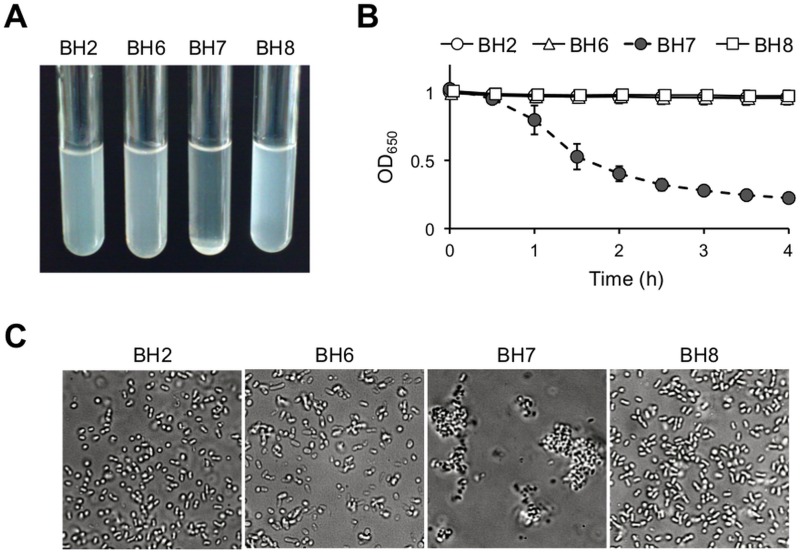
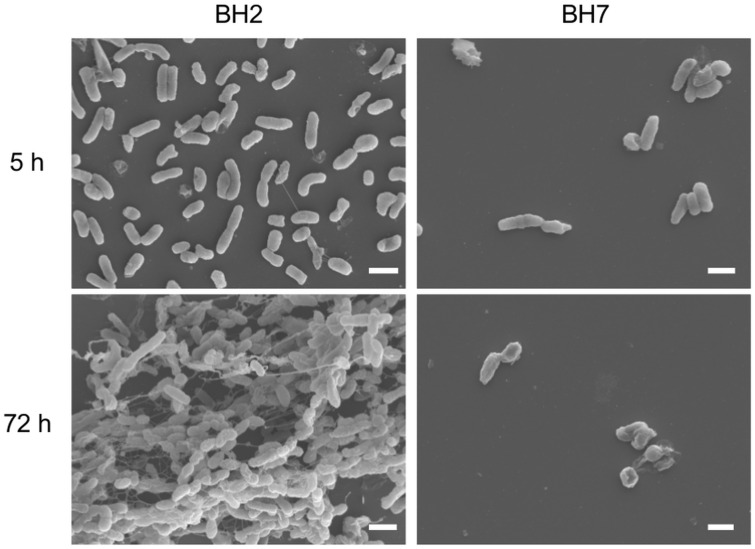
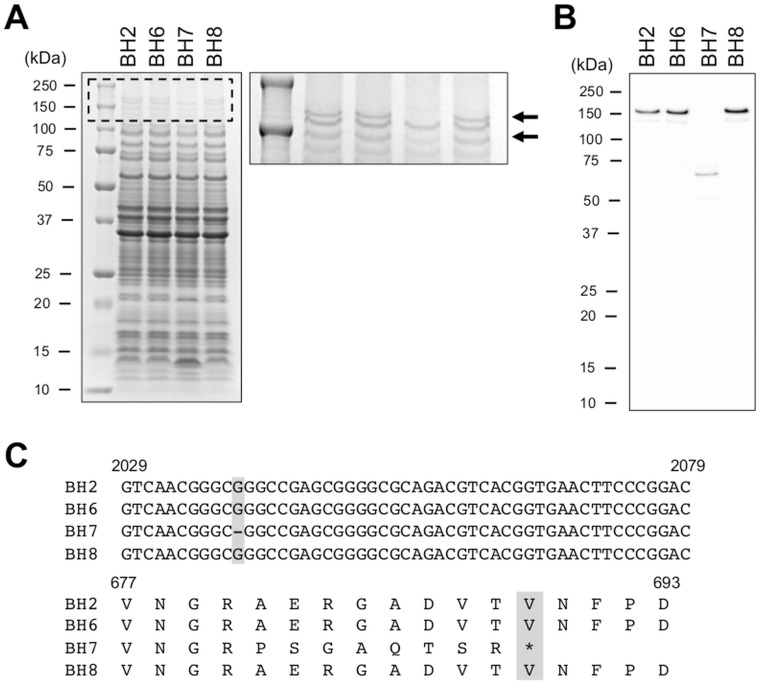
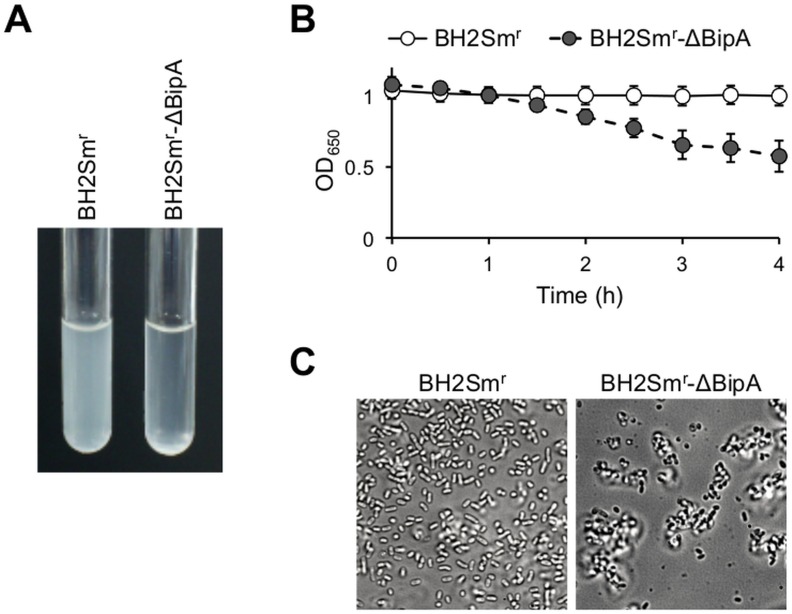
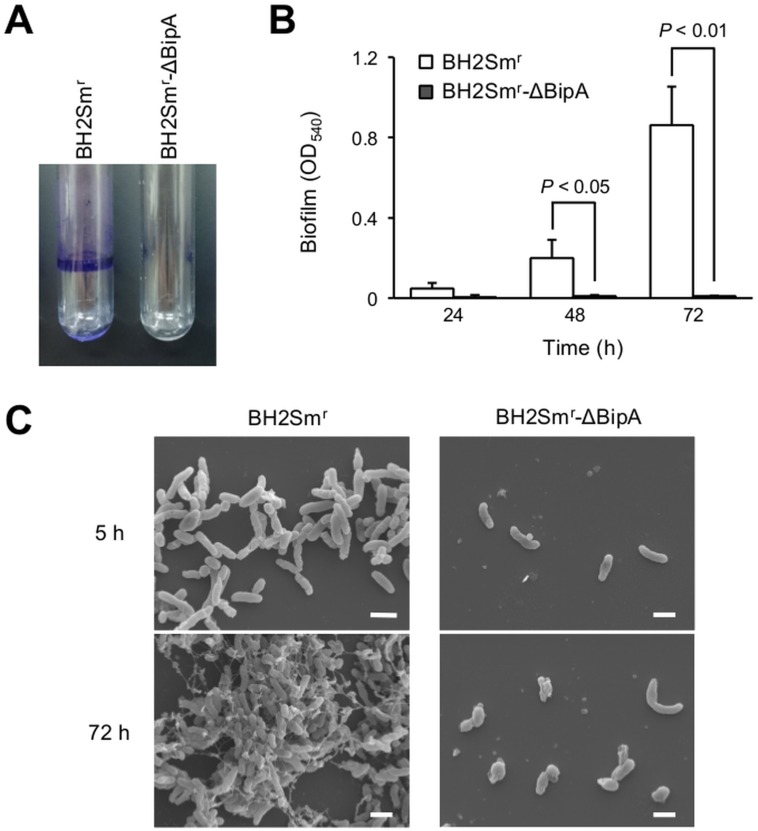
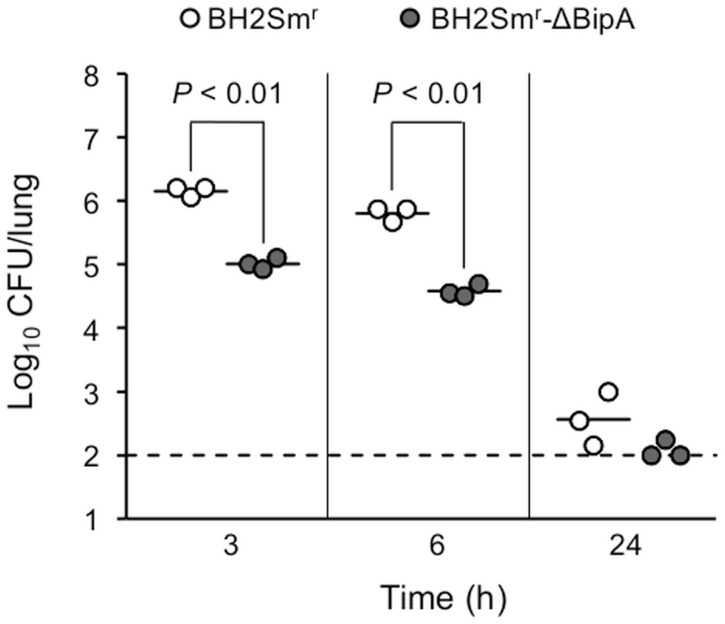
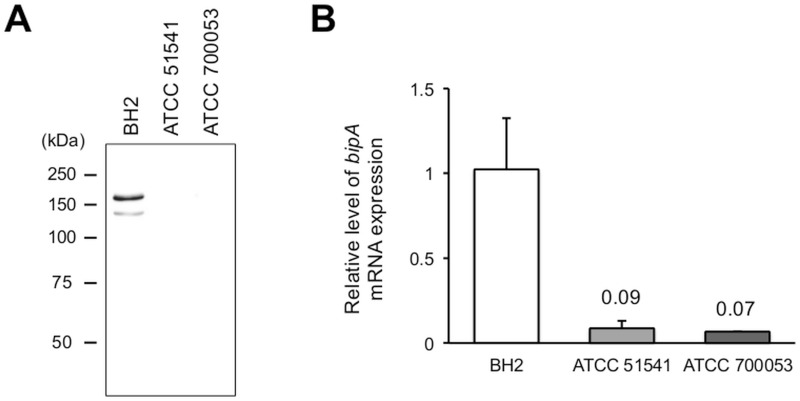
Bordetella holmesii causes both invasive and respiratory diseases in humans. Although the number of cases of pertussis-like respiratory illnesses due to B. holmesii infection has increased in the last decade worldwide, little is known about the virulence factors of the organism. Here, we analyzed a B. holmesii isolate that forms large aggregates and precipitates in suspension, and subsequently demonstrated that the autoagglutinating isolate is deficient in Bordetella intermediate protein A (BipA) and that this deletion is caused by a frame-shift mutation in the bipA gene. A BipA-deficient mutant generated by homologous recombination also exhibited the autoagglutination phenotype. Moreover, the BipA mutant adhered poorly to an abiotic surface and failed to form biofilms, as did two other B. holmesii autoagglutinating strains, ATCC 51541 and ATCC 700053, which exhibit transcriptional down-regulation of bipA gene expression, indicating that autoagglutination indirectly inhibits biofilm formation. In a mouse intranasal infection model, the BipA mutant showed significantly lower levels of initial lung colonization than did the parental strain (P < 0.01), suggesting that BipA might be a critical virulence factor in B. holmesii respiratory infection. Together, our findings suggest that BipA production plays an essential role in preventing autoagglutination and indirectly promoting biofilm formation by B. holmesii.
Overview
The claims and statistics of this paper haven’t been checked yet.
Run the check — free, no account needed. It reads the open-access text and checks the sources it cites.
Integrity signals
Registry
Cites
Statistics
Figures
Verification
Claims the paper makes
The claims and statistics of this paper haven’t been checked yet.
Run the check — free, no account needed. It reads the open-access text and checks the sources it cites.
Claims other papers make about this one
Each is checked against this paper’s own text: does it say what the citing paper says it does?
The cited source says what the claim attributes to it.
In the citing paper
“An example against the general trend is Bordetella holmesii, where the protein BipA acts as an anti-agglutination factor that promotes biofilm formation [101]. In the absence of BipA, B. holmesii failed to form biofilm despite strong autoaggregation.”
From Bacterial autoaggregation (2018) · cites this paper as [101]
Self-check
Percentages, sums and reported differences re-computed from the paper’s own numbers.
The self-check needs the paper’s full text.
Citations
Cites
Sekiya, K., Ohishi, M., Ogino, T., et al. (2001) · Proceedings of the National Academy of Sciences · doi:10.1073/pnas.191378598 · Cited by 307
TUOMANEN, E. I., & Weiss, A. A. (1985) · The Journal of Infectious Diseases · doi:10.1093/infdis/152.1.118 · Cited by 225
Bordetella holmesii sp. nov., a new gram-negative species associated with septicemia
Weyant, R. S., Hollis, D. G., Weaver, R. E., et al. (1995) · Journal of Clinical Microbiology · doi:10.1128/jcm.33.1.1-7.1995 · Cited by 214
Rodgers, L., Martin, S. W., Cohn, A. C., Budd, J., Marcon, M. J., Terranella, A., Mandal, S., Salamon, D. P., Leber, A. L., Tondella, M. L., et al. (2012) · Clinical Infectious Diseases · doi:10.1093/cid/cis888 · Cited by 146
Bordetella holmesii-Like Organisms Isolated from Massachusetts Patients with Pertussis-Like Symptoms
Yih, W. K., Silva, E. A., Ida, J. A., et al. (1999) · Emerging infectious diseases · doi:10.3201/eid0503.990317 · Cited by 144
Dalia, A. B., & Weiser, J. N. (2011) · Cell Host & Microbe · doi:10.1016/j.chom.2011.09.009 · Cited by 135
Unaltered phenotype, tissue distribution and function of Vα14+ NKT cells in germ-free mice
Park, S.-H., Benlagha, K., Lee, D., Balish, E., & Bendelac, A. S. (2000) · European Journal of Immunology · doi:10.1002/1521-4141(200002)30:2 · Cited by 122
The Bvg Virulence Control System Regulates Biofilm Formation in Bordetella bronchiseptica
Irie, Y., Mattoo, S., & Yuk, M. H. (2004) · Journal of Bacteriology · doi:10.1128/jb.186.17.5692-5698.2004 · Cited by 119
Bordetella holmesiiBacteremia: A Newly Recognized Clinical Entity among Asplenic Patients
Shepard, C. W., Daneshvar, M. I., Kaiser, R., et al. (2004) · Clinical Infectious Diseases · doi:10.1086/381888 · Cited by 110
The Bordetella Bps Polysaccharide Is Critical for Biofilm Development in the Mouse Respiratory Tract
Sloan, G. P., Love, C. F., Sukumar, N., Mishra, M., & Deora, R. (2007) · Journal of Bacteriology · doi:10.1128/jb.00785-07 · Cited by 109
Cited by
Sorted by citations
Trunk, T., Bacterial Cell Surface Group, S. F. G. A. E. B., S. Khalil, H., & C. Leo, J. (2018) · AIMS Microbiology · doi:10.3934/microbiol.2018.1.140 · Cited by 444
“An example against the general trend is Bordetella holmesii, where the protein BipA acts as an antiagglutination factor that promotes biofilm formation [101].”
Background
Metadata
- Authors
- Hiramatsu, Y., Saito, M., Otsuka, N., Suzuki, E., Watanabe, M., Shibayama, K., & Kamachi, K.
- Affiliations
- National Institute of Infectious Diseases (JP)
- Kitasato University (JP)
- Corresponding author
- Hiramatsu, Yukihiro
- Kamachi, Kazunari
- Venue
- PLoS ONE
- Publisher
- Public Library of Science (PLoS)
- Published
- 2016-07-22
- Volume
- 11
- Issue
- 7
- Pages
- e0159999
- ISSN
- 1932-6203 (ISSN-L)
- PMC
- PMC4957798
- OpenAlex
- W2499675376
- Cited by
- 20
- References
- 39
- Citations by year
- 2026: 1 · 2025: 1 · 2024: 3 · 2023: 2 · 2022: 2 · 2021: 4 · 2020: 2 · 2019: 2 · 2018: 1 · 2017: 1 · 2016: 1
- FWCI
- 1.72
- Type
- journal article
- Language
- en
- Open access
- gold
- doi.org
- Licence
- Locations
- PLoS ONE (publishedVersion, cc-by)
- Europe PMC (PubMed Central) (publishedVersion, cc-by)
- PubMed Central (publishedVersion, cc-by)
- PubMed (publishedVersion)
- DOAJ (DOAJ: Directory of Open Access Journals) (submittedVersion, cc-by-sa)
- Figshare (submittedVersion, cc-by)
- Funders
- JSPS KAKENHI (25460546)
- Research on Emerging and Re-emerging Infectious Diseases from the Ministry of Health, Labor, and Welfare of Japan (14525508)
- Research Program on Emerging and Re-emerging Infectious Diseases from the Japan Agency for Medical Research and Development, AMED (26361101)
- Topics
- Life Sciences › Immunology and Microbiology › Microbiology › Bacterial Infections and Vaccines
- Life Sciences › Biochemistry, Genetics and Molecular Biology › Molecular Biology › Bacterial biofilms and quorum sensing
- Life Sciences › Immunology and Microbiology › Microbiology › Microbial infections and disease research
- Keywords
- Bordetella holmesii, Indonesian as a foreign language, autoagglutination, biofilm formation, virulence factors, frameshift mutation, lung colonization
- MeSH terms
- Agglutination, Agglutination Tests, Amino Acid Sequence, Animals, Bacterial Outer Membrane Proteins, Bordetella, Bordetella Infections, Mutation, Gene Expression Regulation, Bacterial, Pneumonia, Bacterial, Biofilms, Mice
About these checks
Registry, retraction, Cites and statistics results are computed, not judged, with one exception: a printed reference that no index lists is read once by a model before it counts as a citation error. Claims are extracted by a model and kept only when their quote appears verbatim in the text; each cited source is then checked, with a model’s help, for whether it says what the claim relies on. Those verdicts can be wrong — read the claim’s quote and the cited source before relying on one.
Statistics and arithmetic are recomputed, not judged.
Confidence bands are shown only for fields calibrated on our annotated test set. None is calibrated yet, so no band is shown.
What counts as a claim ›How we measure confidence ›How we check this ›
Are you an author, or do you see a problem with this page? Request a review
