

Early Evidence (Late 2nd Millennium BCE) of Plant-Based Dyeing of Textiles from Timna, Israel.
Open accessThe DOI matches its Crossref record; 60 of the 63 references it cites were found in a registry or an index.
Abstract
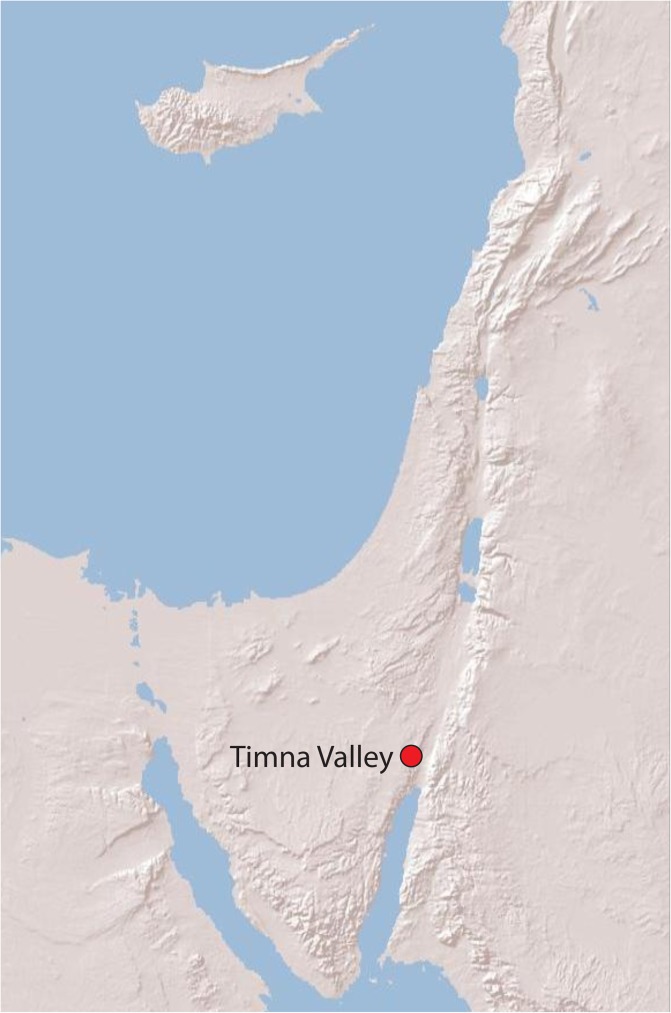
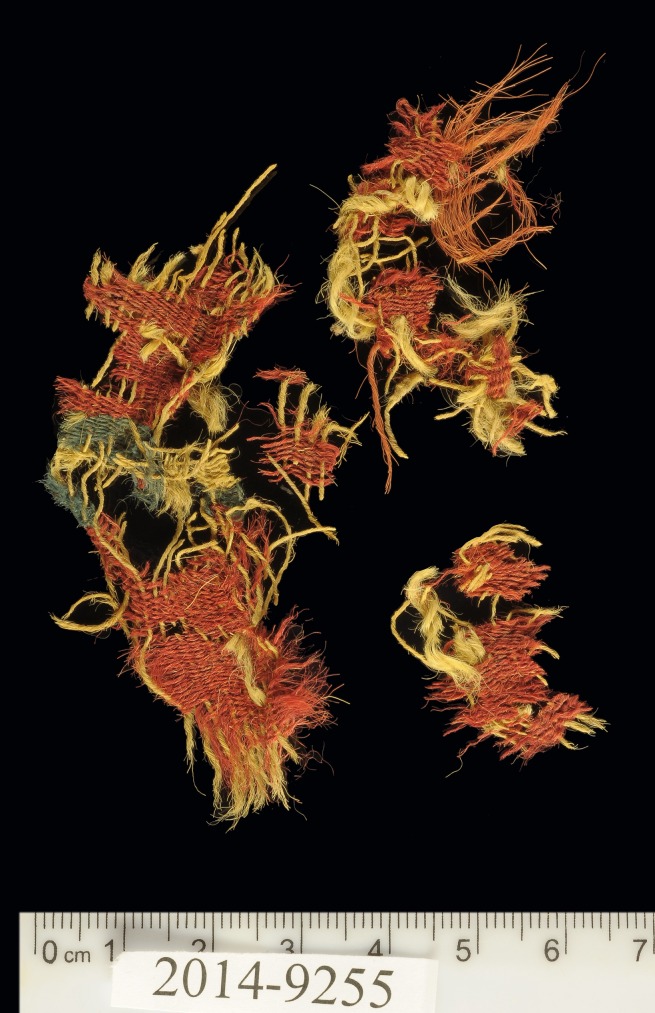
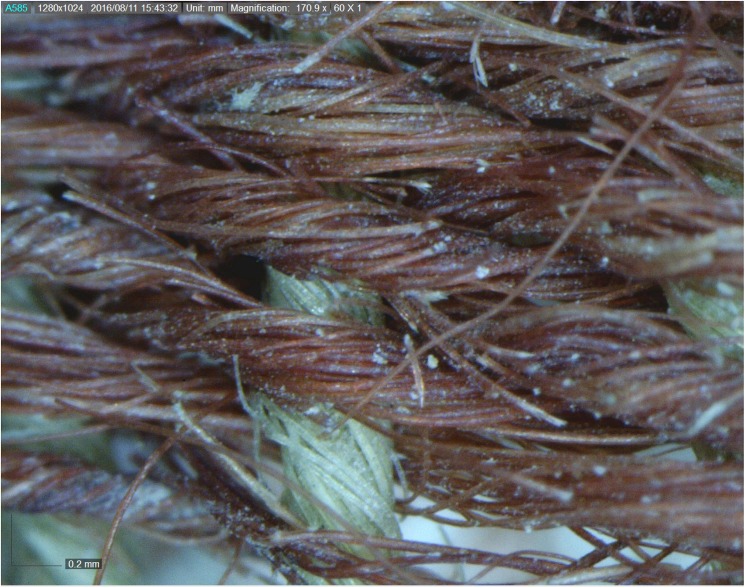
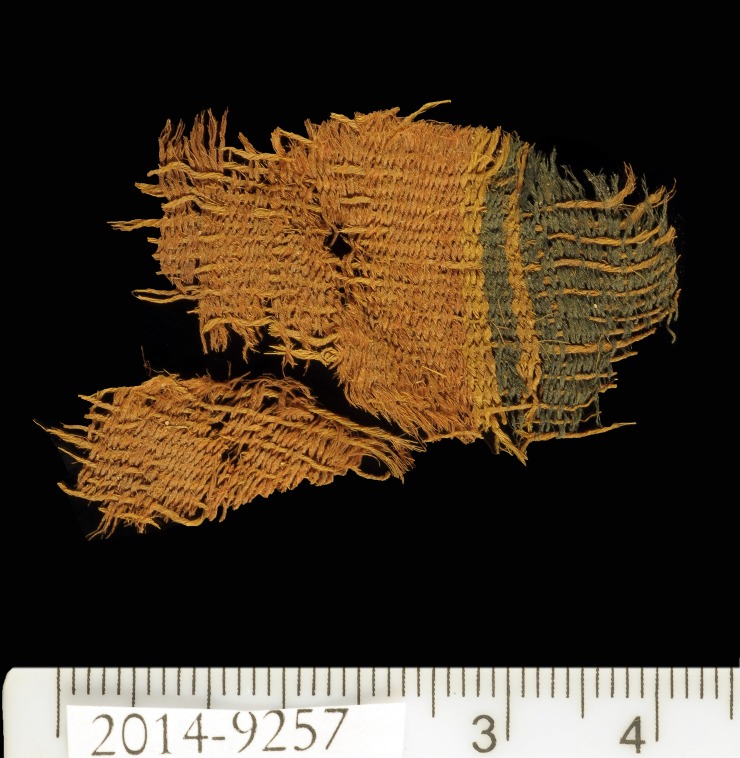
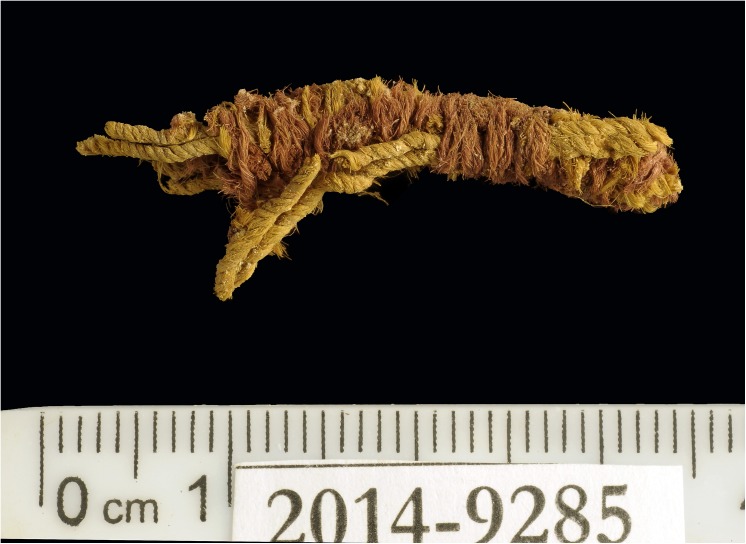
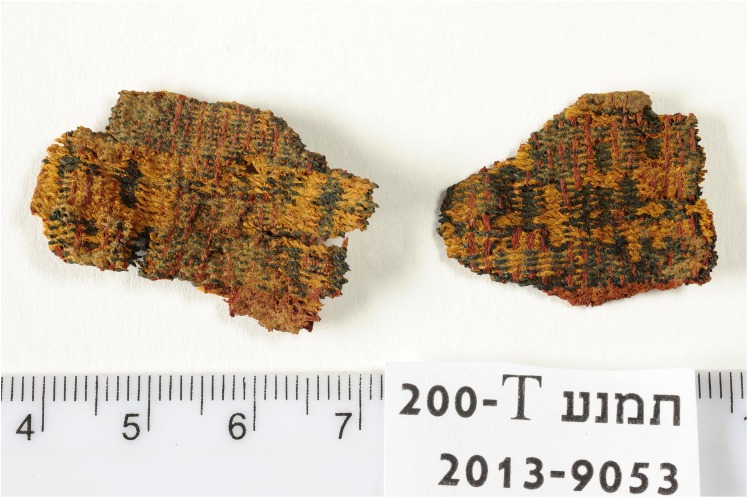
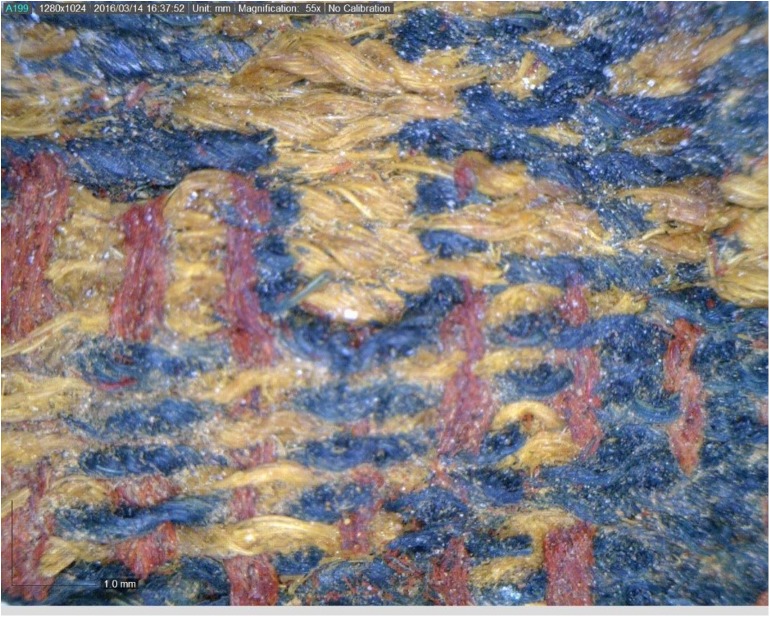
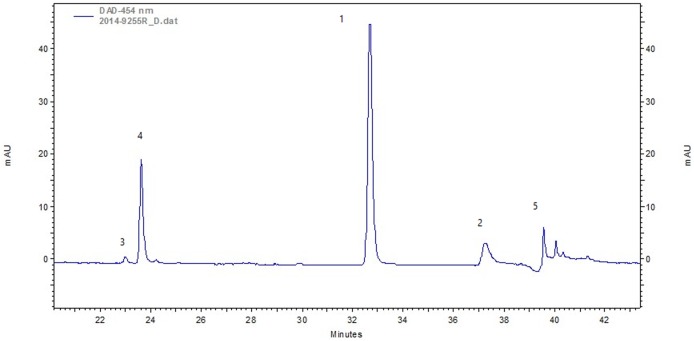
In this article, we focus on the analysis of dyed textile fragments uncovered at an early Iron Age (11th-10th centuries BCE) copper smelting site during new excavations in the Timna Valley conducted by the Central Timna Valley (CTV) Project, as well as those found by the Arabah Expedition at the Hathor Temple (Site 200), dated to the Late Bronze/early Iron Ages (13th-11th centuries BCE). Analysis by HPLC-DAD identified two organic dyestuffs, Rubia tinctorum L. and indigotin, from a plant source (probably Isatis tinctoria L.). They are among the earliest plants known in the dyeing craft and cultivated primarily for this purpose. This study provides the earliest evidence of textiles dyed utilizing a chemical dyeing process based on an industrial dyeing plant from the Levant. Moreover, our results shed new light on the society operating the copper mines at the time, suggesting the existence of an elite that was interested in these high quality textiles and invested efforts in procuring them by long-distance trade.
Overview
The claims and statistics of this paper haven’t been checked yet.
Free: it reads the open-access text and checks the first 5 claims that cite a source we can check. Create a free account to check every claim.
Integrity signals
Registry
Cites
Statistics
Figures
Verification
Claims the paper makes
The claims and statistics of this paper haven’t been checked yet.
Free: it reads the open-access text and checks the first 5 claims that cite a source we can check. Create a free account to check every claim.
Claims other papers make about this one
Each is checked against this paper’s own text: does it say what the citing paper says it does?
The cited source doesn’t support the claim as written.
In the citing paper
“and direct evidence for long-distance trade connections (see also [68,118]).”
From Early evidence of royal purple dyed textile from Timna Valley (Israel) (2021) · cites this paper as [68]
Checked by a reasoning model — may be wrong.
Experimental — accuracy not yet measuredThe source backs part of the claim, not all of it — or backs it for a different population, condition or comparison.
In the citing paper
“as it provides strong evidence for the presence of elite (see also a study based on diet [120], and direct evidence for long-distance trade connections (see also [68,118]).”
From Early evidence of royal purple dyed textile from Timna Valley (Israel) (2021) · cites this paper as [68]
Experimental — accuracy not yet measuredThe source backs part of the claim, not all of it — or backs it for a different population, condition or comparison.
In the citing paper
“The find of fibers dyed with true purple in Timna adds to a growing body of evidence for the complexity of the society operating the copper mines during the early Iron Age [64,68,69].”
From Early evidence of royal purple dyed textile from Timna Valley (Israel) (2021) · cites this paper as [68]
Experimental — accuracy not yet measuredThe cited source says what the claim attributes to it.
In the citing paper
“which is considered unequivocal evidence for the use of murex-derived purple dyestuff”
From Early evidence of royal purple dyed textile from Timna Valley (Israel) (2021) · cites this paper as [68]
The cited source says what the claim attributes to it.
In the citing paper
“The identification of dyes was based on a database containing known chemical components and wool that was dyed with known dyestuffs and analyzed by the authors prior to the current Timna research [68], and on a series of analyses that were done by the authors in a previous study of wool that was dyed with each of the murex species (Hexaplex trunculus, Bolinus brandaris and Stramonita haemastoma),”
From Early evidence of royal purple dyed textile from Timna Valley (Israel) (2021) · cites this paper as [68]
2 more claims about this paper
Create a free account to see every claim other papers make about this one.
Self-check
Percentages, sums and reported differences re-computed from the paper’s own numbers.
The self-check needs the paper’s full text.
Citations
Cites
Zohary, D., Hopf, M., & Weiss, E. (2012) · Oxford University Press eBooks · doi:10.1093/acprof:osobl/9780199549061.001.0001 · Cited by 2,987
Ancient Egyptian Materials and Industries
Sloley, R. W. (1948) · The Journal of Egyptian Archaeology · doi:10.1177/030751334803400129 · Cited by 547
Natural Dyes: Sources, Tradition, Technology and Science
(2007) · HAL · Cited by 443
Wouters, J. (1985) · Studies in Conservation · doi:10.1179/sic.1985.30.3.119 · Cited by 254 · cited 3×
“All these anthraquinone components are typical of the madder species [23,34] from the Rubiaceae family, which contains 36 identified components [35] and includes 15 compounds that affect the dyeing process [14].”
Tyrian Purple: 6,6’-Dibromoindigo and Related Compounds
Cooksey, C. J. (2001) · Molecules · doi:10.3390/60900736 · Cited by 231 · cited 1×
“Direct dyes are water-soluble and bind directly to the fibers, while the vat dyes are insoluble organic pigments, such as indigoid dyes, that require a special dyeing method involving biochemical and photochemical reactions, as well as complex reduction and oxidation processes that necessitated the use of various addi…”
Desert Vegetation Israel and Sinai
Wickens, G. E. (1984) · Journal of Arid Environments · doi:10.1016/s0140-1963(18)31387-9 · Cited by 209
Zhang, X., & Laursen, R. A. (2005) · Analytical Chemistry · doi:10.1021/ac048380k · Cited by 174 · cited 1×
“This method is appropriate for the identification of yellow dyes (mainly flavonoid dyes), which are easily decomposed [30,31].”
Archaeological Textiles: A Review of Current Research.
Good, I. (2001) · Annual Review of Anthropology · doi:10.1146/annurev.anthro.30.1.209 · Cited by 168 · cited 1×
“Generally, extremely dry or, alternatively, oxygen-deficient permanently wet environments such as in a peat bog, are the most conducive to the preservation of textiles in their original organic state [6].”
The Colourful Past: Origins, Chemistry and Identification of Natural Dyestuffs
de Graaff, J. H. H., Roelofs, W. G. T., & van Bommel, M. R. (2007) · Medical Entomology and Zoology · Cited by 149
The Egyptian mining temple at Timna
Rothenberg, B., & Bachmann, H. G. (1988) · Medical Entomology and Zoology · Cited by 147
Research works printed but not linked: 35
- Ben-Yosef E. The Central Timna Valley Project: Research Design and Preliminary Results. In: Ben-Yosef E, editor. Mining for Ancient Copper: Essays in Memory of Professor Beno Rothenberg. Tel Aviv; in press.
- Workman VA. The Fabric of Copper Prodection: The Textile and The Cordage Artifacts From Iron Age Timna. MA, Thesis. Tel-Aviv University. 2016.
- Glueck N. Explorations in Eastern Palestine, II,. Annu Am Sch Orient Res. New Haven: American Schools of Oriental Research.; 1935; 15: 1– 288.
- Sheffer A, Granger-Taylor H. Textiles From Masada—A Prelminary Selection. In: Aviram J, Foerster G, Netzer E, editors. Masada IV. Israel Exp. Jerusalem; 1994. pp. 153–256.
- Yadin Y. The Finds from the Bar Kokhba Period in the Cave of the Letters. Jerusalem; 1963.
- Sheffer A, Tidhar A. Textiles and Basketry. In: Meshel Z, editor. Kuntillat `Ajrud (Horvat Teman), An Iron Age II Religious Site on the Judah-Sinai Border. Jerusalem; 2012. pp. 289–311.
- Avner U. Egyptian Timna Reconsidered. In: Tebes JM, editor. Unearthing the Wilderness: Studies on the History and Archaeology of the Negev and Edom in the Iron Age. Leuven: Peeters,; 2014. pp. 103–162.
- Koren ZC. An Efficient HPLC Analysis Scheme for Plant and Animal Red, Blue, and Purple Dyes. Dyes in History and Archaeology. 1995. pp. 27–37.
- Koren ZC. Non-Destructive vs. Microchemical Analyses: The Case of Dyes and Pigments. Proceedings of ART2008, 9th International Conference, Non-Destructive Investigations and Microanalysis for The Diagnostics and Conservation of Cultural and Environmental Heritage. Jerusalem; 2008. p. 37.1 = 37.10.
- Vajanto K, van Bommel MR. Dyed Textiles from Late Iron Age Finland. Fennoscandia Archaeol. 2014; XXXI: 61– 78.
- Sukenik N. Dyes in Textiles from the Early Roman Period Found in the Judean Desert Caves: Chemical, Historical and Archaeological Aspects. PHd, Thesis. Bar-Ilan University (Hebrew). 2013.
- Koren ZC. Analysis of the Masada Textiles Dyes. In: Aviram Y, Foerster G, Netzer E, editors. Masada, IV. Jerusalem; 1994. pp. 257–264.
- Koren ZC. Microscopic & Chromatographic Analysis of Decorative Band Color on Nabatean ‘En Rahel Textiles–Kermes and Shaded Band. Atiqot. 1999; 38: 129– 136.
- Böhmer H, Karadag R. New Dye Research on Palmyra Textiles. Dye Hist Archaeol. 2003; 19: 88– 92.
- Koren ZC. HPLC-PDA Analysis of Brominated Indirubinoid, Indigoid, and Isatinoid Dyes In: Meijer L, Guyard N, Skaltsounis L, Eisenbrand G, editors. Indirubin, The Red Shade of Indigo Roscoff; 2006 pp. 45– 53.
- Koren ZC. A New HPLC-PDA Method for The Analysis of Tyrian Purple Components. Dye Hist Archaeol. 2008; 21: 26– 35.
- Zohary D, Hopf M, Weiss E. Domestication of Plants in the Old World. 4th ed. Oxford: Oxford University Press; 2013.
- Hofmann-de Keijzer R, van Bommel MR, Hartl A, Grömer K, Rösel-Mautendorfer H, Reschreiter H, et al. Coloured Hallstatt Textiles: 3500 Year-old Textile and Dyeing Techniques and their Contemporary Application. In: Banck-burgess J, Nübold C, editors. NESAT XI: The North European Symposium for Archaeological Textiles XI. Rahden: Vml Verlag Marie Leidorf; 2013. pp. 125–129.
- Iluz D, Amar Z. The Industrial facility at ‘En-Boqeq: an Indigo Production Plant? Jud Samaria Res Stud. 2009; 18: 223– 330.
- Schick T. The Textile In: Schick T, editor. The Cave of The Warrior A Fourth Millennium Burial in The Judean Desert. Jerusalem: IAA; 1998 pp. 6– 22.
- Sukenik N, Iluz D, Shamir O, Varvak A, Amar Z. Purple-Dyed Textiles from Wdi Muraba`at: Historical, Archaeological and Chemical Aspect. Archaeol Text Rev. 2013; 55: 46– 54.
- Vogelsang-Eastwood G. Textiles. In: van der Kooij G, Ibrahim MM, editors. Leiden; pp. 57–61.
- Shamir O, Baginski A. Textiles from the Mining Camps at Timna. Archeol Text Newsl. 1993; 16: 9– 10.
- Sheffer A, Tidhar A. Textiles and Basketry at Kuntillat `Ajrud. Atiqot. 1991; 20: 1– 26.
- Gleba M. Italian Textiles from Prehistory to Late Time In: Bergerbrant S, Fossøy SH, editors. A Stitch in Time: Essays in Honour of Lise Bender Jørgensen. Göteborg: Department of Historical Studies: Gothenburg University; 2014 pp. 145– 169.
- Hoskin NA. Woven Patterns on Tutankhamun Textiles. JARCE. 2011; 47: 199– 216.
- Eastwood G. Preliminary Report of Textiles. In: Kemp B, editor. Amarna Reports II. London; 1985. pp. 191–204. Available: http://scholar.google.com/scholar?hl=en&btnG=Search&q=intitle:Preliminary+Report+on+the+Echini#0
- Kemp BJ, Vogelsang-Eastwood G. The Ancient Textile Industry at Amarna [Internet]. Excavation memoir 68th. Egypt Exploration Society; 2001. Available: http://scholar.google.com/scholar?hl=en&btnG=Search&q=intitle:The+Ancient+Textile+Industry+at+Amarna.#0
- Bruins HJ. Desert Environment and Geoarchaeology of the Wadi Arabah. In: Bienkowski P, Galor K, editors. Crossing the Rift: Resources, Settlements Patterns and Interaction in the Wadi Arabah. Oxford; 2006. pp. 29–44.
- Hauptmann A. The Archaeometallurgy of Copper—Evidence from Faynan. Berlin: Springer; 2007.
- Ben-Yosef E. Back to Solomon’s Era: Results of the First Excavations at “Slaves’ Hill” (Site 34, Timna, Israel) Erez. Bull Am Sch Orient Res. 2016; 376: 169– 198. · DOI · Paper page
- Kislev ME. Fruit Remain In: Rothenberg B, editor. The Egyptian Mining Temple at Timna. London: Institute for Archaeo-Metallurgical Studies; 1988 pp. 236– 240.
- Sapir-Hen L, Lernau O, Ben-Yosef E. The Diet of Late Bronze and Iron Ages Metalworkers in Timna In: Ben-Yosef E, editor. Mining for Ancient Copper: Essays in Memory of Professor Beno Rothenberg. Tel Aviv (in press): The Institute of Archaeology of Tel Aviv University;
- Hanan L. Fish Remains In: Rothenberg B, editor. The Egyptian Mining Temple at Timna. London: Institute for Archaeo-Metallurgical Studies; 1988 pp. 241– 245.
- Hanan L. Mammalian Remain In: Rothenberg B, editor. The Egyptian Mining Temple at Timna. London: Institute for Archaeo-Metallurgical Studies; 1988 pp. 246– 252.
Cited by
Analytical methods for determination of anthraquinone dyes in historical textiles: A review
Shahid, M., Wertz, J. H., Degano, I., Aceto, M., Khan, M. I., & Quye, A. (2019) · Analytica Chimica Acta · doi:10.1016/j.aca.2019.07.009 · Cited by 168
The Architectural Bias in Current Biblical Archaeology.
Ben-Yosef, E. (2019) · Vetus Testamentum · doi:10.1163/15685330-12341370 · Cited by 52
Self-citationDo, K. L., Su, M., & Zhao, F. W. (2022) · Dyes and Pigments · doi:10.1016/j.dyepig.2022.110482 · Cited by 46
Early evidence of royal purple dyed textile from Timna Valley (Israel)
Sukenik, N., Iluz, D., Amar, Z., Varvak, A., Shamir, O., & Ben-Yosef, E. (2021) · PLOS ONE · doi:10.1371/journal.pone.0245897 · Cited by 40
Self-citationArchaeological science brightens Mediterranean dark age
Ben‐Yosef, E. (2019) · Proceedings of the National Academy of Sciences · doi:10.1073/pnas.1901885116 · Cited by 26
Metadata
- Authors
- Sukenik, N., Iluz, D., Amar, Z., Varvak, A., Workman, V., Shamir, O., & Ben-Yosef, E.
- Affiliations
- Israel Antiquities Authority (IL)
- Bar-Ilan University (IL)
- Tel Aviv University (IL)
- Corresponding author
- Sukenik, Naama
- Venue
- PLoS ONE
- Publisher
- Public Library of Science (PLoS)
- Published
- 2017-06-28
- Volume
- 12
- Issue
- 6
- Pages
- e0179014
- ISSN
- 1932-6203 (ISSN-L)
- PMC
- PMC5489155
- OpenAlex
- W2729682368
- Cited by
- 32
- References
- 63
- Citations by year
- 2026: 1 · 2025: 3 · 2024: 1 · 2023: 10 · 2022: 3 · 2021: 4 · 2020: 1 · 2019: 7 · 2018: 1
- FWCI
- 14.23
- Type
- journal article
- Language
- en
- Open access
- gold
- doi.org
- Licence
- Locations
- PLoS ONE (publishedVersion, cc-by)
- PubMed Central (publishedVersion, cc-by)
- PubMed (publishedVersion)
- DOAJ (DOAJ: Directory of Open Access Journals) (submittedVersion, cc-by-sa)
- Figshare (submittedVersion, cc-by)
- Funders
- MARIE CURIE CAREER INTEGRATION GRANTS (CIG) (#334274)
- Yad Hanadiv – The Rothschild Foundation (#5171)
- Topics
- Social Sciences › Arts and Humanities › Archeology (arts and humanities) › Cultural Heritage Materials Analysis
- Social Sciences › Archeology › Archaeology and ancient environmental studies
- Social Sciences › Archeology › Metallurgy and Cultural Artifacts
- Keywords
- plant-based dyeing, dyed fabrics, Rubia tinctorum, indigo, Isatis tinctoria, textile fragments, copper smelting, Early Iron Age, Late Bronze Age, long-distance trade, Levant
- MeSH terms
- Chromatography, High Pressure Liquid, Coloring Agents, Israel, Textiles
About these checks
Registry, retraction, Cites and statistics results are computed, not judged, with one exception: a printed reference that no index lists is read once by a model before it counts as a citation error. Claims are extracted by a model and kept only when their quote appears verbatim in the text; each cited source is then checked, with a model’s help, for whether it says what the claim relies on. Those verdicts can be wrong — read the claim’s quote and the cited source before relying on one.
Statistics and arithmetic are recomputed, not judged.
Confidence bands are shown only for fields calibrated on our annotated test set. None is calibrated yet, so no band is shown.
What counts as a claim ›How we measure confidence ›How we check this ›
Are you an author, or do you see a problem with this page? Request a review
Data sources
Bibliographic data: Semantic Scholar, OpenAlex, Crossref.
Contains information from the Semantic Scholar Academic Graph Datasets, made available under the ODC Attribution License (ODC-BY 1.0).
Semantic Scholar’s data is described in: Kinney, R., et al. (2023). The Semantic Scholar Open Data Platform. arXiv:2301.10140.
