

Joint action aesthetics
Open accessThe DOI matches its Crossref record; 94 of the 97 references it cites were found in a registry or an index.
Abstract
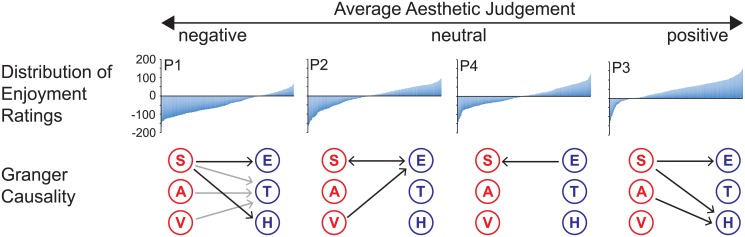
Synchronized movement is a ubiquitous feature of dance and music performance. Much research into the evolutionary origins of these cultural practices has focused on why humans perform rather than watch or listen to dance and music. In this study, we show that movement synchrony among a group of performers predicts the aesthetic appreciation of live dance performances. We developed a choreography that continuously manipulated group synchronization using a defined movement vocabulary based on arm swinging, walking and running. The choreography was performed live to four audiences, as we continuously tracked the performers' movements, and the spectators' affective responses. We computed dynamic synchrony among performers using cross recurrence analysis of data from wrist accelerometers, and implicit measures of arousal from spectators' heart rates. Additionally, a subset of spectators provided continuous ratings of enjoyment and perceived synchrony using tablet computers. Granger causality analyses demonstrate predictive relationships between synchrony, enjoyment ratings and spectator arousal, if audiences form a collectively consistent positive or negative aesthetic evaluation. Controlling for the influence of overall movement acceleration and visual change, we show that dance communicates group coordination via coupled movement dynamics among a group of performers. Our findings are in line with an evolutionary function of dance-and perhaps all performing arts-in transmitting social signals between groups of people. Human movement is the common denominator of dance, music and theatre. Acknowledging the time-sensitive and immediate nature of the performer-spectator relationship, our study makes a significant step towards an aesthetics of joint actions in the performing arts.
Overview
The claims and statistics of this paper haven’t been checked yet.
Free: it reads the open-access text and checks the first 5 claims that cite a source we can check. Create a free account to check every claim.
Integrity signals
Registry
Cites
Statistics
Figures



Verification
Claims the paper makes
The claims and statistics of this paper haven’t been checked yet.
Free: it reads the open-access text and checks the first 5 claims that cite a source we can check. Create a free account to check every claim.
Claims other papers make about this one
Each is checked against this paper’s own text: does it say what the citing paper says it does?
The source backs part of the claim, not all of it — or backs it for a different population, condition or comparison.
In the citing paper
“Therefore aligned with previous research in dance [19, 36, 57, 60] and public visual art [38] spaces, we were able to extract various frequencies of movement, and through time stamps and video footage were able to dissect the movements that were occurring to make observations about human social behaviour.”
From Using Wearable Sensors to Measure Interpersonal Synchrony in Actors and Audience Members During a Live Theatre Performance (2023) · cites this paper as [57]
Experimental — accuracy not yet measured
Self-check
Percentages, sums and reported differences re-computed from the paper’s own numbers.
The self-check needs the paper’s full text.
Citations
Cites
Investigating causal relations by econometric models and cross-spectral methods
Granger, C. W. J. (1969) · Econometrica · doi:10.2307/1912791 · Cited by 22,989
Multimodel Inference: Understanding AIC and BIC in Model Selection
Burnham, K. P., & Anderson, D. R. (2004) · Sociological Methods & Research · doi:10.1177/0049124104268644 · Cited by 11,648
Investigating Causal Relations by Econometric Models and Cross-Spectral Methods
Granger, C. W. J. (2010) · Essays in Econometrics · doi:10.1017/cbo9780511753978.002 · Cited by 4,762
OpenSesame: An open-source, graphical experiment builder for the social sciences
Mathôt, S., Schreij, D., & Theeuwes, J. (2012) · Behavior Research Methods · doi:10.3758/s13428-011-0168-7 · Cited by 2,586
Action Observation and Acquired Motor Skills: An fMRI Study with Expert Dancers
Calvo-Merino, B., Glaser, D. E., Grèzes, J., Passingham, R. E., & Haggard, P. (2005) · Cerebral Cortex · doi:10.1093/cercor/bhi007 · Cited by 1,995
Wiltermuth, S. S., & Heath, C. (2009) · Psychological Science · doi:10.1111/j.1467-9280.2008.02253.x · Cited by 1,717
It's All in the Timing: Interpersonal Synchrony Increases Affiliation
Hove, M. J., & Risen, J. L. (2009) · Social Cognition · doi:10.1521/soco.2009.27.6.949 · Cited by 1,334
Model selection for ecologists: the worldviews of AIC and BIC
Aho, K., Derryberry, D., & Peterson, T. (2014) · Ecology · doi:10.1890/13-1452.1 · Cited by 1,165
(2004) · doi:10.1177/0049124103262065 · Cited by 906
Synchronized arousal between performers and related spectators in a fire-walking ritual
Konvalinka, I., Xygalatas, D., Bulbulia, J., Schjødt, U., Jegindø, E.-M., Wallot, S., Van Orden, G., & Roepstorff, A. (2011) · Proceedings of the National Academy of Sciences · doi:10.1073/pnas.1016955108 · Cited by 632
Research works printed but not linked: 2
- E Waterhouse, 2014, Doing Duo—a case study of entrainment in William Forsythe’s choreography “Duo.”, Front Hum Neurosci, 8, 812, 10.3389/fnhum.2014.00812 · DOI
- P Valdesolo, 2010, The rhythm of joint action: Synchrony promotes cooperative ability, J Exp Soc Psychol, 46, 693, 10.1016/j.jesp.2010.03.004 · DOI · Paper page
Cited by
Soon, S., Svavarsdottir, H. S., Downey, C. L., & Jayne, D. G. (2020) · BMJ Innovations · doi:10.1136/bmjinnov-2019-000354 · Cited by 151
Timing is everything: Dance aesthetics depend on the complexity of movement kinematics
Orlandi, A., Cross, E. S., & Orgs, G. (2020) · Cognition · doi:10.1016/j.cognition.2020.104446 · Cited by 106
Self-citationEvolution and functions of human dance
Fink, B., Bläsing, B. E., Ravignani, A., & Shackelford, T. K. (2021) · Evolution and Human Behavior · doi:10.1016/j.evolhumbehav.2021.01.003 · Cited by 118
“The study of dance is often limited to a particular setting in a given society in that it considers social and cultural information transmitted through symbols and meanings for a particular space-time entity (Siegfried, 1988; Vicary, Sperling, Zimmermann, Richardson, & Orgs, 2017).”
BackgroundZheng, L., Liu, W., Long, Y., Zhai, Y., Zhao, H., Bai, X., Zhou, S., Li, K., Zhang, H., Liu, L., et al. (2020) · Social Cognitive and Affective Neuroscience · doi:10.1093/scan/nsaa016 · Cited by 93
Interpersonal Entrainment in Music Performance
Clayton, M. R. L., Jakubowski, K., Eerola, T., Keller, P. E., Camurri, A., Volpe, G., & Alborno, P. (2020) · Music Perception An Interdisciplinary Journal · doi:10.1525/mp.2020.38.2.136 · Cited by 148
Himberg, T., Laroche, J., Bigé, R., Buchkowski, M., & Bachrach, A. (2018) · Behavioral Sciences · doi:10.3390/bs8020023 · Cited by 85
“In the context of this discussion, it is interesting to note that [12] found that spectators’ annotation of the extent of togetherness (moving together) during a group improvisation performance did not correlate with accelerometer-based measure of movement synchrony.”
BackgroundThe Neuroscience of Dance: A Conceptual Framework and Systematic Review
Elst, O. F. V., Foster, N. H., Vuust, P., Keller, P. E., & Kringelbach, M. L. (2023) · Neuroscience & Biobehavioral Reviews · doi:10.1016/j.neubiorev.2023.105197 · Cited by 123
“A significant amount of communication between dancers is visual, but also occurs via coupled movement dynamics, supporting evolutionary theories of dance as a means to enable communication between and within large groups of people (Vicary et al., 2017).”
BackgroundThe Choreography of Group Affiliation
von Zimmermann, J., Vicary, S., Sperling, M., Orgs, G., & Richardson, D. C. (2018) · Topics in Cognitive Science · doi:10.1111/tops.12320 · Cited by 73
“We also provide a more detailed description and discussion of these tasks in the context of dance aesthetics in Vicary et al. (2017), including video examples.”
BackgroundSelf-citationArdizzi, M., Calbi, M., Tavaglione, S., Umiltà, M. A., & Gallese, V. (2020) · Scientific Reports · doi:10.1038/s41598-020-60832-7 · Cited by 69
McCrary, J. M., Redding, E., & ALTENMÜLLER, E. O. (2021) · PLoS ONE · doi:10.1371/journal.pone.0252956 · Cited by 85
Rose, D., Müllensiefen, D., Lovatt, P. J., & Orgs, G. (2022) · Psychology of Aesthetics Creativity and the Arts · doi:10.1037/aca0000340 · Cited by 69
Self-citationHow to Measure Intangible Cultural Heritage Value? The Case of Flamenco in Spain
Heredia–Carroza, J., Martos, L. A. P., & Quintero, L. F. A. (2020) · Empirical Studies of the Arts · doi:10.1177/0276237420907865 · Cited by 63
“Vicary et al. (2017) demonstrate that some of the aesthetic appeal of the performing arts lies in communicating between a group of performers to a group of spectators and this is only possible through the performance elements that induce visual and hearing stimuli (Beauvois, 2007; Schroeder, 1991).”
BackgroundMultilevel rhythms in multimodal communication
Pouw, W. T. J. L., Proksch, S., Drijvers, L., Gamba, M., Holler, J., Kello, C. T., Schaefer, R., & Wiggins, G. A. (2021) · Philosophical Transactions of the Royal Society B Biological Sciences · doi:10.1098/rstb.2020.0334 · Cited by 56
“royalstypublishing 6 to rate higher levels of rapport (liking) between the interacting individuals [75] and increase an audience’s affective and aesthetic enjoyment of a group dance performance [76].”
BackgroundDancing in Your Head: An Interdisciplinary Review
Zardi, A., Carlotti, E. G., Pontremoli, A. P. M., & Morese, R. (2021) · Frontiers in Psychology · doi:10.3389/fpsyg.2021.649121 · Cited by 61
“, and Orgs, G. (2020b). Timing is everything: dance aesthetics depend on the complexity of movement kinematics.”
BackgroundBridging the gap between emotion and joint action
Bieńkiewicz, M. M. N., Smykovskyi, A., Olugbade, T., Janaqi, S., Camurri, A., Bianchi‐Berthouze, N., Björkman, M., & Bardy, B. G. (2021) · Neuroscience & Biobehavioral Reviews · doi:10.1016/j.neubiorev.2021.08.014 · Cited by 56
The Routledge International Handbook of Neuroaesthetics
Nadal, M., & Skov, M. (2022) · Routledge eBooks · doi:10.4324/9781003008675 · Cited by 53
Cracco, E., Lee, H., Belle, G. V., Quenon, L., Haggard, P., Rossion, B., & Orgs, G. (2021) · Cerebral Cortex · doi:10.1093/cercor/bhab385 · Cited by 39
“Similarly, the same mechanism may also contribute to the fact that people find synchrony aesthetically pleasing (Eskenazi et al. 2015; Vicary et al. 2017) and”
InfluentialSelf-citationSun, Y., Greaves, D. A., Orgs, G., de C. Hamilton, A. F., Day, S., & Ward, J. A. (2023) · Proceedings of the ACM on Interactive Mobile Wearable and Ubiquitous Technologies · doi:10.1145/3580781 · Cited by 35
“Despite, and perhaps as a result of, this diversity of interests and tasks, our study suffered at times due to necessary multi-tasking (e.g., a presenting scientist was also involved in setting up the sensor system - and then, inevitably, forgot to put a working senor on himself).”
BackgroundSelf-citationCoordination dynamics of multi-agent interaction in a musical ensemble
Proksch, S., Reeves, M., Spivey, M. J., & Balasubramaniam, R. (2022) · Scientific Reports · doi:10.1038/s41598-021-04463-6 · Cited by 41
“Movement synchrony in dancers increases affiliation with the group 44 and can increase affective engagement from an audience 45 .”
Kinematics of perceived dyadic coordination in dance
Hartmann, M., Mavrolampados, A., Allingham, E., Carlson, E. J., Burger, B., & Toiviainen, P. (2019) · Scientific Reports · doi:10.1038/s41598-019-52097-6 · Cited by 36
Automatic imitation of multiple agents: Simultaneous or random representation?
Cracco, E., & Braß, M. (2018) · Journal of Experimental Psychology Human Perception & Performance · doi:10.1037/xhp0000489 · Cited by 38
“(2017). TPJ-M1 interaction in the control of shared representations: New insights from tDCS and TMS combined. NeuroImage, 146, 734–740. http://dx.doi.org/10.1016/j.neuroimage.2016.10 .050 Bertenthal, B. I., Longo, M. R., & Kosobud, A. (2006). Imitative response tendencies following observation of intransitive actions.”
InfluentialAudiovisual Aesthetics of Sound and Movement in Contemporary Dance
Howlin, C., Vicary, S. A., & Orgs, G. (2018) · Empirical Studies of the Arts · doi:10.1177/0276237418818633 · Cited by 35
“Finally, the first 5 minutes of the performance were removed to allow for the audience to settle, and the last 5 minutes were removed as this is when the performers started leaving the stage, preventing a computation of synchrony across all performers (Vicary et al., 2017).”
BackgroundMethodInfluentialSelf-citationEngaging With Contemporary Dance: What Can Body Movements Tell us About Audience Responses?
Theodorou, L., Healey, P. G. T., & Smeraldi, F. (2019) · Frontiers in Psychology · doi:10.3389/fpsyg.2019.00071 · Cited by 32
Delta-band audience brain synchrony tracks engagement with live and recorded dance
Rai, L. A., Lee, H., Becke, E., Trenado, C., Abad-Hernando, S., Sperling, M., Vidaurre, D., Wald‐Fuhrmann, M., Richardson, D. C., Ward, J. A., et al. (2025) · iScience · doi:10.1016/j.isci.2025.112922 · Cited by 32
“12,15,16,21,22,54 Watching dance evoked a synchronized brain response in the audience, which was most pronounced among co-present spectators, but did not necessarily differ in trajectory between the experience of live and recorded versions of the dance performance.”
Self-citationEmpathy, Entrainment, and Perceived Interaction in Complex Dyadic Dance Movement
Carlson, E. J., Burger, B., & Toiviainen, P. (2019) · Music Perception An Interdisciplinary Journal · doi:10.1525/mp.2019.36.4.390 · Cited by 30
Dance Across Cultures: Joint Action Aesthetics in Japan and the UK
Monroy, E., Imada, T., Sagiv, N., & Orgs, G. (2021) · Empirical Studies of the Arts · doi:10.1177/02762374211001800 · Cited by 31
“This corroborates findings from a previous study on live dance performances, in which synchrony was the best predictor of enjoyment ratings, over and above the influence of overall movement acceleration and visual displacement of the performers (Vicary et al., 2017).”
BackgroundResultSelf-citationInforming, Coordinating, and Performing: A Perspective on Functions of Sensorimotor Communication
Vesper, C., & Sevdalis, V. (2020) · Frontiers in Human Neuroscience · doi:10.3389/fnhum.2020.00168 · Cited by 23
“Moreover, aesthetic responses to dance movements can be intensified by dance performers’ interpersonal synchrony (Vicary et al., 2017).”
BackgroundDance Like Someone is Watching: A Social Relations Model Study of Music-Induced Movement
Carlson, E. J., Burger, B., & Toiviainen, P. (2018) · Music & Science · doi:10.1177/2059204318807846 · Cited by 32
Synchronicities that shape the perception of joint action
McEllin, L. S., Knoblich, G., & Sebanz, N. (2020) · Scientific Reports · doi:10.1038/s41598-020-72729-6 · Cited by 24
Frith, C., & Frith, U. (2023) · The MIT Press eBooks · doi:10.7551/mitpress/10400.001.0001 · Cited by 40
Effect- and Performance-Based Auditory Feedback on Interpersonal Coordination
Hwang, T., Schmitz, G. H., Klemmt, K., Brinkop, L., Ghai, S., Stoica, M., Maÿe, A., Blume, H., & Effenberg, A. O. (2018) · Frontiers in Psychology · doi:10.3389/fpsyg.2018.00404 · Cited by 24
“The important role of the auditory feedback for managing temporal synchrony during interpersonal coordination has been reported repeatedly (Goebl and Palmer, 2009; Demos et al., 2017; Vicary et al., 2017).”
BackgroundLinking Audience Physiology to Choreography
Han, J., Chernyshov, G., Sugawa, M., Zheng, D., Hynds, D., Furukawa, T., Macieira, M. P., Marky, K., Minamizawa, K., Ward, J. A., et al. (2023) · ACM Transactions on Computer-Human Interaction · doi:10.1145/3557887 · Cited by 26
“Sensing live audiences has been explored using a variety of different sensor technologies including EDA [55, 84, 101], HR /HRV [7, 82, 98], brain computer interfaces (BCI) [38], and body movement [35, 90, 94] (see Table 1).”
Movement synchrony among dance performers predicts brain synchrony among dance spectators
Orgs, G., Vicary, S. A., Sperling, M., Richardson, D. C., & Williams, A. L. (2024) · Scientific Reports · doi:10.1038/s41598-024-73438-0 · Cited by 23
“Arguably, dancers more consistently focus on the relationships between performers rather than how much they are dancing 21 .”
BackgroundMethodInfluentialSelf-citationBläsing, B. E., & Zimmermann, E. (2021) · Frontiers in Psychology · doi:10.3389/fpsyg.2021.643848 · Cited by 39
Negative emotions disrupt intentional synchronization during group sensorimotor interaction.
Smykovskyi, A., Janaqi, S., Pla, S., Jean, P., Bieńkiewicz, M. M. N., & Bardy, B. G. (2023) · Emotion · doi:10.1037/emo0001282 · Cited by 17
Cross, E. S., Darda, K. M., Moffat, R., Muñoz, L., Humphries, S. A., & Kirsch, L. P. (2024) · Scientific Reports · doi:10.1038/s41598-024-72659-7 · Cited by 18
“Beyond the socially relevant benefits for synchronised people, observers of synchronous movements experience greater enjoyment as the degree of synchrony increases 10,11 .”
InfluentialJakubowski, K., Eerola, T., Ximenes, A. B., Ma, W. K., Clayton, M. R. L., & Keller, P. E. (2020) · Psychomusicology Music Mind and Brain · doi:10.1037/pmu0000264 · Cited by 17
Eye movements, attention, and expert knowledge in the observation of Bharatanatyam dance
Ponmanadiyil, R., & Woolhouse, M. H. (2018) · Journal of Eye Movement Research · doi:10.16910/jemr.11.2.11 · Cited by 18
“Vicary et al. (2017) concluded that their findings were in accordance with the evolutionary function of dance in transmitting social signals between people through human movement.”
ResultThe Attraction of Synchrony: A Hip-Hop Dance Study
Poy, C. T., & Woolhouse, M. H. (2020) · Frontiers in Psychology · doi:10.3389/fpsyg.2020.588935 · Cited by 13
Curiosity Emerging From the Perception of Change in Music
Omigie, D., & Ricci, J. (2021) · Empirical Studies of the Arts · doi:10.1177/02762374211059460 · Cited by 18
“In contrast to previous work, (e.g. Vicary et al., 2017) bidirectional causality (e.g. felt curiosity Granger-causing perceived change) was not taken as evidence of spurious causality here, since, unlike in such previous work, both directions of causality have interpretable relationships.”
ResultDoes copyright understand intangible heritage? The case of flamenco in Spain
Heredia–Carroza, J., Martos, L. A. P., & Quintero, L. F. A. (2023) · International Journal of Heritage Studies · doi:10.1080/13527258.2023.2208102 · Cited by 17
“Vicary et al. (2017) show that the aesthetic appeal of the performing arts lies in the communication between a group of performers and a group of spectators, which is only achievable through the performance components that activate visual and hearing stimuli (Schroeder 1991; Beauvois 2007).”
BackgroundOrlandi, A., & Candidi, M. (2025) · iScience · doi:10.1016/j.isci.2025.112365 · Cited by 16
Creative Togetherness. A Joint-Methods Analysis of Collaborative Artistic Performance
Gesbert, V., Hauw, D., Kempf, A., Blauth, A., & Schiavio, A. (2022) · Frontiers in Psychology · doi:10.3389/fpsyg.2022.835340 · Cited by 14
Awareness of embodiment enhances enjoyment and engages sensorimotor cortices
Moffat, R., & Cross, E. S. (2024) · Human Brain Mapping · doi:10.1002/hbm.26786 · Cited by 13
“Our analyses replicate previous findings that observers' enjoyment of dyadic movements increases in concert with the level of synchrony of dyadic movements (Moffat & Cross, 2024; Vicary et al., 2017).”
BackgroundResultObserving Synchrony in Dyads: Effects on Observers’ Expectations and Intentions
Marques‐Quinteiro, P., Mata, A., Simão, C., Gaspar, R., & Farias, A. R. (2019) · Social Psychology · doi:10.1027/1864-9335/a000377 · Cited by 14
Joufflineau, C., Vincent, C., & Bachrach, A. (2018) · Behavioral Sciences · doi:10.3390/bs8020024 · Cited by 18
“As a consequence it is not straightforward to generalize across different presentations of the ’same’ dance (see [157] for a recent study looking at dance spectating where the different ’repetitions’ of the same performance produced very different results regarding spectators’ evaluation and engagement and related mea…”
Tseng, C., Cheng, M., Matout, H., Fujita, K., Kitamura, Y., Shioiri, S., Ho, I., & Bachrach, A. (2021) · Japanese Psychological Research · doi:10.1111/jpr.12330 · Cited by 11
“The feeling of togetherness has been argued to play an important role in the aesthetic experience of dancing for spectators (Vicary et al., 2017) as well as performers (Himberg, Laroche, Bigé, Buchkowski, & Bachrach, 2018).”
BackgroundMoffat, R., & Cross, E. S. (2024) · Scientific Reports · doi:10.1038/s41598-024-53191-0 · Cited by 13
“Vicary et al. 23 and McEllin et al. 24 each demonstrated that measured movement similarity predicts observers’ ratings of enjoyment.”
D’Amario, S., Ternström, S., Goebl, W., & Bishop, L. (2023) · Frontiers in Psychology · doi:10.3389/fpsyg.2023.1220904 · Cited by 11
“The perceived and performed synchrony of a group of dancers can positively correlate with an audience’s perceived enjoyment (an index of their aesthetic appreciation), depending on the dances performed (Vicary et al., 2017).”
BackgroundThe Aesthetics of Action and Movement
Cross, E. S., & Orlandi, A. (2020) · Oxford University Press eBooks · doi:10.1093/oxfordhb/9780198824350.013.27 · Cited by 8
Fink, B., Apalkova, Y. I., Butovskaya, M., & Shackelford, T. K. (2020) · Perceptual and Motor Skills · doi:10.1177/0031512520967607 · Cited by 7
“Studies have documented positive effects on the audience of moving in synchrony, which may facilitate social bonding with viewers and positive appraisals of dancers (Tarr et al., 2014; Vicary et al., 2017).”
BackgroundComparison of Audiovisual Components of Dance in Novices and Experts’ Aesthetic Interest Perceptions
Joung, J., & Kim, J. (2023) · Empirical Studies of the Arts · doi:10.1177/02762374231152775 · Cited by 9
Heredia–Carroza, J., Peña‐Vinces, J. C., Palma, L., & Quintero, L. F. A. (2025) · Journal of Destination Marketing & Management · doi:10.1016/j.jdmm.2025.100994 · Cited by 6
Commentary: What Is Art Good For? The Socio-Epistemic Value of Art
Skov, M., & Nadal, M. (2017) · Frontiers in Human Neuroscience · doi:10.3389/fnhum.2017.00602 · Cited by 6
“Dance, for instance, can coordinate emotional responses to promote social cohesion (Vicary et al., 2017).”
BackgroundNelson, L., Laroche, J., de Figueiredo, N. M., Fiadeiro, J., Dumit, J., & Bachrach, A. (2024) · BMC Neuroscience · doi:10.1186/s12868-024-00907-7 · Cited by 11
“It is often thought that these two aspects go hand-in-hand [30–32], but sometimes the coordination between the dancers’ movement coordination and the feelings of togetherness as judged by an audience don’t match [33].”
BackgroundStamm, J. C., Richardson, D. C., & Ward, J. A. (2024) · CHI Conference Extended Abstracts on Human Factors in Computing Systems (CHI EA) · doi:10.1145/3613905.3651886 · Cited by 6
“A similar measure used finger tracking in complement to physiological measures, demonstrating the relationship between engagement synchrony and enjoyment [46].”
Self-citationThe Audio-Visual Aesthetics of Music and Dance
Orgs, G., & Howlin, C. (2020) · Oxford University Press eBooks · doi:10.1093/oxfordhb/9780198824350.013.29 · Cited by 5
Self-citationContinuous and collective measures of real-time audience engagement
Millman, L. S. M., Richardson, D. C., & Orgs, G. (2022) · Routledge eBooks · doi:10.4324/9781003033226-23 · Cited by 7
Self-citationEugeni, R., Balzarotti, S., Cavaletti, F., & D’Aloia, A. (2019) · Perspectives in pragmatics, psychology & philosophy · doi:10.1007/978-3-030-22090-7_16 · Cited by 5
Rose, D., Müllensiefen, D., Lovatt, P. J., & Orgs, G. (2020) · PsyArXiv (OSF Preprints) · doi:10.31234/osf.io/wapkx · Cited by 5
Self-citationHimberg, T., Laroche, J., Bigé, R., Buchkowski, M., & Bachrach, A. (2018) · PsyArXiv (OSF Preprints) · doi:10.31234/osf.io/fcets · Cited by 6
Musik: Von der Koordination zur Kooperation
Spitzer, M. (2018) · Nervenheilkunde · doi:10.1055/s-0038-1667401 · Cited by 4
“Mittlerweile liegt eine ganze Reihe von Studien zu den Auswirkungen von synchronem Handeln vor (2, 8, 10, 14) Eine Meta analyse von 60 Experimenten ergab einen Effekt von 49% mehr prosozialer Einstellung und 45% mehr prosozialem Handeln (12).”
BackgroundArt knowledge training shapes understanding, inspires creativity and stimulates thinking
Bara, I., Ramsey, R., & Cross, E. S. (2026) · Royal Society Open Science · doi:10.1098/rsos.250805 · Cited by 3
“Understanding art by having the feeling of grasping the artist’s message requires some level of art knowledge, which is usually acquired through formal educational training or informal activities, such as visiting museums or attending live events with performing artists [1–5].”
Heart rate synchrony as a marker of real-world social engagement
He, H., Christensen, J. H., Sørensen, A. J. M., & Konvalinka, I. (2026) · PNAS Nexus · doi:10.1093/pnasnexus/pgag181 · Cited by 9
“This finding aligns with established cases of physiological and neural synchrony observed during shared attentive states in educational (30), dance watching (44), and music listening contexts (45).”
Bläsing, B. E. (2023) · Oxford University Press eBooks · doi:10.1093/oso/9780192896254.003.0003 · Cited by 5
Laroche, J., Himberg, T., & Bachrach, A. (2023) · Oxford University Press eBooks · doi:10.1093/oso/9780192896254.003.0019 · Cited by 4
Rai, L. A., Lee, H., Becke, E., Trenado, C., Abad-Hernando, S., Sperling, M., Vidaurre, D., Wald‐Fuhrmann, M., Richardson, D. C., Ward, J. A., et al. (2024) · SSRN Electronic Journal · doi:10.31219/osf.io/rfs6m · Cited by 3
Self-citationUnlocking Creative Movement with Inertial Technology
Martínez, E. S., Romero-Hernández, A., Calvo‐Merino, B., & Fernández, S. (2025) · Brain Sciences · doi:10.3390/brainsci15090922 · Cited by 2
Structured dance movement therapy for depersonalization-derealization disorder
Millman, L. S. M., Hunter, E. C. M., Terhune, D. B., & Orgs, G. (2025) · The Arts in Psychotherapy · doi:10.1016/j.aip.2025.102374 · Cited by 3
Self-citationYuan, D., Chan, J., Shoaib, Z., Chan, K., Kielman, A., & Wong, P. C. M. (2025) · NeuroImage · doi:10.1016/j.neuroimage.2025.121662 · Cited by 2
Variability and predictability as key factors in a new approach to choreographic complexity in dance
Rutgeerts, J., der Hulst, E. V., & Wagemans, J. P. (2026) · Cognition · doi:10.1016/j.cognition.2026.106524 · Cited by 2
Dancing robots: Social interactions are performed, not depicted
Orgs, G., & Cross, E. S. (2023) · Behavioral and Brain Sciences · doi:10.1017/s0140525x2200156x · Cited by 2
Self-citationEffects of spectators on the performance of a dance routine
Engler, C., Pelzer, F., Kaczmarek, C., & Schaefer, S. (2023) · German Journal of Exercise and Sport Research · doi:10.1007/s12662-023-00929-z · Cited by 6
“Performing sophisticated movement skills in an aesthetic way is an integral part of carnival dancing, or of any group dance (Vicary et al., 2017).”
La cognition incarnée : une entrée dans la danse
Seigneuric, A., & Megherbi, H. (2023) · Enfances & Psy · doi:10.3917/ep.098.0079 · Cited by 1
COLLECTIVE SYNCHRONY IN TEAM SPORTS
Smith, D. J. (2018) · Digital Commons - URI (University of Rhode Island) · doi:10.23860/diss-smith-daniel-2018 · Cited by 2
EEG frequency tagging reveals neural entrainment to people moving in synchronyPreprint
Cracco, E., Lee, H., Belle, G. V., Quenon, L., Haggard, P., Rossion, B., & Orgs, G. (2020) · bioRxiv (Cold Spring Harbor Laboratory) · doi:10.1101/2020.11.06.368118 · Cited by 1
“At the same time, increased neural entrainment may also help explain why synchrony is aesthetically pleasing (Eskenazi et al., 2015; Vicary et al., 2017) and a signal of group cohesion (Lakens & Stel, 2011; Marques-Quinteiro et al., 2019; Wilson & Gos, 2019), as stimuli that are processed more…”
BackgroundInfluentialSelf-citationCoordination Dynamics of Multi-Agent Human InteractionPreprint
Proksch, S., Reeves, M., Balasubramaniam, R., & Spivey, M. J. (2021) · doi:10.31234/osf.io/nz4g2 · Cited by 1
Processing fluency for visual synchrony perceptionPreprint
Bamford, J. S., Tarr, B., & Cohen, E. E. A. (2023) · PsyArXiv (OSF Preprints) · doi:10.31234/osf.io/y5xud · Cited by 3
Art Knowledge Training Shapes Understanding, Inspires Creativity and Stimulates ThinkingPreprint
Bara, I., Ramsey, R., & Cross, E. S. (2024) · SSRN Electronic Journal · doi:10.2139/ssrn.4693410 · Cited by 1
СПЕЦИФІКА ЕСТЕТИЧНОГО СПРИЙНЯТТЯ СЦЕНІЧНОЇ БАЛЬНОЇ ХОРЕОГРАФІЇ
Крись, А. І. (2019) · Вісник КНУКіМ Серія «Мистецтвознавство» · doi:10.31866/2410-1176.40.2019.172697
Brown, S. R. (2020) · Cited by 1
Western Thinking at Its Best: Systems Theory and Psychology
Brunnhuber, S. (2021) · Springer eBooks · doi:10.1007/978-3-030-64826-8_3
Analysis and enhancement of interpersonal coordination using inertial measurement unit solutions
Hwang, T. (2020) · Institutional Repository of Leibniz Universität Hannover (Leibniz Universität Hannover) · doi:10.15488/10332 · Cited by 1
Calvo‐Merino, B. (2021) · Oxford University Press eBooks · doi:10.1093/oxfordhb/9780198824350.013.28
Westliches Denken in seiner Bestform: Systemtheorie und Psychologie
Brunnhuber, S. (2023) · Springer eBooks · doi:10.1007/978-3-031-19625-6_3
Towards a neuroaesthetics of interactions: a perspective reviewPreprint
Orlandi, A., & Candidi, M. (2023) · doi:10.31234/osf.io/fr6mt
(2023) · The MIT Press eBooks · doi:10.7551/mitpress/10400.003.0029
Art Knowledge Training Shapes Understanding, Inspires Creativity and Stimulates ThinkingPreprint
Bara, I., Ramsey, R., & Cross, E. S. (2024) · doi:10.31234/osf.io/sxqgc
Jola, C., Goetz, L., & Bär, C. (2024) · OSF Preprints (OSF Preprints) · doi:10.31219/osf.io/g98yw
Creation of Dance as An Educational Tool in Gumala Kreatif Community
Wahyuni, W., ., R., ., S., & ., D. (2024) · Arts and design studies · doi:10.7176/ads/110-02
The Role of Synchrony in Expert Hip Hop Dance CompetitionsPreprint
Carrillo, C., Marsh‐Rollo, S. E., & Trainor, L. J. (2025) · Research Square · doi:10.21203/rs.3.rs-7521603/v1
Moffat, R., & Cross, E. S. (2025) · Imaging Neuroscience · doi:10.1162/imag.a.962
“…synchrony, their accuracy or, better put, estimation error (i.e., difference between estimation and objective measure of synchrony), is statistically linked to their personality traits, self-report measures of embodiment, and enjoyment of the movements ( Moffat & Cross, 2024b; Vicary et al., 2017).”
InfluentialRamos, Y. E., do Rosário, R. S., Gehres, A. D. F., Alves, M. J., Leitão, A. M., Accioly, C. B. D. C., Wachowicz, F., Santana, I., & Miranda, J. G. V. (2026) · Chaos Solitons & Fractals · doi:10.1016/j.chaos.2026.118081 · Cited by 2
“Studies show that moving in synchrony increases feelings of affiliation (Hove & Risen, 2009), collective enjoyment Vicary et al., 2017), and predicts pro-social effects (von Zimmermann et al., 2018).”
Marques‐Quinteiro, P., Mata, A., Farias, A. R., Simão, C., & Gaspar, R. (2026) · The Spanish Journal of Psychology · doi:10.1017/sjp.2025.10018 · Cited by 1
“…together, be more cooperant with one another, and bystanders feel more willing to affiliate with them (Caporael, 1997; Jex & Bliese, 1999; Lakens, 2010; Lakens & Stel, 2011; Marques-Quinteiro et al., 2019; McEllin & Sebanz, 2024; Miles et al., 2010; Valdesolo et al., 2010; Vicary et al., 2017).”
Kunze, K., Xu, M., Peng, D., de Oliveira, L. O., Shao, R., Meng, X., Hoppe, M., & Barbareschi, G. (2026) · Augmented Humans International Conference (AHs) · doi:10.1145/3795011.3795056
“Studies of audience entrainment during live performances have revealed complex relationships between physiological measures and subjective experience [4], with research showing how movement synchrony among performers can predict aesthetic appreciation [58].”
Perceived coordinated biological motion sequences warp time perception
Cheng, Y., Wu, J., Bian, Y., XiangYong, Y. U. A. N., & Jiang, Y. (2026) · Cognition · doi:10.1016/j.cognition.2026.106611
Investigating Connection-Building Strategies Used by Contact Improvisation Dancers
Łucznik, K., & Zubek, J. (2026) · Human Arenas · doi:10.1007/s42087-026-00683-2
The neuroaesthetics of liveness
Orgs, G. (2026) · Current Opinion in Psychology · doi:10.1016/j.copsyc.2026.102432 · Cited by 1
Self-citationAesthetic perception is an embodied experience
Cross, E. S. (2026) · Current Opinion in Psychology · doi:10.1016/j.copsyc.2026.102454
Audience Gaze and Felt Social Connection With Individual Performers During Live Dance
Arthuis, A., Abad-Hernando, S., Kokkinou, A., Febbo, M., Rai, L. A., 이해은, Sperling, M., Ward, J. A., Richardson, D. C., & Orgs, G. (2026) · Annals of the New York Academy of Sciences · doi:10.1111/nyas.70412 · Cited by 1
“Prior research suggests that dancing and making music together is associated with group bonding between participants and signals affiliation to others [ 2, 3, 55, 56 ], but the role that social affiliation plays for audience engagement is unknown.”
Self-citation
Metadata
- Authors
- Vicary, S., Sperling, M., von Zimmermann, J., Richardson, D. C., & Orgs, G.
- Affiliations
- Goldsmiths University of London (GB)
- University College London (GB)
- Corresponding author
- Orgs, Guido
- Venue
- PLOS ONE
- Publisher
- Public Library of Science (PLoS)
- Published
- 2017-07-25
- Volume
- 12
- Issue
- 7
- Pages
- e0180101
- ISSN
- 1932-6203 (ISSN-L)
- PMC
- PMC5526561
- OpenAlex
- W2736620563
- Cited by
- 102
- References
- 97
- Citations by year
- 2026: 12 · 2025: 8 · 2024: 11 · 2023: 16 · 2022: 5 · 2021: 13 · 2020: 18 · 2019: 6 · 2018: 11 · 2017: 2
- FWCI
- 14.41
- Type
- journal article
- Language
- en
- Open access
- gold
- doi.org
- Licence
- Locations
- PLoS ONE (publishedVersion, cc-by)
- Europe PMC (PubMed Central) (publishedVersion, cc-by)
- PubMed Central (publishedVersion, cc-by)
- PubMed (publishedVersion)
- Goldsmiths (University of London) (acceptedVersion)
- DOAJ (DOAJ: Directory of Open Access Journals) (submittedVersion, cc-by-sa)
- UCL Discovery (University College London) (submittedVersion)
- Figshare (submittedVersion, cc-by)
- Brunel University Research Archive (BURA) (Brunel University London) (submittedVersion, cc-by)
- Funders
- Economic and Social Research Council (ES/M000680/1)
- Topics
- Social Sciences › Psychology › Social Psychology › Action Observation and Synchronization
- Life Sciences › Neuroscience › Cognitive Neuroscience › Aesthetic Perception and Analysis
- Life Sciences › Neuroscience › Cognitive Neuroscience › Neuroscience and Music Perception
- Keywords
- motor synchronization, joint action, dance aesthetics, aesthetic appreciation, group coordination, social signaling, performing arts, wrist accelerometry, heart rate, Granger causality, choreography
- MeSH terms
- Adolescent, Adult, Arousal, Auditory Perception, Dancing, Esthetics, Female, Heart Rate, Humans, Male, Middle Aged, Movement, Music, Visual Perception, Walking, Young Adult, Pleasure
About these checks
Registry, retraction, Cites and statistics results are computed, not judged, with one exception: a printed reference that no index lists is read once by a model before it counts as a citation error. Claims are extracted by a model and kept only when their quote appears verbatim in the text; each cited source is then checked, with a model’s help, for whether it says what the claim relies on. Those verdicts can be wrong — read the claim’s quote and the cited source before relying on one.
Statistics and arithmetic are recomputed, not judged.
Confidence bands are shown only for fields calibrated on our annotated test set. None is calibrated yet, so no band is shown.
What counts as a claim ›How we measure confidence ›How we check this ›
Are you an author, or do you see a problem with this page? Request a review
Data sources
Bibliographic data: Semantic Scholar, OpenAlex, Crossref.
Contains information from the Semantic Scholar Academic Graph Datasets, made available under the ODC Attribution License (ODC-BY 1.0).
Semantic Scholar’s data is described in: Kinney, R., et al. (2023). The Semantic Scholar Open Data Platform. arXiv:2301.10140.
