

3D multi-view convolutional neural networks for lung nodule classification
Open accessThe DOI matches its Crossref record; 40 of the 40 references it cites were found in a registry or an index.
Abstract
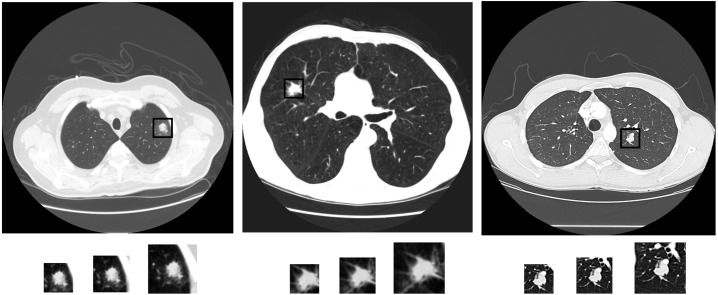
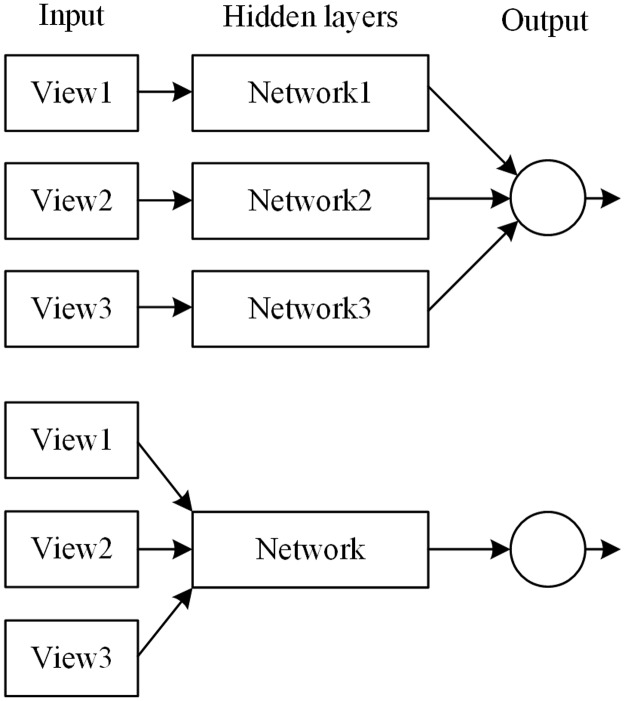
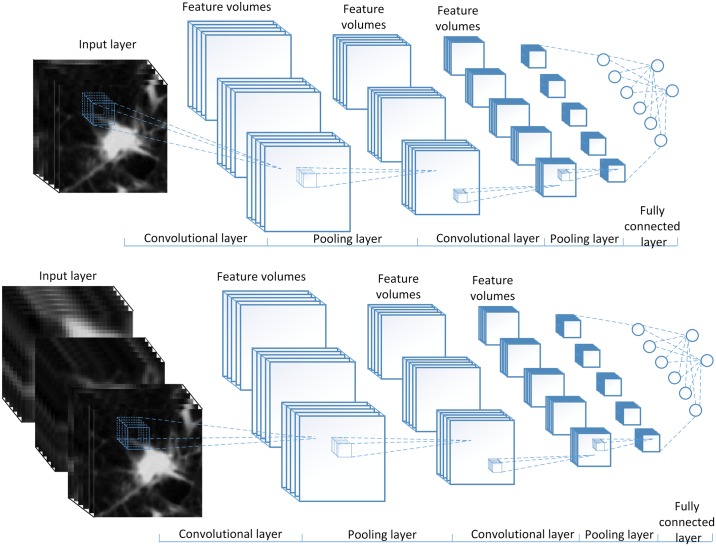
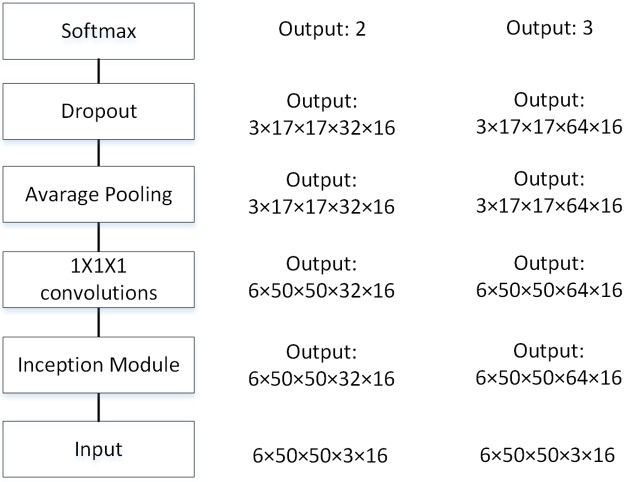
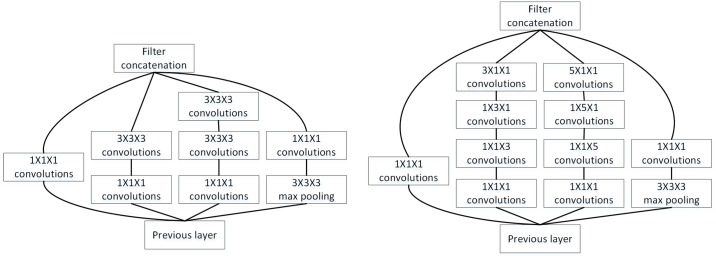
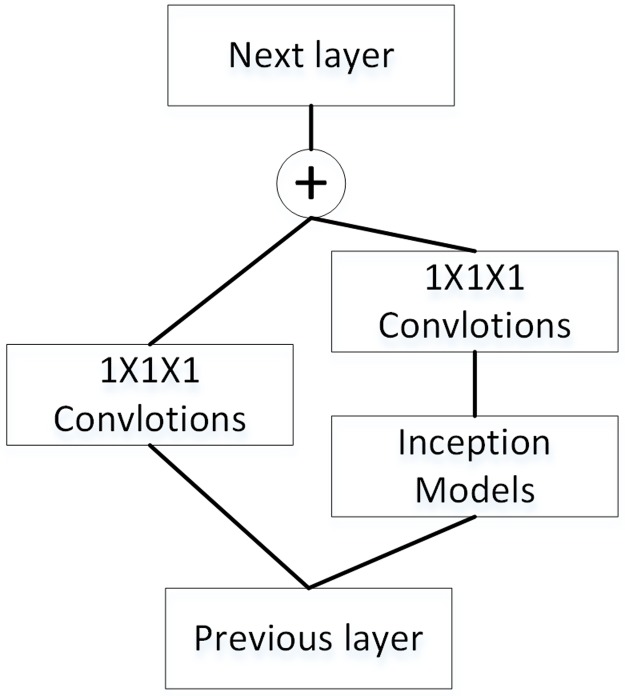
The 3D convolutional neural network (CNN) is able to make full use of the spatial 3D context information of lung nodules, and the multi-view strategy has been shown to be useful for improving the performance of 2D CNN in classifying lung nodules. In this paper, we explore the classification of lung nodules using the 3D multi-view convolutional neural networks (MV-CNN) with both chain architecture and directed acyclic graph architecture, including 3D Inception and 3D Inception-ResNet. All networks employ the multi-view-one-network strategy. We conduct a binary classification (benign and malignant) and a ternary classification (benign, primary malignant and metastatic malignant) on Computed Tomography (CT) images from Lung Image Database Consortium and Image Database Resource Initiative database (LIDC-IDRI). All results are obtained via 10-fold cross validation. As regards the MV-CNN with chain architecture, results show that the performance of 3D MV-CNN surpasses that of 2D MV-CNN by a significant margin. Finally, a 3D Inception network achieved an error rate of 4.59% for the binary classification and 7.70% for the ternary classification, both of which represent superior results for the corresponding task. We compare the multi-view-one-network strategy with the one-view-one-network strategy. The results reveal that the multi-view-one-network strategy can achieve a lower error rate than the one-view-one-network strategy.
Overview
The claims and statistics of this paper haven’t been checked yet.
Free: it reads the open-access text and checks the first 5 claims that cite a source we can check. Create a free account to check every claim.
Integrity signals
Registry
Cites
Statistics
Figures
Verification
Claims the paper makes
The claims and statistics of this paper haven’t been checked yet.
Free: it reads the open-access text and checks the first 5 claims that cite a source we can check. Create a free account to check every claim.
Self-check
Percentages, sums and reported differences re-computed from the paper’s own numbers.
The self-check needs the paper’s full text.
Citations
Cites
Deep Residual Learning for Image Recognition
He, K., Zhang, X., Ren, S., & Sun, J. (2016) · 2016 IEEE Conference on Computer Vision and Pattern Recognition (CVPR) · doi:10.1109/cvpr.2016.90 · Cited by 235,474
Very Deep Convolutional Networks for Large-Scale Image Recognition
Simonyan, K., & Zisserman, A. (2014) · arXiv · doi:10.48550/arxiv.1409.1556 · Cited by 114,148
ImageNet classification with deep convolutional neural networks
Krizhevsky, A., Sutskever, I., & Hinton, G. E. (2017) · Communications of the ACM · doi:10.1145/3065386 · Cited by 112,155
Faster R-CNN: Towards Real-Time Object Detection with Region Proposal Networks
Ren, S., He, K., Girshick, R., & Sun, J. (2017) · IEEE Transactions on Pattern Analysis and Machine Intelligence · doi:10.1109/tpami.2016.2577031 · Cited by 73,472
Faster R-CNN: Towards Real-Time Object Detection with Region Proposal Networks
Ren, S., He, K., Girshick, R., & Sun, J. (2015) · arXiv · doi:10.48550/arxiv.1506.01497 · Cited by 70,812
Jemal, A., Bray, F., Center, M. M., Ferlay, J., Ward, E., & Forman, D. (2011) · CA: A Cancer Journal for Clinicians · doi:10.3322/caac.20107 · Cited by 54,679
Going deeper with convolutions
Szegedy, C., Liu, W., Jia, Y., Sermanet, P., Reed, S., Anguelov, D., Erhan, D., Vanhoucke, V., & Rabinovich, A. (2015) · 2015 IEEE Conference on Computer Vision and Pattern Recognition (CVPR) · doi:10.1109/cvpr.2015.7298594 · Cited by 48,562
Rethinking the Inception Architecture for Computer Vision
Szegedy, C., Vanhoucke, V., Ioffe, S., Shlens, J., & Wojna, Z. (2016) · 2016 IEEE Conference on Computer Vision and Pattern Recognition (CVPR) · doi:10.1109/cvpr.2016.308 · Cited by 32,138
Batch Normalization: Accelerating Deep Network Training by Reducing Internal Covariate Shift
Ioffe, S., & Szegedy, C. (2015) · arXiv · doi:10.48550/arxiv.1502.03167 · Cited by 27,818
Global cancer statistics, 2012
Torre, L. A., Bray, F., Siegel, R. L., Ferlay, J., Lortet‐Tieulent, J., & Jemal, A. (2015) · CA: A Cancer Journal for Clinicians · doi:10.3322/caac.21262 · Cited by 26,850
Cited by
Convolutional neural networks: an overview and application in radiology
Yamashita, R., Nishio, M., Do, R. K. G., & Togashi, K. (2018) · Insights into Imaging · doi:10.1007/s13244-018-0639-9 · Cited by 4,682
“One previous study used 3D-CNN for fully capturing the spatial 3D context information of lung nodules [43].”
MethodConvolutional Neural Networks for Radiologic Images: A Radiologist’s Guide
Soffer, S., Ben-Cohen, A., Shimon, O., Amitai, M. M., Greenspan, H., & Klang, E. (2019) · Radiology · doi:10.1148/radiol.2018180547 · Cited by 577
A review of deep learning with special emphasis on architectures, applications and recent trends
Sengupta, S., Basak, S., Saikia, P., Paul, S., Tsalavoutis, V., Atiah, F., Ravi, V., & Peters, A. (2020) · Knowledge-Based Systems · doi:10.1016/j.knosys.2020.105596 · Cited by 454
Beig, N., Khorrami, M., Alilou, M., Prasanna, P., Braman, N., Orooji, M., Rakshit, S., Bera, K., Rajiah, P., Ginsberg, J., et al. (2019) · Radiology · doi:10.1148/radiol.2018180910 · Cited by 328
“The majority of CNN approaches outperform the traditional radiomic-based approaches (11,12), but these algorithms are limited in their explanatory capacity of the deep features with neither a set of diagnostic rules nor an insight into the results (31).”
BackgroundDeep multi-view learning methods: A review
Yan, X., Hu, S., Mao, Y., Ye, Y., & Yu, H. (2021) · Neurocomputing · doi:10.1016/j.neucom.2021.03.090 · Cited by 322
“The multi-view CNN based on one-view-one-net mechanism adopts one convolutional neural network for each 80 view and extracts feature representation of each view separately, then multiple representations are fused through subsequent part of the network [49, 50, 51, 52, 2, 53, 46, 47, 48].”
Method
Metadata
- Authors
- Kang, G., Liu, K., Hou, B., & Zhang, N.
- Affiliations
- Beijing University of Posts and Telecommunications (CN)
- Corresponding author
- Liu, Kui
- Venue
- PLOS ONE
- Publisher
- Public Library of Science (PLoS)
- Published
- 2017-11-16
- Volume
- 12
- Issue
- 11
- Pages
- e0188290
- ISSN
- 1932-6203 (ISSN-L)
- PMC
- PMC5690636
- OpenAlex
- W2770853452
- Cited by
- 191
- References
- 38
- Citations by year
- 2026: 15 · 2025: 12 · 2024: 17 · 2023: 22 · 2022: 21 · 2021: 40 · 2020: 26 · 2019: 28 · 2018: 10
- FWCI
- 10.44
- Type
- journal article
- Language
- en
- Open access
- gold
- doi.org
- Licence
- Locations
- PLoS ONE (publishedVersion, cc-by)
- PubMed Central (publishedVersion, cc-by)
- PubMed (publishedVersion)
- RePEc: Research Papers in Economics (submittedVersion)
- DOAJ (DOAJ: Directory of Open Access Journals) (submittedVersion, cc-by-sa)
- Funders
- National Natural Science Foundation of China (61471064)
- National High Technology Research and Development Program of China (2015AA01A709)
- Topics
- Physical Sciences › Computer Science › Artificial Intelligence › AI in cancer detection
- Health Sciences › Medicine › Pulmonary and Respiratory Medicine › Lung Cancer Diagnosis and Treatment
- Health Sciences › Medicine › Radiology, Nuclear Medicine and Imaging › Radiomics and Machine Learning in Medical Imaging
- Keywords
- lung nodule classification, 3D convolutional neural networks, chain architecture, benign versus malignant nodules, LIDC-IDRI, CT images
- MeSH terms
- Algorithms, Solitary Pulmonary Nodule, Humans, Lung Neoplasms, Tomography, X-Ray Computed, Neural Networks, Computer
About these checks
Registry, retraction, Cites and statistics results are computed, not judged, with one exception: a printed reference that no index lists is read once by a model before it counts as a citation error. Claims are extracted by a model and kept only when their quote appears verbatim in the text; each cited source is then checked, with a model’s help, for whether it says what the claim relies on. Those verdicts can be wrong — read the claim’s quote and the cited source before relying on one.
Statistics and arithmetic are recomputed, not judged.
Confidence bands are shown only for fields calibrated on our annotated test set. None is calibrated yet, so no band is shown.
What counts as a claim ›How we measure confidence ›How we check this ›
Are you an author, or do you see a problem with this page? Request a review
Data sources
Bibliographic data: Semantic Scholar, OpenAlex, Crossref.
Contains information from the Semantic Scholar Academic Graph Datasets, made available under the ODC Attribution License (ODC-BY 1.0).
Semantic Scholar’s data is described in: Kinney, R., et al. (2023). The Semantic Scholar Open Data Platform. arXiv:2301.10140.
