

The DOI matches its Crossref record; 40 of the 40 references it cites were found in a registry or an index.
Feasibility of large-scale deployment of multiple wearable sensors in Parkinson's disease
Open accessAbstract
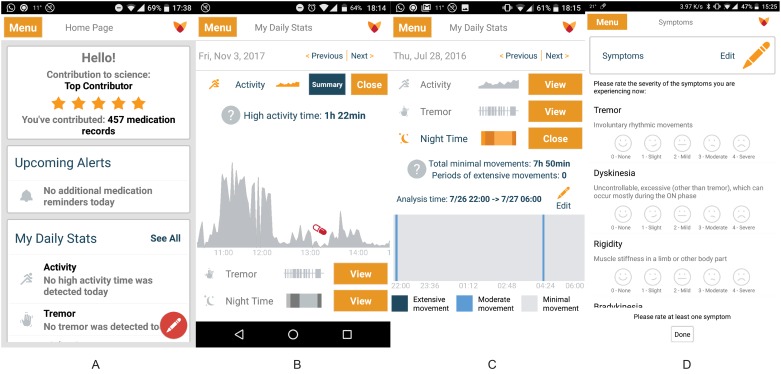
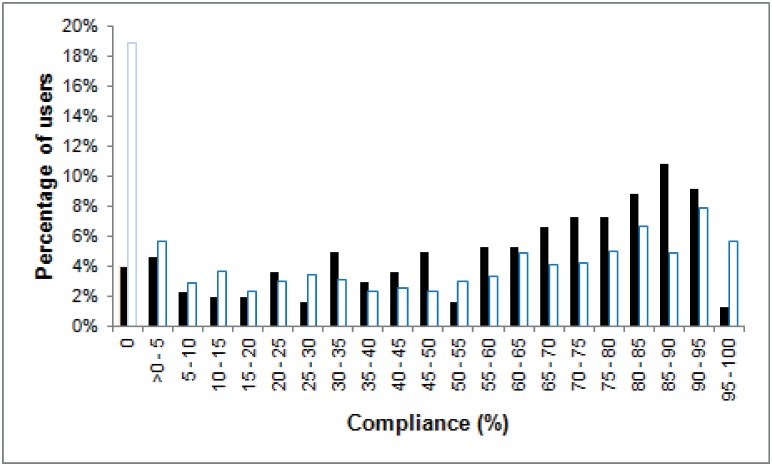
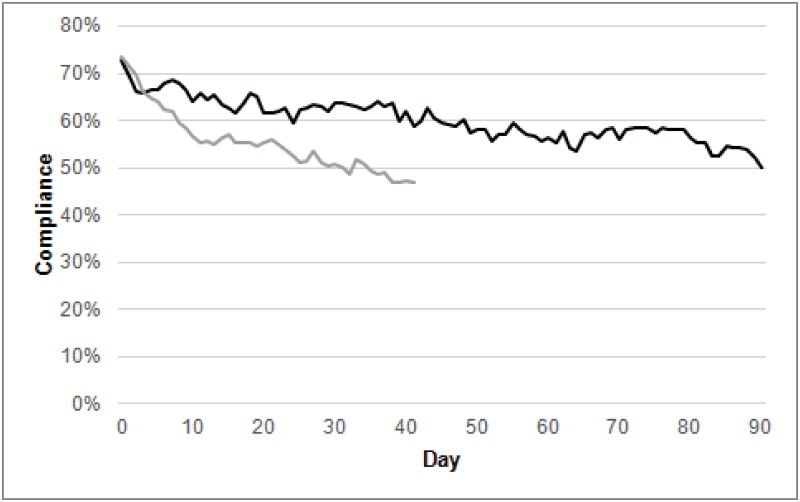
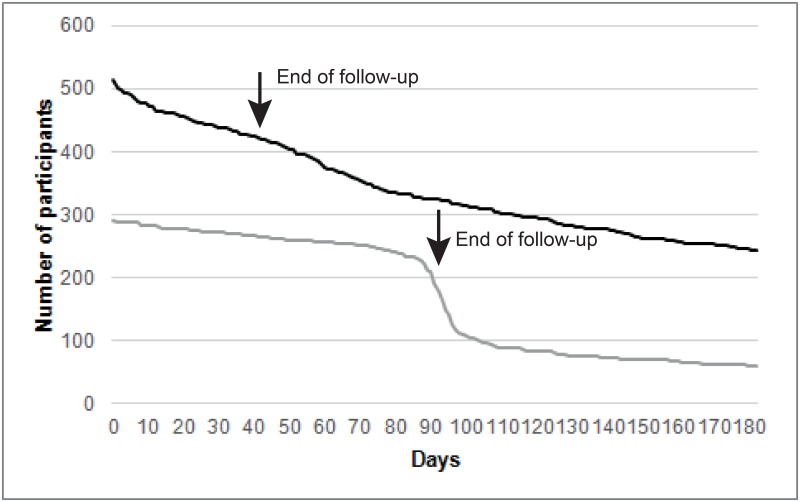
Wearable devices can capture objective day-to-day data about Parkinson's Disease (PD). This study aims to assess the feasibility of implementing wearable technology to collect data from multiple sensors during the daily lives of PD patients. The Parkinson@home study is an observational, two-cohort (North America, NAM; The Netherlands, NL) study. To recruit participants, different strategies were used between sites. Main enrolment criteria were self-reported diagnosis of PD, possession of a smartphone and age≥18 years. Participants used the Fox Wearable Companion app on a smartwatch and smartphone for a minimum of 6 weeks (NAM) or 13 weeks (NL). Sensor-derived measures estimated information about movement. Additionally, medication intake and symptoms were collected via self-reports in the app. A total of 953 participants were included (NL: 304, NAM: 649). Enrolment rate was 88% in the NL (n = 304) and 51% (n = 649) in NAM. Overall, 84% (n = 805) of participants contributed sensor data. Participants were compliant for 68% (16.3 hours/participant/day) of the study period in NL and for 62% (14.8 hours/participant/day) in NAM. Daily accelerometer data collection decreased 23% in the NL after 13 weeks, and 27% in NAM after 6 weeks. Data contribution was not affected by demographics, clinical characteristics or attitude towards technology, but was by the platform usability score in the NL (χ2 (2) = 32.014, p<0.001), and self-reported depression in NAM (χ2(2) = 6.397, p = .04). The Parkinson@home study shows that it is feasible to collect objective data using multiple wearable sensors in PD during daily life in a large cohort.
Overview
The claims and statistics of this paper haven’t been checked yet.
Run the check — free, no account needed. It reads the open-access text and checks the sources it cites.
Integrity signals
Registry
Cites
Statistics
Figures
Verification
Claims the paper makes
The claims and statistics of this paper haven’t been checked yet.
Run the check — free, no account needed. It reads the open-access text and checks the sources it cites.
Claims other papers make about this one
Each is checked against this paper’s own text: does it say what the citing paper says it does?
In the citing paper
“The Parkinson@home study26, 30 deployed the Fox Wearable Companion app to 953 participants in the Netherlands (13‐week study) and North America (6‐week study) to passively monitor behavior and rate the severity of selected symptoms. Adherence was 68% in the Netherlands and 62% in North America, and not affected by demographics, clinical characteristics, or attitude toward technology.26, 30”
From Evaluation of smartphone‐based testing to generate exploratory outcome measures in a phase 1 Parkinson's disease clinical trial (2018) · cites this paper as [30]
Self-check
Percentages, sums and reported differences re-computed from the paper’s own numbers.
The self-check needs the paper’s full text.
Citations
Cites
SUS: A 'Quick and Dirty' Usability Scale
(1996) · Usability Evaluation In Industry · doi:10.1201/9781498710411-35 · Cited by 8,989
Goetz, C. G., Tilley, B. C., Shaftman, S. R., Stebbins, G. T., Fahn, S., Martinez‐Martin, P., Poewe, W., Sampaio, C., Stern, M. B., Dodel, R., et al. (2008) · Movement Disorders · doi:10.1002/mds.22340 · Cited by 7,536
Adams, J., Dinesh, K., Xiong, M., Tarolli, C. G., Sharma, S., Sheth, N., Aranyosi, A. J., Zhu, W. Y., Goldenthal, S. B., Biglan, K., et al. (2017) · Digital Biomarkers · doi:10.1159/000479018 · Cited by 3,190
Diagnostic Criteria for Parkinson Disease
Gelb, D. J., Oliver, E., & Gilman, S. (1999) · Archives of Neurology · doi:10.1001/archneur.56.1.33 · Cited by 2,822
Eysenbach, G. (2005) · Journal of Medical Internet Research · doi:10.2196/jmir.7.1.e11 · Cited by 2,524
The Parkinson Progression Marker Initiative (PPMI)
MAREK, K. L., Jennings, D. L., Lasch, S., Siderowf, A. D., Tanner, C. M., Simuni, T., Coffey, C. S., Kieburtz, K. D., Flagg, E., Chowdhury, S., et al. (2011) · Progress in Neurobiology · doi:10.1016/j.pneurobio.2011.09.005 · Cited by 1,934
IEEE Transactions on Biomedical Engineering
(2025) · IEEE Transactions on Biomedical Engineering · doi:10.1109/tbme.10 · Cited by 1,414
Validity of the MoCA and MMSE in the detection of MCI and dementia in Parkinson disease
Hoops, S., Nazem, S., Siderowf, A. D., Duda, J. E., Xie, S. X., Stern, M. B., & Weintraub, D. A. (2009) · Neurology · doi:10.1212/wnl.0b013e3181c34b47 · Cited by 1,258
Handbook of Psychiatric Measures
Salzman, C. (2001) · American Journal of Psychiatry · doi:10.1176/appi.ajp.158.8.1343 · Cited by 1,172
Technology in Parkinson’s disease: challenges and opportunities
Espay, A. J., Bonato, P., Nahab, F. B., Maetzler, W., Dean, J. M., Klucken, J., Eskofier, B. M., Merola, A., Horak, F., Lang, A. E., et al. (2016) · Movement Disorders · doi:10.1002/mds.26642 · Cited by 654
Self-citation
Research works printed but not linked: 2
- R Schwab, 1969, Projection Technique for Evaluating Surgery in Parkinson's Disease: Third Symposium on Parkinson's Disease
- CC Meunier, 2012, Innovative Web-based Matching Service, Fox Trial Finder, as a mechanism to improve clinical trial recruitment, Movement Disorders, 27, e2
Cited by
Sorted by citations
Bloem, B. R., Okun, M. S., & Klein, C. (2021) · The Lancet · doi:10.1016/s0140-6736(21)00218-x · Cited by 3,920
Self-citationGait impairments in Parkinson’s disease
Mirelman, A., Bonato, P., Camicioli, R., Ellis, T. D., Giladi, N., Hamilton, J. L., Hass, C. J., Hausdorff, J. M., Pelosin, E., & Almeida, Q. J. (2019) · The Lancet Neurology · doi:10.1016/s1474-4422(19)30044-4 · Cited by 821
Espay, A. J., Hausdorff, J. M., Sánchez‐Ferro, Á., Klucken, J., Merola, A., Bonato, P., Paul, S. S., Horak, F. B., Vizcarra, J. A., Mestre, T., et al. (2019) · Movement Disorders · doi:10.1002/mds.27671 · Cited by 319
Self-citationLipsmeier, F., Taylor, K. I., Kilchenmann, T., Wolf, D., Scotland, A., Schjodt‐Eriksen, J., Cheng, W., Fernandez‐Garcia, I., Siebourg‐Polster, J., Jin, L., et al. (2018) · Movement Disorders · doi:10.1002/mds.27376 · Cited by 266
Teleneurology and mobile technologies: the future of neurological care
Dorsey, E. R., Glidden, A. M., Holloway, M. R., Birbeck, G. L., & Schwamm, L. H. (2018) · Nature Reviews Neurology · doi:10.1038/nrneurol.2018.31 · Cited by 258
Metadata
- Authors
- Silva de Lima, A. L., Hahn, T., Evers, L. J. W., de Vries, N. M., Cohen, E., Afek, M., Bataille, L., Daeschler, M., Claes, K., Boroojerdi, B., Terricabras, D., Little, M. A., Baldus, H., Bloem, B. R., & Faber, M. J.
- Affiliations
- Radboud University Nijmegen (NL)
- Intel (Israel) (IL)
- Michael J. Fox Foundation (US)
- UCB Pharma (Belgium) (BE)
- Aston University (GB)
- ORCID
- Venue
- PLOS ONE
- Publisher
- Public Library of Science (PLoS)
- Published
- 2017-12-20
- Volume
- 12
- Issue
- 12
- Pages
- e0189161
- ISSN
- 1932-6203 (ISSN-L)
- PMC
- PMC5738046
- OpenAlex
- W2779593300
- Cited by
- 162
- References
- 40
- Citations by year
- 2026: 2 · 2025: 16 · 2024: 18 · 2023: 23 · 2022: 20 · 2021: 23 · 2020: 27 · 2019: 23 · 2018: 10
- FWCI
- 6.81
- Type
- journal article
- Language
- en
- Open access
- gold
- doi.org
- Licence
- Locations
- PLoS ONE (publishedVersion, cc-by)
- Europe PMC (PubMed Central) (publishedVersion, cc-by)
- PubMed Central (publishedVersion, cc-by)
- PubMed (publishedVersion)
- Aston Publications Explorer (Aston University) (acceptedVersion, cc-by)
- Radboud Repository (Radboud University) (submittedVersion, cc-by)
- DOAJ (DOAJ: Directory of Open Access Journals) (submittedVersion, cc-by-sa)
- Radboud Repository (Radboud University) (submittedVersion)
- Funders
- Intel Corporation
- Parkinson's UK (J-1403, J-0901)
- ZonMw
- Coordenação de Aperfeiçoamento de Pessoal de Nível Superior (0428-140)
- Governo Brasil
- UCB Pharma
- Topics
- Physical Sciences › Computer Science › Computer Vision and Pattern Recognition › Context-Aware Activity Recognition Systems
- Health Sciences › Health Professions › General Health Professions › Mobile Health and mHealth Applications
- Health Sciences › Medicine › Clinical Neurology › Parkinson's Disease Mechanisms and Treatments
- Keywords
- Parkinson's disease, wearable sensors, smartwatches, accelerometer, feasibility, participant recruitment, data contribution, device usability, depression, medication adherence, self-reported symptoms, mobile application
- MeSH terms
- Aged, Feasibility Studies, Female, Gait, Humans, Male, Middle Aged, Movement, Parkinson Disease, Biosensing Techniques
About these checks
Registry, retraction, Cites and statistics results are computed, not judged, with one exception: a printed reference that no index lists is read once by a model before it counts as a citation error. Claims are extracted by a model and kept only when their quote appears verbatim in the text; each cited source is then checked, with a model’s help, for whether it says what the claim relies on. Those verdicts can be wrong — read the claim’s quote and the cited source before relying on one.
Statistics and arithmetic are recomputed, not judged.
Confidence bands are shown only for fields calibrated on our annotated test set. None is calibrated yet, so no band is shown.
What counts as a claim ›How we measure confidence ›How we check this ›
Are you an author, or do you see a problem with this page? Request a review
