

Rainfall trends and variation in the Maasai Mara ecosystem and their implications for animal population and biodiversity dynamics
Open accessThe DOI matches its Crossref record; 134 of the 136 references it cites were found in a registry or an index.
Abstract
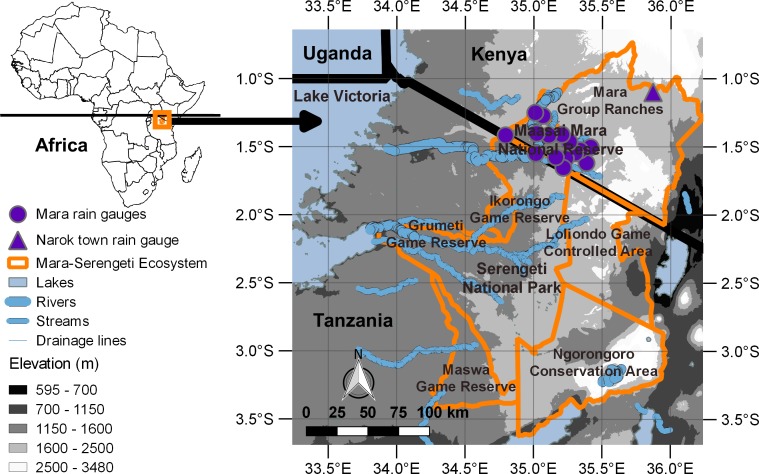
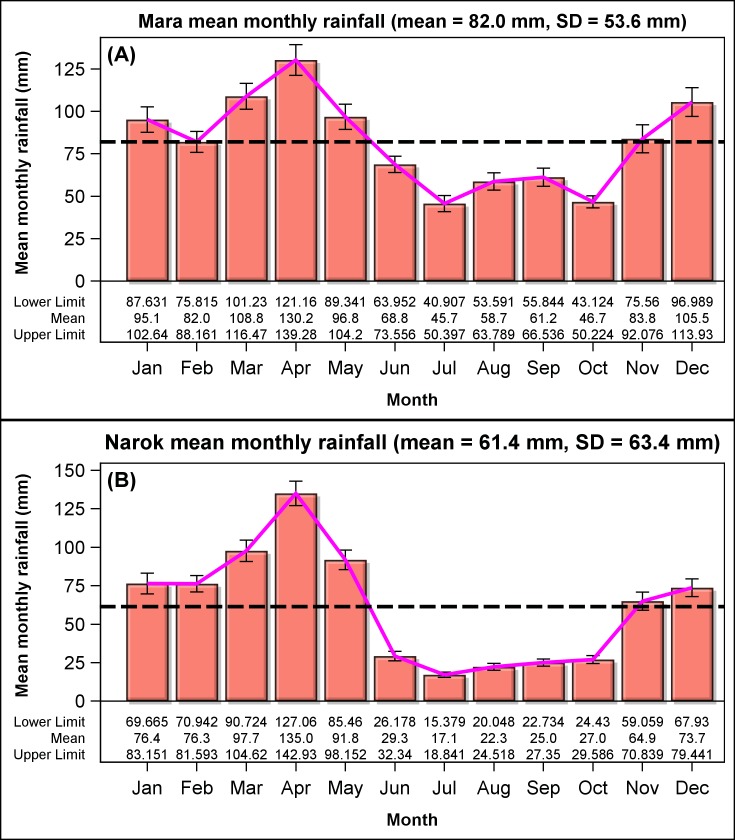
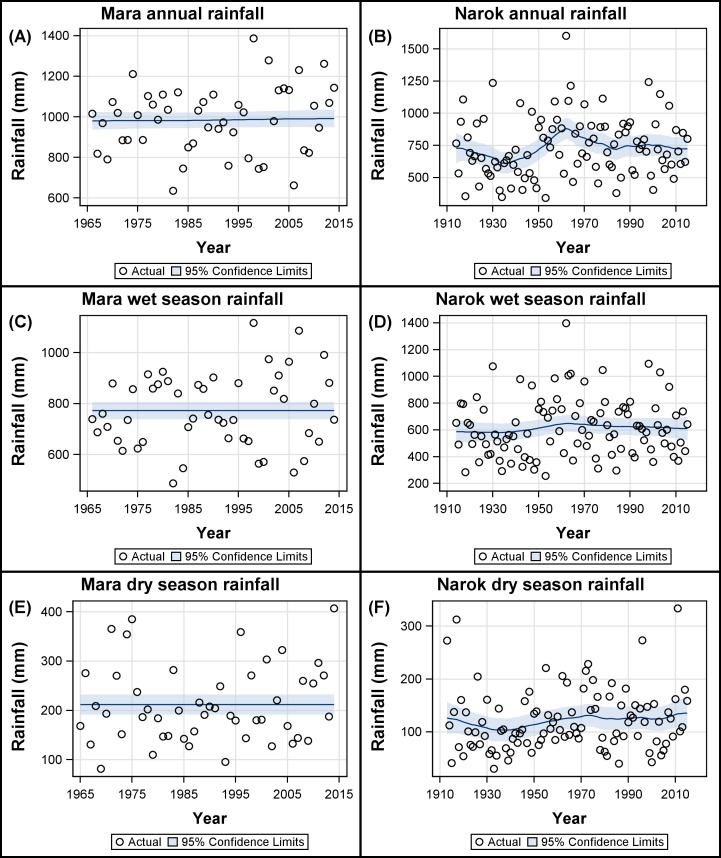
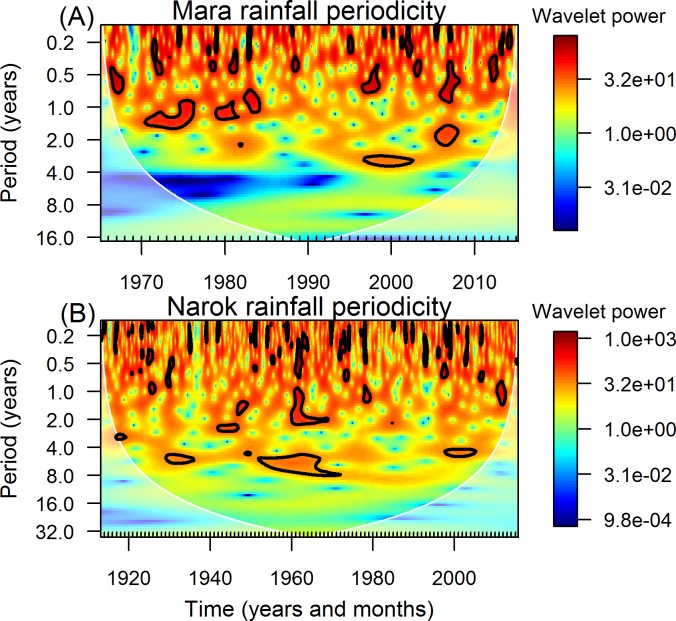
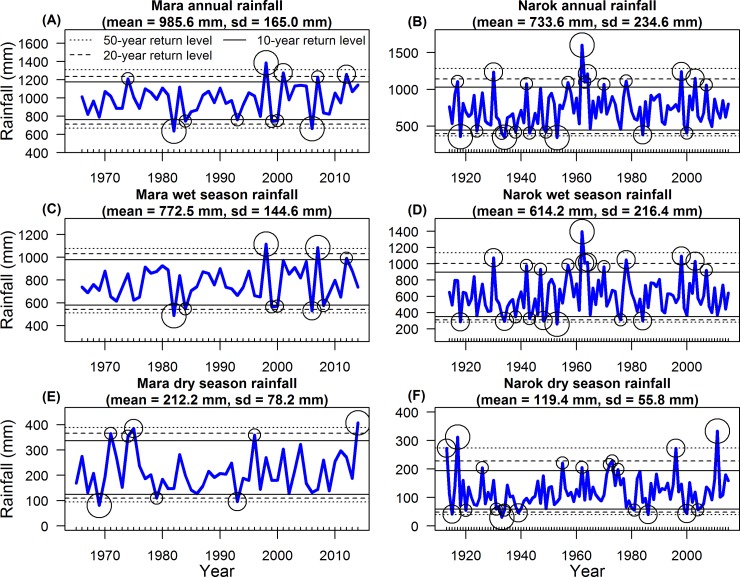
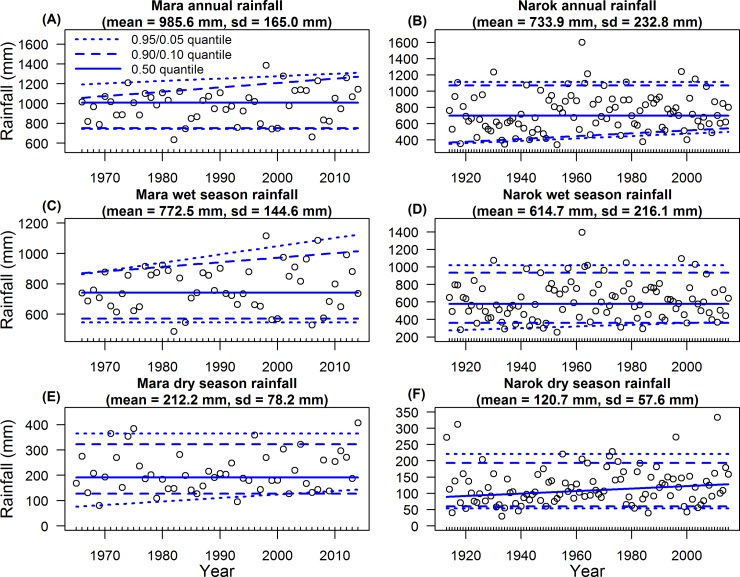
Rainfall exerts a controlling influence on the availability and quality of vegetation and surface water for herbivores in African terrestrial ecosystems. We analyse temporal trends and variation in rainfall in the Maasai Mara ecosystem of East Africa and infer their implications for animal population and biodiversity dynamics. The data originated from 15 rain gauges in the Mara region (1965-2015) and one station in Narok Town (1913-2015), in Kenya's Narok County. This is the first comprehensive and most detailed analysis of changes in rainfall in the region of its kind. Our results do not support the current predictions of the International Panel of Climate Change (IPCC) of very likely increases of rainfall over parts of Eastern Africa. The dry season rainfall component increased during 1935-2015 but annual rainfall decreased during 1962-2015 in Narok Town. Monthly rainfall was more stable and higher in the Mara than in Narok Town, likely because the Mara lies closer to the high-precipitation areas along the shores of Lake Victoria. Predominantly deterministic and persistent inter-annual cycles and extremely stable seasonal rainfall oscillations characterize rainfall in the Mara and Narok regions. The frequency of severe droughts increased and floods intensified in the Mara but droughts became less frequent and less severe in Narok Town. The timings of extreme droughts and floods coincided with significant periodicity in rainfall oscillations, implicating strong influences of global atmospheric and oceanic circulation patterns on regional rainfall variability. These changing rainfall patterns have implications for animal population dynamics. The increase in dry season rainfall during 1935-2015 possibly counterbalanced the impacts of resource scarcity generated by the declining annual rainfall during 1965-2015 in Narok Town. However, the increasing rainfall extremes in the Mara can be expected to create conditions conducive to outbreaks of infectious animal diseases and reduced vegetation quality for herbivores, particularly when droughts and floods persist over multiple years. The more extreme wet season rainfall may also alter herbivore space use, including migration patterns.
Overview
The claims and statistics of this paper haven’t been checked yet.
Free: it reads the open-access text and checks the first 5 claims that cite a source we can check. Create a free account to check every claim.
Integrity signals
Registry
Cites
Statistics
Figures
Verification
Claims the paper makes
The claims and statistics of this paper haven’t been checked yet.
Free: it reads the open-access text and checks the first 5 claims that cite a source we can check. Create a free account to check every claim.
Claims other papers make about this one
Each is checked against this paper’s own text: does it say what the citing paper says it does?
The source backs part of the claim, not all of it — or backs it for a different population, condition or comparison.
In the citing paper
“State-space models are especially well suited for analysing trends and variation in time series of climatic and vegetation variables [3, 18, 19] because they decompose such series into intuitively interpretable but unobservable additive components [14, 17, 20, 21].”
From Trends and cycles in rainfall, temperature, NDVI, IOD and SOI in the Mara-Serengeti: Insights for biodiversity conservation (2024) · cites this paper as [3]
Experimental — accuracy not yet measuredThe source backs part of the claim, not all of it — or backs it for a different population, condition or comparison.
In the citing paper
“Global climate change and variation are now widely recognized, yet their regional manifestations and consequences for biodiversity conservation and dynamics, especially in the southern hemisphere, are less well understood [1–5].”
From Trends and cycles in rainfall, temperature, NDVI, IOD and SOI in the Mara-Serengeti: Insights for biodiversity conservation (2024) · cites this paper as [3]
Experimental — accuracy not yet measuredThe source backs part of the claim, not all of it — or backs it for a different population, condition or comparison.
In the citing paper
“Yet, despite their intuitive appeal, utility and elegant decomposition of time series of climatic or other variable types into readily understandable components, state-space models have only rarely been used to analyse trends and variation in climatic variables, including for the GMSE [3, 11, 18, 19].”
From Trends and cycles in rainfall, temperature, NDVI, IOD and SOI in the Mara-Serengeti: Insights for biodiversity conservation (2024) · cites this paper as [3]
Experimental — accuracy not yet measuredThe source backs part of the claim, not all of it — or backs it for a different population, condition or comparison.
In the citing paper
“In the GMSE in particular, dominant rainfall cycles have time-varying periods ranging between 3 and 10 years [3, 10].”
From Trends and cycles in rainfall, temperature, NDVI, IOD and SOI in the Mara-Serengeti: Insights for biodiversity conservation (2024) · cites this paper as [3]
Experimental — accuracy not yet measuredThe cited source says what the claim attributes to it.
In the citing paper
“The dominant inter-annual rainfall cycle periods in East Africa typically range from 2 to 13 years but can vary markedly in space and time [3, 18, 19, 44–47].”
From Trends and cycles in rainfall, temperature, NDVI, IOD and SOI in the Mara-Serengeti: Insights for biodiversity conservation (2024) · cites this paper as [3]
1 more claim about this paper
Create a free account to see every claim other papers make about this one.
Self-check
Percentages, sums and reported differences re-computed from the paper’s own numbers.
The self-check needs the paper’s full text.
Citations
Cites
R: A Language and Environment for Statistical Computing
R Core Team (2025) · doi:10.32614/r.manuals · Cited by 352,181
Model selection and multimodel inference: a practical information-theoretic approach.
Guthery, F. S., Burnham, K. P., & Anderson, D. R. (2003) · The Journal of Wildlife Management · doi:10.2307/3802723 · Cited by 41,495
A Practical Guide to Wavelet Analysis
Torrence, C., & Compo, G. P. (1998) · Bulletin of the American Meteorological Society · doi:10.1175/1520-0477(1998)079<0061:apgtwa>2.0.co;2 · Cited by 14,890
In situ click chemistry generation of cyclooxygenase-2 inhibitors
Bhardwaj, A., Kaur, J., Wuest, M., & Wuest, F. (2017) · Nature Communications · doi:10.1038/s41467-016-0009-6 · Cited by 7,448
A dipole mode in the tropical Indian Ocean
Saji, N. H., Goswami, B. N., Vinayachandran, P. N., & Yamagata, T. (1999) · Nature · doi:10.1038/43854 · Cited by 5,510
Time Series Analysis by State Space Methods: Second Edition
Durbin, J., & Koopman, S. J. (2012) · doi:10.1093/acprof:oso/9780199641178.001.0001 · Cited by 3,301
Model selection and multimodel inference : a practical information-theoretic approach
Burnham, K. P., Anderson, D. R., & Burnham, K. P. (2002) · Thammasat University Digital Collections · Cited by 2,907
Coupled ocean–atmosphere dynamics in the Indian Ocean during 1997–98
Webster, P. J., Moore, A. M., Loschnigg, J. P., & Leben, R. R. (1999) · Nature · doi:10.1038/43848 · Cited by 2,144
Determinants of woody cover in African savannas.
Sankaran, M., Hanan, N. P., Scholes, R. J., Ratnam, J., Augustine, D. J., Cade, B. S., Gignoux, J., Higgins, S. I., Le Roux, X., Ludwig, F., et al. (2005) · Nature · doi:10.1038/nature04070 · Cited by 1,963
Anthropogenic contribution to global occurrence of heavy-precipitation and high-temperature extremes
Fischer, E. M., & Knutti, R. (2015) · Nature Climate Change · doi:10.1038/nclimate2617 · Cited by 1,427
Research works printed but not linked: 2
- Niang I, Ruppel OC, Abdrabo MA, Essel A, Lennard C, Padgham J, et al 2014: Africa In: Barros VR, Field CB, Dokken DJ, Mastrandrea MD, Mach KJ, Bilir TE, et al, editors. Climate change 2014: impacts, adaptation, and vulnerability. Part B: regional aspects. Contribution of working Group II to the fifth assessment report of the Intergovernmental Panel on Climate Change. Cambridge, UK and New York, NY, USA: Cambridge University Press 2014 pp. 1199– 1265.
- Bartzke GS, Ogutu JO, Mtui D, Mukhopadhyay S, Piepho H-P. Modelled trends in climate and vegetation. 2016. Report No.: 3.1 Available from: https://www.researchgate.net/profile/Joseph_Ogutu2/publication/308802687_Modelling_trends_and_variation_in_climate_of_the_Serengeti-Mara_Ecosystem/links/57f3740508ae8da3ce51b363.pdf.
Cited by
Cross-boundary human impacts compromise the Serengeti-Mara ecosystem
Veldhuis, M. P., Ritchie, M. E., Ogutu, J. O., Morrison, T. A., Beale, C. M., Estes, A. B., Mwakilema, W., Ojwang, G. O., Parr, C. L., Probert, J., et al. (2019) · Science · doi:10.1126/science.aav0564 · Cited by 265
Self-citationLong-term spatial-temporal trends and variability of rainfall over Eastern and Southern Africa
Muthoni, F. K., Odongo, V. O., Ochieng, J., Mugalavai, E. M., Mourice, S. K., Hoesche-Zeledon, I., Mwila, M., & Bekunda, M. (2019) · Theoretical and Applied Climatology · doi:10.1007/s00704-018-2712-1 · Cited by 185
“There is an increasing body of evidence supporting that climate change and variability have significant impact on ecosystem health (Bartzke et al. 2018) and agricultural production”
BackgroundHuman-wildlife conflicts and their correlates in Narok County, Kenya
Mukeka, J. M., Ogutu, J. O., Kanga, E., & Røskaft, E. (2019) · Global Ecology and Conservation · doi:10.1016/j.gecco.2019.e00620 · Cited by 171
Self-citationQuantifying water requirements of African ungulates through a combination of functional traits
Kihwele, E., Mchomvu, V., Owen‐Smith, N., Hetem, R. S., Hutchinson, M. C., Potter, A. B., Olff, H., & Veldhuis, M. P. (2020) · Ecological Monographs · doi:10.1002/ecm.1404 · Cited by 75
“For arid and semiarid regions throughout Africa, a reduction in the amount of precipitation received during the dry season is expected, which will likely trigger more recurrent and severe droughts (Engelbrecht et al. 2015, Bartzke et al. 2018).”
BackgroundExploring linkages between drought and HIV treatment adherence in Africa: a systematic review
Orievulu, K. S., Ayeb‐Karlsson, S., Ngema, S., Baisley, K. J., Tanser, F. C., Ngwenya, N. B., Seeley, J., Hanekom, W. A., Herbst, K., Kniveton, D. R., et al. (2022) · The Lancet Planetary Health · doi:10.1016/s2542-5196(22)00016-x · Cited by 73
Impacts of extreme weather events on terrestrial carbon and nitrogen cycling: A global meta-analysis
Qu, Q., Xu, H., Ai, Z., Wang, M., Wang, G., Liu, G., Geissen, V., Ritsema, C. J., & Xue, S. (2023) · Environmental Pollution · doi:10.1016/j.envpol.2022.120996 · Cited by 65
Nyantakyi‐Frimpong, H. (2019) · Applied Geography · doi:10.1016/j.apgeog.2019.102079 · Cited by 64
Resource pulses influence the spatio‐temporal dynamics of a large carnivore population
Broekhuis, F., Elliot, N. B., Keiwua, K., Koinet, K., Macdonald, D. W., Mogensen, N., Thuo, D., & Gopalaswamy, A. M. (2020) · Ecography · doi:10.1111/ecog.05154 · Cited by 58
Nkedianye, D., Ogutu, J. O., Said, M. Y., Kifugo, S. C., de Leeuw, J., van Gardingen, P. R., & Reid, R. S. (2020) · Pastoralism Research Policy and Practice · doi:10.1186/s13570-020-00165-2 · Cited by 57
Self-citationRainfall forecasting in upper Indus basin using various artificial intelligence techniques
Hammad, M., Shoaib, M., Salahudin, H., Inam, A., Khan, M. M., & Ullah, M. K. (2021) · Stochastic Environmental Research and Risk Assessment · doi:10.1007/s00477-021-02013-0 · Cited by 44
“There is an expanding body of evidence in favor of climate change and increase in climatic uncertainty (Bartzke et al. 2018; Cra-paro et al. 2015; Lobell et al. 2011; Niles et al. 2015).”
BackgroundBosire, C. K., Rao, E. J. O., Muchenje, V., van Wijk, M. T., Ogutu, J. O., Mekonnen, M. M., Auma, J. O., Lukuyu, B. A., & Hammond, J. (2019) · Agriculture Ecosystems & Environment · doi:10.1016/j.agee.2019.106592 · Cited by 44
Self-citationAccelerating savanna degradation threatens the Maasai Mara socio-ecological system
Li, W., Buitenwerf, R., Munk, M., Amoke, I., Bøcher, P. K., & Svenning, J. (2020) · Global Environmental Change · doi:10.1016/j.gloenvcha.2019.102030 · Cited by 40
Hunninck, L., May, R. F., Jackson, C. R., Palme, R., Røskaft, E., & Sheriff, M. J. (2020) · Conservation Physiology · doi:10.1093/conphys/coz117 · Cited by 38
Upstream land-use negatively affects river flow dynamics in the Serengeti National Park
Kihwele, E., Veldhuis, M. P., Loishooki, A., Hongoa, J. R., Hopcraft, J. G. C., Olff, H., & Wolanski, E. J. (2021) · Ecohydrology & Hydrobiology · doi:10.1016/j.ecohyd.2020.12.004 · Cited by 35
“However, the rainfall data from the Masai Mara National Reserve in Kenya, adjoining the Serengeti National Park (SNP), do not support that prediction so far ( Bartzke et al. 2018 ).”
BackgroundBeyond MAP: A guide to dimensions of rainfall variability for tropical ecology
Schwartz, N. B., Lintner, B. R., Feng, X. D., & Powers, J. S. (2020) · Biotropica · doi:10.1111/btp.12830 · Cited by 34
“For example, regions with multiple wet and dry seasons may have multiple cycles of vegetation growth (Zhang, 2005), and multimodal seasonal cycles have been shown to impact wildlife populations (Bartzke et al., 2018; Ogutu, Piepho, Dublin, Bhola, & Reid, 2008).”
BackgroundDutton, C. L., Subalusky, A. L., Hill, T. D., Aleman, J. C., Rosi, E. J., Onyango, K. B., Kanuni, K., Cousins, J. A., Staver, A. C., & Post, D. M. (2019) · The Science of The Total Environment · doi:10.1016/j.scitotenv.2019.01.421 · Cited by 33
A review and SWOC analysis of natural heritage tourism in sub-Saharan Africa
Mutanga, C. N., Kolawole, O. D., Gondo, R., & Mbaiwa, J. E. (2023) · Journal of Heritage Tourism · doi:10.1080/1743873x.2023.2255689 · Cited by 31
“The phenomena have also been observed to impact the Maasai Mara National Reserve where changing rainfall patterns and increased temperatures have in fl uenced the timing and routes of the wildebeest migration (Bartzke et al., 2018; Kilungu et al., 2017).”
BackgroundWilkinson, C. E., Brashares, J. S., Bett, A., & Kelly, M. (2021) · Frontiers in Conservation Science · doi:10.3389/fcosc.2021.681769 · Cited by 31
Meise, K., Franks, D. W., & Bro‐Jørgensen, J. (2019) · Philosophical Transactions of the Royal Society B Biological Sciences · doi:10.1098/rstb.2019.0009 · Cited by 26
“Over a longer time-frame, human-induced climate change is predicted to have an intensifying impact on environmental conditions [64], with the consensus prediction for East Africa being that rainfall will increase ([65]; however, see [66]).”
BackgroundDeforestation and water availability as main drivers of human-elephant conflict
Botey, M. M., Kivuyo, E., Sitati, N. W., & Perea, R. (2024) · Global Ecology and Conservation · doi:10.1016/j.gecco.2024.e03068 · Cited by 28
Omondi, G. P., Obanda, V., VanderWaal, K. L., Deen, J., & Travis, D. A. (2021) · Preventive Veterinary Medicine · doi:10.1016/j.prevetmed.2021.105259 · Cited by 24
“Rainfall in this ecosystem is largely bimodal, varying from 500 mm in the southeast to 1300 mm in the northwest (Bartzke et al., 2018) creating spatiotemporal heterogeneity in water and forage distribution, which influences wild herbivores and domestic stock movement.”
BackgroundWall, J., Hahn, N. R., Carroll, S., Mwiu, S., Goss, M., Sairowua, W., Tiedeman, K., Kiambi, S., Omondi, P., Douglas‐Hamilton, I., et al. (2024) · Movement Ecology · doi:10.1186/s40462-023-00436-8 · Cited by 25
“Seasonal rainfall patterns are generally bimodal, with two wet periods and two dry periods annually but rainfall is becoming more variable overall [51, 52].”
BackgroundVettorazzi, M., Mogensen, N., Kaelo, B., & Broekhuis, F. (2022) · Journal of Zoology · doi:10.1111/jzo.13013 · Cited by 23
Land Use and Land Cover Change Within and Around the Greater Serengeti Ecosystem, Tanzania
Kija, H. K., Ogutu, J. O., Mangewa, L. J., Bukombe, J. K., Verones, F., GRAAE, B. J., Kideghesho, J. R., Said, M. Y., & Nzunda, E. F. (2020) · American Journal of Remote Sensing · doi:10.11648/j.ajrs.20200801.11 · Cited by 23
“The increase in water bodies was concurrent with increasing rainfall in the Mara-Serengeti ecosystem associated with the intensification of the El Niño Southern Oscillation (ENSO) [107] and the Indian Ocean Dipole [65].”
BackgroundSelf-citationNkinda, M., Rwiza, M. J., Ijumba, J. N., & Njau, K. N. (2020) · Environmental Monitoring and Assessment · doi:10.1007/s10661-020-08681-9 · Cited by 19
Alternative Biogeochemical States of River Pools Mediated by Hippo Use and Flow Variability
Dutton, C. L., Subalusky, A. L., Hamilton, S. K., Bayer, E. C., Njoroge, L., Rosi, E. J., & Post, D. M. (2020) · Ecosystems · doi:10.1007/s10021-020-00518-3 · Cited by 21
Nthiwa, D., Bett, B., Odongo, D., Kenya, E., Wainaina, M., Grazioli, S., Foglia, E. A., Brocchi, E., & Alonso, S. (2020) · Preventive Veterinary Medicine · doi:10.1016/j.prevetmed.2020.104929 · Cited by 18
Gicquel, M., East, M. L., Hofer, H., Cubaynes, S., & Benhaiem, S. (2022) · Ecosphere · doi:10.1002/ecs2.4012 · Cited by 21
Mukhopadhyay, S., Ogutu, J. O., Bartzke, G., Dublin, H. T., & Piepho, H.-P. (2019) · Journal of Agricultural, Biological and Environmental Statistics · doi:10.1007/s13253-019-00357-3 · Cited by 17
“1975) or temporal (Pennycuick and Norton-Griffiths 1976; Prins and Loth 1988; Ogutu et al. 2008b; Ritchie 2008; Bartzke et al. 2018) variation in rainfall in the Serengeti–Mara ecosystem, our study is the first to model simultaneous spatio-temporal variation in rainfall in this region.”
BackgroundSelf-citationMtui, D., Ogutu, J. O., Okick, R. E., & Newmark, W. D. (2022) · PLoS ONE · doi:10.1371/journal.pone.0270769 · Cited by 16
“We selected these seasons, which follow Maicher et al [14], to permit a direct comparison of phenological changes in butterfly community structure in montane forests in East Africa with montane forests in West Africa.”
BackgroundSelf-citationOjwang, G. O., Ogutu, J. O., Said, M. Y., Ojwala, M. A., Kifugo, S. C., Verones, F., GRAAE, B. J., Buitenwerf, R., & Olff, H. (2024) · Frontiers in Remote Sensing · doi:10.3389/frsen.2023.1188635 · Cited by 21
Self-citationKimaro, H. S., Asenga, A., Munishi, L. K., & Treydte, A. C. (2019) · Environment and Natural Resources Research · doi:10.5539/enrr.v9n3p63 · Cited by 15
“, the short rains and the long rains, with average annual rainfall of 600-900mm (Bartzke et al., 2018; URT, 2017b) and average annual temperatures of 9°C-22°C in the winter season, and 18°C31°C in summer (URT, 2017b).”
BackgroundLong-term historical and projected herbivore population dynamics in Ngorongoro crater, Tanzania
Moehlman, P. D., Ogutu, J. O., Piepho, H.-P., Runyoro, V. A., Coughenour, M. B., & Boone, R. B. (2020) · PLOS ONE · doi:10.1371/journal.pone.0212530 · Cited by 14
“However, increasing frequency and intensity of droughts [19,20], widening variation of river flows [21] and rising temperatures [19] hasten the need to advance our understanding of how anticipated climate changes will likely affect larger herbivore populations.”
BackgroundSelf-citationKariuki, R. W., Capitani, C., Munishi, L. K., Shoemaker, A., Mustaphi, C. J. C., William, N., Lane, P. J., & Marchant, R. (2022) · Frontiers in Conservation Science · doi:10.3389/fcosc.2022.920143 · Cited by 17
Fecal steroids as a potential tool for conservation paleobiology in East Africa
Kemp, A. C., Vane, C. H., Kim, A. W., Dutton, C. L., Subalusky, A. L., Kemp, S. K., & Parnell, A. C. (2021) · Biodiversity and Conservation · doi:10.1007/s10531-021-02328-y · Cited by 15
Gomes, M., Ralph, T. J., Helander, C., & Humphries, M. (2023) · CATENA · doi:10.1016/j.catena.2023.107148 · Cited by 15
Effect of local climate anomalies on giraffe survival
Bond, M. L., Özgül, A., & Lee, D. (2023) · Biodiversity and Conservation · doi:10.1007/s10531-023-02645-4 · Cited by 14
“Bartzke et al. (2018) asserted that rainfall is the principal driver of the population dynamics of savanna herbivores by mediating plant biomass production and nutrient concentration, as well as diseases.”
BackgroundOgutu, J. O., Bartzke, G. S., Mukhopadhyay, S., Dublin, H. T., Senteu, J. S., Gikungu, D., Obara, I., & Piepho, H.-P. (2024) · PLOS Climate · doi:10.1371/journal.pclm.0000388 · Cited by 12
Self-citationInter-comparison of global precipitation data products at the river basin scale
Hu, X., Zhou, Z., Xiong, H., Gao, Q., Cao, X., & Yang, X. (2023) · Hydrology research · doi:10.2166/nh.2023.062 · Cited by 12
Moisture and temperature influences on nonlinear vegetation trends in Serengeti National Park
Huang, N. T., Mondal, P., Cook, B. I., & McDermid, S. (2021) · Environmental Research Letters · doi:10.1088/1748-9326/ac1a37 · Cited by 13
Rainfall Forecasting Using Machine Learning Algorithms for Localized Events
Ganapathy, G. P., Srinivasan, K., Datta, D., Chang, C., Purohit, O., Zaalishvili, V. B., & Бурдзиева, О. Г. (2022) · Computers, materials & continua/Computers, materials & continua (Print) · doi:10.32604/cmc.2022.023254 · Cited by 12
“Investigative studies have shown that rainfall impacts the carbon exchange [12–14] of the ecosystem; it also has imputation for the community of animals and the overall dynamics [15,16] of the biodiversity.”
BackgroundLong-term trends in elephant mortality and their causes in Kenya
Mukeka, J. M., Ogutu, J. O., Kanga, E., Piepho, H., & Røskaft, E. (2022) · Frontiers in Conservation Science · doi:10.3389/fcosc.2022.975682 · Cited by 15
“Accordingly, the lowest elephant mortality was recorded in 1998 when Kenya experienced exceptionally high El Niño rains (Ogutu et al., 2008a; Ogutu et al., 2016; Bartzke et al., 2018).”
BackgroundSelf-citationOmonge, P., Herrnegger, M., Gathuru, G., Fürst, J., & Olang, L. (2020) · Water and Environment Journal · doi:10.1111/wej.12554 · Cited by 11
“During low flows, demand often exceeds the requirements as is the case in dry season months and during drought conditions (Olang and Fürst 2010; Bartzke et al. 2018; Mehdi et al. 2019).”
BackgroundTurisztikai és Vidékfejlesztési Tanulmányok
(2020) · Turisztikai és Vidékfejlesztési Tanulmányok · doi:10.15170/tvt · Cited by 11
Can rainfall seasonality trigger soil water repellency in a tropical riparian forest?
de Brito, G. Q., Murta, J. R. D. M., Filho, S. F. M., & Salemi, L. F. (2022) · Journal of Forestry Research · doi:10.1007/s11676-022-01501-5 · Cited by 13
Are Tanzanian National Parks affected by the water crisis? Findings and ecohydrology solutions
Mnaya, B. J., Elisa, M., Kihwele, E., Kiwango, H. R., Kiwango, Y., Ng'umbi, G., & Wolanski, E. J. (2021) · Ecohydrology & Hydrobiology · doi:10.1016/j.ecohyd.2021.04.003 · Cited by 10
Gomes, M., Ralph, T. J., & Humphries, M. (2023) · Geomorphology · doi:10.1016/j.geomorph.2023.108583 · Cited by 9
Kimaro, H. S., & Treydte, A. C. (2021) · African Journal of Ecology · doi:10.1111/aje.12881 · Cited by 9
Ludat, A. L., & Kübler, S. (2023) · Biogeosciences · doi:10.5194/bg-20-1991-2023 · Cited by 9
Serengeti–Masai Mara ecosystem dynamics inferred from rainfall extremes
Mtewele, Z. F., Jia, G., & Xu, X. (2023) · Environmental Research Letters · doi:10.1088/1748-9326/ad01cb · Cited by 8
“Nonetheless, excessive wetness may lead to vegetation nutrient dilution and more favorable habitats for vectors of diseases across the ecosystem (Anyamba et al 2009, Bartzke et al 2018).”
BackgroundMethodInfluentialNorth, G. C., Frelich, L. E., & Guthmann, A. (2025) · Applied Soil Ecology · doi:10.1016/j.apsoil.2025.105897 · Cited by 9
Predicting the impact of targeted fence removal on connectivity in a migratory ecosystem
Schwandner, I. A., Morrison, T. A., Hopcraft, J. G. C., Wall, J., Hughey, L. F., Boone, R. B., Ogutu, J. O., Jakes, A. F., Kifugo, S. C., Limo, C., et al. (2025) · Ecological Applications · doi:10.1002/eap.3094 · Cited by 8
“The region is characterized by semi-arid and arid grassland savannas and high interannual variability in rainfall with multiple geographical gradients (Bartzke et al., 2018; Ogutu et al., 2011).”
Self-citationMwangi, S. I., Kirui, B. K., & Kibue, G. W. (2022) · East African Journal of Forestry and Agroforestry · doi:10.37284/eajfa.5.1.1009 · Cited by 8
“Kong’ani (2016) and Bartzke et al. (2018) also reported that droughts and floods have been increasing in frequency and severity in the Mau Forest ecosystem.”
Stommel, C., Hofer, H., Scherer, C., Kramer‐Schadt, S., & East, M. L. (2024) · Wildlife Biology · doi:10.1002/wlb3.01131 · Cited by 11
Okombo, M. O., Masago, M. O., Alice, S., Reuben, K. G., Chaka, B., Bulitia Godrick, M., & Joshua, K. (2020) · Dutch Journal of Finance and Management · doi:10.29333/djfm/9301 · Cited by 8
“The Great Maasai mara game reserve is also located in the county (Bartzke et al., 2018).”
BackgroundGomes, M., Ralph, T. J., Humphries, M., & Bamford, M. K. (2023) · Geomorphology · doi:10.1016/j.geomorph.2023.108584 · Cited by 8
Manyenya, S., Nthiwa, D., Lutta, H. O., Muturi, M., Nyamota, R., Mwatondo, A. J., Watene, G., Akoko, J. M., & Bett, B. (2024) · Frontiers in Veterinary Science · doi:10.3389/fvets.2024.1415423 · Cited by 7
Hatfield, R. S., Davis, A. G., Buij, R., Cox, J. J., Kapila, S. R., Parmuntoro, L., Thomsett, S., Virani, M. Z., Njoroge, P., & van Langevelde, F. (2024) · Wildlife Biology · doi:10.1002/wlb3.01223 · Cited by 7
Zhu, W., Zhang, Z., Zhao, S., Guo, X., Das, P., Feng, S., & Liu, B. (2022) · ISPRS International Journal of Geo-Information · doi:10.3390/ijgi11080426 · Cited by 6
“The decrease in runoff and the rapid increase in water demand in irrigation caused a water shortage in the midstream and downstream [51].”
BackgroundAttum, O., Awaji, M. A., & Bender, L. C. (2022) · Zoology in the Middle East · doi:10.1080/09397140.2021.2021654 · Cited by 6
“However, large herbivores in arid environments often show poorer body condition than those in more mesic habitats because of low forage quantity and quality and frequent drought, which in turn decreases productivity and survival rates (Bender et al., 2007; Marshall et al., 2008; Bartzke et al., 2018; Caltrider & Bende…”
BackgroundInfluentialHierarchical Bayesian Integrated Modeling of Age- and Sex-Structured Wildlife Population Dynamics
Mukhopadhyay, S., Piepho, H., Bhattacharya, S., Dublin, H., & Ogutu, J. O. (2024) · Journal of Agricultural Biological and Environmental Statistics · doi:10.1007/s13253-024-00634-w · Cited by 5
“Monthly rainfall was averaged over a network of 15 monitoring gauges spread over the Mara to account for spatial variation (Bartzke et al. 2018; Mukhopadhyay et al. 2019).”
Self-citationWakhungu, H. K., Abong, G. O., Muthike, C., Muema, J., Mutono, N., Omondi, G., Thumbi, S. M., & Bukania, Z. (2024) · Frontiers in Food Science and Technology · doi:10.3389/frfst.2024.1430391 · Cited by 5
Different migration patterns of Wahlberg's eagles Hieraaetus wahlbergi across Africa
Buij, R., McCabe, J. D., Botha, A. J., Kapila, S. R., Parmuntoro, L., Thomsett, S., & Tate, G. J. (2024) · Journal of Avian Biology · doi:10.1111/jav.03208 · Cited by 5
Chepkirui, P., Chiawo, D. O., James, J., Simbauni, J. A., Ellwood, E. R., Mugo, J. W., & Ngila, P. M. (2024) · Ecology and Evolution · doi:10.1002/ece3.70371 · Cited by 4
Advancing the mapping of vegetation structure in savannas using Sentinel‐1 imagery
Thijssen, V., Tangili, M., Howison, R. A., & Olff, H. (2025) · Remote Sensing in Ecology and Conservation · doi:10.1002/rse2.70006 · Cited by 4
“S1B), with rain primarily falling in the wet season (November – June) (Bartzke et al., 2018).”
InfluentialWhat Drives Compliance with Rules in Community-Based Conservation? Lessons from Maasai Mara, Kenya
Imbo, A. O., Wehn, U., & Irvine, K. (2025) · Environmental Management · doi:10.1007/s00267-025-02297-w · Cited by 5
“Livestock and wildlife dynamics are driven principally by seasonal rainfall patterns (Bartzke et al. 2018; Mtewele et al. 2023; Ogutu et al. 2008).”
Waswala-Olewe, B. M., Webala, P. W., Omondi, G. P., Troon, J. B., & Abila, R. (2026) · Meteorological Applications · doi:10.1002/met.70147 · Cited by 4
“Currently, the region is experiencing an increase in ambient temperatures (Ogutu et al. 2008) and a decrease in annual rainfall (Bartzke et al. 2018).”
InfluentialLand–water connections from river source to mouth
Benjamin, J. A., Ayesiga, P., Gomes, M., Dutton, C. L., Schoelynck, J., & Subalusky, A. L. (2024) · Elsevier eBooks · doi:10.1016/b978-0-443-23898-7.00014-2 · Cited by 4
The White Nile River developing water crisis
Wolanski, E. J. (2024) · Elsevier eBooks · doi:10.1016/b978-0-323-90122-2.00008-5 · Cited by 4
Chaudhry, S. (2021) · Springer eBooks · doi:10.1007/978-3-030-22759-3_80-1 · Cited by 4
Sarmiento, P., Huang, J., Schaffhauser, T., & Disse, M. (2025) · Journal of Hydrology Regional Studies · doi:10.1016/j.ejrh.2025.102497 · Cited by 8
Waswala-Olewe, B. M., Olewe, M. A., Oloitipitip, F. R., Paul, G. O., Webala, P. W., & Abila, R. (2026) · PLOS Water · doi:10.1371/journal.pwat.0000503 · Cited by 3
Waswala-Olewe, B. M., Paul, G. O., Abila, R., & Webala, P. W. (2026) · Environmental Health Insights · doi:10.1177/11786302261443019 · Cited by 3
“40,41 The subcounty lies within the Greater Maasai Mara Serengeti Ecosystem, a critical migratory corridor for wildlife.”
Factors influencing wildlife roadkill in the Ngorongoro Conservation Area, Northern, Tanzania
Mtega, G. A., Shayo, V., Lyamuya, R. D., & Mayengo, G. (2025) · PLoS ONE · doi:10.1371/journal.pone.0323994 · Cited by 3
“The area experiences short rains and long rains with an average annual rainfall of 600–900 mm [23,24], average annual temperatures of 9°C–22°C in the wet season, and 18°C–31°C in the dry season [24].”
The Nile River Basin ecohydrology system
Wolanski, E. J., Zeidan, B. A., & Aly, A. I. M. (2024) · Elsevier eBooks · doi:10.1016/b978-0-323-90122-2.00012-7 · Cited by 3
Babu, I. (2024) · TSpace (University of Toronto) · Cited by 3
Khayat, R. O. S., & Dakhil, M. A. (2024) · Mammalian Biology · doi:10.1007/s42991-024-00445-z · Cited by 2
“It was found that precipitation can affect the distribution of herbivores in dried environments (Bartzke et al. 2018), as the precipitation will affect the forage quality and consequently that will affect the population structure of large herbivores (Marshal et al. 2008; Bartzke et al. 2018).”
Moving beyond forest cover: Linking forest density, age, and fragmentation to diet
Ng, A., Gergel, S. E., Fromstein, M., Sunderland, T., Zerriffi, H., & Nankaya, J. (2025) · Food Security · doi:10.1007/s12571-025-01535-7 · Cited by 2
“Nonetheless, January and February are also some-times referred to as the ‘short dry season’, as these months can also be dry (Bartzke et al., 2018).”
Dzinotizei, Z., Ndagurwa, H. G. T., Ndaimani, H., & Chichinye, A. (2024) · African Journal of Ecology · doi:10.1111/aje.13301 · Cited by 2
Karanja, P. N., Kinyua, J. D. M., King'ori, E. M., Chiyo, P. I., Obanda, V., & Lwande, O. W. (2025) · Ecology and Evolution · doi:10.1002/ece3.71879 · Cited by 2
Avian Diversity and Abundance in Ololunga town, Narok County, Kenya
Miriti, J. G., & Waswala-Olewe, B. M. (2024) · Journal of the Kenya National Commission for UNESCO · doi:10.62049/jkncu.v4i1.70 · Cited by 1
Wakhungu, H. K., Abong, G. O., Muthike, C., Mutono, N., Muema, J., Omondi, G., Thumbi, S. M., & Bukania, Z. (2025) · Food Science & Nutrition · doi:10.1002/fsn3.4625 · Cited by 2
“…is predominantly occupied by the Maasai community with the main economic activities varying from purely pastoral livestock keeping and tourism in the southeast and integrated crop agri-culture and livestock keeping in the northwest following rainfall patterns (KNBS 2010, 2019; Bartzke et al. 2018).”
Bartzke, G. S., Ogutu, J. O., Piepho, H., Bedelian, C., Rainy, M. E., Kruska, R. L., Worden, J. S., Kimani, K., McCartney, M. J., Ng'ang'a, L., et al. (2025) · Ecology and Evolution · doi:10.1002/ece3.71946 · Cited by 1
Self-citationSarmiento, P., Huang, J., & Disse, M. (2025) · Journal of Hydrology Regional Studies · doi:10.1016/j.ejrh.2025.103029 · Cited by 3
Assessment of Heavy Metals Contamination in Tributaries at Musoma and Tarime Towns
Chugu, E. E., Nyangi, M. J., & Lalika, M. C. S. (2025) · Journal of Water Resources Engineering Management and Policy · doi:10.56542/wi.jwempo.v2.i2.a5.2025 · Cited by 1
Ayuyo, I. O., Krhoda, G. O., Mukhovi, S. M., & Nyandega, I. (2020) · East African Journal of Science Technology and Innovation · doi:10.37425/eajsti.v2i1.215 · Cited by 1
Bethel, B. J., & Dusabe, K. (2021) · SOLA · doi:10.2151/sola.2021-028 · Cited by 1
“Bartzke et al. (2018) used a series of rain gauges to investi - gate the effects of the temporal trends and variability in rainfall on the Maasai Mara ecosystem and found that IOD not only strongly affects regional rainfall, but as crucial for this study, noted that local trends and variation in…”
Patel, T., O'Connor, T. G., Parrini, F., & Krüger, S. C. (2019) · African Journal of Wildlife Research · doi:10.3957/056.049.0121 · Cited by 1
Water and wildlife in the Serengeti-Mara ecosystem
Kihwele, E. (2021) · University of Groningen research database (University of Groningen / Centre for Information Technology) · doi:10.33612/diss.164324240 · Cited by 3
The Gnu Normal: Interactions Between Wildebeest, Maasai, and Conservation in Kenya
Fiore, R. (2023) · Open Research Exeter (University of Exeter) · Cited by 1
Sheng, B., Bollasina, M. A., Gagnon, A. S., Wilcox, L. J., Reynolds, T., Beckett, C., Wang, H., Li, Q., Nabat, P., Allen, R. J., et al. (2026) · doi:10.5194/egusphere-2026-2198 · Cited by 1
Mathematical Model for the Serengeti Ecosystem under Weather Variations
Ngana, J. J., Luboobi, L. S., & Abonyo, O. J. (2019) · American Journal of Computational and Applied Mathematics
Nyathi, M. J. J. (2020) · ResearchSpace (University of KwaZulu-Natal) · Cited by 1
Paul, G. A. (2021) · University of Minnesota Digital Conservancy (University of Minnesota) · Cited by 1
Chaudhry, S. (2021) · Springer eBooks · doi:10.1007/978-3-030-57281-5_80
Examining Livelihood Activities in Siana, Mara and Naikarra Wards related to Wildlife Conservation
Lagat, K. M., Nampushi, J., & Omollo, M. (2022) · East African Journal of Environment and Natural Resources · doi:10.37284/eajenr.5.2.936
“It lies at a mean altitude of 1600 m above sea level, a mean annual rainfall of 1015 mm, and daily maximum temperatures range between 260 C and 300 C, while minimum temperature range between 120 C and 140 C (Bartzke et al., 2018).”
Ludat, A. L., & Kübler, S. (2023) · Biogeosciences · doi:10.5194/bg-2022-206-cc1
Ludat, A. L. (2023) · Biogeosciences · doi:10.5194/bg-2022-206-ac1
Ludat, A. L., & bler, S. K. ⁄. (2023) · Biogeosciences · doi:10.5194/bg-2022-206-rc1
Metadata
- Authors
- Bartzke, G. S., Ogutu, J. O., Mukhopadhyay, S., Mtui, D., Dublin, H. T., & Piepho, H.-P.
- Affiliations
- University of Hohenheim (DE)
- Tanzania Wildlife Research Institute (TZ)
- Corresponding author
- Bartzke, Gundula S.
- ORCID
- Venue
- PLOS ONE
- Publisher
- Public Library of Science (PLoS)
- Published
- 2018-09-19
- Volume
- 13
- Issue
- 9
- Pages
- e0202814
- ISSN
- 1932-6203 (ISSN-L)
- PMC
- PMC6145597
- OpenAlex
- W2891493686
- Cited by
- 112
- References
- 136
- Citations by year
- 2026: 7 · 2025: 13 · 2024: 22 · 2023: 16 · 2022: 13 · 2021: 13 · 2020: 16 · 2019: 11 · 2018: 1
- FWCI
- 6.00
- Type
- journal article
- Language
- en
- Open access
- gold
- doi.org
- Licence
- Locations
- PLoS ONE (publishedVersion, cc-by)
- Europe PMC (PubMed Central) (publishedVersion, cc-by)
- PubMed Central (publishedVersion, cc-by)
- PubMed (publishedVersion)
- DOAJ (DOAJ: Directory of Open Access Journals) (submittedVersion, cc-by-sa)
- Figshare (submittedVersion, cc-by)
- Greater South Information System
- Funders
- Horizon 2020 research and innovation programme (641918)
- German Research Foundation (OG 83/1-1)
- Topics
- Physical Sciences › Environmental Science › Global and Planetary Change › Climate variability and models
- Physical Sciences › Environmental Science › Global and Planetary Change › Hydrology and Drought Analysis
- Life Sciences › Agricultural and Biological Sciences › Agronomy and Crop Science › Climate change impacts on agriculture
- Keywords
- rainfall trends, rainfall variability, Maasai Mara, Narok County, drought frequency, flood intensity, seasonal rainfall, animal population dynamics, biodiversity dynamics, infectious disease outbreaks, climate change projections
- MeSH terms
- Animals, Animal Population Groups, Population Dynamics, Rain, Ecosystem, Biodiversity, Climate Change
About these checks
Registry, retraction, Cites and statistics results are computed, not judged, with one exception: a printed reference that no index lists is read once by a model before it counts as a citation error. Claims are extracted by a model and kept only when their quote appears verbatim in the text; each cited source is then checked, with a model’s help, for whether it says what the claim relies on. Those verdicts can be wrong — read the claim’s quote and the cited source before relying on one.
Statistics and arithmetic are recomputed, not judged.
Confidence bands are shown only for fields calibrated on our annotated test set. None is calibrated yet, so no band is shown.
What counts as a claim ›How we measure confidence ›How we check this ›
Are you an author, or do you see a problem with this page? Request a review
Data sources
Bibliographic data: Semantic Scholar, OpenAlex, Crossref.
Contains information from the Semantic Scholar Academic Graph Datasets, made available under the ODC Attribution License (ODC-BY 1.0).
Semantic Scholar’s data is described in: Kinney, R., et al. (2023). The Semantic Scholar Open Data Platform. arXiv:2301.10140.
