

Nonnegative/Binary matrix factorization with a D-Wave quantum annealer
Open accessThe DOI matches its Crossref record; 55 of the 56 references it cites were found in a registry or an index.
Abstract
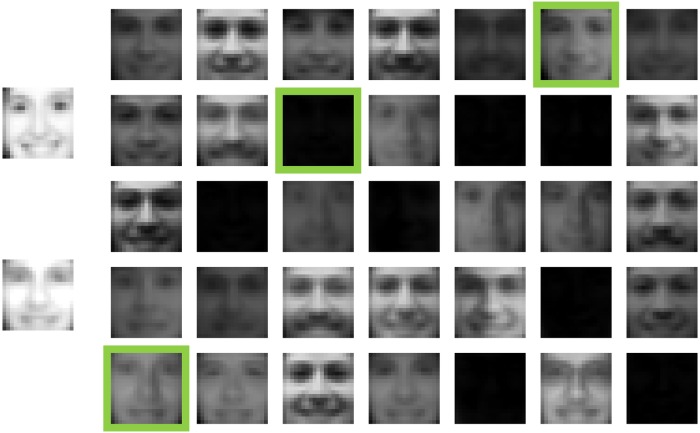
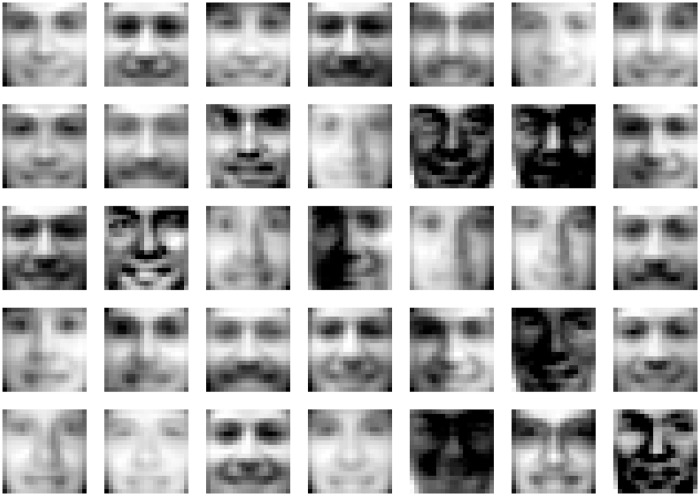
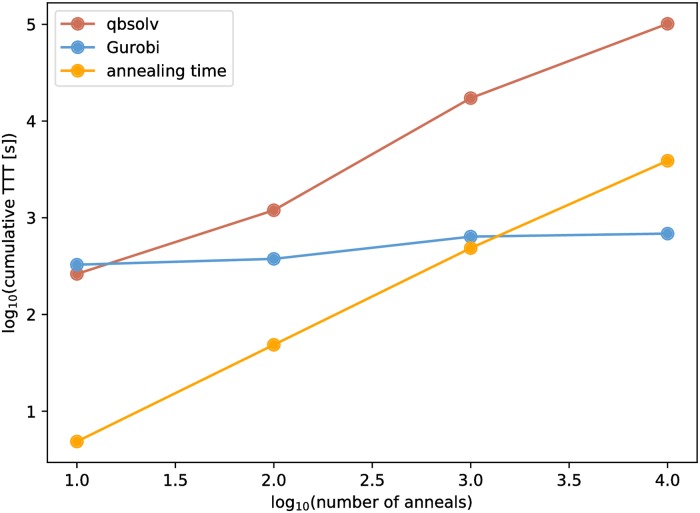
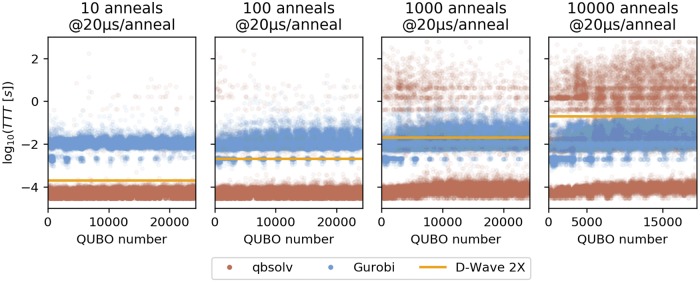
D-Wave quantum annealers represent a novel computational architecture and have attracted significant interest. Much of this interest has focused on the quantum behavior of D-Wave machines, and there have been few practical algorithms that use the D-Wave. Machine learning has been identified as an area where quantum annealing may be useful. Here, we show that the D-Wave 2X can be effectively used as part of an unsupervised machine learning method. This method takes a matrix as input and produces two low-rank matrices as output-one containing latent features in the data and another matrix describing how the features can be combined to approximately reproduce the input matrix. Despite the limited number of bits in the D-Wave hardware, this method is capable of handling a large input matrix. The D-Wave only limits the rank of the two output matrices. We apply this method to learn the features from a set of facial images and compare the performance of the D-Wave to two classical tools. This method is able to learn facial features and accurately reproduce the set of facial images. The performance of the D-Wave shows some promise, but has some limitations. It outperforms the two classical codes in a benchmark when only a short amount of computational time is allowed (200-20,000 microseconds), but these results suggest heuristics that would likely outperform the D-Wave in this benchmark.
Overview
The claims and statistics of this paper haven’t been checked yet.
Free: it reads the open-access text and checks the first 5 claims that cite a source we can check. Create a free account to check every claim.
Integrity signals
Registry
Cites
Statistics
Figures
Verification
Claims the paper makes
The claims and statistics of this paper haven’t been checked yet.
Free: it reads the open-access text and checks the first 5 claims that cite a source we can check. Create a free account to check every claim.
Claims other papers make about this one
Each is checked against this paper’s own text: does it say what the citing paper says it does?
The source backs part of the claim, not all of it — or backs it for a different population, condition or comparison.
In the citing paper
“However,duetothelimitednumberofqubitsandtheirconnectivity, the QAhardwaredidnot show such an advantage over classical methods in past benchmarking studies.”
From Quantum annealing for combinatorial optimization: a benchmarking study (2025) · cites this paper as [17]
Experimental — accuracy not yet measuredThe source backs part of the claim, not all of it — or backs it for a different population, condition or comparison.
In the citing paper
“Whilepreviousbenchmarkingstudiesshowedsomeadvantages of QA, most used low-dimensional or the sparse con fi gurations of QUBO matrices due to the lack of available qubits in the QA hardware and poor topology to connect qubits 17 -19 .”
From Quantum annealing for combinatorial optimization: a benchmarking study (2025) · cites this paper as [17]
Experimental — accuracy not yet measuredThe source backs part of the claim, not all of it — or backs it for a different population, condition or comparison.
In the citing paper
“Consequently, these benchmarking studies show that QA methods and their classical counterparts can exhibit similar solution quality and time complexity.”
From Quantum annealing for combinatorial optimization: a benchmarking study (2025) · cites this paper as [17]
Experimental — accuracy not yet measuredThe source backs part of the claim, not all of it — or backs it for a different population, condition or comparison.
In the citing paper
“We measure the computational time dedicated solely to solving given problems, excluding problem reading time, queue time, or communication time between the local computer and quantum annealer. This is consistent with other benchmarking studies 17,18 .”
From Quantum annealing for combinatorial optimization: a benchmarking study (2025) · cites this paper as [17]
Experimental — accuracy not yet measuredThe cited source says what the claim attributes to it.
In the citing paper
“For example, O ' Malley et al. 17 compared the performance of QA with classical methods (mathematical programming), but they limited the number of binary variables to 35 due to the QA hardware limitation.”
From Quantum annealing for combinatorial optimization: a benchmarking study (2025) · cites this paper as [17]
Self-check
Percentages, sums and reported differences re-computed from the paper’s own numbers.
The self-check needs the paper’s full text.
Citations
Cites
Golub, G. (2012) · doi:10.56021/9781421407944 · Cited by 34,505
Book Review: Pattern Recognition and Machine Learning
Nasrabadi, N. M. (2007) · Journal of Electronic Imaging · doi:10.1117/1.2819119 · Cited by 22,066
Rapid object detection using a boosted cascade of simple features
Viola, P., & Jones, M. (2005) · Proceedings of the 2001 IEEE Computer Society Conference on Computer Vision and Pattern Recognition. CVPR 2001 · doi:10.1109/cvpr.2001.990517 · Cited by 18,300
Learning the parts of objects by non-negative matrix factorization
Lee, D. D., & Seung, H. S. (1999) · Nature · doi:10.1038/44565 · Cited by 13,868 · cited 3×
“In particular, we utilize the form of quantum annealing realized with D-Wave hardware [6, 7], which has been used to solve a PLOS ONE | https://doi.org/10.1371/journal.pone.0206653 December 10, 2018 1 / 12 OPEN ACCESS Citation: O’Malley D, Vesselinov VV, Alexandrov BS, Alexandrov LB (2018)…”
BackgroundMethodInfluentialGlover, F. (1990) · ORSA Journal on Computing · doi:10.1287/ijoc.2.1.4 · Cited by 5,647
Face recognition using eigenfaces
Turk, M. A., & Pentland, A. P. (2002) · Proceedings. 1991 IEEE Computer Society Conference on Computer Vision and Pattern Recognition · doi:10.1109/cvpr.1991.139758 · Cited by 5,197
Glover, F. (1989) · ORSA Journal on Computing · doi:10.1287/ijoc.1.3.190 · Cited by 5,106
Quantum annealing in the transverse Ising model
Kadowaki, T., & Nishimori, H. (1998) · Physical Review E · doi:10.1103/physreve.58.5355 · Cited by 2,339 · cited 1×
“Here we explore the use of another new architecture: quantum annealing [11].”
MethodQuantum annealing with manufactured spins
Johnson, M. W., Amin, M. H. S., Gildert, S., Lanting, T., Hamze, F., Dickson, N., Harris, R., Berkley, A. J., Johansson, J., Bunyk, P., et al. (2011) · Nature · doi:10.1038/nature10012 · Cited by 1,891 · cited 1×
“This method takes a matrix as input and produces two low-rank matrices as output—one containing latent features in the data and another matrix describing how the features can be combined to approximately reproduce the input matrix.”
MethodProjected Gradient Methods for Nonnegative Matrix Factorization
Lin, C.-J. (2007) · Neural Computation · doi:10.1162/neco.2007.19.10.2756 · Cited by 1,737 · cited 1×
“To satisfy equation 1, we utilize an alternating least squares algorithm [17] (see Algorithm 1). where || · || F is the Frobenius norm.”
Method
Research works printed but not linked: 1
- Slawski M, Hein M, Lutsik P. Matrix factorization with binary components. In: Advances in Neural Information Processing Systems; 2013. p. 3210–3218.
Cited by
A Tutorial on Formulating and Using QUBO Models
Glover, F., Kochenberger, G. A., & Du, Y. (2018) · arXiv (Cornell University) · doi:10.48550/arxiv.1811.11538 · Cited by 159
Quantum bridge analytics I: a tutorial on formulating and using QUBO models
Glover, F., Kochenberger, G., Hennig, R., & Du, Y. (2022) · Annals of Operations Research · doi:10.1007/s10479-022-04634-2 · Cited by 297
“A related application in O’Malley et al. (2018) investigates nonnegative/binary matrix factorization with a D-Wave quantum annealer.”
BackgroundQuantum annealing for industry applications: introduction and review
Yarkoni, S., Raponi, E., Bäck, T., & Schmitt, S. (2022) · Reports on Progress in Physics · doi:10.1088/1361-6633/ac8c54 · Cited by 341
“Here we discuss different machine learning problems that have been addressed by making use of QA: classification [127] and reinforcement learning problems [135], cluster analysis [104, 134], and matrix factorization [67, 142, 145].”
Quantum Bridge Analytics I: a tutorial on formulating and using QUBO models
Glover, F., Kochenberger, G., & Du, Y. (2019) · 4OR · doi:10.1007/s10288-019-00424-y · Cited by 298
Efficient partition of integer optimization problems with one-hot encoding
Okada, S., Ohzeki, M., & Taguchi, S. (2019) · Scientific Reports · doi:10.1038/s41598-019-49539-6 · Cited by 190
Support vector machines on the D-Wave quantum annealer
Willsch, D., Willsch, M., De Raedt, H., & Michielsen, K. (2020) · Computer Physics Communications · doi:10.1016/j.cpc.2019.107006 · Cited by 174
Designing metamaterials with quantum annealing and factorization machines
Kitai, K., Guo, J., Ju, S., Tanaka, S., Tsuda, K., Shiomi, J., & Tamura, R. (2020) · Physical Review Research · doi:10.1103/physrevresearch.2.013319 · Cited by 181
Quantum computing at the frontiers of biological sciences
Emani, P. S., Warrell, J., Anticevic, A., Bekiranov, S., Gandal, M., McConnell, M. J., Sapiro, G., Aspuru-Guzik, A., Baker, J. T., Bastiani, M., et al. (2021) · Nature Methods · doi:10.1038/s41592-020-01004-3 · Cited by 163
Prospects for quantum enhancement with diabatic quantum annealing
Crosson, E. J., & Lidar, D. A. (2021) · Nature Reviews Physics · doi:10.1038/s42254-021-00313-6 · Cited by 134
Traffic signal optimization on a square lattice with quantum annealing
Inoue, D., Okada, A., MATSUMORI, T., Aihara, K., & Yoshida, H. (2021) · Scientific Reports · doi:10.1038/s41598-021-82740-0 · Cited by 144
Improving solutions by embedding larger subproblems in a D-Wave quantum annealer
Okada, S., Ohzeki, M., Terabe, M., & Taguchi, S. (2019) · Scientific Reports · doi:10.1038/s41598-018-38388-4 · Cited by 92
“…based on superconducting flux qubits 8 has been developed by D-Wave Systems Inc. Experimental studies using the D-Wave quantum annealer have been performed to compare the performance of QA and SA 6,9 and to demonstrate the applicability of the D-Wave quantum annealer to practical problems 10–12 .”
MethodBenchmarking Quantum Annealing Controls with Portfolio Optimization
Grant, E., Humble, T. S., & Stump, B. (2021) · Physical Review Applied · doi:10.1103/physrevapplied.15.014012 · Cited by 90
“Several experimental efforts have realized quantum annealers [10–12], and application benchmarking of these systems has shown QA is capable of finding the correct result with varying probability of success [13–19].”
BackgroundQuantum machine learning with D‐wave quantum computer
Hu, F., Wang, B., Wang, N., & Wang, C. (2019) · Quantum Engineering · doi:10.1002/que2.12 · Cited by 68
A Hybrid Approach for Solving Optimization Problems on Small Quantum Computers
Shaydulin, R., Ushijima-Mwesigwa, H., Negre, C. F. A., Safro, I., Mniszewski, S. M., & Alexeev, Y. (2019) · Computer · doi:10.1109/mc.2019.2908942 · Cited by 68
Feature Selection for Recommender Systems with Quantum Computing
Nembrini, R., Dacrema, M. F., & Cremonesi, P. (2021) · Entropy · doi:10.3390/e23080970 · Cited by 85
“, graph isomorphism [4], graph partitioning [5], Restricted Boltzmann Machines for deep learning [6], Support Vector Machines [7] and matrix factorization [8].”
MethodBalanced k-means clustering on an adiabatic quantum computer
Arthur, D., & Date, P. (2021) · Quantum Information Processing · doi:10.1007/s11128-021-03240-8 · Cited by 69
“The D-Wave quantum computer has already been used for a number of machine learning tasks including training a support vector machine [4], training a restricted Boltzmann machine [5] [6], linear regression [7] and matrix factorization for feature learning [8].”
MethodTraining Restricted Boltzmann Machines With a D-Wave Quantum Annealer
Dixit, V., Selvarajan, R., Alam, M. A., Humble, T. S., & Kais, S. (2021) · Frontiers in Physics · doi:10.3389/fphy.2021.589626 · Cited by 74
“[16] used a D-Wave for matrix factorization.”
Network Community Detection on Small Quantum Computers
Shaydulin, R., Ushijima‐Mwesigwa, H., Safro, I., Mniszewski, S., & Alexeev, Y. (2019) · Advanced Quantum Technologies · doi:10.1002/qute.201900029 · Cited by 56
“IARPA’s QEO effort [30] and other researchers [31] have achieved a lot of progress in developing a system implementing QA [28] and applying it to a variety of problems, including optimization problems on graphs [20], machine learning [32], traffic flow optimization [33], and simulation problems [34].”
BackgroundReinforcement Quantum Annealing: A Hybrid Quantum Learning Automata
Ayanzadeh, R., Halem, M., & Finin, T. (2020) · Scientific Reports · doi:10.1038/s41598-020-64078-1 · Cited by 57
Analyzing the Quantum Annealing Approach for Solving Linear Least Squares Problems
Borle, A., & Lomonaco, S. J. (2018) · Lecture notes in computer science · doi:10.1007/978-3-030-10564-8_23 · Cited by 48
“applied binary linear least squares using quantum annealing for the purposes of nonnegative/binary matrix factorization [16].”
BackgroundMethodInfluentialReverse annealing for nonnegative/binary matrix factorization
Golden, J. K., & O’Malley, D. (2021) · PLoS ONE · doi:10.1371/journal.pone.0244026 · Cited by 47
“Here, we explore the use of reverse annealing in the context of Nonnegative/Binary Matrix Factoriztion (NBMF), which has shown some promise in combination with quantum annealing [10].”
BackgroundMethodInfluentialSelf-citationQuantum annealing for combinatorial optimization: a benchmarking study
Kim, S., Ahn, S.-W., Suh, I.-S., Dowling, A. W., Lee, E., & Luo, T. (2025) · npj Quantum Information · doi:10.1038/s41534-025-01020-1 · Cited by 46
“17 compared the performance of QA with classical methods (mathematical programming), but they limited the number of binary variables to 35 due to the QA hardware limitation.”
Low Rank Non-Negative Matrix Factorization with D-Wave 2000QPreprint
Ottaviani, D., & Amendola, A. (2018) · arXiv (Cornell University) · doi:10.48550/arxiv.1808.08721 · Cited by 48
Koshka, Y., & Novotny, M. A. (2020) · IEEE Journal on Selected Areas in Information Theory · doi:10.1109/jsait.2020.3014192 · Cited by 47
“DNA sequences according to their binding affinities [4], for matrix factorization [5], and for many other applications.”
BackgroundModel Predictive Control for Finite Input Systems using the D-Wave Quantum Annealer
Inoue, D., & Yoshida, H. (2020) · Scientific Reports · doi:10.1038/s41598-020-58081-9 · Cited by 39
“− − P z z z z z ( ) 1 2 245 0 664 1 1 335 0 644 (22) 1 1 1 2”
Box algorithm for the solution of differential equations on a quantum annealer
Srivastava, S., & Sundararaghavan, V. (2019) · Physical Review A · doi:10.1103/physreva.99.052355 · Cited by 40
Quantum approximate optimization for hard problems in linear algebra
Borle, A., Elfving, V. E., & Lomonaco, S. J. (2021) · SciPost Physics Core · doi:10.21468/scipostphyscore.4.4.031 · Cited by 42
Quantum Permutation Synchronization
Birdal, T., Golyanik, V., Theobalt, C., & Guibas, L. J. (2021) · IEEE Computer Society Conference on Computer Vision and Pattern Recognition/Proceedings - IEEE Computer Society Conference on Computer Vision and Pattern Recognition/Proceedings · doi:10.1109/cvpr46437.2021.01292 · Cited by 54
Quantum Machine Learning: Foundation, New Techniques, and Opportunities for Database Research
Winker, T., Groppe, S., Uotila, V., Yan, Z., Lu, J., Franz, M., & Mauerer, W. (2023) · ACM SIGMOD International Conference on Management of Data (SIGMOD) · doi:10.1145/3555041.3589404 · Cited by 44
Joy, D., Sabir, M., Behera, B. K., & Panigrahi, P. K. (2019) · Quantum Information Processing · doi:10.1007/s11128-019-2531-z · Cited by 43
How to Solve Combinatorial Optimization Problems Using Real Quantum Machines: A Recent Survey
Heng, S., Kim, D., Kim, T.-K., & Han, Y. (2022) · IEEE Access · doi:10.1109/access.2022.3218908 · Cited by 41
“Matrix factorization is one of the most important research tasks in terms of image analysis because it is possible to extract features from a wide variety of datasets regardless of the content of the image [62], [63].”
BackgroundMethodCommunity Detection Across Emerging Quantum Architectures
Shaydulin, R., Ushijima‐Mwesigwa, H., Safro, I., Mniszewski, S. M., & Alexeev, Y. (2018) · arXiv (Cornell University) · doi:10.48550/arxiv.1810.07765 · Cited by 27
“[22], traffic flow optimization [18], and simulation problems [12].”
BackgroundQuantum Annealing Based Binary Compressive Sensing with Matrix UncertaintyPreprint
Ayanzadeh, R., Mousavi, S., Halem, M., & Finin, T. (2019) · arXiv (Cornell University) · doi:10.13016/m2k6ga-cvu4 · Cited by 30
Sleeman, J., Dorband, J. E., & Halem, M. (2020) · doi:10.1117/12.2558832 · Cited by 29
“Recent attention has explored both the theoretical prospects of machine learning on the D-wave [5, 6, 7] and using the D-Wave for machine learning applications [8, 9].”
BackgroundQ-Match: Iterative Shape Matching via Quantum Annealing
Benkner, M. S., Lähner, Z., Golyanik, V., Wunderlich, C., Theobalt, C., & Moeller, M. (2021) · IEEE/CVF International Conference on Computer Vision (ICCV) · doi:10.1109/iccv48922.2021.00749 · Cited by 48
Adiabatic Quantum Graph Matching with Permutation Matrix Constraints
Benkner, M. S., Golyanik, V., Theobalt, C., & Moeller, M. (2020) · International Conference on 3D Vision (3DV) · doi:10.1109/3dv50981.2020.00068 · Cited by 41
“Classificationrelated problems were addressed in [15], to enhance the detection of vegetation zones in aerial images on D-Wave, in [51] to learn facial features and reproduce facial image collections, and in [49] which proposes a dictionary learning method for image classification.”
BackgroundQuadratic Unconstrained Binary Formulation for Traffic Signal Optimization on Real-World Maps
Shikanai, R., Ohzeki, M., & Tanaka, K. (2025) · Journal of the Physical Society of Japan · doi:10.7566/jpsj.94.024001 · Cited by 27
A Quantum Computational Approach to Correspondence Problems on Point Sets
Golyanik, V., & Theobalt, C. (2020) · IEEE Computer Society Conference on Computer Vision and Pattern Recognition/Proceedings - IEEE Computer Society Conference on Computer Vision and Pattern Recognition/Proceedings · doi:10.1109/cvpr42600.2020.00920 · Cited by 37
QUBO formulations for a system of linear equations
Jun, K. (2024) · Results in Control and Optimization · doi:10.1016/j.rico.2024.100380 · Cited by 31
A Survey on Quantum Computing for Recommendation Systems
Pilato, G., & Vella, F. (2022) · Information · doi:10.3390/info14010020 · Cited by 30
“Quantum annealers have been used in different problems, such as restricted Boltzmann machines for deep learning [47], support vector machines [48], matrix factorization [49], multiple community detection [50], graph isomorphism, and graph partitioning [51,52].”
MethodFrozenQubits: Boosting Fidelity of QAOA by Skipping Hotspot Nodes
Ayanzadeh, R., Alavisamani, N., Das, P., & Qureshi, M. K. (2023) · International Conference on Architectural Support for Programming Languages and Operating Systems (ASPLOS) · doi:10.1145/3575693.3575741 · Cited by 32
“First, representing the optimization problem in the form of Equation (1), which is known as Ising Hamiltonian, where zi ∈ {−1,+1} and hi,Ji j,offset ∈ R are given constants of the problem [70, 101, 56, 36, 96, 13, 87, 80, 12, 14, 92].”
BackgroundQuantum visual feature encoding revisited
Nguyen, X.-B., Nguyen, H.-Q., Churchill, H., Khan, S. U., & Luu, K. (2024) · Quantum Machine Intelligence · doi:10.1007/s42484-024-00192-x · Cited by 32
L0 regularization-based compressed sensing with quantum–classical hybrid approach
Aonishi, T., Mimura, K., Okada, M., & Yamamoto, Y. (2022) · Quantum Science and Technology · doi:10.1088/2058-9565/ac6f19 · Cited by 21
Quantum annealing algorithms for Boolean tensor networks
Pelofske, E., Hahn, G., O’Malley, D., Djidjev, H. N., & Alexandrov, B. S. (2022) · Scientific Reports · doi:10.1038/s41598-022-12611-9 · Cited by 21
Self-citationSampei, H., Saegusa, K., Chishima, K., Higo, T., Tanaka, S., Yayama, Y., Makoto, N., Kimura, K., & Sekine, Y. (2023) · JACS Au · doi:10.1021/jacsau.3c00018 · Cited by 30
Efficient Algorithm for Binary Quadratic Problem by Column Generation and Quantum Annealing
Hirama, S., & Ohzeki, M. (2023) · Journal of the Physical Society of Japan · doi:10.7566/jpsj.92.113002 · Cited by 22
Theory of Ising Machines and a Common Software Platform for Ising Machines
Tanaka, S., Matsuda, Y., & Togawa, N. (2020) · Asia and South Pacific Design Automation Conference (ASP-DAC) · doi:10.1109/asp-dac47756.2020.9045126 · Cited by 23
“, the proposal of QBoost which is a modified method of boosting to utilize Ising machines [41], [42], image analysis using QBoost [43], and nonnegative binary matrix factorization [44].”
MethodEEG-Based Emotion Recognition Using Quantum Machine Learning
Garg, D., Verma, G. K., & Singh, A. K. (2023) · SN Computer Science · doi:10.1007/s42979-023-01943-6 · Cited by 19
Exploration of new chemical materials using black-box optimization with the D-wave quantum annealer
Doi, M., Nakao, Y., Tanaka, T., Sako, M., & Ohzeki, M. (2023) · Frontiers in Computer Science · doi:10.3389/fcomp.2023.1286226 · Cited by 17
“…et al., 2015; Venturelli and Kondratyev, 2019), steel manufacturing (Yonaga et al., 2022), decoding problems (Ide et al., 2020; Arai et al., 2021), and algorithms in machine learning (Amin et al., 2018; O’Malley et al., 2018; Urushibata et al., 2022; Hasegawa et al., 2023; Goto and Ohzeki, 2023).”
Nau, M. A., Vija, A. H., Gohn, W., Reymann, M. P., & Maier, A. (2023) · Journal of Imaging · doi:10.3390/jimaging9100221 · Cited by 20
“The first example presented for QA was non-negative binary matrix factorization [44].”
MethodAsproni, L., Caputo, D., Silva, B., Fazzi, G., & Magagnini, M. (2020) · Quantum Machine Intelligence · doi:10.1007/s42484-020-00014-w · Cited by 16
Quantum autoencoders for image classification
Asaoka, H., & Kudo, K. (2025) · Quantum Machine Intelligence · doi:10.1007/s42484-025-00297-x · Cited by 18
“In a previous study, we successfully applied nonnegative/binary matrix factorization (NBMF) to image classification, leveraging binary optimization for feature compression (O’Malley et al. 2018; Asaoka and Kudo 2023).”
Tosun, U. (2022) · Expert Systems with Applications · doi:10.1016/j.eswa.2022.116953 · Cited by 13
Online Calibration Scheme for Training Restricted Boltzmann Machines with Quantum Annealing
Goto, T., & Ohzeki, M. (2025) · Journal of the Physical Society of Japan · doi:10.7566/jpsj.94.034002 · Cited by 14
Arrigoni, F., Menapace, W., Benkner, M. S., Ricci, E., & Golyanik, V. (2022) · Lecture notes in computer science · doi:10.1007/978-3-031-19818-2_29 · Cited by 20
Lossy compression of matrices by black box optimisation of mixed integer nonlinear programming
Kadowaki, T., & Ambai, M. (2022) · Scientific Reports · doi:10.1038/s41598-022-19763-8 · Cited by 13
“Initially, the temperature is high to help global (7) V(M,C) = MC = M (”
BackgroundEndo, K., Matsuda, Y., Tanaka, S., & Muramatsu, M. (2024) · PLoS ONE · doi:10.1371/journal.pone.0304594 · Cited by 13
Quantum annealing for the adjuster routing problem
Mori, N., & Furukawa, S. (2023) · Frontiers in Physics · doi:10.3389/fphy.2023.1129594 · Cited by 12
Quantum data assimilation: a new approach to solving data assimilation on quantum annealers
Kotsuki, S., Kawasaki, F., & Ohashi, M. (2024) · Nonlinear processes in geophysics · doi:10.5194/npg-31-237-2024 · Cited by 12
Hybrid Algorithm of Linear Programming Relaxation and Quantum Annealing
Takabayashi, T., & Ohzeki, M. (2024) · Journal of the Physical Society of Japan · doi:10.7566/jpsj.93.034001 · Cited by 11
Nonnegative/Binary matrix factorization for image classification using quantum annealing
Asaoka, H., & Kudo, K. (2023) · Scientific Reports · doi:10.1038/s41598-023-43729-z · Cited by 14
“where β is the decay rate, g = ∇fW , and vector x is (9) h i = βh t i + (1− β)g 2 i , Figure 1.”
Quantum Annealing Approach to NOMA Signal Detection
Kızılırmak, R. Ç. (2020) · International Symposium on Communication Systems, Networks and Digital Signal Processing (CSNDSP) · doi:10.1109/csndsp49049.2020.9249501 · Cited by 11
“There are still many reasons to be hopeful and future improvements are expected to realise their potential in many different applications [20] [21].”
BackgroundIndividual subject evaluated difficulty of adjustable mazes generated using quantum annealing
Ishikawa, Y., Yoshihara, T., Okamura, K., & Ohzeki, M. (2023) · Frontiers in Computer Science · doi:10.3389/fcomp.2023.1285962 · Cited by 10
“…of quantum annealing as an optimization algorithm in machine learning have also been reported Neven et al. (2012); Khoshaman et al. (2018); O’Malley et al. (2018); Amin et al. (2018); Kumar et al. (2018); Arai et al. (2021b); Sato et al. (2021); Urushibata et al. (2022); Hasegawa et al.…”
MethodLow-temperature environments for quantum computation and quantum simulation*
Fu, H., Wang, P., Hu, Z., Li, Y., & Lin, X. (2020) · Chinese Physics B · doi:10.1088/1674-1056/abd762 · Cited by 11
A Survey of Programming Tools for D-Wave Quantum-Annealing Processors
Pakin, S., & Reinhardt, S. P. (2018) · Lecture notes in computer science · doi:10.1007/978-3-319-92040-5_6 · Cited by 10
Applications of Quantum Annealing in StatisticsPreprint
Foster, R. C., Weaver, B., & Gattiker, J. (2019) · arXiv (Cornell University) · doi:10.48550/arxiv.1904.06819 · Cited by 10
“A number of estimators for the value of τ have been developed, as discussed in Raymond et al. (2016). Operating conditions are not optimal, however, and empirical output from the machine shows significant deviations from the model in Equation (5).”
BackgroundMethodInfluentialUotila, V., & Lu, J. (2023) · IEEE International Conference on Data Engineering Workshops (ICDEW) · doi:10.1109/icdew58674.2023.00023 · Cited by 12
“Quantum annealing is a promising and relatively scalable quantum computing paradigm with many industry-level applications [14]–[21].”
BackgroundSubgradient Method Using Quantum Annealing for Inequality-Constrained Binary Optimization Problems
Takabayashi, T., Goto, T., & Ohzeki, M. (2025) · Journal of the Physical Society of Japan · doi:10.7566/jpsj.94.054003 · Cited by 11
Dynamical Process of a Bit-Width Reduced Ising Model With Simulated Annealing
Kikuchi, S., Togawa, N., & Tanaka, S. (2023) · IEEE Access · doi:10.1109/access.2023.3310875 · Cited by 12
“Studies have applied Ising machines to various combinatorial optimization problems, including machine learning [13], [14], [15], [16], material design [17], [18], [19], portfolio optimization [20], [21], protein folding [22], traffic optimization [23], [24], [25], [26], [27], quantum compiler [28], and black-box optim…”
MethodEfficient Quantum and Simulated Annealing of Potts Models Using a Half-hot Constraint
Okada, S., Ohzeki, M., & Tanaka, K. (2020) · Journal of the Physical Society of Japan · doi:10.7566/jpsj.89.094801 · Cited by 10
Image Analysis Based on Nonnegative/Binary Matrix Factorization
Asaoka, H., & Kudo, K. (2020) · Journal of the Physical Society of Japan · doi:10.7566/jpsj.89.085001 · Cited by 9
Balanced K-means using Quantum annealing
Zaiou, A., Bennani, Y., Mateï, B., & Hibti, M. (2021) · IEEE Symposium Series on Computational Intelligence (SSCI) · doi:10.1109/ssci50451.2021.9659997 · Cited by 9
Reduced-order modeling on a near-term quantum computer
Asztalos, K. J., Steijl, R., & Maulik, R. (2024) · Journal of Computational Physics · doi:10.1016/j.jcp.2024.113070 · Cited by 13
Unraveling reverse annealing: A study of D-Wave quantum annealers
Mehta, V., Raedt, H. A. D., Michielsen, K. F. L., & Jin, F. (2025) · Physical Review A · doi:10.1103/vfxh-gjgy · Cited by 12
Quang, T. N., Matsuyama, K., Shimizu, K., Sugano, H., Kurimoto, E., Miki, M., Suzuki, J., Chen, Z., Waidyasooriya, H. M., Hariyama, M., et al. (2025) · Scientific Reports · doi:10.1038/s41598-025-28481-w · Cited by 13
Quantum Computing for Computer Vision: Applications, Challenges, and Research Tracks
Mebtouche, N. E.-D., & Sahnoune, S. (2024) · Information systems engineering and management · doi:10.1007/978-3-031-59318-5_12 · Cited by 8
Why quantum adiabatic computation and D-Wave computers are so attractive?
Yin, Z., & Wei, Z. (2017) · 中国科学通报:英文版 · doi:10.1016/j.scib.2017.05.001 · Cited by 8
“For example, researchers from Los Alamos Laboratory in USA used D-Wave 2X to perform unsupervised machine learning algorithms for analyzing large datasets, such as facial images [17].”
MethodHybrid Optimization Method Using Simulated-Annealing-Based Ising Machine and Quantum Annealer
Kikuchi, S., Togawa, N., & Tanaka, S. (2023) · Journal of the Physical Society of Japan · doi:10.7566/jpsj.92.124002 · Cited by 8
Binary matrix factorization on special purpose hardware
Malik, O. A., Ushijima‐Mwesigwa, H., Roy, A., Mandal, A., & Ghosh, I. (2021) · PLoS ONE · doi:10.1371/journal.pone.0261250 · Cited by 8
“[21] consider a nonnegative/binary factorization of a real valued matrix of the form A ≈WH, where W has nonnegative entries and H is binary.”
BackgroundMethodEQUAL: Improving the Fidelity of Quantum Annealers by Injecting Controlled Perturbations
Ayanzadeh, R., Das, P., Tannu, S., & Qureshi, M. K. (2022) · IEEE International Conference on Quantum Computing and Engineering (QCE) · doi:10.1109/qce53715.2022.00074 · Cited by 9
“range of real-world applications—including, but not limited to, planning [80], scheduling [90,91], constraint satisfaction problems [16], Boolean satisfiability (SAT) [13, 84], matrix factorization [68], cryptography [39, 74], fault detection and system diagnosis [75], compressive sensing [12, 14], control of automate…”
BackgroundQuantum-Assisted Greedy AlgorithmsPreprint
Ayanzadeh, R., Halem, M., Dorband, J. E., & Finin, T. (2019) · arXiv (Cornell University) · doi:10.13016/m2n5ap-kape · Cited by 8
Optimization of connection patterns between mobile phones and base stations using quantum annealing
Takabayashi, T., Sudo, S., Aoki, T., Seo, S., & Ohzeki, M. (2025) · Scientific Reports · doi:10.1038/s41598-025-09230-5 · Cited by 8
Quantum-Classical Hybrid Algorithm Using Quantum Annealing for Multi-Objective Job Shop Scheduling
Sawamura, K., Araki, K., Maruyama, N., Haba, R., & Ohzeki, M. (2026) · Journal of the Physical Society of Japan · doi:10.7566/jpsj.95.054002 · Cited by 7
On Post-processing the Results of Quantum Optimizers
Borle, A., & McCarter, J. (2019) · Lecture notes in computer science · doi:10.1007/978-3-030-34500-6_16 · Cited by 7
Inoue, D., Yamashita, H., Aihara, K., & Yoshida, H. (2024) · IEEE Access · doi:10.1109/access.2024.3514162 · Cited by 8
“Their applications are currently under investigation [49], [87], [88], [89], [90], [91], [92].”
Analyzing the effectiveness of quantum annealing with meta-learning
Pellini, R., & Dacrema, M. F. (2024) · Quantum Machine Intelligence · doi:10.1007/s42484-024-00179-8 · Cited by 6
“…Mott et al. 2017; Mandrà et al. 2016; Ferrari Dacrema et al. 2022; Neven et al. 2009; Willsch et al. 2020; Kumar et al. 2018; Neukart et al. 2018; O’Malley et al. 2017; Ottaviani and Amendola 2018; Nembrini et al. 2021), chemistry (Micheletti et al. 2021; Hernandez and Aramon 2017; Streif et…”
On Modeling Local Search with Special-Purpose Combinatorial Optimization HardwarePreprint
Liu, X., Ushijima‐Mwesigwa, H., Mandal, A., Upadhyay, S., Safro, I., & Roy, A. (2019) · arXiv (Cornell University) · doi:10.13140/rg.2.2.11353.06241 · Cited by 6
QUBO formulations for numerical quantum computingPreprint
Jun, K. (2021) · arXiv (Cornell University) · doi:10.48550/arxiv.2106.10819 · Cited by 6
Minor embedding for quantum annealing with reinforcement learning
Nembrini, R., Dacrema, M. F., & Cremonesi, P. (2026) · Quantum Machine Intelligence · doi:10.1007/s42484-026-00341-4 · Cited by 6
“Many applications of QA have been proposed in the fields of machine learning (Neven et al. 2009; Mandr`a et al. 2016; O’Malley et al. 2017; Mott et al. 2017; Kumar et al. 2018; Ottaviani and Amendola 2018; Neukart et al. 2018a,b; Willsch et al. 2020; Nembrini et al. 2021, 2022; Ferrari Dacrema et…”
Quantum-Assisted Machine Learning by Means of Adiabatic Quantum Computing
Duarte, L. T., & Deville, Y. (2024) · IEEE Mediterranean and Middle-East Geoscience and Remote Sensing Symposium (M2GARSS) · doi:10.1109/m2garss57310.2024.10537323 · Cited by 5
“In [23], to implement NMF under AQC premises, the authors adopted an alternate least square (ALS) approach.”
MethodCollaborative filtering based on nonnegative/binary matrix factorization
Terui, Y., Inoue, Y., Hamakawa, Y., Tatsumura, K., & Kudo, K. (2025) · Frontiers in Big Data · doi:10.3389/fdata.2025.1599704 · Cited by 5
“Such an alternative optimization method is essential for solving nonnegative/binary matrix factorization (NBMF), which is an extension of NMF. O’Malley et al. (2018) and Golden and O’Malley (2021) used D-Wave’s quantum annealers to solve quadratic binary optimization problems involved in NBMF and…”
Las relaciones exteriores de España con el mundo árabe y musulmán durante el siglo XX
Martínez, M. H. D. L. (2014) · Awraq: Estudios sobre el mundo árabe e islámico contemporáneo · Cited by 5
Leveraging Artificial Intelligence to Advance Problem-Solving with Quantum Annealers
Ayanzadeh, R. (2020) · Maryland Shared Open Access Repository (USMAI Consortium) · doi:10.13016/m28hdb-uoun · Cited by 10
“In particular, the D-Wave quantum annealer has been applied to, planning [155], scheduling [179, 177], image registration [144, 143], data assimilation and processing [133, 84], discrete optimization problems [21, 117], constraint satisfaction problems [22], Boolean satisfiability [174, 11, 16], matrix factorization […”
MethodEQUAL: Improving the Fidelity of Quantum Annealers by Injecting Controlled PerturbationsPreprint
Ayanzadeh, R., Das, P., Tannu, S., & Qureshi, M. K. (2022) · Research Square · doi:10.21203/rs.3.rs-1343360/v1 · Cited by 5
FrozenQubits: Boosting Fidelity of QAOA by Skipping Hotspot NodesPreprint
Ayanzadeh, R., Alavisamani, N., Das, P., & Qureshi, M. K. (2022) · Research Square · doi:10.21203/rs.3.rs-2252963/v1 · Cited by 6
Quantum computing for a profusion of postman problem variants
Pion, J. E., Negre, C. F. A., & Mniszewski, S. M. (2023) · Quantum Machine Intelligence · doi:10.1007/s42484-023-00111-6 · Cited by 4
“QAs proved to be useful for solving NP-hard optimization problems such as those involved in graph theory Mniszewski et al (2021); Negre et al (2020); Ushijima-Mwesigwa et al (2017) and machine learning Dixit et al (2021); O’Malley et al (2018) among others.”
Robust Fitting on a Gate Quantum Computer
Yang, F. F., Sasdelli, M., & Chin, T.-J. (2024) · Lecture notes in computer science · doi:10.1007/978-3-031-73232-4_7 · Cited by 8
Skipper: Improving the Reach and Fidelity of Quantum Annealers by Skipping Long Chains
Ayanzadeh, R., & Qureshi, M. K. (2024) · IEEE International Conference on Quantum Computing and Engineering (QCE) · doi:10.1109/qce60285.2024.00079 · Cited by 6
“…in tack-ling real-world applications such as finance [29], drug discovery [57], cryptography [38, 77], Boolean Satisfiability (SAT) [14, 15, 17, 83], planning and scheduling [40, 81, 91, 92], linear algebra [64], and signal processing [16, 18], extending beyond application-specific acceleration.”
Huang, N., & Roje, D. (2021) · SN Computer Science · doi:10.1007/s42979-020-00431-5 · Cited by 4
Optimal box contraction for solving linear systems via simulated and quantum annealing
Suresh, S., & Suresh, K. (2024) · Engineering Optimization · doi:10.1080/0305215x.2024.2408686 · Cited by 4
“For example, O’Malley and Vesselinov solved the least-squares problem using a finite-precision qubit representation [14].”
Metadata
- Authors
- O’Malley, D., Vesselinov, V. V., Alexandrov, B. S., & Alexandrov, L. B.
- Affiliations
- Los Alamos National Laboratory (US)
- Corresponding author
- O’Malley, Daniel
- Venue
- PLOS ONE
- Publisher
- Public Library of Science (PLoS)
- Published
- 2018-12-10
- Volume
- 13
- Issue
- 12
- Pages
- e0206653
- ISSN
- 1932-6203 (ISSN-L)
- PMC
- PMC6287781
- OpenAlex
- W2605422054
- Semantic Scholar
- ef5a2a394d57f728a4833454e9936beafa0fdc1a
- Cited by
- 140
- References
- 56
- Citations by year
- 2026: 3 · 2025: 15 · 2024: 19 · 2023: 23 · 2022: 15 · 2021: 21 · 2020: 19 · 2019: 15 · 2018: 8
- FWCI
- 8.75
- Type
- journal article
- Language
- en
- Open access
- gold
- doi.org
- Licence
- public-domain
- creativecommons.org/publicdomain/zero/1.0/ (vor)
- Locations
- PLoS ONE (publishedVersion, public-domain)
- Europe PMC (PubMed Central) (publishedVersion, public-domain)
- PubMed Central (publishedVersion, public-domain)
- PubMed (publishedVersion)
- arXiv (Cornell University) (submittedVersion)
- RePEc: Research Papers in Economics (submittedVersion)
- DOAJ (DOAJ: Directory of Open Access Journals) (submittedVersion, cc-by-sa)
- OSTI OAI (U.S. Department of Energy Office of Scientific and Technical Information) (submittedVersion)
- arXiv (Cornell University)
- Funders
- Los Alamos National Laboratory
- Topics
- Physical Sciences › Computer Science › Artificial Intelligence › Quantum Computing Algorithms and Architecture
- Physical Sciences › Computer Science › Computer Vision and Pattern Recognition › Face and Expression Recognition
- Physical Sciences › Computer Science › Artificial Intelligence › Stochastic Gradient Optimization Techniques
- Keywords
- D-Wave quantum annealer, non-negative matrix factorization, binary matrix factorization, quantum annealing, unsupervised feature learning, low-rank approximation, facial image features, quantum machine learning
- MeSH terms
- Machine Learning, Models, Theoretical, Quantum Theory
About these checks
Registry, retraction, Cites and statistics results are computed, not judged, with one exception: a printed reference that no index lists is read once by a model before it counts as a citation error. Claims are extracted by a model and kept only when their quote appears verbatim in the text; each cited source is then checked, with a model’s help, for whether it says what the claim relies on. Those verdicts can be wrong — read the claim’s quote and the cited source before relying on one.
Statistics and arithmetic are recomputed, not judged.
Confidence bands are shown only for fields calibrated on our annotated test set. None is calibrated yet, so no band is shown.
What counts as a claim ›How we measure confidence ›How we check this ›
Are you an author, or do you see a problem with this page? Request a review
Data sources
Bibliographic data: Semantic Scholar, OpenAlex, Crossref.
Contains information from the Semantic Scholar Academic Graph Datasets, made available under the ODC Attribution License (ODC-BY 1.0).
Semantic Scholar’s data is described in: Kinney, R., et al. (2023). The Semantic Scholar Open Data Platform. arXiv:2301.10140.
