

Cereal processing at Early Neolithic Göbekli Tepe, southeastern Turkey
Open accessThe DOI matches its Crossref record; 106 of the 108 references it cites were found in a registry or an index; none of the 134 sources its claims cite is checked for support yet.
Abstract
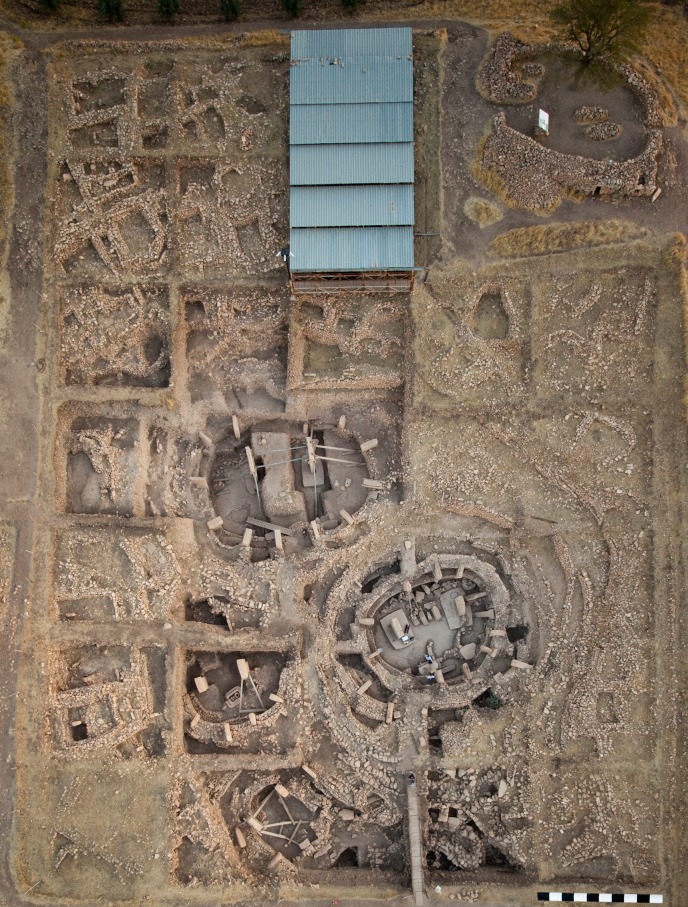
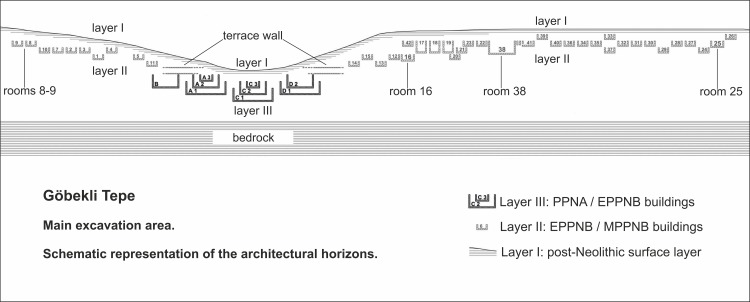
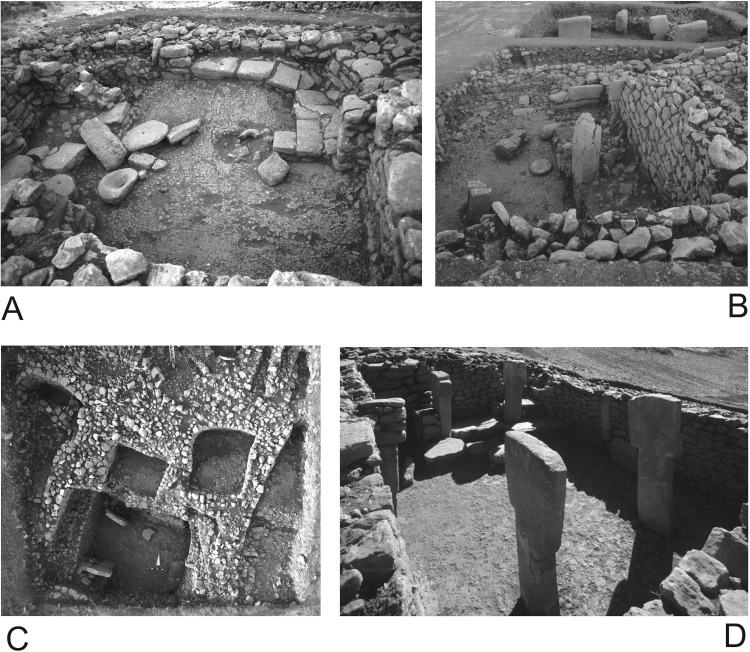
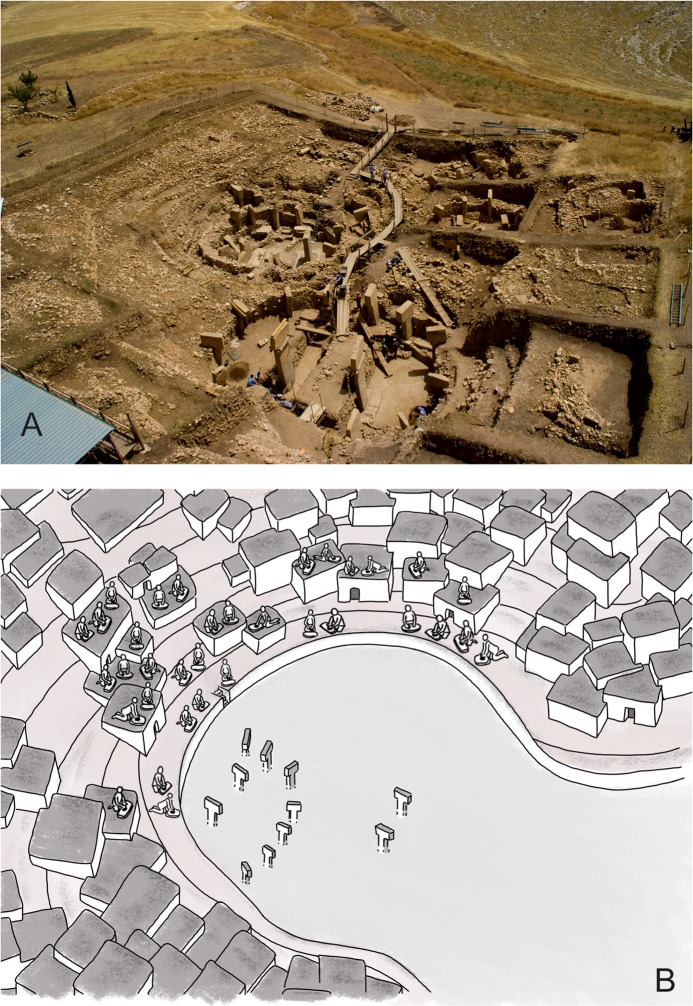
We analyze the processing of cereals and its role at Early Neolithic Göbekli Tepe, southeastern Anatolia (10th / 9th millennium BC), a site that has aroused much debate in archaeological discourse. To date, only zooarchaeological evidence has been discussed in regard to the subsistence of its builders. Göbekli Tepe consists of monumental round to oval buildings, erected in an earlier phase, and smaller rectangular buildings, built around them in a partially contemporaneous and later phase. The monumental buildings are best known as they were in the focus of research. They are around 20 m in diameter and have stone pillars that are up to 5.5 m high and often richly decorated. The rectangular buildings are smaller and-in some cases-have up to 2 m high, mostly undecorated, pillars. Especially striking is the number of tools related to food processing, including grinding slabs/bowls, handstones, pestles, and mortars, which have not been studied before. We analyzed more than 7000 artifacts for the present contribution. The high frequency of artifacts is unusual for contemporary sites in the region. Using an integrated approach of formal, experimental, and macro- / microscopical use-wear analyses we show that Neolithic people at Göbekli Tepe have produced standardized and efficient grinding tools, most of which have been used for the processing of cereals. Additional phytolith analysis confirms the massive presence of cereals at the site, filling the gap left by the weakly preserved charred macro-rests. The organization of work and food supply has always been a central question of research into Göbekli Tepe, as the construction and maintenance of the monumental architecture would have necessitated a considerable work force. Contextual analyses of the distribution of the elements of the grinding kit on site highlight a clear link between plant food preparation and the rectangular buildings and indicate clear delimitations of working areas for food production on the terraces the structures lie on, surrounding the circular buildings. There is evidence for extensive plant food processing and archaeozoological data hint at large-scale hunting of gazelle between midsummer and autumn. As no large storage facilities have been identified, we argue for a production of food for immediate use and interpret these seasonal peaks in activity at the site as evidence for the organization of large work feasts.
Overview
CoChat Summary
TL;DR
Integrated use-wear, experimental, phytolith, and contextual analyses of more than 7,000 grinding tools show that cereal processing was an integral part of Early Neolithic subsistence at Göbekli Tepe, especially in the rectangular layer II buildings and surrounding terraces. With no large storage facilities identified, the authors argue for production for immediate use and interpret seasonal peaks in activity as evidence for work feasts.
Key findings
- More than 7,000 artifacts were analyzed; almost 3,400 handstones were found, and 1,166 handstones were analyzed for form and use-wear. Types 1 and 2 dominate the handstone assemblage at 75%, and use-wear plus experiments indicate standardized, efficient tools mostly used for cereal processing.
- Experiments showed that 500 g of einkorn was processed in 40–60 minutes, producing around 500 g of flour; a single type 1 or 2 handstone used bidirectionally could produce an average of 4,800 g of flour in eight working hours, enough to feed five to ten people if one person needs 500–1,000 g of cereals daily.
- Phytoliths were abundant in all nine soil samples, ranging from 0.5 to 3.0 million phytoliths per gram of sediment; grass phytoliths averaged about 81%, and grinding-side samples contained about 92,000–391,000 phytoliths per gram versus c. 28,000–166,000 on break/back sides, supporting cereal processing.
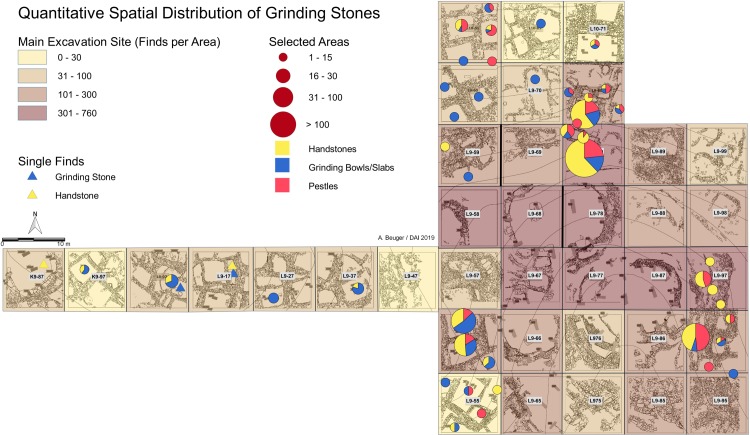
- Contextual analysis links plant food preparation to rectangular buildings and terraces: layer II buildings contain up to 15 grinding stones in fills and up to four on floor levels, with an average of 2 grinding stones/m³ in rectangular buildings and 2.45 grinding stones/m³ in building D; no large silos were identified, suggesting immediate use and seasonal work feasts between midsummer and autumn.
Methods
- The study combined formal typology of 1,166 handstones, 3D modeling via structure from motion, and macro-/microscopic use-wear analysis of grinding equipment.
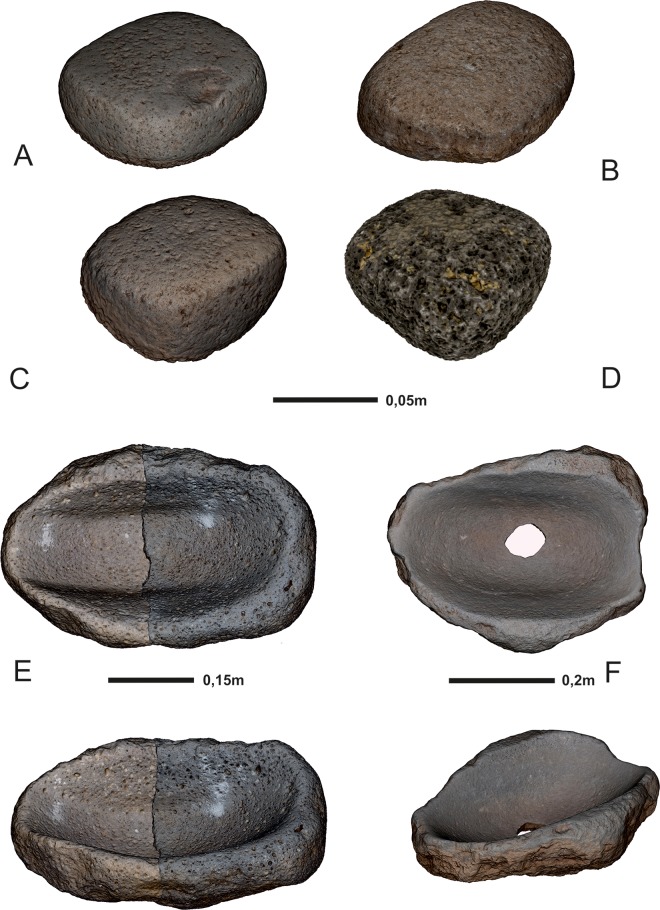
- A reference collection was built experimentally using replicas of Neolithic handstones; six people aged 20–40 conducted experiments over one year, for more than ten hours, grinding einkorn, almonds, and raw red meat while documenting surface traces.
- Phytolith analysis examined nine soil samples and fifteen samples from four grinding stones, with counting, morphological identification, and morphometric comparison; spatial distribution of grinding equipment was assessed across site zones and buildings.
Limitations
- The paper states that charred plant remains are rare and poorly preserved due to large-scale sediment relocation/backfilling, so they cannot be used to estimate the intensity of plant processing; it also states that exact contemporaneity of floor levels and buildings is difficult to establish, the number of grinding stones used contemporaneously is unknown, and a detailed diachronic household study is not feasible at Göbekli Tepe.
- The paper states further limitations: mortar use in cereal processing has not been experimentally tested, pestles are highly fragmented and difficult to analyze for use-wear, morphometric discrimination between wild and domesticated wheat/barley is challenging, and the scenario linking processing to the monumental buildings remains hypothetical.
- Evident from the text: many layer II excavations stopped at the uppermost floor level, limiting in situ floor assemblages; about one third of grinding equipment comes from the uppermost layer I and is chronologically undiagnostic; and comparisons with other sites are hampered because reports often lack total quantities of grinding equipment or excavated sediment volumes.
Model-written summary. Check it against the paper before relying on it.
Integrity signals
Registry
Cites
Statistics
Figures
Verification
Claims the paper makes
0 Valid · 1 Not valid · 77 Not checked · 166 Own results and interpretations
In the paper
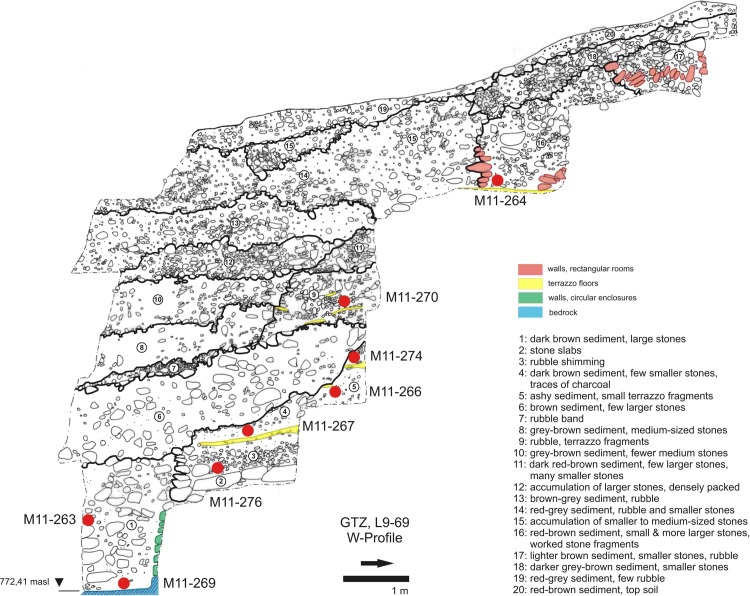
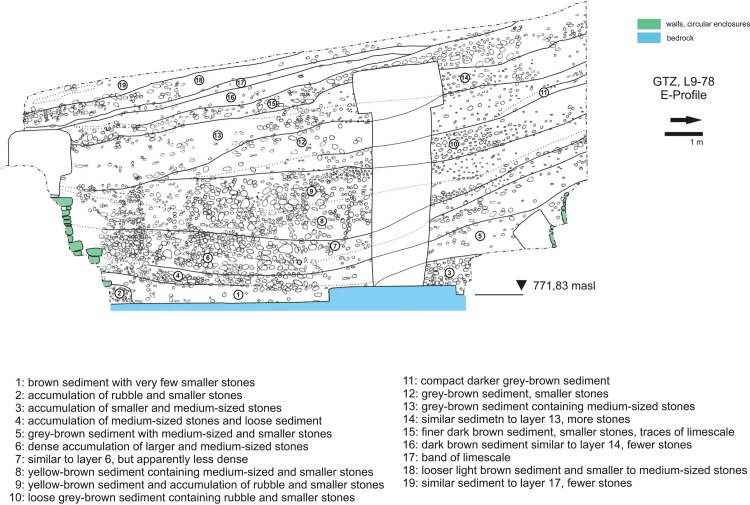
“There is one radiocarbon sample of collagen from an animal tooth from the deepest layer (Fig 5, layer 1) inside building D (KIA-44701, 9800 ±120 14C-BP), resulting in a calibrated age between 9746–8818 cal BC at the 95.4% confidence level [82].”
§ Cereal processing at Early Neolithic Göbekli Tepe, southeastern Turkey > Göbekli Tepe
What the sources say
- Not checked yetcites [82] Dietrich O, Köksal-Schmidt Ç, Notroff J, Schmidt K. Establishing a Radiocarbon Sequence for Göbekli Tepe. State of Research and New Data. Neo-Lithics. 2013; 1(13): 36– 41.
plainSingle case- Asserted: passes — The authors put it forward as true.
- Checkable: passes — It can be checked against evidence.
- Load-bearing: unclear — It is unclear whether the paper’s conclusions depend on it.
- Based: passes — The paper gives a reason why it holds.
A result the paper reports from its own data — it cites no other source for it, so there is none to check. The quote shows it is in the paper.
In the paper
“There is evidence for extensive plant food processing and archaeozoological data hint at large-scale hunting of gazelle between midsummer and autumn.”
§ Cereal processing at Early Neolithic Göbekli Tepe, southeastern Turkey > Abstract
plain- Asserted: passes — The authors put it forward as true.
- Checkable: passes — It can be checked against evidence.
- Load-bearing: passes — The paper’s conclusions depend on it.
- Based: passes — The paper gives a reason why it holds.
A result the paper reports from its own data — it cites no other source for it, so there is none to check. The quote shows it is in the paper.
In the paper
“Additional phytolith analysis confirms the massive presence of cereals at the site, filling the gap left by the weakly preserved charred macro-rests.”
§ Cereal processing at Early Neolithic Göbekli Tepe, southeastern Turkey > Abstract
boostedstates a cause- Asserted: passes — The authors put it forward as true.
- Checkable: passes — It can be checked against evidence.
- Load-bearing: passes — The paper’s conclusions depend on it.
- Based: passes — The paper gives a reason why it holds.
A result the paper reports from its own data — it cites no other source for it, so there is none to check. The quote shows it is in the paper.
In the paper
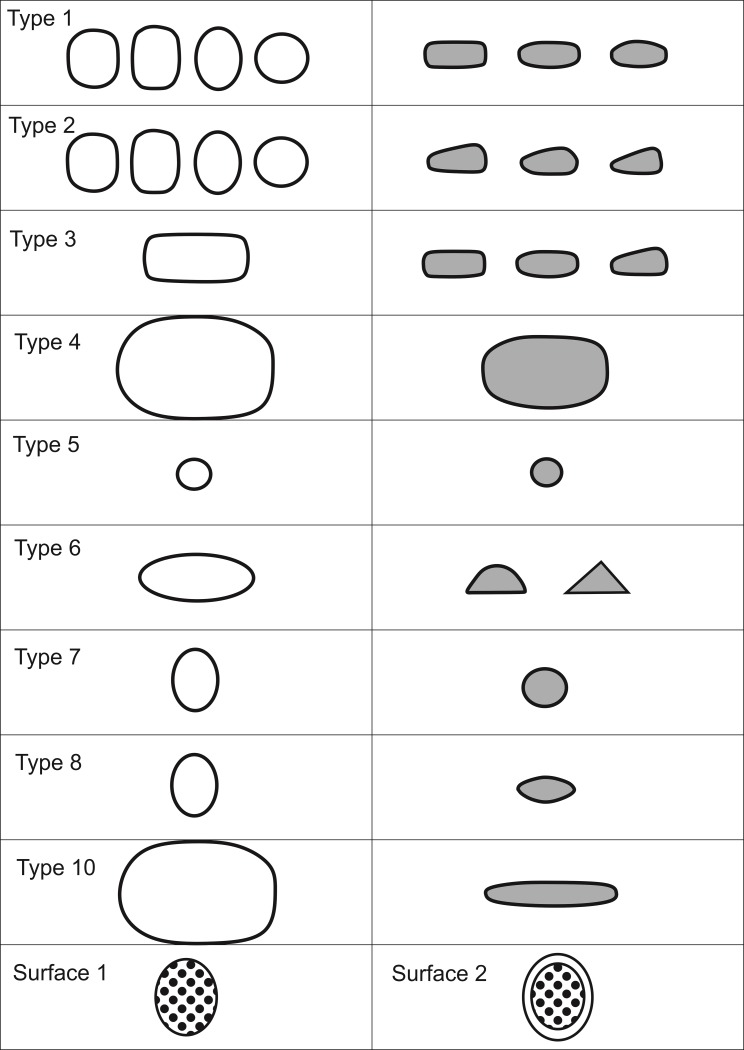
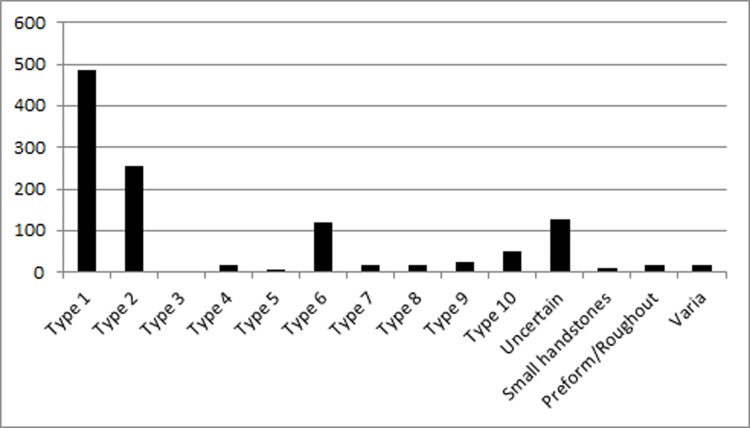
“A total of ten types of handstones can be differentiated, within the sample of 1166 finds which were analyzed regarding form and use-wear (Fig 8 and Table 1).”
§ Cereal processing at Early Neolithic Göbekli Tepe, southeastern Turkey > Functional analysis of grinding stones
plain- Asserted: passes — The authors put it forward as true.
- Checkable: passes — It can be checked against evidence.
- Load-bearing: unclear — It is unclear whether the paper’s conclusions depend on it.
- Based: passes — The paper gives a reason why it holds.
A result the paper reports from its own data — it cites no other source for it, so there is none to check. The quote shows it is in the paper.
In the paper
“The variety of forms seems fairly high at first glance and could hint at a larger spectrum of tasks performed, but types 1 and 2 dominate the tool assemblage with a proportion of 75% (Fig 9).”
§ Cereal processing at Early Neolithic Göbekli Tepe, southeastern Turkey > Functional analysis of grinding stones
plain- Asserted: passes — The authors put it forward as true.
- Checkable: passes — It can be checked against evidence.
- Load-bearing: unclear — It is unclear whether the paper’s conclusions depend on it.
- Based: passes — The paper gives a reason why it holds.
112 more claims
Create a free account to see all 244 claims and to verify the 113 references still open.
- It may state two separate claims as one. 93
- Probably not a substantial claim. 52
- The quote only partly states this claim. 1
Self-check
Percentages, sums and reported differences re-computed from the paper’s own numbers.
Each contradiction between two passages listed here was confirmed by an independent check.
Rated minor: it would not touch a result — a value no result rests on, a p-value that stays on the same side of the significance level, or a conflict that is clerical, resolved elsewhere in the paper, or outside its own findings.
In the paper
§ Cereal processing at Early Neolithic Göbekli Tepe, southeastern Turkey > Phytolith analysis
“M13-133 is from a different context, a large limestone vessel in a rectangular building at the northwestern hilltop”
§ Cereal processing at Early Neolithic Göbekli Tepe, southeastern Turkey > Phytolith analysis
“H. spontaneum (sample M11-133) and H. vulgare (sample M11-133; S5–S8 Tables)”
Rated minor: it would not touch a result — a value no result rests on, a p-value that stays on the same side of the significance level, or a conflict that is clerical, resolved elsewhere in the paper, or outside its own findings.
In the paper
§ Cereal processing at Early Neolithic Göbekli Tepe, southeastern Turkey > Grinding stones and the rectangular buildings > Grinding stones in the monumental circular buildings
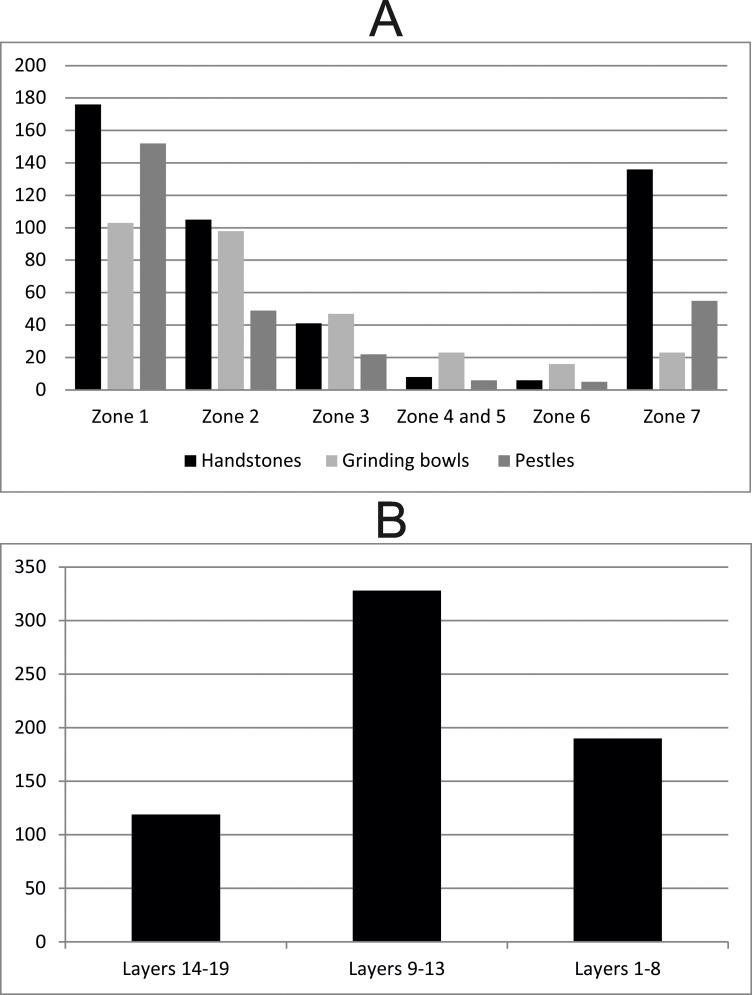
“The distribution is obviously different from that of the rectangular buildings (comp. Fig 12A and 12B with Fig 12C; S2 Table).”
§ Cereal processing at Early Neolithic Göbekli Tepe, southeastern Turkey > Grinding stones and the rectangular buildings
“Figure: Fig 12 Göbekli Tepe. Distribution of the grinding stones. (A) In the rectangular buildings and (B) in the fill of building D (graphs by L. Dietrich).”
Rated minor: it would not touch a result — a value no result rests on, a p-value that stays on the same side of the significance level, or a conflict that is clerical, resolved elsewhere in the paper, or outside its own findings.
In the paper
§ Cereal processing at Early Neolithic Göbekli Tepe, southeastern Turkey > Introduction
“during the PPNA (c. 8800–7000 cal BC)”
§ Cereal processing at Early Neolithic Göbekli Tepe, southeastern Turkey > Introduction
“the later part of the Pre-Pottery Neolithic (PPNB, c. 8800–7000 cal BC)”
Rated minor: it would not touch a result — a value no result rests on, a p-value that stays on the same side of the significance level, or a conflict that is clerical, resolved elsewhere in the paper, or outside its own findings.
In the paper
§ Cereal processing at Early Neolithic Göbekli Tepe, southeastern Turkey > Phytolith analysis
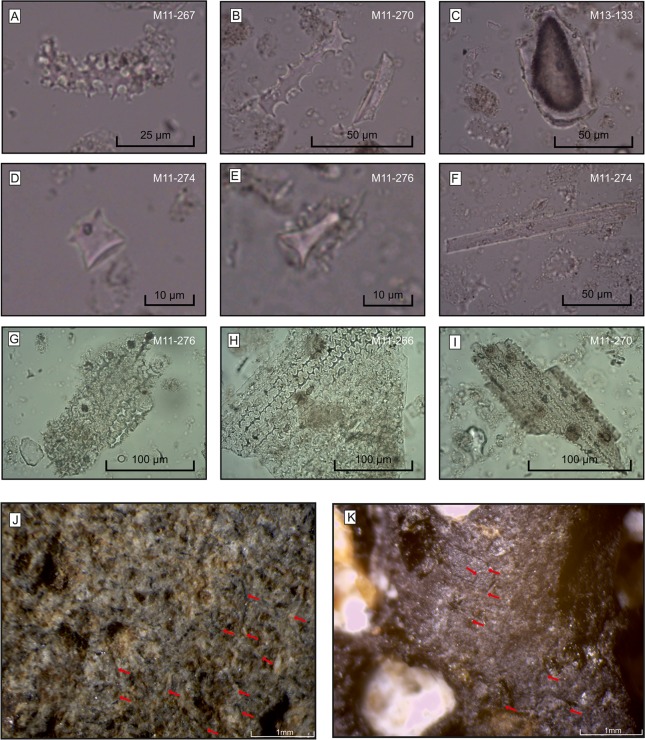
“Tall rondel (‘tower’) short cell morphotypes (Fig 8E), commonly produced in the Hordeum genus [111], were noted in almost all samples.”
§ Cereal processing at Early Neolithic Göbekli Tepe, southeastern Turkey > Functional analysis of grinding stones
“Figure: Fig 10 Göbekli Tepe. Microscopical analyses of phytoliths and use-wear. (A-I) Photomicrographs of phytoliths identified in the samples (400 x magnification). (A) elongate dendritic; (B) elongate echinate (left) and elongate trapeziform short cell (right); (C) bulliform cell; (D) rondel short cell; (E) tall rondel short cell;”
Citations
Cites
Phytoliths: a comprehensive guide for archaeologists and paleoecologists
(2006) · Choice Reviews Online · doi:10.5860/choice.44-0942 · Cited by 1,356
International Code for Phytolith Nomenclature 1.0
MADELLA, M., ALEXANDRE, A., & BALL, T. (2005) · Annals of Botany · doi:10.1093/aob/mci172 · Cited by 887
Morphological Classification of Grass Phytoliths
Twiss, P. C., Suess, E., & Smith, R. M. (1969) · Soil Science Society of America Journal · doi:10.2136/sssaj1969.03615995003300010030x · Cited by 785
Site of Einkorn Wheat Domestication Identified by DNA Fingerprinting
Heun, M., Schäfer-Pregl, R., Klawan, D., Castagna, R., Accerbi, M., Borghi, B., & Salamini, F. (1997) · Science · doi:10.1126/science.278.5341.1312 · Cited by 660
Rethinking materiality : the engagement of mind with the material world
DeMarrais, E., Gosden, C., & Renfrew, C. (2004) · Cited by 617
Lev-Yadun, S., Gopher, A., & Abbo, S. (2000) · Science · doi:10.1126/science.288.5471.1602 · Cited by 605
The Origins of Agriculture in the Near East
Zeder, M. A. (2011) · Current Anthropology · doi:10.1086/659307 · Cited by 585
Palmer, C. (2002) · American Journal of Archaeology · doi:10.2307/4126290 · Cited by 535
Processing of wild cereal grains in the Upper Palaeolithic revealed by starch grain analysis
Piperno, D. R., Weiss, E., Holst, I., & Nadel, D. (2004) · Nature · doi:10.1038/nature02734 · Cited by 505
Predicted World Distribution of C3 and C4 Grass Phytoliths
Twiss, P. C. (1992) · Phytolith Systematics · doi:10.1007/978-1-4899-1155-1_6 · Cited by 418
Kuijt, I., & Goring-Morris, N. (2002) · Journal of World Prehistory · doi:10.1023/a:1022973114090 · Cited by 387
Life in neolithic farming communities: social organization, identity, and differentiation
(2000) · Choice Reviews Online · doi:10.5860/choice.38-2231 · Cited by 384
Archaeobotanical evidence reveals the origins of bread 14,400 years ago in northeastern Jordan
Arranz-Otaegui, A., Gonzalez Carretero, L., Ramsey, M. N., Fuller, D. Q., & Richter, T. (2018) · Proceedings of the National Academy of Sciences · doi:10.1073/pnas.1801071115 · Cited by 338
Dietrich, O., Heun, M., Notroff, J., Schmidt, K., & Zarnkow, M. (2012) · Antiquity · doi:10.1017/s0003598x00047840 · Cited by 329
Self-citationThe broad spectrum revisited: Evidence from plant remains
Weiss, E., Wetterstrom, W., Nadel, D., & Bar-Yosef, O. (2004) · Proceedings of the National Academy of Sciences · doi:10.1073/pnas.0402362101 · Cited by 324
Willcox, G. (2005) · Vegetation History and Archaeobotany · doi:10.1007/s00334-005-0075-x · Cited by 324
Early Holocene cultivation before domestication in northern Syria
Willcox, G., Fornite, S., & Herveux, L. (2008) · Vegetation History and Archaeobotany · doi:10.1007/s00334-007-0121-y · Cited by 318
Rosen, A. M. (1992) · Springer eBooks · doi:10.1007/978-1-4899-1155-1_7 · Cited by 307
Prospects and limits of a phytolith key for grasses in the central United States
Brown, D. A. (1984) · Journal of Archaeological Science · doi:10.1016/0305-4403(84)90016-5 · Cited by 305
Wright, K. I. (1994) · American Antiquity · doi:10.2307/281929 · Cited by 270
The origins of sedentism and farming communities in the Levant
Bar-Yosef, O., & Belfer-Cohen, A. (1989) · Journal of World Prehistory · doi:10.1007/bf00975111 · Cited by 264
Göbekli Tepe, Southeastern Turkey. A Preliminary Report on the 1995-1999 Excavations.
Schmidt, K. (2000) · Paléorient · doi:10.3406/paleo.2000.4697 · Cited by 248
Özkan, H., Brandolini, A., Schäfer-Pregl, R., & Salamini, F. (2002) · Molecular Biology and Evolution · doi:10.1093/oxfordjournals.molbev.a004002 · Cited by 243
Liu, L., Wang, J., Rosenberg, D., Zhao, H., Lengyel, G., & Nadel, D. (2018) · Journal of Archaeological Science: Reports · doi:10.1016/j.jasrep.2018.08.008 · Cited by 243
Asouti, E., & Fuller, D. Q. (2013) · Current Anthropology · doi:10.1086/670679 · Cited by 237
A Morphological Classification of Grass Silica-Bodies
Mulholland, S. C., & Rapp, G. (1992) · Phytolith Systematics · doi:10.1007/978-1-4899-1155-1_4 · Cited by 228
Stone Tools in the Paleolithic and Neolithic Near East: A Guide
Shea, J. J. (2013) · Cambridge University Press eBooks · doi:10.1017/cbo9781139026314 · Cited by 226
Tsartsidou, G., Lev-Yadun, S., Albert, R.-M., Miller-Rosen, A., Efstratiou, N., & Weiner, S. (2007) · Journal of Archaeological Science · doi:10.1016/j.jas.2006.10.017 · Cited by 225
Ground Stone Analysis: A Technological Approach
Adams, J. L. (2014) · University of Utah Press eBooks · doi:10.1353/book41396 · Cited by 225
Twiss, K. C. (2008) · Journal of Anthropological Archaeology · doi:10.1016/j.jaa.2008.06.002 · Cited by 214
Long-term trends in Natufian subsistence: a use-wear analysis of ground stone tools
Dubreuil, L. (2004) · Journal of Archaeological Science · doi:10.1016/j.jas.2004.04.003 · Cited by 211
Albert, R. M., Lavi, O., Estroff, L., Weiner, S., Tsatskin, A., Ronen, A., & Lev-Yadun, S. (1999) · Journal of Archaeological Science · doi:10.1006/jasc.1999.0355 · Cited by 209
Encyclopedia of Applied Plant Sciences
(2016) · Elsevier eBooks · doi:10.1016/c2011-1-04585-x · Cited by 198
Katz, O., Cabanes, D., Weiner, S., Maeir, A. M., Boaretto, E., & Shahack-Gross, R. (2010) · Journal of Archaeological Science · doi:10.1016/j.jas.2010.01.016 · Cited by 195
Ball, T. B., Gardner, J. S., & Anderson, N. (1999) · American Journal of Botany · doi:10.2307/2656798 · Cited by 192
The Neolithic Southwest Asian Founder Crops: Their Biology and Archaeobotany
Weiss, E., & Zohary, D. (2011) · Current Anthropology · doi:10.1086/658367 · Cited by 186
Encyclopedia of applied plant sciences
(2004) · Choice Reviews Online · doi:10.5860/choice.41-5013 · Cited by 165
Use-Wear and Residue Analysis in Archaeology
Clemente-Conte, I., Fernández, T. L., Astruc, L., & Rodríguez Rodríguez, A. C. (2014) · Manuals in archaeological method, theory and technique · doi:10.1007/978-3-319-08257-8 · Cited by 165
Schmidt, K. (2010) · Documenta Praehistorica · doi:10.4312/dp.37.21 · Cited by 161
Early domestication and farming: what should we know or do for a better understanding?
Vigne, J. (2015) · Anthropozoologica · doi:10.5252/az2015n2a5 · Cited by 157
Arranz‐Otaegui, A., Colledge, S., Zapata, L., Mayolini, L. C. T., & Ibáñez, J. J. (2016) · Proceedings of the National Academy of Sciences · doi:10.1073/pnas.1612797113 · Cited by 157
Kiple, K. F. (2007) · Cambridge University Press eBooks · doi:10.1017/cbo9780511512148.003 · Cited by 153
'Prehistoric Technology' 40 years later: Functional Studies and the Russian Legacy
Longo, L., & Skakun, N. N. (2008) · ARCA (Università Ca' Foscari Venezia) · Cited by 148
The Social Origins of Cooking and Dining in Early Villages of Western Asia
Wright, K. I. (2000) · Proceedings of the Prehistoric Society · doi:10.1017/s0079497x0000178x · Cited by 146
Portillo, M., Kadowaki, S., Nishiaki, Y. A., & Albert, R. M. (2013) · Journal of Archaeological Science · doi:10.1016/j.jas.2013.10.038 · Cited by 145
Fuller, D. Q., Asouti, E., & Purugganan, M. D. (2011) · Vegetation History and Archaeobotany · doi:10.1007/s00334-011-0329-8 · Cited by 142
Current Analytical Frameworks for Studies of Use–Wear on Ground Stone Tools
Dubreuil, L., Savage, D., Delgado-Raack, S., Plisson, H., Stephenson, B., & de la Torre, I. (2014) · Manuals in archaeological method, theory and technique · doi:10.1007/978-3-319-08257-8_7 · Cited by 142
Reassessing the emergence of village life in the Near East
Byrd, B. F. (2005) · Journal of Archaeological Research · doi:10.1007/s10814-005-3107-2 · Cited by 127
Les bâtiments communautaires de Jerf el Ahmar et Mureybet Horizon PPNA (Syrie).
Stordeur, D., Brenet, M., Der Aprahamian, G., & Roux, J. C. (2000) · Paléorient · doi:10.3406/paleo.2000.4696 · Cited by 124
A classification system for ground stone tools from the prehistoric Levant
Wright, K. (1992) · Paléorient · doi:10.3406/paleo.1992.4573 · Cited by 123
Willcox, G., & Stordeur, D. (2012) · Antiquity · doi:10.1017/s0003598x00062487 · Cited by 115
Ball, T. B., Davis, A., Evett, R. R., Ladwig, J. L., Tromp, M., Out, W. A., & Portillo, M. (2015) · Journal of Archaeological Science · doi:10.1016/j.jas.2015.03.023 · Cited by 106
Ground stone use-wear analysis: a review of terminology and experimental methods
Adams, J. L. (2014) · Journal of Archaeological Science · doi:10.1016/j.jas.2013.01.030 · Cited by 101
The Origins and development of ground stone assemblages in Late Pleistocene Southwest Asia
Wright, K. (1991) · Paléorient · doi:10.3406/paleo.1991.4537 · Cited by 100
Banning, E. B. (2011) · Current Anthropology · doi:10.1086/661207 · Cited by 97
Hallan Çemi and Early Village Organization in Eastern Anatolia
Rosenberg, M., & Redding, R. W. (2006) · Fundamental Issues in Archaeology · doi:10.1007/0-306-47166-3_3 · Cited by 90
Wright, K. I. (. (2014) · Journal of Anthropological Archaeology · doi:10.1016/j.jaa.2013.09.007 · Cited by 85
New light on Neolithic revolution in south-west Asia
Watkins, T. (2010) · Antiquity · doi:10.1017/s0003598x00100122 · Cited by 85
Dietrich, O., Notroff, J., & Schmidt, K. H. (2017) · Studies in human ecology and adaptation · doi:10.1007/978-3-319-48402-0_5 · Cited by 84
Self-citationStarkovich, B. M., & Stiner, M. C. (2009) · Anthropozoologica · doi:10.5252/az2009n1a2 · Cited by 82
The Dawn of Farming in the Near East
Cappers, R. T. J., & Bottema, S. (2002) · Cited by 80
Dubreuil, L. (2002) · OpenGrey (Institut de l'Information Scientifique et Technique) · Cited by 76
Tell 'Abr 3, un village du néolithique précéramique (PPNA) sur le Moyen Euphrate. Première approche
Yartah, T. (2004) · Paléorient · doi:10.3406/paleo.2004.1017 · Cited by 72
Ritual, Play and Belief, in Evolution and Early Human Societies
Renfrew, C., Morley, I., & Boyd, M. J. (2017) · Cambridge University Press eBooks · doi:10.1017/9781316534663 · Cited by 72
Les bâtiments communautaires de Tell'Abr 3 (PPNA, Syrie)
Yartah, T. (2005) · HAL · Cited by 66
Agricultural Changes at Euphrates and Steppe Sites in the Mid-8th to the 6th Millennium B.C.
de Moulins, D. (1997) · University of Michigan Press eBooks · doi:10.30861/9780860549222 · Cited by 65
Dubreuil, L., & Nadel, D. (2015) · Philosophical Transactions of the Royal Society B Biological Sciences · doi:10.1098/rstb.2014.0357 · Cited by 61
Early Holocene Ground Stone Assemblages in the Levant
Wright, K. (1993) · Levant · doi:10.1179/lev.1993.25.1.93 · Cited by 61
Benz, M., Deckers, K., Rössner, C., Alexandrovskiy, A. L., Pustovoytov, K. E., Scheeres, M., Fecher, M., Coşkun, A., Riehl, S., Alt, K. W., et al. (2015) · Paléorient · doi:10.3406/paleo.2015.5673 · Cited by 59
Dietrich, O., & Notroff, J. (2015) · Oxbow Books · doi:10.2307/j.ctvh1dspq.11 · Cited by 55
Self-citationPremiers paysans du monde. Naissances des agricultures
Perpère, M. (2001) · L Anthropologie · doi:10.1016/s0003-5521(01)80035-2 · Cited by 54
Some aspects of building at the ‘aceramic‐neolithic’ settlement of Çayönü Tepesi
Schirmer, W. (1990) · World Archaeology · doi:10.1080/00438243.1990.9980114 · Cited by 54
Weide, A., Riehl, S., Zeidi, M., & Conard, N. J. (2018) · PLoS ONE · doi:10.1371/journal.pone.0189811 · Cited by 52
Portillo, M., Albert, R. M., & Henry, D. O. (2009) · Quaternary International · doi:10.1016/j.quaint.2007.06.002 · Cited by 52
Erdal, Y. S. (2015) · European Journal of Archaeology · doi:10.1179/1461957114y.0000000072 · Cited by 50
Watkins, T. F. (2017) · Cambridge University Press eBooks · doi:10.1017/9781316534663.010 · Cited by 46
Digital atlas of traditional agricultural practices and food processing
Cappers, R. T. J., Neef, R., Bekker, R. M., Fantone, F., & Okur, Y. (2016) · University of Groningen research database (University of Groningen / Centre for Information Technology) · Cited by 37
Colledge, S. (2002) · UCL Discovery (University College London) · Cited by 34
Gazelle behaviour and human presence at early Neolithic Göbekli Tepe, south-east Anatolia
Lang, C., Peters, J., Pöllath, N., Schmidt, K., & Grupe, G. (2013) · World Archaeology · doi:10.1080/00438243.2013.820648 · Cited by 34
The Archaeology of Early Farming in Southeast Turkey
Özdoğan, M. (2017) · Cambridge University Press eBooks · doi:10.1017/9781316106754.080 · Cited by 34
Rössner, C., Deckers, K., Benz, M., Özkaya, V., & Riehl, S. (2017) · Vegetation History and Archaeobotany · doi:10.1007/s00334-017-0641-z · Cited by 30
Experimental Barley Flour Production in 12,500-Year-Old Rock-Cut Mortars in Southwestern Asia
Eitam, D., Kislev, M. E., Karty, A., & Bar‐Yosef, O. (2015) · PLoS ONE · doi:10.1371/journal.pone.0133306 · Cited by 29
Pöllath, N., Dietrich, O., Notroff, J., Clare, L., Dietrich, L., Köksal-Schmidt, Ç., Schmidt, K., & Peters, J. (2018) · Quaternary International · doi:10.1016/j.quaint.2017.12.003 · Cited by 27
Self-citationFeast, Famine or Fighting?: Multiple Pathways to Social Complexity
Chacon, R. J., & Mendoza, R. G. (2017) · Digital Commons - CSUMB (California State University, Monterey Bay) · Cited by 24
Masks and masquerade in the Early Neolithic. A view from Upper Mesopotamia
Dietrich, O., Notroff, J., & Dietrich, L. (2018) · Time and Mind · doi:10.1080/1751696x.2018.1433354 · Cited by 20
Self-citationRadiocarbon Dating the First Temples of Mankind
Dietrich, O. (2026) · Zeitschrift für Orient-Archäologie · doi:10.34780/yfe6hr28 · Cited by 20
Self-citationScheibner, A., & GmbH, V. V. M. L. (2016) · Cited by 20
Göbekli Tepe − Bauforschung in den Anlagen C und E in den Jahren 2010–2012
Piesker, K. (2026) · Zeitschrift für Orient-Archäologie · doi:10.34780/96x7rv31 · Cited by 19
Defining the sacred approaches to the archaeology of religion in the Near East
Laneri, N. (2015) · Cited by 19
Miller, N. F. (1998) · Périodiques Scientifiques en Édition Électronique · Cited by 18
The Domestication of Crop Plants
Abbo, S., Gopher, A., & Lev‐Yadun, S. (2016) · Elsevier eBooks · doi:10.1016/b978-0-12-394807-6.00066-6 · Cited by 15
Anthropomorphic Imagery at Göbekli Tepe
Dietrich, O., Dietrich, L., & Notroff, J. (2019) · Verlag der österreichischen Akademie der Wissenschaften eBooks · doi:10.2307/j.ctvvh865z.12 · Cited by 15
Self-citationSoils and soil sediments at Göbekli Tepe, southeastern Turkey: a preliminary report
Pustovoytov, K. (2006) · Geoarchaeology · doi:10.1002/gea.20134 · Cited by 11
ŞANLIURFA BÖLGESİNDE "T" ŞEKLİNDE DİKMETAŞ BULUNAN YERLEŞİMLERİN FARKLILIK VE BENZERLİKLERİ
Çelik, B. (2014) · Türkiye Bilimler Akademisi Arkeoloji Dergisi · doi:10.22520/tubaar.2014.0001 · Cited by 11
Hunter-Gatherer Continuity: the Transition from the Epipalaeolithic to the Neolithic in Syria
Akkermans, P. M. M. G. (2004) · Leiden Repository (Leiden University) · Cited by 10
Braidwood, L. S., & Braidwood, R. J. (1982) · University of Michigan Press eBooks · doi:10.30861/9780860541691 · Cited by 10
Rosenberg, D., & Nadel, D. (2017) · Quaternary International · doi:10.1016/j.quaint.2016.11.023 · Cited by 9
Neolithic and Chalcolithic Architecture in Eurasia: Building Techniques and Spatial Organisation
Gheorghiu, D. (2010) · University of Michigan Press eBooks · doi:10.30861/9781407305738 · Cited by 9
An Interdisciplinary Focus on Plant-Working Tools
Anderson, P., Cheval, C., & Durand, A. (2013) · HAL · Cited by 7
Kumar, R. G. (2013) · Cited by 6
Banning, E. B. (2016) · Périodiques Scientifiques en Édition Électronique · Cited by 5
(n.d.)
(2004)
(2012)
(2005) · doi:10.5209/cmpl.30658
(n.d.) · Türkiye Bilimler Akademisi Arkeoloji Dergisi
Research works printed but not linked: 25
- Harris DR. Development of agro-pastoral economy in the Fertile Crescent during the Pre-Pottery Neolithic period In: Cappers RTJ, Bottema S, editors. The dawn of farming in the Near East. Berlin: exOriente; 2002 pp. 67– 84.
- Nesbitt M. When and where did domesticated cereals first occur in southwest Asia? In: Cappers RTJ, Bottema S, editors. The dawn of farming in the Near East. Berlin: ex Oriente; 2002 pp. 113– 132.
- Dubreuil L. Functional analysis of grinding tools from the Natufian site of Mallaha: toward an understanding of assemblage evolution in the Levant. The Arkeotek Journal. 2009; 1: http://www.thearkeotekjournal.org/tdm/Arkeotek/fr/archives/2009/1Dubreuil.xml19331084
- van Zeist W, de Roller GJ. The Çayönü archaeobotanical record In: van Zeist W, editor. Reports on archaeobotanical studies in the Old World. Groningen: Groningen Institute of Archaeology; 2003 pp. 143– 166.
- Becker N, Dietrich O, Götzelt T, Köksal-Schmidt Ç, Notroff J, Schmidt K. Materialien zur Deutung der zentralen Pfeilerpaare des Göbekli Tepe und weiterer Orte des obermesopotamischen Frühneolithikums. Zeitschrift für Orient-Archäologie. 2012; 5: 14– 43.
- Hauptmann H. Ein Kultgebäude in Nevali Çori In: Frangipane M, Hauptmann H, Liverani M, Matthiae P, Mellink MJ, editors. Between the rivers and over the mountains. Archaeologica Anatolica et Mesopotamica Alba Palmieri dedicate. Rom: Gruppo Editoriale Internazionale-Roma; 1993 pp. 37– 69.
- Karul N. Gusir Höyük In: Özdoğan M, Başgelen N, Kuniholm P, editors. The Neolithic in Turkey 1. The Tigris Basin. Istanbul: Archaeology & Art Publications; 2011 pp. 1– 17.
- Karul N. Gusir Höyük/Siirt. Yerleşik Avcılar. Arkeo Atlas. 8; 2013: 22– 29.
- Kurapkat D. Frühneolithische Sonderbauten auf dem Göbekli Tepe in Obermesopotamien und vergleichbare Bauten in Vorderasien. PhD Thesis, Technische Universität Berlin. 2015.
- Özdoğan M, Özdoğan A. Buildings of cult and the cult of buildings In: Arsebük G, Mellink MJ, Schirmer W. Light on top of the Black Hill. Studies presented to Halet Çambel. Istanbul: Ege Yayınları; 1998 pp. 581– 601.
- Schmidt K. “Ritual Centers” and the Neolithisation of Upper Mesopotamia. Neo-Lithics. 2005; 2(05): 13– 21.
- Schmidt K. Göbekli Tepe In: Özdoğan M, Başgelen N, Kuniholm P, editors. The Neolithic in Turkey 2. The Euphrates Basin. Istanbul: Archaeology and Art Publications; 2011 pp. 41– 83.
- Peters J, Arbuckle BS, Pöllath N. Subsistence and beyond: animals in Neolithic Anatolia In: Özdoğan M, Başgelen N, Kuniholm P, editors. The Neolithic in Turkey 6. Istanbul: Archaeology and Art Publications; 2014 pp. 135– 203.
- von den Driesch A, Peters J. Vorläufiger Bericht über die archäozoologischen Untersuchungen am Göbekli Tepe und am Gürcütepe bei Urfa, Türkei. Istanbuler Mitteilungen. 1999; 49: 23– 39.
- Neef R. Overlooking the steppe-forest: a preliminary report on the botanical remains from Early Neolithic Göbekli Tepe (southeastern Turkey). Neo-Lithics. 2003; 2(03): 13– 16.
- Schmidt K. Göbekli Tepe. Eine Beschreibung der wichtigsten Befunde erstellt nach den Arbeiten der Grabungsteams der Jahre 1995–2007 In: Schmidt K, editor. Erste Tempel–frühe Siedlungen. 12000 Jahre Kunst und Kultur. Oldenburg: Isensee; 2009 pp. 187– 223.
- Kurapkat D. A roof under one´s feet: early Neolithic roof constructions at Göbekli Tepe In: Carvais R, Guillerme A, Nègre V, Sakarovitch J, editors. Nuts & bolts of construction history. Culture, technology and society. Paris: Picard; 2012 pp. 157– 165.
- Dietrich O, Köksal-Schmidt Ç, Notroff J, Schmidt K. Establishing a Radiocarbon Sequence for Göbekli Tepe. State of Research and New Data. Neo-Lithics. 2013; 1(13): 36– 41.
- Schmidt K. Göbekli Tepe–der Tell als Erinnerungsort In: Hansen S, editor. Leben auf dem Tell als soziale Praxis. Bonn: Habelt; 2010 pp. 13– 23.
- Schäkel N. Experimentelle Herstellung von Reibsteinen nach Vorbildern archäologischer Originalfunde des präkeramischen Neolithikums Anatoliens. Vorstellung eines experimentalarchäologischen Projektes am Museumsdorf Düppel. Journal–Archäologie, Geschichte, Naturkunde Düppel. 2018: forthcoming.
- Adams JL, Delgado S, Dubreuil L, Hamon C, Plisson H, Risch R. Functional analysis of macro-lithic artifacts In: Sternke F, Costa LJ, Eigeland L, editors. Non-flint raw material use in prehistory: old prejudices and new directions. Oxford: Archaeopress; 2009 pp. 43– 66.
- Schmidt K. Göbekli Tepe kazısı 2011 yılı raporu. In: T.C. Kültür ve Turizm Bakanlığı. Kültür Varlıkları ve Müzeler Genel Müdürlüğü, editor. 34. Kazı sonuçları toplantısı, Çorum 2012. Ankara: T.C. Kültür ve Turizm Bakanlığı. Kültür Varlıkları ve Müzeler Genel Müdürlüğü; 2013. pp. 79–90.
- Schmidt K. Die steinzeitlichen Heiligtümer am Göbekli Tepe. Colloquium Anatolicum–Anadolu Sohbetleeri. 2008; VII: 59– 85.
- Notroff J, Dietrich O, Schmidt K. Building Monuments–Creating Communities. Early monumental architecture at Pre-Pottery Neolithic Göbekli Tepe In: Osborne J, editor. Approaching Monumentality in the Archaeological Record. Albany: SUNY Press; 2014 pp. 83– 105.
- Herrmann RA, Schmidt K. Göbekli Tepe–Untersuchungen zur Gewinnung und Nutzung von Wasser im Bereich des steinzeitlichen Bergheiligtums In: Klimscha F, Eichmann R, Schuler C, Fahlbusch H, editors. Wasserwirtschaftliche Innovationen im archäologischen Kontext. Von den prähistorischen Anfängen bis zu den Metropolen der Antike. Rahden/Westfalen: Leidorf; 2012 pp. 57– 67.
Cited by
An ethnobotanical review on medicinal plants of the Lamiaceae family in Turkey
SELVİ, S., Polat, R., Çakılcıoğlu, U., Celep, F., Dirmenci, T., & Ertuğ, F. (2022) · TURKISH JOURNAL OF BOTANY · doi:10.55730/1300-008x.2712 · Cited by 128
Dietrich, L., Götting-Martin, E., Hertzog, J., Schmitt‐Kopplin, P., McGovern, P. E., Hall, G. R., Petersen, W. C., Zarnkow, M., Hutzler, M., Jacob, F., et al. (2020) · Journal of Archaeological Science Reports · doi:10.1016/j.jasrep.2020.102618 · Cited by 68
Self-citationCristiani, E., Radini, A., Zupancich, A., Gismondi, A., D’Agostino, A., Ottoni, C., Carra, M., Vukojičić, S., Constantinescu, M., Antonović, D., et al. (2021) · eLife · doi:10.7554/elife.72976 · Cited by 64
Preserving the food preservation legacy
Knorr, D., & Augustin, M. A. (2022) · Critical Reviews in Food Science and Nutrition · doi:10.1080/10408398.2022.2065459 · Cited by 59
Cristiani, E., & Zupancich, A. (2020) · Journal of Archaeological Method and Theory · doi:10.1007/s10816-020-09488-1 · Cited by 46
Metadata
- Authors
- Dietrich, L., Meister, J., Dietrich, O., Notroff, J., Kiep, J., Heeb, J., Beuger, A., & Schütt, B.
- Affiliations
- Deutsches Archäologisches Institut, Orient-Abteilung (DE)
- University of Würzburg (DE)
- Freie Universität Berlin (DE)
- Corresponding author
- Dietrich, Laura
- Meister, Julia
- Venue
- PLOS ONE
- Publisher
- Public Library of Science (PLoS)
- Published
- 2019-05-01
- Volume
- 14
- Issue
- 5
- Pages
- e0215214
- ISSN
- 1932-6203 (ISSN-L)
- PMC
- PMC6493732
- OpenAlex
- W2943404806
- Cited by
- 131
- References
- 108
- Citations by year
- 2026: 11 · 2025: 12 · 2024: 22 · 2023: 17 · 2022: 28 · 2021: 22 · 2020: 15 · 2019: 4
- FWCI
- 27.05
- Type
- journal article
- Language
- en
- Open access
- gold
- doi.org
- Licence
- Locations
- PLoS ONE (publishedVersion, cc-by)
- Europe PMC (PubMed Central) (publishedVersion, cc-by)
- PubMed Central (publishedVersion, cc-by)
- PubMed (publishedVersion)
- DOAJ (DOAJ: Directory of Open Access Journals) (submittedVersion)
- Figshare (submittedVersion, cc-by)
- Online Publication Service of Würzburg University (Würzburg University) (submittedVersion, cc-by)
- Knowledge Commons Works (Michigan State University) (cc-by-nc-sa)
- Funders
- Deutsche Forschungsgemeinschaft (165831460, Open Access Publishing funding program)
- Deutsches Archäologisches Institut
- Topics
- Social Sciences › Archeology › Archaeology and ancient environmental studies
- Social Sciences › Arts and Humanities › Archeology (arts and humanities) › Archaeological and Geological Studies
- Social Sciences › Anthropology › Pleistocene-Era Hominins and Archaeology
- Keywords
- Göbeklitepe, Early Neolithic, grain processing, grinding tools, use-wear analysis, phytoliths, food production, monumental architecture, rectangular buildings, seasonal activity, Southeastern Anatolia
- MeSH terms
- Agriculture, Archaeology, Edible Grain, Food Handling, Humans, Turkey, History, Ancient
About these checks
Registry, retraction, Cites and statistics results are computed, not judged, with one exception: a printed reference that no index lists is read once by a model before it counts as a citation error. Claims are extracted by a model and kept only when their quote appears verbatim in the text; each cited source is then checked, with a model’s help, for whether it says what the claim relies on. Those verdicts can be wrong — read the claim’s quote and the cited source before relying on one.
A language model drew the claims from the paper on 2026-11-23, under version 3 of the claim definition (model deepseek-v4.1-flash, prompt extract-v3).
A second model labelled each claim on 2026-11-23 (model jev-1.13-20260917, definition revision gold-guideline-v0.2).
Statistics and arithmetic are recomputed, not judged.
Confidence bands are shown only for fields calibrated on our annotated test set. None is calibrated yet, so no band is shown.
What counts as a claim ›How we measure confidence ›How we check this ›
Are you an author, or do you see a problem with this page? Request a review
Data sources
Bibliographic data: Semantic Scholar, OpenAlex, Crossref.
Contains information from the Semantic Scholar Academic Graph Datasets, made available under the ODC Attribution License (ODC-BY 1.0).
Semantic Scholar’s data is described in: Kinney, R., et al. (2023). The Semantic Scholar Open Data Platform. arXiv:2301.10140.
