

There and back again: A zooarchaeological perspective on Early and Middle Bronze Age urbanism in the southern Levant
Open accessThe DOI matches its Crossref record; 76 of the 79 references it cites were found in a registry or an index, and 3 are not checked yet; none of the 101 sources its claims cite is checked for support yet.
Abstract
Multiple arguments for or against the presence of 'urban' settlements in the Early Bronze Age of the southern Levant have identified the need to compare these settlements against their rural hinterlands through multiple lines of evidence. This meta-analysis of zooarchaeological data from the region compares and identifies patterns of animal production, provisioning and consumption between the supposed "urban" and rural sites of the southern Levant from the Early Bronze (EB) against the (more widely recognised urban) Middle Bronze (MB) Ages. It also identifies distinct and regionally specific patterns in animal production and consumption that can be detected between urban and rural sites of the southern Levant. The taxonomic and age profiles from EB Ia and Ib sites do not demonstrate any urban versus rural differentiation patterning, even though fortifications appear in the EB Ib. Beginning in the EB II and clearly visible in the EB III, there is differentiation between rural and urban sites in the taxonomic and age proportions. Differentiation is repeated in the MB II. The clear differentiation between "urban" and rural zooarchaeological assemblages from the EB II-III and MB suggest that rural sites are provisioning the larger fortified settlements. This pattern indicates that these sites are indeed urban in nature, and these societies are organized at the state-level. From the EB II onwards, there is a clear bias in the large centres towards the consumption of cattle and of subadult sheep and goats with a corresponding bias in smaller rural sites towards the consumption of adult sheep and goats and a reduced presence of cattle. After the emergence of this differential pattern, it disappears with the decline in social complexity at the end of the Early Bronze Age, only to come 'back again' with the re-emergence of urban settlement systems in the Middle Bronze Age.
Checked 2026-11-27 · 3 references not checked yet
Overview
CoChat Summary
TL;DR
A meta-analysis of zooarchaeological data from the southern Levant finds no clear urban–rural provisioning differences in EB Ia/Ib, but from EB II–III and again in MB II urban sites show more cattle and subadult sheep/goats while rural sites show more adult sheep/goats and less cattle. This supports identifying EB II–III large fortified sites as urban/state-level, with the pattern disappearing in EB IV/MB I and returning in MB II.
Key findings
- The dataset comprises 89,241 elements from 91 phases at 57 sites, plus 48 ovicaprine dental age samples from 31 sites. Later Chalcolithic and EB Ia show no overall taxonomic or age patterning; EB Ib shows no clear taxonomic differentiation between rural and putative urban sites, though Ai et-Tell’s age profile sits at the margins.
- In EB II, urban sites have 36.9% cattle vs 17.2% at rural sites, 58.6% sheep/goats vs 81.9%, 4.0% pigs vs 0.3%, and 4.3% wild vs 1.6%. In EB III, urban sites have 29.2% cattle vs 10.9% rural, 2.7% pigs vs 0.2%, 5.8% equids vs 1.3%, and 6.3% wild vs 2.7%.
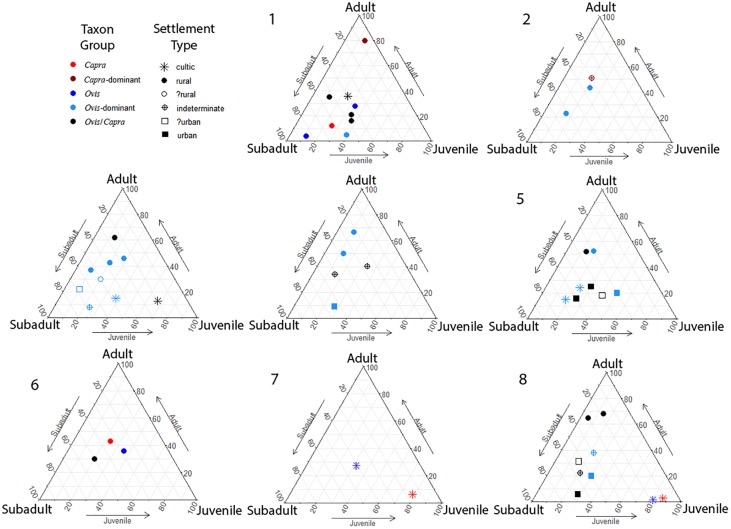
- Ovicaprine dental age profiles show clear rural–urban divergence from EB II, clearly visible in EB III, and repeated in MB II: urban sites are biased toward subadult animals, rural sites toward adults. ANOVA reports significant differences for cattle proportions (p = 0.033) and dental age distributions (p = 3.03e-7), but not for wild (p = 0.202) or pig (p = 0.814) proportions.
- In MB II, urban cattle is 24.4% vs 21.2% rural; rural sheep/goats are 65.6% and pigs 8.0%, while urban pigs are 2.6% and wild 2.5%. Three coastal sites—Tell Jemmeh, Tel Qashish, and Yoqne’am—show anomalously high pig representation (26.2%). The differentiation is lost in EB IV/MB I and returns in MB II.
Methods
- Meta-analysis of published zooarchaeological data from the southern Levant from the later Chalcolithic through MB II, using 89,241 elements from 91 phase-samples at 57 sites and 48 ovicaprine dental age samples from 31 sites. Chronological samples: 17 late Chalcolithic, 9 EB Ia, 14 EB Ib, 13 EB II, 12 EB III, 4 EB IV, 2 MB I, and 19 MB II.
- Taxonomic comparisons use NISP of macro-mammals identified to species or genus, with a minimum NISP cut-off of 100 per phase-sample; Ovis/Capra are combined, wild taxa are grouped, and birds, fish, and microfauna are excluded. Age analysis uses Payne dental age groups for sheep/goats; cattle dental age data are excluded due to sparse reporting (available for only 7 of 91 faunal samples).
- Sites are classified into six urban/rural categories based on planned settlement, fortifications, public/monumental architecture, estimated size, and excavator identification, with additional categories for cultic, lower town, and indeterminate contexts. Analyses in R include correspondence analysis, jitter charts, ternary diagrams, and ANOVA.
Limitations
- Stated: EB IV sample size is limited, making the lack of differentiation difficult to prove; only two arguably urban EB Ib samples (Ai et-Tell and Tel Erani) are available, so EB Ib urban provisioning cannot be conclusively determined; more faunal and dental age data from EB Ib urban and rural sites are needed.
- Stated: cattle dental age data are available for only 7 of 91 faunal samples, so the function/status of increased urban cattle cannot be determined; Ovis and Capra are often not reported separately (30 of 91 samples lacked individual counts; 40 of 46 age samples would be lost if separated), forcing combined Ovis/Capra analysis.
- Stated/evident: pooled upper- and lower-town samples may mask intra-site differences; samples not assigned to a specific phase or spanning multiple phases were omitted; the study relies on published NISP and analyst reporting, with variation in recovery and reporting, and excludes birds, fish, and microfauna.
Model-written summary. Check it against the paper before relying on it.
Integrity signals
Registry
Cites
Statistics
Figures
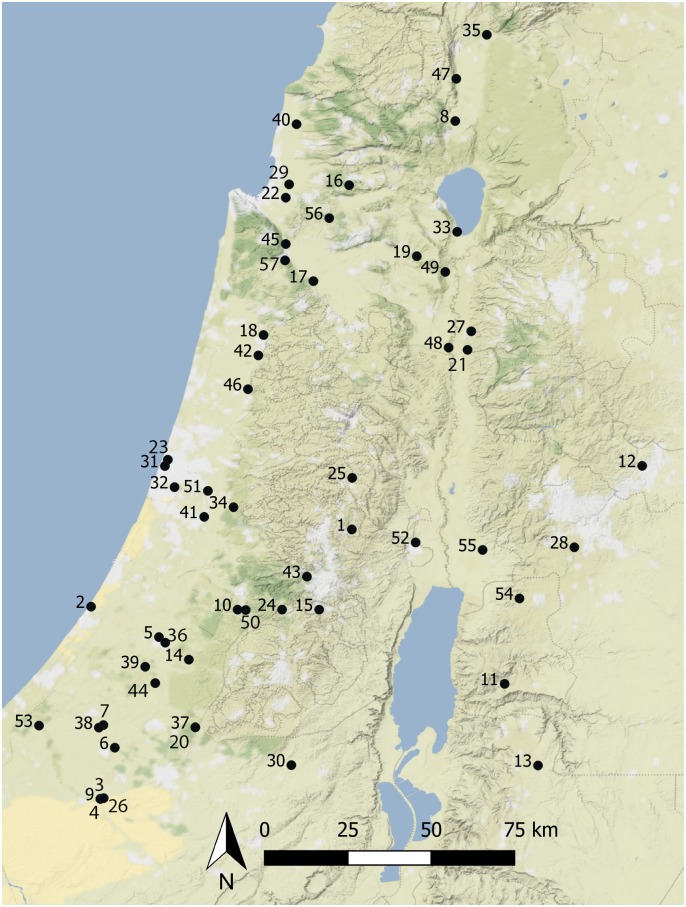
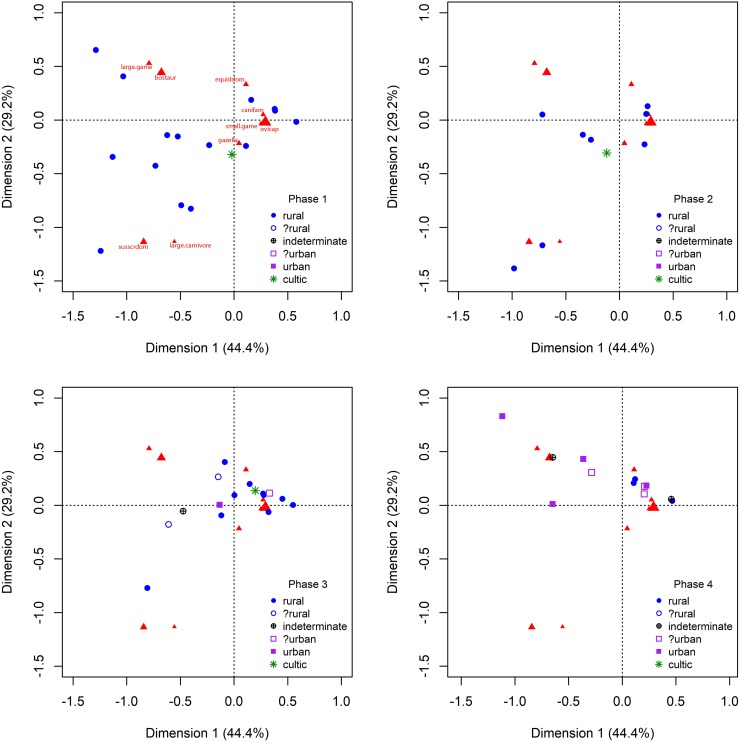
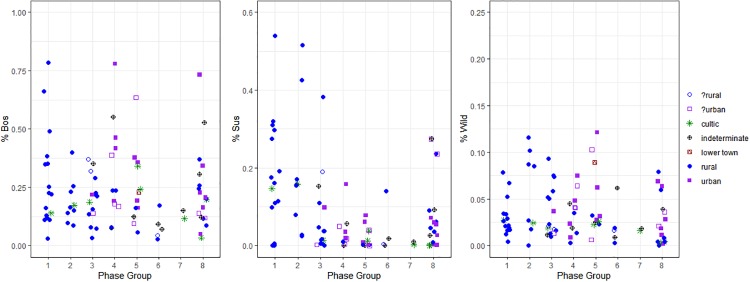
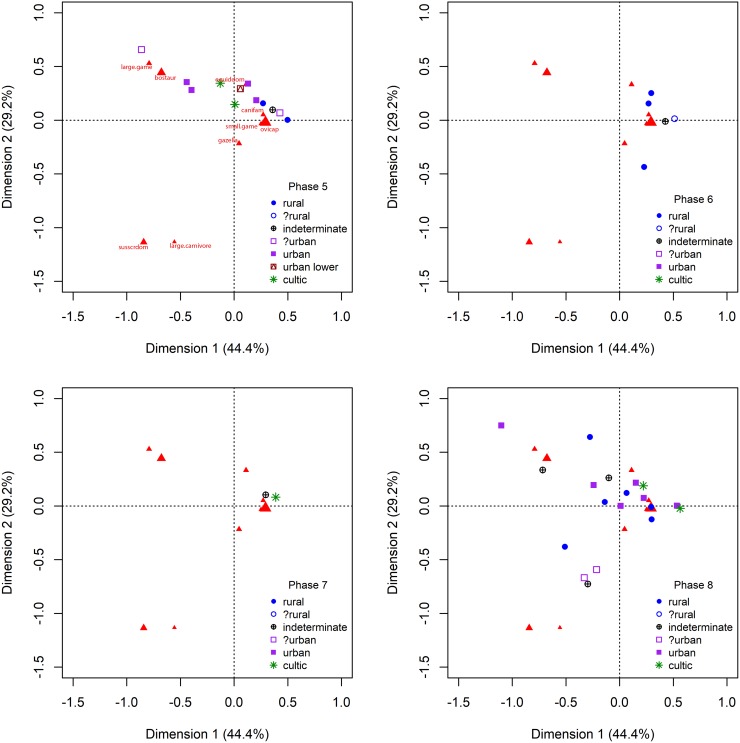
Verification
Claims the paper makes
0 Valid · 2 Not valid · 46 Not checked · 101 Own results and interpretations
A result the paper reports from its own data — it cites no other source for it, so there is none to check. The quote shows it is in the paper.
In the paper
“Beginning in the EB II and clearly visible in the EB III, there is differentiation between rural and urban sites in the taxonomic and age proportions.”
§ There and back again: A zooarchaeological perspective on Early and Middle Bronze Age urbanism in the southern Levant > Abstract
boostedstates an association- Asserted: passes — The authors put it forward as true.
- Checkable: passes — It can be checked against evidence.
- Load-bearing: passes — The paper’s conclusions depend on it.
- Based: passes — The paper gives a reason why it holds.
A result the paper reports from its own data — it cites no other source for it, so there is none to check. The quote shows it is in the paper.
In the paper
“It also identifies distinct and regionally specific patterns in animal production and consumption that can be detected between urban and rural sites of the southern Levant.”
§ There and back again: A zooarchaeological perspective on Early and Middle Bronze Age urbanism in the southern Levant > Abstract
plainstates an association- Asserted: passes — The authors put it forward as true.
- Checkable: passes — It can be checked against evidence.
- Load-bearing: passes — The paper’s conclusions depend on it.
- Based: passes — The paper gives a reason why it holds.
A result the paper states — it cites no source for it, so there is none to check. The quote shows it is in the paper.
In the paper
“From the EB II onwards, there is a clear bias in the large centres towards the consumption of cattle and of subadult sheep and goats with a corresponding bias in smaller rural sites towards the consumption of adult sheep and goats and a reduced presence of cattle.”
§ There and back again: A zooarchaeological perspective on Early and Middle Bronze Age urbanism in the southern Levant > Abstract
boostedstates an association- Asserted: passes — The authors put it forward as true.
- Checkable: passes — It can be checked against evidence.
- Load-bearing: passes — The paper’s conclusions depend on it.
- Based: passes — The paper gives a reason why it holds.
A result the paper states — it cites no source for it, so there is none to check. The quote shows it is in the paper.
In the paper
“In the MB II (Phase 8), the differentiation in age profiles between urban and rural sites is once again found with the return of urbanism.”
§ There and back again: A zooarchaeological perspective on Early and Middle Bronze Age urbanism in the southern Levant > Observations > Ovicaprine age profiles
plainstates an association- Asserted: passes — The authors put it forward as true.
- Checkable: passes — It can be checked against evidence.
- Load-bearing: passes — The paper’s conclusions depend on it.
- Based: passes — The paper gives a reason why it holds.
- Rests on an assumption not shown here.
A result the paper reports from its own data — it cites no other source for it, so there is none to check. The quote shows it is in the paper.
In the paper
“Likewise, dental age distributions show a significant difference (p = 3.03e-7) between urban and rural site categories.”
§ There and back again: A zooarchaeological perspective on Early and Middle Bronze Age urbanism in the southern Levant > Discussion
plainstates an association- Asserted: passes — The authors put it forward as true.
- Checkable: passes — It can be checked against evidence.
- Load-bearing: passes — The paper’s conclusions depend on it.
- Based: passes — The paper gives a reason why it holds.
81 more claims
Create a free account to see all 149 claims and to verify the 99 references still open.
- It may state two separate claims as one. 43
- The quote only partly states this claim. 1
- Probably not a substantial claim. 23
Self-check
Percentages, sums and reported differences re-computed from the paper’s own numbers.
Each contradiction between two passages listed here was confirmed by an independent check.
Rated major: it would touch a result — a value a result rests on, reported and recomputed p-values on opposite sides of the significance level, two passages that conflict with no sign which is right, or a cited work retracted before this paper was published.
In the paper
§ There and back again: A zooarchaeological perspective on Early and Middle Bronze Age urbanism in the southern Levant > Observations > Taxonomic proportions
“Only two samples were available from this phase for sites identified as potentially urban—Ai/et-Tell and Tel Erani.”
§ There and back again: A zooarchaeological perspective on Early and Middle Bronze Age urbanism in the southern Levant > Data and methods > Some time and space considerations
“| 54 | Tell Madaba | 3 | 441 | | urban | Griffith 2016 |”
Rated minor: it would not touch a result — a value no result rests on, a p-value that stays on the same side of the significance level, or a conflict that is clerical, resolved elsewhere in the paper, or outside its own findings.
In the paper
§ There and back again: A zooarchaeological perspective on Early and Middle Bronze Age urbanism in the southern Levant > Observations > Ovicaprine age profiles
“Two additional samples from cultic areas of Megiddo are clearly distinct from the body of rural sites in this phase.”
§ There and back again: A zooarchaeological perspective on Early and Middle Bronze Age urbanism in the southern Levant > Data and methods > Some time and space considerations
“| 17 | Megiddo | 3 | 2960 | ⋆ | cultic | Hesse & Wapnish 2001 | | 17 | Megiddo | 5 | 673 | ⋆ | cultic | Wapnish & Hesse 2001 |”
Rated minor: it would not touch a result — a value no result rests on, a p-value that stays on the same side of the significance level, or a conflict that is clerical, resolved elsewhere in the paper, or outside its own findings.
In the paper
§ There and back again: A zooarchaeological perspective on Early and Middle Bronze Age urbanism in the southern Levant > Observations > Taxonomic proportions
“Ai et-Tell does not follow this pattern (13.9% cattle, 0.02% pigs and no equids)”
§ There and back again: A zooarchaeological perspective on Early and Middle Bronze Age urbanism in the southern Levant > Data and methods > Some time and space considerations
“| 1 | Ai et-Tell | 3 | 247 | ⋆ | ?urban | Hesse & Wapnish 2001 |”
Citations
Cites
ggplot2: Elegant Graphics for Data Analysis
Wickham, H. (2009) · doi:10.1007/978-0-387-98141-3 · Cited by 14,447
The Genesis and Collapse of Third Millennium North Mesopotamian Civilization
Weiss, H., Courty, M. A., Wetterstrom, W., Guichard, F., Senior, L., Meadow, R., & Curnow, A. (1993) · Science · doi:10.1126/science.261.5124.995 · Cited by 1,104
Kill-off Patterns in Sheep and Goats: the Mandibles from Aşvan Kale
Payne, S. (1973) · Anatolian Studies · doi:10.2307/3642547 · Cited by 942
The Evolution of Political Society: An Essay in Political Anthropology
Fried, M. H. (1967) · Medical Entomology and Zoology · Cited by 726
Correspondence Analysis in R, with Two- and Three-dimensional Graphics: The ca Package
c, O. N., & Greenacre, M. (2007) · Journal of Statistical Software · doi:10.18637/jss.v020.i03 · Cited by 657
Population, Exchange, and Early State Formation in Southwestern Iran
WRIGHT, H. T., & JOHNSON, G. A. (1975) · American Anthropologist · doi:10.1525/aa.1975.77.2.02a00020 · Cited by 429
Origins and Development of Urbanism: Archaeological Perspectives
Cowgill, G. L. (2004) · Annual Review of Anthropology · doi:10.1146/annurev.anthro.32.061002.093248 · Cited by 364
Cycles of Civilization in Northern Mesopotamia, 4400–2000 BC
Ur, J. A. (2010) · Journal of Archaeological Research · doi:10.1007/s10814-010-9041-y · Cited by 297
The Secondary Products Revolution: the past, the present and the future
Greenfield, H. J. (2010) · World Archaeology · doi:10.1080/00438240903429722 · Cited by 264
Self-citationLocal Exchange and Early State Development in Southwestern Iran
Johnson, G. A. (1973) · doi:10.3998/mpub.11396443 · Cited by 257
Research works printed but not linked: 47
- de Miroschedji P. The Southern Levant (Cisjordan) during the Early Bronze Age In: Steiner ML, Killebrew AE, editors. The Oxford Handbook of the Archaeology of the Levant c. 8000-332 BCE. Oxford Handbooks in Archaeology. Oxford: Oxford University Press; 2014 p. 308– 328.
- Greenberg R. Early Urbanization in the Levant: A Regional Narrative New Approaches to Anthropological Archaeology. Leicester: Leicester University Press; 2002.
- Algaze G. Ancient Mesopotamia at the Dawn of Civilization: the evolution of an Urban Landscape Chicago: University of Chicago Press; 2008.
- Wright HT. Prestate political formations In: Stein G, Rothman MS, editors. Chiefdoms and Early States in the Near East. Madison (WI): Prehistory Press; 1994 p. 67– 84.
- Gophna R and Paz I. On rural aspects of the urban settlement system in southwestern Canaan during the Early Bronze Age III. Strata (Bulletin of the Anglo-Israel Archaeological Society). 2011; 29: 51– 59.
- Gophna R and Paz Y. From village to town to village again: settlement dynamics in the central Coastal Plain and adjacent Shephela from the Late Early Bronze Age I to Early Bronze Age III. Strata (Bulletin of the Anglo-Israel Archaeological Society). 2014; 32: 13– 36.
- Gophna R, Paz Y and Taxel I. Al-Maghar—an Early Bronze Age walled town in the lower Soreq Valley and the EB IB-II sequence in the central coastal plain of Israel. Strata (Bulletin of the Anglo-Israel Archaeological Society). 2010; 28: 9– 38.
- Akkermans PMMG, Schwartz GM. The Archaeology of Syria: From Complex Hunter-Gatherers to Early Urban Societies (c.16,000-300 BC) Cambridge World Archaeology. Cambridge: Cambridge University Press; 2003.
- Schwartz GM, Nichols JJ, editors. After Collapse: the Regeneration of Complex Societies. Tucson (AZ): The University of Arizona Press; 2006.
- Horwitz LK and Tchernov E. Animal exploitation in the Early Bronze Age of the southern Levant: an overview. In: de Miroschedji P, editor. L’urbanisation de la Palestine à l’âge du Bronze ancien. British Archaeological Reports International Series 527. Oxford: British Archaeological Reports; 1989. p. 279-296.
- Pournelle JR and Algaze G. Travels in Edin: deltaic resilience and early urbanism in Greater Mesopotamia In: Crawford H, McMahon A, Postgate N, editors. Preludes to Urbanism: Studies in the Late Chalcolithic of Mesopotamia in Honor of Joan Oates. Cambridge: McDonald Institute for Archaeological Research; 2011 p. 1– 31.
- Adams RMcC. The Evolution of Urban Society: Early Mesopotamia and Prehispanic Mexico. Chicago: Aldine; 1966.
- Brumfiel EM, Earle TK. Specialization and Exchange in Complex Societies: An introduction In: Brumfiel EM, Earle TK, editors. Specialization and Exchange in Complex Societies. Cambridge: Cambridge University Press; 1987 p. 1– 9
- Clark J, Parry WJ. Craft specialization and cultural complexity. Research in Economic Anthropology. 1990; 12: 289– 346.
- Costin CL. Craft specialization: issues in defining, documenting, and explaining the organization of production. Journal of Archaeological Method and Theory. 1991; 3: 1– 56.
- Milevski I. Early Bronze Age Goods Exchange in the Southern Levant: A Marxist Perspective Approaches to anthropological archaeology. London: Equinox Publishing Ltd; 2011.
- Lull V and Mico R. Archaeology of the Origin of the State: The Theories. Oxford: Oxford University Press; 2011.
- Zeder MA. Feeding cities: specialized animal economy in the Ancient Near East. Washington DC: Smithsonian Institution Press; 1991.
- Bourke SJ. The southern Levant (Transjordan) during the Middle Bronze Age In: Steiner ML, Killebrew AE, editors. The Oxford Handbook of the Archaeology of the Levant c. 8000-332 BCE. Oxford Handbooks in Archaeology. Oxford: Oxford University Press; 2014 p. 459
- Cohen SL. The southern Levant (Cisjordan) during the Middle Bronze Age In: Steiner ML, Killebrew AE, editors. The Oxford Handbook of the Archaeology of the Levant c. 8000-332 BCE. Oxford Handbooks in Archaeology. Oxford: Oxford University Press; 2014 pp. 445– 458.
- Harrison TP. Early Bronze social organization as reflected in burial patterns from the southern Levant In: Wolff SR, editor. Studies in the Archaeology of Israel and Neighboring Lands. Chicago: The Oriental Institute of the University of Chicago; 2001 p. 215– 236.
- de Miroschedji P. Rise and collapse in the southern Levant in the Early Bronze Age. Scienze dell’antichità. Storia Archeologia Antropologia. 2009; 15: 101– 129.
- Greenberg R. Introduction to the Levant during the Early Bronze Age In: Steiner ML, Killebrew AE, editors. Oxford Handbook of the Archaeology of the Levant, c. 8000-332 BCE. Oxford: Oxford University Press; 2014 p. 269– 277.
- Nigro L. The end of the Early Bronze Age in the southern Levant: urban crisis and collapse seen from two 3rd Millennium BC cities: Tell es-Sultan/Jericho and Khirbet al-Batrawy In: Cinnungham T, Driessen J, editors. Crisis to Collapse: The Archaeology of Social Breakdown. AEGIS 11 Actes de Colloques. Louvrain: Presses de Universitaires Louvain; 2016 p. 151– 172.
- Weiss H. Altered trajectories: The Intermediate Bronze Age in Syria and Lebanon 2200–1900 BCE In: Steiner ML, Killebrew AE, editors. Oxford Handbook of the Archaeology of the Levant. Oxford: Oxford University Press; 2013.
- Ilan D. The dawn of internationalism: the Middle Bronze Age In: Levy TE, editor. The Archaeology of Society in the Holy Land. London: Leicester University Press; 1998 p. 297– 320.
- Bar S. The Dawn of the Bronze Age: The Pattern of Settlement in the Lower Jordan Valley and the Desert Fringes of Samaria During the Chalcolithic Period and Early Bronze Age I. Leiden: Brill; 2013.
- Levy-Reifer A. Settlement processes during the Early Bronze Age in the Judean Shephelah (in Hebrew with English abstract). Cathedra. 2016; 161: 7– 36.
- Sasson A. Animal Husbandry in Ancient Israel: A Zooarchaeological Perspective on Livestock Exploitation, Herd Management and Economic Strategies Approaches to Anthropological Archaeology. London: Equinox Publishers; 2010.
- Greenfield TL. Feeding Empires: The Political Economy of a Neo Assyrian Provincial Capital through the Analysis of Zooarchaeological Remains [dissertation]. PhD Thesis. Cambridge: University of Cambridge; 2014.
- Crabtree PJ. Zooarchaeology and complex societies: some uses of faunal remains for the study of trade, social status, and ethnicity. Archaeological Method and Theory. 1990; 2: 155– 205.
- Stein GJ. Pastoral Production in Complex Societies: Mid-late 3rd Millenium BC and Medieval Faunal Remains from Gritille Höyük in the Karababa Basin. Philadelphia (PA): University of Pennsylvania; 1988.
- Gates C. The archaeology of urban life in the Ancient Near East and Egypt, Greece, and Rome. London: Routledge: 2003.
- Grant A. Food, status and social hierarchy In: Miracle P, Milner N, editors. Consuming Passions and Patterns of Consumption. Cambridge: MacDonald Institute Monographs: Cambridge; 2002 p. 17– 23
- Wattenmaker P. Household and State in Upper Mesopotamia: Specialized Economy and the Social Uses of Goods in an Early Complex Society. Washington DC: Smithsonian Press: 1998.
- Boessneck J, von den Driesch A, Steger U. Tierknochenfunde der Ausgrabungen des Deutschen Archäologischen Instituts Baghdad un Uruk-Warka, Iraq. Baghdader Mitteilungen. 1984; 15: 149– 189.
- Grigson C. Culture, ecology, and pigs from the 5th to the 3rd millennium BC around the Fertile Crescent In: Albarella U, Dobney KM, Ervynck A, Rowley-Conwy P, editors. Pigs and Humans: 10,000 Years of Interaction. Oxford: Oxford University Press; 2007 p. 83– 108.
- Redding R. Status and diet at the workers’ town, Giza, Egypt In: Campana D, Crabtree P, deFrance SD, Lev-Tov J and Choyke A, editors. Anthropological Approaches to Zooarchaeology: Complexity, Colonialism and Animal Transformations. Oxford: Oxbow books; 2010 p. 65– 75.
- Lev-Tov J. A plebian perspective on empire economies: faunal remains from Tel Miqn-Ekron, Israel In: Campana D, Crabtree P, deFrance SD, Lev-Tov J and Choyke A, editors. Anthropological Approaches to Zooarchaeology: Complexity, Colonialism and Animal Transformations. Oxford: Oxbow books; 2010 p. 90– 104.
- Allentuck A and Greenfield HJ. The organisation of animal production in an early urban center: the zooarchaeological evidence from Early Bronze Age Titriş Höyük, southeastern Turkey. In: Campana D, Crabtree P, deFrance SD, Lev-Tov J and Choyke A, editors. Anthropological Approaches to Zooarchaeology: Complexity, Colonialism and Animal Transformations. Oxford: Oxbow books; 2010 p. 12– 29.
- Hesse B and Wapnish P. Commodities and cuisine: animals in the Early Bronze Age of northern Palestine In: Wolff SR, editor. Studies in the Archaeology of Israel and Neighbouring Lands in Memory of Douglas L. Esse. Atlanta (GA): American School of Oriental Research ASOR Books; 2001 p. 251– 305.
- Höflmayer F. The late Third Millennium B.C. in the ancient Near East and Eastern Mediterranean: a time of collapse and transformation In: Hölfmayer F, editor. The Late Third Millennium B.C. in the Ancient Near East: Chronology, C14, and Climate Change. Oriental Institute Seminars No. 11. Chicago: The Oriental Institute of the University of Chicago; 2017 p. 1– 30.
- Payne S. Partial recovery and sample bias: the results of some sieving experiments In: Higgs ES, editor. Papers in Economic Prehistory. Cambridge: Cambridge University Press; 1972 p. 49– 64.
- Shalev O. The urbanisation process in Early Bronze Age Canaan: a view from Tel Erani, Israel In: Miszk Ł, Wacławik M, editors. The Land of Fertility II: The Southeast Mediterranean from the Bronze Age to the Muslim Conquest. Newcastle: Cambridge Scholars Publishing; 2017 p. 37– 68.
- Amiran R. Ancient pottery of the Holy Land. Jerusalem-Ramat Gan: Masada Press Ltd; 1969.
- Posener G, Bottéro J and Kenyon KM. Syria and Palestine c.2160-1780 B.C In: Edwards IES, Gadd CJ, Hammond NGL, editors. The Cambridge Ancient History:Volume 1, Part 2: Early History of the Middle East. London: Cambridge University Press; 1965 p. 532– 594.
- Johnson GA. Information Sources and the Development of Decision-Making Organizations In: Redman CL, editor. Social Archaeology: Beyond Subsistence and Dating. New York: Academic Press; 1978 p. 87– 112.
Cited by
Vermeersch, S., Riehl, S., Starkovich, B. M., & Kamlah, J. (2021) · Quaternary Science Reviews · doi:10.1016/j.quascirev.2020.106776 · Cited by 17
Greenfield, T. L., McMahon, A., O’Connell, T. C., Reade, H., Holmden, C., Fletcher, A. C., Zettler, R. L., & Petrie, C. A. (2022) · PLoS ONE · doi:10.1371/journal.pone.0265170 · Cited by 16
Self-citationGaastra, J. S., Welton, L., de Gruchy, M., & Lawrence, D. (2021) · Quaternary International · doi:10.1016/j.quaint.2021.03.045 · Cited by 16
Self-citationFrumin, S., Melamed, Y., Maeir, A. M., Greenfield, H. J., & Weiss, E. (2021) · Journal of Archaeological Science Reports · doi:10.1016/j.jasrep.2021.102873 · Cited by 16
Self-citationJensen, T. Z. T., Yeomans, L., Meillour, L. L., Nielsen, P. W., Ramsøe, M., Mackie, M., Bangsgaard, P., Kinzel, M., Thuesen, I., Collins, M. J., et al. (2023) · Journal of Archaeological Science Reports · doi:10.1016/j.jasrep.2023.104238 · Cited by 15
Fishing, fish consumption, urbanism and migrants at Tel Bet Yerah, 3200–2700 BC
Lernau, O., Shapiro, J., Paz, S., & Greenberg, R. (2021) · Antiquity · doi:10.15184/aqy.2021.70 · Cited by 14
Provisioning urbanism: a comparative urban-rural zooarchaeology of ancient Southwest Asia
Gaastra, J. S., Lawrence, D., & Tumolo, V. (2024) · Antiquity · doi:10.15184/aqy.2024.24 · Cited by 14
Self-citationPrice, M. D., & Wolfhagen, J. (2024) · Journal of Anthropological Archaeology · doi:10.1016/j.jaa.2024.101590 · Cited by 11
Common animals: sedentary pastoralism and the emergence of the commons as an institution
Kanne, K. S., Haughton, M., & Lash, R. (2024) · Frontiers in Human Dynamics · doi:10.3389/fhumd.2024.1389009 · Cited by 8
Deckers, K., Polisca, F., Riehl, S., de Gruchy, M., & Lawrence, D. (2021) · Environmental Archaeology · doi:10.1080/14614103.2021.1989977 · Cited by 6
Schjerven, N., Wadstål, M., Sayle, K. L., Bartosiewicz, L., & Wright, D. (2024) · Journal of Archaeological Science Reports · doi:10.1016/j.jasrep.2024.104543 · Cited by 5
Hruby, K., & Rosenberg, D. (2023) · Journal of Anthropological Archaeology · doi:10.1016/j.jaa.2023.101549 · Cited by 5
Sapir‐Hen, L., Fulton, D. N., Adams, M. J., & Finkelstein, I. (2022) · Bulletin of the American Society of Overseas Research · doi:10.1086/718777 · Cited by 5
Jericho, Palestine: From pilgrims to gamblers, a global oasis city always ‘on the map’
Chitti, M., & Moser, S. (2024) · Cities · doi:10.1016/j.cities.2024.105338 · Cited by 4
Big-cat hunting in the Bronze and Iron Ages of the Near East: a view from Tel Burna
Gaastra, J. S., Greenfield, T. L., Cassuto, D. R., & Shai, I. (2023) · Antiquity · doi:10.15184/aqy.2023.129 · Cited by 3
Self-citationErftenbeck, H., & Chesson, M. S. (2025) · Journal of Anthropological Archaeology · doi:10.1016/j.jaa.2025.101687 · Cited by 2
Fındıklar, Ş., Starkovich, B. M., & Riehl, S. (2025) · Archaeological and Anthropological Sciences · doi:10.1007/s12520-025-02257-9 · Cited by 2
Bunbury, M. M. E. (2025) · Journal of Open Archaeology Data · doi:10.5334/joad.144 · Cited by 1
Ceramic Platters at Early Bronze Age Tell eṣ-Ṣâfi/Gath: An Integrated Chaîne Opératoire Approach
Ross, J., Albaz, S., Greenfield, H. J., & Maeir, A. M. (2024) · Journal of Eastern Mediterranean Archaeology & Heritage Studies · doi:10.5325/jeasmedarcherstu.12.3.0298 · Cited by 1
Self-citationLivestock and the Transition to the Tributary Mode of Production
Price, M. D., & Corcoran-Tadd, N. (2025) · Cambridge Archaeological Journal · doi:10.1017/s0959774325100140 · Cited by 1
Cheney, T. (2020) · Mspace (University of Manitoba) · Cited by 1
Animals and Society in the Iron Age to the Persian Period: Economy, Culture and Environment
Sapir‐Hen, L. (2026) · Cambridge University Press eBooks · doi:10.1017/9781009507929
Grissa, Z., Pişkin, E., Akar, M., & Yener, K. A. (2026) · Journal of Anthropological Archaeology · doi:10.1016/j.jaa.2026.101770
Maurer, G., & Albuquerque, M. (2023) · Palestine Exploration Quarterly · doi:10.1080/00310328.2023.2251271
Turgeman-Yaffe, Z. (2025) · Atiqot · doi:10.70967/2948-040x.2325
Open-access bioarchaeology resources for the Eastern Mediterranean and Middle East (EMME)
Mardini, M., Polyzou, S., & Lato, L. (2024) · Bioarchaeology of the Near East · doi:10.47888/bne-1803
S. De Martino, E. D., & Stefano de martino, E. D. (2024) · Institutional Research Information System University of Turin (University of Turin)
Sliced meat: animal processing and butchery technologies at Early Dynastic Abu Salabikh, Iraq
Greenfield, T. L., Sousa, E. A. D., Gaastra, J. S., & Greenfield, H. J. (2026) · Frontiers in Environmental Archaeology · doi:10.3389/fearc.2026.1812460
Self-citationZooarchaeological Approaches to Biblical Animals
Sapir‐Hen, L. (2026) · Oxford University Press eBooks · doi:10.1093/9780191986376.003.0004
Metadata
- Authors
- Gaastra, J. S., Greenfield, T. L., & Greenfield, H. J.
- Affiliations
- University of Exeter (GB)
- University of Saskatchewan (CA)
- St. Paul’s College (CA)
- Corresponding author
- Gaastra, Jane S.
- Venue
- PLOS ONE
- Publisher
- Public Library of Science (PLoS)
- Published
- 2020-03-03
- Volume
- 15
- Issue
- 3
- Pages
- e0227255
- ISSN
- 1932-6203 (ISSN-L)
- PMC
- PMC7053731
- OpenAlex
- W3009240414
- Cited by
- 29
- References
- 75
- Citations by year
- 2026: 4 · 2025: 5 · 2024: 8 · 2023: 4 · 2022: 2 · 2021: 5 · 2020: 1
- FWCI
- 3.02
- Type
- journal article
- Language
- en
- Open access
- gold
- doi.org
- Licence
- Locations
- PLoS ONE (publishedVersion, cc-by)
- PubMed Central (publishedVersion, cc-by)
- PubMed (publishedVersion)
- DOAJ (DOAJ: Directory of Open Access Journals) (submittedVersion)
- Figshare (submittedVersion, cc-by)
- Funders
- University of Saskatchewan
- University of Manitoba
- Topics
- Social Sciences › Archeology › Archaeology and ancient environmental studies
- Social Sciences › Arts and Humanities › Archeology (arts and humanities) › Ancient Mediterranean Archaeology and History
- Social Sciences › Arts and Humanities › Archeology (arts and humanities) › Archaeological and Geological Studies
- Keywords
- urbanism, Early Bronze Age, Middle Bronze Age, Southern Levant, zooarchaeology, animal husbandry, animal consumption, cattle, sheep and goats, fortified settlement, state formation, social complexity
- MeSH terms
- Animals, Animal Husbandry, Archaeology, Cattle, Humans, Middle East, Rural Population, Sheep, Urban Population, History, Ancient, Datasets as Topic
About these checks
Registry, retraction, Cites and statistics results are computed, not judged, with one exception: a printed reference that no index lists is read once by a model before it counts as a citation error. Claims are extracted by a model and kept only when their quote appears verbatim in the text; each cited source is then checked, with a model’s help, for whether it says what the claim relies on. Those verdicts can be wrong — read the claim’s quote and the cited source before relying on one.
A language model drew the claims from the paper on 2026-11-27, under version 3 of the claim definition (model deepseek-v4.1-flash, prompt extract-v3).
A second model labelled each claim on 2026-11-27 (model jev-1.13-20260917, definition revision gold-guideline-v0.2).
Statistics and arithmetic are recomputed, not judged.
Confidence bands are shown only for fields calibrated on our annotated test set. None is calibrated yet, so no band is shown.
What counts as a claim ›How we measure confidence ›How we check this ›
Are you an author, or do you see a problem with this page? Request a review
Data sources
Bibliographic data: Semantic Scholar, OpenAlex, Crossref.
Contains information from the Semantic Scholar Academic Graph Datasets, made available under the ODC Attribution License (ODC-BY 1.0).
Semantic Scholar’s data is described in: Kinney, R., et al. (2023). The Semantic Scholar Open Data Platform. arXiv:2301.10140.
