

Relationships between objective structured clinical examination, computer-based testing, and clinical clerkship performance in Japanese medical students
Open accessThe DOI matches its Crossref record; 26 of the 26 references it cites were found in a registry or an index.
Abstract
BACKGROUND: It is unclear how comprehensive evaluations conducted prior to clinical clerkships (CC), such as the objective structured clinical examination (OSCE) and computer-based testing (CBT), reflect the performance of medical students in CC. Here we retrospectively analyzed correlations between OSCE and CBT scores and CC performance. METHODS: Ethical approval was obtained from our institutional review board. We analyzed correlations between OSCE and CBT scores and CC performance in 94 medical students who took the OSCE and CBT in 2017 when they were 4th year students, and who participated in the basic CC in 2018 when they were 5th year students. RESULTS: Total scores for OSCE and CBT were significantly correlated with CC performance (P<0.001, each). More specifically, medical interview and chest examination components of the OSCE were significantly correlated with CC performance (P = 0.001, each), while the remaining five components of the OSCE were not. CONCLUSION: Our findings suggest that the OSCE and CBT play important roles in predicting CC performance in Japanese medical education context. Among OSCE components, medical interview and chest examination were suggested to be important for predicting CC performance.
Overview
The claims and statistics of this paper haven’t been checked yet.
Free: it reads the open-access text and checks the first 5 claims that cite a source we can check. Create a free account to check every claim.
Integrity signals
Registry
Cites
Statistics
Figures
Verification
Claims the paper makes
The claims and statistics of this paper haven’t been checked yet.
Free: it reads the open-access text and checks the first 5 claims that cite a source we can check. Create a free account to check every claim.
Claims other papers make about this one
Each is checked against this paper’s own text: does it say what the citing paper says it does?
The cited source says what the claim attributes to it.
In the citing paper
“However, the pre-CC OSCE has shown a significant correlation with performance during clinical clerkships in Japanese medical student cohorts [15].”
From Enhancing Medical Interview Skills Through AI-Simulated Patient Interactions: Nonrandomized Controlled Trial (2024) · cites this paper as [15]
The cited source says what the claim attributes to it.
In the citing paper
“As this study focused on pre-clinical clerkship medical students, the assessment was limited to an indirect and short-term evaluation of clinical skills using medical interview scores from the pre-CC OSCE [15].”
From Enhancing Medical Interview Skills Through AI-Simulated Patient Interactions: Nonrandomized Controlled Trial (2024) · cites this paper as [15]
Self-check
Percentages, sums and reported differences re-computed from the paper’s own numbers.
The self-check needs the paper’s full text.
Citations
Cites
Educational Strategies to Promote Clinical Diagnostic Reasoning
Bowen, J. L. (2006) · New England Journal of Medicine · doi:10.1056/nejmra054782 · Cited by 931
Kirkman, M. A., Sevdalis, N., Arora, S., Baker, P., Vincent, C., & Ahmed, M. (2015) · BMJ Open · doi:10.1136/bmjopen-2015-007705 · Cited by 184 · cited 1×
“Incorrect assessment of physical findings can lead to errors in diagnosis, which may result in an adverse outcome for the patient [15][16].”
BackgroundEvaluation of medical student retention of clinical skills following simulation training
Offiah, G., Ekpotu, L., Murphy, S., Kane, D. T., Gordon, A., O’Sullivan, M., Sharifuddin, S. F., Hill, A., & Condron, C. M. (2019) · BMC Medical Education · doi:10.1186/s12909-019-1663-2 · Cited by 130 · cited 1×
“As SBE methods have been developed and are widely used to acquire both technical and non-technical skills in medical education [23][24], combination of SBE and CC could potentially maximize the competency of medical students.”
MethodLörwald, A. C., Lahner, F.-M., Nouns, Z. M., Berendonk, C., Norcini, J., Greif, R., & Huwendiek, S. (2018) · PLOS ONE · doi:10.1371/journal.pone.0198009 · Cited by 117 · cited 1×
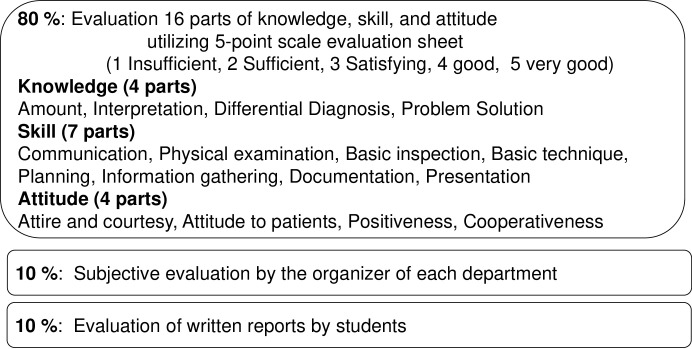
“During the CCs, supervising (teaching) doctors of each department evaluate the clinical skills of students using an evaluation sheet based on the mini- CEX and Direct Observation of Procedural Skills (DOPS) [11][12].”
MethodBest practices to impart clinical skills during preclinical years of medical curriculum
Sahu, P. K., Chattu, V. K., Rewatkar, A., & Sakhamuri, S. M. (2019) · Journal of Education and Health Promotion · doi:10.4103/jehp.jehp_354_18 · Cited by 96 · cited 1×
“First, as data were obtained from a single institution, our findings may not be generalizable to other medical schools [26][27].”
Longitudinal integrated clerkships
Hudson, J. N., Poncelet, A. N., Weston, K. M., Bushnell, J. A., & A Farmer, E. (2017) · Medical Teacher · doi:10.1080/0142159x.2017.1245855 · Cited by 86 · cited 1×
“To achieve this goal, effective clinical training methods are needed which allow for a smooth transition from undergraduate medical education to basic skill acquisition as a postgraduate [2].”
BackgroundIshikawa, H., Hashimoto, H., Kinoshita, M., Fujimori, S., Shimizu, T., & Yano, E. (2006) · Medical Education · doi:10.1111/j.1365-2929.2006.02628.x · Cited by 78 · cited 1×
“The OSCE evaluates clinical skills and communication skills using simulated patients and simulators [6] [7], and the CBT basic clinical knowledge.”
MethodOkayama, M., & Kajii, E. (2011) · BMC Medical Education · doi:10.1186/1472-6920-11-19 · Cited by 76 · cited 1×
“Clinical training throughout the various departments of a hospital is carried out in the form of CCs which are driven by curricula for diagnoses and treatments [5].”
BackgroundSchiekirka-Schwake, S., Reinhardt, D., Heim, S., Fabry, G., Pukrop, T., Anders, S., & Raupach, T. (2012) · BMC Medical Education · doi:10.1186/1472-6920-12-45 · Cited by 66 · cited 1×
“Medical educators are expected to improve CC program by including SBE method to compensate low-frequent clinical skills [25].”
BackgroundLörwald, A. C., Lahner, F.-M., Mooser, B., Perrig, M., Widmer, M. K., Greif, R., & Huwendiek, S. (2018) · Medical Teacher · doi:10.1080/0142159x.2018.1497784 · Cited by 66 · cited 2×
“During the CCs, supervising (teaching) doctors of each department evaluate the clinical skills of students using an evaluation sheet based on the mini- CEX and Direct Observation of Procedural Skills (DOPS) [11][12].”
MethodHough, J. L., Levan, D., Steele, M. C., Kelly, K., & Dalton, M. (2019) · BMC Medical Education · doi:10.1186/s12909-019-1894-2 · Cited by 58 · cited 1×
“To overcome this problem, we believe that simulation-based education (SBE) can be a powerful solution to compensate for the lack of opportunities to exercise these skills [22].”
BackgroundDong, T., Saguil, A. A., Artino, A. R., Gilliland, W. R., Waechter, D. M., Lopreaito, J., Flanagan, A., & Durning, S. J. (2012) · Military Medicine · doi:10.7205/milmed-d-12-00237 · Cited by 50 · cited 1×
“For example, medical students are not permitted to perform emergency response such as advanced life support alone [19][20].”
BackgroundMukohara, K., Kitamura, K., Wakabayashi, H., Abe, K., Sato, J., & Ban, N. (2004) · BMC Medical Education · doi:10.1186/1472-6920-4-24 · Cited by 46 · cited 1×
“As medical students should acquire these basic clinical competencies after medical doctor certification, some educational method for compensating the gap is warranted [21].”
BackgroundCouto, L. B., Durand, M., Wolff, A. C. D., Restini, C. B. A., Faria, M., Romão, G. S., & Bestetti, R. B. (2019) · Medical Education Online · doi:10.1080/10872981.2018.1560862 · Cited by 41 · cited 1×
“For example, medical students are not permitted to perform emergency response such as advanced life support alone [19][20].”
BackgroundCan the results of the OSCE predict the results of clinical assessment in dental education?
Näpänkangas, R., Karaharju‐Suvanto, T., Pyörälä, E., Harila, V., Ollila, P., Lähdesmäki, R. E., & Lahti, S. M. (2014) · European Journal Of Dental Education · doi:10.1111/eje.12126 · Cited by 38 · cited 1×
“First, as data were obtained from a single institution, our findings may not be generalizable to other medical schools [26][27].”
Dimensions of integration, continuity and longitudinality in clinical clerkships
Ellaway, R., Graves, L. E., & Cummings, B. (2016) · Medical Education · doi:10.1111/medu.13038 · Cited by 38 · cited 1×
“Seamless medical education in which students gradually acquire professional abilities from when they are undergraduates up until they become postgraduates is important from the perspective of outcome-based education [1].”
BackgroundReflection and self‐directed and group learning improve OSCE scores
Tagawa, M., & Imanaka, H. (2010) · The Clinical Teacher · doi:10.1111/j.1743-498x.2010.00377.x · Cited by 32 · cited 1×
“The OSCE evaluates clinical skills and communication skills using simulated patients and simulators [6] [7], and the CBT basic clinical knowledge.”
MethodEftekhar, H., Labaf, A., Anvari, P., Jamali, A., & Moghaddam, F. S. (2012) · Medical Education Online · doi:10.3402/meo.v17i0.15958 · Cited by 32 · cited 1×
“Thus, focusing training on these skills may contribute to better CC performance [17][18].”
BackgroundRogausch, A., Beyeler, C., Montagne, S., Jucker-Kupper, P., Berendonk, C., Huwendiek, S., Gemperli, A., & Himmel, W. (2015) · BMC Medical Education · doi:10.1186/s12909-015-0490-3 · Cited by 29 · cited 1×
“Although previous studies examined the CC performance by mini-clinical evaluation exercise (mini-CEX) [8][9], the relation between OSCE or CBT and CC performance has not been fully validated.”
An objective structured clinical exam to measure intrinsic CanMEDS roles
Kassam, A., Cowan, M., & Donnon, T. (2016) · Medical Education Online · doi:10.3402/meo.v21.31085 · Cited by 25 · cited 1×
“Thus, focusing training on these skills may contribute to better CC performance [17][18].”
BackgroundInfluence of predicting the diagnosis from history on the accuracy of physical examination
Shikino, K., Ikusaka, M., Ohira, Y., Miyahara, M., Suzuki, S., Hirukawa, M., Noda, K., Tsukamoto, T., & Uehara, T. (2015) · Advances in Medical Education and Practice · doi:10.2147/amep.s77315 · Cited by 19 · cited 1×
“Incorrect assessment of physical findings can lead to errors in diagnosis, which may result in an adverse outcome for the patient [15][16].”
Dong, T., Zahn, C., Saguil, A., Swygert, K. A., Yoon, M., Servey, J., & Durning, S. (2017) · Teaching and Learning in Medicine · doi:10.1080/10401334.2017.1279057 · Cited by 18 · cited 1×
“As SBE methods have been developed and are widely used to acquire both technical and non-technical skills in medical education [23][24], combination of SBE and CC could potentially maximize the competency of medical students.”
MethodAssessing the Validity of a Multidisciplinary Mini-Clinical Evaluation Exercise
Humphrey-Murto, S. M., Côté, M., Pugh, D., & Wood, T. (2017) · Teaching and Learning in Medicine · doi:10.1080/10401334.2017.1387553 · Cited by 13 · cited 1×
“Although previous studies examined the CC performance by mini-clinical evaluation exercise (mini-CEX) [8][9], the relation between OSCE or CBT and CC performance has not been fully validated.”
Public Attitudes Toward Practice by Medical Students: A Nationwide Survey in Japan
Murata, K., Sakuma, M., Seki, S., & Morimoto, T. (2014) · Teaching and Learning in Medicine · doi:10.1080/10401334.2014.945030 · Cited by 9 · cited 1×
“In this regard, students are required to have a sense of identity and personal responsibility [4].”
BackgroundTakahashi, N., Aomatsu, M., Saiki, T., Otani, T., & Ban, N. (2018) · BMC Medical Education · doi:10.1186/s12909-018-1336-6 · Cited by 9 · cited 1×
“The range of medical procedures allowed to be performed by students is defined and carried out under the supervision of an instructing doctor [3].”
BackgroundTrialing a new clinical clerkship record in Japanese clinical training
Nomura, S., Tanigawa, N., Kinoshita, Y., & Tomoda, K. (2015) · Advances in Medical Education and Practice · doi:10.2147/amep.s90295 · Cited by 3
Research works printed but not linked: 1
- M Tagawa, 2010, Reflection and self-directed and group learning improve OSCE scores, Clin Teach, 7, 266, 10.1111/j.1743-498X.2010.00377.x · DOI
Cited by
Yamamoto, A., Koda, M., Ogawa, H., Miyoshi, T., Maeda, Y., Otsuka, F., & Ino, H. (2024) · JMIR Medical Education · doi:10.2196/58753 · Cited by 92
“As this study focused on pre-clinical clerkship medical students, the assessment was limited to an indirect and short-term evaluation of clinical skills using medical interview scores from the pre-CC OSCE [15].”
BackgroundMethodA text mining analysis of perceptions of the COVID‐19 pandemic among final‐year medical students
Komasawa, N., Terasaki, F., Nakano, T., Saura, R., & Kawata, R. (2020) · Acute Medicine & Surgery · doi:10.1002/ams2.576 · Cited by 19
Self-citationKomasawa, N., Terasaki, F., Kawata, R., & Nakano, T. (2022) · Medicine · doi:10.1097/md.0000000000030135 · Cited by 20
“The range of medical procedures which can be performed by students is defined and carried out under the supervision of an instructing doctor.[20,21] Supervising doctors of each department evaluate the clinical skills of students utilizing an evaluation sheet based on the Direct Observation of Procedural Skills (DOPS)…”
MethodSelf-citationKomasawa, N., Terasaki, F., Nakano, T., & Kawata, R. (2021) · PLoS ONE · doi:10.1371/journal.pone.0248569 · Cited by 16
“Of these competencies, medical chart documentation skills are considered to be very important [20, 21].”
BackgroundSelf-citationKomasawa, N., Terasaki, F., Takitani, K., Lee, S., Kawata, R., & Nakano, T. (2022) · Medicine · doi:10.1097/md.0000000000031392 · Cited by 12
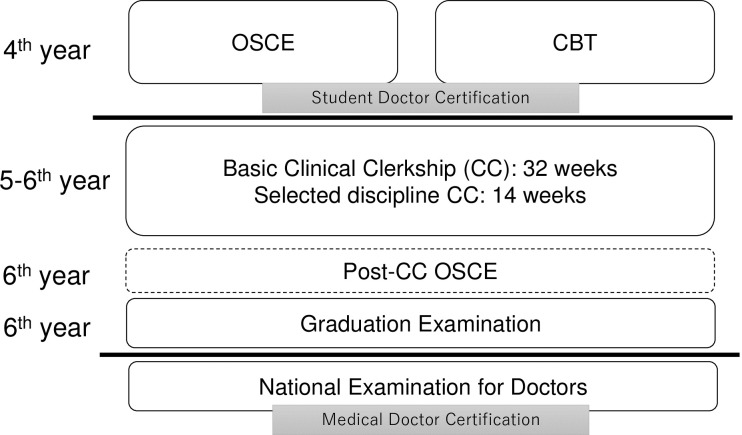
“The 5th year CC integrative test is taken at the end of a student’s 5th year, and the graduation exam and graduation in the 6th year.[12] The students’ grade and summative test are shown in Table 1.”
BackgroundSelf-citation
Metadata
- Authors
- Komasawa, N., Terasaki, F., Nakano, T., & Kawata, R.
- Affiliations
- Osaka Medical and Pharmaceutical University (JP)
- Corresponding author
- Komasawa, Nobuyasu
- Venue
- PLOS ONE
- Publisher
- Public Library of Science (PLoS)
- Published
- 2020-03-26
- Volume
- 15
- Issue
- 3
- Pages
- e0230792
- ISSN
- 1932-6203 (ISSN-L)
- PMC
- PMC7098585
- OpenAlex
- W3013383002
- Cited by
- 27
- References
- 26
- Citations by year
- 2026: 2 · 2025: 3 · 2024: 6 · 2023: 3 · 2022: 5 · 2021: 5 · 2020: 3
- FWCI
- 2.99
- Type
- journal article
- Language
- en
- Open access
- gold
- doi.org
- Licence
- Locations
- PLoS ONE (publishedVersion, cc-by)
- PubMed Central (publishedVersion, cc-by)
- PubMed (publishedVersion)
- DOAJ (DOAJ: Directory of Open Access Journals) (submittedVersion, cc-by-sa)
- Topics
- Social Sciences › Education › Innovations in Medical Education
- Social Sciences › Education › Medical Education and Admissions
- Health Sciences › Medicine › Family Practice › Clinical Reasoning and Diagnostic Skills
- Keywords
- OSCE, computer-based testing, medical students, chest examination, clinical skills assessment, Japanese medical education
- MeSH terms
- Clinical Clerkship, Clinical Competence, Educational Measurement, Humans, Japan, Students, Medical
About these checks
Registry, retraction, Cites and statistics results are computed, not judged, with one exception: a printed reference that no index lists is read once by a model before it counts as a citation error. Claims are extracted by a model and kept only when their quote appears verbatim in the text; each cited source is then checked, with a model’s help, for whether it says what the claim relies on. Those verdicts can be wrong — read the claim’s quote and the cited source before relying on one.
Statistics and arithmetic are recomputed, not judged.
Confidence bands are shown only for fields calibrated on our annotated test set. None is calibrated yet, so no band is shown.
What counts as a claim ›How we measure confidence ›How we check this ›
Are you an author, or do you see a problem with this page? Request a review
Data sources
Bibliographic data: Semantic Scholar, OpenAlex, Crossref.
Contains information from the Semantic Scholar Academic Graph Datasets, made available under the ODC Attribution License (ODC-BY 1.0).
Semantic Scholar’s data is described in: Kinney, R., et al. (2023). The Semantic Scholar Open Data Platform. arXiv:2301.10140.
