

The DOI matches its Crossref record; 52 of the 55 references it cites were found in a registry or an index.
Visual saliency guided perceptual adaptive quantization based on HEVC intra-coding for planetary images
Open accessAbstract
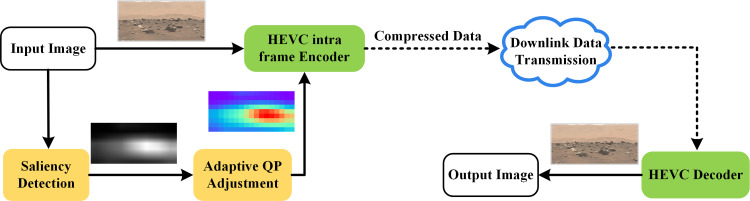
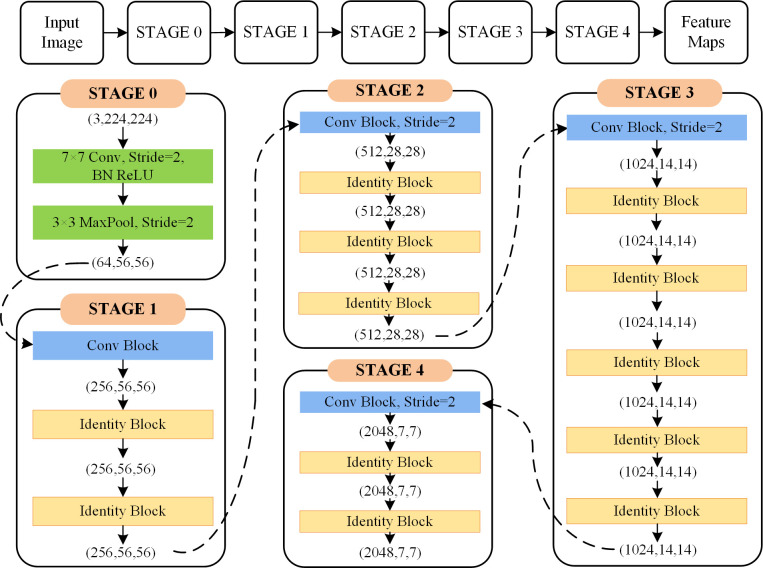
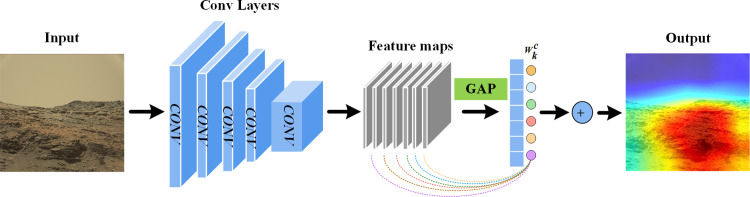
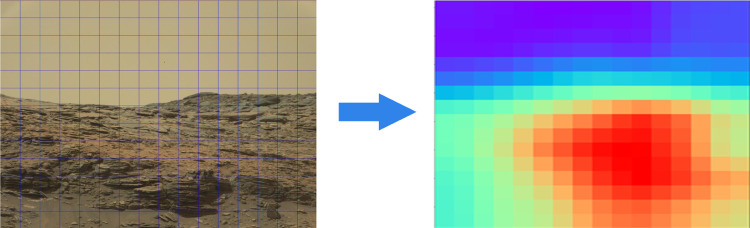
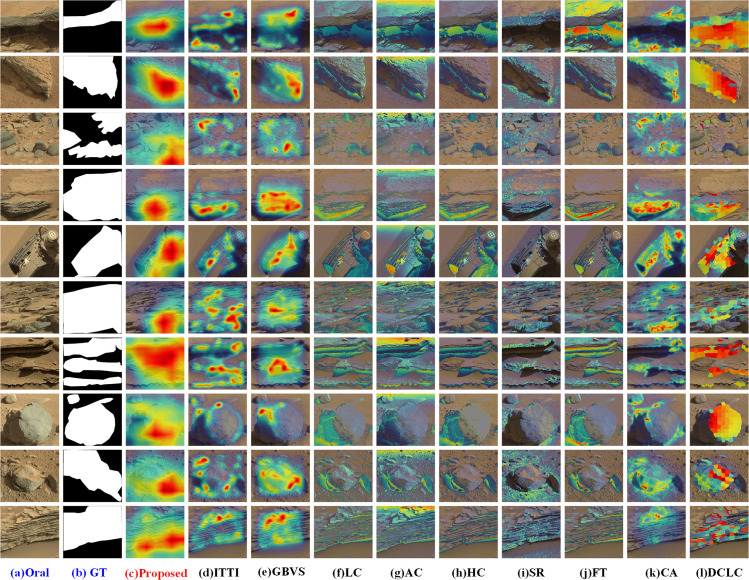
Due to the limited storage space of spacecraft and downlink bandwidth in the data delivery during planetary exploration, an efficient way for image compression onboard is essential to reduce the volume of acquired data. Applicable for planetary images, this study proposes a perceptual adaptive quantization technique based on Convolutional Neural Network (CNN) and High Efficiency Video Coding (HEVC). This technique is used for bitrate reduction while maintaining the subjective visual quality. The proposed algorithm adaptively determines the Coding Tree Unit (CTU) level Quantization Parameter (QP) values in HEVC intra-coding using the high-level features extracted by CNN. A modified model based on the residual network is exploited to extract the saliency map for a given image automatically. Furthermore, based on the saliency map, a CTU level QP adjustment technique combining global saliency contrast and local saliency perception is exploited to realize a flexible and adaptive bit allocation. Several quantitative performance metrics that efficiently correlate with human perception are used for evaluating image quality. The experimental results reveal that the proposed algorithm achieves better visual quality along with a maximum of 7.17% reduction in the bitrate as compared to the standard HEVC coding.
Overview
The claims and statistics of this paper haven’t been checked yet.
Run the check — free, no account needed. It reads the open-access text and checks the sources it cites.
Integrity signals
Registry
Cites
Statistics
Figures
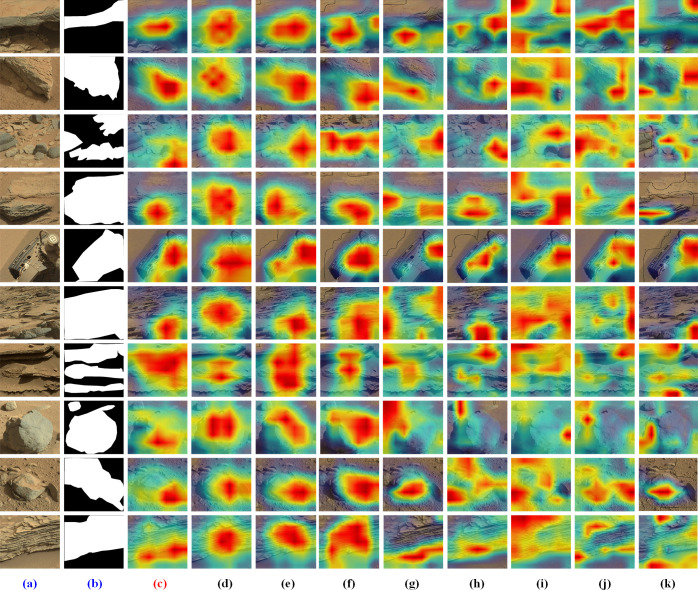
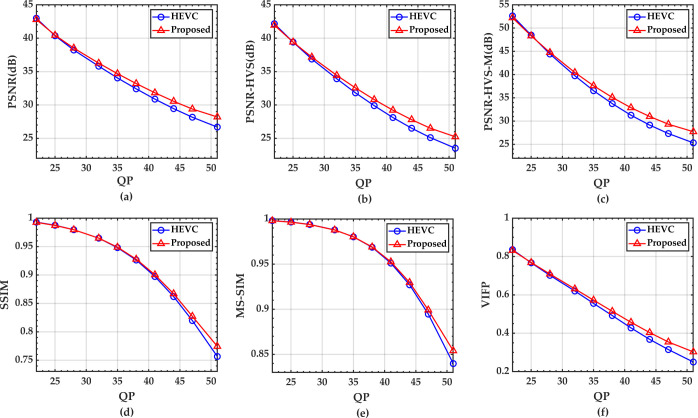
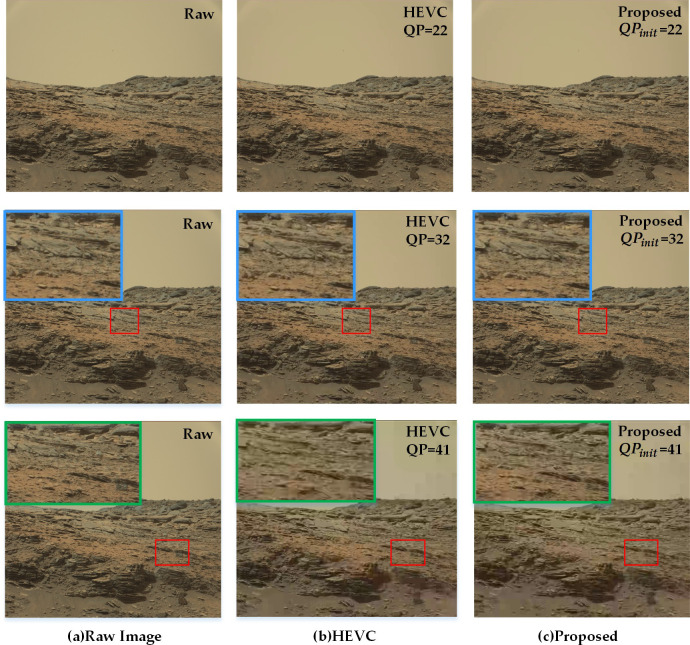
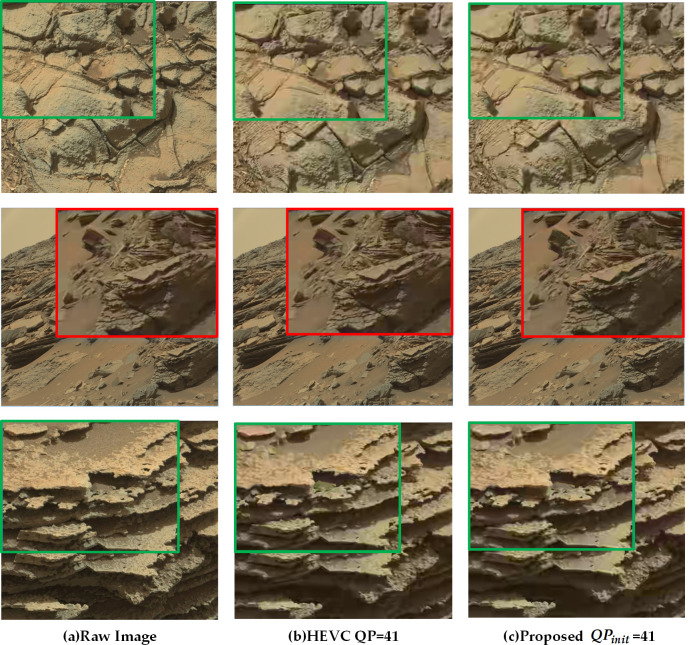
Verification
Claims the paper makes
The claims and statistics of this paper haven’t been checked yet.
Run the check — free, no account needed. It reads the open-access text and checks the sources it cites.
Claims other papers make about this one
Each is checked against this paper’s own text: does it say what the citing paper says it does?
The source backs part of the claim, not all of it — or backs it for a different population, condition or comparison.
In the citing paper
“Objects on the surface of Mars exhibit unstructured characteristics with rich textures, ambiguous boundaries and diverse sizes, such as rocks and gravel [21].”
From SegMarsViT: Lightweight Mars Terrain Segmentation Network for Autonomous Driving in Planetary Exploration (2022) · cites this paper as [21]
Experimental — accuracy not yet measured
Self-check
Percentages, sums and reported differences re-computed from the paper’s own numbers.
The self-check needs the paper’s full text.
Citations
Cites
Deep Residual Learning for Image Recognition
He, K., Zhang, X., Ren, S., & Sun, J. (2016) · 2016 IEEE Conference on Computer Vision and Pattern Recognition (CVPR) · doi:10.1109/cvpr.2016.90 · Cited by 235,474
ImageNet: A large-scale hierarchical image database
Deng, J., Dong, W., Socher, R., Li, L.-J., Li, K., & Fei-Fei, L. (2009) · 2009 IEEE Conference on Computer Vision and Pattern Recognition · doi:10.1109/cvpr.2009.5206848 · Cited by 65,333
Image quality assessment: from error visibility to structural similarity
Wang, Z., Bovik, A. C., Sheikh, H. R., & Simoncelli, E. P. (2004) · IEEE Transactions on Image Processing · doi:10.1109/tip.2003.819861 · Cited by 57,892
Grad-CAM: Visual Explanations from Deep Networks via Gradient-Based Localization
Selvaraju, R. R., Cogswell, M., Das, A., Vedantam, R., Parikh, D., & Batra, D. (2017) · 2017 IEEE International Conference on Computer Vision (ICCV) · doi:10.1109/iccv.2017.74 · Cited by 24,513
Aggregated Residual Transformations for Deep Neural Networks
Xie, S., Girshick, R., Dollar, P., Tu, Z., & He, K. (2017) · 2017 IEEE Conference on Computer Vision and Pattern Recognition (CVPR) · doi:10.1109/cvpr.2017.634 · Cited by 12,465
Learning Deep Features for Discriminative Localization
Zhou, B., Khosla, A., Lapedriza, A., Oliva, A., & Torralba, A. (2016) · 2016 IEEE Conference on Computer Vision and Pattern Recognition (CVPR) · doi:10.1109/cvpr.2016.319 · Cited by 11,428
A model of saliency-based visual attention for rapid scene analysis
Itti, L., Christof Koch, A., & Niebur, E. (1998) · IEEE Transactions on Pattern Analysis and Machine Intelligence · doi:10.1109/34.730558 · Cited by 11,289
Howard, A., Sandler, M., Chen, B., Wang, W., Chen, L.-C., Tan, M., Chu, G., Vasudevan, V., Zhu, Y., Pang, R., et al. (2019) · 2019 IEEE/CVF International Conference on Computer Vision (ICCV) · doi:10.1109/iccv.2019.00140 · Cited by 9,708
Neural Mechanisms of Selective Visual Attention
Desimone, R., & Duncan, J. (1995) · Annual Review of Neuroscience · doi:10.1146/annurev.ne.18.030195.001205 · Cited by 8,388
ShuffleNet V2: Practical Guidelines for Efficient CNN Architecture Design
Ma, N., Zhang, X., Zheng, H.-T., & Sun, J. (2018) · Lecture notes in computer science · doi:10.1007/978-3-030-01264-9_8 · Cited by 7,356 · cited 1×
“Furthermore, considering that typical onboard remote sensing systems have limited storage and compute capacity, we compare the proposed model with another 4 state-of-the-art lightweight CNN architectures including ShuffleNet_v2 [48], MobileNet_v3 [49], EfficientNet_b0 [50] and GhostNet [51].”
Method
Research works printed but not linked: 3
- N. Moayeri, 1998, A low-complexity, fixed-rate compression scheme for color images and documents, The Hewlett-Packard Journal, 50, 46
- M. Rabbani, 2002, JPEG2000: Image compression fundamentals, standards and practice, JEI, 11, 286
- Tan M, Le Q. Efficientnet: Rethinking model scaling for convolutional neural networks. International Conference on Machine Learning: PMLR; 2019. p. 6105–14.
Cited by
Sorted by citations
Dai, Y., Zheng, T., Xue, C., & Zhou, L. (2022) · Remote Sensing · doi:10.3390/rs14246297 · Cited by 35
Self-citationDSFNet: Video Salient Object Detection Using a Novel Lightweight Deformable Separable Fusion Network
Singh, H., Verma, M., & Cheruku, R. (2024) · IEEE Transactions on Instrumentation and Measurement · doi:10.1109/tim.2024.3470045 · Cited by 13
DMFNet: geometric multi-scale pixel-level contrastive learning for video salient object detection
Singh, H., Verma, M., & Cheruku, R. (2025) · International Journal of Multimedia Information Retrieval · doi:10.1007/s13735-025-00361-z · Cited by 8
Energy-Efficient Saliency-Guided Video Coding Framework for Real-Time Applications
Partanen, T., Hoang, M., Mercat, A., Sainio, J., & Vanne, J. (2025) · IEEE Journal on Emerging and Selected Topics in Circuits and Systems · doi:10.1109/jetcas.2024.3525339 · Cited by 6
Moroto, Y., Maeda, K., Ogawa, T., & Haseyama, M. (2022) · Proceedings - International Conference on Image Processing · doi:10.1109/icip46576.2022.9897473 · Cited by 1
Quality Enhancement with Frame-wise DLCNN using High Efficiency Video Coding in 5G Networks
Dommeti, V. S., Dharani, M., Shasidhar, K., Reddy, Y. D. R., & Moorthy, T. V. (2024) · Scalable Computing Practice and Experience · doi:10.12694/scpe.v25i2.2658 · Cited by 1
Metadata
- Authors
- Dai, Y., Xue, C., & Zhou, L.
- Affiliations
- Chinese Academy of Sciences (CN)
- Corresponding author
- Dai, Yuqi
- Venue
- PLOS ONE
- Publisher
- Public Library of Science (PLoS)
- Published
- 2022-02-09
- Volume
- 17
- Issue
- 2
- Pages
- e0263729
- ISSN
- 1932-6203 (ISSN-L)
- PMC
- PMC8827453
- OpenAlex
- W4210855954
- Cited by
- 6
- References
- 55
- Citations by year
- 2025: 2 · 2024: 2 · 2022: 2
- FWCI
- 0.49
- Type
- journal article
- Language
- en
- Open access
- gold
- doi.org
- Licence
- Locations
- PLoS ONE (publishedVersion, cc-by)
- PubMed Central (publishedVersion, cc-by)
- PubMed (publishedVersion)
- RePEc: Research Papers in Economics (submittedVersion)
- DOAJ (DOAJ: Directory of Open Access Journals) (submittedVersion, cc-by-sa)
- Topics
- Physical Sciences › Computer Science › Computer Vision and Pattern Recognition › Advanced Data Compression Techniques
- Physical Sciences › Computer Science › Signal Processing › Video Coding and Compression Technologies
- Physical Sciences › Computer Science › Computer Vision and Pattern Recognition › Image and Video Quality Assessment
- Keywords
- visual saliency, planetary images, onboard image compression, quantization parameter adjustment, coding tree unit, saliency maps, ResNet, adaptive bit allocation, bit rate reduction, subjective image quality, spacecraft data storage
- MeSH terms
- Algorithms, Humans, Video Recording, Visual Perception, Planets, Neural Networks, Computer, Spacecraft, Data Compression, Limit of Detection, Satellite Imagery
About these checks
Registry, retraction, Cites and statistics results are computed, not judged, with one exception: a printed reference that no index lists is read once by a model before it counts as a citation error. Claims are extracted by a model and kept only when their quote appears verbatim in the text; each cited source is then checked, with a model’s help, for whether it says what the claim relies on. Those verdicts can be wrong — read the claim’s quote and the cited source before relying on one.
Statistics and arithmetic are recomputed, not judged.
Confidence bands are shown only for fields calibrated on our annotated test set. None is calibrated yet, so no band is shown.
What counts as a claim ›How we measure confidence ›How we check this ›
Are you an author, or do you see a problem with this page? Request a review
