

The DOI matches its Crossref record; 60 of the 60 references it cites were found in a registry or an index.
The Mnn2 Mannosyltransferase Family Modulates Mannoprotein Fibril Length, Immune Recognition and Virulence of Candida albicans
Open accessAbstract
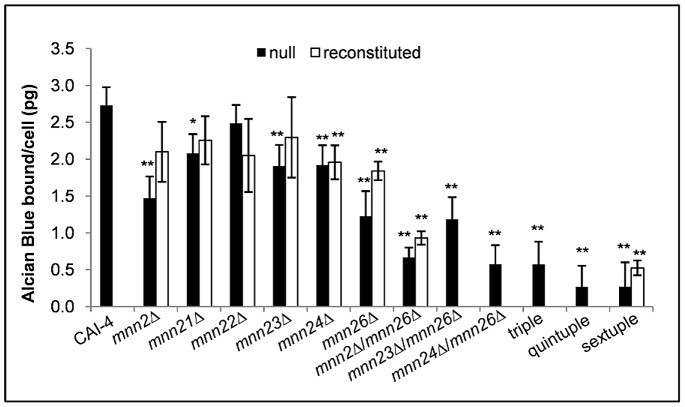
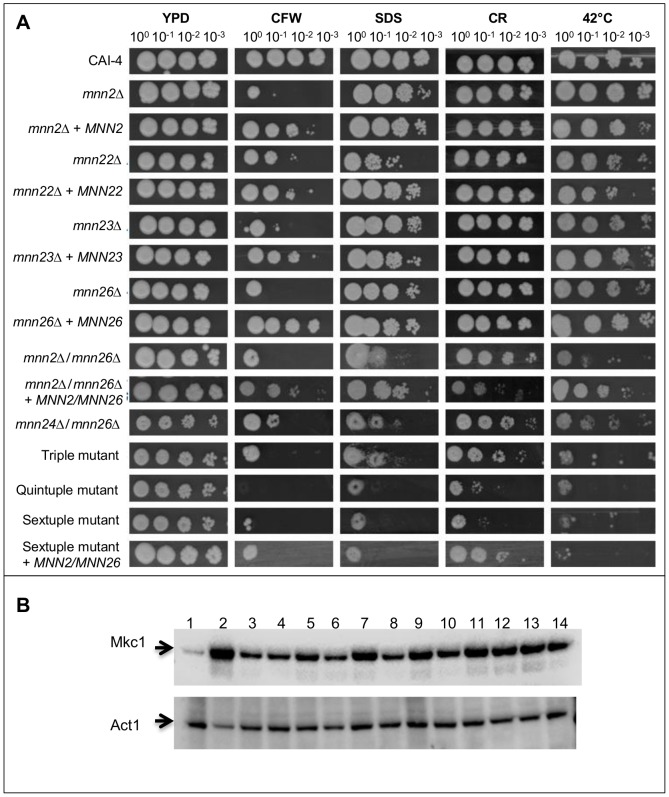
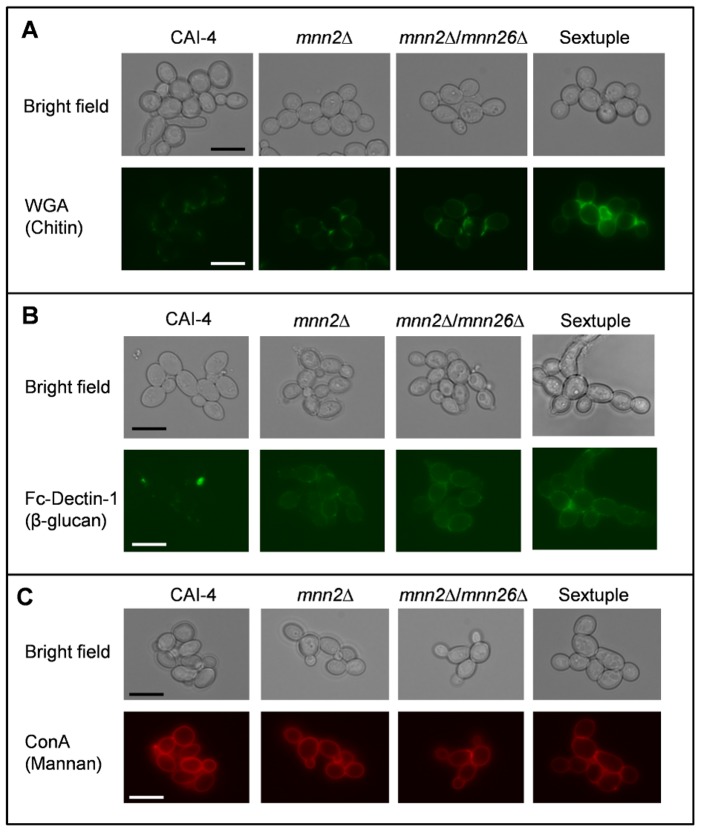
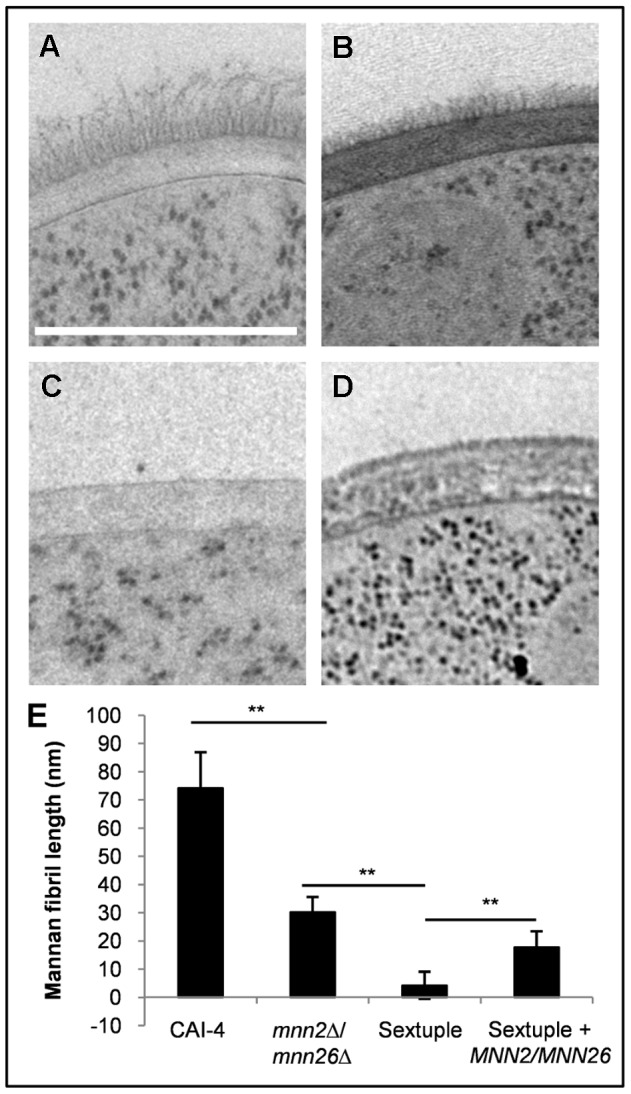
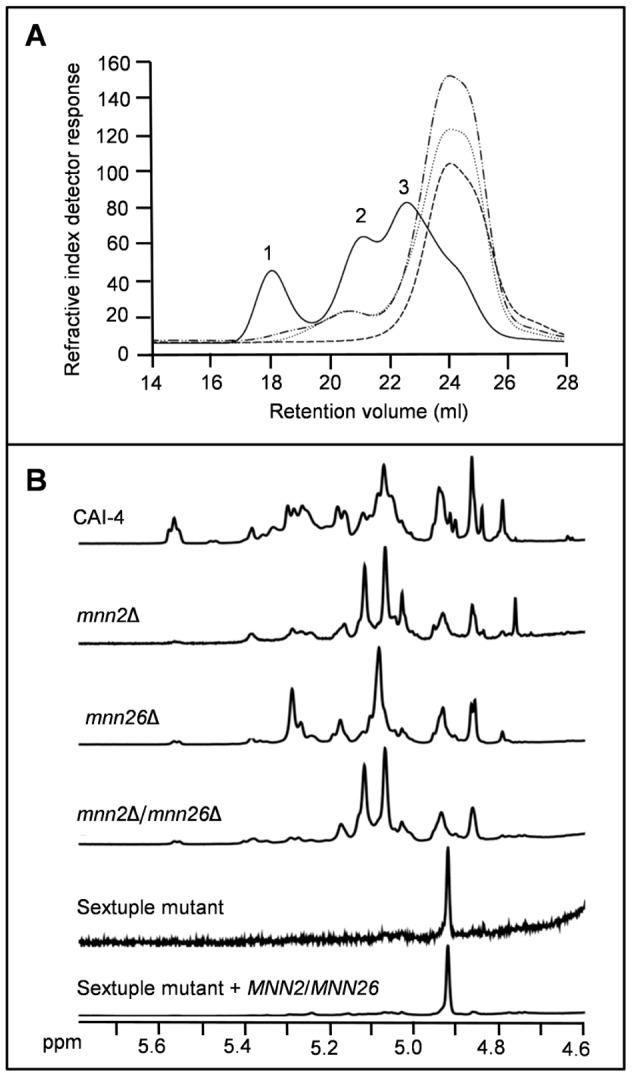
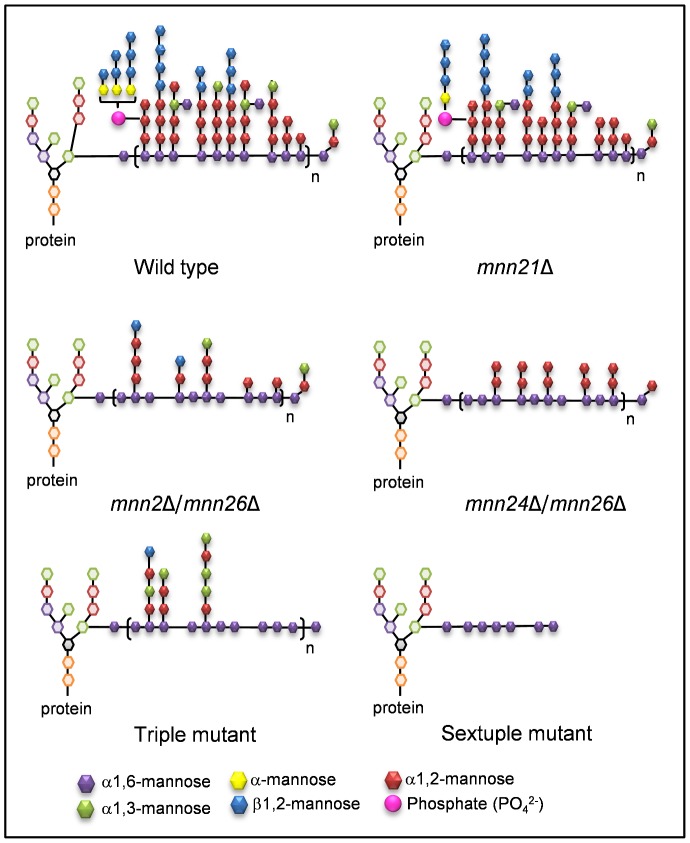
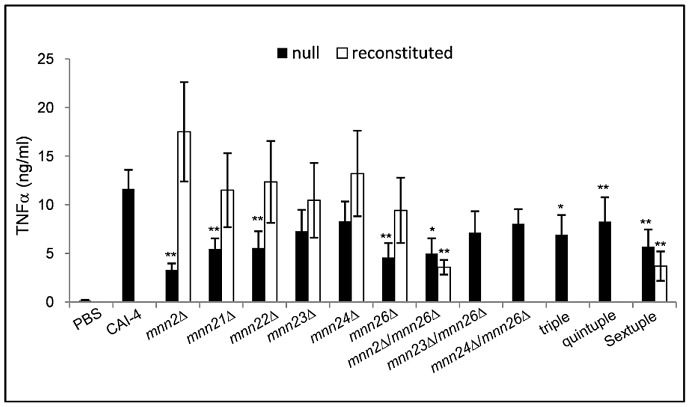
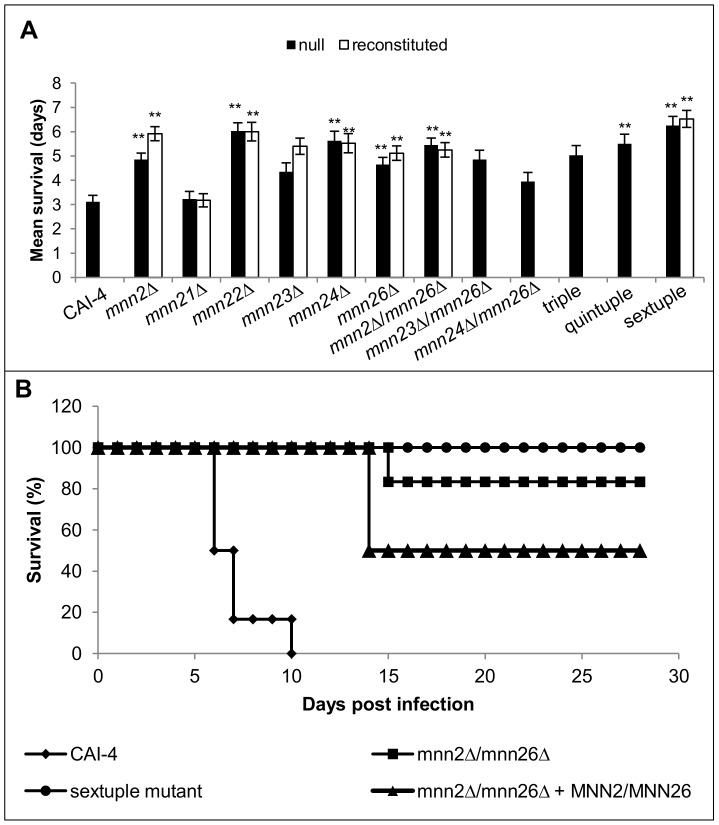
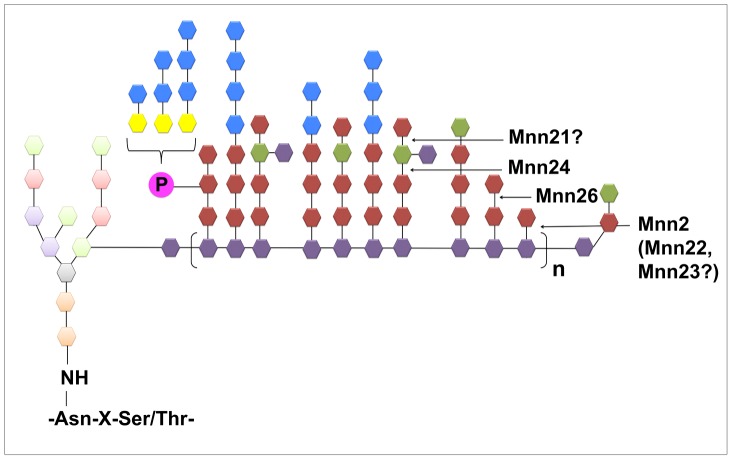
The fungal cell wall is the first point of interaction between an invading fungal pathogen and the host immune system. The outer layer of the cell wall is comprised of GPI anchored proteins, which are post-translationally modified by both N- and O-linked glycans. These glycans are important pathogen associated molecular patterns (PAMPs) recognised by the innate immune system. Glycan synthesis is mediated by a series of glycosyl transferases, located in the endoplasmic reticulum and Golgi apparatus. Mnn2 is responsible for the addition of the initial α1,2-mannose residue onto the α1,6-mannose backbone, forming the N-mannan outer chain branches. In Candida albicans, the MNN2 gene family is comprised of six members (MNN2, MNN21, MNN22, MNN23, MNN24 and MNN26). Using a series of single, double, triple, quintuple and sextuple mutants, we show, for the first time, that addition of α1,2-mannose is required for stabilisation of the α1,6-mannose backbone and hence regulates mannan fibril length. Sequential deletion of members of the MNN2 gene family resulted in the synthesis of lower molecular weight, less complex and more uniform N-glycans, with the sextuple mutant displaying only un-substituted α1,6-mannose. TEM images confirmed that the sextuple mutant was completely devoid of the outer mannan fibril layer, while deletion of two MNN2 orthologues resulted in short mannan fibrils. These changes in cell wall architecture correlated with decreased proinflammatory cytokine induction from monocytes and a decrease in fungal virulence in two animal models. Therefore, α1,2-mannose of N-mannan is important for both immune recognition and virulence of C. albicans.
Overview
The claims and statistics of this paper haven’t been checked yet.
Run the check — free, no account needed. It reads the open-access text and checks the sources it cites.
Integrity signals
Registry
Cites
Statistics
Figures
Verification
Claims the paper makes
The claims and statistics of this paper haven’t been checked yet.
Run the check — free, no account needed. It reads the open-access text and checks the sources it cites.
Claims other papers make about this one
Each is checked against this paper’s own text: does it say what the citing paper says it does?
The source backs part of the claim, not all of it — or backs it for a different population, condition or comparison.
In the citing paper
“Cell wall and extracellular matrix polysaccharides have mechanistic roles implicated in the protection of Candida species from host response and drug therapies (13–16).”
From Dual function of Candida auris mannosyltransferase, MNT5, in biofilm community protection from antifungal therapy and the host (2025) · cites this paper as [14]
Experimental — accuracy not yet measuredThe cited source says what the claim attributes to it.
In the citing paper
“C. albicans has a well-characterized cell wall composed of an inner layer of chitin, β−1,3-glucan, and β−1,6-glucan, and an outer layer composed of proteins modified with N- and O-linked mannans and phosphomannans, called mannoproteins34,35.”
From Distinct echinocandin responses of Candida albicans and Candida auris cell walls revealed by solid-state NMR (2025) · cites this paper as [34]
Self-check
Percentages, sums and reported differences re-computed from the paper’s own numbers.
The self-check needs the paper’s full text.
Citations
Cites
Gapped BLAST and PSI-BLAST: a new generation of protein database search programs
Altschul, S. (1997) · Nucleic Acids Research · doi:10.1093/nar/25.17.3389 · Cited by 73,302
Brown, G. D., & Gordon, S. (2001) · Nature · doi:10.1038/35092620 · Cited by 1,579
The structure and synthesis of the fungal cell wall
Bowman, S. M., & Free, S. J. (2006) · BioEssays · doi:10.1002/bies.20441 · Cited by 1,320
An integrated model of the recognition of Candida albicans by the innate immune system
Netea, M. G., Brown, G. D., Kullberg, B. J., & Gow, N. A. R. (2008) · Nature Reviews Microbiology · doi:10.1038/nrmicro1815 · Cited by 946
Self-citationCandida albicans morphogenesis and host defence: discriminating invasion from colonization
Gow, N. A. R., van de Veerdonk, F. L., Brown, A. J. P., & Netea, M. G. (2012) · Nature Reviews Microbiology · doi:10.1038/nrmicro2711 · Cited by 888
Self-citationSaijo, S., Ikeda, S., Yamabe, K., Kakuta, S., Ishigame, H., Akitsu, A., Fujikado, N., Kusaka, T., Kubo, S., Chung, S.-H., et al. (2010) · Immunity · doi:10.1016/j.immuni.2010.05.001 · Cited by 760
Netea, M. G. (2006) · Journal of Clinical Investigation · doi:10.1172/jci27114 · Cited by 754
Almirante, B., Rodríguez-Pardo, D., Park, B. J., Cuenca‐Estrella, M., Planes, A. M., Almela, M., Mensa, J., Sánchez, F., Ayats, J., Giménez, M., et al. (2005) · Journal of Clinical Microbiology · doi:10.1128/jcm.43.4.1829-1835.2005 · Cited by 571
Leroy, O., Gangneux, J., Montravers, P., Mira, J. P., Gouin, F., Sollet, J.-P., Carlet, J. M., Reynes, J., Rosenheim, M., Regnier, B., et al. (2009) · Critical Care Medicine · doi:10.1097/ccm.0b013e31819efac0 · Cited by 551
The carbohydrate-recognition domain of Dectin-2 is a C-type lectin with specificity for high mannose
McGreal, E. P., Rosas, M., Brown, G. D., ZAMZE, S. E., Wong, S. Y. C., Gordon, S., Martínez‐Pomares, L., & Taylor, P. R. (2006) · Glycobiology · doi:10.1093/glycob/cwj077 · Cited by 383
Correlation between virulence of Candida albicans mutants in mice and Galleria mellonella larvae
Brennan, M., Thomas, D. Y., Whiteway, M. S., & Kavanagh, K. A. (2002) · FEMS Immunology & Medical Microbiology · doi:10.1111/j.1574-695x.2002.tb00617.x · Cited by 360
Immune Recognition of Candida albicans β‐glucan by Dectin‐1
Gow, N. A. R., Netea, M. G., Munro, C. A., Ferwerda, G., Bates, S., Mora‐Montes, H. M., Walker, L., Jansen, T., Jacobs, L., Tsoni, V., et al. (2007) · The Journal of Infectious Diseases · doi:10.1086/523110 · Cited by 314
Self-citationBallou, C. E. (1990) · Methods in enzymology on CD-ROM/Methods in enzymology · doi:10.1016/0076-6879(90)85038-p · Cited by 298
Jouault, T., Behi, M. E. A.-E., Martínez-Esparza, M., Breuilh, L., Trinel, P., Chamaillard, M., Trottein, F., & Poulain, D. (2006) · Journal of Immunology · doi:10.4049/jimmunol.177.7.4679 · Cited by 256
McKenzie, C. G. J., Koser, U., Lewis, L. E., Bain, J. M., Mora-Montes, H. M., Barker, R. N., Gow, N. A. R., & Erwig, L. P. (2010) · Infection and Immunity · doi:10.1128/iai.00001-10 · Cited by 250
Self-citationDendritic Cell Interaction with Candida albicans Critically Depends on N-Linked Mannan
Cambi, A., Netea, M. G., Mora-Montes, H. M., Gow, N. A. R., Hato, S. V., Lowman, D. W., Kullberg, B. J., Torensma, R., Williams, D. L., & Figdor, C. G. (2008) · Journal of Biological Chemistry · doi:10.1074/jbc.m709334200 · Cited by 247
Self-citationOuter Chain N-Glycans Are Required for Cell Wall Integrity and Virulence of Candida albicans
Bates, S., Hughes, H. B., Munro, C. A., Thomas, W. P. H., MacCallum, D. M., Bertram, G., Atrih, A., Ferguson, M. A. J., Brown, A. J. P., Odds, F. C., et al. (2005) · Journal of Biological Chemistry · doi:10.1074/jbc.m510360200 · Cited by 238
Self-citationGalectin-3 Induces Death of Candida Species Expressing Specific β-1,2-Linked Mannans
Kohatsu, L., Hsu, D. K., Jegalian, A. G., Liu, F., & Baum, L. G. (2006) · The Journal of Immunology · doi:10.4049/jimmunol.177.7.4718 · Cited by 221
Recognition and Blocking of Innate Immunity Cells by Candida albicans Chitin
Mora-Montes, H. M., Netea, M. G., Ferwerda, G., Lenardon, M. D., Brown, G. D., Mistry, A. R., Kullberg, B. J., O’Callaghan, C. A., Sheth, C. C., Odds, F. C., et al. (2011) · Infection and Immunity · doi:10.1128/iai.01282-10 · Cited by 211
Self-citationElevated Cell Wall Chitin in Candida albicans Confers Echinocandin Resistance In Vivo
Lee, K. K., MacCallum, D. M., Jacobsen, M. D., Walker, L. A., Odds, F. C., Gow, N. A. R., & Munro, C. A. (2012) · Antimicrobial Agents and Chemotherapy · doi:10.1128/aac.00683-11 · Cited by 209
Self-citationMunro, C. A., Bates, S., Buurman, E. T., Hughes, H. B., MacCallum, D. M., Bertram, G., Atrih, A., Ferguson, M. A. J., Bain, J. M., Brand, A., et al. (2005) · Journal of Biological Chemistry · doi:10.1074/jbc.m411413200 · Cited by 200
Self-citationBates, S., MacCallum, D. M., Bertram, G., Munro, C. A., Hughes, H. B., Buurman, E. T., Brown, A. J. P., Odds, F. C., & Gow, N. A. R. (2005) · Journal of Biological Chemistry · doi:10.1074/jbc.m502162200 · Cited by 197
Self-citationEndres, S., Ghorbani, R., Lonnemann, G., van der Meer, J. W. M., & Dinarello, C. A. (1988) · Clinical Immunology and Immunopathology · doi:10.1016/0090-1229(88)90130-4 · Cited by 176
Shibata, N., Suzuki, A., Kobayashi, H., & Okawa, Y. (2007) · Biochemical Journal · doi:10.1042/bj20070081 · Cited by 176
Brown, A. J., Dyos, S. L., Whiteway, M. S., White, J. H. M., Watson, M.-A., Marzioch, M., Clare, J. J., Cousens, D. J., Paddon, C. J., Plumpton, C., et al. (2000) · Yeast · doi:10.1002/(sici)1097-0061(20000115)16:1 · Cited by 174
MacCallum, D., & Odds, F. (2005) · Mycoses (Berlin) · doi:10.1111/j.1439-0507.2005.01121.x · Cited by 159
Self-citationYeast Cell Adhesion Molecules Have Functional Amyloid-Forming Sequences
Ramsook, C. B., Tan, C., Garcia, M. C., Fung, R., Soybelman, G., Henry, R., Litewka, A., O'Meally, S., Otoo, H., Khalaf, R. A., et al. (2009) · Eukaryotic Cell · doi:10.1128/ec.00068-09 · Cited by 156
Mora-Montes, H. M., Bates, S., Netea, M. G., Díaz-Jiménez, D. F., López-Romero, E., Zinker, S., Ponce‐Noyola, P., Kullberg, B. J., Brown, A. J. P., Odds, F. C., et al. (2007) · Eukaryotic Cell · doi:10.1128/ec.00350-07 · Cited by 149
Self-citationExistence of Branched Side Chains in the Cell Wall Mannan of Pathogenic Yeast, Candida albicans
Shibata, N., Ikuta, K., Imai, T., Satoh, Y., Satoh, R., Suzuki, A., Kojima, C., Kobayashi, H., Hisamichi, K., & Suzuki, S. (1995) · Journal of Biological Chemistry · doi:10.1074/jbc.270.3.1113 · Cited by 148
Buurman, E. T., Westwater, C., Hube, B., Brown, A. J. P., Odds, F. C., & Gow, N. A. R. (1998) · Proceedings of the National Academy of Sciences · doi:10.1073/pnas.95.13.7670 · Cited by 146
Self-citationYip, C., Welch, S. K., Klebl, F., Gilbert, T. L., Seidel, P., Grant, F. J., O’Hara, P. J., & MacKay, V. L. (1994) · Proceedings of the National Academy of Sciences · doi:10.1073/pnas.91.7.2723 · Cited by 137
Loss of Cell Wall Mannosylphosphate in Candida albicans Does Not Influence Macrophage Recognition
Hobson, R. P., Munro, C. A., Bates, S., MacCallum, D. M., Cutler, J. E., Heinsbroek, S. E. M., Brown, G. D., Odds, F. C., & Gow, N. A. R. (2004) · Journal of Biological Chemistry · doi:10.1074/jbc.m405003200 · Cited by 132
Self-citationMora-Montes, H. M., Bates, S., Netea, M. G., Castillo, L., Brand, A., Buurman, E. T., Díaz-Jiménez, D. F., Jan Kullberg, B., Brown, A. J. P., Odds, F. C., et al. (2010) · Journal of Biological Chemistry · doi:10.1074/jbc.m109.081513 · Cited by 129
Self-citationRayner, J. C., & Munro, S. (1998) · Journal of Biological Chemistry · doi:10.1074/jbc.273.41.26836 · Cited by 129
Häusler, A., Ballou, L., Ballou, C. E., & Robbins, P. W. (1992) · Proceedings of the National Academy of Sciences · doi:10.1073/pnas.89.15.6846 · Cited by 119
Shibata, N., ARAI, M., Haga, E., Kikuchi, T., Najima, M., Satoh, T., Kobayashi, H., & Suzuki, S. (1992) · Infection and Immunity · doi:10.1128/iai.60.10.4100-4110.1992 · Cited by 118
Molecular organization of the cell wall of Candida albicans
Klis, F. M., De Groot, P., & Hellingwerf, K. (2001) · Medical Mycology · doi:10.1080/744118876 · Cited by 111
Kobayashi, H., Shibata, N., Mitobe, H., Ohkubo, Y., & Suzuki, S. (1989) · Archives of Biochemistry and Biophysics · doi:10.1016/0003-9861(89)90230-0 · Cited by 107
MacCallum, D. M., Coste, A., Ischer, F., Jacobsen, M. D., Odds, F. C., & Sanglard, D. (2010) · Antimicrobial Agents and Chemotherapy · doi:10.1128/aac.01645-09 · Cited by 98
Self-citationShibata, N., Fukasawa, S., Kobayashi, H., Tojo, M., Yonezu, T., Ambo, A., Ohkubo, Y., & Suzuki, S. (1989) · Carbohydrate Research · doi:10.1016/0008-6215(89)80006-0 · Cited by 98
Galleria mellonella as a Model for Fungal Pathogenicity Testing
Fallon, J. P., Kelly, J., & Kavanagh, K. A. (2012) · Methods in molecular biology · doi:10.1007/978-1-61779-539-8_33 · Cited by 92
Wang, X., Nakayama, K.-I., Shimma, Y., Tanaka, A., & Jigami, Y. (1997) · Journal of Biological Chemistry · doi:10.1074/jbc.272.29.18117 · Cited by 86
Therapy and outcome of Candida glabrata versus Candida albicans bloodstream infection
Klevay, M. J., Ernst, E. J., Hollanbaugh, J. L., Miller, J. G., Pfaller, M. A., & Diekema, D. J. (2008) · Diagnostic Microbiology and Infectious Disease · doi:10.1016/j.diagmicrobio.2007.10.001 · Cited by 73
Variable recognition ofCandida albicansstrains by TLR4 and lectin recognition receptors
Netea, M. G., Gow, N. A. R., Joosten, L. A. B., Verschueren, I., van der Meer, J. W. M., & Kullberg, B. J. (2010) · Medical Mycology · doi:10.3109/13693781003621575 · Cited by 71
Self-citationRomero, P. A., Lussier, M., Véronneau, S., Sdicu, A.-M., Herscovics, A. A., & Bussey, H. (1999) · Glycobiology · doi:10.1093/glycob/9.10.1045 · Cited by 62
Arbour, M., Epp, E., Hogues, H., Sellam, A., Lacroix, C., Rauceo, J. M., Mitchell, A. P., Whiteway, M. S., & Nantel, A. (2009) · FEMS Yeast Research · doi:10.1111/j.1567-1364.2009.00563.x · Cited by 57
Southard, S. B., Specht, C. A., Mishra, C., Chen-Weiner, J., & Robbins, P. W. (1999) · Journal of Bacteriology · doi:10.1128/jb.181.24.7439-7448.1999 · Cited by 57
Murciano, C., Moyes, D. L., Runglall, M., Islam, A., Mille, C., Fradin, C., Poulain, D., Gow, N. A. R., & Naglik, J. R. (2011) · Infection and Immunity · doi:10.1128/iai.05591-11 · Cited by 56
Self-citationMannose receptor contribution to Candida albicans phagocytosis by murine E-clone J774 macrophages
Porcaro, I., Vidal, M., Jouvert, S., Stahl, P. D., & Giaimis, J. (2003) · Journal of Leukocyte Biology · doi:10.1189/jlb.1202608 · Cited by 55
Díaz-Jiménez, D. F., Mora-Montes, H. M., Hernández-Cervantes, A., Luna-Arias, J. P., Gow, N. A. R., & Flores-Carreón, A. (2012) · Biochemical and Biophysical Research Communications · doi:10.1016/j.bbrc.2012.01.131 · Cited by 54
Self-citationBai, C., Xu, X.-L., Chan, F.-Y., Lee, R. T. H., & Wang, Y. (2006) · Eukaryotic Cell · doi:10.1128/ec.5.2.238-247.2006 · Cited by 52
Kruppa, M., Greene, R. R., Noss, I., Lowman, D. W., & Williams, D. L. (2011) · Glycobiology · doi:10.1093/glycob/cwr051 · Cited by 50
Self-citationSheth, C. C., Hall, R. A., Lewis, L. E., Brown, A. J. P., Odds, F. C., Erwig, L. P., & Gow, N. A. R. (2011) · Medical Mycology · doi:10.3109/13693786.2010.551425 · Cited by 45
Self-citationLowman, D. W., Ensley, H. E., Greene, R. R., Knagge, K. J., Williams, D. L., & Kruppa, M. (2011) · Carbohydrate Research · doi:10.1016/j.carres.2011.09.029 · Cited by 43
Self-citationThe Candida albicans histidine kinase Chk1p: Signaling and cell wall mannan
Li, D., Williams, D. L., Lowman, D. W., Monteiro, M. A., Tan, X., Kruppa, M., Fonzi, W. A., Román, E., Plá, J., & Calderone, R. (2009) · Fungal Genetics and Biology · doi:10.1016/j.fgb.2009.06.008 · Cited by 41
Self-citationEfg1 Controls Caspofungin-Induced Cell Aggregation of Candida albicans through the Adhesin Als1
Gregori, C., Glaser, W., Frohner, I. E., Reinoso-Martín, C., Rupp, S., Schüller, C., & Kuchler, K. (2011) · Eukaryotic Cell · doi:10.1128/ec.05187-11 · Cited by 40
Kobayashi, H., Takahashi, S., Shibata, N., Miyauchi, M., Ishida, M., Sato, J., Maeda, K., & Suzuki, S. (1994) · Infection and Immunity · doi:10.1128/iai.62.3.968-973.1994 · Cited by 39
Shibata, N., Kobayashi, H., Takahashi, S., Okawa, Y., Hisamichi, K., Suzuki, S., & Suzuki, S. (1991) · Archives of Biochemistry and Biophysics · doi:10.1016/0003-9861(91)90578-7 · Cited by 32
Kobayashi, H., Tanaka, S., Suzuki, J. S., Kiuchi, Y., Shibata, N., Suzuki, S., & Okawa, Y. (1997) · FEMS Microbiology Letters · doi:10.1111/j.1574-6968.1997.tb10433.x · Cited by 20
Rapid Detection of Aneuploidy Following the Generation of Mutants in Candida albicans
Lenardon, M. D., & Nantel, A. (2012) · Methods in molecular biology · doi:10.1007/978-1-61779-539-8_3 · Cited by 7
Self-citation
Cited by
Sorted by citations
Immune defence against Candida fungal infections
Netea, M. G., Joosten, L. A. B., van der Meer, J. W. M., Kullberg, B.-J., & van de Veerdonk, F. L. (2015) · Nature Reviews Immunology · doi:10.1038/nri3897 · Cited by 642
Interactions of fungal pathogens with phagocytes
Erwig, L. P., & Gow, N. A. R. (2016) · Nature Reviews Microbiology · doi:10.1038/nrmicro.2015.21 · Cited by 626
Self-citationFungal Chitin Dampens Inflammation through IL-10 Induction Mediated by NOD2 and TLR9 Activation
Wagener, J., Malireddi, R. K. S., Lenardon, M. D., Köberle, M., Vautier, S., MacCallum, D. M., Biedermann, T., Schaller, M., Netea, M. G., Kanneganti, T., et al. (2014) · PLoS Pathogens · doi:10.1371/journal.ppat.1004050 · Cited by 302
Self-citationLactate signalling regulates fungal β-glucan masking and immune evasion
Ballou, E. R., Avelar, G. M., Childers, D. S., Mackie, J., Bain, J. M., Wagener, J., Kastora, S. L., Panea, M. D., Hardison, S. E., Walker, L. A., et al. (2016) · Nature Microbiology · doi:10.1038/nmicrobiol.2016.238 · Cited by 269
Self-citationMetabolism impacts upon Candida immunogenicity and pathogenicity at multiple levels
Brown, A. J. P., Brown, G. D., Netea, M. G., & Gow, N. A. R. (2014) · Trends in Microbiology · doi:10.1016/j.tim.2014.07.001 · Cited by 258
Self-citation
Metadata
- Authors
- Hall, R. A., Bates, S., Lenardon, M. D., MacCallum, D. M., Wagener, J., Lowman, D. W., Kruppa, M. D., Williams, D. L., Odds, F. C., Brown, A. J. P., & Gow, N. A. R.
- Affiliations
- University of Aberdeen (GB)
- University of Exeter (GB)
- East Tennessee State University (US)
- Corresponding author
- Gow, Neil A. R.
- ORCID
- Venue
- PLoS Pathogens
- Publisher
- Public Library of Science (PLoS)
- Published
- 2013-04-25
- Volume
- 9
- Issue
- 4
- Pages
- e1003276
- ISSN
- 1553-7366 (ISSN-L)
- 1553-7374
- PMC
- PMC3636026
- OpenAlex
- W2086193922
- Cited by
- 128
- References
- 60
- Citations by year
- 2026: 8 · 2025: 9 · 2024: 13 · 2023: 4 · 2022: 12 · 2021: 6 · 2020: 9 · 2019: 10 · 2018: 16 · 2017: 9 · 2016: 11 · 2015: 9 · 2014: 6 · 2013: 6
- FWCI
- 4.78
- Type
- journal article
- Language
- en
- Open access
- gold
- doi.org
- Locations
- PLoS Pathogens (publishedVersion, cc-by)
- Europe PMC (PubMed Central) (publishedVersion, cc-by)
- PubMed Central (publishedVersion, cc-by)
- PubMed (publishedVersion)
- Kent Academic Repository (University of Kent) (acceptedVersion)
- Aberdeen University Research Archive (Aberdeen University) (submittedVersion)
- Digital Commons - East Tennessee State University (East Tennessee State University) (submittedVersion)
- DOAJ (DOAJ: Directory of Open Access Journals) (submittedVersion, cc-by-sa)
- Figshare (submittedVersion, cc-by)
- Open Research Exeter (University of Exeter) (submittedVersion)
- University of Birmingham Research Portal (University of Birmingham) (submittedVersion, cc-by)
- University of Birmingham Research Portal (University of Birmingham) (submittedVersion, other-oa)
- Funders
- Wellcome Trust (099215, 086827, 080088, 075470)
- European Commission (260338)
- Medical Research Council (MR/J008230/1)
- Biotechnology and Biological Sciences Research Council (BB/F00513X/1)
- National Institute of General Medical Sciences (R01GM053522)
- Topics
- Life Sciences › Biochemistry, Genetics and Molecular Biology › Molecular Biology › Fungal and yeast genetics research
- Life Sciences › Biochemistry, Genetics and Molecular Biology › Molecular Biology › Glycosylation and Glycoproteins Research
- Health Sciences › Medicine › Infectious Diseases › Antifungal resistance and susceptibility
- Keywords
- Candida albicans, fungal cell wall, glycosyltransferases, pathogen-associated molecular patterns, innate immune recognition, inflammatory cytokines, fungal virulence, GPI-anchored proteins, N-glycans
- MeSH terms
- Animals, Candida albicans, Candidiasis, Cell Wall, Female, Fungal Proteins, Humans, Mannans, Mannose, Mannosyltransferases, Membrane Glycoproteins, Mice, Inbred BALB C, Polysaccharides, Sequence Alignment, Sequence Deletion, Receptors, Pattern Recognition, Mice
About these checks
Registry, retraction, Cites and statistics results are computed, not judged, with one exception: a printed reference that no index lists is read once by a model before it counts as a citation error. Claims are extracted by a model and kept only when their quote appears verbatim in the text; each cited source is then checked, with a model’s help, for whether it says what the claim relies on. Those verdicts can be wrong — read the claim’s quote and the cited source before relying on one.
Statistics and arithmetic are recomputed, not judged.
Confidence bands are shown only for fields calibrated on our annotated test set. None is calibrated yet, so no band is shown.
What counts as a claim ›How we measure confidence ›How we check this ›
Are you an author, or do you see a problem with this page? Request a review
