

Infectious particle identity determines dissemination and disease outcome for the inhaled human fungal pathogen Cryptococcus
Open accessThe DOI matches its Crossref record; 49 of the 49 references it cites were found in a registry or an index.
Abstract
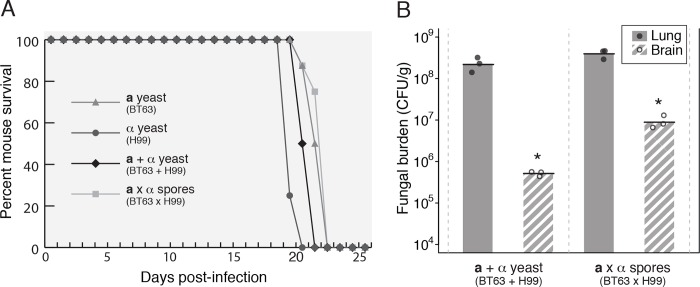
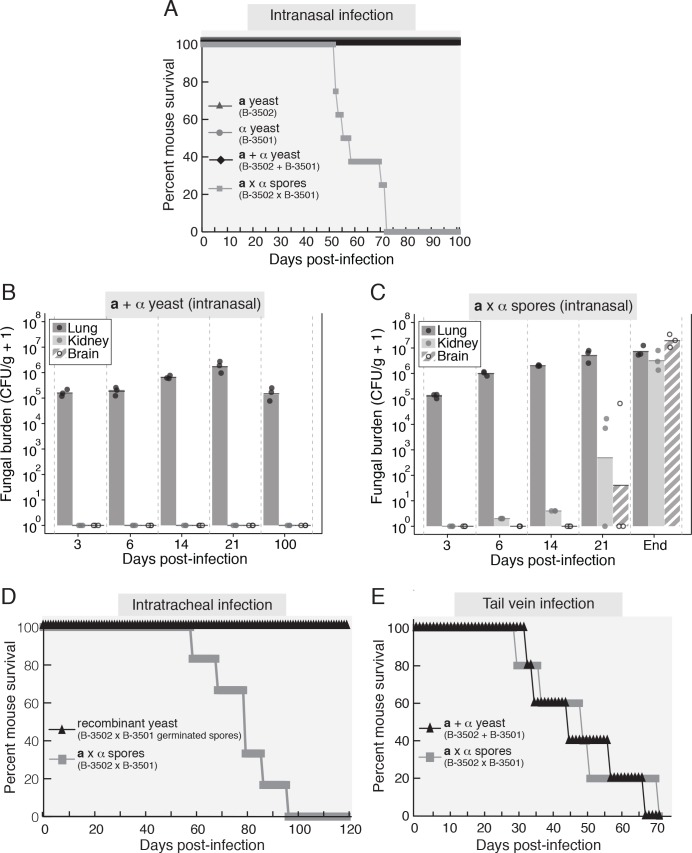
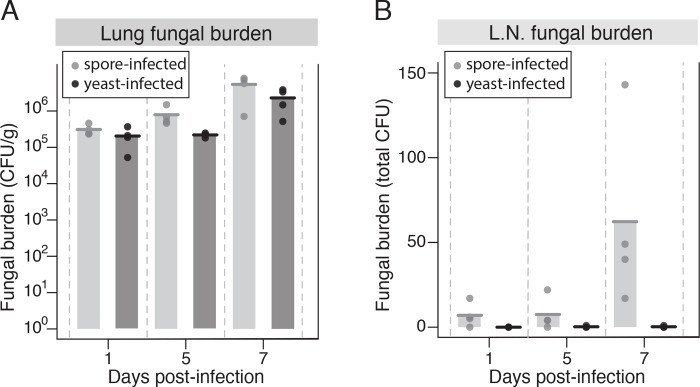
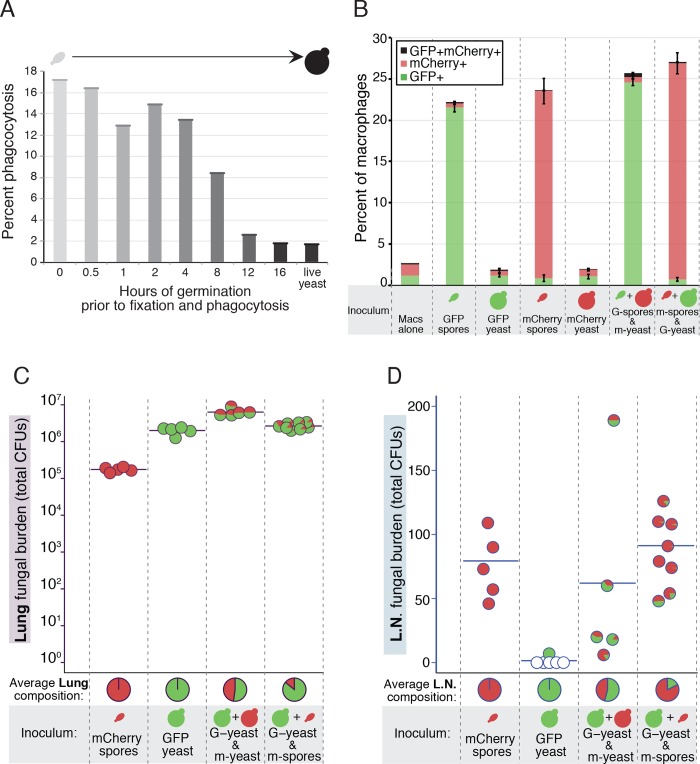
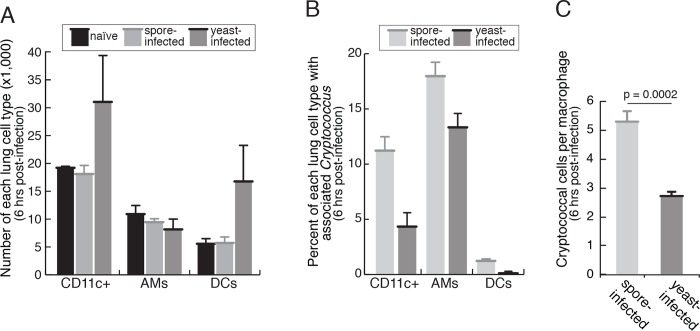
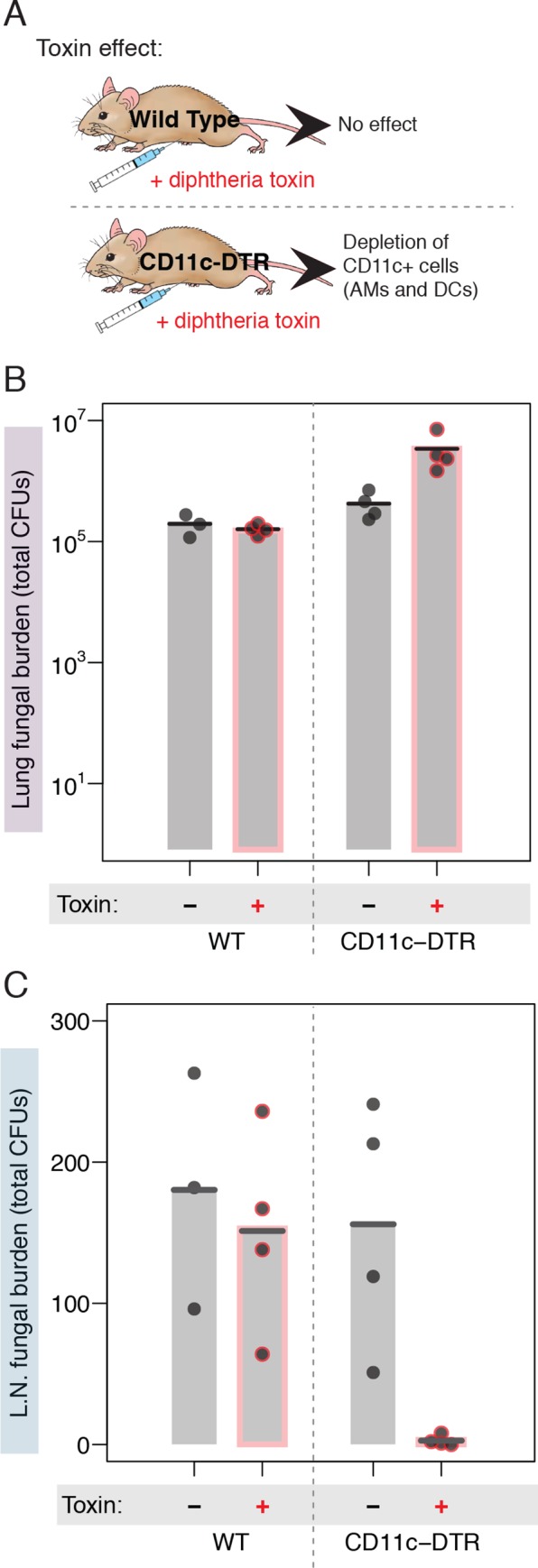
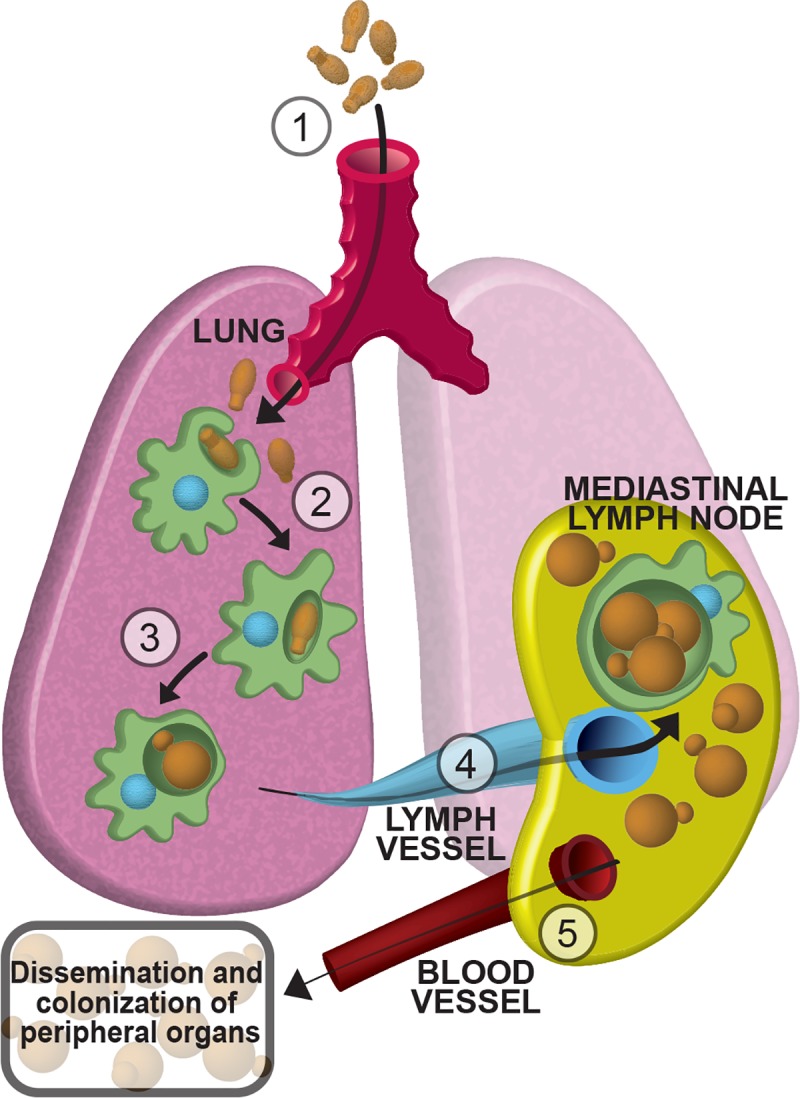
The majority of invasive human fungal pathogens gain access to their human hosts via the inhalation of spores from the environment into the lung, but relatively little is known about this infectious process. Among human fungal pathogens the most frequent cause of inhaled fatal fungal disease is Cryptococcus, which can disseminate from the lungs to other tissues, including the brain, where it causes meningoencephalitis. To determine the mechanisms by which distinct infectious particles of Cryptococcus cause disseminated disease, we evaluated two developmental cell types (spores and yeast) in mouse models of infection. We discovered that while both yeast and spores from several strains cause fatal disease, there was a consistently higher fungal burden in the brains of spore-infected mice. To determine the basis for this difference, we compared the pathogenesis of avirulent yeast strains with their spore progeny derived from sexual crosses. Strikingly, we discovered that spores produced by avirulent yeast caused uniformly fatal disease in the murine inhalation model of infection. We determined that this difference in outcome is associated with the preferential dissemination of spores to the lymph system. Specifically, mice infected with spores harbored Cryptococcus in their lung draining lymph nodes as early as one day after infection, whereas mice infected with yeast did not. Furthermore, phagocyte depletion experiments revealed this dissemination to the lymph nodes to be dependent on CD11c+ phagocytes, indicating a critical role for host immune cells in preferential spore trafficking. Taken together, these data support a model in which spores capitalize on phagocytosis by immune cells to escape the lung and gain access to other tissues, such as the central nervous system, to cause fatal disease. These previously unrealized insights into early interactions between pathogenic fungal spores and lung phagocytes provide new opportunities for understanding cryptococcosis and other spore-mediated fungal diseases.
Overview
The claims and statistics of this paper haven’t been checked yet.
Free: it reads the open-access text and checks the first 5 claims that cite a source we can check. Create a free account to check every claim.
Integrity signals
Registry
Cites
Statistics
Figures
Verification
Claims the paper makes
The claims and statistics of this paper haven’t been checked yet.
Free: it reads the open-access text and checks the first 5 claims that cite a source we can check. Create a free account to check every claim.
Claims other papers make about this one
Each is checked against this paper’s own text: does it say what the citing paper says it does?
The source backs part of the claim, not all of it — or backs it for a different population, condition or comparison.
In the citing paper
“It was later determined that CD11c+ lung resident cells, primarily alveolar macrophages and to a lesser extent dendritic cells, are responsible for internalizing and transporting cryptococci to the lymph system following intranasal instillation [24].”
From Mechanisms of fungal dissemination (2021) · cites this paper as [24]
Experimental — accuracy not yet measuredIn the citing paper
“Depletion of these CD11c+ populations in transgenic mice, resulted in a complete loss of dissemination [24] further supporting the role of these cells in Trojan horse transport.”
From Mechanisms of fungal dissemination (2021) · cites this paper as [24]
Self-check
Percentages, sums and reported differences re-computed from the paper’s own numbers.
The self-check needs the paper’s full text.
Citations
Cites
Global burden of disease of HIV-associated cryptococcal meningitis: an updated analysis
Rajasingham, R., Smith, R. M., Park, B. J., Jarvis, J. N., Govender, N. P., Chiller, T. M., Denning, D. W., Loyse, A., & Boulware, D. R. (2017) · The Lancet Infectious Diseases · doi:10.1016/s1473-3099(17)30243-8 · Cited by 1,861
Understanding survival analysis: Kaplan-Meier estimate
Kishore, J., Goel, M., & Khanna, P. (2010) · International Journal of Ayurveda Research · doi:10.4103/0974-7788.76794 · Cited by 1,273
Laboratory course manual for methods in yeast genetics
Sherman, F., Fink, G. R., & Hicks, J. B. (1986) · Cold Spring Harbor Laboratory eBooks · Cited by 1,231
Vermaelen, K. Y., Carro-Muino, I., Lambrecht, B. N., & Pauwels, R. A. (2001) · The Journal of Experimental Medicine · doi:10.1084/jem.193.1.51 · Cited by 542
Fels, A. O., & Cohn, Z. A. (1986) · Journal of Applied Physiology · doi:10.1152/jappl.1986.60.2.353 · Cited by 506
Cryptococcal meningitis: epidemiology, immunology, diagnosis and therapy
Williamson, P. R., Jarvis, J. N., Panackal, A. A., Fisher, M. C., Molloy, S. F., Loyse, A., & Harrison, T. S. (2017) · Nature Reviews Neurology · doi:10.1038/nrneurol.2016.167 · Cited by 480
Phagosome Extrusion and Host-Cell Survival after Cryptococcus neoformans Phagocytosis by Macrophages
Alvarez, M., & Casadevall, A. (2006) · Current Biology · doi:10.1016/j.cub.2006.09.061 · Cited by 414
Perfect, J. R., & Casadevall, A. (2002) · Infectious Disease Clinics of North America · doi:10.1016/s0891-5520(02)00036-3 · Cited by 363
Evidence of a Role for Monocytes in Dissemination and Brain Invasion by Cryptococcus neoformans
Charlier, C., Nielsen, K., Daou, S., Brigitte, M., Chretien, F., & Dromer, F. (2009) · Infection and Immunity · doi:10.1128/iai.01065-08 · Cited by 362
Spores as Infectious Propagules of Cryptococcus neoformans
Velagapudi, R., Hsueh, Y.-P., Geunes-Boyer, S., Wright, J. R., & Heitman, J. (2009) · Infection and Immunity · doi:10.1128/iai.00542-09 · Cited by 327
Cited by
Mechanisms of fungal dissemination
Strickland, A. B., & Shi, M. (2021) · Cellular and Molecular Life Sciences · doi:10.1007/s00018-020-03736-z · Cited by 127
Chen, Y., Shi, Z. W., Strickland, A. B., & Shi, M. (2022) · Journal of Fungi · doi:10.3390/jof8101069 · Cited by 123
“neoformans to the lung lymph nodes and the brain [40,41], suggesting a role for these cells in extrapulmonary dissemination.”
BackgroundMontoya, M. C., Magwene, P. M., & Perfect, J. R. (2021) · Journal of Fungi · doi:10.3390/jof7040260 · Cited by 94
A dissemination-prone morphotype enhances extrapulmonary organ entry by Cryptococcus neoformans
Denham, S. T., Brammer, B., Chung, K. Y., Wambaugh, M. A., Bednarek, J. M., Guo, L., Moreau, C. T., & Brown, J. C. S. (2022) · Cell Host & Microbe · doi:10.1016/j.chom.2022.08.017 · Cited by 80
Cryptococcus neoformans: Sex, morphogenesis, and virulence
Zhao, Y., & Lin, X. (2021) · Infection Genetics and Evolution · doi:10.1016/j.meegid.2021.104731 · Cited by 66
“In addition, mice infected intranasally with a mixture of JEC20 and JEC21 yeasts (1:1) showed a lower fungal burden in lungs than those infected with equal inoculum of spores derived from a JEC20 × JEC21 cross (Walsh et al., 2019), consistent with the previous conclusion that spores of serotype D are more infectious t…”
BackgroundResultAl-Huthaifi, A. M., Radman, B. A., Al-Alawi, A. A., Mahmood, F., & Liu, T. (2024) · Journal of Fungi · doi:10.3390/jof10080586 · Cited by 46
“In a mouse model of infection, following intranasal instillation, it was found that alveolar macrophage and dendritic cells are essential for internalizing and transferring cryptococci to the lymph node, lungs, and brain [82,83].”
BackgroundCoelho, C., Camacho, E., Salas, A., Alanio, A., & Casadevall, A. (2019) · mSphere · doi:10.1128/msphere.00483-19 · Cited by 45
“Depletion of 250 mononuclear phagocytes decreases the number of yeasts brain detected in the brain 251 (23, 26, 34, 35).”
BackgroundCryptococcus escapes host immunity: What do we know?
Yang, C., Huang, Y., Zhou, Y., Zang, X., Deng, H., Liu, Y., Shen, D., & Xue, X. (2022) · Frontiers in Cellular and Infection Microbiology · doi:10.3389/fcimb.2022.1041036 · Cited by 45
“Cn is largely nonpathogenic in immunocompetent hosts, and patients are often diagnosed by a pathological biopsy of unexplained pulmonary nodules (Walsh et al., 2019; Alanio, 2020).”
BackgroundVij, R., Danchik, C., Crawford, C. J., Dragotakes, Q., & Casadevall, A. (2020) · mSphere · doi:10.1128/msphere.00310-20 · Cited by 43
“neoformans cause significantly higher fungal burden in the brain of a murine model than small encapsulated yeast (1).”
BackgroundNormile, T. G., Bryan, A. M., & Poeta, M. D. (2020) · Frontiers in Immunology · doi:10.3389/fimmu.2020.581750 · Cited by 42
“However, spores differ compared to yeast cells, and these differences may account for a different immune recognition and response to the infection (40).”
BackgroundSpore Germination as a Target for Antifungal Therapeutics
Ortiz, S. C., Huang, M., & Hull, C. M. (2019) · Antimicrobial Agents and Chemotherapy · doi:10.1128/aac.00994-19 · Cited by 41
“To evaluate the direct effects of pentamidine on spore germination in vivo, we infected mice with spores carrying a green fluorescent protein (GFP) marker, recovered bronchoalveolar lavage fluid from the lungs of prophylactically treated mice 8 h after spore infection, stained the samples with a cell wall dye (calcofl…”
MethodSelf-citationZhang, X., Bian, F., Wang, Y., Hu, L., Yang, N., & Mao, H. (2022) · Foods · doi:10.3390/foods11213462 · Cited by 39
“In addition to causing damage to crops and fruits, fungal spores can also enter the lungs through the human respiratory tract and spread to other organs of the human body, causing various fungal diseases [3,4].”
BackgroundImmunoprotection against Cryptococcosis Offered by Znf2 Depends on Capsule and the Hyphal Morphology
Lin, J., Pham, T., Hipsher, K., Glueck, N. K., Fan, Y., & Lin, X. (2022) · mBio · doi:10.1128/mbio.02785-21 · Cited by 37
Francis, V. I., Liddle, C., Camacho, E., Kulkarni, M., Santos, S. R. D., Harvey, J. A., Ballou, E. R., Thomson, D. D., Brown, G. D., Hardwick, J. M., et al. (2024) · mBio · doi:10.1128/mbio.03078-23 · Cited by 36
“…shown viable cryptococci in the blood of infected mice as early as 24 hpi and up to 7 dpi in spleen and lymph nodes, which was interpreted to suggest that cryptococci disseminate from the lung to the brain via the lymph nodes, carried by antigen-presenting cells in a Trojan-horse mechanism (25).”
BackgroundResultInfluentialDangerous Liaisons: Interactions of Cryptococcus neoformans with Host Phagocytes
Gaylord, E. A., Choy, H. L., & Doering, T. L. (2020) · Pathogens · doi:10.3390/pathogens9110891 · Cited by 33
“Notably, inoculation with spores from some st ains that appear to be avirulent s yeasts can cause fatal di ease in mice [6].”
BackgroundCryptococcus neoformans Genotypic Diversity and Disease Outcome among HIV Patients in Africa
Kassaza, K., Wasswa, F. B., Nielsen, K., & Bazira, J. (2022) · Journal of Fungi · doi:10.3390/jof8070734 · Cited by 26
The pathways and the mechanisms by which Cryptococcus enters the brain
Zhou, Y., Huang, Y., Yang, C., Zang, X., Deng, H., Liu, J., Zhao, E., Tian, T., Pan, L., & Xue, X. (2024) · Mycology: An International Journal on Fungal Biology · doi:10.1080/21501203.2023.2295409 · Cited by 23
“Some studies have shown that spore-infected mice exhibit a higher brain fungal burden compared to yeast-infected mice (Walsh et al. 2019; Frerichs et al. 2021).”
Elements of dissemination in cryptococcosis
Bednarek, J. M., & Brown, J. C. S. (2024) · mBio · doi:10.1128/mbio.02155-23 · Cited by 22
“Walsh et al. demonstrated that mice infected intranasally with spores see the accumulation of fungi in lung-draining lymph nodes 7 days post-infection (5).”
Alternatively activated lung alveolar and interstitial macrophages promote fungal growth
Strickland, A. B., Chen, Y., Sun, D., & Shi, M. (2023) · iScience · doi:10.1016/j.isci.2023.106717 · Cited by 21
“neoformans.(27,28) Following the initial interaction between AMs with C.”
BackgroundEdwards, H. M., Cogliati, M., Kwenda, G., & Fisher, M. C. (2021) · FEMS Microbiology Ecology · doi:10.1093/femsec/fiab093 · Cited by 21
“are yeasts which are cosmopolitan in environments worldwide and can cause the disease cryptococcosis when aerosolised spores and/or desiccated yeast cells are inhaled by a susceptible individual (Velagapudi et al. 2009; Walsh et al. 2019).”
BackgroundHadebe, S., & Brombacher, F. (2019) · Frontiers in Immunology · doi:10.3389/fimmu.2019.02696 · Cited by 19
“Breakdown of immune defense leads to re-activation of this dormant stage and escape from lung, disseminating to other organs, particularly the brain (144).”
BackgroundHuang, J., Lei, J., Ge, A., Xiao, W., Xin, C., Song, Z., & Zhang, J. (2023) · Journal of Fungi · doi:10.3390/jof9070772 · Cited by 18
“neoformans can spread to the brain, causing CM [3,4].”
BackgroundAntifungal Activity of Plant Secondary Metabolites on Candida albicans: An Updated Review
Khan, A., Moni, S. S., Ali, M., Mohan, S., Jan, H., Rasool, S., Kamal, M. A., Alshahrani, S., Halawi, M., & Alhazmi, H. A. (2023) · Current Molecular Pharmacology · doi:10.2174/1874467215666220304143332 · Cited by 17
Pathogen and host genetics underpinning cryptococcal disease
Coelho, C., & Farrer, R. A. (2020) · Advances in genetics · doi:10.1016/bs.adgen.2020.02.001 · Cited by 16
Biogenesis, germination, and pathogenesis of Cryptococcus spores
Ortiz, S. C., & Hull, C. M. (2024) · Microbiology and Molecular Biology Reviews · doi:10.1128/mmbr.00196-23 · Cited by 15
“The fact that spores readily germinate at 37°C in vitro suggests that germination can occur in mammalian hosts, which is consistent with in vivo findings in mouse models (56, 88).”
BackgroundResultInfluentialSelf-citationChen, M., Liu, Y., Liu, Z., Su, L., Yan, L., Huang, Y., Huang, Y., Zhang, W., Xu, X., & Zheng, F. (2023) · mSphere · doi:10.1128/msphere.00299-23 · Cited by 15
“Previous research revealed that sexual reproduction plays a critical role in promoting its infections and virulence evolution, as the meiotic spore is consid ered as an important infection propagule due to its stress-resistant feature and small size (12, 13, 47, 48).”
BackgroundStraumfors, A., Mundra, S., Foss, O. A. H., Mollerup, S. K., & Kauserud, H. (2021) · Scientific Reports · doi:10.1038/s41598-021-88252-1 · Cited by 14
Influence of Pathogen Carbon Metabolism on Interactions With Host Immunity
Berguson, H. P., Caulfield, L., & Price, M. S. (2022) · Frontiers in Cellular and Infection Microbiology · doi:10.3389/fcimb.2022.861405 · Cited by 13
Roosen, L., Maes, D., Musetta, L., & Himmelreich, U. (2024) · Journal of Fungi · doi:10.3390/jof10020146 · Cited by 12
“These models significantly overcome limitations for understanding the progression of cryptococcal infection, including the immune response and the dissemination from the lungs to other organs, notably the brain [87–89].”
BackgroundTong, Y., Zeng, Y., Lu, Y., Huang, Y., Jin, Z., Wang, Z., Wang, Y., Zang, X., Chang, L., Mu, W., et al. (2024) · View · doi:10.1002/viw.20240032 · Cited by 12
Taha, M. A., Tartor, Y. H., El-Aziz, R. M. A., & Elsohaby, I. (2024) · IMA Fungus · doi:10.1186/s43008-024-00153-w · Cited by 12
“Initial pulmonary infection can occur by penetrating the lung, causing acute pneumonia, with subsequent dissemination to the brain (manifesting as highly fatal meningitis) and other organs (Velagapudi et al. 2009; Harris et al. 2012; Walsh et al. 2019).”
BackgroundThe complex evolution and genomic dynamics of mating-type loci in Cryptococcus and Kwoniella
Coelho, M. A., Palma, M. D., Marincowitz, S., Aylward, J., Pham, N. Q., Yurkov, A. M., Wingfield, B. D., Wingfield, M. J., Sun, S., & Heitman, J. (2025) · PLoS Biology · doi:10.1371/journal.pbio.3003417 · Cited by 11
Kupffer Cells Mediate Systemic Antifungal Immunity
Coelho, C., & Drummond, R. A. (2019) · Trends in Immunology · doi:10.1016/j.it.2019.11.001 · Cited by 10
Cheng, K., Wu, Z., Liang, S., Li, H., & Xu, J. (2021) · Annals of Palliative Medicine · doi:10.21037/apm-21-127 · Cited by 9
“gattii is linked mainly with eucalyptus trees and afflicts mostly immunocompetent individuals in tropical and subtropical regions (18-21).”
BackgroundMethods for Manipulating Cryptococcus Spores
Frerichs, A. B., Huang, M., Ortiz, S. C., & Hull, C. M. (2021) · Journal of Fungi · doi:10.3390/jof8010004 · Cited by 9
“Spore infected mice display higher fungal burden in the brain but both cell types cause death with the same kinetics [13].”
BackgroundSelf-citationMacropinocytosis as a potential mechanism driving neurotropism of Cryptococcus neoformans
Lanser, D. M., Bennett, A. B., Vu, K., & Gelli, A. (2023) · Frontiers in Cellular and Infection Microbiology · doi:10.3389/fcimb.2023.1331429 · Cited by 8
Crop Disease Spore Detection Method Based on Au@Ag NRS
Zhang, Y., Guo, J., Bian, F., Li, Z., Guo, C., Zheng, J., & Zhang, X. (2025) · Agriculture · doi:10.3390/agriculture15192076 · Cited by 7
Esperti, S., Stoelting, A., Mangano, A., Patel, D., Sansbury, J. R., & Sherertz, R. J. (2020) · Case Reports in Infectious Diseases · doi:10.1155/2020/8232178 · Cited by 7
“Cryptococcal organisms are often present in soil and infect the host through inhalation of spores with subsequent dissemination from the lungs to the brain [2].”
BackgroundClosely related budding yeast species respond to different ecological signals for spore activation
Plante, S., & Landry, C. R. (2020) · Yeast · doi:10.1002/yea.3538 · Cited by 7
“, 2009), most of the fungal-host interactions are mediated by spores (Huang & Hull, 2017; Rieux et al., 2014; Walsh et al., 2019).”
BackgroundReconsidering the blood-brain barrier: histopathology and microanatomy of cryptococcal CNS infection
Sorrell, T. C., & Davis, J. M. (2025) · Microbiology and Molecular Biology Reviews · doi:10.1128/mmbr.00078-25 · Cited by 4
“There is also indirect evidence for the transport of intraphagocytic cryptococci through hilar/mediastinal lymph nodes to efferent lymphatics and hence, presumably, the thoracic duct, in murine inhalational models (8, 9) and in humans (10).”
Hughes, E. S., Tuck, L., He, Z., Ballou, E. R., & Wallace, E. W. J. (2025) · mSphere · doi:10.1128/msphere.00191-25 · Cited by 4
“cells into mammalian airways (7–10).”
Unisexual reproduction in the global human fungal pathogen Cryptococcus neoformans
Sun, S., Bian, Z., Xu, Z. Z., Choi, Y., & Heitman, J. (2025) · Proceedings of the National Academy of Sciences · doi:10.1073/pnas.2521779122 · Cited by 4
In-vitro and in-vivo antimicrobial activity of Citrullus lanatus prolamin hydrolysates
Dash, P., & Ghosh, G. (2023) · South African Journal of Botany · doi:10.1016/j.sajb.2023.06.011 · Cited by 4
Genetic diversity and microevolution in clinical Cryptococcus isolates from Cameroon
Sephton-Clark, P., Temfack, E., Tenor, J. L., Toffaletti, D. L., Loyse, A., Molloy, S. F., Perfect, J. R., Bicanic, T. A., Harrison, T. S., Lortholary, O., et al. (2023) · Medical Mycology · doi:10.1093/mmy/myad116 · Cited by 4
Loza, L., & Doering, T. L. (2021) · Elsevier eBooks · doi:10.1016/b978-0-12-819475-1.00079-1 · Cited by 5
Ortiz, S. C., McKeon, M. C., Botts, M. R., Gage, H. L., Frerichs, A. B., & Hull, C. M. (2023) · bioRxiv (Cold Spring Harbor Laboratory) · doi:10.1101/2023.10.01.560341 · Cited by 4
“It has been demonstrated previously that spores readily disseminate out of the lung and that spore-mediated infections lead to significantly higher fungal burden in the brains of mice than in yeast-mediated infections [30].”
BackgroundSelf-citationCai, Q., Wang, H., Ruan, S., Zhu, M., Duan, J., Sun, S., & Sheng, J. (2020) · Medical Mycology · doi:10.1093/mmy/myaa095 · Cited by 3
Fatal cryptococcal meningitis in the Non-HIV infected: A case report
Osaigbovo, I. I., Igetei, S., & Omiunu, O. (2022) · Nigerian Journal of Clinical Practice · doi:10.4103/njcp.njcp_217_22 · Cited by 2
Cryptococcus displays spore-specific uptake by alveolar epithelial cells
Ortiz, S. C., Fortune‐Grant, R., Thom, A., Davies, J., May, R. C., Drummond, R. A., & Bertuzzi, M. (2025) · mBio · doi:10.1128/mbio.01831-25 · Cited by 2
“Spores generated from avirulent Cryptococcus yeast (unable to cause disease within 100 days of intranasal infection) preferentially disseminate out of the lung, resulting in disease in intranasal murine models of infection (13).”
InfluentialSelf-citationRoss, O., Akampurira, A., Mukaremera, L., & Dambuza, I. M. (2026) · Journal of Medical Microbiology · doi:10.1099/jmm.0.002128 · Cited by 2
“Cryptococcus neoformans colonizes the pulmonary region through inhalation of spores and desiccated yeast cells, often found in bird guano and hollows of various tree species, including Eucalyptus spp., in the environment [1–3].”
Omura, M., Satoh, K., Tamura, T., Komori, A., & Makimura, K. (2024) · Microbiology Spectrum · doi:10.1128/spectrum.02903-23 · Cited by 2
Clark, P. S. (2019) · University of Birmingham Institutional Research Archive (University of Birmingham) · Cited by 2
Pline, K., & Johnston, S. A. (2020) · bioRxiv (Cold Spring Harbor Laboratory) · doi:10.1101/2020.04.08.032268
“neoformans likely colonises monocytes and macrophages to escape from the lung environment (16).”
BackgroundYan, L., Chen, M., Liu, Y., Hu, P., Wang, Y., Cao, Y., Huang, Y., Tian, X., Xu, X., & Zheng, F. (2025) · Applied and Environmental Microbiology · doi:10.1128/aem.01460-25
“In addition, the final products of sexual reproduction, basidiospores, are recognized as critical infection propagules due to their small size and stress-resistant feature (16, 17).”
Dissecting how natural killer cells change in tumours to rationalise immunotherapies
Dean, I. (2023) · University of Birmingham Institutional Research Archive (University of Birmingham)
de Castro, R. J. A. (2019) · LA Referencia (Red Federada de Repositorios Institucionales de Publicaciones Científicas)
The role of tissue resident macrophages during cryptococcal infection
Mohamed, S. H. (2023) · University of Birmingham Institutional Research Archive (University of Birmingham)
Advances in cryptococcal infections-associated immunopathology and potential therapeutic strategies
Павловна, С. Н., Saha, S., Gurina, R., Kuznetsova, O., Zhabo, N., Avdonina, M., & Pilshchikova, O. (2026) · Frontiers in Pharmacology · doi:10.3389/fphar.2026.1776489
“Spore-infected mice show a higher brain fungal burden than yeast-infected mice, likely due to events in the lungs before bloodstream spread (Walsh et al., 2019; Frerichs et al., 2021).”
Zheng, F., Cao, Y., Chen, H., Yan, L. G., Lv, F., Huang, Y., Chen, M., Su, L., Liu, Z. M., Huang, Y., et al. (2026) · Proceedings of the National Academy of Sciences · doi:10.1073/pnas.2536339123
“In addition, meiosis is also required for the production of stress - resilient infectious spores (26, 27).”
Calegari-Alves, Y. P., Cardozo, L. C., Beys‐da‐Silva, W. O., & Santi, L. (2026) · ACS Omega · doi:10.1021/acsomega.6c04202
Ferreira, J. H., da Silva, R. M., Leite, V. R. B., Pantaleão, L., Villar, B. B. D. L. F., Vilte, R. M. D. L. C. V., Machado, C. R., McBenedict, B., Pinheiro, P. Y. M., & Martins, E. B. (2026) · Diagnostic Microbiology and Infectious Disease · doi:10.1016/j.diagmicrobio.2026.117694
Metadata
- Authors
- Walsh, N. M., Botts, M. R., McDermott, A. J., Ortiz, S. C., Wüthrich, M., Klein, B., & Hull, C. M.
- Affiliations
- University of Wisconsin–Madison (US)
- Corresponding author
- Hull, Christina M.
- Venue
- PLOS Pathogens
- Publisher
- Public Library of Science (PLoS)
- Published
- 2019-06-27
- Volume
- 15
- Issue
- 6
- Pages
- e1007777
- ISSN
- 1553-7366 (ISSN-L)
- 1553-7374
- PMC
- PMC6597114
- OpenAlex
- W2956137181
- Cited by
- 60
- References
- 49
- Citations by year
- 2026: 5 · 2025: 7 · 2024: 9 · 2023: 9 · 2022: 9 · 2021: 8 · 2020: 8 · 2019: 5
- FWCI
- 5.71
- Type
- journal article
- Language
- en
- Open access
- gold
- doi.org
- Licence
- Locations
- PLoS Pathogens (publishedVersion, cc-by)
- Europe PMC (PubMed Central) (publishedVersion, cc-by)
- PubMed Central (publishedVersion, cc-by)
- PubMed (publishedVersion)
- DOAJ (DOAJ: Directory of Open Access Journals) (submittedVersion, cc-by-sa)
- Figshare (submittedVersion, cc-by)
- Funders
- Howard Hughes Medical Institute
- Wisconsin Alumni Research Foundation
- Hartwell Foundation
- University of Wisconsin Carbone Cancer Center (CA014520, P30 CA 014520, Grant P30 CA014520)
- National Institutes of Health (R01-AI035681, CA014520)
- National Cancer Institute (P30CA014520)
- National Institute of General Medical Sciences (T32GM007215)
- National Institute of Allergy and Infectious Diseases (R01AI089370, R01AI130411, R01AI093553, R01AI035681, R01AI040996, R01AI137409, T32AI007635)
- Topics
- Health Sciences › Medicine › Infectious Diseases › Fungal Infections and Studies
- Health Sciences › Medicine › Infectious Diseases › Antifungal resistance and susceptibility
- Life Sciences › Immunology and Microbiology › Microbiology › Bacterial Infections and Vaccines
- Keywords
- Cryptococcus, cryptococcosis, fungal spores, yeast cells, pulmonary dissemination, lymph node trafficking, phagocytosis, meningoencephalitis, fungal pathogenesis
- MeSH terms
- RAW 264.7 Cells, Animals, Cryptococcosis, Cryptococcus, Disease Models, Animal, Humans, Lung, Meningoencephalitis, Phagocytes, Phagocytosis, Spores, Fungal, Inhalation Exposure, Mice
About these checks
Registry, retraction, Cites and statistics results are computed, not judged, with one exception: a printed reference that no index lists is read once by a model before it counts as a citation error. Claims are extracted by a model and kept only when their quote appears verbatim in the text; each cited source is then checked, with a model’s help, for whether it says what the claim relies on. Those verdicts can be wrong — read the claim’s quote and the cited source before relying on one.
Statistics and arithmetic are recomputed, not judged.
Confidence bands are shown only for fields calibrated on our annotated test set. None is calibrated yet, so no band is shown.
What counts as a claim ›How we measure confidence ›How we check this ›
Are you an author, or do you see a problem with this page? Request a review
Data sources
Bibliographic data: Semantic Scholar, OpenAlex, Crossref.
Contains information from the Semantic Scholar Academic Graph Datasets, made available under the ODC Attribution License (ODC-BY 1.0).
Semantic Scholar’s data is described in: Kinney, R., et al. (2023). The Semantic Scholar Open Data Platform. arXiv:2301.10140.
