

The DOI matches its Crossref record; 1 of the 1 references it cites were found in a registry or an index.
Riduzione volumetrica dei turbinati inferiori con radiofrequenze: risultati clinici a lungo termine
Open accessAbstract
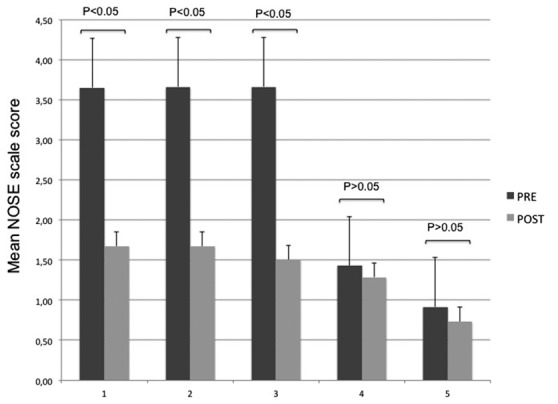
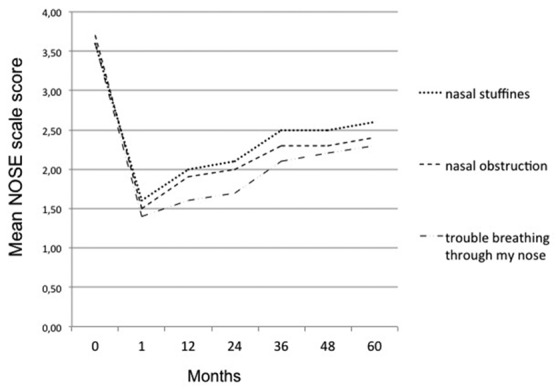
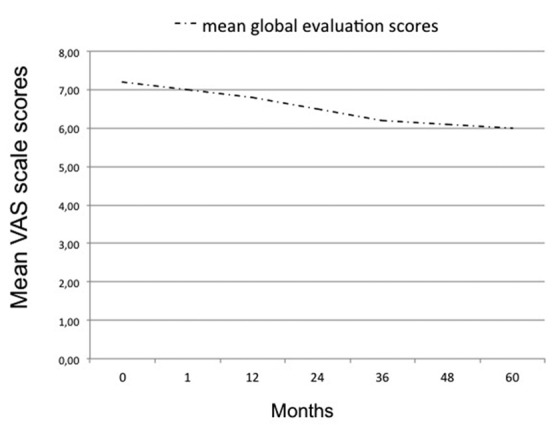
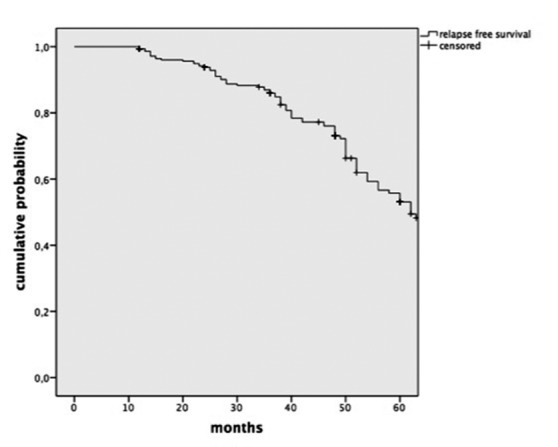
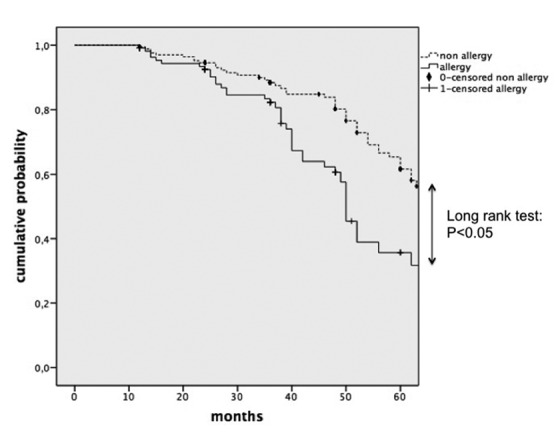
Lo scopo del nostro studio è stato quello di valutare i risultati a lungo termine della procedura di riduzione volumetrica dei turbinati inferiori mediante radiofrequenze (RVTR). Abbiamo eseguito una valutazione prospettica longitudinale a lungo termine di 305 pazienti affetti da rinite (114 allergici e 191 non allergici) refrattari alla terapia medica e sottoposti a intervento di RVTR (gennaio 2004 - dicembre 2010). I pazienti sono stati seguiti per un Follow-up medio di 39,70±19,41 mesi (minimo-24, massimo-60 mesi) e sono stati valutati mediante la somministrazione del questionario NOSE-scale prima e dopo l’intervento a distanza di un mese e successivamente ogni anno per 5 anni. I pazienti sono stati considerati affetti da recidiva durante il periodo di follow-up in caso di ricomparsa dei sintomi con un aumento del punteggio totale del NOSE scale di almeno il 75% e necessità di riassumere trattamenti medici. La ricorrenza è stata valutata mediante analisi di sopravvivenza con il metodo di Kaplan-Meyer. Complessivamente abbiamo documentato una buona soddisfazione dei pazienti per quanto riguarda la procedura, con un elevato controllo del dolore e poche complicanze. Nel post-operatorio abbiamo avuto un significativo miglioramento di ostruzione nasale e respirazione orale vicariante (p < 0,05). Dopo 36 mesi abbiamo osservato un peggioramento dei sintomi, in particolare, dopo 36 mesi con un progressivo crescente tasso di recidive significativamente più elevato nei pazienti allergici rispetto a quelli non-allergici (p < 0,05). Abbiamo anche osservato una leggera diminuizione della soddisfazione generale dei pazienti. Il nostro studio conferma la buona tollerabilità da parte dei pazienti della procedura di decongestione dei turbinati inferiori con radiofrequenze con un basso rischio di complicanze. I nostri dati confermano inoltre una buona efficacia a lungo termine nella maggior parte dei pazienti per almeno 36 mesi dopo l’intervento con una probabilità di rimanere liberi da recidiva in questo periodo sempre superiore a 0,8. Nei mesi successivi si assiste a una progressiva riduzione del beneficio clinico in particolare nei pazienti allergici, con una differenza statisticamente significativa rispetto ai pazienti non allergici (p < 0,05).
Overview
The claims and statistics of this paper haven’t been checked yet.
Run the check — free, no account needed. It reads the open-access text and checks the sources it cites.
Integrity signals
Registry
Cites
Statistics
Figures
Verification
Claims the paper makes
The claims and statistics of this paper haven’t been checked yet.
Run the check — free, no account needed. It reads the open-access text and checks the sources it cites.
Claims other papers make about this one
Each is checked against this paper’s own text: does it say what the citing paper says it does?
The source backs part of the claim, not all of it — or backs it for a different population, condition or comparison.
In the citing paper
“These techniques are well tolerated, can be performed without general anesthesia, have few complications, and are widely used, although their effectiveness tends to decrease over time [202].”
From Position Paper on Nasal Obstruction: Evaluation and Treatment (2018) · cites this paper as [202]
Experimental — accuracy not yet measured
Self-check
Percentages, sums and reported differences re-computed from the paper’s own numbers.
The self-check needs the paper’s full text.
Citations
Cites
Fokkens, W. J., Lund, V. J., Mullol, J., Bachert, C., Alobid, I., Baroody, F., Cohen, N., Cervin, A., Douglas, R., Gevaert, P., et al. (2012) · Rhinology journal · doi:10.4193/rhino12.000 · Cited by 2,387
Research works printed but not linked: 34
- [1]Passàli D Passàli FM Damiani V Treatment of inferior turbinate hypertrophy: a randomized clinical trial Ann Otol Rhinol Laryngol 2003 112 683 688 12940665
- [2]Bhandarkar ND Smith TL Outcomes of surgery for inferior turbinate hypertrophy Curr Opin Otolaryngol Head Neck Surg 2010 18 49 53 19915467
- [3]Antunes MB Gudis DA Cohen NA Epithelium, cilia and mucus: Their importance in chronic rhinosinusitis Immunol Allergy Clin North Am 2009 29 631 643 19879439
- [4]Chen XB Lee HP Chong VF Numerical simulation of thee ffects of inferior turbinate surgery on nasal airway heating capacity Am J Rhinol Allergy 2010 24 118 122 21244728
- [5]Kojima Y Tsuzuki K Takebayashi H Therapeutic evaluation of outpatient submucosal inferior turbinate surgery for patients with severe allergic rhinitis Allergol Int 2013 62 479 485 24153329
- [6]Talmon Y Samet A Gilbey P Total inferior turbinectomy: Operative results and technique Ann Otol Rhinol Laryngol 2000 109 1117 1119 11130822
- [7]Salzano FA Mora R Dellepiane M Radiofrequency, high-frequency, and electrocautery treatments vs partial inferior turbinotomy: microscopic and macroscopic effects on nasal mucosa Arch Otolaryngol Head Neck Surg 2009 135 752 758 19687393
- [9]Kahveci OK Miman MC Yucel A The efficiency of Nose Obstruction Symptom Evaluation (NOSE) scale on patients with nasal septal deviation Auris Nasus Larynx 2012 39 275 279 21885221
- [10]Cukurova I Demirhan E Cetinkaya EA Long-term clinical results of radiofrequency tissue volume reduction for inferior turbinate hypertrophy J Laryngol Otol 2011 125 1148 1151 21867587
- [11]Lin HC Lin PW Friedman M Long-term results of radiofrequency turbinoplasty for allergic rhinitis refractory to medical therapy Arch Otolaryngol Head Neck Surg 2010 136 892 895 20644029
- [12]Garzaro M Pezzoli M Landolfo V Radiofrequency inferior turbinate reduction: long-term olfactory and functional outcomes Otolaryngol Head Neck Surg 2012 146 146 150 21934127
- [13]Garzaro M Landolfo V Pezzoli M Radiofrequency volume turbinate reduction versus partial turbinectomy: clinical and histological features Am J Rhinol Allergy 2012 26 321 325 22801021
- [14]Chen YL Tan CT Huang HM Long-term efficacy of microdebrider- assisted inferior turbinoplasty with lateralization for hypertrophic inferior turbinates in patients with perennial allergic rhinitis Laryngoscope 2008 118 1270 1274 18401269
- [15]Willatt D The evidence for reducing inferior turbinates Rhinology 2009 47 227 236 19839242
- [16]Porter MW Hales NW Nease CJ Long-term results of inferior turbinate hypertrophy with radiofrequency treatment: a new standard of care? Laryngoscope 2006 116 554 557 16585858
- [17]Sroka R Janda P Killian T Comparison of long term results after Ho:YAG and diode laser treatment of hyperplastic inferior nasal turbinates Lasers Surg Med 2007 39 324 331 17304563
- [18]Gierek T Jura-Szoltys E Long-term results after argon plasma coagulation (APC) inferior turbinates reduction Otolaryngol Pol 2007 61 63 68 17605421
- [19]Li KK Powell NB Riley RW Radiofrequency volumetric tissue reduction for treatment of turbinate hypertrophy: a pilot study Otolaryngol Head Neck Surg 1998 119 569 573 9852527
- [20]Motta G Salzano FA Motta S The treatment of allergic vasomotor rhinitis: diagnostic problems and local immunotherapy Acta Otorhinolaryngol Ital 1995 15 3 Suppl 48 1 24 8561027
- [21]Gouveris H Nousia C Giatromanolaki A Immunohistological study of wound healing after submucosal radiofrequency tissue ablation of inferior nasal turbinate in a sheep model Am J Rhinol Allergy 2011 25 131 136 21679519
- [22]Gindros G Kantas I Balatsouras DG Comparison of ultrasound turbinate reduction, radiofrequency tissue ablation and submucosal cauterization in inferior turbinate hypertrophy Eur Arch Otorhinolaryngol 2010 267 1727 1733 20432043
- [23]Bäck LJ Hytönen ML Malmberg HO Submucosal bipolar radiofrequency thermal ablation of inferior turbinates: a long-term follow-up with subjective and objective assessment Laryngoscope 2002 112 1806 1812 12368620
- [24]Hirunwiwatkul P Udomchotphruet P Efficacy study of nasal irrigation after radiofrequency tissue volume reduction for inferior turbinate hypertrophy: an equivalence randomized controlled trial Am J Rhinol Allergy 2012 26 497 503 23232203
- [25]Brunworth J Holmes J Sindwani R Inferior turbinate hypertrophy: review and graduated approach to surgical management Am J Rhinol Allergy 2013 27 411 415 24119606
- [26]Manuele C Giacomo C Valeria F The potential role of hyaluronic acid in postoperative radiofrequency surgery for chronic inferior turbinate hypertrophy Am J Rhinol Allergy 2013 27 234 236 23710960
- [27]Porter MW Hales NW Nease CJ Long-term results of inferior turbinate hypertrophy with radiofrequency treatment: a new standard of care? Laryngoscope 2006 116 554 557 16585858
- [28]Safiruddin F Vroegop AV Ravesloot MJ Long-term self-reported treatment effects and experience of radiofrequency- induced thermotherapy of the inferior turbinates performed under local anesthesia: a retrospective analysis Eur Arch Otorhinolaryngol 2013 270 1849 1853 23212693
- [29]Incandela C Calamusa G Massenti MF Long-term efficacy of radiofrequency treatment of turbinate hypertrophy: a patient based point of view Indian J Otolaryngol Head Neck Surg 2013 65 Suppl. 2 226 230 24427651 PMC3738794
- [30]Corso E De Battista M Pandolfini M Role of inflammation in non-allergic rhinitis Rhinology 2014 52 142 149 24932626
- [31]Passali GC1 Bellussi LM Corso E De The natural course of allergic rhinitis: a 32-year follow-up study Acta Otolaryngol 2013 133 1188 1195 24125190
- [32]Corso E De Baroni S Romitelli F Nasal lavage CCL24 levels correlate with eosinophils trafficking and symptoms in chronic sino-nasal eosinophilic inflammation Rhinology 2011 49 174 179 21743872
- [33]Corso E De Baroni S Battista M Nasal fluid release of eotaxin-3 and eotaxin-2 in persistent sinonasal eosinophilic inflammation Int Forum Allergy Rhinol 2014 4 617 624 24989688
- [34]Passali D Corso E De Platzgummer S Spa therapy of upper respiratory tract inflammations Eur Arch Otorhinolaryngol 2013 270 565 570 22588193
- [35]Corso E De Baroni S Lucidi D Nasal lavage levels of granulocyte-macrophage colony-stimulating factor and chronic nasal hypereosinophilia Int Forum Allergy Rhinol 2015 5 557 562 25821067
Cited by
Sorted by citations
Position Paper on Nasal Obstruction: Evaluation and Treatment
SEAIC Rhinoconjunctivitis Committee & SEORL Rhinology, A., Valero, A., Navarro, A., del Cuvillo, A., Alobid, I., Benito, Jr., Colás, C., de los Santos, G., Fernández Liesa, R., García-Lliberós, A., et al. (2018) · Journal of Investigational Allergology and Clinical Immunology · doi:10.18176/jiaci.0232 · Cited by 76
Metadata
- Authors
- De Corso, E., Bastanza, G., Di Donfrancesco, V., Guidi, M. L., Morelli Sbarra, G., Passali, G., Poscia, A., de Waure, C., Paludetti, G., & Galli, J.
- Affiliations
- Department of Head and Neck Surgery - Otorhinolaryngology, Catholic University of the Sacred Heart Rome, Italy;
- Università Cattolica del Sacro Cuore (IT)
- Department of Intensive Care and Anesthesiology, Catholic University School of Medicine and Surgery, Rome, Italy;
- Venue
- Acta Otorhinolaryngologica Italica
- Publisher
- Pacini Editore
- Published
- 2016-05
- Volume
- 36
- Issue
- 3
- Pages
- 199-205
- ISSN
- 0392-100X (ISSN-L)
- 1827-675X
- PMC
- PMC4977007
- OpenAlex
- W2398908475
- Cited by
- 49
- References
- 1
- Citations by year
- 2026: 6 · 2025: 4 · 2024: 1 · 2023: 7 · 2022: 11 · 2021: 6 · 2020: 3 · 2019: 2 · 2018: 6 · 2017: 3
- FWCI
- 4.06
- Type
- journal article
- Language
- it
- Open access
- bronze
- doi.org
- Locations
- Acta Otorhinolaryngologica Italica (publishedVersion)
- Europe PMC (PubMed Central) (publishedVersion, cc-by-nc-nd)
- PubMed Central (publishedVersion, cc-by-nc-nd)
- PubMed (publishedVersion)
- DOAJ (DOAJ: Directory of Open Access Journals) (submittedVersion)
- Topics
- Health Sciences › Medicine › Surgery › Nasal Surgery and Airway Studies
- Health Sciences › Medicine › Otorhinolaryngology › Sinusitis and nasal conditions
- Health Sciences › Medicine › Immunology and Allergy › Allergic Rhinitis and Sensitization
- Keywords
- inferior turbinate reduction, refractory rhinitis, allergic rhinitis, nasal obstruction, nasal patency, recurrence, long-term outcomes, NOSE scale, patient satisfaction, postoperative complications, mouth breathing, turbinate hypertrophy, radiofrequency ablation
- MeSH terms
- Adolescent, Adult, Aged, Female, Humans, Male, Middle Aged, Prospective Studies, Rhinitis, Otorhinolaryngologic Surgical Procedures, Time Factors, Turbinates, Treatment Outcome, Ablation Techniques, Young Adult
About these checks
Registry, retraction, Cites and statistics results are computed, not judged, with one exception: a printed reference that no index lists is read once by a model before it counts as a citation error. Claims are extracted by a model and kept only when their quote appears verbatim in the text; each cited source is then checked, with a model’s help, for whether it says what the claim relies on. Those verdicts can be wrong — read the claim’s quote and the cited source before relying on one.
Statistics and arithmetic are recomputed, not judged.
Confidence bands are shown only for fields calibrated on our annotated test set. None is calibrated yet, so no band is shown.
What counts as a claim ›How we measure confidence ›How we check this ›
Are you an author, or do you see a problem with this page? Request a review
