

The DOI matches its Crossref record; 16 of the 16 references it cites were found in a registry or an index.
Evaluating a Widely Implemented Proprietary Deterioration Index Model among Hospitalized Patients with COVID-19
Open accessPublished version of a preprint
Abstract
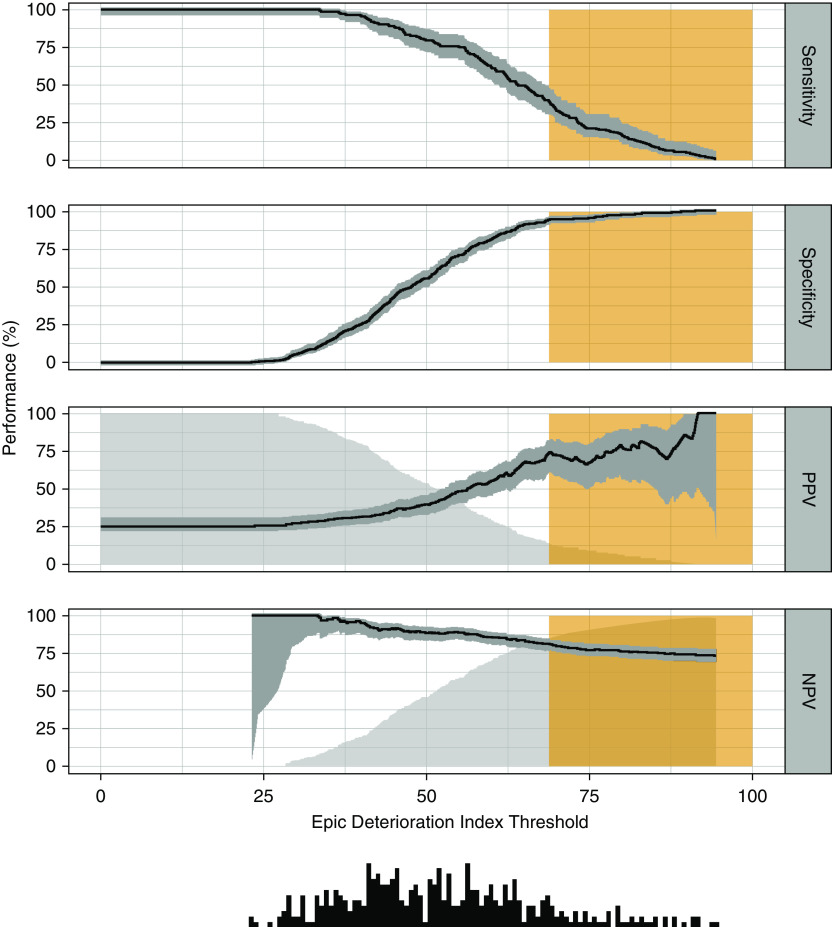
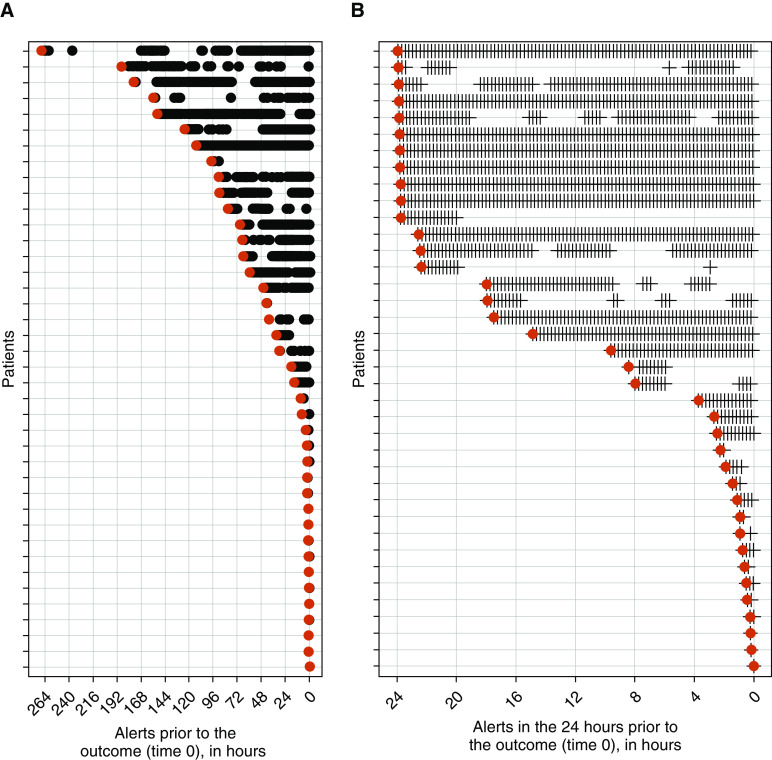
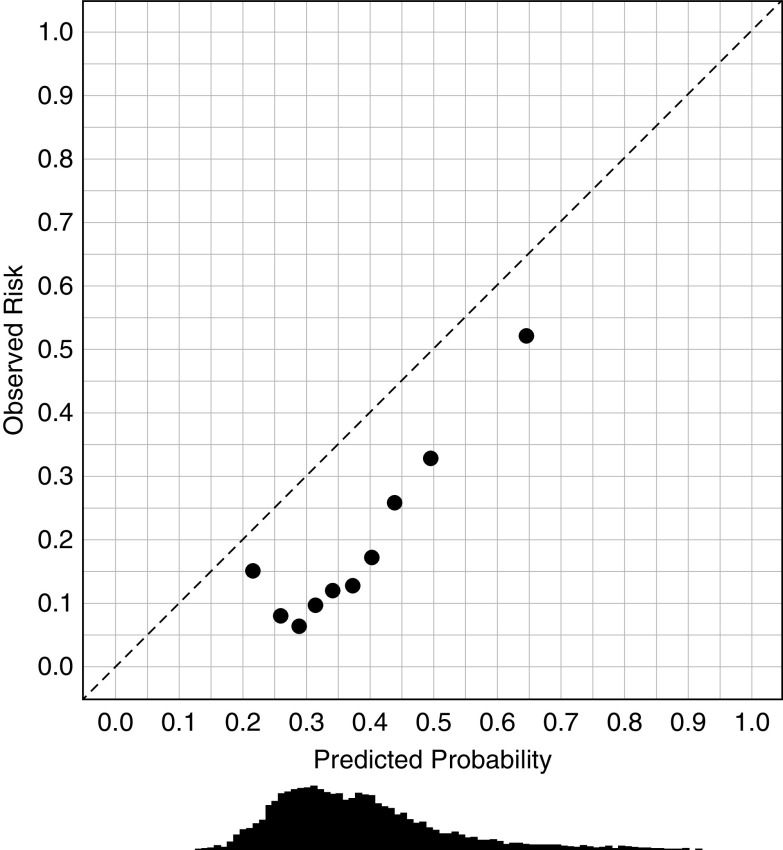
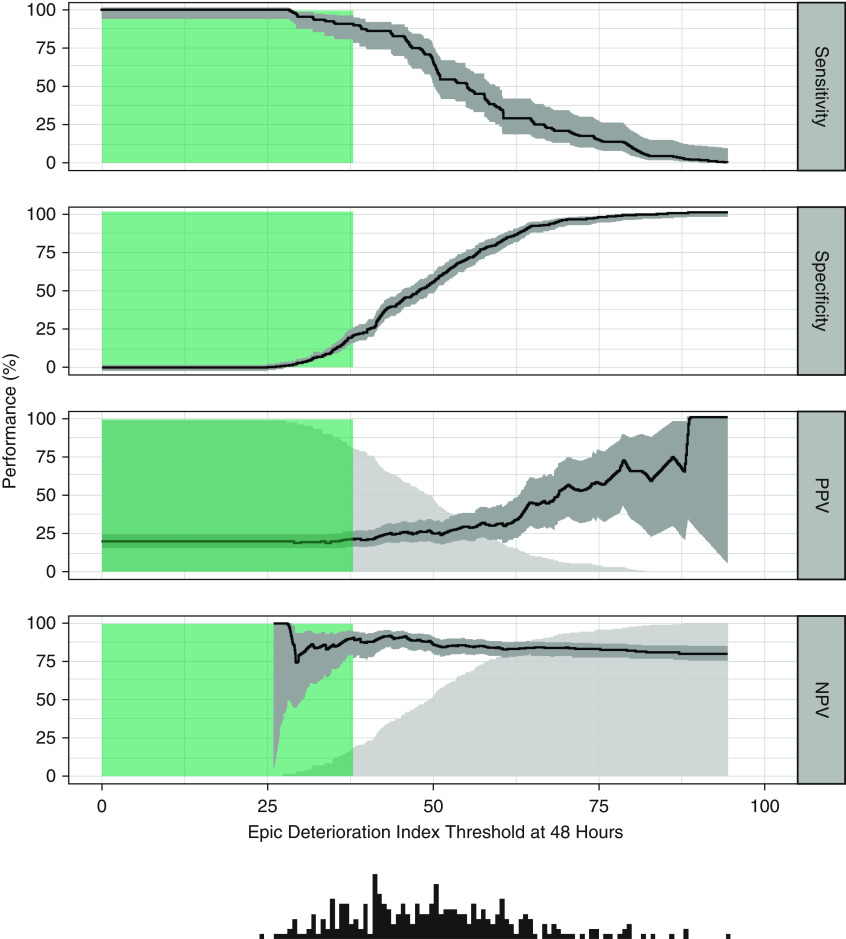
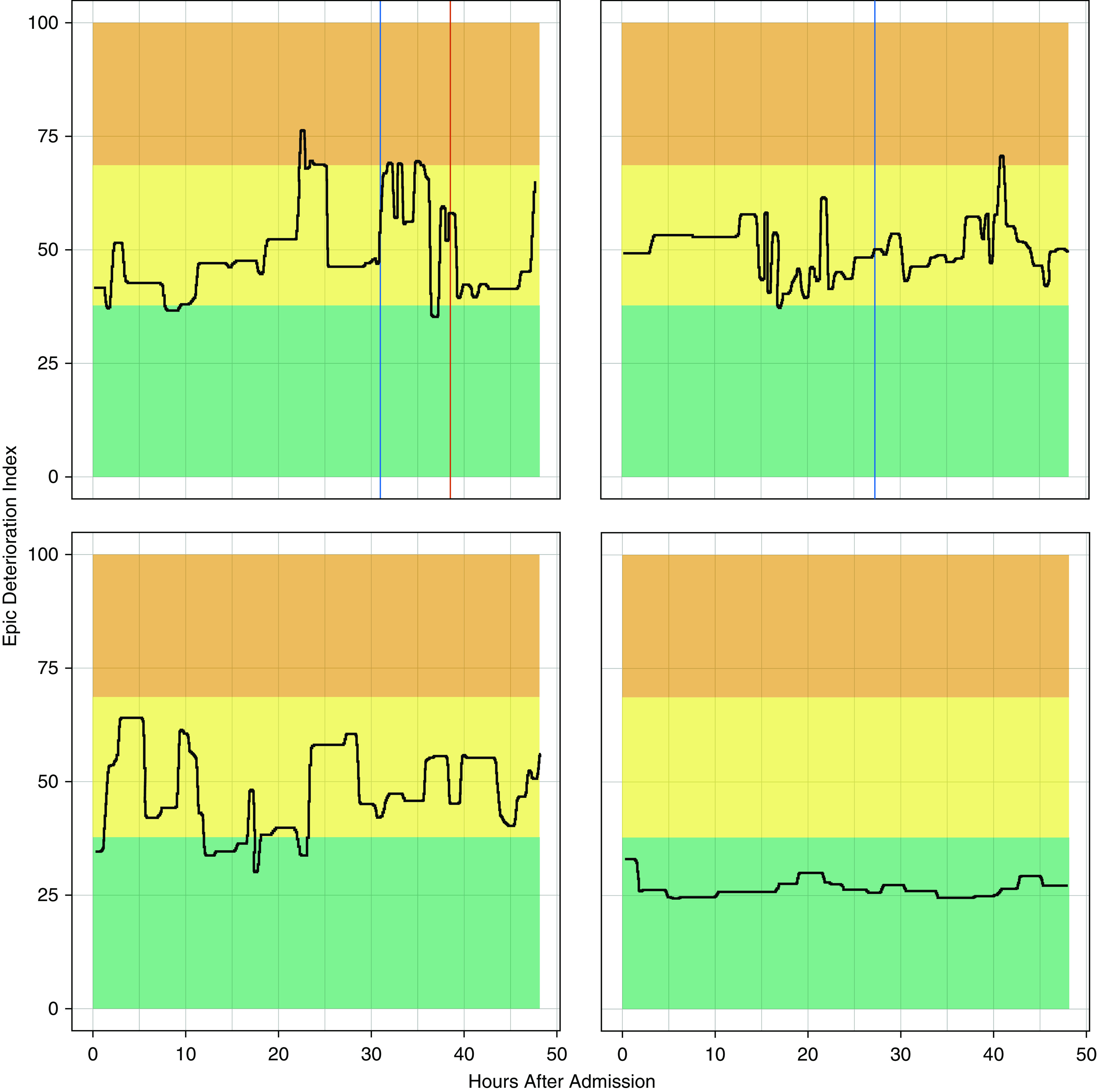
Rationale: The Epic Deterioration Index (EDI) is a proprietary prediction model implemented in over 100 U.S. hospitals that was widely used to support medical decision-making during the coronavirus disease (COVID-19) pandemic. The EDI has not been independently evaluated, and other proprietary models have been shown to be biased against vulnerable populations. Objectives: To independently evaluate the EDI in hospitalized patients with COVID-19 overall and in disproportionately affected subgroups. Methods: We studied adult patients admitted with COVID-19 to units other than the intensive care unit at a large academic medical center from March 9 through May 20, 2020. We used the EDI, calculated at 15-minute intervals, to predict a composite outcome of intensive care unit–level care, mechanical ventilation, or in-hospital death. In a subset of patients hospitalized for at least 48 hours, we also evaluated the ability of the EDI to identify patients at low risk of experiencing this composite outcome during their remaining hospitalization. Results: Among 392 COVID-19 hospitalizations meeting inclusion criteria, 103 (26%) met the composite outcome. The median age of the cohort was 64 (interquartile range, 53–75) with 168 (43%) Black patients and 169 (43%) women. The area under the receiver-operating characteristic curve of the EDI was 0.79 (95% confidence interval, 0.74–0.84). EDI predictions did not differ by race or sex. When exploring clinically relevant thresholds of the EDI, we found patients who met or exceeded an EDI of 68.8 made up 14% of the study cohort and had a 74% probability of experiencing the composite outcome during their hospitalization with a sensitivity of 39% and a median lead time of 24 hours from when this threshold was first exceeded. Among the 286 patients hospitalized for at least 48 hours who had not experienced the composite outcome, 14 (13%) never exceeded an EDI of 37.9, with a negative predictive value of 90% and a sensitivity above this threshold of 91%. Conclusions: We found the EDI identifies small subsets of high-risk and low-risk patients with COVID-19 with good discrimination, although its clinical use as an early warning system is limited by low sensitivity. These findings highlight the importance of independent evaluation of proprietary models before widespread operational use among patients with COVID-19.
Overview
The claims and statistics of this paper haven’t been checked yet.
Run the check — free, no account needed. It reads the open-access text and checks the sources it cites.
Integrity signals
Registry
Cites
Statistics
Figures
Verification
Claims the paper makes
The claims and statistics of this paper haven’t been checked yet.
Run the check — free, no account needed. It reads the open-access text and checks the sources it cites.
Claims other papers make about this one
Each is checked against this paper’s own text: does it say what the citing paper says it does?
The source backs part of the claim, not all of it — or backs it for a different population, condition or comparison.
In the citing paper
“Vendors increasingly provide proprietary “turnkey” CDSS solutions for identifying clinical deterioration and sepsis [42–44].”
From Use of artificial intelligence in critical care: opportunities and obstacles (2024) · cites this paper as [44]
Experimental — accuracy not yet measuredThe source backs part of the claim, not all of it — or backs it for a different population, condition or comparison.
In the citing paper
“Singh 2021 21 had a high risk of selection bias due to restricting validation to COVID-19 patients.”
From A Systematic Review and Meta-analysis of Externally Validated Epic Clinical Decision Support Tools (2026) · cites this paper as [21]
Experimental — accuracy not yet measuredThe source backs part of the claim, not all of it — or backs it for a different population, condition or comparison.
In the citing paper
“For example, more than a quarter of hospitalized patients in the first wave of the COVID-19 pandemic in 2020 required a transfer to an intensive care unit or died.6”
From Quantification of Sepsis Model Alerts in 24 US Hospitals Before and During the COVID-19 Pandemic (2021) · cites this paper as [6]
Experimental — accuracy not yet measuredThe cited source says what the claim attributes to it.
In the citing paper
“Earlier predictions provide clinicians with greater lead time for action24, ultimately enabling the care team to identify patients who may be entering a risky state with enough time to intervene10.”
From Real-time surveillance system for patient deterioration: a pragmatic cluster-randomized controlled trial (2025) · cites this paper as [24]
Self-check
Percentages, sums and reported differences re-computed from the paper’s own numbers.
The self-check needs the paper’s full text.
Citations
Cites
Richardson, S., Hirsch, J. S., Narasimhan, M., Crawford, J. M., McGinn, T., Davidson, K. W., and the Northwell COVID-19 Research Consortium, Barnaby, D. P., Becker, L. B., Chelico, J. D., et al. (2020) · JAMA · doi:10.1001/jama.2020.6775 · Cited by 9,254
Dissecting racial bias in an algorithm used to manage the health of populations
Obermeyer, Z., Powers, B., Vogeli, C., & Mullainathan, S. (2019) · Science · doi:10.1126/science.aax2342 · Cited by 7,137
Fair Allocation of Scarce Medical Resources in the Time of Covid-19
Emanuel, E., Persad, G., Upshur, R. E. G., Thome, B. D. C., Parker, M., Glickman, A., Zhang, C., Boyle, C., Smith, M. J., & Phillips, J. P. (2020) · New England Journal of Medicine · doi:10.1056/nejmsb2005114 · Cited by 3,143
Wynants, L., Van Calster, B., Bonten, M. M., Collins, G. S., Debray, T. P., De Vos, M., Haller, M. C., Heinze, G., Moons, K. G., Riley, R. D., et al. (2020) · doi:10.1101/2020.03.24.20041020 · Cited by 3,070
A targeted real-time early warning score (TREWScore) for septic shock.
Henry, K. E., Hager, D. N., Pronovost, P. J., & Saria, S. (2015) · Science Translational Medicine · doi:10.1126/scitranslmed.aab3719 · Cited by 598
Face recognition vendor test part 3:
Grother, P. J., Ngan, M. L., & Hanaoka, K. (2019) · doi:10.6028/nist.ir.8280 · Cited by 434
Calibration drift in regression and machine learning models for acute kidney injury
Davis, S. E., Lasko, T. A., Chen, G., Siew, E. D., & Matheny, M. E. (2017) · Journal of the American Medical Informatics Association · doi:10.1093/jamia/ocx030 · Cited by 312
Gu, T., Mack, J. A., Salvatore, M., Sankar, S. P., Valley, T. S., Singh, K., Nallamothu, B. K., Kheterpal, S., Lisabeth, L. D., Fritsche, L. G., et al. (2020) · JAMA Network Open · doi:10.1001/jamanetworkopen.2020.25197 · Cited by 263
Self-citationPredictive analytics in health care: how can we know it works?
Van Calster, B., Wynants, L., Timmerman, D., Steyerberg, E. W., & Collins, G. S. (2019) · Journal of the American Medical Informatics Association · doi:10.1093/jamia/ocz130 · Cited by 223
Kipnis, P., Turk, B. J., Wulf, D. A., LaGuardia, J. C., Liu, V. X., Churpek, M. M., Brufau, S. R., & Escobar, G. J. (2016) · Journal of Biomedical Informatics · doi:10.1016/j.jbi.2016.09.013 · Cited by 167
Research works printed but not linked: 1
- Robin, pROC: display and analyze ROC curves, 10.32614/CRAN.package.pROC · DOI
Cited by
Sorted by citations
Wynants, L., Van Calster, B., Bonten, M. M., Collins, G. S., Debray, T. P., De Vos, M., Haller, M. C., Heinze, G., Moons, K. G., Riley, R. D., et al. (2020) · doi:10.1101/2020.03.24.20041020 · Cited by 3,070
Wong, A., Otles, E., Donnelly, J. P., Krumm, A., McCullough, J., DeTroyer-Cooley, O., Pestrue, J., Phillips, M., Konye, J., Penoza, C., et al. (2021) · JAMA Internal Medicine · doi:10.1001/jamainternmed.2021.2626 · Cited by 995
Self-citationArtificial Intelligence -based technologies in nursing: A scoping literature review of the evidence
von Gerich, H., Moen, H., Block, L. J., Chu, C. H., DeForest, H., Hobensack, M., Michalowski, M., Mitchell, J., Nibber, R., Olalia, M. A., et al. (2022) · International Journal of Nursing Studies · doi:10.1016/j.ijnurstu.2021.104153 · Cited by 360
Armoundas, A. A., Narayan, S. M., Arnett, D. K., Spector-Bagdady, K., Bennett, D. A., Celi, L. A., Friedman, P. A., Gollob, M. H., Hall, J. L., Kwitek, A. E., et al. (2024) · Circulation · doi:10.1161/cir.0000000000001201 · Cited by 347
Development of a prognostic model for mortality in COVID-19 infection using machine learning
Booth, A. L., Abels, E. A., & McCaffrey, P. (2020) · Modern Pathology · doi:10.1038/s41379-020-00700-x · Cited by 187
Metadata
- Authors
- Singh, K., Valley, T. S., Tang, S., Li, B. Y., Kamran, F., Sjoding, M. W., Wiens, J., Otles, E., Donnelly, J. P., Wei, M. Y., McBride, J. P., Cao, J., Penoza, C., Ayanian, J. Z., & Nallamothu, B. K.
- Affiliations
- University of Michigan (US)
- Department of Industrial and Operations Engineering, University of Michigan College of Engineering, Ann Arbor, Michigan; and
- Michigan Medicine (US)
- Corresponding author
- Singh, Karandeep
- ORCID
- Venue
- Annals of the American Thoracic Society
- Publisher
- Oxford University Press (OUP)
- Published
- 2021-07-01
- Volume
- 18
- Issue
- 7
- Pages
- 1129-1137
- ISSN
- 2325-6621 (ISSN-L)
- 2329-6933
- PMC
- PMC8328366
- OpenAlex
- W3114626119
- Cited by
- 111
- References
- 16
- Citations by year
- 2026: 12 · 2025: 15 · 2024: 16 · 2023: 16 · 2022: 32 · 2021: 16
- FWCI
- 2.23
- Type
- journal article
- Language
- en
- Open access
- hybrid
- doi.org
- Licence
- Locations
- Annals of the American Thoracic Society (publishedVersion, cc-by-nc-nd)
- medRxiv (acceptedVersion)
- PubMed Central (publishedVersion, cc-by-nc-nd)
- PubMed (publishedVersion)
- PubMed Central (submittedVersion)
- Funders
- National Institutes of Health
- Michigan Institute for Data Science, University of Michigan
- National Institute on Aging (K23AG056638)
- National Heart, Lung, and Blood Institute (K01HL136687, L30 HL133988, K23HL140165, K12HL138039)
- National Institute of General Medical Sciences (T32GM007863)
- U.S. National Library of Medicine (R01LM013325)
- Topics
- Health Sciences › Medicine › Infectious Diseases › COVID-19 Clinical Research Studies
- Physical Sciences › Computer Science › Artificial Intelligence › Machine Learning in Healthcare
- Health Sciences › Medicine › Critical Care and Intensive Care Medicine › Sepsis Diagnosis and Treatment
- Keywords
- COVID-19 pandemic, model evaluation, early warning systems, hospitalized patients, intensive care unit admission, mechanical ventilation, in-hospital mortality, racial and sex disparities, model discrimination, model bias, clinical decision support, health equity, Black patients, women, vulnerable populations
About these checks
Registry, retraction, Cites and statistics results are computed, not judged, with one exception: a printed reference that no index lists is read once by a model before it counts as a citation error. Claims are extracted by a model and kept only when their quote appears verbatim in the text; each cited source is then checked, with a model’s help, for whether it says what the claim relies on. Those verdicts can be wrong — read the claim’s quote and the cited source before relying on one.
Statistics and arithmetic are recomputed, not judged.
Confidence bands are shown only for fields calibrated on our annotated test set. None is calibrated yet, so no band is shown.
What counts as a claim ›How we measure confidence ›How we check this ›
Are you an author, or do you see a problem with this page? Request a review
