

The DOI matches its Crossref record; 2 of the 2 references it cites were found in a registry or an index.
Heterochromatin-Enriched Assemblies Reveal the Sequence and Organization of the Drosophila melanogaster Y Chromosome
Published version of a preprint
Abstract
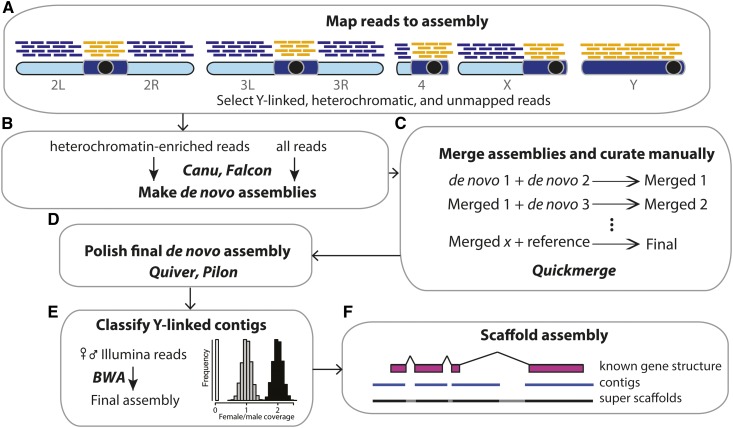
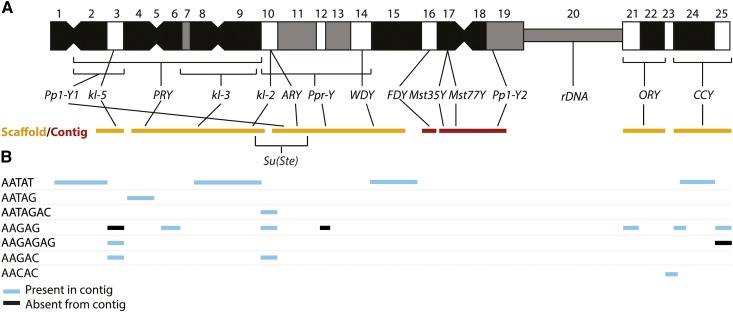
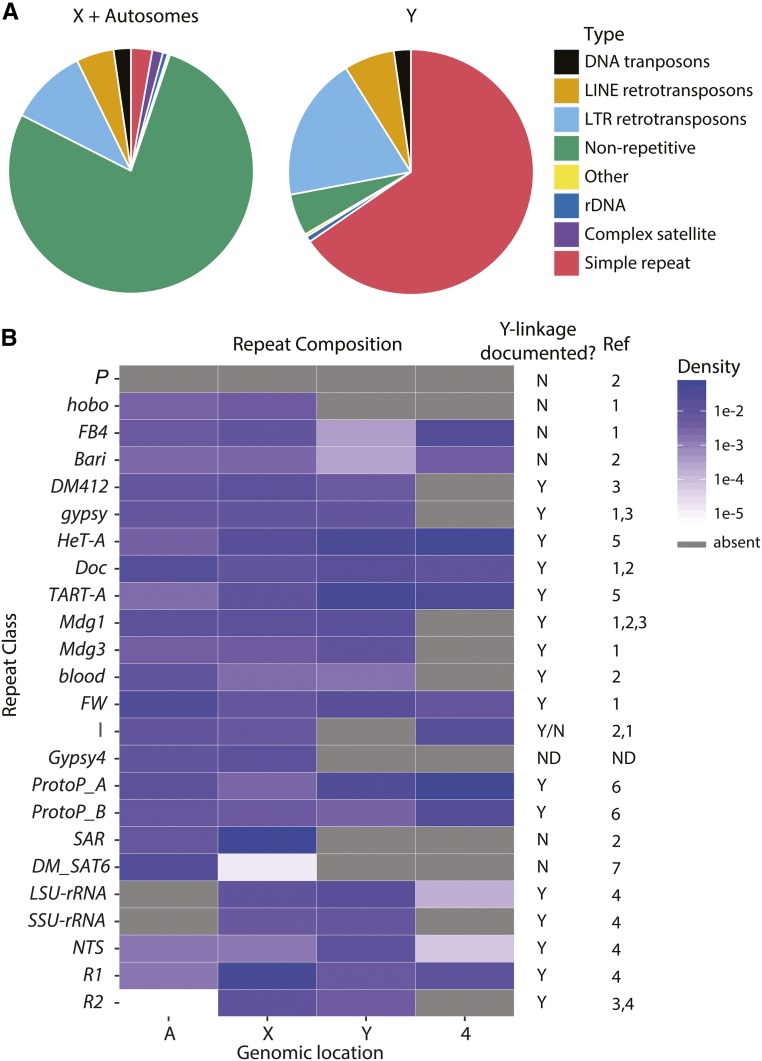
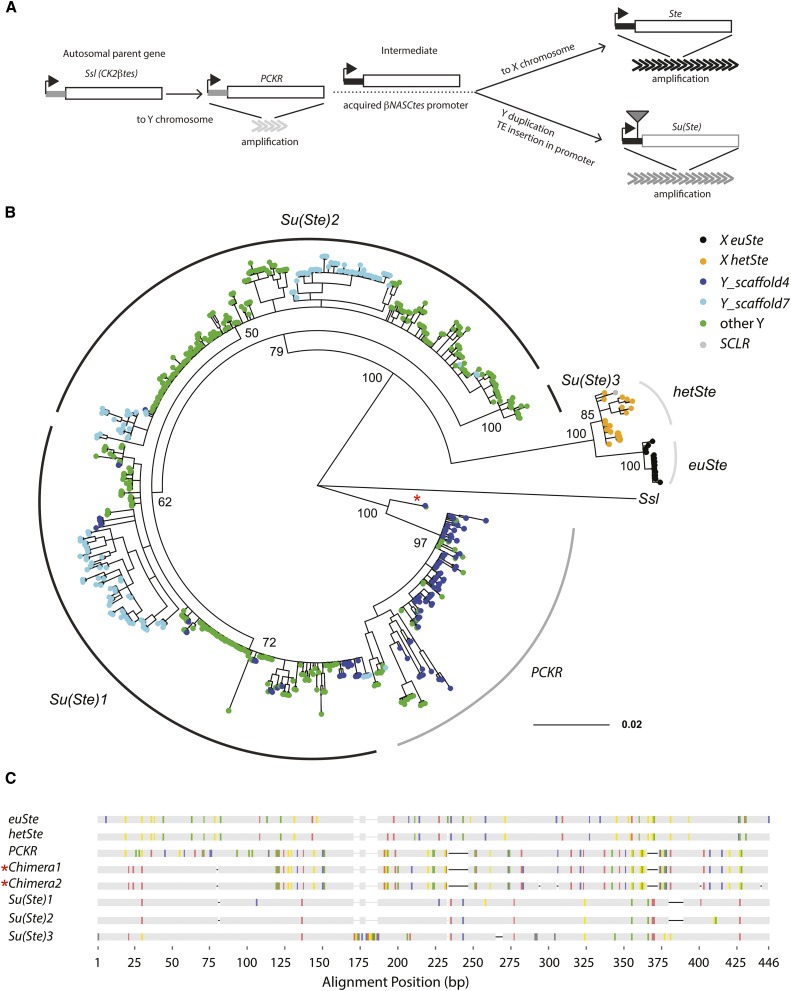
Heterochromatic repeat-rich regions are often missing from even the best genome assemblies. Chang and Larracuente designed a de novo assembly strategy to improve the Drosophila melanogaster assembly in heterochromatin, extending the reference assembly by 11.9 Mb, including 10.6 Mb from the Y chromosome..... Heterochromatic regions of the genome are repeat-rich and poor in protein coding genes, and are therefore underrepresented in even the best genome assemblies. One of the most difficult regions of the genome to assemble are sex-limited chromosomes. The Drosophila melanogaster Y chromosome is entirely heterochromatic, yet has wide-ranging effects on male fertility, fitness, and genome-wide gene expression. The genetic basis of this phenotypic variation is difficult to study, in part because we do not know the detailed organization of the Y chromosome. To study Y chromosome organization in D. melanogaster, we develop an assembly strategy involving the in silico enrichment of heterochromatic long single-molecule reads and use these reads to create targeted de novo assemblies of heterochromatic sequences. We assigned contigs to the Y chromosome using Illumina reads to identify male-specific sequences. Our pipeline extends the D. melanogaster reference genome by 11.9 Mb, closes 43.8% of the gaps, and improves overall contiguity. The addition of 10.6 MB of Y-linked sequence permitted us to study the organization of repeats and genes along the Y chromosome. We detected a high rate of duplication to the pericentric regions of the Y chromosome from other regions in the genome. Most of these duplicated genes exist in multiple copies. We detail the evolutionary history of one sex-linked gene family, crystal-Stellate. While the Y chromosome does not undergo crossing over, we observed high gene conversion rates within and between members of the crystal-Stellate gene family, Su(Ste), and PCKR, compared to genome-wide estimates. Our results suggest that gene conversion and gene duplication play an important role in the evolution of Y-linked genes.
Overview
The claims and statistics of this paper haven’t been checked yet.
Run the check — free, no account needed. It reads the open-access text and checks the sources it cites.
Integrity signals
Registry
Cites
Statistics
Figures
Verification
Claims the paper makes
The claims and statistics of this paper haven’t been checked yet.
Run the check — free, no account needed. It reads the open-access text and checks the sources it cites.
Claims other papers make about this one
Each is checked against this paper’s own text: does it say what the citing paper says it does?
In the citing paper
“Long-read sequencing technologies are improving the quality of genome assemblies, especially in highly repetitive regions (e.g. ( Chang and Larracuente 2019)).”
From RepeatModeler2 for automated genomic discovery of transposable element families (2020) · cites this paper as Chang and Larracuente 2019
Self-check
Percentages, sums and reported differences re-computed from the paper’s own numbers.
The self-check needs the paper’s full text.
Citations
Cites
Tandem repeats finder: a program to analyze DNA sequences
Benson, G. (1999) · Nucleic Acids Research · doi:10.1093/nar/27.2.573 · Cited by 9,374
Sun, C., Skaletsky, H., Rozen, S., Gromoll, J., Nieschlag, E., Oates, R., & Page, D. C. (2000) · Human Molecular Genetics · doi:10.1093/oxfordjournals.hmg.a018920 · Cited by 247
Research works printed but not linked: 134
- Abad, 2004, Genomic and cytological analysis of the Y chromosome of Drosophila melanogaster: telomere-derived sequences at internal regions., Chromosoma, 113, 295, 10.1007/s00412-004-0318-0 · DOI
- Agudo, 1999, Centromeres from telomeres? The centromeric region of the Y chromosome of Drosophila melanogaster contains a tandem array of telomeric HeT-A- and TART-related sequences., Nucleic Acids Res., 27, 3318, 10.1093/nar/27.16.3318 · DOI
- Altschul, 1990, Basic local alignment search tool., J. Mol. Biol., 215, 403, 10.1016/S0022-2836(05)80360-2 · DOI · Paper page
- Backström, 2005, Gene conversion drives the evolution of HINTW, an ampliconic gene on the female-specific avian W chromosome., Mol. Biol. Evol., 22, 1992, 10.1093/molbev/msi198 · DOI
- Bailly-Bechet, 2014, “One code to find them all”: a perl tool to conveniently parse RepeatMasker output files., Mob. DNA, 5, 13, 10.1186/1759-8753-5-13 · DOI
- Balakireva, 1992, Structural organization and diversification of Y-linked sequences comprising Su(Ste) genes in Drosophila melanogaster., Nucleic Acids Res., 20, 3731, 10.1093/nar/20.14.3731 · DOI
- Bayes, 2009, Altered heterochromatin binding by a hybrid sterility protein in Drosophila sibling species., Science, 326, 1538, 10.1126/science.1181756 · DOI
- Berlin, 2015, Assembling large genomes with single-molecule sequencing and locality-sensitive hashing., Nat. Biotechnol., 33, 623, 10.1038/nbt.3238 · DOI
- Bhutkar, 2007, Inferring genome-scale rearrangement phylogeny and ancestral gene order: a Drosophila case study., Genome Biol., 8, R236, 10.1186/gb-2007-8-11-r236 · DOI
- Bonaccorsi, 1991, Fine mapping of satellite DNA sequences along the Y chromosome of Drosophila melanogaster: relationships between satellite sequences and fertility factors., Genetics, 129, 177, 10.1093/genetics/129.1.177 · DOI
- Bozzetti, 1995, The Ste locus, a component of the parasitic cry-Ste system of Drosophila melanogaster, encodes a protein that forms crystals in primary spermatocytes and mimics properties of the beta subunit of casein kinase 2., Proc. Natl. Acad. Sci. USA, 92, 6067, 10.1073/pnas.92.13.6067 · DOI
- Branton, 2008, The potential and challenges of nanopore sequencing., Nat. Biotechnol., 26, 1146, 10.1038/nbt.1495 · DOI
- Brown, 2014, The chromatin landscape of Drosophila: comparisons between species, sexes, and chromosomes., Genome Res., 24, 1125, 10.1101/gr.172155.114 · DOI
- Bucheton, 1976, Non-mendelian female sterility in Drosophila melanogaster: quantitative variations in the efficiency of inducer and reactive strains., Heredity (Edinb), 36, 305, 10.1038/hdy.1976.38 · DOI
- Carlson, 1977, Cloning and characterization of a complex satellite DNA from Drosophila melanogaster., Cell, 11, 371, 10.1016/0092-8674(77)90054-X · DOI
- Carmena, 1995, Transposable elements map in a conserved pattern of distribution extending from beta-heterochromatin to centromeres in Drosophila melanogaster., Chromosoma, 103, 676, 10.1007/BF00344228 · DOI
- Carvalho, 2000, Y chromosomal fertility factors kl-2 and kl-3 of Drosophila melanogaster encode dynein heavy chain polypeptides., Proc. Natl. Acad. Sci. USA, 97, 13239, 10.1073/pnas.230438397 · DOI
- Carvalho, 2001, Identification of five new genes on the Y chromosome of Drosophila melanogaster., Proc. Natl. Acad. Sci. USA, 98, 13225, 10.1073/pnas.231484998 · DOI
- Carvalho, 2003, Y chromosome and other heterochromatic sequences of the Drosophila melanogaster genome: how far can we go?, Genetica, 117, 227, 10.1023/A:1022900313650 · DOI
- Carvalho, 2015, Birth of a new gene on the Y chromosome of Drosophila melanogaster., Proc. Natl. Acad. Sci. USA, 112, 12450, 10.1073/pnas.1516543112 · DOI
- Carvalho, 2016, Improved assembly of noisy long reads by k-mer validation., Genome Res., 26, 1710, 10.1101/gr.209247.116 · DOI
- Cattani, 2012, Incompatibility between X chromosome factor and pericentric heterochromatic region causes lethality in hybrids between Drosophila melanogaster and its sibling species., Genetics, 191, 549, 10.1534/genetics.112.139683 · DOI
- Chaisson, 2012, Mapping single molecule sequencing reads using basic local alignment with successive refinement (BLASR): application and theory., BMC Bioinformatics, 13, 238, 10.1186/1471-2105-13-238 · DOI
- Chaisson, 2015, Resolving the complexity of the human genome using single-molecule sequencing., Nature, 517, 608, 10.1038/nature13907 · DOI
- Chakraborty, 2016, Contiguous and accurate de novo assembly of metazoan genomes with modest long read coverage., Nucleic Acids Res., 44, e147
- Chakraborty, 2018, Hidden genetic variation shapes the structure of functional elements in Drosophila., Nat. Genet., 50, 20, 10.1038/s41588-017-0010-y · DOI
- Chang, 2017, Genomic changes following the reversal of a Y chromosome to an autosome in Drosophila pseudoobscura., Evolution, 71, 1285, 10.1111/evo.13229 · DOI
- Charlesworth, 2003, The organization and evolution of the human Y chromosome., Genome Biol., 4, 226, 10.1186/gb-2003-4-9-226 · DOI
- Charlesworth, 2000, The degeneration of Y chromosomes., Philos. Trans. R. Soc. Lond. B Biol. Sci., 355, 1563, 10.1098/rstb.2000.0717 · DOI
- Charlesworth, 1986, The evolution of restricted recombination and the accumulation of repeated DNA sequences., Genetics, 112, 947, 10.1093/genetics/112.4.947 · DOI
- Chin, 2013, Nonhybrid, finished microbial genome assemblies from long-read SMRT sequencing data., Nat. Methods, 10, 563, 10.1038/nmeth.2474 · DOI · Paper page
- Chin, 2016, Phased diploid genome assembly with single-molecule real-time sequencing., Nat. Methods, 13, 1050, 10.1038/nmeth.4035 · DOI
- Chippindale, 2001, Y chromosome polymorphism is a strong determinant of male fitness in Drosophila melanogaster., Proc. Natl. Acad. Sci. USA, 98, 5677, 10.1073/pnas.101456898 · DOI
- Clifton, 2017, Rapid functional and sequence differentiation of a tandemly repeated species-specific multigene family in Drosophila., Mol. Biol. Evol., 34, 51, 10.1093/molbev/msw212 · DOI
- Comeron, 2012, The many landscapes of recombination in Drosophila melanogaster., PLoS Genet., 8, e1002905, 10.1371/journal.pgen.1002905 · DOI
- Connallon, 2010, Gene duplication, gene conversion and the evolution of the Y chromosome., Genetics, 186, 277, 10.1534/genetics.110.116756 · DOI
- Csink, 1996, Genetic modification of heterochromatic association and nuclear organization in Drosophila., Nature, 381, 529, 10.1038/381529a0 · DOI
- Danilevskaya, 1991, He-T family DNA sequences in the Y chromosome of Drosophila melanogaster share homology with the X-linked stellate genes., Chromosoma, 100, 118, 10.1007/BF00418245 · DOI
- Dernburg, 1996, Direct evidence of a role for heterochromatin in meiotic chromosome segregation., Cell, 86, 135, 10.1016/S0092-8674(00)80084-7 · DOI
- Dimitri, 1989, Position effect variegation in Drosophila melanogaster: relationship between suppression effect and the amount of Y chromosome., Genetics, 122, 793, 10.1093/genetics/122.4.793 · DOI
- Eid, 2009, Real-time DNA sequencing from single polymerase molecules., Science, 323, 133, 10.1126/science.1162986 · DOI · Paper page
- Elgin, 1996, Heterochromatin and gene regulation in Drosophila., Curr. Opin. Genet. Dev., 6, 193, 10.1016/S0959-437X(96)80050-5 · DOI
- Ferree, 2009, Species-specific heterochromatin prevents mitotic chromosome segregation to cause hybrid lethality in Drosophila., PLoS Biol., 7, e1000234, 10.1371/journal.pbio.1000234 · DOI
- Francisco, 2014, How do y-chromosomes modulate genome-wide epigenetic states: genome folding, chromatin sinks, and gene expression., J Genomics, 2, 94, 10.7150/jgen.8043 · DOI
- Garavís, 2015, The structure of an endogenous Drosophila centromere reveals the prevalence of tandemly repeated sequences able to form i-motifs., Sci. Rep., 5, 13307, 10.1038/srep13307 · DOI
- Gatti, 1992, Functional elements in Drosophila melanogaster heterochromatin., Annu. Rev. Genet., 26, 239, 10.1146/annurev.ge.26.120192.001323 · DOI
- Hall, 2013, Six novel Y chromosome genes in Anopheles mosquitoes discovered by independently sequencing males and females., BMC Genomics, 14, 273, 10.1186/1471-2164-14-273 · DOI
- Han, 2012, Inferring the history of interchromosomal gene transposition in Drosophila using n-dimensional parsimony., Genetics, 190, 813, 10.1534/genetics.111.135947 · DOI
- Henikoff, 1996, Dosage-dependent modification of position-effect variegation in Drosophila., BioEssays, 18, 401, 10.1002/bies.950180510 · DOI
- Hoskins, 2002, Heterochromatic sequences in a Drosophila whole-genome shotgun assembly., RESEARCH0085
- Hoskins, 2015, The Release 6 reference sequence of the Drosophila melanogaster genome., Genome Res., 25, 445, 10.1101/gr.185579.114 · DOI
- Huddleston, 2014, Reconstructing complex regions of genomes using long-read sequencing technology., Genome Res., 24, 688, 10.1101/gr.168450.113 · DOI
- Hudson, 1987, Estimating the recombination parameter of a finite population model without selection., Genet. Res., 50, 245, 10.1017/S0016672300023776 · DOI
- Hughes, 2015, The biology and evolution of mammalian Y chromosomes., Annu. Rev. Genet., 49, 507, 10.1146/annurev-genet-112414-055311 · DOI
- Hughes, 2012, Strict evolutionary conservation followed rapid gene loss on human and rhesus Y chromosomes., Nature, 483, 82, 10.1038/nature10843 · DOI
- Hurst, 1996, Further evidence consistent with Stellate’s involvement in meiotic drive., Genetics, 142, 641, 10.1093/genetics/142.2.641 · DOI
- Jagannathan, 2017, Comparative analysis of satellite DNA in the Drosophila melanogaster species complex., G3 (Bethesda), 7, 693, 10.1534/g3.116.035352 · DOI
- Jain, 2018, Linear assembly of a human centromere on the Y chromosome., Nat. Biotechnol, 36, 321, 10.1038/nbt.4109 · DOI
- Junakovic, 1998, Accumulation of transposable elements in the heterochromatin and on the Y chromosome of Drosophila simulans and Drosophila melanogaster., J. Mol. Evol., 46, 661, 10.1007/PL00006346 · DOI
- Karpen, 1994, Position-effect variegation and the new biology of heterochromatin., Curr. Opin. Genet. Dev., 4, 281, 10.1016/S0959-437X(05)80055-3 · DOI
- Kearse, 2012, Geneious Basic: an integrated and extendable desktop software platform for the organization and analysis of sequence data., Bioinformatics, 28, 1647, 10.1093/bioinformatics/bts199 · DOI
- Keightley, 2014, Estimation of the spontaneous mutation rate per nucleotide site in a Drosophila melanogaster full-sib family., Genetics, 196, 313, 10.1534/genetics.113.158758 · DOI
- Kennison, 1981, The genetic and cytological organization of the Y chromosome of Drosophila melanogaster., Genetics, 98, 529, 10.1093/genetics/98.3.529 · DOI
- Kent, 2002, BLAT–the BLAST-like alignment tool., Genome Res., 12, 656, 10.1101/gr.229202 · DOI · Paper page
- Khost, 2017, Single-molecule sequencing resolves the detailed structure of complex satellite DNA loci in Drosophila melanogaster., Genome Res., 27, 709, 10.1101/gr.213512.116 · DOI
- Kim, 2015, HISAT: a fast spliced aligner with low memory requirements., Nat. Methods, 12, 357, 10.1038/nmeth.3317 · DOI · Paper page
- Kim, 2014, Long-read, whole-genome shotgun sequence data for five model organisms., Sci. Data, 1, 140045, 10.1038/sdata.2014.45 · DOI
- Koerich, 2008, Low conservation of gene content in the Drosophila Y chromosome., Nature, 456, 949, 10.1038/nature07463 · DOI
- Kogan, 2000, Molecular evolution of two paralogous tandemly repeated heterochromatic gene clusters linked to the X and Y chromosomes of Drosophila melanogaster., Mol. Biol. Evol., 17, 697, 10.1093/oxfordjournals.molbev.a026348 · DOI
- Kogan, 2012, Expansion and evolution of the X-linked testis specific multigene families in the melanogaster species subgroup., PLoS One, 7, e37738, 10.1371/journal.pone.0037738 · DOI
- Kopp, 2006, Interspecific divergence, intrachromosomal recombination, and phylogenetic utility of Y-chromosomal genes in Drosophila., Mol. Phylogenet. Evol., 38, 731, 10.1016/j.ympev.2005.10.006 · DOI
- Koren, 2017, Canu: scalable and accurate long-read assembly via adaptive k-mer weighting and repeat separation., Genome Res., 27, 722, 10.1101/gr.215087.116 · DOI
- Kost, 2015, Multimerization of Drosophila sperm protein Mst77F causes a unique condensed chromatin structure., Nucleic Acids Res., 43, 3033, 10.1093/nar/gkv015 · DOI
- Krsticevic, 2010, Functional copies of the Mst77F gene on the Y chromosome of Drosophila melanogaster., Genetics, 184, 295, 10.1534/genetics.109.107516 · DOI
- Krsticevic, 2015, Long-read single molecule sequencing to resolve tandem gene copies: the Mst77Y region on the Drosophila melanogaster Y chromosome., G3 (Bethesda), 5, 1145, 10.1534/g3.115.017277 · DOI
- Kurek, 2000, Molecular aspects of intron evolution in dynein encoding mega-genes on the heterochromatic Y chromosome of Drosophila sp., Genetica, 109, 113, 10.1023/A:1026552604229 · DOI
- Kurtz, 2004, Versatile and open software for comparing large genomes., Genome Biol., 5, R12, 10.1186/gb-2004-5-2-r12 · DOI · Paper page
- Kutch, 2017, A test for Y-linked additive and epistatic effects on surviving bacterial infections in Drosophila melanogaster., J. Evol. Biol., 30, 1400, 10.1111/jeb.13118 · DOI
- Larracuente, 2013, Surprising differences in the variability of Y chromosomes in African and cosmopolitan populations of Drosophila melanogaster., Genetics, 193, 201, 10.1534/genetics.112.146167 · DOI
- Lemos, 2008, Polymorphic Y chromosomes harbor cryptic variation with manifold functional consequences., Science, 319, 91, 10.1126/science.1148861 · DOI
- Lemos, 2010, Epigenetic effects of polymorphic Y chromosomes modulate chromatin components, immune response, and sexual conflict., Proc. Natl. Acad. Sci. USA, 107, 15826, 10.1073/pnas.1010383107 · DOI
- Li, 2016, Minimap and miniasm: fast mapping and de novo assembly for noisy long sequences., Bioinformatics, 32, 2103, 10.1093/bioinformatics/btw152 · DOI
- Li, 2010, Fast and accurate long-read alignment with Burrows-Wheeler transform., Bioinformatics, 26, 589, 10.1093/bioinformatics/btp698 · DOI · Paper page
- Li, 2009, The sequence alignment/map format and SAMtools., Bioinformatics, 25, 2078, 10.1093/bioinformatics/btp352 · DOI · Paper page
- Livak, 1984, Organization and mapping of a sequence on the Drosophila melanogaster X and Y chromosomes that is transcribed during spermatogenesis., Genetics, 107, 611, 10.1093/genetics/107.4.611 · DOI
- Lohe, 1987, Adjacent satellite DNA segments in Drosophila structure of junctions., J. Mol. Biol., 194, 171, 10.1016/0022-2836(87)90366-4 · DOI
- Lohe, 1987, Identical satellite DNA sequences in sibling species of Drosophila., J. Mol. Biol., 194, 161, 10.1016/0022-2836(87)90365-2 · DOI
- Lohe, 1993, Mapping simple repeated DNA sequences in heterochromatin of Drosophila melanogaster., Genetics, 134, 1149, 10.1093/genetics/134.4.1149 · DOI
- Lyckegaard, 1989, Ribosomal DNA and Stellate gene copy number variation on the Y chromosome of Drosophila melanogaster., Proc. Natl. Acad. Sci. USA, 86, 1944, 10.1073/pnas.86.6.1944 · DOI
- Mahajan, 2017, Convergent evolution of Y chromosome gene content in flies., Nat. Commun., 8, 785, 10.1038/s41467-017-00653-x · DOI
- Mahajan, 2018, De novo assembly of a young Drosophila Y chromosome using single-molecule sequencing and chromatin conformation capture., e2006348, 10.1371/journal.pbio.2006348 · DOI
- Malone, 2015, The cellular basis of hybrid dysgenesis and Stellate regulation in Drosophila., Curr. Opin. Genet. Dev., 34, 88, 10.1016/j.gde.2015.09.003 · DOI
- McKee, 1996, Structure of the Y chromosomal Su(Ste) locus in Drosophila melanogaster and evidence for localized recombination among repeats., Genetics, 142, 149, 10.1093/genetics/142.1.149 · DOI
- McKee, 2000, On the roles of heterochromatin and euchromatin in meiosis in drosophila: mapping chromosomal pairing sites and testing candidate mutations for effects on X-Y nondisjunction and meiotic drive in male meiosis., Genetica, 109, 77, 10.1023/A:1026536200594 · DOI
- Méndez-Lago, 2009, Novel sequencing strategy for repetitive DNA in a Drosophila BAC clone reveals that the centromeric region of the Y chromosome evolved from a telomere., Nucleic Acids Res., 37, 2264, 10.1093/nar/gkp085 · DOI
- Mendez-Lago, 2011, A large palindrome with interchromosomal gene duplications in the pericentromeric region of the D. melanogaster Y chromosome., Mol. Biol. Evol., 28, 1967, 10.1093/molbev/msr034 · DOI
- Mikheenko, 2018, Versatile genome assembly evaluation with QUAST-LG., Bioinformatics, 34, i142, 10.1093/bioinformatics/bty266 · DOI
- Miller, 2012, A whole-chromosome analysis of meiotic recombination in Drosophila melanogaster., G3 (Bethesda), 2, 249, 10.1534/g3.111.001396 · DOI
- Miller, 2016, Whole-genome analysis of individual meiotic events in Drosophila melanogaster reveals that noncrossover gene conversions are insensitive to interference and the centromere effect., Genetics, 203, 159, 10.1534/genetics.115.186486 · DOI
- Morgan, 2017, Sequence and structural diversity of mouse Y chromosomes., Mol. Biol. Evol., 34, 3186, 10.1093/molbev/msx250 · DOI
- Nishida, 2007, Gene silencing mechanisms mediated by Aubergine piRNA complexes in Drosophila male gonad., RNA, 13, 1911, 10.1261/rna.744307 · DOI
- Nurminsky, 1994, Structure, molecular evolution and maintenance of copy number of extended repeated structures in the X-heterochromatin of Drosophila melanogaster., Chromosoma, 103, 277, 10.1007/BF00352252 · DOI
- Ohta, 1984, Some models of gene conversion for treating the evolution of multigene families., Genetics, 106, 517, 10.1093/genetics/106.3.517 · DOI
- Paradis, 2004, APE: analyses of phylogenetics and evolution in R language., Bioinformatics, 20, 289, 10.1093/bioinformatics/btg412 · DOI · Paper page
- Paredes, 2011, Ribosomal DNA deletions modulate genome-wide gene expression: “rDNA-sensitive” genes and natural variation., PLoS Genet., 7, e1001376, 10.1371/journal.pgen.1001376 · DOI
- Pertea, 2015, StringTie enables improved reconstruction of a transcriptome from RNA-seq reads., Nat. Biotechnol., 33, 290, 10.1038/nbt.3122 · DOI
- Pimpinelli, 1995, Transposable elements are stable structural components of Drosophila melanogaster heterochromatin., Proc. Natl. Acad. Sci. USA, 92, 3804, 10.1073/pnas.92.9.3804 · DOI
- Reijo, 1995, Diverse spermatogenic defects in humans caused by Y chromosome deletions encompassing a novel RNA-binding protein gene., Nat. Genet., 10, 383, 10.1038/ng0895-383 · DOI
- Repping, 2003, Polymorphism for a 1.6-Mb deletion of the human Y chromosome persists through balance between recurrent mutation and haploid selection., Nat. Genet., 35, 247, 10.1038/ng1250 · DOI
- Reugels, 2000, Mega-introns in the dynein gene DhDhc7(Y) on the heterochromatic Y chromosome give rise to the giant threads loops in primary spermatocytes of Drosophila hydei., Genetics, 154, 759, 10.1093/genetics/154.2.759 · DOI
- Ritossa, 1965, Localization of DNA complementary to ribosomal Rna in the nucleolus organizer region of Drosophila melanogaster., Proc. Natl. Acad. Sci. USA, 53, 737, 10.1073/pnas.53.4.737 · DOI
- Rohmer, 2004, Heat induced male sterility in Drosophila melanogaster: adaptive genetic variations among geographic populations and role of the Y chromosome., J. Exp. Biol., 207, 2735, 10.1242/jeb.01087 · DOI
- Rošić, 2014, Repetitive centromeric satellite RNA is essential for kinetochore formation and cell division., J. Cell Biol., 207, 335, 10.1083/jcb.201404097 · DOI
- Rozen, 2003, Abundant gene conversion between arms of palindromes in human and ape Y chromosomes., Nature, 423, 873, 10.1038/nature01723 · DOI
- Shevelyov, 1992, Copies of a Stellate gene variant are located in the X heterochromatin of Drosophila melanogaster and are probably expressed., Genetics, 132, 1033, 10.1093/genetics/132.4.1033 · DOI
- Soh, 2014, Sequencing the mouse Y chromosome reveals convergent gene acquisition and amplification on both sex chromosomes., Cell, 159, 800, 10.1016/j.cell.2014.09.052 · DOI
- Thornton, 2003, Libsequence: a C++ class library for evolutionary genetic analysis., Bioinformatics, 19, 2325, 10.1093/bioinformatics/btg316 · DOI
- Tobler, 2017, High rate of translocation-based gene birth on the Drosophila Y chromosome., Proc. Natl. Acad. Sci. USA, 114, 11721, 10.1073/pnas.1706502114 · DOI
- Tomaszkiewicz, 2016, A time- and cost-effective strategy to sequence mammalian Y Chromosomes: an application to the de novo assembly of gorilla Y., Genome Res., 26, 530, 10.1101/gr.199448.115 · DOI
- Traverse, 1989, Studies of He-T DNA sequences in the pericentric regions of Drosophila chromosomes., Chromosoma, 97, 261, 10.1007/BF00371965 · DOI
- Treangen, 2011, Repetitive DNA and next-generation sequencing: computational challenges and solutions., Nat. Rev. Genet., 13, 36, 10.1038/nrg3117 · DOI · Paper page
- Tulin, 1997, Heterochromatic Stellate gene cluster in Drosophila melanogaster: structure and molecular evolution., Genetics, 146, 253, 10.1093/genetics/146.1.253 · DOI
- Usakin, 2005, An alien promoter capture as a primary step of the evolution of testes-expressed repeats in the Drosophila melanogaster genome., Mol. Biol. Evol., 22, 1555, 10.1093/molbev/msi147 · DOI
- Vibranovski, 2008, Two new Y-linked genes in Drosophila melanogaster., Genetics, 179, 2325, 10.1534/genetics.108.086819 · DOI
- Vogt, 1996, Human Y chromosome azoospermia factors (AZF) mapped to different subregions in Yq11., Hum. Mol. Genet., 5, 933, 10.1093/hmg/5.7.933 · DOI
- Wakimoto, 1998, Beyond the nucleosome: epigenetic aspects of position-effect variegation in Drosophila., Cell, 93, 321, 10.1016/S0092-8674(00)81159-9 · DOI
- Walker, 2014, Pilon: an integrated tool for comprehensive microbial variant detection and genome assembly improvement., PLoS One, 9, e112963, 10.1371/journal.pone.0112963 · DOI
- Wang, 2018, The Y chromosome modulates splicing and sex-biased intron retention rates in Drosophila., Genetics, 208, 1057, 10.1534/genetics.117.300637 · DOI
- Wang, 2014, A distinct type of heterochromatin at the telomeric region of the Drosophila melanogaster Y chromosome., PLoS One, 9, e86451, 10.1371/journal.pone.0086451 · DOI
- Wei, 2018, Variable rates of simple satellite gains across the Drosophila phylogeny., Mol. Biol. Evol., 35, 925, 10.1093/molbev/msy005 · DOI
- Zhao, 2014, CrossMap: a versatile tool for coordinate conversion between genome assemblies., Bioinformatics, 30, 1006, 10.1093/bioinformatics/btt730 · DOI
- Zhou, 2012, Y chromosome mediates ribosomal DNA silencing and modulates the chromatin state in Drosophila., Proc. Natl. Acad. Sci. USA, 109, 9941, 10.1073/pnas.1207367109 · DOI
- Zimin, 2017, Hybrid assembly of the large and highly repetitive genome of Aegilops tauschii, a progenitor of bread wheat, with the MaSuRCA mega-reads algorithm., Genome Res., 27, 787, 10.1101/gr.213405.116 · DOI
- Zurovcova, 1999, Lack of nucleotide polymorphism in the Y-linked sperm flagellar dynein gene Dhc-Yh3 of Drosophila melanogaster and D. simulans., Genetics, 153, 1709, 10.1093/genetics/153.4.1709 · DOI
Cited by
Sorted by citations
RepeatModeler2 for automated genomic discovery of transposable element families
Flynn, J. M., Hubley, R., Goubert, C., Rosen, J., Clark, A. G., Feschotte, C., & Smit, A. F. (2020) · Proceedings of the National Academy of Sciences · doi:10.1073/pnas.1921046117 · Cited by 3,848
Metadata
- Authors
- Chang, C.-H., & Larracuente, A. M.
- Affiliations
- Department of Biology , University of Rochester, New York 14627
- Venue
- Genetics
- Publisher
- Oxford University Press (OUP)
- Published
- 2018-11-12
- Volume
- 211
- Issue
- 1
- Pages
- 333-348
- ISSN
- 1943-2631
- PMC
- PMC6325706
- Cited by
- 141
- References
- 2
- Language
- en
About these checks
Registry, retraction, Cites and statistics results are computed, not judged, with one exception: a printed reference that no index lists is read once by a model before it counts as a citation error. Claims are extracted by a model and kept only when their quote appears verbatim in the text; each cited source is then checked, with a model’s help, for whether it says what the claim relies on. Those verdicts can be wrong — read the claim’s quote and the cited source before relying on one.
Statistics and arithmetic are recomputed, not judged.
Confidence bands are shown only for fields calibrated on our annotated test set. None is calibrated yet, so no band is shown.
What counts as a claim ›How we measure confidence ›How we check this ›
Are you an author, or do you see a problem with this page? Request a review
How to cite
Cite CoChat for the checks on this page, and the paper for its own findings.
- This page
- CoChat. (2026). Citation check: Heterochromatin-Enriched Assemblies Reveal the Sequence and Organization of the Drosophila melanogaster Y Chromosome. https://app.cochat.ai/papers/10.1534/genetics.118.301765
- The paper
- Chang, C.-H., & Larracuente, A. M. (2019). Heterochromatin-Enriched Assemblies Reveal the Sequence and Organization of the Drosophila melanogaster Y Chromosome. Genetics. https://doi.org/10.1534/genetics.118.301765
