

The Ipuwer Papyrus and the Exodus
Open accessThe DOI matches its Crossref record; 24 of the 28 references it cites were found in a registry or an index; none of the 15 sources its claims cite is checked for support yet.
Abstract
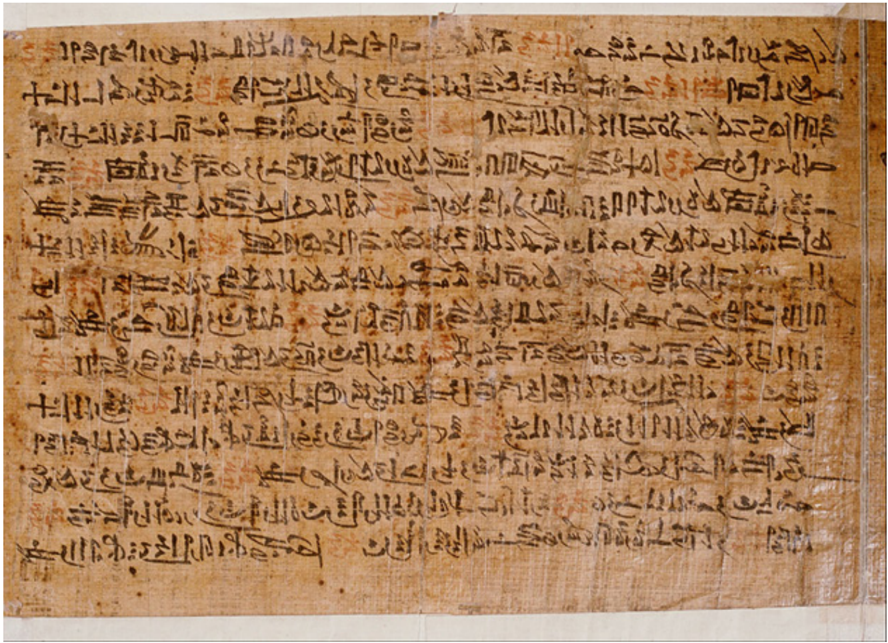
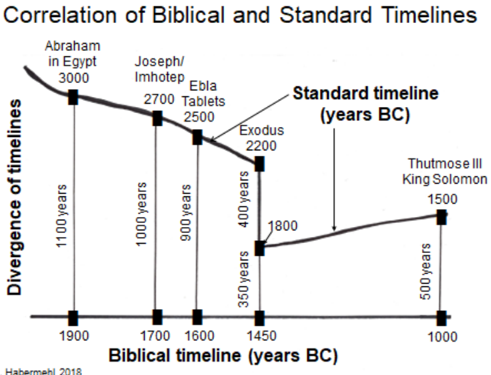
Controversy surrounds the Ipuwer Papyrus, an Egyptian manuscript residing in the Dutch National Museum of Antiquities in Leiden, Netherlands. On the one side are those who claim that this manuscript describes chaotic conditions in Egypt at the time of the biblical Exodus. On the other side are those who deny this on the basis of disbelief that the Exodus ever took place, or who claim that the date of the events described in the manuscript are wrong for the Exodus. In this paper we show that this ancient document most likely describes Exodus conditions; and that the Ipuwer Papyrus therefore offers strong extra-biblical evidence for a historical Exodus. With respect to dating the events in this papyrus, it needs to be understood that the secular historical timeline diverges from the biblical timeline, and furthermore, that the Old Kingdom and the Middle Kingdom of Egypt ended at the same time (contrary to the standard history). This puts the manuscript’s original date (as determined by scholars) exactly where it should be. The question of divergence of the secular and biblical timelines is a matter of enormous importance for biblical apologetics. Often secular scholars declare that biblical events like the Exodus cannot have taken place because there are no evidences of these at the time in history where the Bible places them. The Ipuwer papyrus therefore supports a divergence of several hundred years between the biblical and secular timelines at the time of the Exodus.
Overview
CoChat Summary
TL;DR
The paper argues that the Ipuwer Papyrus describes chaotic conditions in Egypt matching the biblical Exodus plagues, and therefore offers extra-biblical evidence for a historical Exodus. It further argues that the 6th and 12th Dynasties ended concurrently, requiring a several-hundred-year divergence between biblical and secular timelines.
Key findings
- The paper reads the Ipuwer Papyrus as describing total Egyptian collapse: the river is blood, people thirst, famine, widespread death, social reversal, and no central authority. Table 1 lists 8 parallels with Exodus/Numbers, including “the river is blood” (Exodus 7:20) and “All is ruin!” vs. “Egypt is destroyed” (Exodus 10:7).
- The paper claims Ipuwer was likely a real historical figure, citing the Daressy fragment naming Ipuwer as “Overseer of Singers”; this is said to contradict Rice (1999).
- Dating: the sole extant copy dates to the 13th century BC, but scholars agree it copies a much earlier original, written at the end of the 12th Dynasty. The paper argues the 6th and 12th Dynasties ran concurrently and ended together at the Exodus, with Amenemhat IV (1786–1777 BC) in Lower Egypt and Pepi II (2278–2184 BC) in Upper Egypt; this produces two Exodus dates on the secular timeline about 400 years apart and a divergence from the biblical date of about 1445 BC.
- The paper rejects a low Nile flood as the cause of collapse, noting Ipuwer says Hapy inundates and none plow; it suggests a low Nile in Sobekneferu’s third year came after the Exodus.
Methods
- Textual/comparative analysis: uses the Lichtheim 1973 English translation of Ipuwer and compares selected statements with biblical Exodus/Numbers passages in Table 1; it also discusses alternate translations (Gardiner, Erman, Faulkner, Wilson, Dollinger, Enmarch, Simpson).
- Historical-chronology argument: draws on Habermehl (2013) and Shaw (2003) dates to propose concurrent 6th/12th Dynasties and a biblical–secular timeline divergence; no new archaeological excavation or radiocarbon dating is reported.
- Interpretive discussion of ambiguous lines, authorship, the addressee (“The Lord of All”), and scholarly debate over whether the text is historical or lament literature.
Limitations
- The paper states that the manuscript is damaged, with missing beginning and end and lacunae throughout; translations vary, and some statements can be interpreted more than one way and cannot be used to support the argument.
- The paper acknowledges opposing views: scholars date the events to the end of the Old Kingdom vs. the end of the Middle Kingdom, or deny that the events are historical/lament genre; some biblical believers reject the timeline divergence.
- Evident from the text: the argument depends on accepting biblical chronology, concurrent dynasties, and a specific Exodus date; the comparative parallels are selected and some are thematic; no independent physical dating of the original is presented.
Model-written summary. Check it against the paper before relying on it.
Integrity signals
Registry
Cites
Statistics
Figures
Verification
Claims the paper makes
0 Valid · 0 Not valid · 9 Not checked · 18 Own results and interpretations
None of the sources cited for this claim have been checked yet.
In the paper
“However, a low Nile rising was recorded in the third year of the reign of the pharaoh Sobekneferu (Callender 2003, p. 159), who reigned immediately after the Exodus pharaoh, Amenemhat IV (Habermehl 2013).”
What the sources say
- Not matchedcites Callender 2003, p. 159
An author–year citation the paper’s reference list doesn’t settle. We don’t search these by name.
- Not checked yetcites Habermehl 2013
plainSingle case- Asserted: passes — The authors put it forward as true.
- Checkable: passes — It can be checked against evidence.
- Load-bearing: passes — The paper’s conclusions depend on it.
- Based: passes — The paper gives a reason why it holds.
- Not matched
A conclusion the paper draws from its own results — it cites no other source for it, so there is none to check. The quote shows it is in the paper.
In the paper
“Because this low Nile rising was only three years after the Exodus, it could be easily mistaken by historians as causing the collapse of Egypt.”
hedgedSingle case- Asserted: passes — The authors put it forward as true.
- Checkable: passes — It can be checked against evidence.
- Load-bearing: unclear — It is unclear whether the paper’s conclusions depend on it.
- Based: passes — The paper gives a reason why it holds.
In the paper
“The building of defense walls along the eastern border of Egypt by Amenemhat I at the beginning of the 12 th Dynasty to keep Asiatics out is well documented by historians (e.g., see Shaw 2003, pp.147─148).”
What the sources say
- Not matchedcites Shaw 2003, pp.147─148
An author–year citation the paper’s reference list doesn’t settle. We don’t search these by name.
boosted- Asserted: passes — The authors put it forward as true.
- Checkable: passes — It can be checked against evidence.
- Load-bearing: unclear — It is unclear whether the paper’s conclusions depend on it.
- Based: passes — The paper gives a reason why it holds.
- Not matched
A conclusion the paper draws from its own results — it cites no other source for it, so there is none to check. The quote shows it is in the paper.
In the paper
“and that the Ipuwer Papyrus therefore offers strong extra-biblical evidence for a historical Exodus.”
- Also stated in: § CONCLUSION · boosted
“We see that the Ipuwer Papyrus displays strong extra-biblical evidence for the historicity of the Exodus in its description of a chaotic Egypt that would have resulted from the biblical 10 plagues.”
boostedstates a cause- Asserted: passes — The authors put it forward as true.
- Checkable: passes — It can be checked against evidence.
- Load-bearing: passes — The paper’s conclusions depend on it.
- Based: unclear — It is unclear why the paper says it holds.
- Rests on an assumption not shown here.
- Also stated in: § CONCLUSION · boosted
A conclusion the paper draws from its own results — it cites no other source for it, so there is none to check. The quote shows it is in the paper.
In the paper
“These details of the biblical narrative are hard to explain, short of a miracle.”
plain- Asserted: passes — The authors put it forward as true.
- Checkable: unclear — It is unclear whether it could be checked against evidence.
- Load-bearing: passes — The paper’s conclusions depend on it.
- Based: passes — The paper gives a reason why it holds.
- Rests on an assumption not shown here.
11 more claims
Create a free account to see all 27 claims and to verify the 3 references still open.
- Probably not a substantial claim. 5
- It may state two separate claims as one. 7
Citations
Cites
Ancient Near Eastern Texts Relating to the Old Testament
Porada, E., & Pritchard, J. B. (1952) · Artibus Asiae · doi:10.2307/3248583 · Cited by 485
Collapse, environment, and society
Butzer, K. W. (2012) · Proceedings of the National Academy of Sciences · doi:10.1073/pnas.1114845109 · Cited by 461
Ancient near Eastern Texts Relating to the Old Testament
Albright, W. F., & Pritchard, J. B. (1951) · Journal of the American Oriental Society · doi:10.2307/596109 · Cited by 460
The Oxford history of Ancient Egypt
(2001) · Choice Reviews Online · doi:10.5860/choice.38-5725 · Cited by 350
Spaull, C. H. S., & Gardiner, A. H. (1965) · The Journal of Egyptian Archaeology · doi:10.1177/030751336505100132 · Cited by 129
The Literature of Ancient Egypt
Gilula, M., Simpson, W. K., Faulkner, R. O., Wente, E. F., & Simpson, W. K. (1975) · Journal of the American Oriental Society · doi:10.2307/599165 · Cited by 95
A Date for the 'Admonitions' in the Second Intermediate Period
Seters, J. V. (1964) · The Journal of Egyptian Archaeology · doi:10.1177/030751336405000104 · Cited by 65
A World Upturned: Commentary on and Analysis of the Dialogue of Ipuwer and the Lord of All
Enmarch, R. (2009) · Cited by 60
The Dialogue of Ipuwer and the Lord of All
Enmarch, R. (2005) · Cited by 48
The Admonitions of an Egyptian Sage
Faulkner, R. O. (1965) · The Journal of Egyptian Archaeology · doi:10.1177/030751336505100107 · Cited by 43
The Ancient Egyptians: A Sourcebook of Their Writings
McKenna, G., & Erman, A. (1967) · Journal of the American Research Center in Egypt · doi:10.2307/40000750 · Cited by 22
Rice, M. (2002) · Routledge eBooks · doi:10.4324/9780203443286 · Cited by 20
The Admonitions of an Egyptian Sage from a Hieratic Papyrus in Leiden
Gardiner, A. H. (1969) · De Gruyter eBooks · doi:10.1515/9783112707517 · Cited by 14
Papyrus the plant that changed the world - from ancient Egypt to today's water wars
Gaudet, J. (2015) · Cited by 14
Johnstone, W. (2005) · Journal of Semitic Studies · doi:10.1093/jss/fgi051 · Cited by 12
Réflexions sur le «Fragment Daressy» et ses hommes illustres
Mathieu, B. (2012) · Bibliothèque de l'école des hautes études. Sciences religieuses · doi:10.1484/m.behe-eb.4.00455 · Cited by 11
The Popular Handbook of Archaeology and the Bible
Holden, J. M., & Geisler, N. L. (2013) · Cited by 9
(2003) · Choice Reviews Online · doi:10.5860/choice.41-2187 · Cited by 9
Droughts, Famine and the Collapse of the Old Kingdom;Re-Reading Ipuwer
Hassan, F. (n.d.) · UCL Discovery (University College London) · Cited by 8
Arts and Humanities Through the Eras
James, S. (2005) · Reference Reviews · doi:10.1108/09504120510596508 · Cited by 8
Papyrus: the plant that changed the world--from ancient Egypt to today's water wars
(2015) · Choice Reviews Online · doi:10.5860/choice.187283 · Cited by 7
Egyptian Hieroglyphs as Linguistic Signs and Metalinguistic Informants
Velde, H. T. (1988) · BRILL eBooks · doi:10.1163/9789004668645_010 · Cited by 5
An early 12th Dynasty “Appeal to the Living” (Stela Musée Rodin Inv. No. co 1305)
Stefanović, D., & Satzinger, H. (2014) · Chronique d Egypte · doi:10.1484/j.cde.5.102507 · Cited by 4
(2013) · Proceedings of the International Conference on Creationism/Proceedings of the ... International Conference on Creationism
Self-citation
Research works printed but not linked: 6
- Callender, G. 2003. The Middle Kingdom renaissance. In The Oxford history of ancient Egypt, ed. I. Shaw, pp. 137-171. Oxford, England: Oxford University Press.
- Gardiner, A.H. 1972. Egypt of the Pharaohs. Oxford, England: Oxford University Press [paperback edition].
- Habermehl, A. 2018. Chronology and the Gezer connection-Solomon, Thutmose III, Shishak and Hatshepsut. Journal of Creation 32, no. 2:83-90.
- Lichtheim, M. 1973/1975. Ancient Egyptian literature: The Old and Middle Kingdoms (vol. 1). Berkley, California: University of California Press.
- Stewart, T.T. 2003. Solving the Exodus Mystery, vol. 1. Lubbock, Texas: Biblemart.com.
- James E. Pritchard, editor. Princeton, New Jersey: Princeton University Press.
Cited by
Pestilences in Ancient Egypt and Their Relation to Certain Deities and Events
بلیغ, ر. (2022) · حولية الاتحاد العام للآثاريين العرب دراسات فى آثار الوطن العربى · doi:10.21608/cguaa.2022.115417.1102 · Cited by 1
Metadata
- Authors
- Habermehl, A.
- Corresponding author
- Habermehl, Anne
- Venue
- The Proceedings of the International Conference on Creationism
- Publisher
- Centennial Library
- Published
- 2018
- Volume
- 8
- Issue
- 1
- Pages
- 1-6
- ISSN
- 2639-3999 (ISSN-L)
- 2639-4006
- OpenAlex
- W2904288162
- Cited by
- 1
- References
- 28
- Citations by year
- 2022: 1
- FWCI
- 0.00
- Type
- conference paper
- Language
- en
- Open access
- hybrid
- doi.org
- Licence
- cc-by-nc-nd
- Locations
- Proceedings of the International Conference on Creationism/Proceedings of the ... International Conference on Creationism (publishedVersion, cc-by-nc-nd)
- DigitalCommons-Cedarville (Cedarville University) (submittedVersion, cc-by-nc-nd)
- Topics
- Social Sciences › Arts and Humanities › Religious studies › Biblical Studies and Interpretation
- Social Sciences › Arts and Humanities › Archeology (arts and humanities) › Ancient Egypt and Archaeology
- Social Sciences › Arts and Humanities › Archeology (arts and humanities) › Ancient Near East History
- Keywords
- Exodus, biblical chronology, biblical apologetics, Egyptian history
About these checks
Registry, retraction, Cites and statistics results are computed, not judged, with one exception: a printed reference that no index lists is read once by a model before it counts as a citation error. Claims are extracted by a model and kept only when their quote appears verbatim in the text; each cited source is then checked, with a model’s help, for whether it says what the claim relies on. Those verdicts can be wrong — read the claim’s quote and the cited source before relying on one.
A language model drew the claims from the paper on 2026-11-23, under version 3 of the claim definition (model deepseek-v4.1-flash, prompt extract-v3).
A second model labelled each claim on 2026-11-23 (model jev-1.13-20260917, definition revision gold-guideline-v0.2).
Statistics and arithmetic are recomputed, not judged.
Confidence bands are shown only for fields calibrated on our annotated test set. None is calibrated yet, so no band is shown.
What counts as a claim ›How we measure confidence ›How we check this ›
Are you an author, or do you see a problem with this page? Request a review
Data sources
Bibliographic data: Semantic Scholar, OpenAlex, Crossref.
Contains information from the Semantic Scholar Academic Graph Datasets, made available under the ODC Attribution License (ODC-BY 1.0).
Semantic Scholar’s data is described in: Kinney, R., et al. (2023). The Semantic Scholar Open Data Platform. arXiv:2301.10140.
