

»The sun was darkened for seventeen days« (AD 797). An Interdisciplinary Exploration of Celestial Phenomena between Byzantium, Charlemagne, and a Volcanic Eruption
Open accessThe DOI matches its Crossref record; 122 of the 122 references it cites were found in a registry or an index.
Abstract
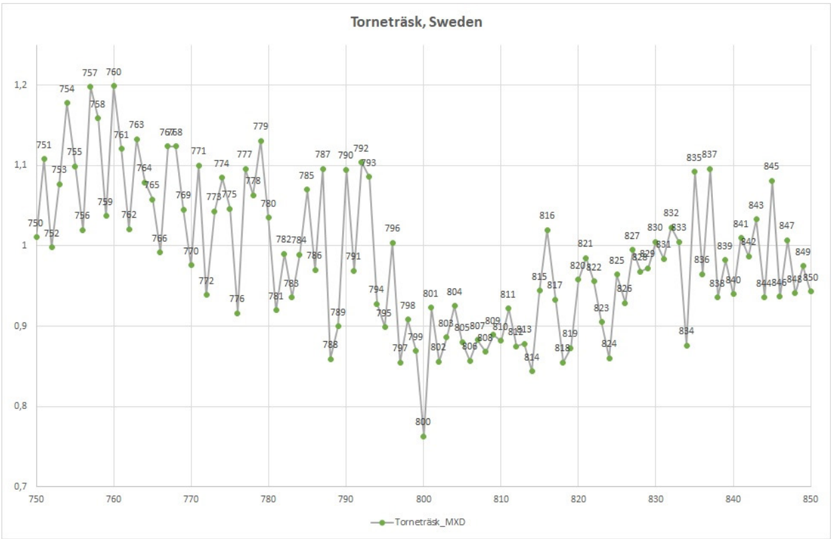
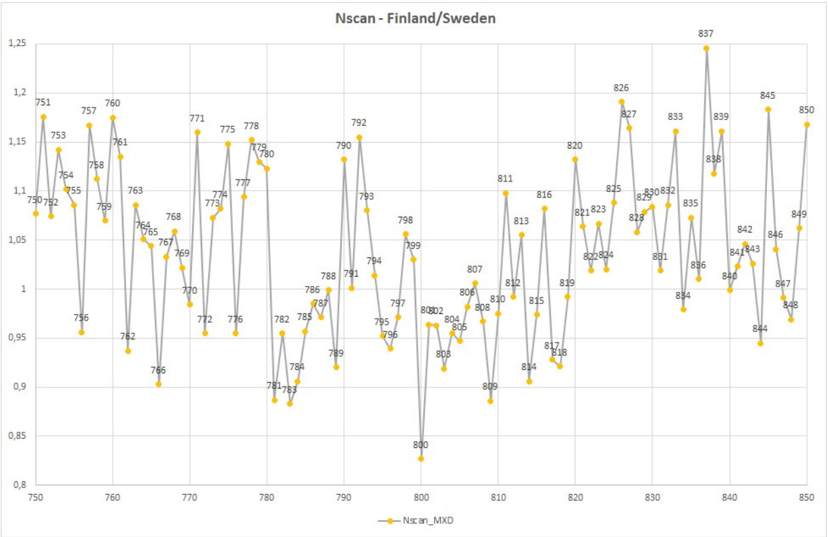
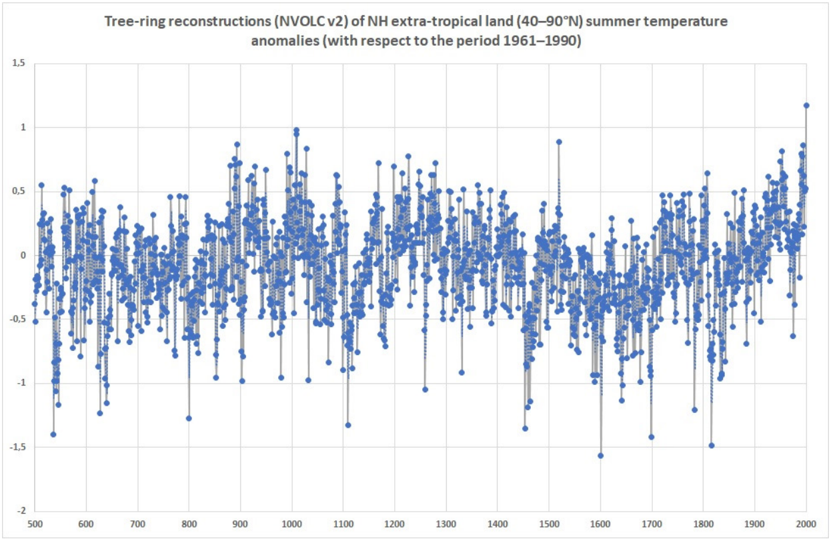
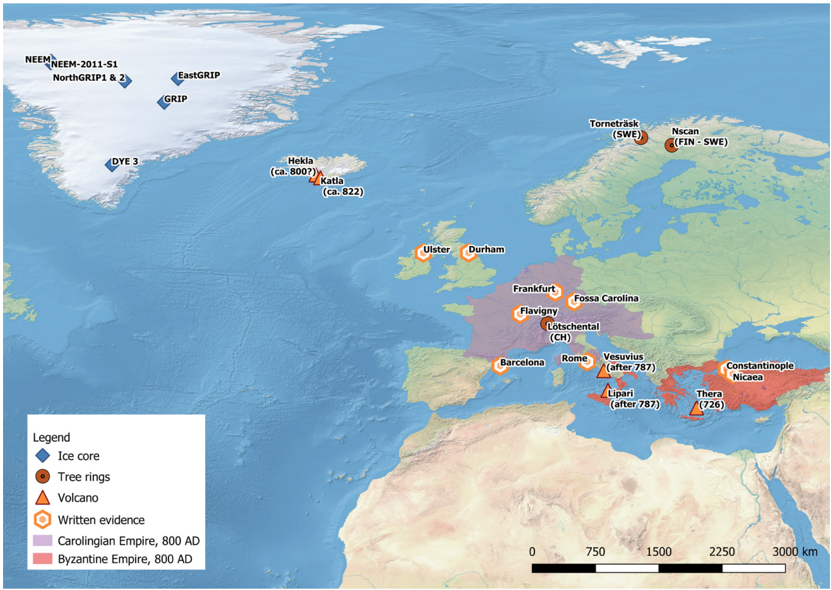
The blinding of the Byzantine emperor Constantine VI in Constantinople in August 797 and his overthrow by his mother Eirene, who then ruled as the first female »emperor« of the Eastern Roman Empire until 802, was used as legitimation for the coronation of the Frankish king Charlemagne as emperor of the Romans on 25 December 800, by contemporaries in Western Europe. Some observers in the West may have even interpreted the downfall of the Eastern Roman emperor and his replacement by a woman as sign of an impending collapse of the Roman Empire and the entire world order, as already expected (based on chiliastic calculations). We equally find indications of apocalyptic expectations in Constantinople, where Constantineʹs blinding was linked with a spectacular celestial manifestation of divine disapproval – a darkening of the sun for 17 days. In this paper, this obfuscation of the sun is compared with the description of other atmospheric and climatic phenomena in the 8th and 9th centuries, as well as before and after this period. In addition, natural scientific data is used to disprove earlier hypotheses on the physical background to this event and to present a more probable scenario (i.e., the impacts of one or more volcanic eruptions) for the darkening of 797 and other phenomena, which provided a peculiar »atmospheric« framework for the interpretation of the events between the downfall of Constantine VI and the coronation of Charlemagne by contemporaries.
Overview
The claims and statistics of this paper haven’t been checked yet.
Free: it reads the open-access text and checks the first 5 claims that cite a source we can check. Create a free account to check every claim.
Integrity signals
Registry
Cites
Statistics
Figures
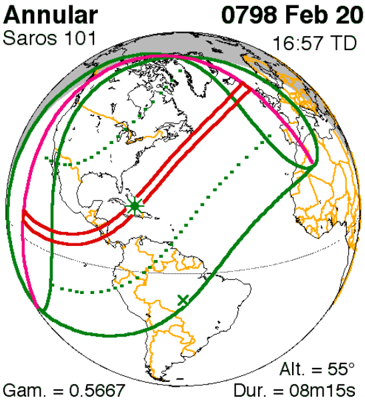
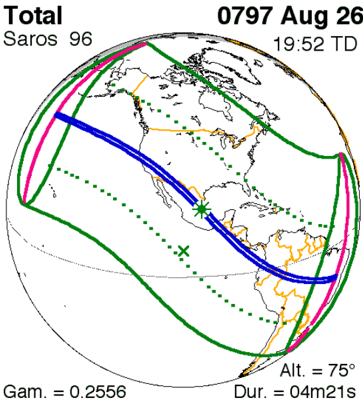
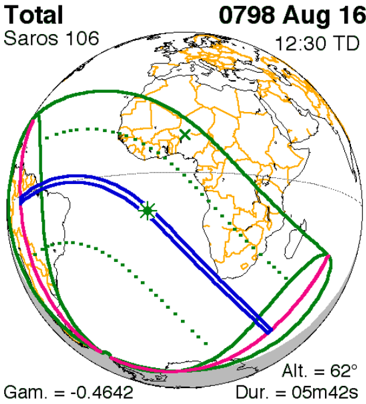
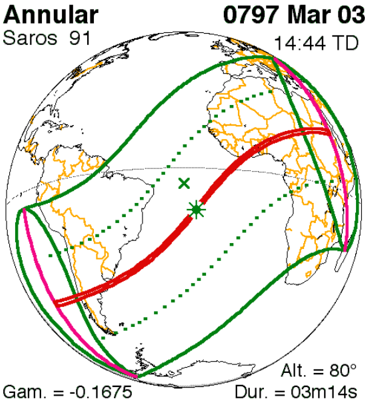
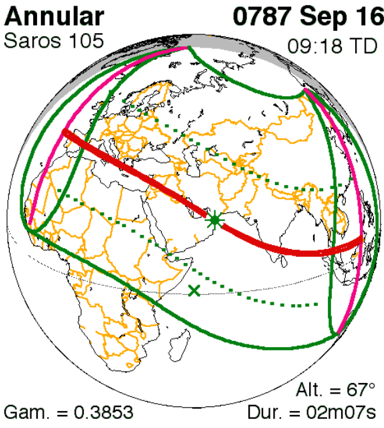
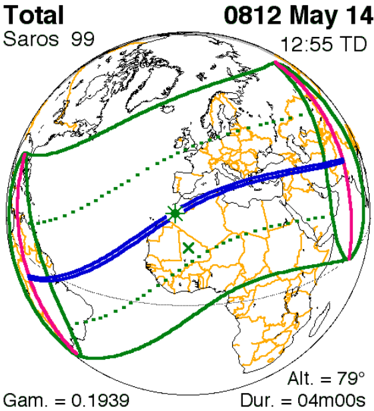
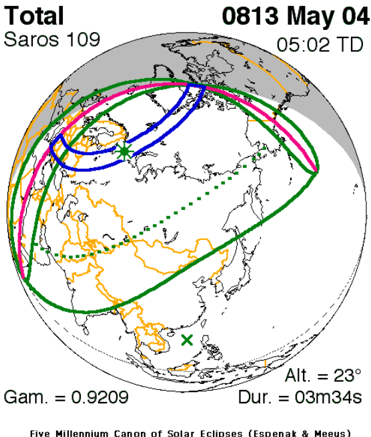
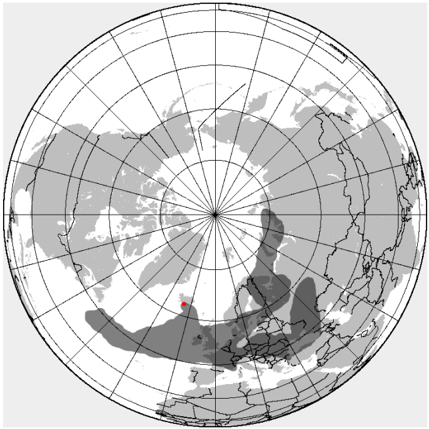
Verification
Claims the paper makes
The claims and statistics of this paper haven’t been checked yet.
Free: it reads the open-access text and checks the first 5 claims that cite a source we can check. Create a free account to check every claim.
Claims other papers make about this one
Each is checked against this paper’s own text: does it say what the citing paper says it does?
The source backs part of the claim, not all of it — or backs it for a different population, condition or comparison.
In the citing paper
“Indeed, the firsthand eyewitness account of Theophanes the Confessor documents an extremely severe winter in the area of the Black Sea and the Bosporus from October 763 CE to February 764 CE and describes that”
From Decadal-to-centennial increases of volcanic aerosols from Iceland challenge the concept of a Medieval Quiet Period (2024) · cites this paper as [69]
Experimental — accuracy not yet measured
Self-check
Percentages, sums and reported differences re-computed from the paper’s own numbers.
The self-check needs the paper’s full text.
Citations
Cites
Timing and climate forcing of volcanic eruptions for the past 2,500 years
Sigl, M., Winstrup, M., McConnell, J. R., Welten, K. C., Plunkett, G., Ludlow, F., Büntgen, U., Caffee, M., Chellman, N., Dahl-Jensen, D., et al. (2015) · Nature · doi:10.1038/nature14565 · Cited by 1,325
Old World megadroughts and pluvials during the Common Era
Cook, E. R., Seager, R., Kushnir, Y., Briffa, K. R., Büntgen, U., Frank, D., Krusic, P. J., Tegel, W., van der Schrier, G., Andreu-Hayles, L., et al. (2015) · Science Advances · doi:10.1126/sciadv.1500561 · Cited by 679
European summer temperatures since Roman times
Luterbacher, J., Werner, J. P., Smerdon, J. E., Fernández-Donado, L., González-Rouco, F. J., Barriopedro, D., Ljungqvist, F. C., Büntgen, U., Zorita, E., Wagner, S., et al. (2016) · Environmental Research Letters · doi:10.1088/1748-9326/11/2/024001 · Cited by 426
A History of the Byzantine State and Society
Treadgold, W. (1997) · Stanford University Press eBooks · doi:10.1515/9780804779371 · Cited by 400
Sigl, M., McConnell, J. R., Layman, L., Maselli, O., McGwire, K., Pasteris, D., Dahl‐Jensen, D., Steffensen, J. P., Vinther, B., Edwards, R., et al. (2013) · Journal of Geophysical Research: Atmospheres · doi:10.1029/2012jd018603 · Cited by 363
Chronique de Michel le Syrien : patriarche Jacobite d'Antioche (1166-1199)
Michel, L. S., & Chabot, J.-B. (1899) · E. Leroux eBooks · Cited by 330
The AD775 cosmic event revisited: the Sun is to blame
Usoskin, I. G., Kromer, B., Ludlow, F., Beer, J., Friedrich, M., Kovaltsov, G. A., Solanki, S. K., & Wacker, L. (2013) · Astronomy & Astrophysics · doi:10.1051/0004-6361/201321080 · Cited by 235
The 1631 Vesuvius eruption. A reconstruction based on historical and stratigraphical data
Rosi, M., Principe, C., & Vecci, R. (1993) · Journal of Volcanology and Geothermal Research · doi:10.1016/0377-0273(93)90106-2 · Cited by 227
The Inheritance of Rome: A History of Europe from 400 to 1000
Cameron, A. (2009) · International journal for the Study of the Christian Church · doi:10.1080/14742250903123623 · Cited by 218
Volcanic eruptions in the Mediterranean before A.D. 630 from written and archaeological sources
(1983) · Journal of Geophysical Research: Solid Earth · doi:10.1029/jb088ib08p06357 · Cited by 218
Research works printed but not linked: 40
- MGH SS rer. Germ = Scriptores rerum Germanicarum in usum scholarum PmbZ = Prosopographie der mittelbyzantinischen Zeit Manuscript Oxford, Christ Church MS 5: digital.bodleian.ox.ac.uk/objects/e873ecff-7b8d-4826-a1dd- 62e4e2ac1c8f
- Barbe, Dominique, Irène de Byzance: La Femme Empereur (second edition), (Paris, 2006).
- Barnes, Timothy S., Constantine. Dynasty, Religion and Power in the Late Roman Empire (Cambridge, MA, 2011).
- Berger, Albrecht, Das apokalyptische Konstantinopel. Topographisches in apokalyptischen Schriften der mittelbyzantinischen Zeit, in: Wolfram Brandes and Felicitas Schmieder (eds.), Endzeiten. Eschatologie in den monotheistischen Weltreligionen, Millennium-Studien 16 (Berlin, 2008) 135-156.
- Brandes, Wolfram, »Tempora periculosa sunt«. Eschatologisches im Vorfeld der Kaiser- krönung Karls des Großen, in: Rainer Berndt (ed.), Das Frankfurter Konzil von 794. Kristallisationspunkt karolingischer Kultur (Mainz, 1997) 49-79.
- Brandes, Wolfram, Kaiserprophetien und Hochverrat. Apokalyptische Schriften und Kaiservaticinien als Medium antikaiserlicher Propaganda, in: Wolfram Brandes and Felicitas Schmieder (eds.), Endzeiten. Eschatologie in den monotheistischen Weltreligionen, Millennium-Studien 16 (Berlin, 2008) 157-200.
- Brandes, Wolfram and John Haldon, Byzantium ca. 600-1000, in: Falko Daim (ed.), Brillʹs History and Culture of Byzantium. New Pauly (Leiden, 2019) 28-59.
- Caudano, Anne-Laurence, Astronomy and astrology, in: Stavros Lazaris (ed.), A Companion to Byzantine Science, Brill's Companions to the Byzantine World 6 (Leiden, 2020) 202-230.
- Caudano, Anne-Laurence, Traditions and practices in the medieval eastern Christian World: astral sciences, in: Matthias Heiduk, Klaus Herbers and Hans-Christian Lehner (eds.), Prognostication in the Medieval World. A Handbook, vol. 1 (Berlin, 2021) 502-515.
- Cyril Mango and Roger Scott (Oxford, 1997).
- Cioni, Raffaello, Antonella Bertagnini, Roberto Santacroce and Daniele Andronico, Explosive activity and eruption scenarios at Somma-Vesuvius (Italy): towards a new classification schema, Journal of Volcanology and Geothermal Research 178 (2008) 333-346.
- D.C., in: Claude Albore Livadie (ed.), Tremblements de terre, éruptions volcaniques et vie des hommes dans la Campanie antique (Naples, 1986) 121-141.
- di Cosmo, Nicola, Amy Hessl, Caroline Leland, Oyunsanaa Byambasuren, Hanqin Tian, Baatarbileg Nachin, Neil Pederson, Laia Andreu-Hayles and Edward R. Cook, Environ- mental stress and steppe nomads: Rethinking the history of the Uyghur Empire (744-840) with Paleoclimate data, Journal of Interdisciplinary History 48/4 (Spring, 2018) 439-463.
- Andreas E. Müller with the collaboration of Johannes Preiser-Kapeller and Alexander Riehle (second edition), (Munich, 2009).
- Fried, Johannes, Karl der Große. Gewalt und Glaube (fifth edition), (Munich, 2014).
- Herrin, Judith, Blinding in Byzantium, in: Cordula Scholz and Georgios Makris (eds.), Polypleuros Nous. Miscellanea für Peter Schreiner zu seinem 60. Geburtstag, Byzantinisches Archiv 19 (Munich, 2000) 56-68.
- Hiestand, Rudolf, Eirene Basileus -die Frau als Herrscherin im Mittelalter, in: Hans Hecker (ed.), Der Herrscher: Leitbild und Abbild in Mittelalter und Renaissance (Düsseldorf, 1990) 253-284.
- Jankowiak, Marek, The first Arab siege of Constantinople, in: Constantin Zuckerman (ed.), Constructing the Seventh Century = Travaux et Mémoires 17 (Paris, 2013) 237-320.
- Jones, Alexander, Later Greek and Byzantine astronomy, in: Christopher B. F. Walker (ed.), Astronomy Before the Telescope (London, 1996) 98-109.
- Kislinger, Ewald, La Longibardia minor e Bisanzio, in: Marcello Rotili (ed.), Tra i Longobardi del Sud. Arechi II e il Ducato di Benevento, Humanitas 25 (Padua, 2017) 591-607.
- Kislinger, Ewald, Sea routes, in: Falko Daim (ed.), Brillʹs History and Culture of Byzantium (Leiden, 2019) 320-322.
- Kislinger, Ewald, Sightseeing in the Byzantine Empire, in: Nikolaos G. Moschonas (ed.), Η επικοινωνία στο Βυζάντιο (Athens, 1993) 457-468.
- Kostick, Conor and Francis Ludlow, European weather extremes in the lifetime of Charle- magne (c.742 -814 AD), Working paper for the First Annual Virtual Symposium on Pre-Modern Studies: Catastrophe, Calamity and Chaos in the Pre-Modern World, Athabasca University and the Medieval & Modern Institute at the University of Alberta, Canada, 16th March 2013. Accessed on 21 September 2022: www.tara.tcd.ie/bitstream/ handle/2262/95664/European%20Weather%20Extremes%20in%20the%20Lifetime%20 of%20Charlemagne%20%28c.742%E2%80%93814%20CE%29%20-%20Kostick%20 %26%20Ludlow%20-%202013.pdf?sequence=1&isAllowed=y.
- La Porta, Sergio, The Seventh Vision of Daniel. A new translation and introduction, in: Richard Bauckham, James R. Davila and Alexander Panayotov (eds.), Old Testament Pseudepigrapha: More Noncanonical Scriptures, volume I (Grand Rapids, 2013) 410-434.
- Lempire, John, Traditions and practices in the medieval eastern Christian world: Calendrical calculations, in: Matthias Heiduk, Klaus Herbers and Hans-Christian Lehner (eds.), Prog- nostication in the Medieval World. A Handbook, vol. 1 (Berlin, 2021) 619-623.
- Lynch, David K. and William Livingston, Color and Light in Nature (Cambridge, 2001).
- McCormick, Michael, Origins of the European Economy. Communications and Commerce AD 300-900 (Cambridge, 2001).
- Menke, Valerie, Impacts of Short-Term Climate Change and Anthropogenic Activity on Marine Ecosystem Variability and Biogeochemical Processes in the Gulf of Taranto (Central Medi- terranean Sea) Unpublished PhD thesis (Hamburg University, 2017).
- Newfield, Timothy, The Contours of Disease and Hunger in Carolingian and Early Ottonian Europe (c.750-c.950 CE). Unpublished PhD thesis (McGill University, Montreal, 2010).
- Newfield, Timothy, The Climate Downturn of 536-50, in: Sam White, Christian Pfister and Franz Mauelshagen (eds.), The Palgrave Handbook of Climate History (London, 2018) 447-493.
- Rosi, Mauro and Roberto Santacroce, The A.D. 472 ›Pollena‹ eruption: volcanological and petrological data for this poorly-known Plinian-type at Vesuvius, Journal of Volcanology and Geothermal Research 17 (1983) 249-271.
- Runciman, Steven, The empress Eirene the Athenian, in: Derek Baker (ed.), Medieval women, Studies in church history, Subsidia 1 (Oxford, 1978) 101-118.
- Sarris, Peter, Climate and disease, in: Erik Hermans (ed.), Companion to the Global Early Middle Ages (Leeds, 2020) 511-538.
- Symeonis Monachi Opera Omnia, ed. Thomas Arnold, Vol. 2, Rolls Series 75/2 (London, 1882).
- Telelis, Ioannis G., Traditions and practices in the medieval eastern Christian World: Weather forecasting, in: Matthias Heiduk, Klaus Herbers and Hans-Christian Lehner (eds.), Prog- nostication in the Medieval World. A Handbook, vol 1 (Berlin, 2021) 665-685.
- Tremblay, Vincent, L'image du pouvoir impérial dans la Chronographie de Théophane le Confes- seur pendant le premier iconoclasme byzantin (717-815). Unpublished MA thesis (Université de Sherbrooke, 2013).
- Ubierna, Pablo, L'apocalyptique byzantine au IXe siècle, in: Michel Kaplan (ed.), Monastères, Images, Pouvoirs et Société à Byzance (Paris, 2006) 207-221.
- Verhulst, Adriaan, The Carolingian Economy (Cambridge, 2002).
- Whitelock, Dorothy (ed.), English Historical Documents c. 500-1042 (London, 1968).
- Zimmermann, Helmut, and Alfred Weigert, Lexikon der Astronomie (Berlin, 1999). Websites Geschichtsquellen des deutschen Mittelalters: www.geschichtsquellen.de/werk/266 NASAEclipse Website: eclipse.gsfc.nasa.gov PmbZ -Prosopography of the Middle Byzantine Period Online: www.degruyter.com/ database/pmbz/html Smithsonian Institution, Global Volcanism Program, online: volcano.si.edu UGSG: Science for changing the World: www.usgs.gov
Cited by
Gabriel, I., Plunkett, G., Abbott, P. M., Behrens, M., Burke, A., Chellman, N., Cook, E., Fleitmann, D., Hörhold, M., Hutchison, W., et al. (2024) · Communications Earth & Environment · doi:10.1038/s43247-024-01350-6 · Cited by 26
“[ … ] One of the icebergs struck the jetty of the Acropolis [of Constantinople] and crushed it ” 67 – 69 .”
BackgroundSelf-citationCampone, M. C. (2024) · De Medio Aevo · doi:10.5209/dmae.92855
Metadata
- Authors
- Preiser-Kapeller, J., & Kislinger, E.
- Affiliations
- University of Vienna (AT)
- Corresponding author
- Kislinger, Ewald
- Venue
- Medieval Worlds
- Published
- 2022
- Volume
- medieval worlds
- Issue
- Volume 17. 2022
- Pages
- 3-58
- ISSN
- 2412-3196 (ISSN-L)
- OpenAlex
- W4310919855
- Cited by
- 2
- References
- 119
- Citations by year
- 2024: 2
- FWCI
- 12.18
- Type
- journal article
- Language
- en
- Open access
- diamond
- doi.org
- Licence
- cc-by-nd
- Locations
- Medieval Worlds (publishedVersion, cc-by-nd)
- arXiv (Cornell University) (submittedVersion)
- Oesterreichisches Musiklexikon online (Institut für kunst- und musikhistorische Forschungen der Österreichischen Akademie der Wissenschaften) (submittedVersion, cc-by-nc-nd)
- Austrian Biographical Dictionary (Austrian Academy of Sciences) (submittedVersion, cc-by-nc-nd)
- DOAJ (DOAJ: Directory of Open Access Journals) (submittedVersion)
- arXiv (Cornell University) (cc-by)
- Funders
- University of Bern
- Topics
- Social Sciences › Arts and Humanities › Classics › Byzantine Studies and History
- Physical Sciences › Physics and Astronomy › Astronomy and Astrophysics › Historical Astronomy and Related Studies
- Social Sciences › Arts and Humanities › History › Medieval Literature and History
- Keywords
- Eirene, Byzantine empresses, Charlemagne, volcanic eruptions, atmospheric phenomena, apocalyptic expectations, chiliasticism, Byzantine-Frankish relations, 8th century, 9th century
About these checks
Registry, retraction, Cites and statistics results are computed, not judged, with one exception: a printed reference that no index lists is read once by a model before it counts as a citation error. Claims are extracted by a model and kept only when their quote appears verbatim in the text; each cited source is then checked, with a model’s help, for whether it says what the claim relies on. Those verdicts can be wrong — read the claim’s quote and the cited source before relying on one.
Statistics and arithmetic are recomputed, not judged.
Confidence bands are shown only for fields calibrated on our annotated test set. None is calibrated yet, so no band is shown.
What counts as a claim ›How we measure confidence ›How we check this ›
Are you an author, or do you see a problem with this page? Request a review
How to cite
Cite CoChat for the checks on this page, and the paper for its own findings.
- This page
- CoChat. (2026). Citation check: »The sun was darkened for seventeen days« (AD 797). An Interdisciplinary Exploration of Celestial Phenomena between Byzantium, Charlemagne, and a Volcanic Eruption. https://app.cochat.ai/papers/10.1553/medievalworlds_no17_2022s3
- The paper
- Preiser-Kapeller, J., & Kislinger, E. (2022). »The sun was darkened for seventeen days« (AD 797). An Interdisciplinary Exploration of Celestial Phenomena between Byzantium, Charlemagne, and a Volcanic Eruption. Medieval Worlds. https://doi.org/10.1553/medievalworlds_no17_2022s3
Data sources
Bibliographic data: Semantic Scholar, OpenAlex, Crossref.
Contains information from the Semantic Scholar Academic Graph Datasets, made available under the ODC Attribution License (ODC-BY 1.0).
Semantic Scholar’s data is described in: Kinney, R., et al. (2023). The Semantic Scholar Open Data Platform. arXiv:2301.10140.
