

Routine vaccination coverage—worldwide, 2023
Open accessThe DOI matches its Crossref record; 5 of the 5 references it cites were found in a registry or an index.
Abstract
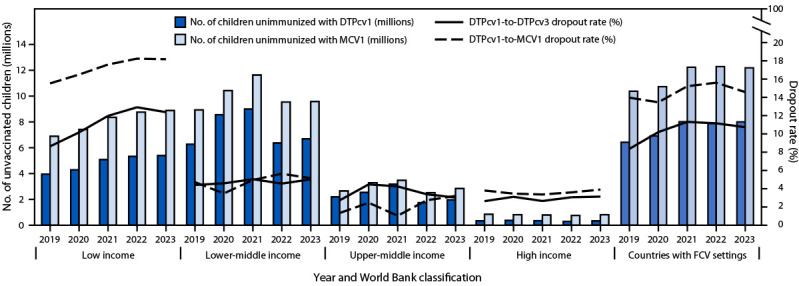
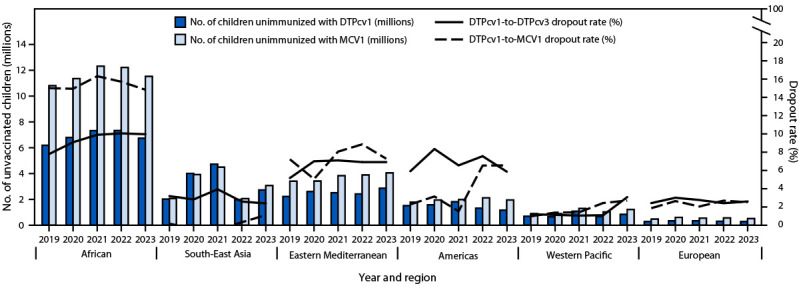
In 2020, the World Health Assembly endorsed the Immunization Agenda 2030 (IA2030), a 10-year strategy to reduce vaccine-preventable disease (VPD)-associated morbidity and mortality. IA2030 goals include improving equitable vaccination coverage, halving the number of unimmunized (zero-dose) children, and increasing the introduction of new and underutilized vaccines. The COVID-19 pandemic disrupted health systems worldwide, hindering years of childhood vaccination achievements and putting global public health goals at risk. This report presents trends in World Health Organization (WHO) and UNICEF routine vaccination coverage estimates through 2023 across the 194 WHO member countries. During 2022-2023, global coverage with the first and third doses of diphtheria-tetanus-pertussis-containing vaccine (DTPcv) (89% and 84%, respectively) and the first dose of measles-containing vaccine (83%) stagnated and remained lower than prepandemic levels. The 31 WHO member countries with fragile, conflict-affected, and vulnerable (FCV) settings include approximately one half of the world's 14.5 million children who did not receive the first DTPcv dose. The introduction of new and underutilized vaccines, such as a second MCV dose in the African Region, has improved countries' overall protection against VPDs. Accelerating country-specific routine immunization and catch-up vaccination programs to reach unvaccinated and incompletely vaccinated children, especially those living in FCV settings, is critical to reducing morbidity and mortality associated with VPDs.
Overview
The claims and statistics of this paper haven’t been checked yet.
Free: it reads the open-access text and checks the first 5 claims that cite a source we can check. Create a free account to check every claim.
Integrity signals
Registry
Cites
Statistics
Figures
Verification
Claims the paper makes
The claims and statistics of this paper haven’t been checked yet.
Free: it reads the open-access text and checks the first 5 claims that cite a source we can check. Create a free account to check every claim.
Self-check
Percentages, sums and reported differences re-computed from the paper’s own numbers.
The self-check needs the paper’s full text.
Citations
Cites
WHO and UNICEF estimates of national infant immunization coverage: methods and processes
Burton, A. (2009) · Bulletin of the World Health Organization · doi:10.2471/blt.08.053819 · Cited by 422 · cited 2×
“Second, data quality limitations in some countries might have resulted in inaccurate administrative coverage estimations ( 7 ).”
BackgroundShet, A., Carr, K., Danovaro-Holliday, M. C., Sodha, S. V., Prosperi, C., Wunderlich, J., Wonodi, C., Reynolds, H. W., Mirza, I., Gacic-Dobo, M., et al. (2022) · The Lancet Global Health · doi:10.1016/s2214-109x(21)00512-x · Cited by 363
Self-citationExpanded programme on immunization.
Keja, K., Chan, C., Hayden, G., & Henderson, R. H. (1988) · PubMed · Cited by 229
Routine Vaccination Coverage — Worldwide, 2022
Kaur, G., Danovaro-Holliday, M. C., Mwinnyaa, G., Gacic-Dobo, M., Francis, L., Grevendonk, J., Sodha, S. V., Sugerman, C. E., & Wallace, A. S. (2023) · MMWR Morbidity and Mortality Weekly Report · doi:10.15585/mmwr.mm7243a1 · Cited by 136 · cited 1×
“This report updates a previous report ( 5 ) and presents global, regional, † and national routine vaccination § coverage trends during 2010–2023 across the 194 WHO member countries, highlighting trends before and during the COVID-19 pandemic, and through 2023.”
BackgroundSelf-citationExpanded Programme on Immunization
TIANDE, L. (1990) · International Journal of Epidemiology · doi:10.1093/ije/19.1.219-a · Cited by 88
Cited by
Haeuser, E., Byrne, S., Nguyen, J., Raggi, C., McLaughlin, S. A., Bisignano, C., Harris, A. A., Smith, A. E., Lindstedt, P. A., Smith, G., et al. (2025) · The Lancet · doi:10.1016/s0140-6736(25)01037-2 · Cited by 143
“114 Second, our reliance on DTP1 coverage as a measure of zero-dose children—although standard practice 9,115 —could overestimate the number of those who do not receive any childhood vaccinations, as children may in some cases receive other vaccinations even after missing DTP1.”
Hussein, S. A., Osman, M. M., Hassan, M. M., Hassan, Y. S. A., Hussein, A. A., Mohamed, A. H., Adem, R., Fuje, M. M., Mohamud, K. H., Ali, A. N., et al. (2025) · Tropical Medicine and Health · doi:10.1186/s41182-025-00833-2 · Cited by 18
“[70, 71].”
Schaub, M., Adeyanju, G. C., Abulfathi, A. A., Bello, M. M., Kasserra, L., Kwaku, A. A., Jalo, M. I., Mahmud, A., Schrage, P., Jalo, R. I., et al. (2025) · BMJ Global Health · doi:10.1136/bmjgh-2025-019494 · Cited by 9
Moura, L. D. L., Neto, M. D. O., & Souza‐Santos, R. (2023) · Epidemiologia e Serviços de Saúde · doi:10.1590/s2237-96222023000300004.en · Cited by 10
Tendência temporal da taxa de abandono e da cobertura da vacina tríplice viral no Brasil, 2014-2021
Moura, L. D. L., Neto, M. D. O., & Souza‐Santos, R. (2023) · Epidemiologia e Serviços de Saúde · doi:10.1590/s2237-96222023000300004.pt · Cited by 9
Chen, W., Du, M., Deng, J., Liu, M., & Liu, J. (2025) · International Journal of Infectious Diseases · doi:10.1016/j.ijid.2025.107908 · Cited by 14
Wu, Z., Lin, L., Zhang, J., Zhong, J., & Lai, D. (2025) · Frontiers in Public Health · doi:10.3389/fpubh.2025.1597076 · Cited by 14
“As a prototype vaccine-preventable disease (VPD) (58), diphtheria control is highly dependent on vaccination coverage.”
Challenges associated with pertussis detection, monitoring, and vaccination in adults
Regan, A. K. (2025) · Expert Review of Anti-infective Therapy · doi:10.1080/14787210.2025.2516556 · Cited by 8
“Although global coverage of three doses of pertussis-containing vaccine exceeds 84% in children [78], pertussis vaccine uptake has been historically lower in adults.”
Borlini, S., Pennisi, F., Pinto, A., Ponti, E. D., D’Amelio, A. C., & Signorelli, C. (2026) · Vaccine · doi:10.1016/j.vaccine.2026.128426 · Cited by 9
Hammour, K. A., Manaseer, Q., Abdeljalil, M., El‐Dahiyat, F., Hammour, W. A., Hammour, A. M. A., Al-Ashwal, F. Y., & Farha, R. K. A. (2025) · Journal of Pharmaceutical Policy and Practice · doi:10.1080/20523211.2025.2482669 · Cited by 9
“Vaccination is one of the most valuable public health interventions, contributing to the reduction or eradication of several life-threatening infectious diseases globally (Kaur, 2024).”
Economic and healthcare determinants of under-five mortality in low-income countries
Rajapakse, V., Fernando, A., Sudangama, N., Adikari, D., Sundaram, A., & Jayathilaka, R. (2025) · BMC Public Health · doi:10.1186/s12889-025-23370-3 · Cited by 17
“LICs should invest in reliable vaccine supply chains, cold storage systems, and tracking technologies [92, 93].”
O’Sullivan, T., & Keegan, L. T. (2025) · BMC Global and Public Health · doi:10.1186/s44263-025-00156-8 · Cited by 5
“However, the combination of two trends is unsettling: childhood vaccine coverage remains lower than in pre-pandemic periods in many regions [39], and conflict events and the number of people in Africa inter - nally displaced due to conflict has risen sharply in the past decade [40].”
Okesanya, O. J., Ahmed, M. M., Othman, Z. K., Alhammadi, O. A. S., Ibrahim, A. M., Adigun, O. A., Musa, S. S., Lamem, M. F. H., Cue, E. G., & Prisno, D. E. L. (2026) · Discover Social Science and Health · doi:10.1007/s44155-026-00364-z · Cited by 8
“However, despite this global progress, the African region continues to experience comparatively low inequitable coverage, driven by persistent challenges in infrastructure, financing, logistics and workforce capacity [2].”
Dinga, J. N., Akinbobola, J. S., Afolayan, F. I. D., Njoh, A. A., Kassa, T., Lazarus, D. D., Dièye, Y., Mamo, G., Duedu, K. O., Tshifhiwa, N., et al. (2025) · BMJ Global Health · doi:10.1136/bmjgh-2024-015693 · Cited by 4
“32 Other factors that can hamper the availability of vaccination coverage data include; legal and ethical barriers, lack of resources and personnel, selection and recall bias, survey implementation, data quality, and reporting.”
Samara, K. A., Barqawi, H. J., Alhayali, D. M., Kannas, S. M., Elmorsy, R. M., & Abu‐Gharbieh, E. (2025) · PLoS ONE · doi:10.1371/journal.pone.0324629 · Cited by 6
“According to UNICEF, Iraq, Jordan, Syria, and Yemen have some of the lowest coverage levels, with Yemen’s DTP3 coverage at 72% and Syria’s at just 49% in 2020 [11].”
What’s Old Is New Again: Pertussis
Li, C. N., Edwards, K. M., Kaplan, S. L., Marshall, G. S., Parker, S. K., & Healy, C. M. (2025) · PEDIATRICS · doi:10.1542/peds.2025-072868 · Cited by 4
Mendez‐Lopez, A., Hensman, R. D., Ding, S., & Park, K. (2025) · Vaccines · doi:10.3390/vaccines13101032 · Cited by 4
“These coverage challenges were exacerbated by the COVID-19 pandemic, which further hindered efforts to ensure equitable vaccine access [9–11].”
A world without US support: WHO funding cuts and the future of childhood health
Rashes, E. R., Koller, D., Kraft, C., Spencer, N. J., Goldhagen, J. L., & Weitzman, M. L. (2025) · BMJ Paediatrics Open · doi:10.1136/bmjpo-2025-003533 · Cited by 3
Danovaro-Holliday, M. C., Castro-Aguirre, I., Koh, M., Kim, I., Nedelec, Y., Contreras, M., Bar‐Zeev, N., Velandia-González, M., & Gacic-Dobo, M. (2026) · Gates Open Research · doi:10.12688/gatesopenres.16398.1 · Cited by 3
Self-citationBuilding the global evidence on text message reminders to increase timely childhood vaccination
Regan, A. K., & Sullivan, S. G. (2025) · International Journal of Epidemiology · doi:10.1093/ije/dyaf125 · Cited by 2
Abdi, Y. H., Abdullahi, Y. B., Abdi, M. S., Bashir, S., & Ahmed, N. I. (2025) · Archives of Public Health · doi:10.1186/s13690-025-01707-z · Cited by 2
“The IA2030 strategy specifically aims to reduce the number of zero-dose children those who have not received even the first dose of diphtheria-tetanus-pertussis-containing vaccine by 50% and to achieve equitable vaccination coverage globally [3].”
Cazes, C., Goni, B. W., Muhammad, N., Gabillard, D., Balonda, P. K., Feuzeu, L., Atanga, I., Yapi, B., Habiyambere, G. G., Danho, S., et al. (2025) · Trials · doi:10.1186/s13063-025-09243-5 · Cited by 3
“In 2021, Nigeria accounted for 18% of the global burden of zero-dose children, with over 2.2 million children unvaccinated [19], contributing to an under-five mortality rate of 105 per 1000 live births—approximately 768,000 childhood deaths annually [20].”
InfluentialMa, Q.-Y., Li, T., Gong, S., li, J., Wei, Y., & Hao, Y. (2026) · Journal of Infection · doi:10.1016/j.jinf.2026.106708 · Cited by 2
Yang, Q., Yang, Y., Liu, B., Xu, L., Ma, Y., Zhou, J. W., Wang, Y., Hao, C., & Jiang, W. (2026) · Journal of Microbiology Immunology and Infection · doi:10.1016/j.jmii.2026.03.002 · Cited by 2
Lakew, A. M., Limenih, M. A., Belew, A. K., Muhammad, E. A., Beshaw, M. A., & Angaw, D. A. (2026) · Human Vaccines & Immunotherapeutics · doi:10.1080/21645515.2026.2650041 · Cited by 2
Rifai, A. A., Ratterree, D. C. P., Kong, J. D., & Ndeffo-Mbah, M. L. (2026) · PLOS Global Public Health · doi:10.1371/journal.pgph.0006295 · Cited by 2
Ramakrishnan, S., Vignesh, U., & Parvathi, R. (2026) · Frontiers in Health Services · doi:10.3389/frhs.2026.1745633 · Cited by 2
“This divergence has renewed concern about zero-dose children and the re-emergence of vaccine-preventable diseases, particularly measles, which remains highly sensitive to gaps in routine service delivery (3, 5, 7–10).”
Namasambi, S., Migisha, R., Kigongo, V. J., Nakabuye, M., Bulage, L., Kwesiga, B., Nuwamanya, Y., Nsubuga, F., Ankunda, C., Eliku, J. P., et al. (2026) · Discover Public Health · doi:10.1186/s12982-026-02544-3 · Cited by 3
“Children aged 9–17 months experienced the highest attack rates, consistent with vulnerability during the period before completion of the recommended two-dose MR schedule [4, 10, 15].”
Collaborators, G. 2. P., Sartorius, B. K. D., Shalev, N., Poudyal, I., Srivastava, T., Byrne, S., Haeuser, E., Bhoomadevi, A., Aalruz, H., Razeq, N. M. A., et al. (2026) · Nature Medicine · doi:10.1038/s41591-026-04661-7 · Cited by 4
Memon, N. A., Langah, A., Jamali, A. A., Siyal, M. A., Khushik, K., & Siyal, A. A. (2024) · Journal of Bacha Khan Medical College. · doi:10.69830/jbkmc.v5i01.6 · Cited by 2
Mohamed, M. A., Nyagero, J. M., & Matiang’i, M. (2024) · International Journal of Community Medicine and Public Health · doi:10.18203/2394-6040.ijcmph20241942 · Cited by 2
Predictors of polio immunization in Nigerian children after wild poliovirus-free certificationPreprint
Iliyasu, Z., Burke, R. M., Paige, L. M., Yusuf, K. M., Mande, A., Ashir, G. M., Danzomo, A. A., & Okiror, S. O. (2025) · doi:10.12688/verixiv.1747.1 · Cited by 2
Concurrent diphtheria and COVID-19 infection in an unvaccinated child
Gundalli, S., Pujari, S., Balasubramanian, A., & Das, S. K. (2025) · BMJ Case Reports · doi:10.1136/bcr-2024-264530 · Cited by 1
“21 22 The novelty of this case lies in the simultaneous occurrence of two diseases that are individually significant public health concerns but have not been previously documented together.”
Komarovskaya, Е. I., Фадейкина, О. В., Lysko, K. A., Волкова, Р. А., & Корнилова, О. Г. (2025) · Biological Products Prevention Diagnosis Treatment · doi:10.30895/2221-996x-2025-25-2-182-192 · Cited by 1
Rimal, R. N., Ganjoo, R., Panda, B., Rath, S., Pandey, M., Pandey, S., Parida, M., Mohanty, S., Jamison, A., Alperstein, N. M., et al. (2025) · Journal of Health Communication · doi:10.1080/10810730.2025.2575879 · Cited by 1
“India has made significant progress in childhood vaccination – from 62% of children fully immunized in 2016 to 76.4% in 2021 (MOHFW, 2022) – but more than 1.6 million children remain zero-dosed, meaning they have not received any of their recommended vaccines in the past year (Jones et al., 2024).”
InfluentialThe global threat of vaccine-preventable neurological diseases
Chow, F. C., Granerød, J., Kim, C. Y., Nurye, T. D., & Thakur, K. T. (2025) · Nature Reviews Neurology · doi:10.1038/s41582-025-01172-w · Cited by 2
Workie, D. L., Dires, A. A., Teklie, A. K., & Wudu, T. K. (2025) · Scientific Reports · doi:10.1038/s41598-025-28853-2 · Cited by 1
Overview of Sustainable Development Goals and Their Health Significance
Saroj, A., Moharana, K. C., Kar, S. K., & Kabir, R. (2026) · Springer eBooks · doi:10.1007/978-981-95-2684-0_1 · Cited by 1
Cardenas, M. H., Santana, C. E. M., Castro, A., Gonzales, A., & Salvatierra, G. (2026) · PLOS Global Public Health · doi:10.1371/journal.pgph.0005891 · Cited by 1
“While BCG vaccination maintained high coverage rates consistent with WHO targets [28], DTaP, Pol, and particularly MMR exhibited suboptimal completion [29,30].”
Alleman, M. M., Tanon, A. A., Rukengwa, E., Tschirhart, K., Lendo, C., Balepukayi, M., Cishugi, G. K., Shaboya, E. B., Mburugu, C., Chasinga, G., et al. (2026) · Vaccines · doi:10.3390/vaccines14020175 · Cited by 1
“Since at least 2020, the DRC has been among the ten countries with the largest numbers of “zero-dose” children (estimated at 839,000 in 2023), and Maniema Province has one of the highest proportions of such children in the country [16–19 ,55– 58].”
Melaku, T., Gudina, E., Sørensen, J. B., Dræbel, T., Meyrowitsch, D., Kavishe, R., & Mekonnen, Z. (2026) · Vaccine · doi:10.1016/j.vaccine.2026.128343 · Cited by 1
Language, trust, and the polio endgame: words matter in vaccine communication
Tsiodras, S., Gupta, N., Hänscheid, T., Jokelainen, P., Drexler, J. F., Barac, A. M., Gkrania-Klotsas, E., Mora-Rillo, M., Bulescu, C., Paño‐Pardo, J. R., et al. (2026) · Clinical Microbiology and Infection · doi:10.1016/j.cmi.2026.02.023 · Cited by 1
Plans-Rubió, P. (2026) · Vaccines · doi:10.3390/vaccines14030264 · Cited by 1
Recent Advances, Bottlenecks, and Future Directions in Plasmodium falciparum Vaccine Development
Turan, G., Boggio, M. J., Othman, A. S., Nnaemeka, V., Hill, A. V. S., & Salman, A. M. (2026) · Vaccines · doi:10.3390/vaccines14030277 · Cited by 2
“In 2023, around 14.5 million children globally did not receive their first dose of the combined diphtheria/tetanus/pertussis (DTP) vaccine, commonly referred to as “zero-dose children” [56].”
InfluentialWhole cell and acellular pertussis vaccines - rethinking the evidence
Casabona, G., Shah, N., Choudhury, J., & Shah, U. (2026) · Expert Review of Vaccines · doi:10.1080/14760584.2026.2689606 · Cited by 1
Ahmed, F. A., Ali, M. N., Hassan, M. Y., Gahnug, M., Ali, Y. K., Ismail, F. A., Jama, A. A., Fujeyra, A. M. H., Mohamed, M. M., & Ahmed, S. A. (2026) · Tropical Medicine and Health · doi:10.1186/s41182-026-01016-3 · Cited by 1
“The burden of disease has become increasingly concentrated in regions with fragile health systems, including parts of sub-Saharan Africa, and the Middle East and South Asia [5, 6].”
Papelian, S. (2025) · Research Square · doi:10.21203/rs.3.rs-7340665/v1 · Cited by 2
Vaccine hesitancy in war-torn Ukraine: A machine learning framework for resilient immunizationPreprint
Bukhari, M. H., Павлова, Ю., Lapii, F., & Haque, U. (2025) · Research Square · doi:10.21203/rs.3.rs-7406595/v1 · Cited by 2
Coronaviruses Research in BRICS Countries
Fielding, B. C., & Schäfer, G. (2022) · MDPI eBooks · doi:10.3390/books978-3-0365-4027-6
Cavalcanti, G. M., Rocha, H. R., Castro, J. D. O., Assenço, J. N. F., Abreu, V. P. L., de Oliveira, J. R., Franco, D. C. G., Farias, J. R., da Costa, A. A. C., & Figueredo, A. S. (2023) · Revista Eletrônica Acervo Saúde · doi:10.25248/reas.e12147.2023
Maintaining the battle against vaccine-preventable neurological diseases in the United States
Mateen, F. J. (2025) · Journal of NeuroVirology · doi:10.1007/s13365-025-01256-9
“Poliomyelitis vaccine coverage remains below the target of 90% of the infant population in low coverage states such as Colorado and Oregon, rivalling the coverage reported in several low-income countries (Jones et al. 2024).”
Loeve, L. F., Sideridou, V., Schölvinck, E. H., Brandsema, R., van Leer‐Buter, C., & Zhou, X. (2025) · The Pediatric Infectious Disease Journal · doi:10.1097/inf.0000000000004849
Burstein, R., Mbunga, B. K., Liu, P., Abbruzzese, M., Danovaro-Holliday, M. C., Mourid, A. E., Egbende, L., Fullman, N., Kaba, D. K., Mudipanu, A. N., et al. (2025) · doi:10.12688/verixiv.788.1 · Cited by 1
Self-citationBaranda-Ávila, N., Maldonado, G., Vélez, D. E., & Hernández, G. (2025) · Frontiers in Cell and Developmental Biology · doi:10.3389/fcell.2025.1676001
Yamakawa, M., Tanaka, Y., Tokinobu, A., & Tsuda, T. (2025) · Journal of Infection and Chemotherapy · doi:10.1016/j.jiac.2025.102894
Zou, K., & Ferrari, M. J. (2026) · medRxiv · doi:10.64898/2026.02.12.26346210
Vaccine Design for Fragile Settings: Translating Field Constraints into Product Requirements
Akem, T. E. (2026) · Pharmaceutical science. · doi:10.5772/intechopen.1014867
Kondeva, V. K., Stoeva, V., & Stoyanova, R. (2026) · Folia Medica · doi:10.3897/folmed.68.e171679
Marcellus, Voss, C. J. D., Li, S., Ateere, A., McShane, H., & Stylianou, E. (2026) · Frontiers in Immunology · doi:10.3389/fimmu.2026.1807190 · Cited by 2
“BCG ’ s widespread use is due to its well-established protective effect against TB meningitis and disseminated TB in children (43).”
Olson, K., Pratt, C., Nabia, S., Wonodi, C. B., Vilajeliu, A., Vega, V., Twose, C., Njiro, B. J., Suasti, A., Nduka, C. C., et al. (2026) · SSM - Health Systems · doi:10.1016/j.ssmhs.2026.100242
Olorunsaiye, C. Z., Ho, L. S., Malalu, P. K., Chatterjee, G., Mutanda, P., Demissie, S. D., Farrenkopf, B. A., & Miller, L. (2026) · BMJ Global Health · doi:10.1136/bmjgh-2025-022320
Tsapi, A. T., Komi, A., Akawulu, N., Tetsatsi, A. C. M., Yahouza, M., Russo, G., & Kuiaté, J. R. (2026) · Sahelian Journal of Responsible One Health · doi:10.4081/sjroh.2026.637
Aziaby, A. I., Hakami, A. A., Norah, Y. A., Alsalmi, R. M., Munjem, M. F. A., Bakri, H., Alkattan, A., & Thabit, A. K. (2026) · Journal of King Saud University - Science · doi:10.25259/jksus_731_2025
BISTA, P., & Joshi, N. (2026) · Journal of Health and Environmental Research · doi:10.11648/j.jher.20261202.12
Amani, A., Mitula, P., Bekele, A. T., Danwang, C., Ngossaki, H. D., Masembe, Y. V., Agbenu, A. E., Achille, L., Mangobo, C., Bwaka, A. M., et al. (2026) · medRxiv · doi:10.64898/2026.06.19.26356078
The well-worn path from armed conflict to measles resurgence
Hagan, J. E. (2026) · PLoS Medicine · doi:10.1371/journal.pmed.1005156
“Today, 20% of the global birth cohort lives in countries affected by conflict and instability [1]; yet, these countries account for more than half of the world’s 14.5 million “zero-dose” children [2].”
InfluentialStrusi, V. P., Hellwig, R. P., Brenzel, L., Maloney, K., Dansereau, E., Yusufari, Y., Saad, A., Ibrahim, S. A., Sani, S., Masri, A. A., et al. (2026) · doi:10.12688/verixiv.3486.1
Ngo-Bebe, D., Kwilu, F. N., Bwira, E. M., Egbende, L., Mayala, V., Musawu, Y. K., Ngumbu, E. M., Bukasa-Kanyama, A., Mbunga, B. K., & Bukele, T. K. (2026) · Discover Health Systems · doi:10.1007/s44250-026-00408-w
“…Organization (WHO) and UNICEF Estimates of National Immunization Coverage (WUENIC), the DRC had over 839,000 “zero-dose” children—those who had not received even a first dose of diphtheria-tetanus-pertussis vaccine (DTP1) - placing it among the top contributors to the global zero-dose burden [6].”
Nkodila, A. N., Okingo, R. L., Nsana, A.-R. B., Wembonyama, S. O., Likwela, J. L., N’siala, A. K., & Lukanu, P. N. (2026) · Vaccine · doi:10.1016/j.vaccine.2026.128995
Arima, Y., Okada, A., Nakamura, T., Kanbara, K., Ishii, K., Otsuka, N., & Yamamoto, M. (2026) · Iryo Yakugaku (Japanese Journal of Pharmaceutical Health Care and Sciences) · doi:10.5649/jjphcs.52.560
Scala, A., Cristillo, S., Piano, M. G. D., Lorenzo, T. D., Maestro, A. R., Esposito, C., Mascolo, P., Avagliano, S., Girardi, F., Izzo, P., et al. (2026) · Frontiers in Public Health · doi:10.3389/fpubh.2026.1901337
“This is particularly relevant because global and national evidence shows that routine childhood vaccination coverage remains vulnerable to disruptions, and that even modest declines may increase the risk of vaccine-preventable disease resurgence (25, 26).”
Azumah, G. E., & Saani, A. T. (2026) · The Lancet Regional Health - Africa · doi:10.1016/j.lanafr.2026.100124
Abdi, M. S., Abdi, Y. H., Abdullahi, Y. B., Dahir, N. A., Hassan, D. H. S., Ali, L. A., Nur, R. A., Husein, A. H., Bashir, S., Ahmed, N., et al. (2026) · Frontiers in Public Health · doi:10.3389/fpubh.2026.1901409
Infectious disease burden and hospital service demand in Aktobe Region Kazakhstan
Bekzhanova, A., Nurgazina, G., & Mergaliyeva, L. (2026) · Discover Public Health · doi:10.1186/s12982-026-02228-y
“…in surveillance, cross-sectoral collaboration in the spirit of One Health and accelerated programs for the development of new anti-infective agents [1 Aktobe Region is one of the rapidly developing regions of Kazakhstan and plays a central role in providing specialized infectious disease care for…”
KÖSE, E., Uçar, A., Özdemir, K., Çokluk, S. T., & Akdaş, E. (2026) · Research Square · doi:10.21203/rs.3.rs-10499823/v1
Fenta, S. M., Fenta, H. M., Biresaw, H. B., Yilema, S. A., Belay, D. B., Mekie, M., Yismaw, M. D., Baye, A. A., Shiferaw, Y. A., & Chen, D. (2026) · PLoS ONE · doi:10.1371/journal.pone.0354918
“This leads to about 500,000 deaths every year and over 30 million vaccine-preventable deaths among African children under five [9–11].”
Erence, B. Y., Erdem, F., Tepe, E., & Arica, S. G. (2026) · Vaccines · doi:10.3390/vaccines14090785
“…contrasts with WHO pulse-survey evidence of widespread disruption to essential health services in 2020 [8,9], a 170-country analysis documenting acute immunization service interruption [7], and reports that childhood DTP coverage had not returned to pre-pandemic levels globally as of 2023 [10,11].”
Qyli, Z. (2026) · Romanian Journal of Pediatrics · doi:10.37897/rjp.2026.3.8
“Global studies documented a marked decline in 2020, followed by an uneven recovery [4-6].”
Pham, Q. D., Ly, N. T., Mital, S., Kim, L., Thuy, N. T. P., Hiển, N. T., Toan, N. V., Thai, T. T., Trung, N. V., Thuong, N. V., et al. (2026) · Vaccine X · doi:10.1016/j.jvacx.2026.100911 · Cited by 1
Vaccine attitudes and perceptions in a post-COVID Era: what lessons can be learned in Tunisia?Preprint
Mansour, N. B., Benzina, B., Fray, S., Hariz, E., Gzara, A., Romdhane, H. B., Mueller, J. E., & Miled, S. B. (2026) · medRxiv · doi:10.64898/2026.10.02.26364577
Tsapi, A. T., Komi, A., Akawulu, N., Tetsatsi, A. C. M., Yahouza, M., Russo, G., & Kuiaté, J. R. (2026) · Sahelian Journal of Responsible One Health · doi:10.4081/sjroh.637
Infectious Diseases in Children
Jaber, R. M., Alghzawi, A. O., & Qasem, N. W. (2026) · Springer eBooks · doi:10.1007/978-1-4939-0779-3_150-2
Measles resurgence in fragile states of East Africa: immunization gaps after years of disruption
Bashir, S., & Khalif, I. A. (2026) · Vacunas · doi:10.1016/j.vacun.2026.500701
Metadata
- Authors
- Jones, C. E., Danovaro-Holliday, M. C., Mwinnyaa, G., Gacic-Dobo, M., Francis, L., Grevendonk, J., Nedelec, Y., Wallace, A., Sodha, S. V., & Sugerman, C.
- Affiliations
- United Nations Children's Fund (US)
- Corresponding author
- Jones, Camille E.
- ORCID
- Venue
- MMWR. Morbidity and Mortality Weekly Report
- Published
- 2024-10-31
- Volume
- 73
- Issue
- 43
- Pages
- 978-984
- ISSN
- 0149-2195 (ISSN-L)
- 1545-861X
- PMC
- PMC11527360
- OpenAlex
- W4403941635
- Cited by
- 84
- References
- 5
- Citations by year
- 2026: 48 · 2025: 30 · 2024: 2
- FWCI
- 36.13
- Type
- journal article
- Language
- en
- Open access
- diamond
- doi.org
- Locations
- MMWR Morbidity and Mortality Weekly Report (publishedVersion)
- PubMed Central (publishedVersion, public-domain)
- PubMed (publishedVersion)
- Topics
- Social Sciences › Health › Vaccine Coverage and Hesitancy
- Health Sciences › Medicine › Pediatrics, Perinatology and Child Health › Global Maternal and Child Health
- Life Sciences › Immunology and Microbiology › Immunology › Immune responses and vaccinations
- Keywords
- Immunization Agenda 2030, vaccine-preventable diseases, DTP vaccine, measles-containing vaccine, zero-dose children, COVID-19 pandemic impact on immunization, catch-up vaccination
- MeSH terms
- Vaccination Coverage, COVID-19, Child, Preschool, Humans, Infant, United Nations, Global Health, World Health Organization, Diphtheria-Tetanus-Pertussis Vaccine, Immunization Programs
About these checks
Registry, retraction, Cites and statistics results are computed, not judged, with one exception: a printed reference that no index lists is read once by a model before it counts as a citation error. Claims are extracted by a model and kept only when their quote appears verbatim in the text; each cited source is then checked, with a model’s help, for whether it says what the claim relies on. Those verdicts can be wrong — read the claim’s quote and the cited source before relying on one.
Statistics and arithmetic are recomputed, not judged.
Confidence bands are shown only for fields calibrated on our annotated test set. None is calibrated yet, so no band is shown.
What counts as a claim ›How we measure confidence ›How we check this ›
Are you an author, or do you see a problem with this page? Request a review
Data sources
Bibliographic data: Semantic Scholar, OpenAlex, Crossref.
Contains information from the Semantic Scholar Academic Graph Datasets, made available under the ODC Attribution License (ODC-BY 1.0).
Semantic Scholar’s data is described in: Kinney, R., et al. (2023). The Semantic Scholar Open Data Platform. arXiv:2301.10140.
