

The DOI matches its Crossref record; 3 of the 3 references it cites were found in a registry or an index.
Human–AI Collaboration in Security Operations: Measuring Alert Trust, Automation Bias, and Analyst Upskilling in AI-Augmented SOC Environments
Open accessAbstract
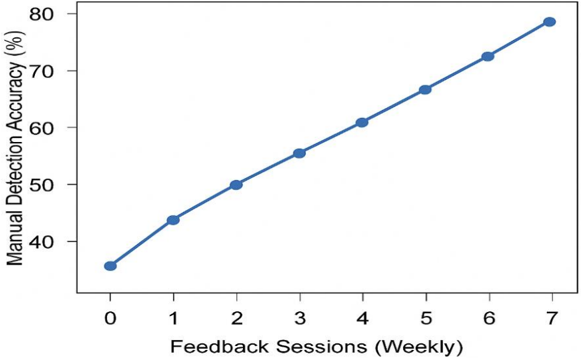
The rapid integration of artificial intelligence (AI) in Security Operations Centers (SOCs) has created both opportunities and challenges for cybersecurity teams. This paper explores the effects of the levels of AI automation on trust of the analysts, decision-making quality, and skill development. The study delves into three main areas: alert trust, automation bias, and skill adaptation. Using an experimental SOC simulator, participants had to use AI detection tools that generated alerts with varied prediction accuracy to examine the effects on trust and performance. Findings suggest that moderate automation promotes healthy trust and improved decision-making accuracy, while high automation could induce excessive reliance and less alertness. Feedback also aids independent detection skill and confidence in analysts. These studies illustrate the imperative to design trust-sensitive adaptive training systems that can allow for better analyst-AI collaboration in cybersecurity.
Overview
The claims and statistics of this paper haven’t been checked yet.
Run the check — free, no account needed. It reads the open-access text and checks the sources it cites.
Integrity signals
Registry
Cites
Statistics
Figures
Verification
Claims the paper makes
The claims and statistics of this paper haven’t been checked yet.
Run the check — free, no account needed. It reads the open-access text and checks the sources it cites.
Claims other papers make about this one
Each is checked against this paper’s own text: does it say what the citing paper says it does?
In the citing paper
“These Gen-1 AI agents can perform natural language processing efficiently: they summarize long cyber reports in accessible language to summarize unstructured security warnings, help the analyst make sense of them, and respond to analyst queries with contextual reasoning and the like [7], [24].”
From The Evolution of Agentic AI in Cybersecurity: From Single LLM Reasoners to Multi-Agent Systems and Autonomous Pipelines (2026) · cites this paper as [24]
Self-check
Percentages, sums and reported differences re-computed from the paper’s own numbers.
The self-check needs the paper’s full text.
Citations
Cites
The publisher hasn’t deposited this paper’s reference list.
Research works printed but not linked: 17
- Araujo, T., Helberger, N., Kruikemeier, S., & de Vreese, C. H. (2020). In AI we trust? Perceptions about automated decision-making by artificial intelligence. AI & SOCIETY, 35(3), 611-623. https://doi.org/10.1007/s00146-019-00931- w · DOI · Paper page
- Asan, O., Bayrak, A. E., & Choudhury, A. (2020). Artificial Intelligence and Human Trust in Healthcare: Focus on Clinicians. Journal of Medical Internet Research, 22(6), e15154. https://doi.org/10.2196/15154 · DOI · Paper page
- Bhatt, U., Xiang, A., Sharma, S., Weller, A., Taly, A., Jia, Y., Ghosh, J., Puri, R., Moura, J. M. F., & Eckersley, P. (2020). Explainable machine learning in deployment. Proceedings of the 2020 Conference on Fairness, Accountability, and Transparency, 648-657. https://doi.org/10.1145/3351095.3375624 · DOI · Paper page
- Branley-Bell, D., Whitworth, R., & Coventry, L. (2020). User Trust and Understanding of Explainable AI: Exploring Algorithm Visualisations and User Biases. Lecture Notes in Computer Science, 382-399. https://doi.org/10.1007/978- 3-030-49065-2_27 · DOI
- Buçinca, Z., Lin, P., Gajos, K. Z., & Glassman, E. L. (2020). Proxy tasks and subjective measures can be misleading in evaluating explainable AI systems. Proceedings of the 25th International Conference on Intelligent User Interfaces. https://doi.org/10.1145/3377325.3377498 · DOI · Paper page
- Burton, J. W., Stein, M., & Jensen, T. B. (2019). A systematic review of algorithm aversion in augmented decision making. Journal of Behavioral Decision Making, 33(2), 220-239. https://doi.org/10.1002/bdm.2155 · DOI · Paper page
- Göndöcs Dóra, Szabolcs Horváth, & Viktor Dörfler. (2025). Uncovering the Dynamics of Human-AI Hybrid Performance: A Qualitative Meta-Analysis of Empirical Studies. International Journal of Human-Computer Studies, 103622-103622. https://doi.org/10.1016/j.ijhcs.2025.103622 · DOI
- Fragiadakis, G., Diou, C., Kousiouris, G., & Nikolaidou, M. (2024). Evaluating human-ai collaboration: A review and methodological framework. arXiv preprint arXiv:2407.19098. https://arxiv.org/pdf/2407.19098 · arXiv
- Glikson, E., & Woolley, A. W. (2020). Human Trust in Artificial Intelligence: Review of Empirical Research. Academy of Management Annals, 14(2), 627-660. https://doi.org/10.5465/annals.2018.0057 · DOI · Paper page
- Kaur, H., Nori, H., Jenkins, S., Caruana, R., Wallach, H., & Vaughan, J. W. (2020). Interpreting Interpretability: Understanding Data Scientists' Use of Interpretability Tools for Machine Learning. 1-14. https://doi.org/10.1145/3313831.3376219 · DOI · Paper page
- Liao, Q. V., Gruen, D., & Miller, S. (2020). Questioning the AI: Informing Design Practices for Explainable AI User Experiences. Proceedings of the 2020 CHI Conference on Human Factors in Computing Systems. https://doi.org/10.1145/3313831.3376590 · DOI · Paper page
- Mohsen Abbaspour Onari, Grau, I., Zhang, C., Nobile, M. S., & Zhang, Y. (2025). Assessing and Quantifying Perceived Trust in Interpretable Clinical Decision Support. Communications in Computer and Information Science, 202-222. https://doi.org/10.1007/978-3-032-08327-2_10 · DOI
- Raji, I. D., Smart, A., White, R. N., Mitchell, M., Gebru, T., Hutchinson, B., Smith-Loud, J., Theron, D., & Barnes, P. (2020). Closing the AI accountability gap. Proceedings of the 2020 Conference on Fairness, Accountability, and Transparency, 33-44. https://doi.org/10.1145/3351095.3372873 · DOI · Paper page
- Reverberi, C., Rigon, T., Solari, A., Hassan, C., Cherubini, P., & Cherubini, A. (2022). Experimental evidence of effective human-AI collaboration in medical decision-making. Scientific reports, 12(1), 14952. https://doi.org/10.1038/s41598-022-18751-2 · DOI · Paper page
- Smith-Renner, A., Fan, R., Birchfield, M., Wu, T., Boyd-Graber, J., Weld, D. S., & Findlater, L. (2020). No Explainability without Accountability. Proceedings of the 2020 CHI Conference on Human Factors in Computing Systems. https://doi.org/10.1145/3313831.3376624 · DOI · Paper page
- Vielberth, M., Bohm, F., Fichtinger, I., & Pernul, G. (2020). Security Operations Center: A Systematic Study and Open Challenges. IEEE Access, 8, 227756-227779. https://doi.org/10.1109/access.2020.3045514 · DOI
- Zhang, Y., Liao, Q. V., & Bellamy, R. K. E. (2020). Effect of confidence and explanation on accuracy and trust calibration in AI-assisted decision making. Proceedings of the 2020 Conference on Fairness, Accountability, and Transparency, 295-305. https://doi.org/10.1145/3351095.3372852 · DOI · Paper page
Cited by
Sorted by citations
Vinay, V. (2026) · 2026 IEEE 5th International Conference on AI in Cybersecurity (ICAIC) · doi:10.1109/icaic67076.2026.11395809 · Cited by 15
AI-Based Asynchronous Alert Enrichment Framework for Scalable Security Operations Centers
Karki, D., Ranga, V., & Sisaudia, V. (2026) · International Conference on Smart Futuristic Technology (SMARTTECH) · doi:10.1109/icsft66733.2026.11507831
Vinay, V., & Bhardwaj, A. (2026) · IEEE Conference on Artificial Intelligence (CAI) · doi:10.1109/cai68641.2026.11536537
Guntha, A. (2026) · International Conference on I-SMAC (IoT in Social, Mobile, Analytics and Cloud) (I-SMAC) · doi:10.1109/i-smac70384.2026.11747296
Metadata
- Authors
- Dept. of Cybersecurity, B. C., & Mathew, A.
- Venue
- International Journal of Computer Technology and Electronics Communication
- Publisher
- Ess & Ess Research Publications
- Published
- 2025-10-30
- Volume
- 08
- Issue
- 05
- ISSN
- 2320-0081 (ISSN-L)
- OpenAlex
- W4415487189
- Cited by
- 3
- References
- 0
- Citations by year
- 2026: 3
- FWCI
- 3.30
- Type
- journal article
- Language
- en
- Open access
- hybrid
- doi.org
- Licence
- cc-by
- Locations
- International Journal of Computer Technology and Electronics Communication (publishedVersion, cc-by)
- Topics
- Social Sciences › Human Factors and Ergonomics › Human-Automation Interaction and Safety
- Physical Sciences › Computer Science › Information Systems › Information and Cyber Security
- Physical Sciences › Computer Science › Computer Networks and Communications › Network Security and Intrusion Detection
- Keywords
- human-AI collaboration, security operations center, automation bias, cybersecurity decision-making, prediction accuracy, alertness, feedback, adaptive training systems
About these checks
Registry, retraction, Cites and statistics results are computed, not judged, with one exception: a printed reference that no index lists is read once by a model before it counts as a citation error. Claims are extracted by a model and kept only when their quote appears verbatim in the text; each cited source is then checked, with a model’s help, for whether it says what the claim relies on. Those verdicts can be wrong — read the claim’s quote and the cited source before relying on one.
Statistics and arithmetic are recomputed, not judged.
Confidence bands are shown only for fields calibrated on our annotated test set. None is calibrated yet, so no band is shown.
What counts as a claim ›How we measure confidence ›How we check this ›
Are you an author, or do you see a problem with this page? Request a review
