

The DOI matches its Crossref record; 2 of the 2 references it cites were found in a registry or an index.
A scoping review of simulation-based dental education
Open accessAbstract
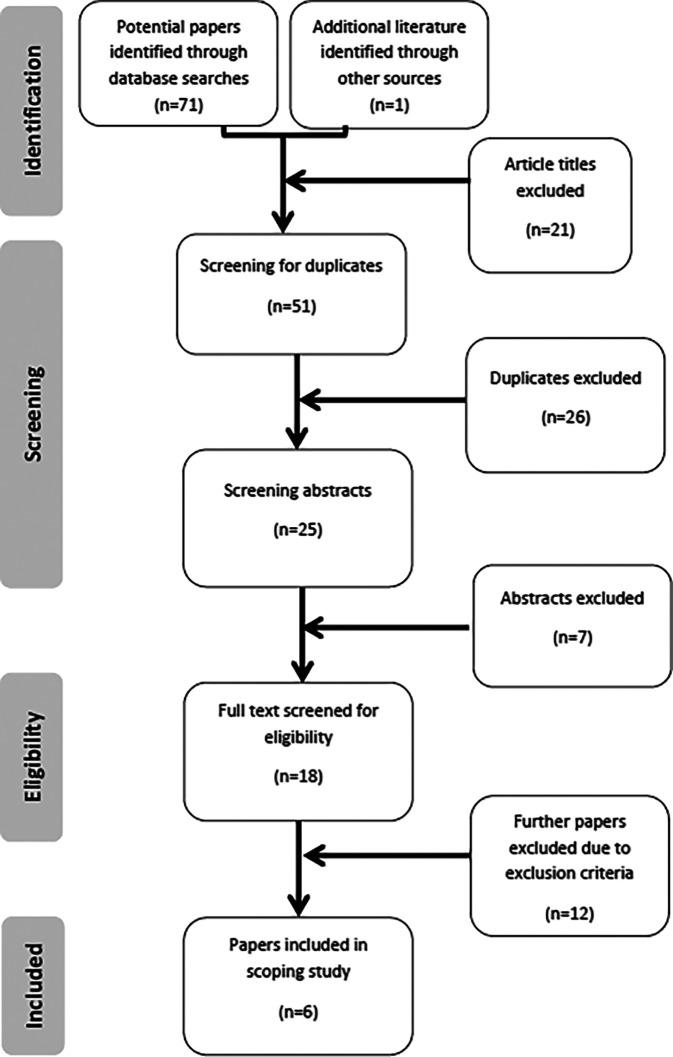
This article was migrated. The article was marked as recommended. In order to meet the needs of student learning within a competency-based pedagogy, it is necessary to understand the current philosophies and modalities being used in dental and oral health simulation-based education. The aim of this literature review is to identify the existing research relating to the educational structure of dental and oral health simulation activities. The review is presented as a scoping review, formulated and conducted using a modified five stage methodological framework. Despite evidence showing that the healthcare simulation model is ideal for learning and assessments of non-clinical and clinical tasks such as psychomotor skills, there is a paucity of published literature relating to simulation in dental and oral health education. Out of 72 initial articles only six papers related to dental preclinical psychomotor skills in an educational setting, none of which were deemed high-quality. Deficiencies in these papers included no statements defining underpinning educational theory, limited acknowledgement of evidence-based simulation activities including preparation, briefing, simulation, feedback, debriefing, reflection and evaluation. Given the widespread use of simulation in dentistry, academics should be encouraged to publish their scholarly activities in simulation-based dental education in order so that all dental faculties can work towards developing contemporary simulation curriculum to provide optimum teaching and learning opportunities for students.
Overview
The claims and statistics of this paper haven’t been checked yet.
Run the check — free, no account needed. It reads the open-access text and checks the sources it cites.
Integrity signals
Registry
Cites
Statistics
Figures
Verification
Claims the paper makes
The claims and statistics of this paper haven’t been checked yet.
Run the check — free, no account needed. It reads the open-access text and checks the sources it cites.
Claims other papers make about this one
Each is checked against this paper’s own text: does it say what the citing paper says it does?
The check wasn’t confident either way, so it gives no verdict — never disputed.
In the citing paper
“The key findings were that process simulations significantly reduced state anxiety (situational anxiety) before and after consultations.”
From Novel non-pharmacological strategies for managing dentophobia in adult patients - literature review (2024) · cites this paper as [25]
Experimental — accuracy not yet measuredThe check wasn’t confident either way, so it gives no verdict — never disputed.
In the citing paper
“The results were consistent with previous research, demonstrating that PSs are clinically and statistically effective in reducing state anxiety [25].”
From Novel non-pharmacological strategies for managing dentophobia in adult patients - literature review (2024) · cites this paper as [25]
Experimental — accuracy not yet measured
Self-check
Percentages, sums and reported differences re-computed from the paper’s own numbers.
The self-check needs the paper’s full text.
Citations
Cites
An Evidence‐Based Approach to Scoping Reviews
Khalil, H., Peters, M., Godfrey, C. M., McInerney, P., Soares, C. B., & Parker, D. (2016) · Worldviews on Evidence-Based Nursing · doi:10.1111/wvn.12144 · Cited by 655
Systematic Reviews: Constructing a Search Strategy and Searching for Evidence
Aromataris, E., & Riitano, D. (2014) · AJN, American Journal of Nursing · doi:10.1097/01.naj.0000446779.99522.f6 · Cited by 523
Research works printed but not linked: 27
- Amer R. S. Denehy G. E. Cobb D. S. Dawson D. V. (2011) Development and evaluation of an Interactive Dental Video Game to Teach Dentin Bonding. Journal of Dental Education. 75(6), pp. 823– 831. 21642529
- Arigbede A. Denloye O. and Dosumu O. (2015) Use of simulators in operative dental education: experience in southern Nigeria. African Health Sciences. 15(1), pp. 269– 277. 10.4314/ahs.v15i1.35 25834558 PMC4370126 · DOI
- Arksey H. and O’Malley L. (2007) Scoping studies: towards a methodological framework. International Journal Of Social Research Methodology. 8(1), pp. 19– 32. 10.1080/1364557032000119616 · DOI · Paper page
- Ben-Gal G. Weiss E. I. Gafni N. and Ziv A. (2013) Testing manual dexterity using a virtual reality simulator: reliability and validity. European Journal of Dental Education. 17, pp. 138– 142. 10.1111/eje.12023 23815690 · DOI
- Cheng A. Kessler D. Mackinnon R. Chang T. P. (2016) Reporting guidelines for health care simulation research: extensions to the CONSORT and STROBE statements. Advances in Simulation. 1(25), pp. 1– 13. 10.1186/s41077-016-0025-y 29449994 PMC5806464 · DOI
- Fugill M. (2013) Defining the purpose of phantom head. European Journal of Dental Education. 17, pp. e1– e4. 10.1111/eje.12008 23279394 · DOI
- Gaba D. M. (2004) The future vision of simulation in health care. BMJ Quality & Safety. 13(1). 10.1136/qshc.2004.009878 PMC1765792 15465951 · DOI
- Gottlieb R. Lanning S. K. Gunsolley J. C. and Buchanan J. A. (2011) Faculty Impressions of Dental Students. Performance With and Without Virtual Reality Simulation. Journal of Dental Education. 75(11), pp. 1443– 1451. 22058393
- Kilistoff A. J. Mackenzie L. D’Eon M. and Trinder K. (2013) Efficacy of a Step-by-Step Carving Technique for Dental Students. Journal of Dental Education. 77(1), pp. 63– 67. 23314467
- Laschinger S. Medves J. Pulling C. McGraw D. R. (2008) Effectiveness of simulation on health profession students’ knowledge, skills, confidence and satisfaction. JBI Library of Systematic Reviews. 6(7), pp. 265– 309. 10.11124/jbisrir-2008-223 27819835 · DOI
- Levac D. Colquhoun H. and O’Brien K. K. (2010) Scoping studies: advancing the methodology. Implementation Science. 5(69), pp. 1– 9. 10.1186/1748-5908-5-69 20854677 PMC2954944 · DOI · Paper page
- Levett-Jones T. and Lapkin S. (2014) A systematic review of the effectiveness of simulation debriefing in health professional education. Nurse Education Today. 34(6), pp. e58– e63. 10.1016/j.nedt.2013.09.020 24169444 · DOI
- Levine A. I. DeMaria S. Schwartz A. D. and Sim A. J. (eds.) (2014) The Comprehensive Textbook of Healthcare Simulation. 2nd edn. New York: Springer.
- Perry S. Bridges S. M. and Burrow M. F. (2015) A Review of the Use of Simulation in Dental Education. Simulation in Healthcare. 10(1), pp. 31– 37. 10.1097/sih.0000000000000059 25574865 · DOI
- Reese C. E. Jeffries P. R. and Engum S. A. (2010) Learning Together: Using Simulations to Develop Nursing and Medical Student Collaboration. Nursing Education Perspectives. 31(1), pp. 33– 38. 20397478
- Schaefer J. J. Vanderbilt A. A. Cason C. L. Bauman E. B. (2011) Instructional Design and Pedagogy Science in Healthcare Simulation. Simulation in Healthcare. 6, pp. S30– S41. 10.1097/sih.0b013e31822237b4 21817861 · DOI
- Seropian M. A. Brown K. Gavilanes J. S. and B D. (2004) An Approach to Simulation Program Development. Journal of Nursing Education. 43(4), pp. 170– 175. 15098911
- Shah R. and Cunningham S. (2009) Implementation of the virtual learning environment into a UK orthodontic training programme: the postgraduate and lecturer perspective. European Journal of Dental Education. 13(4), pp. 223– 232. 10.1111/j.1600-0579.2009.00579.x 19824959 · DOI
- Urbankova A. Eber M. and Engebretson S. P. (2013) A Complex Haptic Exercise to Predict Preclinical Operative Dentistry Performance: A Retrospective Study. Journal of Dental Education. 77(11), pp. 1443– 1450. 24192409
- Urbankova A. and Engebretson S. P. (2011a) Computer-Assisted Dental Simulation as a Predictor of Preclinical Operative Dentistry Perfomance. Journal of Dental Education. 75(9), pp. 1249– 1255. 21890855
- Urbankova A. and Engebretson S. P. (2011b) The Use of Haptics to Predict Preclinic Operative Dentistry Performance and Perceptual Ability. Journal of Dental Education. 75(12), pp. 1548– 1557. 22184593
- Walker J. and von Bergmann H. (2015) Lessons from a Pilot Project in Cognitive Task Analysis: The Potential Role of Intermediates in Preclinical Teaching in Dental Education. Journal of Dental Education. 79(3), pp. 286– 294. 25729022
- Watson K. Wright A. Morris N. McMeeken J. (2012) Can simulation replace part of clinical time? Two parallel randomised controlled trials. Medical Education. 46, pp. 657– 667. 10.1111/j.1365-2923.2012.04295.x 22646319 · DOI
- Welk A. Maggio M. Simon J. Scarbecz M. (2008) Computer-assisted Learning and Simulation Lab with 40 DentSim Units. International Journal of Computerized Dentistry. 11, pp. 17– 40. 18780559
- Weller J. M. Nestel D. Marshall S. D. Brooks P. M. (2012) Simulation in clinical teaching and learning. Medical Education. 196(9), pp. 1– 5. 10.5694/mja10.11474 22621154 · DOI
- Wierinck E. R. Puttemans V. Swinnen S. P. and Steenberghe D. v. (2007) Expert Performance on a Virtual Reality Simulation System. Journal of Dental Education. 71(6), pp. 759– 766. 17554093
- Williams B. and Song J. J. Y. (2016) Are simulated patients effective in facilitating development of clinical competence for healthcare students? A scoping review. Advances in Simulation. 1(6), pp. 1– 9. 10.1186/s41077-016-0006-1 29449975 PMC5796606 · DOI
Cited by
Jones, B., Desu, A., & Honig, C. D. F. (2026) · European Journal of Dental Education · doi:10.1111/eje.13135 · Cited by 21
Novel non-pharmacological strategies for managing dentophobia in adult patients - literature review
Los, A., Fiegler-Rudol, J., Tysiąc-Miśta, M., & Tanasiewicz, M. (2024) · Wiadomości Lekarskie · doi:10.36740/wlek202408112 · Cited by 2
Metadata
- Authors
- Higgins, D., Hayes, M., Taylor, J., & Wallace, J.
- Affiliations
- University of Newcastle Australia (AU)
- The University of Sydney (AU)
- Corresponding author
- Hayes, Melanie
- Venue
- MedEdPublish
- Publisher
- F1000 Research Ltd
- Published
- 2020-02-27
- Volume
- 9
- Pages
- 36
- ISSN
- 2312-7996 (ISSN-L)
- PMC
- PMC10697570
- OpenAlex
- W3008717849
- Cited by
- 45
- References
- 2
- Citations by year
- 2026: 14 · 2025: 13 · 2024: 5 · 2023: 4 · 2022: 2 · 2021: 5 · 2020: 2
- FWCI
- 1.96
- Type
- journal article
- Language
- en
- Open access
- gold
- doi.org
- Licence
- Locations
- MedEdPublish (publishedVersion, cc-by)
- PubMed Central (publishedVersion, cc-by)
- PubMed (publishedVersion)
- DOAJ (DOAJ: Directory of Open Access Journals) (submittedVersion, cc-by-sa)
- NOVA (University of Newcastle Australia) (submittedVersion)
- Topics
- Social Sciences › Education › Simulation-Based Education in Healthcare
- Social Sciences › Education › Innovations in Medical Education
- Health Sciences › Medicine › Surgery › Surgical Simulation and Training
- Keywords
- dental education, oral health education, competency-based education, psychomotor skills, simulation curriculum, debriefing, feedback, simulation evaluation, dental students
About these checks
Registry, retraction, Cites and statistics results are computed, not judged, with one exception: a printed reference that no index lists is read once by a model before it counts as a citation error. Claims are extracted by a model and kept only when their quote appears verbatim in the text; each cited source is then checked, with a model’s help, for whether it says what the claim relies on. Those verdicts can be wrong — read the claim’s quote and the cited source before relying on one.
Statistics and arithmetic are recomputed, not judged.
Confidence bands are shown only for fields calibrated on our annotated test set. None is calibrated yet, so no band is shown.
What counts as a claim ›How we measure confidence ›How we check this ›
Are you an author, or do you see a problem with this page? Request a review
Data sources
Bibliographic data: Semantic Scholar, OpenAlex, Crossref.
Contains information from the Semantic Scholar Academic Graph Datasets, made available under the ODC Attribution License (ODC-BY 1.0).
Semantic Scholar’s data is described in: Kinney, R., et al. (2023). The Semantic Scholar Open Data Platform. arXiv:2301.10140.
