

The DOI matches its Crossref record.
Effectiveness of Mosquito Magnet® trap in rural areas in the southeastern tropical Atlantic Forest
Open accessAbstract
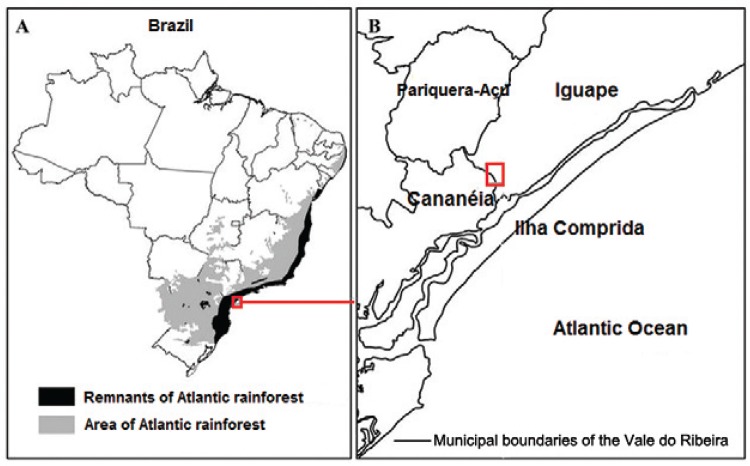
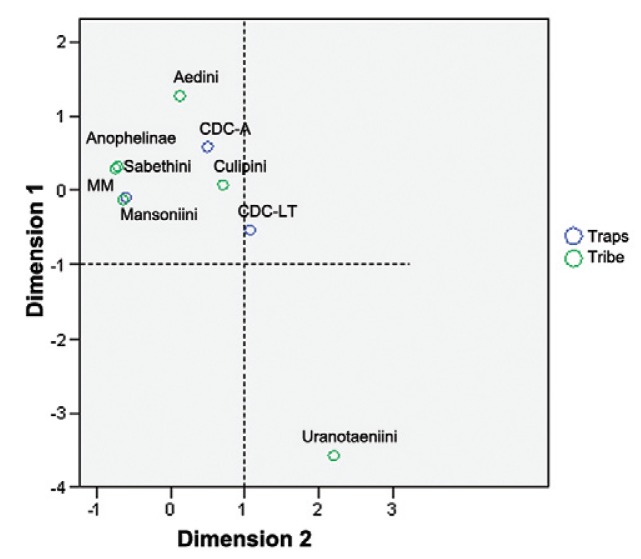
Traps are widely employed for sampling and monitoring mosquito populations for surveillance, ecological and fauna studies. Considering the importance of assessing other technologies for sampling mosquitoes, we addressed the effectiveness of Mosquito Magnet® Independence (MMI) in comparison with those of the CDC trap with CO2 and Lurex3® (CDC-A) and the CDC light trap (CDC-LT). Field collections were performed in a rural area within the Atlantic Forest biome, southeastern state of São Paulo, Brazil. The MMI sampled 53.84% of the total number of mosquitoes, the CDC-A (26.43%) and CDC-LT (19.73%). Results of the Pearson chi-squared test (χ2) showed a positive association between CDC-LT and species of Culicini and Uranotaeniini tribes. Additionally, our results suggested a positive association between CDC-A and representatives of the Culicini and Aedini tribes, whereas the MMI was positively associated with the Mansoniini and Sabethini as well as with Anophelinae species. The MMI sampled a greater proportion (78.27%) of individuals of Anopheles than either the CDC-LT (0.82%) or the CDC-A traps (20.91%). Results of the present study showed that MMI performed better than CDC-LT or CDC-A in sampling mosquitoes in large numbers, medically important species and assessing diversity parameters in rural southeastern Atlantic Forest.
Overview
The claims and statistics of this paper haven’t been checked yet.
Run the check — free, no account needed. It reads the open-access text and checks the sources it cites.
Integrity signals
Registry
Cites
Statistics
Figures
Verification
Claims the paper makes
The claims and statistics of this paper haven’t been checked yet.
Run the check — free, no account needed. It reads the open-access text and checks the sources it cites.
Claims other papers make about this one
Each is checked against this paper’s own text: does it say what the citing paper says it does?
The check wasn’t confident either way, so it gives no verdict — never disputed.
In the citing paper
“Ongoing studies are investigating a range of novel trap designs for Aedes spp. surveillance and control [106–108] but to date, evidence of traps preventing any mosquito-borne disease remains elusive.”
From Is Dengue Vector Control Deficient in Effectiveness or Evidence?: Systematic Review and Meta-analysis (2016) · cites this paper as [106]
Experimental — accuracy not yet measured
Self-check
Percentages, sums and reported differences re-computed from the paper’s own numbers.
The self-check needs the paper’s full text.
Citations
Cites
Still being checked.
Research works printed but not linked: 57
- Arnell JH, 1976, Mosquito studies (Diptera, Culicidae). XXXIII. A revision of the scapularis group of Aedes (Ochlerotatus), Contrib Amer Ent Inst, 13, 1
- Bisevac L, 2009, A comparison of two generic trap types for monitoring mosquitoes through an annual cycle in tropical Australia, J Am Mosq Control Assoc, 25, 58, 10.2987/08-5814.1 · DOI
- Brown HE, 2008, Effectiveness of mosquito trap in measuring species abundance and composition, J Med Entomol, 45, 517, 10.1093/jmedent/45.3.517 · DOI
- Cardoso JC, 2010, Yellow fever virus in Haemagogus leucocelaenus and Aedes serratus mosquitoes, southern Brazil, 2008, Emerg Infect Dis, 16, 1918, 10.3201/eid1612.100608 · DOI
- Cardoso JC, 2010, Novos registros e potencial epidemiológico de algumas espécies de mosquitos (Diptera, Culicidae), no estado do Rio Grande do Sul, Rev Soc Bras Med Trop, 43, 552, 10.1590/S0037-86822010000500016 · DOI
- Cardoso JC, 2011, Ecological aspects of mosquitoes (Diptera: Culicidae) in an Atlantic Forest area on the north coast of Rio Grande do Sul state, Brazil, J Vector Ecol, 36, 175, 10.1111/j.1948-7134.2011.00155.x · DOI
- Carvalho JRP, 2002, Análise de correspondência - uma ferramenta útil na interpretação de mapas de produtividade, R Bras Ci Solo, 26, 435, 10.1590/S0100-06832002000200017 · DOI
- Chaves LSM, 2014, Effectiveness of Mosquito Magnet in preserved area on the Coastal Atlantic Rainforest: implication for entomological surveillance, J Med Entomol, 51, 915, 10.1603/ME14050 · DOI
- Chen H, 2011, VennDiagram: a package for the generation of highly-customizable Venn and Euler diagrams in R, BMC Bioinformatics, 12, 10.1186/1471-2105-12-35 · DOI
- Cilek JE, 2005, The effectiveness of the Mosquito Magnet trap for reducing biting midge (Diptera: Ceratopogonidae) populations in coastal residential backyards, J Am Mosq Control Assoc, 21, 218, 10.2987/8756-971X(2005)21[218:TEOTMM]2.0.CO;2 · DOI
- Correa RR, 1956, Revisão de Phoniomyia Theobald, 1903 (Diptera, Culicidae, Sabethini), Folia Clin Biol, 25, 1
- Cupp EW, 2004, Identification of reptilian and amphibian blood meals from mosquitoes in an eastern equine encephalomyelitis virus focus in central Alabama, Am J Trop Med Hyg, 71, 272, 10.4269/ajtmh.2004.71.272 · DOI
- de Sá ILR, 2013, Comparison of automatic traps to capture mosquitoes (Diptera: Culicidae) in rural areas in the tropical Atlantic rainforest, Mem Inst Oswaldo Cruz, 108, 1014, 10.1590/0074-0276130474 · DOI
- Deane LM, 1984, The vertical dispersion of Anopheles (Kerteszia) cruzi in a forest in southern Brazil suggests that human cases of malaria of simian origin might be expected, Mem Inst Oswaldo Cruz, 79, 461, 10.1590/S0074-02761984000400011 · DOI
- Dugassa S, 2013, Development of a gravid trap for collecting live malaria vectors Anopheles gambiae s.l., PLoS ONE, 8, 10.1371/journal.pone.0068948 · DOI
- Dusfour I, 2010, Evaluation of four methods for collecting malaria vectors in French Guiana, J Econ Entomol, 103, 973, 10.1603/EC09328 · DOI
- Forattini OP, 1965, Culicini: Haemagogus, Mansonia, Culiseta. Sabethini. Toxorhynchitini. Arboviroses. Filariose bancroftiana, Genética, 3
- Forattini OP, 2002, Vol. 2
- Forattini OP, 1991, Observações sobre domiciliação de mosquitos Culex (Melanoconion) em ambiente com acentuadas modificações antrópicas, Rev Saude Publica, 25, 257, 10.1590/S0034-89101991000400004 · DOI
- Forattini OP, 1989, Preferências alimentares e domiciliação de mosquitos no Vale do Ribeira, São Paulo, Brasil, com especial referência a Aedes scapularis e a Culex (Melanoconion), Rev Saude Publica, 23, 9, 10.1590/S0034-89101989000100003 · DOI
- Forattini OP, 1995, Studies on mosquitoes (Diptera: Culicidae) andanthropic environment. 9 - Synanthropy and epidemiological vector role of Aedes scapularis in south-eastern Brazil, Rev Saude Publica, 29, 199, 10.1590/S0034-89101995000300007 · DOI
- Forattini OP, 1995, Studies on mosquitoes (Diptera: Culicidae) and anthropic environment. 10 - Survey of adult behaviour of Culex nigripalpus and other species of Culex (Culex) in south-eastern Brazil, Rev Saude Publica, 29, 271, 10.1590/S0034-89101995000400003 · DOI
- Forattini OP, 1996, Studies on mosquitoes (Diptera: Culicidae) and anthropic environment. 11 - Biting activity and blood-seeking parity of Anopheles (Kerteszia) in south-eastern Brazil, Rev Saude Publica, 30, 107, 10.1590/S0034-89101996000200001 · DOI
- Galindo P, 1954, A revision of the Uranotaenia of Panama withnotes on other American species of the genus (Diptera, Culicidae)., Ann Entomol Soc Am, 47, 105, 10.1093/aesa/47.1.107 · DOI
- Gomes AC, 1985, Uma nova câmara coletora para armadilha CDC-miniatura, Rev Saude Publica, 19, 190, 10.1590/S0034-89101985000200009 · DOI
- Hiwat H, 2011, Carbon dioxide baited trap catches do not correlate with human landing collections of Anopheles aquasalis in Suriname., Mem Inst Oswaldo Cruz, 106, 360, 10.1590/S0074-02762011000300017 · DOI
- Hiwat H, 2011, Evaluation of methods for sampling the malaria vector Anopheles darlingi (Diptera, Culicidae) in Suriname and the relation with its biting behaviour, J Med Entomol, 48, 1039, 10.1603/ME10245 · DOI
- Hoel DF, 2007, Evaluation of carbon dioxide, 1-octen-3l and acid lactic as baits in Mosquito Magnet® Pro traps for Aedes albopictus in north central Florida, J Am Mosq Control Assoc, 23, 11, 10.2987/8756-971X(2007)23[11:EOCDOA]2.0.CO;2 · DOI
- Hoffman DL, 1986, Correspondence analysis: graphical representation of categorical data in marketing research, J Mark Res, 23, 213, 10.2307/3151480 · DOI
- Hutchings RS, 2011, Mosquito (Diptera: Culicidae) diversity of a forest-fragment mosaic in the Amazon rainforest, J Med Entomol, 48, 173, 10.1603/ME10061 · DOI
- Hutchings RSG, 2013, Culicidae (Diptera: Culicomorpha) from the central Brazilian Amazon: Nhamundá and Abacaxis Rivers, Zoologia, 30, 1, 10.1590/S1984-46702013000100001 · DOI
- Hutchings RSG, 2005, Mosquitoes of the Jaú Park and their potential importance in Brazilian Amazonia, Med Vet Entomol, 19, 428, 10.1111/j.1365-2915.2005.00587.x · DOI
- Jawara M, 2011, Field testing of different chemical combinations as odour baits for trapping wild mosquitoes in the Gambia, PLoS ONE, 6, 10.1371/journal.pone.0019676 · DOI
- Jawara M, 2009, Optimizing odor-baited trap methods for collecting mosquitoes during the malaria season in The Gambia, PLoS ONE, 4, 10.1371/journal.pone.0008167 · DOI
- Jones JW, 2004, Seasonal distribution, biology and human attractant patterns of Culicine mosquitoes (Diptera: Culicidae) in a forest near Puerto Almendras, Iquitos, Peru, J Med Entomol, 41, 349, 10.1603/0022-2585-41.3.349 · DOI
- Kitau J, 2010, The effect of Mosquito Magnet® Liberty Plus trap on the human mosquito biting rate under semi-field conditions, J Am Mosq Control Assoc, 26, 287, 10.2987/09-5979.1 · DOI
- Kline DL, 2002, Evaluation of various models of propane-powered mosquito traps, J Vector Ecol, 27, 1
- Kline DL, 1990, Field studies on the potential of butanone, carbon dioxide, honey extract, 1-octen-3-ol, L-lactic acid and phenols as attractants for mosquitoes, Med Vet Entomol, 4, 383, 10.1111/j.1365-2915.1990.tb00455.x · DOI
- Laporta GZ, 2011, Effect of CO2 and 1-octen-3-ol attractants for estimating species richness and the abundance of diurnal mosquitoes in the southeastern Atlantic forest, Brazil, Mem Inst Oswaldo Cruz, 106, 279, 10.1590/S0074-02762011000300005 · DOI
- Lourenço-de-Oliveira R, 1984, Alguns aspectos da ecologia dos mosquitos (Diptera: Culicidae) de uma área de planície (Granjas Calábria) em Jacarepaguá, Rio de Janeiro. I. Frequência comparativa das espécies e métodos de coleta., Mem Inst Oswaldo Cruz, 79, 479, 10.1590/S0074-02761984000400014 · DOI
- Mascheretti M, 2013, Yellow fever: reemerging in the state of São Paulo, Brazil, 2009., Rev Saude Publica, 47, 881
- Melo AS, 2008, O que ganhamos “confundindo” riqueza de espécies e equabilidade em um índice de diversidade?, Biota Neotrop, 8, 21, 10.1590/S1676-06032008000300001 · DOI
- Missawa NA, 2011, Comparison of capture methods for the diagnosis of adult anopheline populations from state of Mato Grosso, Brazil, Rev Soc Bras Med Trop, 44, 555, 10.1590/S0037-86822011005000053 · DOI
- Montes J, 2005, Fauna de Culicidae da Serra da Cantareira, São Paulo, Brasil, Rev Saude Publica, 39, 578, 10.1590/S0034-89102005000400010 · DOI
- Morrow MG, 2010, Mosquito vector abundance immediately before and after Tropical Storms Alma and Arthur, northern Belize, 2008, Rev Panam Salud Publica, 28, 19, 10.1590/S1020-49892010000700003 · DOI
- Oliveira-Ferreira J, 2010, Malaria in Brazil: an overview, Malar J, 9, 10.1186/1475-2875-9-115 · DOI
- Pucci TM, 2003, Insect composition of the Mosquito Magnet Pro® mosquito trap in northeastern Ohio, Gt Lakes Entomol, 36, 25
- Rosa APAT, 1996, Epidemia de febre do Oropouche em Serra Pelada, município de Curionpolis, Pará, 1994, Rev Soc Bras Med Trop, 29, 537, 10.1590/S0037-86821996000600002 · DOI
- Rubio-Palis Y, 2012, Can Mosquito Magnet® substitute for human-landing catches to sample anopheline populations?, Mem Inst Oswaldo Cruz, 107, 546, 10.1590/S0074-02762012000400017 · DOI
- Rutledge CR, 2003, West Nile virus infection rates in Culex nigripalpus (Diptera: Culicidae) do not reflect transmission rates in Florida, J Med Entomol, 40, 253, 10.1603/0022-2585-40.3.253 · DOI
- Santos LG, 2008, Aspectos ecológicos de Anopheles cruzii e Culex ribeirensis (Diptera, Culicidae) da Mata Atlântica de Morretes, Paraná, Brasil, Rev Bras Entomol, 52, 105, 10.1590/S0085-56262008000100018 · DOI
- Spence L, 1962, Bimiti virus: a new agent isolated from Trinidadian mosquitoes, Am J Trop Med Hyg, 11, 414, 10.4269/ajtmh.1962.11.414 · DOI
- Sudia WD, 1962, Battery-operated light trap, an improved model, Mosq News, 22, 126
- Vasconcelos PFC, 1998, Arboviruses pathogenic from man in Brazil, 72
- Versteirt V, 2013, Nationwide inventory of mosquito biodiversity (Diptera: Culicidae) in Belgium, Europe, Bull Entomol Res, 103, 193, 10.1017/S0007485312000521 · DOI
- Xue RD, 2008, Field evaluation of CDC and Mosquito Magnet® x traps baited with dry ice, CO2 sachet and octenol against mosquitoes, J Am Mosq Control Assoc, 24, 249, 10.2987/5701.1 · DOI
- Yamasaki T, 2011, Detection of etiological agents of malaria in howler monkeys from Atlantic Forest, rescued in regions of São Paulo city, Brazil, J Med Primatol, 40, 392, 10.1111/j.1600-0684.2011.00498.x · DOI
Cited by
Sorted by citations
Bowman, L. R., Donegan, S., & McCall, P. J. (2016) · PLOS Neglected Tropical Diseases · doi:10.1371/journal.pntd.0004551 · Cited by 449
Metadata
- Authors
- Sant’Ana, D. C., Sá, I. L. R. D., & Sallum, M. A. M.
- Affiliations
- Faculdade de Saúde Pública, Brasil
- Corresponding author
- Sallum, Maria Anice Mureb
- Venue
- Memórias do Instituto Oswaldo Cruz
- Publisher
- FapUNIFESP (SciELO)
- Published
- 2014-11-21
- Volume
- 109
- Issue
- 8
- Pages
- 1021-1029
- ISSN
- 0074-0276 (ISSN-L)
- 1678-8060
- PMC
- PMC4325607
- OpenAlex
- W2125119747
- Cited by
- 10
- References
- 0
- Citations by year
- 2025: 1 · 2024: 1 · 2022: 3 · 2021: 2 · 2020: 1 · 2018: 1 · 2016: 1
- FWCI
- 0.33
- Type
- journal article
- Language
- en
- Open access
- diamond
- doi.org
- Licence
- cc-by-nc
- Locations
- Memórias do Instituto Oswaldo Cruz (publishedVersion, cc-by-nc)
- Europe PMC (PubMed Central) (publishedVersion, cc-by-nc)
- PubMed Central (publishedVersion, cc-by-nc)
- PubMed (publishedVersion)
- Americanae (AECID Library) (publishedVersion, other-oa)
- DOAJ (DOAJ: Directory of Open Access Journals) (submittedVersion)
- DOAJ (DOAJ: Directory of Open Access Journals) (submittedVersion, cc-by-sa)
- Funders
- Centers for Disease Control and Prevention
- Topics
- Health Sciences › Medicine › Public Health, Environmental and Occupational Health › Mosquito-borne diseases and control
- Health Sciences › Medicine › Public Health, Environmental and Occupational Health › Malaria Research and Control
- Health Sciences › Medicine › Public Health, Environmental and Occupational Health › Dengue and Mosquito Control Research
- Keywords
- CDC light traps, Anopheles, Aedini, Sabethini, Anophelinae, mosquito diversity, Atlantic Forest
- MeSH terms
- Animals, Anopheles, Brazil, Culex, Insect Vectors, Mosquito Control, Culicidae, Population Density, Public Health, Rural Health, Tropical Climate, Ecosystem, Biodiversity, Ochlerotatus, Rainforest
About these checks
Registry, retraction, Cites and statistics results are computed, not judged, with one exception: a printed reference that no index lists is read once by a model before it counts as a citation error. Claims are extracted by a model and kept only when their quote appears verbatim in the text; each cited source is then checked, with a model’s help, for whether it says what the claim relies on. Those verdicts can be wrong — read the claim’s quote and the cited source before relying on one.
Statistics and arithmetic are recomputed, not judged.
Confidence bands are shown only for fields calibrated on our annotated test set. None is calibrated yet, so no band is shown.
What counts as a claim ›How we measure confidence ›How we check this ›
Are you an author, or do you see a problem with this page? Request a review
