

The DOI matches its Crossref record; 1 of the 1 references it cites were found in a registry or an index.
Remineralizing effect of commercial fluoride varnishes on artificial enamel lesions
Overview
The claims and statistics of this paper haven’t been checked yet.
Run the check — free, no account needed. It reads the open-access text and checks the sources it cites.
Integrity signals
Registry
Cites
Statistics
Figures
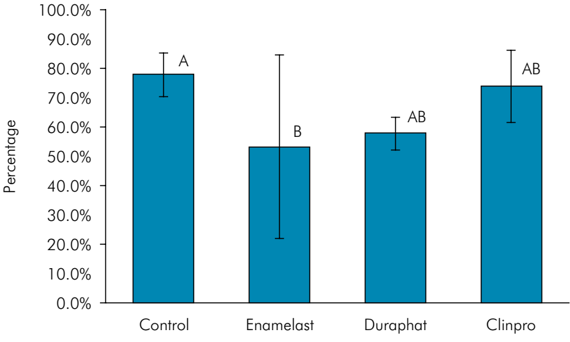
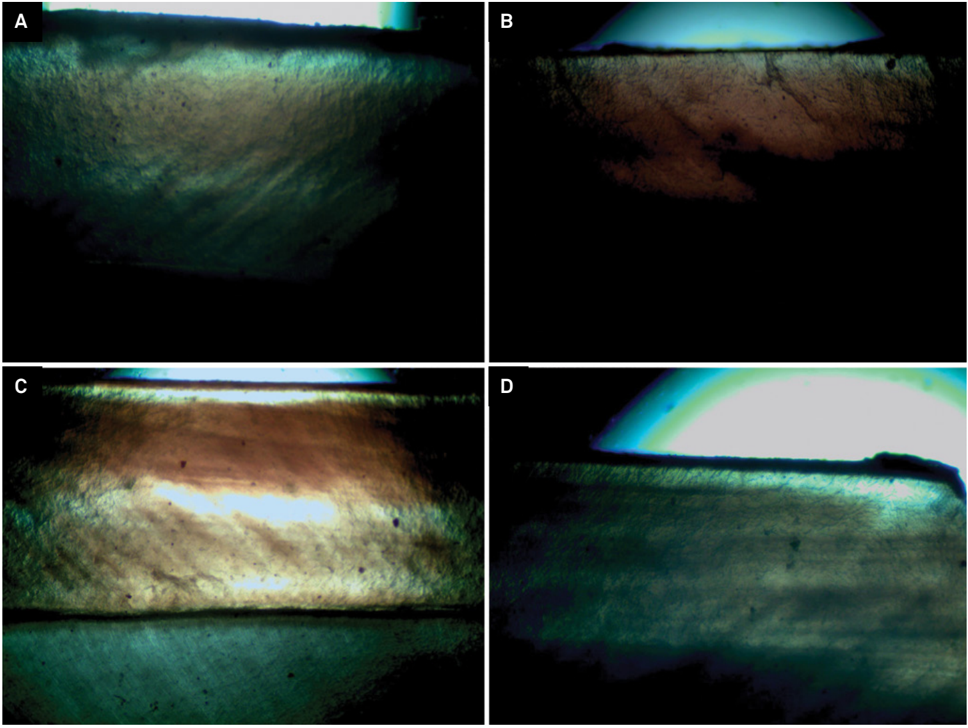
Verification
Claims the paper makes
The claims and statistics of this paper haven’t been checked yet.
Run the check — free, no account needed. It reads the open-access text and checks the sources it cites.
Claims other papers make about this one
Each is checked against this paper’s own text: does it say what the citing paper says it does?
In the citing paper
“De Godoi et al.35 conducted a study to assess the remineralization effect on artificial carious lesions, finding that Enamelast varnish facilitated surface remineralization and achieved higher fluoride concentration compared to other varnishes.”
Self-check
Percentages, sums and reported differences re-computed from the paper’s own numbers.
The self-check needs the paper’s full text.
Citations
Cites
Fluoride varnishes for preventing dental caries in children and adolescents
Marinho, V. C., Worthington, H. V., Walsh, T., & Clarkson, J. E. (2013) · Cochrane Database of Systematic Reviews · doi:10.1002/14651858.cd002279.pub2 · Cited by 1,022
Research works printed but not linked: 37
- Cury JA, 2009, Enamel remineralization: controlling the caries disease or treating early caries lesions?, Braz Oral Res., 23, 23, 10.1590/S1806-83242009000500005 · DOI · Paper page
- Gibson G, 2011, Supplemental fluoride use for moderate and high caries risk adults: a systematic review, J Public Health Dent., 71, 171
- Tellez M, 2013, Non-surgical management methods of noncavitated carious lesions, Community Dent Oral Epidemiol., 41, 79, 10.1111/cdoe.12028 · DOI
- Marinho VC, 2002, Fluoride varnishes for preventing dental caries in children and adolescents, Cochrane Database Syst Rev.
- Queiroz CS, 2008, pH-cycling models to evaluate the effect of low fluoride dentifrice on enamel de- and remineralization, Braz Dent J., 19, 21, 10.1590/S0103-64402008000100004 · DOI
- Lenzi TL, 2016, Are topical fluorides effective for treating incipient carious lesions?: A systematic review and meta-analysis, J Am Dent Assoc., 147, 84.e1, 10.1016/j.adaj.2015.06.018 · DOI
- Gao SS, 2016, Caries remineralisation and arresting effect in children by professionally applied fluoride treatment - a systematic review, BMC Oral Health., 16, 12, 10.1186/s12903-016-0171-6 · DOI
- ten Cate JM, 1999, Current concepts on the theories of the mechanism of action of fluoride, Acta Odontol Scand., 57, 325, 10.1080/000163599428562 · DOI · Paper page
- Tenuta LM, 2008, Fluoride release from CaF2 and enamel demineralization, J Dent Res., 87, 1032, 10.1177/154405910808701105 · DOI
- Fernández CE, 2014, Insoluble NaF in Duraphat® may prolong fluoride reactivity of varnish retained on dental surfaces, Braz Dent J., 25, 160, 10.1590/0103-6440201302405 · DOI
- Bruun C, 1991, Formation of CaF2 on sound enamel and in caries-like enamel lesions after different forms of fluoride applications in vitro, Caries Res., 25, 96, 10.1159/000261350 · DOI
- Retief DH, 1980, In vitro fluoride uptake, distribution and retention by human enamel after 1- and 24-hour application of various topical fluoride agents, J Dent Res., 59, 573, 10.1177/00220345800590030401 · DOI
- Du M, 2012, Randomized controlled trial on fluoride varnish application for treatment of white spot lesion after fixed orthodontic treatment, Clin Oral Investig., 16, 463, 10.1007/s00784-011-0520-4 · DOI
- Arruda AO, 2012, Effect of 5% fluoride varnish application on caries among school children in rural Brazil: a randomized controlled trial, Community Dent Oral Epidemiol., 40, 267, 10.1111/j.1600-0528.2011.00656.x · DOI
- Giacaman R, 2017, Longer retention time of fluoridated varnishes enhances enamel remineralisation in vitro, Oral Health Prev Dent., 15, 569
- Sköld-Larsson K, 2000, Fluoride concentration in plaque in adolescents after topical application of different fluoride varnishes, Clin Oral Investig., 4, 31, 10.1007/s007840050110 · DOI
- Weintraub JA, 2006, Fluoride varnish efficacy in preventing early childhood caries, J Dent Res., 85, 172, 10.1177/154405910608500211 · DOI
- Mohd Said SN, 2017, Effect of different fluoride varnishes on remineralization of artificial enamel carious lesions, Int J Paediatr Dent., 27, 163, 10.1111/ipd.12243 · DOI
- Silverstone LM, 1972, Remineralization of human enamel in vitro, Proc R Soc Med., 65, 906
- Al Dehailan L, 2016, The effect of fluoride varnishes on caries lesions: an in vitro investigation, Clin Oral Investig., 20, 1655, 10.1007/s00784-015-1648-4 · DOI
- Bolis C, 2015, Fluoride varnishes: is there a correlation between fluoride release and deposition on enamel?, Oral Health Prev Dent., 13, 545
- Carvalho TS, 2015, Braz. oral res. Correction: Fluoride varnishes with calcium glycerophosphate: fluoride release and effect on in vitro enamel demineralization, Braz Oral Res., 29, 1, 10.1590/1807-3107BOR-2015.vol29.0092 · DOI
- Punathil S, 2018, Assessment of enamel surface microhardness with different fluoride varnishes-an in vitro study, J Contemp Dent Pract., 19, 1317, 10.5005/jp-journals-10024-2425 · DOI
- Oliveira MR, 2019, Microhardness of bovine enamel after different fluoride application protocols, Dent Mater J., 38, 61, 10.4012/dmj.2017-399 · DOI
- Manarelli MM, 2014, In vitro remineralizing effect of fluoride varnishes containing sodium trimetaphosphate, Caries Res., 48, 299, 10.1159/000356308 · DOI
- Spiguel MH, 2009, Evaluation of laser fluorescence in the monitoring of the initial stage of the de-/remineralization process: an in vitro and in situ study, Caries Res., 43, 302, 10.1159/000218094 · DOI
- Vieira AE, 2005, Fluoride dose response in pH-cycling models using bovine enamel, Caries Res., 39, 514, 10.1159/000088189 · DOI
- Silverstone LM, 1968, The surface zone in caries and in caries-like lesions produced in vitro, Br Dent J., 125, 145
- Altenburger MJ, 2008, Fluoride uptake and remineralisation of enamel lesions after weekly application of differently concentrated fluoride gels, Caries Res., 42, 312, 10.1159/000148164 · DOI
- Buzalaf MA, 2011, Mechanisms of action of fluoride for caries control, Monogr Oral Sci., 22, 97, 10.1159/000325151 · DOI
- Lagerweij MD, 2006, Prevention of erosion and abrasion by a high fluoride concentration gel applied at high frequencies, Caries Res., 40, 148, 10.1159/000091062 · DOI
- Elkassas D, 2014, Remineralizing efficacy of different calcium-phosphate and fluoride based delivery vehicles on artificial caries like enamel lesions, J Dent., 42, 466, 10.1016/j.jdent.2013.12.017 · DOI
- Karlinsey RL, 2010, Surfactant-modified beta-TCP: structure, properties, and in vitro remineralization of subsurface enamel lesions, J Mater Sci Mater Med., 21, 2009, 10.1007/s10856-010-4064-y · DOI
- Balakrishnan A, 2013, Evaluation to determine the caries remineralization potential of three dentifrices: an in vitro study, J Conserv Dent., 16, 375, 10.4103/0972-0707.114347 · DOI
- Cochrane NJ, 2010, New approaches to enhanced remineralization of tooth enamel, J Dent Res., 89, 1187, 10.1177/0022034510376046 · DOI
- Alamoudi SA, 2013, The effect of the addition of tricalcium phosphate to 5% sodium fluoride varnishes on the microhardness of enamel of primary teeth, Int J Dent., 2013, 486358, 10.1155/2013/486358 · DOI
- Tuloglu N, 2016, Effect of fluoride varnish with added casein phosphopeptide-amorphous calcium phosphate on the acid resistance of the primary enamel, BMC Oral Health., 16, 103, 10.1186/s12903-016-0299-4 · DOI
Cited by
Sorted by citations
Baidya, D., Pathivada, L., Garg, N., Karthik, K. M., Jain, A. K., & Bhyri, P. (2026) · International Journal of Clinical Pediatric Dentistry · doi:10.5005/jp-journals-10005-3470
Metadata
- Authors
- Godoi, F. A. D., Carlos, N. R., Bridi, E. C., Amaral, F. L. B. D., França, F. M. G., Turssi, C. P., Kantovitz, K. R., & Basting, R. T.
- Venue
- Brazilian Oral Research
- Publisher
- FapUNIFESP (SciELO)
- Published
- 2019
- Volume
- 33
- ISSN
- 1807-3107
- 1806-8324
- Cited by
- 31
- References
- 1
About these checks
Registry, retraction, Cites and statistics results are computed, not judged, with one exception: a printed reference that no index lists is read once by a model before it counts as a citation error. Claims are extracted by a model and kept only when their quote appears verbatim in the text; each cited source is then checked, with a model’s help, for whether it says what the claim relies on. Those verdicts can be wrong — read the claim’s quote and the cited source before relying on one.
Statistics and arithmetic are recomputed, not judged.
Confidence bands are shown only for fields calibrated on our annotated test set. None is calibrated yet, so no band is shown.
What counts as a claim ›How we measure confidence ›How we check this ›
Are you an author, or do you see a problem with this page? Request a review
