

Apparent mineralocorticoid excess syndrome: an overview
Open accessThe DOI matches its Crossref record; 70 of the 70 references it cites were found in a registry or an index.
Abstract
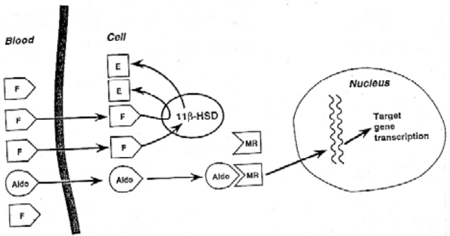
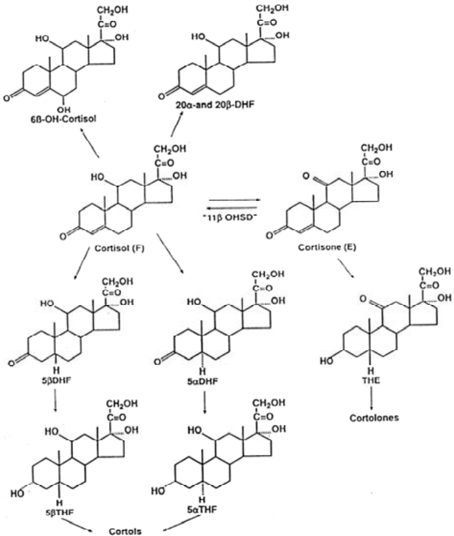
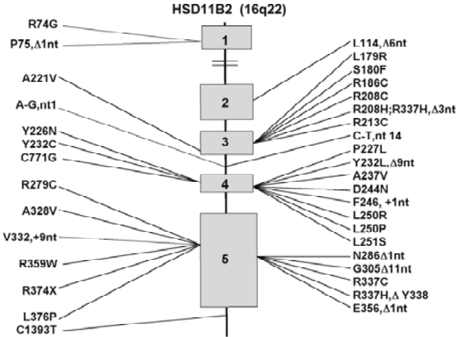
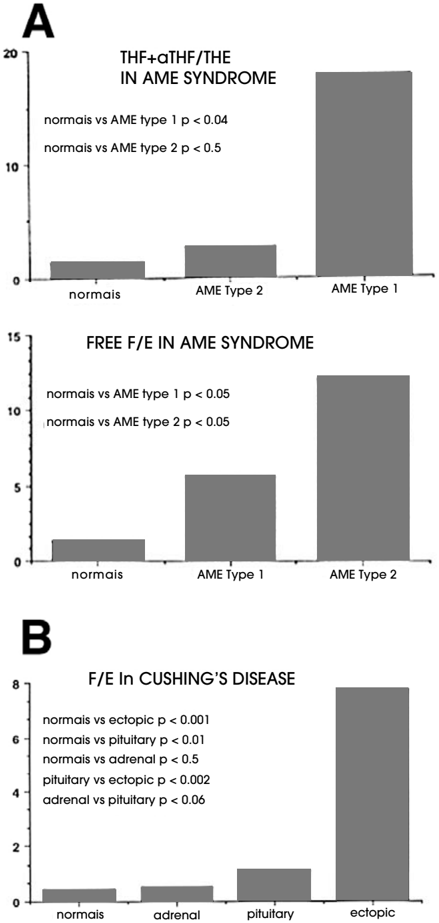
Apparent mineralocorticoid excess (AME) syndrome results from defective 11beta-hydroxysteroid dehydrogenase type 2 (11beta-HSD2). This enzyme is co-expressed with the mineralocorticoid receptor (MR) in the kidney and converts cortisol (F) to its inactive metabolite cortisone (E). Its deficiency allows the unmetabolized cortisol to bind to the MR inducing sodium retention, hypokalemia, suppression of PRA and hypertension. Mutations in the gene encoding 11beta-HSD2 account for the inherited form, but a similar clinical picture to AME occurs following the ingestion of bioflavonoids, licorice and carbenoxolone, which are competitive inhibitors of 11beta-HSD2. Reduced 11beta-HSD2 activity may explain the increased sodium retention in preeclampsia, renal disease and liver cirrhosis. Relative deficiency of 11beta-HSD2 activity can occur in Cushing's syndrome due to saturation of the enzyme and explains the mineralocorticoid excess state that characterizes ectopic ACTH syndrome. Reduced placental 11beta-HSD2 expression might explain the link between reduced birth weight and adult hypertension. Polymorphic variability in the HSD11B2 gene in part determines salt sensitivity, a forerunner for adult hypertension onset. AME represents a spectrum of mineralocorticoid hypertension with severity reflecting the underlying genetic defect in the 11beta-HSD2; although AME is a genetic disorder, several exogenous compounds can bring about the symptoms by inhibiting 11beta-HSD2 enzyme. Substrate excess as seen in Cushing's syndrome and ACTH ectopic production can overwhelm the capacity of 11beta-HSD2 to convert F to E, leading up to an acquired form of AME.
Overview
The claims and statistics of this paper haven’t been checked yet.
Free: it reads the open-access text and checks the first 5 claims that cite a source we can check. Create a free account to check every claim.
Integrity signals
Registry
Cites
Statistics
Figures
Verification
Claims the paper makes
The claims and statistics of this paper haven’t been checked yet.
Free: it reads the open-access text and checks the first 5 claims that cite a source we can check. Create a free account to check every claim.
Claims other papers make about this one
Each is checked against this paper’s own text: does it say what the citing paper says it does?
The source backs part of the claim, not all of it — or backs it for a different population, condition or comparison.
In the citing paper
“Treatment with spironolactone, correction of the hypokalemia, low-salt diets, and diuretics is only partially successful, and 10% of patients die from cerebrovascular accidents (599).”
From The Molecular Biology, Biochemistry, and Physiology of Human Steroidogenesis and Its Disorders (2011) · cites this paper as [599]
Experimental — accuracy not yet measuredThe cited source says what the claim attributes to it.
In the citing paper
“HSD11B2 converts cortisol to cortisone to protect the MR from activation by cortisol, thus allowing the dedicated MR agonist aldosterone to bind [[228], [229], [230], [231]].”
From Human steroid biosynthesis, metabolism and excretion are differentially reflected by serum and urine steroid metabolomes: a comprehensive review (2019) · cites this paper as [230]
Self-check
Percentages, sums and reported differences re-computed from the paper’s own numbers.
The self-check needs the paper’s full text.
Citations
Cites
Arriza, J. L., Weinberger, C., Cerelli, G., Glaser, T. M., Handelin, B. L., Housman, D. E., & Evans, R. M. (1987) · Science · doi:10.1126/science.3037703 · Cited by 1,946
Mineralocorticoid action: target tissue specificity is enzyme, not receptor, mediated
Funder, J. W., Pearce, P. T., Smith, R., & Smith, A. I. (1988) · Science · doi:10.1126/science.2845584 · Cited by 1,628
Edwards, C. R. W., Burt, D., Mcintyre, M. A., De Kloet, E. R., Stewart, P. M., Brett, L., Sutanto, W. S., & Monder, C. (1988) · The Lancet · doi:10.1016/s0140-6736(88)90742-8 · Cited by 1,068
Self-citationANTI-ESCHERICHIA COLI ALPHA-HAEMOLYSIN IN CONTROL AND PATIENT SERA
Emody, L., Batai, I., Kerényi, M., Székely, J., & Polyak, L. (1982) · The Lancet · doi:10.1016/s0140-6736(82)90183-0 · Cited by 800
11β-Hydroxysteroid Dehydrogenase
Stewart, P. M., & Krozowski, Z. S. (1997) · Vitamins & Hormones · doi:10.1016/s0083-6729(08)60646-9 · Cited by 718
Self-citationCloning and tissue distribution of the human 1 lβ-hydroxysteroid dehydrogenase type 2 enzyme
Albiston, A. L., Obeyesekere, V. R., Smith, R. E., & Krozowski, Z. S. (1994) · Molecular and Cellular Endocrinology · doi:10.1016/0303-7207(94)90176-7 · Cited by 712
Human hypertension caused by mutations in the kidney isozyme of 11β–hydroxysteroid dehydrogenase
Mune, T., Rogerson, F. M., Nikkilä, H., Agarwal, A. K., & White, P. C. (1995) · Nature Genetics · doi:10.1038/ng0895-394 · Cited by 619
Krozowski, Z. S., & Funder, J. W. (1983) · Proceedings of the National Academy of Sciences · doi:10.1073/pnas.80.19.6056 · Cited by 523
11β-Hydroxysteroid Dehydrogenase and the Syndrome of Apparent Mineralocorticoid Excess*
White, P. C., Mune, T., & Agarwal, A. K. (1997) · Endocrine Reviews · doi:10.1210/edrv.18.1.0288 · Cited by 517
ULICK, S., KODAMA, T., GUNCZIER, P., ZANCONATO, G., RAMIREZ, L. C., RAUH, W., ROSLER, A., BRADLOW, H. L., & NEW, M. I. (1979) · The Journal of Clinical Endocrinology & Metabolism · doi:10.1210/jcem-49-5-757 · Cited by 496
Research works printed but not linked: 3
- 5. Vogt B, Frey BM, Frey FJ. 11 -Hydroxysteroid dehydro- genase: pathophysiology. Adv Nephrol Necker Hosp 1999;29:127-48.
- 19. Werder E, Zachmann M, Vollmin JA, Veyrat R, Prader A. Unusual steroid excretion in a child with low renin hyper- tension. Res Steroids 1974;6:385-9.
- 67. Nikkila H, Tannin GM, New MI, Taylors NF, Kalaitzoglu G, Monder G, et al. Defect in HSD1 gene encoding 11 - hydroxysteroid dehydrogenase are not found in patient with mineralocorticoid excess or 11-oxo reductase defi- ciency. J Clin Endocrinol Metab 1993;77:687-91.
Cited by
The Molecular Biology, Biochemistry, and Physiology of Human Steroidogenesis and Its Disorders
Miller, W. L., & Auchus, R. J. (2011) · Endocrine Reviews · doi:10.1210/er.2010-0013 · Cited by 2,458
Review of Pharmacological Effects of Glycyrrhiza sp. and its Bioactive Compounds
Asl, M. N., & Hosseinzadeh, H. (2008) · Phytotherapy Research · doi:10.1002/ptr.2362 · Cited by 1,136
Schiffer, L., Barnard, L., Baranowski, E. S., Gilligan, L. C., Taylor, A. E., Arlt, W., Shackleton, C. H. L., & Storbeck, K.-H. (2019) · The Journal of Steroid Biochemistry and Molecular Biology · doi:10.1016/j.jsbmb.2019.105439 · Cited by 450
Steroidogenesis in the skin: Implications for local immune functions
Slominski, A., Zbytek, B., Nikolakis, G., Manna, P. R., Skobowiat, C., Zmijewski, M., Li, W., Janjetovic, Z., Postlethwaite, A., Zouboulis, C. C., et al. (2013) · The Journal of Steroid Biochemistry and Molecular Biology · doi:10.1016/j.jsbmb.2013.02.006 · Cited by 369
Sambucus nigra extracts inhibit infectious bronchitis virus at an early point during replication
Chen, C., Zuckerman, D. M., Brantley, S. E., Sharpe, M., Childress, K. O., Hoiczyk, E., & Pendleton, A. R. (2014) · BMC Veterinary Research · doi:10.1186/1746-6148-10-24 · Cited by 140
“However, the use of these extracts or the active ingredients from these extracts for long-term treatment or prevention strategies poses some toxicity concerns [27-29].”
Pereira, C., Azevedo, I., Monteiro, R., & Martins, M. J. (2012) · Diabetes Obesity and Metabolism · doi:10.1111/j.1463-1326.2012.01582.x · Cited by 128
Overview of Monogenic or Mendelian Forms of Hypertension
Raina, R., Krishnappa, V., Das, A., Amin, H., Radhakrishnan, Y., Nair, N., & Kusumi, K. (2019) · Frontiers in Pediatrics · doi:10.3389/fped.2019.00263 · Cited by 79
Pseudohyperaldosteronism, Liquorice, and Hypertension
Sontia, B., Mooney, J., Gaudet, L., & Touyz, R. M. (2008) · The Journal of Clinical Hypertension · doi:10.1111/j.1751-7176.2008.07470.x · Cited by 60
He, P., Chen, Z., Sun, Q., Li, Y., Gu, H., & Ni, X. (2013) · Endocrinology · doi:10.1210/en.2013-1350 · Cited by 66
Cross-talk between adipose tissue and the HPA axis in obesity and overt hypercortisolemic states
Vicennati, V., Garelli, S., Rinaldi, E., Dalmazi, G. D., Pagotto, U., & Pasquali, R. (2014) · Hormone Molecular Biology and Clinical Investigation · doi:10.1515/hmbci-2013-0068 · Cited by 67
“Plasma cortisol levels were not reduced, while there was an increase in ACTH levels, suggesting a systemic, rather than local, cortisol inhibition [3, 157, 158].”
BackgroundAdrenal cortex and its disorders
Miller, W. L., & Flück, C. E. (2014) · Elsevier eBooks · doi:10.1016/b978-1-4557-4858-7.00022-6 · Cited by 60
Human saliva cortisone and cortisol simultaneous analysis using reverse phase HPLC technique
Palo, E. F. D., Antonelli, G., Benetazzo, A., Prearo, M., & Gatti, R. D. (2009) · Clinica Chimica Acta · doi:10.1016/j.cca.2009.04.006 · Cited by 57
“Kidney 11βHSD2 inability to inactivate F to E causes excess of F in the AME (apparentmineralocorticoid excess) syndrome [1,11].”
BackgroundMethodAcclimation of Zebrafish to Transport Stress
Dhanasiri, A. K. S., Fernandes, J. M. O., & Kiron, V. (2013) · Zebrafish · doi:10.1089/zeb.2012.0843 · Cited by 55
“30,78 The expression of hsd11b2 in this organ of zebrafish from the control group increased significantly at the 72 h time point during transport (AT) compared to those in fish prior to transport (BP) and after packing (AP), while the transcript in the fish from the Nbc1 group remained unchanged during…”
The Adrenal Cortex and its Disorders
Miller, W. L. (2009) · Brook's Clinical Pediatric Endocrinology · doi:10.1002/9781444316728.ch13 · Cited by 50
Hypertensive Crisis in Pediatric Patients: An Overview
Raina, R., Mahajan, Z., Sharma, A., Chakraborty, R., Mahajan, S., Sethi, S. K., Kapur, G., & Kaelber, D. C. (2020) · Frontiers in Pediatrics · doi:10.3389/fped.2020.588911 · Cited by 49
Apparent mineralocorticoid excess: comprehensive overview of molecular genetics
Lu, Y., Zhang, D., Zhang, Q.-Y., Zhou, Z.-M., Yang, K., Zhou, X., & Peng, F. (2022) · Journal of Translational Medicine · doi:10.1186/s12967-022-03698-9 · Cited by 49
“Presumably, the prolonged cortisol half-life may result in the low rate of cortisol secretion because of normal hypothalamic-pituitary-adrenal axis (HPA) regulation effect [14, 31].”
BackgroundLicorice induced hypokalemia, edema, and thrombocytopenia
Celik, M. M., Karakuş, A., Zeren, C., Demir, M. T., Bayaroğulları, H., Duru, M., & Al, M. (2012) · Human & Experimental Toxicology · doi:10.1177/0960327112446843 · Cited by 46
“The net effect of renal mineralocorticoid receptor activation is sodium reabsorption and potassium excretion with transient hypernatremia, persistent hypokalemia, hypertension, and metabolic alkalosis, leading to a phenotype similar to that of the syndrome of apparent mineralocorticoid excess.(5) Herein, a case with h…”
BackgroundSteroids - From Physiology to Clinical Medicine
Ostojić, S. M. (2012) · InTech eBooks · doi:10.5772/46119 · Cited by 41
“[78] Seeger T, Fedorova I, Zheng F, Miyakawa T, Koustova E, Gomeza J, Basile AS, Alz‐ heimer C, Wess J (2004) M2 muscarinic acetylcholine receptor knock-out mice show deficits in behavioral flexibility, working memory, and hippocampal plasticity.”
BackgroundInfluentialAra, T., Nakatani, S., Kobata, K., Sogawa, N., & Sogawa, C. A. (2018) · Medicines · doi:10.3390/medicines5040122 · Cited by 39
Inherited forms of mineralocorticoid hypertension
Hassan-Smith, Z., & Stewart, P. M. (2011) · Current Opinion in Endocrinology, Diabetes & Obesity · doi:10.1097/med.0b013e3283469444 · Cited by 36
Self-citationClinical and Molecular Perspectives of Monogenic Hypertension
Levanovich, P., Diaczok, A., & Rossi, N. F. (2019) · Current Hypertension Reviews · doi:10.2174/1573402115666190409115330 · Cited by 38
The Adrenal Cortex and Its Disorders
Miller, W. L., Flück, C. E., Breault, D. T., & Feldman, B. J. (2021) · Elsevier eBooks · doi:10.1016/b978-0-323-62520-3.00014-2 · Cited by 38
Monogenic forms of low-renin hypertension: clinical and molecular insights
Khandelwal, P., & Deinum, J. (2021) · Pediatric Nephrology · doi:10.1007/s00467-021-05246-x · Cited by 34
The Adrenal Cortex and Its Disorders
Miller, W. L., Achermann, J. C., & Flück, C. E. (2008) · Elsevier eBooks · doi:10.1016/b978-141604090-3.50017-x · Cited by 33
Fan, P. T., Lu, Y., Yang, K., Zhang, D., Liu, X., Tian, T., Luo, F., Wang, L., Ma, W., Liu, Y., et al. (2020) · Endocrine · doi:10.1007/s12020-020-02460-9 · Cited by 28
Sánchez‐Guijo, A., Hartmann, M. F., Shi, L., Remer, T., & Wudy, S. A. (2013) · Analytical and Bioanalytical Chemistry · doi:10.1007/s00216-013-7505-x · Cited by 26
“Patients with AME syndrome, a severe form of steroidogenic hypertension, cannot convert cortisol into cortisone, as the renal enzyme responsible for this conversion, 11betahydroxysteroid dehydrogenase type 2 (11-βHSD2), is defective [24].”
BackgroundCilia-enriched oxysterol 7β,27-DHC is required for polycystin ion channel activation
Ha, K., Mundt, N., Bisignano, P., Pinedo, A., Raleigh, D. R., Loeb, G. B., Reiter, J. F., Cao, E., & Delling, M. (2024) · Nature Communications · doi:10.1038/s41467-024-50318-9 · Cited by 23
11β-Hydroxysteroid Dehydrogenase Type 1 as a Potential Treatment Target in Cardiovascular Diseases
Kupczyk, D., Studzińska, R., Kołodziejska, R., Baumgart, S., Modrzejewska, M., & Woźniak, A. (2022) · Journal of Clinical Medicine · doi:10.3390/jcm11206190 · Cited by 21
“Symptoms similar to AME, despite normal 11β-HSD2 activity (enzyme inactivation—substrate saturation of 11β-HSD2), can also be observed in the case of excessive cortisol production in Cushing’s syndrome or ectopic ACTH secretion [60,68,71].”
BackgroundChen, Z., Li, J., Xu, G., Yang, J., Zhang, J., & Deng, H. (2014) · Journal of Chromatography B · doi:10.1016/j.jchromb.2014.08.001 · Cited by 20
Støving, R. K., Lingqvist, L. E., Bonde, R. K., Andries, A., Hansen, M. H., Andersen, M., & Hørder, K. (2010) · Nutrition · doi:10.1016/j.nut.2010.06.006 · Cited by 21
Assessment of General Toxicity of the Glycyrrhiza New Variety Extract in Rats
Kim, D., Lee, J., Kim, W., An, H., Lee, J., Chang, J.-K., Kang, S.-H., Song, Y.-J., Jeon, Y., & Jin, J. (2021) · Plants · doi:10.3390/plants10061126 · Cited by 18
“Then it can cross-react and activate the mineralocorticoid receptor, which leads to the AME-associated syndromes [27,28].”
BackgroundMurck, H., Lehr, L., & Ježová, D. (2022) · Journal of Neuroendocrinology · doi:10.1111/jne.13219 · Cited by 16
Bisogni, V., Rossi, G. P., & Calò, L. A. (2013) · Blood Pressure · doi:10.3109/08037051.2013.832967 · Cited by 15
Liquorice: a root cause of secondary hypertension
Varma, R., & Ross, C. N. (2017) · JRSM Open · doi:10.1177/2054270416685208 · Cited by 16
Diagnosis and Management of Endocrine Hypertension in Children and Adolescents
Kotanidou, E. P., Giza, S., Tsinopoulou, V. R., Vogiatzi, M. G., & Galli‐Τsinopoulou, A. (2020) · Current Pharmaceutical Design · doi:10.2174/1381612826666201113103614 · Cited by 14
Mechanism of Action of Hormones That Act on Nuclear Receptors
Lazar, M. A. (2011) · Elsevier eBooks · doi:10.1016/b978-1-4377-0324-5.00004-3 · Cited by 14
Decoding Monogenic Hypertension: A Review of Rare Hypertension Disorders
Gallegos, F. R., Delahunty, M., Hu, J., Yerigeri, S., Dev, V., Bhatt, G., & Raina, R. (2025) · American Journal of Hypertension · doi:10.1093/ajh/hpaf005 · Cited by 14
Aldosterone Action on Brain and Behavior
Murck, H. (2016) · Elsevier eBooks · doi:10.1016/b978-0-12-803592-4.00052-3 · Cited by 10
An Unusual Cause of Pediatric Hypertension
Friedman, K. G., Wallis, T. W., Maloney, K. W., Hendrickson, R. J., Mengshol, S. C., & Cadnapaphornchai, M. A. (2007) · The Journal of Pediatrics · doi:10.1016/j.jpeds.2007.04.015 · Cited by 9
Myers, K. A., & Kline, G. A. (2010) · Endocrine Practice · doi:10.4158/ep09282.cr · Cited by 8
“Mild deficiency or decreased activity of this enzyme may also contribute to normal mineralocorticoid function in the absence of aldosterone (23).”
BackgroundValdivia, C. P., Carvajal, C. A., Campino, C., Allende, F. A., Martínez‐Aguayo, A., Baudrand, R., Vecchiola, A., Lagos, C. F., Tapia-Castillo, A., Fuentes, C., et al. (2015) · American Journal of Hypertension · doi:10.1093/ajh/hpv052 · Cited by 7
Apparent Mineralocorticoid Excess – Update
Nimkarn, S. (2011) · Advances in experimental medicine and biology · doi:10.1007/978-1-4419-8002-1_10 · Cited by 7
SECONDARY (ENDOCRINE) HYPERTENSION: LECTURE
Yukina, M. Y., Troshina, E. A., Beltsevich, D. G., & Platonova, N. M. (2016) · Almanac of Clinical Medicine · doi:10.18786/2072-0505-2016-44-4-501-512 · Cited by 6
Primary Mineralocorticoid Excess Disorders and Hypertension
Carey, R. M., & Padia, S. H. (2015) · Elsevier eBooks · doi:10.1016/b978-0-323-18907-1.00108-6 · Cited by 6
Apostolakos, J. M., & Caines, L. C. (2016) · Journal of Clinical Hypertension · doi:10.1111/jch.12841 · Cited by 6
“The relative excess of cortisol stimulates the mineralocorticoid receptors in the renal distal tubules and collecting ducts resulting in sodium retention, potassium wasting, and metabolic alkalosis accompanied by low plasma renin and low aldosterone levels.(5,6,9,10,12) The finding of low aldosterone is what distingui…”
BackgroundA Rare Case of Apparent Mineralocorticoid Excess Presenting as Endocrine Hypertension
Vijayakumar, V., Kumar, N., Kumar, D., Abhinay, A., Singh, A., & Prasad, R. (2024) · Indian Journal of Nephrology · doi:10.25259/ijn_83_2024 · Cited by 5
Ligand Regulation and Nuclear Receptor Action
Hewison, M. (2010) · Springer eBooks · doi:10.1007/978-90-481-3303-1_16 · Cited by 5
Hypertension Secondary to Ingestion of Licorice Root Tea
Eid, T. J., Morris, A. A., & Shah, S. A. (2011) · Journal of Pharmacy Technology · doi:10.1177/875512251102700605 · Cited by 5
Buhl, L. F., Pedersen, F. N., Andersen, M., & Glintborg, D. (2018) · BMJ Case Reports · doi:10.1136/bcr-2017-223918 · Cited by 4
[Rare congenital defects of adrenal steroidogenesis].
Krysiak, R. G., Marek, B., & Okopień, B. (2008) · PubMed · Cited by 4
Pandher, R., Puvanendran, A., & DIAMOND, T. H. (2020) · The Medical Journal of Australia · doi:10.5694/mja2.50728 · Cited by 4
Hipopotasemia asociada al consumo de regaliz
Moreno-Rodrigo, A., Macías, A. G., Martínez, P. A., García-Jiménez, N., Aparicio, E. M., & de la Villa, F. M. (2008) · Gaceta Médica de Bilbao · doi:10.1016/s0304-4858(08)74630-4 · Cited by 3
“Además del regaliz, deben tenerse en cuenta otras sustancias con acciones biológicas similares, como la carbenoxolona (derivado del ácido glicirricínico, utilizado como antiulceroso en úlceras pépticas) y los flavonoides presentes en algunas frutas como la uva (11).”
A Hyperparathyroid State in a Patient with Glycyrrhetinic Acid-Induced Pseudoaldosteronism
Sugimoto, T., Ogawa, N., Yamamoto, K., Uzu, T., Nishio, Y., & Kashiwagi, A. (2007) · Internal Medicine · doi:10.2169/internalmedicine.46.6183 · Cited by 3
“, hypokalemia and metabolic alkalosis) were caused by glycyrrhetinic acidinduced pseudoaldosteronism (1); and she stopped taking glycyrrhetinic acid on admission and started to take oral potassium supplement and spironolactone, at a daily dose of 25 mg, on day 4.”
BackgroundMain, A. M., & Feldt‐Rasmussen, U. (2015) · AACE Clinical Case Reports · doi:10.4158/ep14556.cr · Cited by 3
Costa‐Barbosa, F. A., Giorgi, R. B., & Kater, C. E. (2022) · Archives of Endocrinology and Metabolism · doi:10.20945/2359-3997000000507 · Cited by 3
Overview of endocrine hypertension in children
Metwalley, K. A., & Farghaly, H. S. (2022) · Progress in Pediatric Cardiology · doi:10.1016/j.ppedcard.2022.101581 · Cited by 3
11β-Hydroxysteroid Dehydrogenases in the Regulation of Tissue Glucocorticoid Availability
Pereira, C., Monteiro, R., Constância, M., & João, M. (2012) · InTech eBooks · doi:10.5772/53645 · Cited by 3
“…present with sodium retention, hypertension and hypokalemia (Anagnostis et al., 2009; Andrews et al., 2003; Edwards et al., 1988; Gathercole & Stewart, 2010; Monder et al., 1986; Mune et al., 1995; Palermo et al., 2004; Quinkler & Stewart, 2003; Stewart et al., 1996; Walker, B. & An‐ drew, 2006).”
BackgroundCrisis hipertensiva inducida por la toma de regaliz natural
Galvañ, V. G., Domingo, T. F. M., Tudela, S. M., & Giner, M. J. E. (2008) · Medicina Clínica · doi:10.1157/13119966 · Cited by 3
Glucocorticoid Metabolism and Activation
Othonos, N., & Tomlinson, J. (2017) · Elsevier eBooks · doi:10.1016/b978-0-12-801238-3.64302-7 · Cited by 4
11β-Hydroxysteroid Dehydrogenase Type 1 and the Metabolic Syndrome
Cidalia, D., Maria, J., Azevedo, I., & Monteiro, R. (2011) · InTech eBooks · doi:10.5772/28641 · Cited by 2
“11┚- HSD2 is expressed principally in the distal nephron, where it inactivates cortisol to cortisone and thereby protects MR from cortisol (Andrews et al., 2003; Edwards et al., 1988; Ferrari, 2010; Funder et al., 1988; Palermo et al., 2004).”
BackgroundInfluentialDiagnostic de l'hypertension artérielle de l'enfant
Deschênes, G. (2008) · EMC - Pédiatrie - Maladies infectieuses · doi:10.1016/s1637-5017(08)72409-8 · Cited by 2
Richard, M. N., Shah, P. J., Katz, P. M., Love, K., Semaniuk, N., Menkis, A. H., & Greenberg, C. R. (2016) · AACE Clinical Case Reports · doi:10.4158/ep161525.cr · Cited by 2
Endocrine hypertension: discovering the inherited causes
Assadi, F. K., Hooman, N., Mazaheri, M., & Sharbaf, F. G. (2023) · Elsevier eBooks · doi:10.1016/b978-0-323-96120-2.00001-7 · Cited by 2
Hypertension guidelines need to be patient oriented
Tantirige, N. N. T., Gray, J., & Wilkinson, I. B. (2026) · Current Opinion in Nephrology & Hypertension · doi:10.1097/mnh.0000000000001154 · Cited by 1
Apparent Mineralocorticoid Excess
Yau, M., & Nimkarn, S. (2013) · Elsevier eBooks · doi:10.1016/b978-0-12-416006-4.00017-x · Cited by 1
The Diagnostics of Human Steroid Hormone Disorders
Dobosz, M., Manda‐Handzlik, A., Pyrżak, B., & Demkow, U. A. (2017) · Advances in experimental medicine and biology · doi:10.1007/5584_2017_80 · Cited by 1
Primary Mineralocorticoid Excess Syndromes and Hypertension
Carey, R. M., & Padia, S. H. (2010) · Elsevier eBooks · doi:10.1016/b978-1-4160-5583-9.00107-6 · Cited by 1
Wechselwirkung zwischen Säuren-Basen-Haushalt und Elektrolyt-Haushalt
Walther, F. (2021) · Springer eBooks · doi:10.1007/978-3-662-63876-7_8 · Cited by 1
Clinical diagnosis and treatment of apparent mineralocorticoid excess
Yau, M., Nimkarn, S., Macdonald, A., & New, M. I. (2023) · Elsevier eBooks · doi:10.1016/b978-0-12-821424-4.00029-0 · Cited by 1
Hydrosaline Alterations in Cushing Disease
Alcubierre, D. D., Sbardella, E., & Isidori, A. M. (2023) · Endocrinology · doi:10.1007/978-3-031-27119-9_15 · Cited by 1
Fluid and Electrolyte Disorders
Assadi, F. K. (2007) · Springer eBooks · doi:10.1007/978-0-387-74602-9_1 · Cited by 1
Endocrine Hypertension in Childhood
Nimkarn, S., & New, M. I. (2013) · Europe PMC (PubMed Central) · Cited by 1
Apparent Mineralocorticoid Excess Syndrome (AME): A Case Report of Two TwinsPreprint
Kaddour, A., Almoshantaf, M. B., Aljabali, A. S., TCHOUAR, A. H., & Benmelouka, A. Y. (2022) · doi:10.22541/au.166538706.63604336/v1 · Cited by 1
Schmitt, M. C. (2007) · LA Referencia (Red Federada de Repositorios Institucionales de Publicaciones Científicas)
The R563Q Mutation of the Beta Subunit of the Epithelial Sodium Channel: Prevalence and Effect
Jones, E. S. W. (2009) · Open University of Cape Town (University of Cape Town)
Apparent mineralocorticoid excess manifested in an elderly patient with hypothyroidism
New, M. I. (2007) · Mount Sinai Journal of Medicine A Journal of Translational and Personalized Medicine · doi:10.1002/msj.20001
Diagnóstico de la hipertensión arterial infantil
Deschênes, G. (2008) · EMC - Pediatría · doi:10.1016/s1245-1789(08)70214-2
Nimkarn, S., & NEW, M. (2006) · American Journal of Hypertension · doi:10.1016/j.amjhyper.2006.07.004
Katedra i Zakład Farmacji Fizycznej i Farmakokinetyki
Kosicka, K. (2011)
Une hypertension artérielle avec hypokaliémie et aldostérone effondrée chez un enfant de 18 mois
Delbet, J., & Ulinski, T. (2018) · Archives des Maladies du Coeur et des Vaisseaux - Pratique · doi:10.1016/j.amcp.2018.09.016
Juszczak, A. (2018) · Oxford University Research Archive (ORA) (University of Oxford) · doi:10.5287/ora-bdj6ramex
Biological Efficacy of Natural and Chemically Modified Products against Oral Inflammatory Lesions
Sakagami, H. (2019) · MDPI eBooks · doi:10.3390/books978-3-03897-993-7
Apparent Mineralocorticoid Excess Syndrome (AME): A Case Report of Two TwinsPreprint
Kaddour, A., Almoshantaf, M. B., Aljabali, A. S., TCHOUAR, A. H., & Benmelouka, A. Y. (2022) · doi:10.22541/au.166538706.63604336/v2
Моногенные вторичные артериальные гипертензии: диагностика, хирургическое и консервативное лечение
Бокерия, Л. А., Абдулгасанов, Р. А., Гасымов, Э. Г., & Абдулгасанова, М. Р. (2023) · The Bulletin of Bakoulev Center Cardiovascular Diseases · doi:10.24022/1810-0694-2023-24-1-5-18
Hydrosaline Alterations in Cushing Disease
Alcubierre, D. D., Sbardella, E., & Isidori, A. M. (2023) · Endocrinology · doi:10.1007/978-3-030-44628-4_15-1
Zirino, F., Calabrese, V., Siligato, R., Lipari, A., Vienna, F., & Santoro, D. (2023) · World Academy of Sciences Journal · doi:10.3892/wasj.2023.216
Syndrome of imaginary excess of mineralocorticoids: a clinical case
Nuralieva, N. F., Lavreniuk, A., Adjiasanova, M. Z., Yukina, M. Y., Чугунов, І., Platonova, N. M., & Troshina, E. A. (2024) · FOCUS Endocrinology · doi:10.15829/2713-0177-2024-5-1-10
Wechselwirkung zwischen Säuren-Basen-Haushalt und Elektrolyt-Haushalt
Walther, F. (2024) · Springer eBooks · doi:10.1007/978-3-662-69769-6_8
Glucocorticoid metabolism and activation
Othonos, N., & Tomlinson, J. (2025) · Elsevier eBooks · doi:10.1016/b978-0-443-13825-6.00210-7
Disorders of the Adrenal Cortex in the Fetus and Neonate
Flück, C. E., du Toit, T., & Miller, W. L. (2025) · Elsevier eBooks · doi:10.1016/b978-0-443-23940-3.00035-1
Hipertansiyonda Beslenme ve Sağlık Önerileri
Özden, A., & Döneray, H. (2025) · Ataturk University - AVESIS
Stavro, P. M. (2006) · TSpace (University of Toronto)
Endocrine Hypertension in Children and Adults: Beyond Primary Aldosteronism
Salle, S. P., Puthukara, A., Vaidya, A., & Bhatt, G. C. (2026) · Advances in Kidney Disease and Health · doi:10.1053/j.akdh.2026.04.002
Moreno-Rodrigo, A., Macías, A. G., Martínez, P. A., Montero-Aparicio, N. G.-J., & de la Villa, F. M. (2008) · Gaceta Médica de Bilbao
Lo screening delle malattie genetiche del surrene
Giraldi, F. P. (2006) · L Endocrinologo · doi:10.1007/bf03345946
Metadata
- Authors
- Palermo, M., Quinkler, M., & Stewart, P. M.
- Affiliations
- University of Sassari (IT)
- University of Birmingham (GB)
- Corresponding author
- Palermo, Mario
- Venue
- Arquivos Brasileiros de Endocrinologia & Metabologia
- Publisher
- FapUNIFESP (SciELO)
- Published
- 2004-10
- Volume
- 48
- Issue
- 5
- Pages
- 687-696
- ISSN
- 0004-2730 (ISSN-L)
- OpenAlex
- W2040822167
- Semantic Scholar
- 37119f10f166808be9434d1e12ae9117e731cc16
- Cited by
- 92
- References
- 70
- Citations by year
- 2026: 2 · 2025: 3 · 2024: 4 · 2023: 5 · 2022: 8 · 2021: 4 · 2020: 4 · 2019: 4 · 2018: 3 · 2017: 3 · 2016: 4 · 2015: 3 · 2014: 4 · 2013: 7 · 2012: 4
- FWCI
- 0.33
- Type
- journal article
- Language
- en
- Open access
- diamond
- doi.org
- Licence
- cc-by-nc
- Locations
- Arquivos Brasileiros de Endocrinologia & Metabologia (publishedVersion, cc-by-nc)
- PubMed (publishedVersion)
- LA Referencia (Red Federada de Repositorios Institucionales de Publicaciones Científicas) (publishedVersion, other-oa)
- UnissResearch (Università degli Studi di Sassari) (submittedVersion)
- UnissResearch (Università degli Studi di Sassari) (submittedVersion, other-oa)
- Americanae (AECID Library) (submittedVersion, other-oa)
- University of Birmingham Research Portal (University of Birmingham) (submittedVersion)
- INFM-OAR (INFN Catania) (submittedVersion, other-oa)
- Topics
- Health Sciences › Medicine › Endocrinology, Diabetes and Metabolism › Hormonal Regulation and Hypertension
- Health Sciences › Medicine › Cardiology and Cardiovascular Medicine › Renin-Angiotensin System Studies
- Health Sciences › Medicine › Endocrinology, Diabetes and Metabolism › Adrenal Hormones and Disorders
- Keywords
- apparent mineralocorticoid excess syndrome, 11β-hydroxysteroid dehydrogenase type 2, mineralocorticoid receptor, cortisol metabolism, licorice, carbenoxolone, bioflavonoids, preeclampsia, Cushing's syndrome, ectopic ACTH syndrome, birth weight, salt sensitivity, hypertension, hypokalemia, sodium retention
- MeSH terms
- Alkalosis, Decision Trees, Humans, Hypertension, Hypokalemia, Plasma Volume, Renin-Angiotensin System, Syndrome, Mineralocorticoid Excess Syndrome, Apparent
About these checks
Registry, retraction, Cites and statistics results are computed, not judged, with one exception: a printed reference that no index lists is read once by a model before it counts as a citation error. Claims are extracted by a model and kept only when their quote appears verbatim in the text; each cited source is then checked, with a model’s help, for whether it says what the claim relies on. Those verdicts can be wrong — read the claim’s quote and the cited source before relying on one.
Statistics and arithmetic are recomputed, not judged.
Confidence bands are shown only for fields calibrated on our annotated test set. None is calibrated yet, so no band is shown.
What counts as a claim ›How we measure confidence ›How we check this ›
Are you an author, or do you see a problem with this page? Request a review
Data sources
Bibliographic data: Semantic Scholar, OpenAlex, Crossref.
Contains information from the Semantic Scholar Academic Graph Datasets, made available under the ODC Attribution License (ODC-BY 1.0).
Semantic Scholar’s data is described in: Kinney, R., et al. (2023). The Semantic Scholar Open Data Platform. arXiv:2301.10140.
