

Preliminary evaluation of the "Dengue-MI" technology for Aedes aegyptimonitoring and control
Open accessThe DOI matches its Crossref record; 22 of the 22 references it cites were found in a registry or an index.
Abstract
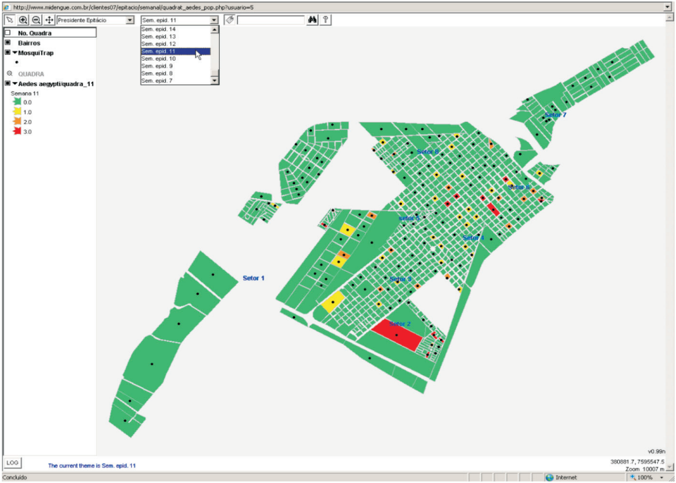
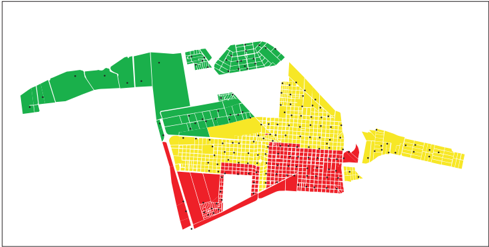
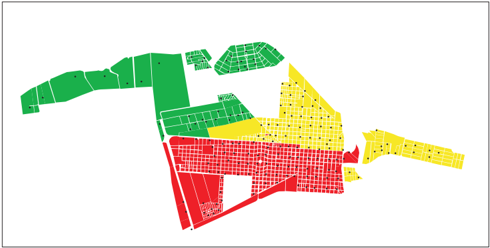
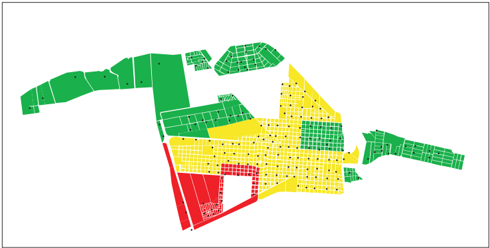
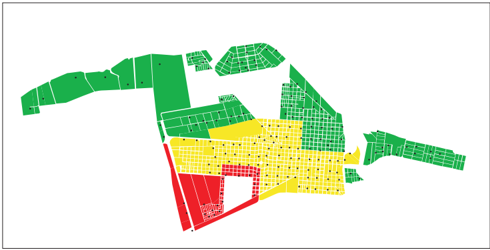
Limitations in the laboratory identification of Aedes aegypti and processing of field data based on larval surveys led to the development of the "Intelligent Dengue Monitoring" technology (MI-Dengue). MI-Dengue consists of a trap that captures gravid female Ae. aegypti, coupled with a computerized system for field data collection, transmission, and access to georeferenced maps in real time. The current study describe the first experience with a system for monitoring adult Ae. aegypti and presents the preliminary results in three municipalities that adopted MI-Dengue as a strategy to identify key areas and orient control measures. Weekly georeferenced maps and an entomological indicator (Mean Female Aedes Index) provided information on infested areas and infestation levels, color-coded according to the number of captured female Ae. aegypti, and indicated risk-free, dengue alert, and critical situations that triggered appropriate control measures. The preliminary results suggest that the adoption of this control strategy with house-to-house visits in a 200m radius of the positive trap helped reduce dengue in the municipalities that adopted the system.
Overview
The claims and statistics of this paper haven’t been checked yet.
Free: it reads the open-access text and checks the first 5 claims that cite a source we can check. Create a free account to check every claim.
Integrity signals
Registry
Cites
Statistics
Figures
Verification
Claims the paper makes
The claims and statistics of this paper haven’t been checked yet.
Free: it reads the open-access text and checks the first 5 claims that cite a source we can check. Create a free account to check every claim.
Claims other papers make about this one
Each is checked against this paper’s own text: does it say what the citing paper says it does?
The source backs part of the claim, not all of it — or backs it for a different population, condition or comparison.
In the citing paper
“Ongoing studies are investigating a range of novel trap designs for Aedes spp. surveillance and control [106–108] but to date, evidence of traps preventing any mosquito-borne disease remains elusive.”
From Is Dengue Vector Control Deficient in Effectiveness or Evidence?: Systematic Review and Meta-analysis (2016) · cites this paper as [107]
Experimental — accuracy not yet measured
Self-check
Percentages, sums and reported differences re-computed from the paper’s own numbers.
The self-check needs the paper’s full text.
Citations
Cites
Dengue and Dengue Hemorrhagic Fever
Gubler, D. J. (1998) · Clinical Microbiology Reviews · doi:10.1128/cmr.11.3.480 · Cited by 4,310
Dengue and Dengue Hemorrhagic Fever, Brazil, 1981–2002
Siqueira, J. B., Martelli, C. M. T., Coelho, G. E., Simplício, A. C. D. R., & Hatch, D. L. (2005) · Emerging Infectious Diseases · doi:10.3201/eid1101.031091 · Cited by 307
Maciel-de-Freitas, R., Eiras, Á. E., & Lourenço-de-Oliveira, R. (2006) · Memórias do Instituto Oswaldo Cruz · doi:10.1590/s0074-02762006000300017 · Cited by 209 · cited 1×
“Bastos/SP 21,343 4 (19) 582 (2,727) 7 (33) 2 (9) -98.”
Self-citationRegis, L., Monteiro, A. M., Melo-Santos, M. A. V. D., Silveira Jr, J. C., Furtado, A. F., Acioli, R. V., Santos, G. M., Nakazawa, M., Carvalho, M. S., Ribeiro Jr, P. J., et al. (2008) · Memórias do Instituto Oswaldo Cruz · doi:10.1590/s0074-02762008000100008 · Cited by 166
Gomes, A. D. C. (1998) · Informe Epidemiológico do Sus · doi:10.5123/s0104-16731998000300006 · Cited by 129
Teixeira, M. G., Costa, M. D. C. N., Barreto, M. L., & Mota, E. (2005) · Cadernos de Saúde Pública · doi:10.1590/s0102-311x2005000500002 · Cited by 129
Ritchie, S. A., Long, S., Smith, G., Pyke, A., & Knox, T. B. (2004) · Journal of Medical Entomology · doi:10.1603/0022-2585-41.1.1 · Cited by 123
Lagrotta, M. T. F., Silva, W. D. C., & Souza‐Santos, R. (2008) · Cadernos de Saúde Pública · doi:10.1590/s0102-311x2008000100007 · Cited by 77
Dengue in Brazil: current situation and prevention and control activities.
da Silva, J. B., Siqueira, J. B., Coelho, G. E., Vilarinhos, P. D. T. R., & Pimenta, F. G. (2002) · PubMed · Cited by 70
Análise espacial da transmissão de dengue em cidade de porte médio do interior paulista
Mondini, A., Neto, F. C., Sanches, M. G. Y., & Lopes, J. C. (2005) · Revista de Saúde Pública · doi:10.1590/s0034-89102005000300016 · Cited by 68 · cited 1×
“Partially adopted Divinópolis/MG 207,983 56 (27) 311 (150) 49 (24) 212 (102) -84.”
Research works printed but not linked: 1
- 4. Focks DA. A review of entomological sampling methods and indicators for dengue vectors. Gene- va: World Health Organization; 2003. (Document WHO/TDR/IDE/Den/03.1).
Cited by
Bowman, L. R., Donegan, S., & McCall, P. J. (2016) · PLOS Neglected Tropical Diseases · doi:10.1371/journal.pntd.0004551 · Cited by 449
Bowman, L. R., Runge-Ranzinger, S., & McCall, P. J. (2014) · PLoS Neglected Tropical Diseases · doi:10.1371/journal.pntd.0002848 · Cited by 337
“aegypti adults with gravid traps deployed at relatively low densities was used to identify high risk localities which were then targeted for vector control [68,69].”
MethodSurveillance of Aedes aegypti: Comparison of House Index with Four Alternative Traps
Codeço, C. T., Silva‐Lima, A. W., Araújo, S. C., Lima, J. B. P., Maciel‐de‐Freitas, R., Honório, N. A., Galardo, A. K. R., Braga, I. A., Coelho, G. E., & Valle, D. (2015) · PLoS neglected tropical diseases · doi:10.1371/journal.pntd.0003475 · Cited by 167
“For instance, in Australia, control measures are strengthened when sticky ovitrap density index are above 1 mosquito/trap [32]; in Brazil, the MI-Dengue surveillance service uses a threshold of 2 mosquitoes/MQT to launch an alert signal [33].”
BackgroundAn improved autocidal gravid ovitrap for the control and surveillance of Aedes aegypti
Mackay, A. J., Amador, M., & Barrera, R. (2013) · Parasites & Vectors · doi:10.1186/1756-3305-6-225 · Cited by 162
“aegypti and dengue virus (DENV) transmission risk [10,14,17-19].”
BackgroundFerreira, D. A. D. C., Degener, C. M., Marques-Toledo, C., Bendati, M. M. D. A., Fetzer, L. O., Teixeira, C. P., & Eiras, Á. E. (2017) · Parasites & Vectors · doi:10.1186/s13071-017-2025-8 · Cited by 146
Self-citationEiras, Á. E., Buhagiar, T. S., & Ritchie, S. A. (2014) · Journal of Medical Entomology · doi:10.1603/me13104 · Cited by 117
“…in Þeld conditions to monitor vector abundance (Ritchie et al. 2003, Fávaro et al. 2006, Facchinelli et al. 2007, Chadee andRitchie 2010a) and to analyze the association between adult abundance and risk of dengue transmission (Ritchie et al. 2004, Eiras and Resende 2009, de Melo et al. 2012).”
BackgroundInfluentialSelf-citationField Validation of the GravidAedesTrap (GAT) for Collection ofAedes aegypti(Diptera: Culicidae)
Ritchie, S. A., Buhagiar, T. S., Townsend, M., Hoffmann, A. A., van den Hurk, A. F., McMahon, J., & Eiras, Á. E. (2014) · Journal of Medical Entomology · doi:10.1603/me13105 · Cited by 104
“Temporal distribution of Aedes aegypti in different districts of Rio de Janeiro, Brazil, measured by two types of traps.”
InfluentialSelf-citationSearching for the proverbial needle in a haystack: advances in mosquito-borne arbovirus surveillance
Ramírez, A. L., van den Hurk, A. F., Meyer, D. B., & Ritchie, S. A. (2018) · Parasites & Vectors · doi:10.1186/s13071-018-2901-x · Cited by 108
“An example of this is the Intelligent Dengue Monitoring technology (MI-Dengue) developed in Brazil [101].”
BackgroundSnetselaar, J., Andriessen, R., Suer, R. A., Osinga, A. J., Knols, B. G., & Farenhorst, M. (2014) · Parasites & Vectors · doi:10.1186/1756-3305-7-200 · Cited by 100
“Egg-laying female mosquitoes are attracted to the trap by the water [6], visual cues [7], natural odors (mostly from plant infusions) [8-11], conspecifics [12], or synthetic odors [5,13-15].”
BackgroundDormont, L., Mulatier, M., Carrasco, D., & Cohuet, A. (2021) · Journal of Chemical Ecology · doi:10.1007/s10886-021-01261-2 · Cited by 109
Azil, A. H., LONG, S. A., Ritchie, S. A., & Williams, C. R. (2010) · Tropical Medicine & International Health · doi:10.1111/j.1365-3156.2010.02592.x · Cited by 99
“However, some entomological surveillance with accompanying vector control response is currently carried out as a pre-emptive measure against transmission in some areas as is performed in other regions (Ooi et al. 2006; Eiras & Resende 2009).”
Backgroundde Melo, D. P. O., Scherrer, L. R., & Eiras, Á. E. (2012) · PLoS ONE · doi:10.1371/journal.pone.0042125 · Cited by 73
Self-citationThe use of mobile phones for the prevention and control of arboviral diseases: a scoping review
Carrillo, M. A., Kroeger, A., Cardenas Sanchez, R., Diaz Monsalve, S., & Runge-Ranzinger, S. (2021) · BMC Public Health · doi:10.1186/s12889-020-10126-4 · Cited by 64
Cost-effectiveness of Novel System of Mosquito Surveillance and Control, Brazil
Pepin, K. M., Marques-Toledo, C., Scherrer, L. R., Morais, M. M., Ellis, B. R., & Eiras, Á. E. (2013) · Emerging infectious diseases · doi:10.3201/eid1904.120117 · Cited by 63
Self-citationGravitrap deployment for adult Aedes aegypti surveillance and its impact on dengue cases
Ong, J., Chong, C., Yap, G., Lee, C., Razak, M. A. B. A., Chiang, S., & Ng, L. C. (2020) · PLoS neglected tropical diseases · doi:10.1371/journal.pntd.0008528 · Cited by 57
A comparison of larval, ovitrap and MosquiTRAP surveillance for Aedes (Stegomyia) aegypti
de Resende, M. C., da Silva, I. M., Ellis, B. R., & Eiras, Á. E. (2013) · Memórias do Instituto Oswaldo Cruz · doi:10.1590/0074-0276130128 · Cited by 53
“…& Chadee 1997, Morrison et al. 2004) and various adult mosquito trapping methodologies (e.g., adult sticky traps, mechanical fan traps and chemical lure traps) (Gama et al. 2007, Lourenço-deOliveira et al. 2008, Eiras & Resende 2009, Honório et al. 2009, Chadee & Ritchie 2010, Azil et al. 2011).”
BackgroundSelf-citationGuzzetta, G., Marques-Toledo, C., Rosà, R., Teixeira, M. M., & Merler, S. (2018) · Nature Communications · doi:10.1038/s41467-018-05230-4 · Cited by 60
Assessment of a trap based Aedes aegypti surveillance program using mathematical modeling
Lana, R. M., Morais, M. M., de Lima, T. F. M., Carneiro, T. G. D. S., Stolerman, L. M., dos Santos, J. P. C., Cortés, J. J. C., Eiras, Á. E., & Codeço, C. T. (2018) · PLoS ONE · doi:10.1371/journal.pone.0190673 · Cited by 53
Self-citationAzil, A. H., Li, M., & Williams, C. R. (2011) · Asia Pacific Journal of Public Health · doi:10.1177/1010539511426595 · Cited by 45
“Mosquito identification is done on site without the inconvenience of bringing back mosquito samples to the laboratory for rearing and identification.(19) A third strategy called the Monitoring System and Population Control of Aedes aegypti (SMCP-Aedes) is currently under trial at the time of writing.”
BackgroundInfluentialLau, S. M., Chua, T. H., Sulaiman, W.-Y., Joanne, S., Lim, Y. A. L., Sekaran, S. D., Chinna, K., Venugopalan, B., & Vythilingam, I. (2017) · Parasites & Vectors · doi:10.1186/s13071-017-2091-y · Cited by 49
Surveillance of adult Aedes mosquitoes in Selangor, Malaysia
Lau, S. M., Vythilingam, I., Doss, J. I., Sekaran, S. D., Chua, T. H., Sulaiman, W. Y. W., Chinna, K., Lim, Y. A. L., & Venugopalan, B. (2015) · Tropical Medicine & International Health · doi:10.1111/tmi.12555 · Cited by 40
“The adult indices are used for larviciding and source reduction [21].”
BackgroundMethodMudele, O. E., Bayer, F. M., Zanandrez, L., Eiras, Á. E., & Gamba, P. E. (2020) · IEEE Access · doi:10.1109/access.2020.2966080 · Cited by 43
“All the utilized traps are of the same type, specifically, the sticky-card oviposition trap, commercially named MosquiTrapr [44].”
BackgroundSelf-citationModeling the Non-Stationary Climate Dependent Temporal Dynamics of Aedes aegypti
Simões, T. C., Codeço, C. T., Nobre, A. A., & Eiras, Á. E. (2013) · PLoS ONE · doi:10.1371/journal.pone.0064773 · Cited by 37
Self-citationRecomendaciones para el monitoreo de Aedes aegypti
Barrera, R. (2016) · Biomédica · doi:10.7705/biomedica.v36i3.2892 · Cited by 34
Mass trapping with MosquiTRAPs does not reduce Aedes aegypti abundance
Degener, C. M., de Ázara, T. M. F., Roque, R. A., Rösner, S., Rocha, E. S. D. O., Kroon, E. G., Codeço, C. T., Nobre, A. A., Ohly, J. J., Geier, M., et al. (2015) · Memórias do Instituto Oswaldo Cruz · doi:10.1590/0074-02760140374 · Cited by 41
“The MI-Dengue, a real-time, citywide mosquito trapping system for weekly monitoring of gravid Ae. aegypti, uses the MQT as the main tool (Eiras & Resende 2009).”
BackgroundMethodSelf-citationMarques-Toledo, C., Bendati, M. M. D. A., Codeço, C. T., & Teixeira, M. M. (2019) · Parasites & Vectors · doi:10.1186/s13071-018-3280-z · Cited by 36
“Another source of mosquito data is based on the collection of adult Aedes aegypti mosquito by the MI-Aedes system, using the sticky trap MosquiTRAP (Ecovec LTDA, Belo Horizonte, Brazil) [24, 25].”
MethodSchultes, O. L., Morais, M. H. F., Cunha, M. D. C. M., Sobral, A., & Caiaffa, W. T. (2020) · Tropical Medicine & International Health · doi:10.1111/tmi.13521 · Cited by 30
“The Brazilian government has identified other key locations with an abundance of breeding sites for targeted control actions, such as cemeteries, tire shops and street drains [5, 13, 18–20].”
InfluentialDegener, C. M., de Ázara, T. M. F., Roque, R. A., Codeço, C. T., Nobre, A. A., Ohly, J. J., Geier, M., & Eiras, Á. E. (2014) · Memórias do Instituto Oswaldo Cruz · doi:10.1590/0074-0276140234 · Cited by 30
“…temporal pattern of female Ae. aegypti in MQTs was contrary to the findings of other longitudinal studies with duration of at least one year, which were conducted in several cities of MG (Eiras & Resende 2009), in Belo Horizonte (Melo et al. 2012) and in Rio de Janeiro (Honório et al. 2009).”
BackgroundResultInfluentialSelf-citationModeling dengue vector population with earth observation data and a generalized linear model
Mudele, O. E., Frery, A. C., Zanandrez, L., Eiras, Á. E., & Gamba, P. E. (2020) · Acta Tropica · doi:10.1016/j.actatropica.2020.105809 · Cited by 36
Self-citationSedda, L., Vilela, A. P. P., Aguiar, E. R. G. R., Gaspar, C. H. P., Gonçalves, A. N. A., Olmo, R. P., Silva, A. T. S., da Silveira, L. D. C., Eiras, Á. E., Drumond, B. P., et al. (2018) · Parasites & Vectors · doi:10.1186/s13071-018-2662-6 · Cited by 38
“These results are in accordance with the types of traps we utilized that were designed for highly specific and detailed surveillance of Aedes mosquitoes and not population control [29, 37].”
MethodResultInfluentialSelf-citationPepin, K. M., Leach, C. B., Marques-Toledo, C., Laass, K. H., Paixão, K. S., Luis, A. D., Hayman, D. T. S., Johnson, N. G., Buhnerkempe, M., Carver, S., et al. (2015) · Parasites & Vectors · doi:10.1186/s13071-015-0659-y · Cited by 32
“In cities where MI-dengue surveillance is conducted, the additional control activities can be targeted to blocks with the highest mosquito densities (or blocks with infected mosquitos where MI-Virus data are available) very rapidly after the mosquito populations achieve high numbers because the longest time lag betwee…”
BackgroundMethodSelf-citationField optimisation of MosquiTRAP sampling for monitoring Aedes aegypti Linnaeus (Diptera: Culicidae)
de Resende, M. C., de Ázara, T. M. F., Costa, I. O., Costa, L. H., de Andrade, M. R., Acebal, J. L., & Eiras, Á. E. (2012) · Memórias do Instituto Oswaldo Cruz · doi:10.1590/s0074-02762012000300002 · Cited by 26
“Instead, they are probably dispersed in clusters (Eiras & Resende 2009, Honório et al. 2009a) at different distances (Reiter et al. 1995, Honório et al. 2003).”
BackgroundMethodInfluentialSelf-citationCosta, L. H., Johnson, B. J., Fikrig, K., Oliveira, B. A., Silva, R. D., Townsend, M., Barrera, R., Eiras, Á. E., & Ritchie, S. A. (2016) · Journal of Medical Entomology · doi:10.1093/jme/tjw051 · Cited by 28
“For Permissions, please email: journals.permissions@oup.com 873 (BG-Sentinel and BG-Mosquito), or gravid mosquitoes (MosquiTRAP, Sticky trap, double sticky ovitrap, and CDC autocidal gravid ovitrap [CDC-AGO]).”
BackgroundMethodSelf-citationMulatier, M., Boullis, A., & Vega-Rúa, A. (2022) · Parasites & Vectors · doi:10.1186/s13071-022-05337-0 · Cited by 29
Matowo, N. S., Koekemoer, L. L., Moore, S., Mmbando, A. S., Mapua, S. A., Coetzee, M., & Okumu, F. O. (2016) · PLoS ONE · doi:10.1371/journal.pone.0145653 · Cited by 24
“aegypti [13,14] and mass trapping of host seeking female Ae.”
BackgroundGeoprocessamento em Saúde Pública: fundamentos e aplicações
Nardi, S. M. T., Paschoal, J. A. A., Pedro, H. D. S. P., Paschoal, V. D., & Sichieri, E. P. (2013) · REVISTA DO INSTITUTO ADOLFO LUTZ · doi:10.18241/0073-98552013721562 · Cited by 21
Liew, J. W. K., Selvarajoo, S., Tan, W., Zaki, R. A., & Vythilingam, I. (2019) · Infectious Diseases of Poverty · doi:10.1186/s40249-019-0584-y · Cited by 21
Linking mosquito surveillance to dengue fever through Bayesian mechanistic modeling
Leach, C. B., Hoeting, J. A., Pepin, K. M., Eiras, Á. E., Hooten, M. B., & Webb, C. T. (2020) · PLoS neglected tropical diseases · doi:10.1371/journal.pntd.0008868 · Cited by 19
“These control efforts are guided by the MI-Dengue system, which uses the trap-level mosquito surveillance data to target areas of high mosquito infestation for control (including source reduction, larvacide, and adulticide) [22].”
MethodSelf-citationNew Cost-Benefit of Brazilian Technology for Vector Surveillance Using Trapping System
Eiras, Á. E., de Resende, M. C., Acebal, J. L., & Paixão, K. S. (2019) · IntechOpen eBooks · doi:10.5772/intechopen.78781 · Cited by 18
Self-citationde Paula, A. R., Silva, L. E. I., Ribeiro, A., Butt, T. M., Silva, C. P., & Samuels, R. I. (2018) · Parasites & Vectors · doi:10.1186/s13071-018-2871-z · Cited by 17
“aegypti for at least 45 days [23], although these results have not been published.”
BackgroundDacko, N. M., Reyna, M., Vitek, C. J., & Debboun, M. (2020) · Elsevier eBooks · doi:10.1016/b978-0-12-814545-6.00007-9 · Cited by 19
Risk of dengue occurrence based on the capture of gravid Aedes aegypti females using MosquiTRAP
Steffler, L. M., Marteis, L. S., Dolabella, S. S., Cavalcanti, S. C. H., & dos Santos, R. L. C. (2011) · Memórias do Instituto Oswaldo Cruz · doi:10.1590/s0074-02762011000300018 · Cited by 13
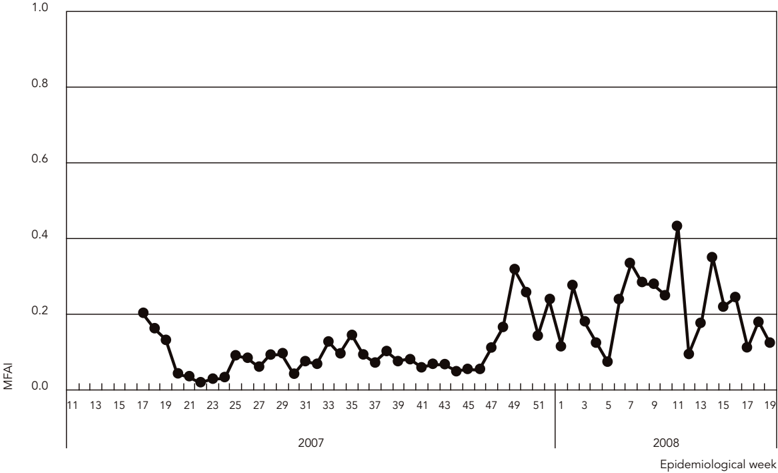
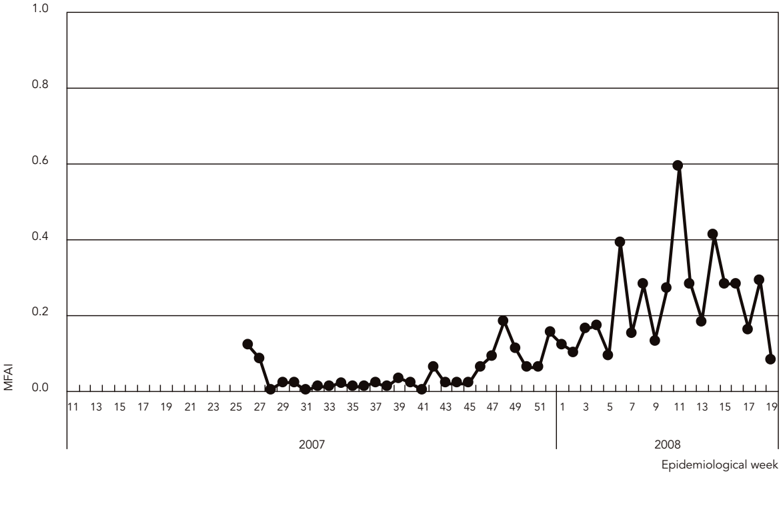
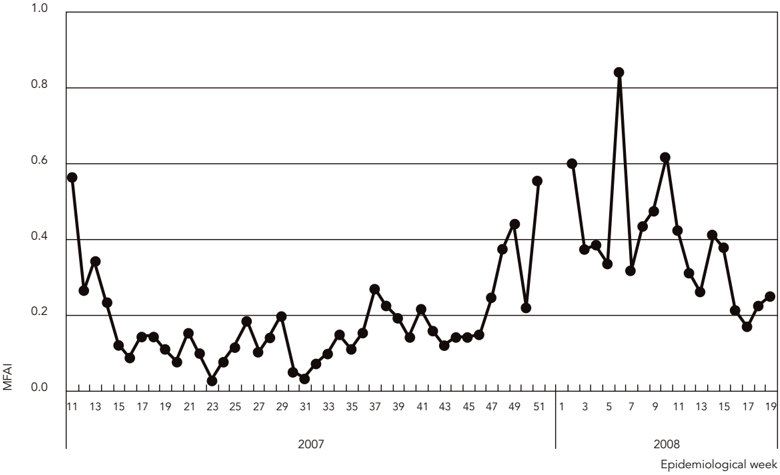
“Eiras and Resende (2009) proposed the Mean Index of Ae. aegypti Females (IMFA) based on MosquiTRAP, which is the ratio between the average number of females caught and the number of traps in the area and the Temporal Mean Index of Ae. aegypti Females (IMFAt), calculated as the average of the IMFA…”
BackgroundMethodInfluentialThornton, J., Batengana, B., Eiras, Á. E., & Irish, S. R. (2016) · Journal of Vector Ecology · doi:10.1111/jvec.12221 · Cited by 13
“…the Intelligent Dengue Monitoring System (MI-Dengue) in Brazil, an Ae. aegypti monitoring program in which MQT catches are collated with field data on transmission and geosatellite maps to identify key areas of transmission and help organize control efforts in real time (Eiras and Resende 2009).”
BackgroundMethodSelf-citationde Vasconcelos, A. S. V., SILVA, L. S. B., Cardoso, R. T. N., & Acebal, J. L. (2020) · Applied Mathematical Modelling · doi:10.1016/j.apm.2020.08.072 · Cited by 10
Sedda, L., Taylor, B. M., Eiras, Á. E., Marques, J. T., & Dillon, R. J. (2020) · Acta Tropica · doi:10.1016/j.actatropica.2020.105519 · Cited by 11
Self-citationIncidência de dengue e indicadores socioeconômicos e entomológicos em Santos, São Paulo, 2012-2016
dos Santos, S. D., & Ribeiro, M. C. S. D. A. (2021) · Nursing Edição Brasileira · doi:10.36489/nursing.2021v24i273p5229-5242 · Cited by 8
Tovar-Zamora, I., Caraveo-Patiño, J., Penilla-Navarro, R. P., Serrano‐Pinto, V., Méndez-Galván, J. F., Martínez, A. M., Guerrero-Cárdenas, I., & Servín‐Villegas, R. (2019) · Southwestern Entomologist · doi:10.3958/059.044.0404 · Cited by 8
Cooper, K. M., Bastola, D. R., Gandhi, R. A., Ghersi, D., Hinrichs, S. H., Morien, M., & Fruhling, A. (2016) · PubMed · Cited by 7
Defining Aedes aegypti density thresholds for preventing human arboviral infections
Barrera, R., Acevedo-Soto, V., Ruiz-Valcárcel, J., Medina, J., Rivera, R., Otero, L. M., Tosado-Acevedo, R., Medina, F. A., Saavedra, R., Miranda, J., et al. (2025) · Acta Tropica · doi:10.1016/j.actatropica.2025.107688 · Cited by 6
Ferreira, D. A. D. C., Freitas, L. P., Lowe, R., Souza, G. D., Fujiwara, R. T., & Lana, R. M. (2025) · The Lancet Regional Health - Americas · doi:10.1016/j.lana.2025.101153 · Cited by 6
Insecticidas biorracionales para el control de mosquitos y moscas negras en Sinaloa
García-Gutiérrez, C., Gómez-Peraza, R. L., Aguilar, C. E. L., & Váldez, A. L. (2012) · Ra Ximhai · doi:10.35197/rx.08.03.e2.2012.05.cg · Cited by 6
Evaluation of the Atraedes™ Lure for Collection ofCulex quinquefasciatusin Gravid Traps
Irish, S. R., Batengana, B., Eiras, Á. E., & Cameron, M. (2015) · Journal of the American Mosquito Control Association · doi:10.2987/14-6420r.1 · Cited by 6
Self-citationFelix, G. E., Barrera, R., Vázquez, J., Ryff, K. R., Muñoz‐Jordán, J. L., Matías, K. Y., & Hemme, R. R. (2018) · Journal of the American Mosquito Control Association · doi:10.2987/18-6741.1 · Cited by 6
Silva, L. D. S. B., de Vasconcelos, A. S. V., Sanches, A. L., Cardoso, R. T. N., Fernandes, J. L. A., & Eiras, Á. E. (2019) · TEMA (São Carlos) · doi:10.5540/tema.2019.020.01.197 · Cited by 5
Self-citationEiras, Á. E., Geier, M., Rose, A., & Jones, O. (2010) · Wageningen Academic Publishers eBooks · doi:10.3920/9789086866984_019 · Cited by 5
“…aegypti specimens caught by traps installed per week and is used for monitoring vector infestations in neighborhoods and municipalities (Figure 8) (Eiras and Resende 2009); (2) the Temporal Mean Female Aedes Index (MFAIt), which is the average of MFAI values for the three previous, consecutive…”
InfluentialSelf-citationOptimal control of Aedes aegypti using rainfall and temperature data
de Vasconcelos, A. S. V., de Lima, J. S., Cardoso, R. T. N., Acebal, J. L., & Anibal Munoz, L. (2022) · Computational and Applied Mathematics · doi:10.1007/s40314-022-01804-7 · Cited by 4
Tovar-Zamora, I., Ramos-Rodríguez, A., Galván, J. F. M., & Servín‐Villegas, R. (2015) · Southwestern Entomologist · doi:10.3958/059.040.0107 · Cited by 8
Mudele, O. E., Bayer, F. M., Zanandrez, L., Eiras, Á. E., & Gamba, P. E. (2020) · doi:10.36227/techrxiv.11086871 · Cited by 4
Self-citationKittayapong, P., Kittayapong, R., Ninphanomchai, S., & Limohpasmanee, W. (2022) · Insects · doi:10.3390/insects13111050 · Cited by 3
Sampling Methods for Blood-Feeding Insects Diversity
Eiras, Á. E., Batista, E. P. A., & de Resende, M. C. (2020) · Springer eBooks · doi:10.1007/978-3-030-53226-0_21 · Cited by 2
Self-citationSticky traps for Aedes aegypti surveillance and targeted vector control in Sincelejo, Colombia
Sermeño-Correa, C., Bedoya-Polo, A., Camacho, E., & Bejarano, E. E. (2025) · Biomédica · doi:10.7705/biomedica.7290 · Cited by 1
“Although MosquiTRAP™ traps are designed for weekly inspections, some studies indicate that this frequency may not be essential for optimal results in effective mosquito surveillance (24,28).”
Controle da dengue na estação seca da cidade de Curvelo-MG através de um modelo preditivo
Silva, L. D. S. B., Cordeiro, F. D. S., Cardoso, R. T. N., Acebal, J. L., Paixão, K. S., & Eiras, Á. E. (2015) · Proceeding Series of the Brazilian Society of Computational and Applied Mathematics · doi:10.5540/03.2015.003.01.0082 · Cited by 1
“aegypti em fase de oviposição capturadas pela armadilha MosquiTRAP R © e o número total de armadilhas instaladas na região de estudo [4].”
BackgroundSelf-citationFernandes, C. M., dos Santos, J. A., Pereira, M. B., Bermudi, P. M. M., Barbosa, G. L., Andrade, V. R., Nogueira, K., Quintanilha, J. A., & Neto, F. C. (2026) · Research Square · doi:10.21203/rs.3.rs-9762487/v1 · Cited by 1
Eiras, Á. E., de Resende, M. C., Mota, R. M., Robinson, W. H., & Campos, A. E. D. C. (2011)
Self-citationBhat, R. A., & Agrawal, O. (2020) · Journal of Entomology and Zoology Studies · doi:10.22271/j.ento.2020.v8.i1u.6312
“To control these day-biting species, new traps such as BG-Sentinal, CDC light, ovitraps and sticky traps may be effective enough ([10]).”
BackgroundUsing mosquito excreta to enhance mosquito-borne disease surveillance
Ramírez, A. L. (2019) · ResearchOnline - JCU (James Cook University) · doi:10.25903/mdqe-vc16
Mapeamento da infestação por Aedes aegypti e Culex spp. adultos em Campinas (SP), Brasil
Fernandes, C. M. (2024) · Digital Library of Theses and Dissertations (Universidade de São Paulo) · doi:10.11606/d.6.2024.tde-12092024-142313 · Cited by 2
Carrillo, M. A., Kroeger, A., Cardenas Sanchez, R., Diaz Monsalve, S., & Runge‐Ranzinger, S. (2021) · Figshare · doi:10.6084/m9.figshare.13550643
Aldana, H. C. (2023) · Repositorio Institucional Universidad de Sucre
Preliminary evaluation of mass-trapping of Aedes aegypti by the Gravid Aedes Trap (GAT) in Brazil
Mota, L. H., Ker, F. T. D. O., Gavilanes, A. H., de Oliveira, A. C. G., Reis, S. E. C. S., Júnior, P. D., de Resende, M. C., & Eiras, Á. E. (2026) · Acta Tropica · doi:10.1016/j.actatropica.2026.108103
Self-citationAlves, A. A. C., Vargas, D. E. C., Eiras, Á. E., & Acebal, J. L. (2026) · Symmetry · doi:10.3390/sym18050740
Self-citationFavoreto, C. J. R., da Silva, G. F. M., & Peixoto, J. R. V. (2026) · Boletim de Conjuntura (BOCA) · doi:10.56238/bocav25n83-018
Metadata
- Authors
- Eiras, Á. E., & Resende, M. C.
- Affiliations
- Universidade Federal de Minas Gerais (BR)
- Fundação Nacional de Saúde (BR)
- Venue
- Cadernos de Saúde Pública
- Publisher
- FapUNIFESP (SciELO)
- Published
- 2009
- Volume
- 25
- Issue
- suppl 1
- Pages
- S45-S58
- ISSN
- 0102-311X (ISSN-L)
- OpenAlex
- W2152383998
- Semantic Scholar
- 6e7e2babaac1bd88855a12ef56fb425749bf547f
- Cited by
- 71
- References
- 22
- Citations by year
- 2026: 4 · 2025: 3 · 2022: 3 · 2021: 5 · 2020: 10 · 2019: 6 · 2018: 6 · 2017: 2 · 2016: 6 · 2015: 7 · 2014: 5 · 2013: 5 · 2012: 4
- FWCI
- 3.01
- Type
- journal article
- Language
- en
- Open access
- diamond
- doi.org
- Licence
- cc-by-nc
- Locations
- Cadernos de Saúde Pública (publishedVersion, cc-by-nc)
- PubMed (publishedVersion)
- LA Referencia (Red Federada de Repositorios Institucionales de Publicaciones Científicas) (publishedVersion, other-oa)
- Americanae (AECID Library) (submittedVersion, other-oa)
- DOAJ (DOAJ: Directory of Open Access Journals) (submittedVersion, cc-by-sa)
- Funders
- Conselho Nacional de Desenvolvimento Científico e Tecnológico
- Financiadora de Estudos e Projetos
- Fundação de Amparo à Pesquisa do Estado de Minas Gerais
- Ministério da Saúde
- Topics
- Health Sciences › Medicine › Public Health, Environmental and Occupational Health › Mosquito-borne diseases and control
- Health Sciences › Medicine › Public Health, Environmental and Occupational Health › Dengue and Mosquito Control Research
- Health Sciences › Medicine › Public Health, Environmental and Occupational Health › Malaria Research and Control
- Keywords
- Aedes aegypti, dengue vector control, georeferenced maps, insect monitoring, dengue risk mapping
- MeSH terms
- Aedes, Animals, Electronic Data Processing, Brazil, Dengue, Female, Image Processing, Computer-Assisted, Larva, Mosquito Control, Oviposition, Population Dynamics, Population Surveillance, Time Factors, Urban Population, Incidence, Geographic Information Systems
About these checks
Registry, retraction, Cites and statistics results are computed, not judged, with one exception: a printed reference that no index lists is read once by a model before it counts as a citation error. Claims are extracted by a model and kept only when their quote appears verbatim in the text; each cited source is then checked, with a model’s help, for whether it says what the claim relies on. Those verdicts can be wrong — read the claim’s quote and the cited source before relying on one.
Statistics and arithmetic are recomputed, not judged.
Confidence bands are shown only for fields calibrated on our annotated test set. None is calibrated yet, so no band is shown.
What counts as a claim ›How we measure confidence ›How we check this ›
Are you an author, or do you see a problem with this page? Request a review
Data sources
Bibliographic data: Semantic Scholar, OpenAlex, Crossref.
Contains information from the Semantic Scholar Academic Graph Datasets, made available under the ODC Attribution License (ODC-BY 1.0).
Semantic Scholar’s data is described in: Kinney, R., et al. (2023). The Semantic Scholar Open Data Platform. arXiv:2301.10140.
