

Tonsil volume, tonsil grade and obstructive sleep apnea: is there any meaningful correlation?
Open accessThe DOI matches its Crossref record; 24 of the 24 references it cites were found in a registry or an index.
Abstract
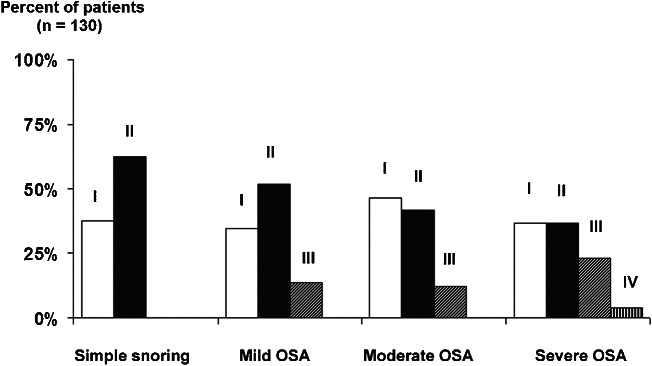
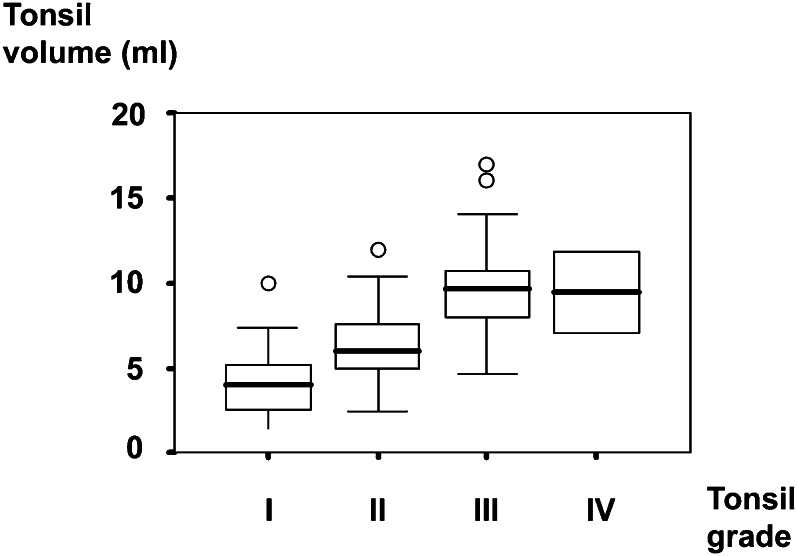
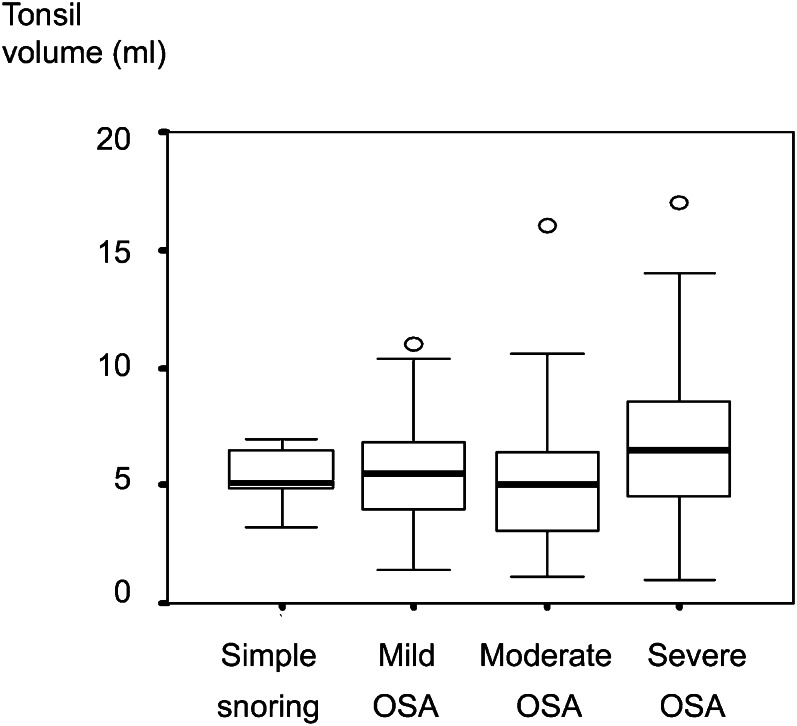
OBJECTIVES: The aims of this study were to evaluate the correlation between oropharyngeal examination and objective palatine tonsil volume in snoring adults and verify the influence of the oropharyngeal anatomy, body mass index, age, and severity of obstructive sleep apnea on actual tonsil volume. In addition, we aimed to assess the influence of tonsil size on obstructive sleep apnea in adults. INTRODUCTION: Pharyngeal wall geometry is often altered in adults who have obstructive sleep apnea, and this might influence the findings of the oropharyngeal examination that, in turn, are the key factors when considering surgical management for this condition. Furthermore, the correlation between the actual tonsil volume and the severity of obstructive sleep apnea in adults is currently unknown. METHODS: We prospectively studied 130 patients with obstructive sleep apnea or primary snoring who underwent pharyngeal surgery with intraoperative measurement of tonsil volume. We compared tonsil volume with preoperative polysomnography, oropharyngeal examination, and anthropometric data. RESULTS: We found a significant correlation between actual tonsil volume and subjective tonsil grade. We also found a significant correlation between tonsil volume and the apnea-hypopnea index. Using a multivariate linear regression model, tonsil volume was found to be significantly correlated with age, body mass index, and oropharyngeal examination, but not with polysomnography. Clinically, only the rare tonsil grade IV was indicative of more severe obstructive sleep apnea. CONCLUSIONS: There is a strong correlation between clinical tonsil grade and objective tonsil volume in snoring adults, and this correlation exists regardless of the presence or severity of obstructive sleep apnea. Pharyngeal tissue volume likely reflects the body mass index rather than obstructive sleep apnea severity.
Overview
The claims and statistics of this paper haven’t been checked yet.
Free: it reads the open-access text and checks the first 5 claims that cite a source we can check. Create a free account to check every claim.
Integrity signals
Registry
Cites
Statistics
Figures
Verification
Claims the paper makes
The claims and statistics of this paper haven’t been checked yet.
Free: it reads the open-access text and checks the first 5 claims that cite a source we can check. Create a free account to check every claim.
Claims other papers make about this one
Each is checked against this paper’s own text: does it say what the citing paper says it does?
The cited source says what the claim attributes to it.
In the citing paper
“Other groups have studied the relationship between subjective (grade) or objective (volume/weight) tonsil evaluation and AHI and reported a trend toward significance328 or a significant association.318,329–334”
From International Consensus Statement on Obstructive Sleep Apnea (2023) · cites this paper as [331]
Self-check
Percentages, sums and reported differences re-computed from the paper’s own numbers.
The self-check needs the paper’s full text.
Citations
Cites
Rechtschaffen, A. (1968) · Medical Entomology and Zoology · Cited by 12,675
Allan Hobson, J. (1969) · Electroencephalography and Clinical Neurophysiology · doi:10.1016/0013-4694(69)90021-2 · Cited by 5,192
McNicholas, W. T., Strohl, K. P., White, D. P., Levy, P. A., Schmidt, W., Wheatley, J. R., Redline, S. S., Carley, D. W., Buysse, D. J., Young, T. B., et al. (1999) · PubMed · Cited by 3,665
Schwab, R. J., Pasirstein, M., Pierson, R., Mackley, A., Hachadoorian, R., Arens, R., Maislin, G., & Pack, A. I. (2003) · American Journal of Respiratory and Critical Care Medicine · doi:10.1164/rccm.200208-866oc · Cited by 952 · cited 1×
“The narrow lateral pharyngeal wall with which these patients present is either the result of larger lateral fat pads, muscle thickening, or tissue edema, which may be due to cervical vascular congestion.(1,3,12,13) Each of these factors may displace the palatine tonsils towards the pharyngeal lumen, leading to an over…”
BackgroundSchwab, R. J., Gupta, K. B., Gefter, W. B., Metzger, L. J., Hoffman, E. A., & Pack, A. I. (1995) · American journal of respiratory and critical care medicine · doi:10.1164/ajrccm.152.5.7582313 · Cited by 819 · cited 1×
“The narrow lateral pharyngeal wall with which these patients present is either the result of larger lateral fat pads, muscle thickening, or tissue edema, which may be due to cervical vascular congestion.(1,3,12,13) Each of these factors may displace the palatine tonsils towards the pharyngeal lumen, leading to an over…”
BackgroundClinical Predictors of Obstructive Sleep Apnea
Friedman, M., Tanyeri, H., La Rosa, M., Landsberg, R., Vaidyanathan, K., Pieri, S., & Caldarelli, D. (1999) · The Laryngoscope · doi:10.1097/00005537-199912000-00002 · Cited by 706 · cited 1×
“Other groups have studied the relationship between clinical tonsil evaluation and AHI and reported a tendency approaching significance(15) or a significant relationship between these parameters.(6) More important, these studies showed that a combination of increased oropharyngeal tissues served as a much stronger pred…”
ResultClinical Staging for Sleep‐Disordered Breathing
Friedman, M., Ibrahim, H., & Bass, L. (2002) · Otolaryngology–Head and Neck Surgery · doi:10.1067/mhn.2002.126477 · Cited by 534 · cited 3×
“The success of uvulopalatopharyngoplasty markedly decreases with an increase in Friedman stage from 1 to 3.(7,8) Stage 4 corresponds to cases with a BMI that is higher than 40 kg/m(2) or with gross craniofacial abnormalities and is usually not suitable for pharyngeal surgeries.”
BackgroundResultRecognition of obstructive sleep apnea.
Strohl, K. P., & Redline, S. (1996) · American Journal of Respiratory and Critical Care Medicine · doi:10.1164/ajrccm.154.2.8756795 · Cited by 487
Staging of Obstructive Sleep Apnea/Hypopnea Syndrome: A Guide to Appropriate Treatment
Friedman, M., Ibrahim, H., & Joseph, N. J. (2004) · The Laryngoscope · doi:10.1097/00005537-200403000-00013 · Cited by 379 · cited 3×
“The success of uvulopalatopharyngoplasty markedly decreases with an increase in Friedman stage from 1 to 3.(7,8) Stage 4 corresponds to cases with a BMI that is higher than 40 kg/m(2) or with gross craniofacial abnormalities and is usually not suitable for pharyngeal surgeries.”
BackgroundResult
Cited by
International Consensus Statement on Obstructive Sleep Apnea
Chang, J. L., Goldberg, A. N., Alt, J. A., Mohammed, A., Ashbrook, L., Auckley, D., Ayappa, I., Bakhtiar, H., Barrera, J. E., Bartley, B. L., et al. (2023) · International Forum of Allergy & Rhinology · doi:10.1002/alr.23079 · Cited by 350
Self-citationKang, K.-T., Chou, C.-H., Weng, W.-C., Lee, P.-L., & Hsu, W.-C. (2013) · PLoS ONE · doi:10.1371/journal.pone.0078666 · Cited by 186
“Many investigators are dedicated to unveil the convoluted correlations between adenotonsillar size and childhood OSA [9-11,14,15,44-48], and some authors have even examined the effects of age [14,45].”
BackgroundTonsillectomy and Adenoidectomy - Pediatric Clinics of North America
Nguyen, B. K., & Quraishi, H. (2022) · Pediatric Clinics of North America · doi:10.1016/j.pcl.2021.12.008 · Cited by 63
Regrowth of the adenoids after coblation adenoidectomy: Cephalometric analysis
Kim, S. Y., Lee, W., Rhee, C., Lee, C. H., & Kim, J. (2013) · The Laryngoscope · doi:10.1002/lary.23984 · Cited by 55
Sung, M., Lee, W. H., Wee, J. H., Lee, C. H., Kim, E., & Kim, J.-W. (2013) · JAMA Otolaryngology–Head & Neck Surgery · doi:10.1001/jamaoto.2013.3263 · Cited by 50
Association of palatine tonsil size and obstructive sleep apnea in adults
Jara, S. M., & Weaver, E. M. (2018) · The Laryngoscope · doi:10.1002/lary.26928 · Cited by 41
Al‐Jewair, T., Nazir, M. A., Almasoud, N. N., & Alqahtani, N. (2016) · Saudi Medical Journal · doi:10.15537/smj.2016.2.12852 · Cited by 42
A Clinical Prediction Formula for Apnea-Hypopnea Index
Şahin, M., Bilgen, C., Taşbakan, M. S., Midilli, R., & Başoğlu, Ö. K. (2014) · International Journal of Otolaryngology · doi:10.1155/2014/438376 · Cited by 34
Tonsil size and outcome of uvulopalatopharyngoplasty with tonsillectomy in obstructive sleep apnea
Tschopp, S., & Tschopp, K. P. (2019) · The Laryngoscope · doi:10.1002/lary.27899 · Cited by 29
Correlation between Brodsky Tonsil Scale and Tonsil Volume in Adult Patients
Lu, X., Zhang, J., & Xiao, S. (2018) · BioMed Research International · doi:10.1155/2018/6434872 · Cited by 37
Swallowing and pharyngo-esophageal manometry in obstructive sleep apnea
Oliveira, L. A. M. D. P., Fontes, L. H. D. S., & Cahali, M. B. (2015) · Brazilian Journal of Otorhinolaryngology · doi:10.1016/j.bjorl.2015.03.006 · Cited by 28
Self-citationYagihara, F., Lucchesi, L. M., D’Almeida, V., de Mello, M. T., Tufik, S. B., & Bittencourt, L. (2012) · Clinics · doi:10.6061/clinics/2012(06)04 · Cited by 25
Lai, C., Friedman, M., Lin, H., Wang, P., Hsu, C., Yalamanchali, S., Lin, M., & Chen, Y. (2014) · European Archives of Oto-Rhino-Laryngology · doi:10.1007/s00405-014-2944-3 · Cited by 21
Volume estimation of tonsil phantoms using an oral camera with 3D imaging
Das, A. J., Valdez, T. A., Vargas, J. A., Saksupapchon, P., Rachapudi, P., Ge, Z., Estrada, J. C., & Raskar, R. (2016) · Biomedical Optics Express · doi:10.1364/boe.7.001445 · Cited by 19
Insights into the Use of Point-of-Care Ultrasound for Diagnosing Obstructive Sleep Apnea
Kalkanis, A., Testelmans, D., Papadopoulos, D., den Driessche, A. V., & Buyse, B. (2023) · Diagnostics · doi:10.3390/diagnostics13132262 · Cited by 17
“In the past, but also in more recent studies, different scales and anatomical criteria, like Brodsky’s grading scale [49,50], Archimedes’ principle [51], and the Ellipsoid formula [52], have been applied to estimate the size of the tonsils, especially in children who suffer from snoring and apneas.”
BackgroundMatarredona-Quiles, S., Carrasco‐Llatas, M., de Apodaca, P. M. R., Beltrá, N. O., & Galofre, J. D. (2022) · Brazilian Journal of Otorhinolaryngology · doi:10.1016/j.bjorl.2021.12.002 · Cited by 18
High‐Frequency Ultrasound: A Novel Diagnostic Tool to Measure Pediatric Tonsils in 3 Dimensions
Kay‐Rivest, E., Saint‐Martin, C., & Daniel, S. J. (2019) · Otolaryngology · doi:10.1177/0194599819850139 · Cited by 14
“To this day, the literature is divided on whether tonsil size correlates with severity of sleep apnea in children and adults.(29-31) Two important questions remain unanswered: whether subjective tonsil size correlates with objective tonsil size and whether subjective tonsil size correlates with the severity of sleep-d…”
BackgroundTaniguchi, K., Yoshitomi, A., Kanemaru, A., & Baba, S. (2021) · International Journal of Pediatric Otorhinolaryngology · doi:10.1016/j.ijporl.2021.110841 · Cited by 12
Akgül, G., Cingi, C., & Sarafoleanu, C. (2023) · Springer eBooks · doi:10.1007/978-3-031-22483-6_122-1 · Cited by 12
Palatine tonsil volume estimation using different methods after tonsillectomy
Sağıroğlu, A., Acer, N., Okuducu, H., Ertekın, T., Erkan, M., Durmaz, E., Aydın, M., Yılmaz, S., & Zararsız, G. (2016) · Anatomical Science International · doi:10.1007/s12565-016-0350-1 · Cited by 10
“Cahali et al. (2011) reported a strong correlation between clinical tonsil grade and objective tonsil volume in snoring adults.”
BackgroundMethodInfluentialThe association between dysphagia and OSA
Marra, L., Cavallaro, G., Lecce, V. D., Castellana, G., Santomasi, C., Nicola, V. D., Quaranta, N. A. A., Carpagnano, G. E., Resta, O., & Fiorella, M. L. (2022) · Acta Otorhinolaryngologica Italica · doi:10.14639/0392-100x-n1578 · Cited by 10
Martinović, D., Tokić, D., Puizina-Mladinic, E., Kadić, S., Lešin, A., Lupi-Ferandin, S., Kumrić, M., & Božić, J. (2023) · Life · doi:10.3390/life13010142 · Cited by 12
Airway evaluation in obstructive sleep apnea
Kowalczyk, D. M., Hardy, E. T., & Lewis, A. F. (2015) · Operative Techniques in Otolaryngology-Head and Neck Surgery · doi:10.1016/j.otot.2015.03.003 · Cited by 10
Zaffanello, M., PIACENTINI, G. L., Pietrobelli, A., Fava, C., Lippi, G., Maffeis, C., Gasperi, E., Nosetti, L. M., Bonafini, S., Tagetti, A., et al. (2017) · World Journal of Pediatrics · doi:10.1007/s12519-017-0054-1 · Cited by 9
Drug-Induced Sedation Endoscopy (DISE) DATA FUSION system: clinical feasibility study
Dijemeni, E., & Kotecha, B. T. (2017) · European Archives of Oto-Rhino-Laryngology · doi:10.1007/s00405-017-4765-7 · Cited by 8
Impact of obstructive sleep apnea syndrome on olfactory and gustatory capacity
Trecca, E. M. C., Marano, P. G., Madaro, F., Fortunato, F., Frisotti, D. R., Caponio, V. C. A., Vocale, M., & Cassano, M. (2024) · Chemical Senses · doi:10.1093/chemse/bjae022 · Cited by 6
Snoring in a cohort of obese children: association with palate position and nocturnal desaturations
Zaffanello, M., PIACENTINI, G. L., Gasperi, E., Maffeis, C., Fava, C., Bonafini, S., Tagetti, A., & Antoniazzi, F. (2016) · Journal of pediatric and neonatal individualized medicine · doi:10.7363/050134 · Cited by 6
“Nasal patency (right plus left nostril obstruction: not bilaterally obstructed 0 – totally bilaterally obstructed 8) [10], tonsils size (1 to 4) [11] and palate position (1 to 4) [12] were graded according to previously published roles.”
BackgroundTschopp, S., Azalmad, K., & Tschopp, K. P. (2023) · European Archives of Oto-Rhino-Laryngology · doi:10.1007/s00405-023-07914-0 · Cited by 7
Wiwattanadittakul, P., Sonsuwan, N., Prapayasatok, S., & Chaiworawitkul, M. (2024) · Sleep And Breathing · doi:10.1007/s11325-024-03195-x · Cited by 5
Patial, K., Mishra, H. P., Pal, G., Suvvari, T. K., Mahapatra, C., Amanullah, N. A., Singh, I., Gaur, S. N., & Behera, R. K. (2023) · Cureus · doi:10.7759/cureus.42028 · Cited by 5
A Novel Assessment Method With Ultrasound for Obstructive Tonsillar Hypertrophy in Children
Sağtaş, E., Mengi, E., Kara, C. O., & Şenol, H. (2020) · Journal of Ultrasound in Medicine · doi:10.1002/jum.15559 · Cited by 6
“size.(13,15,16,18) Furthermore, in subjective measurements, the correlation is quite weak, especially in Brodsky stages II and III, which comprise the most patients.”
BackgroundVenkatesha, B. K., Yogeesha, B. S., & Asha, M. N. (2017) · International Journal of Otorhinolaryngology and Head and Neck Surgery · doi:10.18203/issn.2454-5929.ijohns20170444 · Cited by 5
Barbed suture pharyngoplasty in velopharyngeal complete concentric collapse: a multicentric study
Castillo-Farias, F., Carrasco‐Llatas, M., Bosco, G., Rinaldi, V., Baptista, P., Cammaroto, G., Alkan, U., Muñoz-Fernández, N., Rosel, P., Bachelet, C., et al. (2022) · The Egyptian Journal of Otolaryngology · doi:10.1186/s43163-022-00241-x · Cited by 4
Sato, M., Adachi, M., Kosukegawa, H., Nomura, Y., Watanabe, K., Sato, T., & Taguma, Y. (2016) · Clinical Kidney Journal · doi:10.1093/ckj/sfw125 · Cited by 3
“[32] reported that tonsil volume has a negative correlation with age in patients with obstructive sleep apnea and simple snoring [32].”
BackgroundWiwattanadittakul, P., Chaiworawitkul, M., Sonsuwan, N., & Prapayasatok, S. (2023) · Oral Sciences Reports · doi:10.12982/osr.2023.015 · Cited by 3
Measurement of Blood Loss during Adenotonsillectomy in Children and Factors Affecting It
Manikandan, D., Musarrat, F., Preetham, A. P., & Anjali, R. (2015) · Case Reports in Clinical Medicine · doi:10.4236/crcm.2015.45032 · Cited by 3
Clinical correlation between tonsillar hypertrophy and tonsillitis
Hubballi, R. K., Shyam Sundar., S., & Koujalagi, S. M. (2019) · International Journal of Otorhinolaryngology and Head and Neck Surgery · doi:10.18203/issn.2454-5929.ijohns20195703 · Cited by 2
Mao, K., Ai, Q. Y. H., Hung, K. F., Tse, I. O. L., Leung, H. S., Liang, Y. Y., Chen, Y., Wong, L. M., Lam, W. K., & King, A. D. (2025) · Diagnostics · doi:10.3390/diagnostics15060788 · Cited by 2
Ferré, À., Vila, J., & Arcalís, N. (2013) · Medicina Clínica · doi:10.1016/j.medcli.2013.04.035 · Cited by 6
Pawar, K. S., Goyal, A., Khurana, A. K., & Pakhare, A. P. (2018) · Sleep and Vigilance · doi:10.1007/s41782-018-0045-x · Cited by 2
“One study found the correlation of tonsillar size with AHI, however, in another study, no correlation was found between tonsil grades and AHI [27, 28].”
ResultCorrelation between Tonsil Shadow Area on Skull Lateral View and Tonsil Volume after Tonsillectomy
Kim, H. C., Park, J.-T., & Chung, Y. (2019) · Sleep Medicine Research · doi:10.17241/smr.2019.00395 · Cited by 3
Palatine Tonsil Size Predicts Upper Airway Obstruction in Adults with Obstructive Sleep Apnea
Ji, C. L., Koo, S. K., Koh, T. K., & Woo, J. Y. (2022) · Journal of Clinical Otolaryngology Head and Neck Surgery · doi:10.35420/jcohns.2022.33.2.59 · Cited by 2
Muleta, R. T., Bezabih, N. A., Abera, M. T., Damtew, H. D., Salah, F. O., Medihn, Y. G. G., & Beyene, E. C. (2025) · Radiology Research and Practice · doi:10.1155/rrp/9996789 · Cited by 1
“Taken together, these factors emphasize the need for standardized measurement protocols, clear reporting on population characteristics, and careful consideration of demographic diferences when interpreting and comparing palatine tonsil measurements across studies [11, 16].”
Factors Influencing Post-Operative Oral Intake Following Tonsillectomy in Children with OSA
Nicolette, M., Shapiro, Y., Zhang, K., Garcia, L. D., Kolia, N. R., Hunter, K., Roth, H., Rosen, B., Balouch, B., & Solomon, D. H. (2026) · Annals of Otology Rhinology & Laryngology · doi:10.1177/00034894261437492 · Cited by 1
“28 Additionally, Cahali et al 29 found that higher AHI is correlated with larger tonsil volume.”
Rhinopharyngeal Predictors of Snoring Among Adult African Patients
Oyewole, E. A. (2013) · Journal of Sleep Disorders Treatment & Care · doi:10.4172/2325-9639.1000125 · Cited by 1
“However, other studies [31,32] have also reported a strong correlation between clinical tonsil grade and objective tonsil volume in adults who snore and that tonsillectomy reduces the risk of being both habitual and severe snorer.”
BackgroundThe Efficacy of Diode Laser Palatoplasty on Patients with Troublesome Snoring.
Dawood, M. R., & Shukri, N.-F. (2020) · PubMed Central · doi:10.22038/ijorl.2020.39316.2299 · Cited by 1
Cephalometric CBCT analysis of the upper airways
Мамедов, А. А., Timoshenko, T. V., & Slynko, A. Y. (2022) · Stomatology · doi:10.17116/stomat202210105131 · Cited by 1
Pediatric T-cell Lymphoblastic Leukemia/Lymphoma Diagnosed at Routine Adenoidectomy Specimen
Kara, İ., Ramadan, S. S., Şenkal, E., & Koçdor, P. (2022) · International Journal of Surgical Pathology · doi:10.1177/10668969221142044 · Cited by 2
Diagnosis: How Is Diagnosis Performed
Zancanella, E., Duarte, B. B., Cahali, M. B., & Soares, C. F. D. P. (2023) · Springer eBooks · doi:10.1007/978-3-031-35225-6_4 · Cited by 1
Self-citationClinical Efficacy of Symptomatic Manifestations in Prediction of Pediatric Obstructive Sleep Apnea
Lee, W. H., Kang, S. I., & Kim, J. (2014) · Sleep Medicine Research · doi:10.17241/smr.2014.5.1.25
Zaffanello, M., Antoniazzi, F., Tenero, L., Piazza, M., Pietrobelli, A., Lippi, G., Gasperi, E., & PIACENTINI, G. L. (2018) · Medical Science and Discovery · doi:10.17546/msd.411431
“The tonsils were measured using a grading system from 1 to 4 (13).”
MethodHussein, A., Story, B., Eskander, G., Abdelhamid, A. O., & El-kholy, A. (2020) · Egyptian Journal of Ear Nose Throat and Allied Sciences · doi:10.21608/ejentas.2020.13603.1120
“The majority of children with OSA, however, have an element of adenotonsillar hypertrophy, particularly grade II tonsils or above[6,7].”
BackgroundShrestha, I., Dhakal, S. S., Acharya, S., & Bista, M. (2021) · Journal of Karnali Academy of Health Sciences
Relationship Between Adenotonsillar Size and Snoring Sound: Acoustic Analysis
Woo, J. Y., Kwon, S.-B., Koh, T. K., Ji, C. L., & Koo, S. K. (2022) · Korean Journal of Otorhinolaryngology - Head and Neck Surgery · doi:10.3342/kjorl-hns.2022.00374
Anatomic Features of the Nasal and Pharyngeal Region Do Not Influence PAP Therapy Response
Seifen, C., Schlaier, N. A., Pordzik, J., Staufenberg, A.-R., Matthias, C., Gouveris, H. T., & Bahr‐Hamm, K. (2023) · International Journal of Environmental Research and Public Health · doi:10.3390/ijerph20166580
“described in their cross-sectional study that only sporadic tonsil hyperplasia grade 4 was suggestive of more severe OSA [29].”
BackgroundTratamiento quirúrgico de la Apnea obstructiva del sueño: adenoamigdalectomía en el adulto
de Apodaca, P. M. R., Carrasco‐Llatas, M., Baptista, P., Plaza, G., Marco-Garrido, A., & O’Connor-Reina, C. (2023) · Revista ORL · doi:10.14201/orl.30968
Sleep Disordered Breathing in Professional Drivers in Damietta Governorate
Elsherbiny, M. E. A. E., Mahmoud, A. A., Hassan, K., & Al-Wakeel, I. M. (2024) · The Scientific Journal of Medical Scholar · doi:10.55675/sjms.v3i3.93
“Tonsil size grade 4 is recognized by extended tonsils to the midline (11) .”
BackgroundShenavayi, F., Dasdar, S., Amirifard, H., Erfanian, R., Najafi, A., Kianfar, N., Amali, A., Ghasemi, S., & Heidari, R. (2025) · American Journal of Otolaryngology · doi:10.1016/j.amjoto.2025.104608
Ultrasound imaging in floppy eyelid syndrome: anatomical and clinical considerations
Batis, V., Detorakis, Ε. T., Schiza, S. E., Prokopakis, E. P., Krasagakis, K., & Drakonaki, E. E. (2025) · Journal of Ultrasonography · doi:10.15557/jou.2025.0019
“The selection of UAL and TT as metrics of upper respiratory tract anatomy was based on the fact that they are directly associated with airway volume, rather than tissue volume, such as the volume of the tonsils, which is more likely to correlate with BMI than with OSA severity (30) .”
Ameli-Mazandarani, Z., Behnaz, M., Amirifard, H., Ebadifar, A., Mirmohammadsadeghi, H., Dalaie, K., & Kavousinejad, S. (2026) · Sleep And Breathing · doi:10.1007/s11325-026-03774-0
“Tonsillar hypertrophy showed limited predictive value in this adult cohort—expected, given that tonsillar enlargement is a more significant driver of airway collapse in pediatric than adult OSA [66].”
Treatment of adult obstructive sleep apnoea with tonsillectomy
Sjöblom, H. M. (2026) · UTUPub (University of Turku)
Metadata
- Authors
- Cahali, M. B., de Paula Soares, C. F., da Silva Dantas, D. A., & Formigoni, G. G. S.
- Affiliations
- Hospital das Clínicas da Faculdade de Medicina da Universidade de São Paulo (BR)
- Corresponding author
- Cahali, Michel Burihan
- Venue
- Clinics
- Publisher
- Elsevier BV
- Published
- 2011-08
- Volume
- 66
- Issue
- 8
- Pages
- 1347-1351
- ISSN
- 1807-5932 (ISSN-L)
- PMC
- PMC3161210
- OpenAlex
- W2110230811
- Cited by
- 58
- References
- 24
- Citations by year
- 2026: 2 · 2025: 3 · 2024: 3 · 2023: 9 · 2022: 9 · 2021: 1 · 2020: 3 · 2019: 4 · 2018: 3 · 2017: 4 · 2016: 5 · 2015: 3 · 2014: 3 · 2013: 5 · 2012: 1
- FWCI
- 1.96
- Type
- journal article
- Language
- en
- Open access
- gold
- doi.org
- Licence
- cc-by-nc
- www.elsevier.com/tdm/userlicense/1.0/ (tdm)
- www.elsevier.com/legal/tdmrep-license (tdm)
- creativecommons.org/licenses/by-nc/3.0/ (vor, 29 d)
- Locations
- Clinics (publishedVersion, cc-by-nc)
- Europe PMC (PubMed Central) (publishedVersion, cc-by-nc)
- PubMed Central (publishedVersion, cc-by-nc)
- PubMed (publishedVersion)
- Americanae (AECID Library) (publishedVersion, other-oa)
- LA Referencia (Red Federada de Repositorios Institucionales de Publicaciones Científicas) (publishedVersion, other-oa)
- Portuguese National Funding Agency for Science, Research and Technology (RCAAP Project by FCT) (publishedVersion)
- DOAJ (DOAJ: Directory of Open Access Journals) (submittedVersion)
- LA Referencia (Red Federada de Repositorios Institucionales de Publicaciones Científicas) (submittedVersion, other-oa)
- Topics
- Health Sciences › Medicine › Physiology (medical) › Obstructive Sleep Apnea Research
- Health Sciences › Medicine › Otorhinolaryngology › Oropharyngeal Anatomy and Pathologies
- Health Sciences › Medicine › Surgery › Nasal Surgery and Airway Studies
- Keywords
- obstructive sleep apnea, snoring, oropharyngeal examination, apnea-hypopnea index, body mass index, tonsil surgery, tonsillar hypertrophy
- MeSH terms
- Adult, Aged, Female, Humans, Male, Middle Aged, Organ Size, Prospective Studies, Severity of Illness Index, Snoring, Palatine Tonsil, Body Mass Index, Polysomnography, Sleep Apnea, Obstructive, Young Adult
About these checks
Registry, retraction, Cites and statistics results are computed, not judged, with one exception: a printed reference that no index lists is read once by a model before it counts as a citation error. Claims are extracted by a model and kept only when their quote appears verbatim in the text; each cited source is then checked, with a model’s help, for whether it says what the claim relies on. Those verdicts can be wrong — read the claim’s quote and the cited source before relying on one.
Statistics and arithmetic are recomputed, not judged.
Confidence bands are shown only for fields calibrated on our annotated test set. None is calibrated yet, so no band is shown.
What counts as a claim ›How we measure confidence ›How we check this ›
Are you an author, or do you see a problem with this page? Request a review
Data sources
Bibliographic data: Semantic Scholar, OpenAlex, Crossref.
Contains information from the Semantic Scholar Academic Graph Datasets, made available under the ODC Attribution License (ODC-BY 1.0).
Semantic Scholar’s data is described in: Kinney, R., et al. (2023). The Semantic Scholar Open Data Platform. arXiv:2301.10140.
