

Is Ancestor veneration the most universal of all world religions? A critique of modernist cosmological bias
Open accessThe DOI matches its Crossref record; 52 of the 56 references it cites were found in a registry or an index; none of the 31 sources its claims cite is checked for support yet.
Abstract
Research by anthropologists engaged with the Comparative Austronesia Project (Australian National University) has amassed an enormous data set for ethnological comparison between the religions of Austronesian-speaking societies, a language group to which nearly all Indonesian societies also belong. Comparative analysis reveals that ancestor veneration is a key-shared feature among "Austronesian" religious cosmologies; a feature that also resonates strongly with the ancestor-focused religions characteristic of East Asia. Characteristically, the religions of Austronesian-speaking societies focus on the core idea of a sacred time and place of ancestral origin and the continuous flow of life that is issuing forth from this source. Present-day individuals connect with the place and time of origin though ritual acts of retracing a historical path of migration to its source. What can this seemingly exotic notion of a flow of life reveal about the human condition writ large? Is it merely a curiosity of the ethnographic record of this region, a traditional religious insight forgotten even by many of the people whose traditional religion this is, but who have come under the influence of so-called world religions? Or is there something of great importance to be learnt from the Austronesian approach to life? Such questions have remained unasked until now, I argue, because a systematic cosmological bias within western thought has largely prevented us from taking Ancestor Religion and other forms of "traditional knowledge" seriously as an alternative truth claim. While I have discussed elsewhere the significance of Ancestor Religion in reference to my own research in highland Bali, I will attempt in this paper to remove this bias by its roots. I do so by contrasting two modes of thought: the "incremental dualism" of precedence characteristic of Austronesian cultures and their Ancestor Religions, and the "transcendental dualism" of mind and matter that has been a central theme within the cultural history of Western European thought. I argue for a deeper appreciation of Ancestor Religion as the oldest and most pervasive of all world religions. Keywords
Overview
CoChat Summary
TL;DR
Reuter argues that Ancestor Religion is the oldest and most widely distributed world religion, but Western scholarship has obscured it through a transcendentalist/individualist cosmological bias. Using Austronesian and especially Balinese/Javanese material, he reinterprets ancestor veneration as a “religion of intent” centered on origin, precedence, and the flow of life.
Key findings
- Ancestor Religion is described as the oldest and most pervasive world religion, yet it is rarely recognized as such: its “vast majority of billions” of practitioners are classified as Christians, Muslims, Buddhists, or Hindus; maps often omit it or use vague labels like “indigenous religion” or “traditional Chinese religion.” In Austronesian-speaking societies alone, it involves 270 million speakers of more than 1,000 related languages.
- Western anthropology and science are said to be shaped by a transcendentalist bias that posits a separate Ego/mind and rational-choice individualism; this makes scholars treat Ancestor Religion as a primitive precursor or mere cultural practice rather than a serious cosmology. Reuter contrasts “religions of intent” (Ancestor Religion, Animism) with “religions of choice” (Christianity, Islam).
- Austronesian Ancestor Religion emphasizes origin/source, precedence, and the “flow of life”; its logic of incremental dualism (predecessor::successor) serializes relations rather than separating categories. Ritual aims at numinous experiences of unity/continuity, which Reuter says harmonize better with evolutionary science and big bang cosmology than transcendental religions do.
- Reuter critiques Traube’s Freudian reading of Mambai symbolism as projecting modern individual anxiety; his own highland Bali/Java fieldwork led him to see ancestors as influencing the living through intent within a monistic, interconnected reality, not through supernatural intervention.
Methods
- Critical/reflective essay rather than systematic empirical study; the author draws on “some twenty years” of personal immersion in Austronesian cosmological thinking and doing, especially in highland Bali and Java.
- Uses a regional case study of Asia-Pacific/Austronesian societies, comparative Austronesian ethnology associated with the ANU Comparative Austronesia Project (established 1989), and engagement with ethnographic/theoretical literature (Bateson, Jung, James, Traube, etc.).
- Main analysis is conceptual: it critiques transcendental dualism/individualism, redefines dualism as incremental versus categorical, and proposes “intent” as an alternative to transcendental subjects and rational choice.
Limitations
- Stated: the aim is to provoke discussion, not to provide an unassailable historical or philosophical argument; scope prevents full exploration of Ancestor Religion’s marginalization; findings are not all transferable to other regions; personal experience is difficult to articulate and has limited transferability; comparison is difficult because of cognitive dissonance; measuring inner states is difficult, though neuroscience may help.
- Evident: the argument is programmatic and normative, relies heavily on selected ethnographic examples and personal experience rather than systematic comparative data, and broad claims about universality and world-religion status are asserted rather than tested.
Model-written summary. Check it against the paper before relying on it.
Integrity signals
Registry
Cites
Statistics
Figures
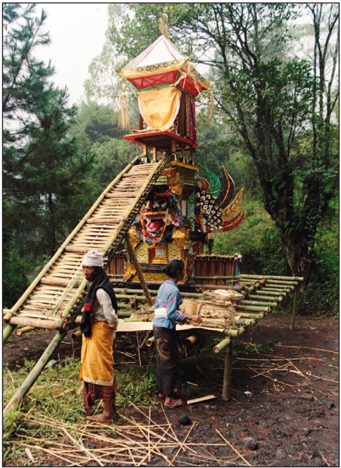
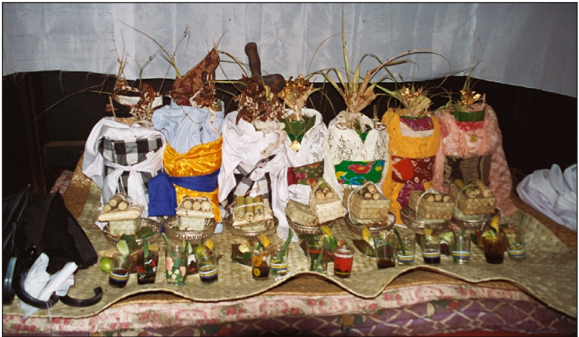
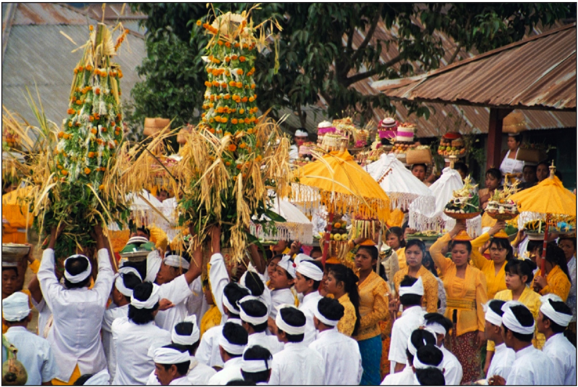

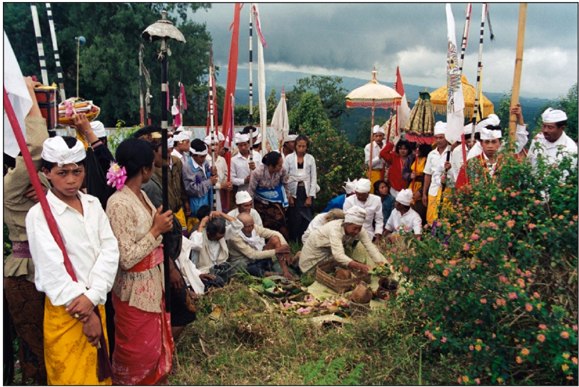
Verification
Claims the paper makes
0 Valid · 22 Not valid · 29 Not checked · 103 Own results and interpretations
In the paper
“People's present-day identity is defined by their belonging within such origin groups, for example, as members of a particular *umah (house-group of kin and affines) or as co-residents of a *banua, *tanaq (settlement) with complex and variable patterns of relations between house groups.”
§ Is Ancestor veneration the most universal of all world religions? A Is Ancestor veneration the > Ancestor Religion today; A regional case study
What the sources say
- Not matchedcites [26]
The reference list we hold has no entry [26].
plainstates a cause- Asserted: passes — The authors put it forward as true.
- Checkable: passes — It can be checked against evidence.
- Load-bearing: unclear — It is unclear whether the paper’s conclusions depend on it.
- Based: passes — The paper gives a reason why it holds.
- Not matched
In the paper
“Among other findings, it was discovered that ancestor veneration is still a key feature in almost every Austronesian society today.”
§ Is Ancestor veneration the most universal of all world religions? A Is Ancestor veneration the > Ancestor Religion today; A regional case study
What the sources say
- Not matchedcites [19]
The reference list we hold has no entry [19].
plain- Asserted: passes — The authors put it forward as true.
- Checkable: passes — It can be checked against evidence.
- Load-bearing: unclear — It is unclear whether the paper’s conclusions depend on it.
- Based: passes — The paper gives a reason why it holds.
- Not matched
A conclusion the paper draws from its own results — it cites no other source for it, so there is none to check. The quote shows it is in the paper.
In the paper
“Regardless of the fact that ancestor veneration has been stripped of its status as a freestanding religion in its own right in many parts of the world, religious practices concerning the deceased continue to be extremely prevalent today.”
§ Is Ancestor veneration the most universal of all world religions? A Is Ancestor veneration the > Anthropology and the transcendentalist bias of Western cosmology
plain- Asserted: passes — The authors put it forward as true.
- Checkable: passes — It can be checked against evidence.
- Load-bearing: passes — The paper’s conclusions depend on it.
- Based: unclear — It is unclear why the paper says it holds.
The paper states this without a source or data behind it here, so there is nothing to check it against. The quote shows it is in the paper.
In the paper
“Studies by anthropologists and other scholars have provided descriptions of hundreds of societies around the world that feature a dominant or subsidiary tradition of Ancestor Religion”
§ Is Ancestor veneration the most universal of all world religions? A Is Ancestor veneration the > Introduction
plain- Asserted: passes — The authors put it forward as true.
- Checkable: passes — It can be checked against evidence.
- Load-bearing: passes — The paper’s conclusions depend on it.
- Based: unclear — It is unclear why the paper says it holds.
A conclusion the paper draws from its own results — it cites no other source for it, so there is none to check. The quote shows it is in the paper.
In the paper
“Indeed, its very existence is concealed under the hat of other religions.”
§ Is Ancestor veneration the most universal of all world religions? A Is Ancestor veneration the > Anthropology and the transcendentalist bias of Western cosmology
plainstates a cause- Asserted: passes — The authors put it forward as true.
- Checkable: unclear — It is unclear whether it could be checked against evidence.
- Load-bearing: passes — The paper’s conclusions depend on it.
- Based: unclear — It is unclear why the paper says it holds.
16 more claims
Create a free account to see all 154 claims and to verify the 3 references still open.
- Probably not a substantial claim. 119
- It may state two separate claims as one. 56
Citations
Cites
Freud, S. (1913) · MacMillan Co eBooks · doi:10.1037/10561-000 · Cited by 5,920
The Hero with a Thousand Faces
Campbell, J. (1949) · Cited by 3,775
The Gender of the GiftProblems with Women and Problems with Society in Melanesia
Strathern, M. (1988) · University of California Press · doi:10.1525/california/9780520064232.001.0001 · Cited by 2,931
The Political Theory of Possessive Individualism: Hobbes to Locke.
Day, J. P., & MacPherson, C. B. (1964) · The Philosophical Quarterly · doi:10.2307/2955469 · Cited by 2,221
Cosmological Deixis and Amerindian Perspectivism
de Castro, E. V. (1998) · The Journal of the Royal Anthropological Institute · doi:10.2307/3034157 · Cited by 1,868
The Archetypes and the Collective Unconscious
Jung, C. G. (2014) · Routledge eBooks · doi:10.4324/9781315725642 · Cited by 1,767
(1980) · Cited by 1,658
Wells, F. L., Freud, S., & Brill, A. A. (1913) · The Journal of Philosophy, Psychology and Scientific Methods · doi:10.2307/2013727 · Cited by 1,325
Modern Man in Search of a Soul
Jung, C. G. (1935) · The Journal of Nervous and Mental Disease · doi:10.1097/00005053-193506000-00052 · Cited by 1,092
The Varieties of Religious Experience
James, W. (2012) · Oxford University Press eBooks · doi:10.1093/owc/9780199691647.001.0001 · Cited by 491
Research works printed but not linked: 8
- Bateson, Gregory. 1958. Naven. Stanford: Stanford University Press. [First published 1936.]
- De Josselin de Jong, J.P.B. 1977. "The Malay archipelago as a field of ethnological study", in: P.E. de Josselin de Jong (ed.), Structural anthropology in the Netherlands, pp. 164-182. The Hague: Martinus Nijhoff. [KITLV Translation Series, first published in 1935.]
- Fortes, Meyer. 1965. "Some reflections on ancestor worship in Africa", in: M. Fortes and G. Dieterlen (eds), African systems of thought, pp. 122-142. London: Oxford University Press. 53
- Fox, James J. 1996. "Introduction", in: J. Fox and C. Sathers (eds), Origins, ancestry and alliance; Explorations in Austronesian ethnography, pp. 1-17. Canberra: ANU Press.
- Hefner, Robert. 1999. "Islam and nation in the Post-Suharto Era", in: Adam Schwarz and Jonathan Paris (eds), The politics of Post-Suharto Indonesia, pp. 40-72. New York: Council of Foreign Relations Press.
- Lewis, E. Douglas. 2009. Untitled work presented at the History of Christianity in Indonesia Conference, Yarra Theological Union, Melbourne, 7-8 August.
- Macpherson, C. 1963. The political theory of possessive individualism. Oxford: Clarendon.
- Wagner, Roy. 1991. "The fractal person", in: M. Godelier and M. Strathern (eds), Big men and great men; Personifications of power in Melanesia, pp. 159-173. Cambridge: Cambridge University Press.
Cited by
Kidron, C. A. (2018) · Ethos · doi:10.1111/etho.12198 · Cited by 26
Wali Pitu in Bali: inventing new halal tourism destinations in contemporary Indonesia
Raya, M. K. F. (2022) · Contemporary Islam · doi:10.1007/s11562-022-00503-8 · Cited by 24
Envisioning postmortal futures: six archetypes on future societal approaches to seeking immortality
Hurtado, J. H. (2022) · Mortality · doi:10.1080/13576275.2022.2100250 · Cited by 16
Susanto, N. H., Rahayani, Y., & Muasomah, M. (2024) · EDUKASI Jurnal Penelitian Pendidikan Agama dan Keagamaan · doi:10.32729/edukasi.v22i2.1472 · Cited by 8
Brinkgreve, F. (2016) · Leiden Repository (Leiden University) · Cited by 8
Metadata
- Authors
- Reuter, T.
- Affiliations
- The University of Melbourne (AU)
- Corresponding author
- Reuter, Thomas
- ORCID
- Reuter, Thomas
- Venue
- Wacana
- Published
- 2015-07-01
- Volume
- 15
- Issue
- 2
- Pages
- 223
- ISSN
- 1411-2272 (ISSN-L)
- 2407-6899
- OpenAlex
- W2404635709
- Semantic Scholar
- f01c18908577bead981a2bc254ae948aa7f7145b
- Cited by
- 24
- References
- 56
- Citations by year
- 2025: 12 · 2024: 3 · 2023: 1 · 2022: 3 · 2020: 1 · 2018: 1 · 2016: 3
- FWCI
- 5.19
- Type
- journal article
- Language
- en
- Open access
- diamond
- doi.org
- Licence
- cc-by-nc
- Locations
- Wacana Journal of the Humanities of Indonesia (publishedVersion, cc-by-nc)
- DOAJ (DOAJ: Directory of Open Access Journals) (submittedVersion)
- Minerva Access (University of Melbourne) (submittedVersion, cc-by-nc)
- Funders
- Monash University
- University of Melbourne
- Topics
- Social Sciences › Arts and Humanities › Philosophy › Study and Philosophy of Religion
- Social Sciences › Cultural Studies › Cultural and Religious Practices in Indonesia
- Social Sciences › Anthropology › Anthropological Studies and Insights
- Keywords
- ancestor veneration, cosmological bias, traditional knowledge, dualism, mind-matter dualism, comparative religion, Bali, Indonesian religion, world religions
About these checks
Registry, retraction, Cites and statistics results are computed, not judged, with one exception: a printed reference that no index lists is read once by a model before it counts as a citation error. Claims are extracted by a model and kept only when their quote appears verbatim in the text; each cited source is then checked, with a model’s help, for whether it says what the claim relies on. Those verdicts can be wrong — read the claim’s quote and the cited source before relying on one.
A language model drew the claims from the paper on 2026-11-24, under version 3 of the claim definition (model deepseek-v4.1-flash, prompt extract-v3).
A second model labelled each claim on 2026-11-24 (model jev-1.13-20260917, definition revision gold-guideline-v0.2).
Statistics and arithmetic are recomputed, not judged.
Confidence bands are shown only for fields calibrated on our annotated test set. None is calibrated yet, so no band is shown.
What counts as a claim ›How we measure confidence ›How we check this ›
Are you an author, or do you see a problem with this page? Request a review
How to cite
Cite CoChat for the checks on this page, and the paper for its own findings.
- This page
- CoChat. (2026). Citation check: Is Ancestor veneration the most universal of all world religions? A critique of modernist cosmological bias. https://app.cochat.ai/papers/10.17510/wacana.v15i2.402
- The paper
- Reuter, T. (2015). Is Ancestor veneration the most universal of all world religions? A critique of modernist cosmological bias. Wacana. https://doi.org/10.17510/wacana.v15i2.402
Data sources
Bibliographic data: Semantic Scholar, OpenAlex, Crossref.
Contains information from the Semantic Scholar Academic Graph Datasets, made available under the ODC Attribution License (ODC-BY 1.0).
Semantic Scholar’s data is described in: Kinney, R., et al. (2023). The Semantic Scholar Open Data Platform. arXiv:2301.10140.
