

The DOI matches its Crossref record; 57 of the 59 references it cites were found in a registry or an index; none of the 117 sources its claims cite is checked for support yet.
Exploring the Challenges of Generative AI on Public Sector Communication in Europe
Open accessAbstract
This study investigates how emerging digital technologies, particularly generative AI tools, are transforming public sector communication in Europe, highlighting the profound intersection between public organizations, AI, and human interactions. In particular, it explores the opportunities and risks that public sector communicators face as they deal with and integrate digital platforms and AI‐driven tools into their strategies and practices in a contemporary scenario characterized by the spread of disinformation and a growing distrust toward institutions. The article gathers insights from in‐depth interviews with leading public sector communicators working for European governments and EU institutions. Findings reveal that generative AI is seen as a transformative tool for governments and public institutions, with communicators emphasizing both benefits and risks, as well as the importance of adopting ethical practices and new responsibilities toward citizens, institutions, and mass media. From the interviews, generative AI tools emerged as game‐changers in message delivery and content production, demanding greater professionalism and new competencies and skills to integrate these technologies into public sector communication strategies and to counteract the threats posed by disinformation campaigns and platformization. The study provides valuable insights into the evolving role of generative AI in public‐sector communication, addressing the scarcity of research in this field. As the adoption of generative AI becomes inevitable, and policy frameworks like the EU AI Act develop, communicators must ensure transparency and trust to align public sector communication with democratic values and foster meaningful dialogue in new digital‐media arenas. Implications for theory and practice are discussed.
Overview
CoChat Summary
TL;DR
This qualitative study interviews 14 senior public sector communicators in European governments and EU institutions about how generative AI is reshaping public sector communication. It finds GenAI is widely seen as a game-changer for message delivery and content production, with opportunities cited more often than risks, but also with major concerns about disinformation, ethics, transparency, and the need for new competencies.
Key findings
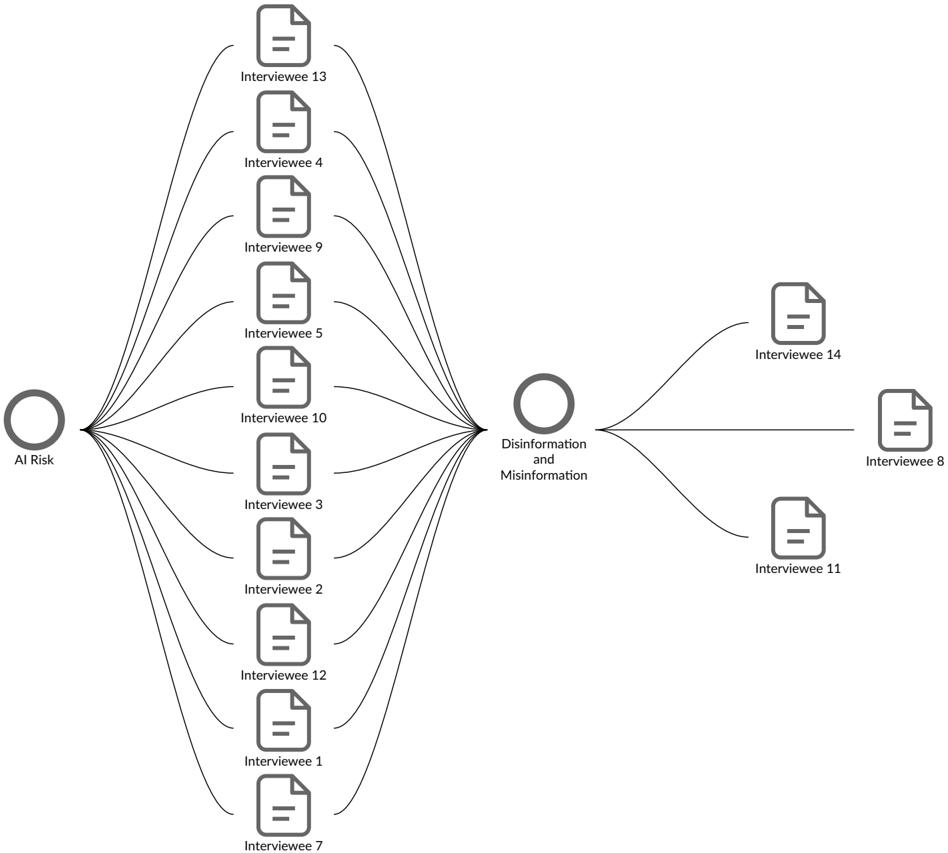
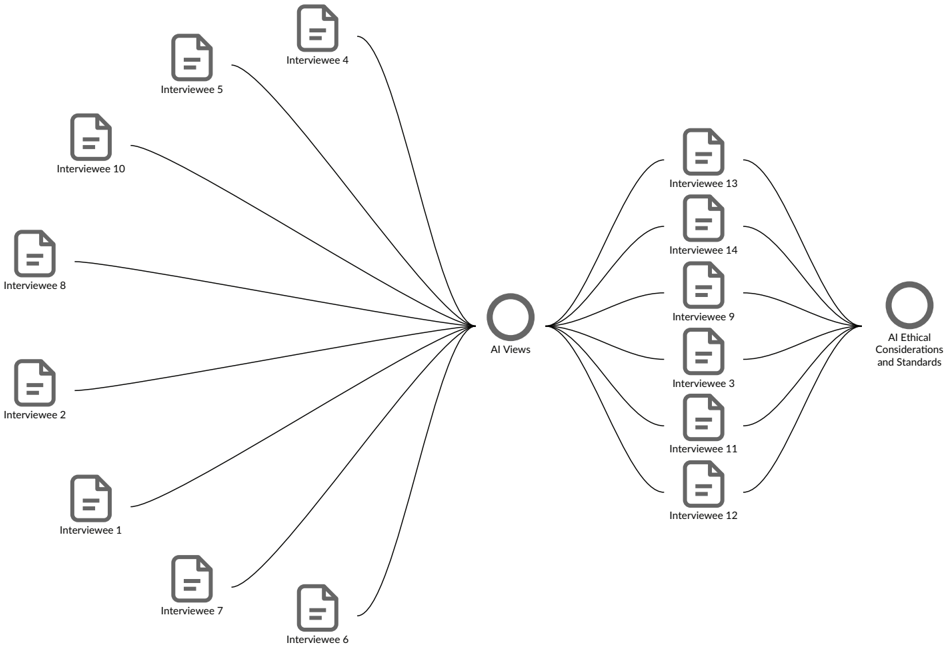
- All interviewees agreed that GenAI represents a game-changer for their profession in message delivery and communication campaign production, requiring a new sense of responsibility and an ethical approach; out of 14 interviews, “AI opportunity” was cited more frequently than “AI risk” in the majority of interviews.
- Opportunities identified included enhancing efficiency in communication management, faster data analysis, creating communication plans, engaging different publics, monitoring social media sentiment, stimulating creativity in visuals/videos/messages, preparing internal staff training, and assisting in strategic and complex tasks; one interviewee described AI-enabled targeting as “fingers of an octopus reaching out.”
- Risks emphasized by the majority included disinformation, deepfakes, hallucinations, misleading content, and incorrect information; some interviewees said GenAI could automate false content, accelerate dissemination, and multiply misleading information online, raising concerns about trust, source transparency, and human oversight.
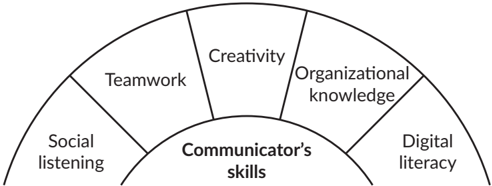
- For competencies, respondents underscored a balanced skill set blending traditional communication expertise with digital literacy, including social listening, teamwork, creativity, digital skills, and understanding PSO functioning and organizational culture; the conclusion describes public communicators evolving into “centaur communicators” and acting as a “steady rock” and trusted voice.
Methods
- Qualitative design using in-depth semi-structured interviews with elite publics, recruited through snowball sampling; professionals were invited during the Club of Venice conference in Venice in November 2023, contacted by email in January 2024, and interviewed in October 2024 in English using Microsoft Teams.
- The sample comprised 14 professionals residing in 13 different countries, including directors of communication in ministries, heads of communication units for national departments, heads of communication at EU institutions, and former heads of public information for governments and ministries; average interview length was 42 minutes.
- Thematic analysis was applied, combining manual and computer-assisted techniques using NVivo 14; authors independently coded the same set of transcripts, compared coding, and resolved discrepancies through consensus.
Limitations
- The paper states limitations including the limited number of interviewees and the fact that interviewing elites provides valuable insights and trends but sometimes fails to reveal organizational issues or diverse organizational cultures.
- Evident from the text: the study is qualitative and not generalizable; the sample consists of senior government and EU communicators, so perspectives of citizens, media, or non-elite staff are not represented; snowball sampling may introduce selection bias; findings rely on self-reported perceptions.
Model-written summary. Check it against the paper before relying on it.
Integrity signals
Registry
Cites
Statistics
Figures


Verification
Claims the paper makes
0 Valid · 0 Not valid · 81 Not checked · 43 Own results and interpretations
A result the paper reports from its own data — it cites no other source for it, so there is none to check. The quote shows it is in the paper.
In the paper
“Findings reveal that generative AI is seen as a transformative tool for governments and public institutions, with communicators emphasizing both benefits and risks, as well as the importance of adopting ethical practices and new responsibilities toward citizens, institutions, and mass media.”
§ Exploring the Challenges of Generative AI on Public Sector Communication in Europe > Abstract
plain- Asserted: passes — The authors put it forward as true.
- Checkable: passes — It can be checked against evidence.
- Load-bearing: passes — The paper’s conclusions depend on it.
- Based: passes — The paper gives a reason why it holds.
- Rests on 2 assumptions not shown here.
A result the paper reports from its own data — it cites no other source for it, so there is none to check. The quote shows it is in the paper.
In the paper
“All interviews showed a strong awareness of the technological revolution and the impact of digital technologies within governments and EU institutions.”
§ Exploring the Challenges of Generative AI on Public Sector Communication in Europe > 4. Results and Discussions
boosted- Asserted: passes — The authors put it forward as true.
- Checkable: passes — It can be checked against evidence.
- Load-bearing: unclear — It is unclear whether the paper’s conclusions depend on it.
- Based: passes — The paper gives a reason why it holds.
A result the paper reports from its own data — it cites no other source for it, so there is none to check. The quote shows it is in the paper.
In the paper
“Findings reveal that generative AI is seen as a transformative tool for governments and public institutions, with communicators emphasizing both benefits and risks, as well as the importance of adopting ethical practices and new responsibilities toward citizens, institutions, and mass media.”
§ Exploring the Challenges of Generative AI on Public Sector Communication in Europe > Abstract
plain- Asserted: passes — The authors put it forward as true.
- Checkable: passes — It can be checked against evidence.
- Load-bearing: passes — The paper’s conclusions depend on it.
- Based: passes — The paper gives a reason why it holds.
- Rests on 2 assumptions not shown here.
A result the paper reports from its own data — it cites no other source for it, so there is none to check. The quote shows it is in the paper.
In the paper
“From the interviews, generative AI tools emerged as game-changers in message delivery and content production, demanding greater professionalism and new competencies and skills to integrate these technologies into public sector communication strategies and to counteract the threats posed by disinformation campaigns and platformization.”
§ Exploring the Challenges of Generative AI on Public Sector Communication in Europe > Abstract
plainstates a cause- Asserted: passes — The authors put it forward as true.
- Checkable: passes — It can be checked against evidence.
- Load-bearing: passes — The paper’s conclusions depend on it.
- Based: passes — The paper gives a reason why it holds.
- Rests on 2 assumptions not shown here.
26 more claims
Create a free account to see all 124 claims and to verify the 69 references still open.
- Probably not a substantial claim. 76
- It may state two separate claims as one. 59
Citations
Cites
Using thematic analysis in psychology
Braun, V., & Clarke, V. (2006) · Qualitative Research in Psychology · doi:10.1191/1478088706qp063oa · Cited by 194,414
Snowball Sampling: Problems and Techniques of Chain Referral Sampling
Biernacki, P., & Waldorf, D. (1981) · Sociological Methods & Research · doi:10.1177/004912418101000205 · Cited by 5,464
Dwivedi, Y. K., Kshetri, N., Hughes, L., Slade, E. L., Jeyaraj, A., Kar, A. K., Baabdullah, A. M., Koohang, A., Raghavan, V., Ahuja, M., et al. (2023) · International Journal of Information Management · doi:10.1016/j.ijinfomgt.2023.102642 · Cited by 4,584
Bryman, A. E., Bell, E., Reck, J., & Fields, J. (2001) · Cited by 4,059
van Dijck, J., Poell, T., & de Waal, M. (2018) · doi:10.1093/oso/9780190889760.001.0001 · Cited by 2,951
The Hybrid Media System: Politics and Power
Chadwick, A. (2013) · Oxford University Press eBooks · doi:10.1093/acprof:oso/9780199759477.001.0001 · Cited by 1,550
The Platformization of the Web: Making Web Data Platform Ready
Helmond, A. (2015) · Social Media + Society · doi:10.1177/2056305115603080 · Cited by 1,360
Understanding Social Media Logic
Van Dijck, J., & Poell, T. (2013) · Media and Communication · doi:10.17645/mac.v1i1.70 · Cited by 1,258
Artificial intelligence and innovation management: A review, framework, and research agenda✰
Haefner, N., Wincent, J., Parida, V., & Gassmann, O. (2021) · Technological Forecasting and Social Change · doi:10.1016/j.techfore.2020.120392 · Cited by 1,073
Information disorder toward an interdisciplinary framework for research and policymaking
Wardle, C., Derakhshan, H., & Europarat (2017) · Cited by 857
Research works printed but not linked: 4
- Audétat, M. (2022). Promising technosciences in the economy of attention: Why have pessimistic stories of disruption and “artificial intelligence” performed so well? TECNOSCIENZA: Italian Journal of Science & Technology Studies, 13(2), 35–56.
- Gusfield, J. R. (1981). The culture of public problems: Drinking-driving and the symbolic order. University of Chicago Press.
- OECD. (2024). Assessing potential future artificial intelligence risks, benefits and policy imperative. https://www.oecd-ilibrary.org/deliver/3f4e3dfb-en.pdf?itemId=%2Fcontent%2Fpaper%2F3f4e3dfb-en&mimeType=pdf
- Smillie, L., & Scharfbillig, M. (2024). Trustworthy public communications. Publications Office of the European Union. https://data.europa.eu/doi/10.2760/695605 · doi:10.2760/695605
Cited by
Rethinking Media Users in the Age of AI and Algorithmic Mediation
Jung, J., & Kim, J. (2025) · Media and Communication · doi:10.17645/mac.10915 · Cited by 11
Mercuri, F., Quaglieri, L., Ramírez‐Hurtado, J. M., & Quattrociocchi, B. (2025) · European Journal of Innovation Management · doi:10.1108/ejim-03-2025-0359 · Cited by 9
Implementation of Cyber Public Relations on Instagram @sinergugulanusnatara
Zakiyah, A. R., Rahmanto, A. N., & Sudarmo, S. (2025) · International Journal of Media and Communication Research · doi:10.25299/ijmcr.v6i2.24242 · Cited by 1
Setianingrum, V. M., Pramana, P., Utari, P., & Aziz, R. A. (2025) · Forum for Linguistic Studies · doi:10.30564/fls.v7i11.11618 · Cited by 1
sara, P., marco, B., & marinella, B. (2025) · Institutional Research Information System University of Turin (University of Turin) · doi:10.32049/rtsa.2025.3.11 · Cited by 1
Metadata
- Authors
- Lovari, A., & De Rosa, F.
- Affiliations
- University of Cagliari (IT)
- ORCID
- Lovari, Alessandro
- Venue
- Media and Communication
- Publisher
- Cogitatio
- Published
- 2025-05-14
- Volume
- 13
- ISSN
- 2183-2439 (ISSN-L)
- OpenAlex
- W4410285031
- Semantic Scholar
- f13d4fa2573b48c80b3aa3f07b22bb4f776ec315
- Cited by
- 22
- References
- 59
- Citations by year
- 2026: 12 · 2025: 10
- FWCI
- 23.78
- Type
- journal article
- Language
- en
- Open access
- gold
- doi.org
- Locations
- Media and Communication (publishedVersion, cc-by)
- Cogitatio (Cogitatio) (publishedVersion, cc-by)
- Social Science Open Access Repository (GESIS – Leibniz Institute for the Social Sciences) (submittedVersion, cc-by)
- RePEc: Research Papers in Economics (submittedVersion)
- DOAJ (DOAJ: Directory of Open Access Journals) (submittedVersion, cc-by-sa)
- UNICA IRIS Institutional Research Information System (University of Cagliari) (submittedVersion, cc-by)
- Topics
- Social Sciences › Communication › Public Relations and Crisis Communication
- Social Sciences › Political Science and International Relations › E-Government and Public Services
- Social Sciences › Communication › News Media Framing and Political Communication
- Keywords
- generative AI, government communication, disinformation, platformization, EU institutions, EU AI Act, AI ethics, institutional trust, digital communication, content creation, professional competence, democratic values
About these checks
Registry, retraction, Cites and statistics results are computed, not judged, with one exception: a printed reference that no index lists is read once by a model before it counts as a citation error. Claims are extracted by a model and kept only when their quote appears verbatim in the text; each cited source is then checked, with a model’s help, for whether it says what the claim relies on. Those verdicts can be wrong — read the claim’s quote and the cited source before relying on one.
A language model drew the claims from the paper on 2026-11-14, under version 3 of the claim definition (model deepseek-v4.1-flash, prompt extract-v3).
A second model labelled each claim on 2026-11-14 (model jev-1.13-20260917, definition revision gold-guideline-v0.2).
Statistics and arithmetic are recomputed, not judged.
Confidence bands are shown only for fields calibrated on our annotated test set. None is calibrated yet, so no band is shown.
What counts as a claim ›How we measure confidence ›How we check this ›
Are you an author, or do you see a problem with this page? Request a review
How to cite
Cite CoChat for the checks on this page, and the paper for its own findings.
- This page
- CoChat. (2026). Citation check: Exploring the Challenges of Generative AI on Public Sector Communication in Europe. https://app.cochat.ai/papers/10.17645/mac.9644
- The paper
- Lovari, A., & De Rosa, F. (2025). Exploring the Challenges of Generative AI on Public Sector Communication in Europe. Media and Communication. https://doi.org/10.17645/mac.9644
Data sources
Bibliographic data: Semantic Scholar, OpenAlex, Crossref.
Contains information from the Semantic Scholar Academic Graph Datasets, made available under the ODC Attribution License (ODC-BY 1.0).
Semantic Scholar’s data is described in: Kinney, R., et al. (2023). The Semantic Scholar Open Data Platform. arXiv:2301.10140.
