

The DOI matches its Crossref record.
The Problems in the Implementation of Inclusive Education in Primary Schools
Abstract
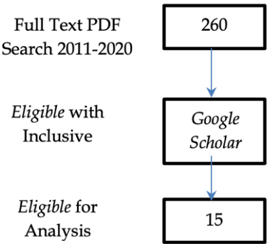
Inclusive education is an educational service that provides opportunities for children with SEN to attend regular schools with their peers. Inclusive education is also a form of Education for All. The implementation of inclusive education has been implemented at the primary school level. However, in its implementation, inclusive education still finds problems. The purpose of this study was to analyze the problems of implementing inclusive education in primary schools. This research study goes through three stages: determining the scope that will focus on the research, determining the urgency and novelty of the research, and determining the research formulation and objectives. A total of sixteen journal articles from 2011 until 2020 with the topic of problems in implementing inclusive education in primary schools. This literature is collected through the Google Scholar database. Based on the current literature review, the problems that exist in the implementation of inclusive education in primary schools are found in the aspects of teacher understanding or skills in teaching SEN students, school infrastructure, student attitudes with the presence of SEN students in the same class, the role of parents, implementation of learning and curriculum development, fees procurement, and cooperation with various parties.
Overview
The claims and statistics of this paper haven’t been checked yet.
Run the check — free, no account needed. It reads the open-access text and checks the sources it cites.
Integrity signals
Registry
Cites
Statistics
Figures
Verification
Claims the paper makes
The claims and statistics of this paper haven’t been checked yet.
Run the check — free, no account needed. It reads the open-access text and checks the sources it cites.
Claims other papers make about this one
Each is checked against this paper’s own text: does it say what the citing paper says it does?
In the citing paper
“Ediyanto et al. (2023) highlight that a significant barrier to inclusive education is the lack of awareness and understanding among educators regarding inclusive practices and the diverse needs of students.”
From Inclusive Education: Navigating the Implementation and Challenges Among Public Elementary Teachers in Las Piñas City, Philippines (2025) · cites this paper as Ediyanto et al. (2023)
Self-check
Percentages, sums and reported differences re-computed from the paper’s own numbers.
The self-check needs the paper’s full text.
Citations
Cites
No references could be resolved yet.
Research works printed but not linked: 34
- Agustin, I. (2016). Manajemen pendidikan inklusi di Sekolah Dasar Sumbersari 1 Kota Malang. Education and Human Development Journal, 1(1), 27-33.
- Agustin, I. (2019). Permasalahan dalam Penyelenggaraan Pendidikan Inklusi di SDN Se Kecamatan Soko Kabupaten Tuban. ELSE (Elementary School Education Journal): Jurnal Pendidikan dan Pembelajaran Sekolah Dasar, 3(2), 17-26.
- Agustin, I. (2020). Problematika Pembelajaran Tematik Bagi Anak Berkebutuhan Khusus di Sekolah Dasar Penyelenggara Pendidikan Inklusi. EduStream: Jurnal Pendidikan Dasar, 4(2), 166-175.
- Al Kahar, A. A. D. (2019). Pendidikan Inklusif Sebagai Gebrakan Solutif "Education for All". Al-Riwayah: Jurnal Kependidikan, 11(1), 45-66.
- Alquraini, T., & Gut, D. (2012). Critical Components of Successful Inclusion of Students with Severe Disabilities: Literature Review. International Journal of Special Education, 27(1), 42-59.
- Amka, A., & Kusumastuti, D. (2019). The Level of Support For Successful Learning in Inclusive Primary School in Banjarmasin. Journal of ICSAR, 3(2), 1-8.
- Anjarsari, A. D. (2018). Penyelenggaraan pendidikan inklusi pada jenjang SD, SMP, dan SMA di Kabupaten Sidoarjo. JPI (Jurnal Pendidikan Inklusi), 1(2), 91-104.
- Anthony, N., & Yasin, M. (2019). Trainee Teachers Level of Willingness for Inclusive Education. Journal of ICSAR, 3(1), 79-83.
- Baiti, R. R. N., Soedjarwo, S., & Purbaningrum, E. (2021). Management of Student with Special Needs in Inclusive Schools (Case Study in the State Junior High School 30 Surabaya and Alam Insan Mulia Junior High School Surabaya). International Journal for Educational and Vocational Studies, 3(1), 57-63.
- Chaitee, N. N., Mallick, B., Arefin, M. S., & Popy, F. B. (2020). Exploring Inclusion in Secondary Schools: A Study on Dhaka City. International Journal for Educational and Vocational Studies, 2(12), 961-968 .
- Darma, I. P., & Rusyidi, B. (2015). Pelaksanaan sekolah inklusi di Indonesia. Prosiding Penelitian dan Pengabdian kepada Masyarakat, 2(2), 233-227.
- Dewi, D. E. C., Zubaidah, Z., Lubis, E., & Syaputra, E. (2020). Problematics of Implementation of Inclusion Education in the Elementary School of Bengkulu City. International Journal of Multicultural and Multireligious Understanding, 7(7), 1-11.
- Fitria, R. (2012). Proses pembelajaran dalam setting inklusi di sekolah dasar. Jurnal Ilmiah Pendidikan Khusus, 1(1), 90-101.
- Husna, F., Yunus, N. R., & Gunawan, A. (2019). Hak Mendapatkan Pendidikan Bagi Anak Berkebutuhan Khusus Dalam Dimensi Politik Hukum Pendidikan. SALAM J. Sos. dan Budaya Syar-i, 6(2), 207-222.
- Kartini, A., & Aprilia, I. D. (2022). Challenges and Opportunities for Regular Teachers in the Implementation of Assessments for Students with Special Needs in Inclusive Education Provider School. Journal of Education for Sustainability and Diversity, 1(1), 29-38.
- Khotimah, H. (2019). Problematika Pelaksanaan Pembelajaran Inklusi di SDN Betet 1 Kediri. INOVATIF: Jurnal Penelitian Pendidikan, Agama dan Kebudayaan, 5(2), 84-103.
- Martin, Nurhattati Fuad. (2016). Manajemen Sarana dan Prasarana Pendidikan, Raja Grafindo Persada: Jakarta Milla, I. (2016). Problematika pembelajaran anak berkebutuhan khusus anak autis kelas II di Sekolah Dasar Negeri Inklusi Ketawanggede Malang (Doctoral dissertation, Universitas Islam Negeri Maulana Malik Ibrahim).
- Nurmawanti, I., Haryati, L. F., Radiusman, R., Anar, A. P., & Novitasari, S. (2020). Problematika dan Tindakan Guru dalam Menghadapi Anak Berkebutuhan Khusus di Mi NW Tanak Beak. Progres Pendidikan, 1(2), 134- 142.
- Novianti, R., Rizal, A. F., Hutasuhut, F. H., Nadiyah, . S. ., Santoso, Y. B., & Widia, A. (2022). Perceptions and Attitudes of Elementary School Class Teachers as Facilitators of Inclusive Education for Children with Special Needs. INCLUSIVE EDUCATION, 1(1), 72-84.
- Pratiwi, J. C. (2016). Sekolah Inklusi untuk Anak Berkebutuhan Khusus: Tanggapan Terhadap Tantangan Kedepannya. Prosiding Ilmu Pendidikan, 1(2), 237-242.
- Riyana, T. A. (2017). Problematika Pemenuhan Pendidikan Bagi Siswa Berkebutuhan Khusus di Sekolah Inklusif Tingkat Sekolah Dasar. Jurnal PPKn, 5(1), 1106-1115.
- Rofiah, K. (2022). Between Special and Regular Settings: The Teachers Attitude towards Inclusion. INCLUSIVE EDUCATION, 1(1), 48-60.
- Sari, W. Q. (2012). Pelaksanaan Inklusi di Sekolah Dasar Negeri 14 Pakan Sinayan Payakumbuh (Deskriptif Kualitatif). Jurnal Penelitian Pendidikan Khusus, 1(1), 190-197.
- Sunanto, J. (2016). Indeks inklusi dalam pembelajaran di kelas yang terdapat student with special needs di sekolah dasar. JASSI ANAKKU, 8(2), 78-84.
- Suwandayani, B. I. (2019). Penerapan Pendidikan Inklusi Berbasis Kontekstual di Sekolah Dasar. ELSE (Elementary School Education Journal): Jurnal Pendidikan dan Pembelajaran Sekolah Dasar, 3(1), 44-54.
- Triutari, I. (2014). Persepsi Mahasiswa Penyandang Disabilitas Tentang Sistem Pendidikan Segregasi Dan Pendidikan Inklusi (Deskrptif Kuantitatif Pada Penyandang Disabilitas di Universitas Negeri Padang). Jurnal Penelitian Pendidikan Khusus, 3(3), 221-229.
- Uthami, N., & Sunardi, S. (2022). Occupational Stress on Special Education Teachers at Inclusive School X, South Tangerang. Proceeding of International Conference on Special Education in South East Asia Region, 1(1), 35-42.
- Wahyudi, M., & Rugaiyah, R. (2019). Inclusive Education: Cooperation Between Class Teachers, Special Teachers, Parents to Optimize Development of Special Needs Childrens. International Journal for Educational and Vocational Studies, 1(5), 396-399.
- Wati, E. (2014). Manajemen pendidikan inklusi di sekolah dasar negeri 32 kota Banda Aceh. JURNAL ILMIAH DIDAKTIKA: Media Ilmiah Pendidikan dan Pengajaran, 14(2), 368-378.
- Widodo, A., & Saptini, N. (2020). Problematika Pendidikan Karakter Anak Berkebutuhan Khusus (Studi Kasus Terhadap Sekolah Dasar Penyelenggara Pendidikan Inklusif di Lombok Tengah). Jurnal Ilmiah Keguruan dan Ilmu Pendidikan, 9(2), 129-135.
- Widyawati, R. (2017). Evaluasi Pelaksanaan Program Inklusi Sekolah Dasar. Kelola: Jurnal Manajemen Pendidikan, 4(1), 109-120.
- Wulan, R., & Sanjaya, W. (2022). Developing Positive School Climate for Inclusive Education. Journal of Education for Sustainability and Diversity, 1(1), 54-66.
- Yasa, R. B., & Julianto, J. (2018). Evaluasi Penerapan Pendidikan Inklusi di Sekolah Dasar di Kotamadya Banda Aceh dan Kabupaten Pidie. Gender Equality: International Journal of Child and Gender Studies, 3(2), 120- 135.
- Yu, L., Su, X., & Liu, C. (2011). Issues of teacher education and inclusion in China. Prospects, 41(3), 355-369.
Cited by
Sorted by citations
Jimenez, J. A. (2025) · Journal of Interdisciplinary Perspectives · doi:10.69569/jip.2024.0434 · Cited by 5
Metadata
- Authors
- Ediyanto, E., Ramadhani, R. S., Fitrasari, B. D., Kenila, E., Sunandar, A., Hastuti, W. D., & Suhendri, S.
- Venue
- Journal of ICSAR
- Publisher
- State University of Malang (UM)
- Published
- 2023-01-30
- Volume
- 7
- Issue
- 1
- Pages
- 1
- ISSN
- 2548-8600
- 2548-8619
- Cited by
- 2
- References
- 0
About these checks
Registry, retraction, Cites and statistics results are computed, not judged, with one exception: a printed reference that no index lists is read once by a model before it counts as a citation error. Claims are extracted by a model and kept only when their quote appears verbatim in the text; each cited source is then checked, with a model’s help, for whether it says what the claim relies on. Those verdicts can be wrong — read the claim’s quote and the cited source before relying on one.
Statistics and arithmetic are recomputed, not judged.
Confidence bands are shown only for fields calibrated on our annotated test set. None is calibrated yet, so no band is shown.
What counts as a claim ›How we measure confidence ›How we check this ›
Are you an author, or do you see a problem with this page? Request a review
