

Data Augmentation for Low-Resource Neural Machine Translation
Open accessThe DOI matches its Crossref record; 3 of the 3 references it cites were found in a registry or an index.
Abstract
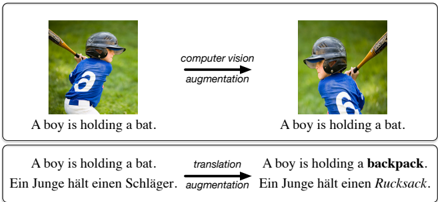
The quality of a Neural Machine Translation system depends substantially on the availability of sizable parallel corpora.For low-resource language pairs this is not the case, resulting in poor translation quality.Inspired by work in computer vision, we propose a novel data augmentation approach that targets low-frequency words by generating new sentence pairs containing rare words in new, synthetically created contexts.Experimental results on simulated low-resource settings show that our method improves translation quality by up to 2.9 BLEU points over the baseline and up to 3.2 BLEU over back-translation.
Overview
The claims and statistics of this paper haven’t been checked yet.
Free: it reads the open-access text and checks the first 5 claims that cite a source we can check. Create a free account to check every claim.
Integrity signals
Registry
Cites
Statistics
Figures
Verification
Claims the paper makes
The claims and statistics of this paper haven’t been checked yet.
Free: it reads the open-access text and checks the first 5 claims that cite a source we can check. Create a free account to check every claim.
Self-check
Percentages, sums and reported differences re-computed from the paper’s own numbers.
The self-check needs the paper’s full text.
Citations
Cites
BLEU: a method for automatic evaluation of machine translation
Papineni, K., Roukos, S., Ward, T., & Zhu, W.-J. (2001) · Proceedings of the 40th Annual Meeting on Association for Computational Linguistics - ACL '02 · doi:10.3115/1073083.1073135 · Cited by 21,344 · cited 2×
“We measure translation quality by single-reference case-insensitive BLEU (Papineni et al., 2002) computed with the multi-bleu.perl script from Moses.”
InfluentialOn the Properties of Neural Machine Translation: Encoder–Decoder Approaches
Cho, K., van Merrienboer, B., Bahdanau, D., & Bengio, Y. (2014) · Proceedings of SSST-8, Eighth Workshop on Syntax, Semantics and Structure in Statistical Translation · doi:10.3115/v1/w14-4012 · Cited by 7,099
Proceedings of the British Machine Vision Conference 2014
(2014) · doi:10.5244/c.28 · Cited by 1,337
Research works printed but not linked: 13
- Dzmitry Bahdanau, Kyunghyun Cho, and Yoshua Ben- gio. 2015. Neural machine translation by jointly learning to align and translate. In Proceedings of the International Conference on Learning Represen- tations (ICLR).
- Ondřej Bojar, Rajen Chatterjee, Christian Feder- mann, Yvette Graham, Barry Haddow, Matthias Huck, Antonio Jimeno Yepes, Philipp Koehn, Varvara Logacheva, Christof Monz, Matteo Negri, Aurelie Neveol, Mariana Neves, Martin Popel, Matt Post, Raphael Rubino, Carolina Scarton, Lucia Specia, Marco Turchi, Karin Verspoor, and Marcos Zampieri. 2016. Findings of the 2016 conference on machine translation. In Proceedings of the First Conference on Ma- chine Translation. Association for Computational Linguistics, Berlin, Germany, pages 131-198. http://www.aclweb.org/anthology/W/W16/W16- 2301.
- Long Duong, Trevor Cohn, Steven Bird, and Paul Cook. 2015. A neural network model for low- resource universal dependency parsing. In Proceed- ings of the 2015 Conference on Empirical Methods in Natural Language Processing. Association for Computational Linguistics, Lisbon, Portugal, pages 339-348. http://aclweb.org/anthology/D15-1040.
- Chris Dyer, Victor Chahuneau, and Noah A. Smith. 2013. A simple, fast, and effective reparameteriza- tion of ibm model 2. In Proceedings of the 2013 Conference of the North American Chapter of the Association for Computational Linguistics: Human Language Technologies. Association for Computa- tional Linguistics, Atlanta, Georgia, pages 644-648. http://www.aclweb.org/anthology/N13-1073.
- Sepp Hochreiter and Jürgen Schmidhuber. 1997. Long short-term memory. Neural Computation 9(8):1735-1780.
- Rafal Jozefowicz, Wojciech Zaremba, and Ilya Sutskever. 2015. An empirical exploration of re- current network architectures. In Francis Bach and David Blei, editors, Proceedings of the 32nd International Conference on Machine Learning. PMLR, Lille, France, volume 37 of Proceedings of Machine Learning Research, pages 2342-2350. http://proceedings.mlr.press/v37/jozefowicz15.pdf.
- Alex Krizhevsky, Ilya Sutskever, and Geoffrey E Hinton. 2012. Imagenet classification with deep convolutional neural networks. In F. Pereira, C. J. C. Burges, L. Bottou, and K. Q. Weinberger, editors, Advances in Neural Information Process- ing Systems 25, Curran Associates, Inc., pages 1097-1105. http://papers.nips.cc/paper/4824- imagenet-classification-with-deep-convolutional- neural-networks.pdf.
- Thang Luong, Hieu Pham, and Christopher D. Man- ning. 2015. Effective approaches to attention-based neural machine translation. In Proceedings of the 2015 Conference on Empirical Methods in Natu- ral Language Processing. Association for Compu- tational Linguistics, Lisbon, Portugal, pages 1412- 1421. http://aclweb.org/anthology/D15-1166.
- Yuval Marton, Chris Callison-Burch, and Philip Resnik. 2009. Improved statistical machine translation using monolingually-derived para- phrases. In Proceedings of the 2009 Confer- ence on Empirical Methods in Natural Lan- guage Processing. Association for Computa- tional Linguistics, Singapore, pages 381-390. http://www.aclweb.org/anthology/D/D09/D09- 1040.
- Rico Sennrich, Barry Haddow, and Alexandra Birch. 2016a. Improving neural machine translation models with monolingual data. In Proceed- ings of the 54th Annual Meeting of the As- sociation for Computational Linguistics (Volume 1: Long Papers). Association for Computa- tional Linguistics, Berlin, Germany, pages 86-96. http://www.aclweb.org/anthology/P16-1009.
- Rico Sennrich, Barry Haddow, and Alexandra Birch. 2016b. Neural machine translation of rare words with subword units. In Proceed- ings of the 54th Annual Meeting of the As- sociation for Computational Linguistics (Volume 1: Long Papers). Association for Computational Linguistics, Berlin, Germany, pages 1715-1725. http://www.aclweb.org/anthology/P16-1162.
- Ilya Sutskever, Oriol Vinyals, and Quoc V Le. 2014. Sequence to sequence learning with neural net- works. In Z. Ghahramani, M. Welling, C. Cortes, N. D. Lawrence, and K. Q. Weinberger, editors, Advances in Neural Information Processing Sys- tems 27, Curran Associates, Inc., pages 3104- 3112. http://papers.nips.cc/paper/5346-sequence- to-sequence-learning-with-neural-networks.pdf.
- Barret Zoph, Deniz Yuret, Jonathan May, and Kevin Knight. 2016. Transfer learning for low-resource neural machine translation. In Proceedings of the 2016 Conference on Empirical Methods in Natu- ral Language Processing. Association for Computa- tional Linguistics, Austin, Texas, pages 1568-1575. https://aclweb.org/anthology/D16-1163.
Cited by
Items 101–200 of 270
CERG: Chinese Emotional Response Generator with Retrieval Method
Zhou, Y., & Ren, F. (2020) · Research · doi:10.34133/2020/2616410 · Cited by 10
“The replacement augmentation method can help to improve the robustness of the model [27].”
MethodSTA: An efficient data augmentation method for low-resource neural machine translation
Li, F., Chi, C., Yan, H., Liu, B., & Shao, M. (2023) · Journal of Intelligent & Fuzzy Systems · doi:10.3233/jifs-230682 · Cited by 9
“Words replacement are employed to generate augmented data with relatively high quality [9, 11, 12, 16–18].”
Non-Fluent Synthetic Target-Language Data Improve Neural Machine Translation
Sánchez-Cartagena, V. M., Esplà-Gomis, M., Pérez-Ortiz, J. A., & Sánchez-Martínez, F. (2023) · IEEE Transactions on Pattern Analysis and Machine Intelligence · doi:10.1109/tpami.2023.3333949 · Cited by 11
“Table XII shows the output translations of each system under study in a couple of representative cases in which MaTiLDA attains the highest cosine similarity with the reference translation.”
BackgroundAddressing the data gap: building a parallel corpus for Kashmiri language
Qumar, S. M. U., Azim, M., & Quadri, S. M. K. (2024) · International Journal of Information Technology · doi:10.1007/s41870-024-01979-8 · Cited by 10
“The challenges in developing resources for low-resource languages are multifaceted, ranging from the limited availability of sizable corpora [41] to difficulties in domain coverage and data acquisition [42].”
Simple Data Augmentation for Multilingual NLU in Task Oriented Dialogue Systems
Louvan, S., & Magnini, B. (2020) · Accademia University Press eBooks · doi:10.4000/books.aaccademia.8648 · Cited by 11
“Recently, DA has shown potential in tasks such as machine translation (Fadaee et al., 2017), constituency and dependency parsing (Şahin and Steedman, 2018; Vania et al.”
BackgroundTowards Efficiently Diversifying Dialogue Generation Via Embedding Augmentation
Cao, Y. H., Ding, L., Tian, Z., & Fang, M. (2021) · IEEE International Conference on Acoustics Speech and Signal Processing · doi:10.1109/icassp39728.2021.9414915 · Cited by 15
“Word replacement extends the data scales by randomly replacing original tokens with others based on vocabulary distributions [13, 14].”
Multi‐source BERT stack ensemble for cross‐domain author profiling
Neto, J. P. D., & Paraboni, I. (2021) · Expert Systems · doi:10.1111/exsy.12869 · Cited by 9
“These may include, for instance, the use of back-translation (Sennrich et al., 2016), word replacement (Fadaee et al., 2017), and data augmentation methods (Ng et al., 2020; Xie et al., 2020).”
MethodImproving Intrusion Detection Through Training Data Augmentation
Otokwala, U. J., Petrovski, A., & Kalutarage, H. (2021) · International Conference on Security of Information and Networks (SIN) · doi:10.1109/sin54109.2021.9699293 · Cited by 13
“It has been successfully used in image classification to change the geometrical transformation of an existing image, and thus improving the image quality [6].”
MethodA Study of Machine Translation Models for Kannada-Tulu
Hegde, A., Shashirekha, H. L., Kumar, M. A., & Chakravarthi, B. R. (2023) · Lecture notes in networks and systems · doi:10.1007/978-981-19-9225-4_12 · Cited by 8
Semantic-Based Data Augmentation for Math Word Problems
Li, A., Xiao, Y., Liang, J., & Chen, Y. (2022) · Lecture notes in computer science · doi:10.1007/978-3-031-00129-1_3 · Cited by 10
RandMixAugment: A Novel Unified Technique for Region- and Image-Level Data Augmentations
Shin, Y., Palakonda, V., Yun, S., Kim, I., Kim, S.-G., Park, S.-M., & Kang, J. (2023) · IEEE Access · doi:10.1109/access.2023.3305385 · Cited by 8
Null Model-Based Data Augmentation for Graph Classification
Wang, Z., Wang, J., Shan, Y., Yu, S., Xu, X.-K., Xuan, Q., & Chen, G. (2023) · IEEE Transactions on Network Science and Engineering · doi:10.1109/tnse.2023.3332499 · Cited by 9
Zhu, W., Liu, J., Xu, J., Chen, Y., & Zhang, Y. (2021) · Lecture notes in computer science · doi:10.1007/978-3-030-84186-7_24 · Cited by 9
“This has also been observed in previous work on machine translation tasks (Fadaee et al., 2017).”
ResultA fuzzy data augmentation technique to improve regularisation
Dabare, R., Wong, K. W., Shiratuddin, M. F., & Koutsakis, P. (2021) · International Journal of Intelligent Systems · doi:10.1002/int.22731 · Cited by 8
“Fadaee et al. 22 use a simple approach for augmentation of Neural Machine Translation training data for low resource pairs by using an attention ‐ based encoder + decoder model.”
MethodHu, Y., Donald, C., & Giacaman, N. (2022) · International Journal of Artificial Intelligence in Education · doi:10.1007/s40593-022-00310-5 · Cited by 11
“Compared to creating augmented images in computer vision fields, text augmentation in NLP tasks is much more difficult due to the complexity of human language (Fadaee et al., 2017).”
BackgroundNaito, S., Tomozawa, H., Mori, Y., Nakamura, H., & Fujiwara, H. (2018) · Journal of Disaster Research · doi:10.20965/jdr.2018.p0928 · Cited by 7
“…the discrimination performance of unknown data; hence, there is a possibility of robustness improvement by adding learning patch images so that the amount of data in each of the classes becomes homogenous by using more photos or preventing overlearning using the method of data augmentation [40].”
Efficient Low-Resource Neural Machine Translation with Reread and Feedback Mechanism
Yu, Z., Yu, Z., Guo, J., Huang, Y., & Wen, Y. (2020) · ACM Transactions on Asian and Low-Resource Language Information Processing · doi:10.1145/3365244 · Cited by 11
“[3, 9, 23, 29] try to address this problem by data augmentation.”
BackgroundDetecting Malicious Social Robots with Generative Adversarial Networks
Wu, B., Liu, L., Dai, Z., Wang, X., & Zheng, K. (2019) · KSII Transactions on Internet and Information Systems · doi:10.3837/tiis.2019.11.018 · Cited by 9
“Fadaee and Bisazza [24] located low-frequency words by generating new sentence pairs containing rare words in the context of new synthetic creation.”
Background“Turkic Morpheme” Portal Toolset for Data Augmentation in Low Resource Machine Translation
Gatiatullin, A. R., Шевкетович, С. Д., Prokopyev, N. A., & Karpova, K. (2024) · IEEE International Conference on Problems of Informatics, Electronics and Radio Engineering (PIERE) · doi:10.1109/piere62470.2024.10805036 · Cited by 6
“…of training machine translation models consists of using other machine translation systems to generate training datasets by translating texts from one of the languages of a bilingual pair in original parallel dataset, obtained as an electronic corpus of real-use texts, into another language [6].”
Gorman, K., & Sproat, R. (2021) · Synthesis lectures on human language technologies · doi:10.2200/s01086ed1v01y202104hlt050 · Cited by 8
Saxena, S., Gupta, A. K., & Daniel, P. (2024) · Multimedia Tools and Applications · doi:10.1007/s11042-023-18086-8 · Cited by 8
“Previous studies on various DA tasks include back-translation [6], noise reduction [7], and translational DA [20].”
Prompt-based data labeling method for aspect based sentiment analysis
Bu, K., & Liu, Y. (2024) · International Journal of Machine Learning and Cybernetics · doi:10.1007/s13042-024-02180-w · Cited by 6
A Clause-Based Data Augmentation Method for Low-Resource Neural Machine Translation
Li, F., Shao, M., Yan, H., & Chi, C. (2025) · IEEE Access · doi:10.1109/access.2025.3555742 · Cited by 7
Offline Corpus Augmentation for English-Amharic Machine Translation
Biadgligne, Y., & Smaïli, K. (2022) · International Conference on Information and Computer Technologies (ICICT) · doi:10.1109/icict55905.2022.00030 · Cited by 11
“The pioneering work of using data augmentation for MT is adopted by Fadaee et al. [19].”
Kipyatkova, I. S., & Kagirov, I. (2022) · Informatics and Automation · doi:10.15622/ia.21.4.2 · Cited by 10
Data augmentation using Heuristic Masked Language Modeling
Liu, X., Zhong, Y., Wang, J., & Li, P. (2023) · International Journal of Machine Learning and Cybernetics · doi:10.1007/s13042-023-01784-y · Cited by 6
“To address this issue, current text augmentation approaches such as back-translation [6, 7], word replacement [8], text augmentation based on contextual information [9, 10], and language generation method [11–13] have been attempted.”
MethodBadawi, S. S. (2023) · Kurdistan Journal of Applied Research · doi:10.24017/science/2023.1.4 · Cited by 7
Liu, Y.-S., Chen, C.-P., Gau, S. S., & Lee, C.-C. (2018) · IEEE International Conference on Acoustics Speech and Signal Processing · doi:10.1109/icassp.2018.8461560 · Cited by 5
“, in neural translation and speech recognition [19, 20].”
BackgroundThe Role of the Input in Natural Language Video Description
Cascianelli, S., Costante, G., Devo, A., Ciarfuglia, T. A., Valigi, P., & Fravolini, M. L. (2019) · IEEE Transactions on Multimedia · doi:10.1109/tmm.2019.2924598 · Cited by 7
“In [59], data augmentation for machine translation was performed, targeting rare words.”
MethodFan, Z., Huang, M., Zhang, X., Liu, R., Lyu, X., Duan, T., Bu, Z., & Liang, J. (2023) · Applied Sciences · doi:10.3390/app132212184 · Cited by 6
“An established resolution would be to explore the edge of the cloud platform system with remote speech recognition functions and multilingual translation.”
BackgroundA Multi-Level Optimization Framework for End-to-End Text Augmentation
Somayajula, S. A., Song, L., & Xie, P. (2022) · Transactions of the Association for Computational Linguistics · doi:10.1162/tacl_a_00464 · Cited by 11
“Data augmentation (Sennrich et al., 2015; Fadaee et al., 2017; Wei and Zou, 2019) is an effective technique for mitigating the deficiency of training data and preventing overfitting.”
MethodA Cross Search Method for Data Augmentation in Neural Machine Translation
Zhang, M., Tu, M., Zhang, F., & Liu, S. (2024) · IEEE International Conference on Acoustics Speech and Signal Processing · doi:10.1109/icassp48485.2024.10447171 · Cited by 6
“Heuristic methods augment the training data using word swapping, removal or substitution [6, 7, 8] on either source-side or target-side, or both.”
MethodLatest Research in Data Augmentation for Low Resource Language Text Translation: A Review
Latief, A. D., Jarin, A., Yaniasih, Y., Afra, D. I. N., Nurfadhilah, E., Pebiana, S., Hidayati, N. N., & Fajri, R. (2024) · International Conference on Computer, Control, Informatics and its Applications · doi:10.1109/ic3ina64086.2024.10732042 · Cited by 5
“Research by Fadaee et al. [4] show that data augmentation can significantly improve translation quality for languages with a limited corpus by adding new, artificially generated sentence examples.”
BackgroundImbalanced Sentiment Classification Enhanced with Discourse Marker
Zhang, T., Wu, X. C., Meng, L., Han, J., & Hu, S. (2019) · Lecture notes in computer science · doi:10.1007/978-3-030-30490-4_11 · Cited by 4
Emna, A., Kchaou, S., & Boujelban, R. (2022) · Communications in computer and information science · doi:10.1007/978-3-031-08277-1_20 · Cited by 5
BOLT-K: Bootstrapping Ontology Learning via Transfer of Knowledge
Vedula, N., Maneriker, P., & Parthasarathy, S. (2019) · International World Wide Web Conference (WWW) · doi:10.1145/3308558.3313511 · Cited by 9
“Another technique is to translate sentences into a second language, and then translate them back into the original language to obtain a slight variation of the original sentence [13, 54, 71].”
BackgroundTorunoğlu-Selamet, D., İnceoğlu, A., & Eryiğit, G. (2020) · International Conference on Computer Science and Engineering (UBMK) · doi:10.1109/ubmk50275.2020.9219389 · Cited by 5
Lucas, A., Baladón, A., Pardiñas, V., Agüero-Torales, M., Góngora, S., & Chiruzzo, L. (2024) · Proceedings of the 2024 Conference of the North American Chapter of the Association for Computational Linguistics: Human Language Technologies (Volume 1: Long Papers) · doi:10.18653/v1/2024.naacl-long.354 · Cited by 5
Effective Strategies for Low-Resource Reading Comprehension
Jing, Y., & Xiong, D. (2020) · International Conference on Asian Language Processing · doi:10.1109/ialp51396.2020.9310502 · Cited by 4
“R ELATED W ORK Low-resource language processing is a very important and challenging problem, which has been widely studied in tasks such as machine translation [22], [23] and named entity recognition [24], [25].”
BackgroundDescription and demonstration guided data augmentation for sequence tagging
Chen, Z., & Qian, T. (2021) · World Wide Web · doi:10.1007/s11280-021-00978-0 · Cited by 4
“To avoid changing the labels after perturbing languages, existing data augmentation studies in NLP mainly concentrate on coarse-grained sentence-level tasks such as machine translation [8, 37], text classification [14, 44], and question answering [1, 21].”
BackgroundMethodA Smaller and Better Word Embedding for Neural Machine Translation
Chen, Q. (2023) · IEEE Access · doi:10.1109/access.2023.3270171 · Cited by 7
Tasneef: A Fast and Effective Hybrid Representation Approach for Arabic Text Classification
Louail, M., Kara‐Mohamed, C., & Hamdi‐Cherif, A. (2024) · IEEE Access · doi:10.1109/access.2024.3450507 · Cited by 8
Geometry of Textual Data Augmentation: Insights from Large Language Models
Feng, J. H., Lai, E. M.-K., & Li, W. (2024) · Electronics · doi:10.3390/electronics13183781 · Cited by 8
Xu, Q., Song, K., Kang, Y., Liu, C., Yu, H., & Zhou, G. (2024) · Knowledge-Based Systems · doi:10.1016/j.knosys.2024.112734 · Cited by 5
Radliński, Ł., Guściora, M., & Kocoń, J. (2025) · Lecture notes in computer science · doi:10.1007/978-3-031-97626-1_1 · Cited by 9
“The core idea to augment data by translating text into a foreign language and then back to the original has been used effectively long before generative devices such as BART or GPT were released [9].”
Augmenting training data with syntactic phrasal-segments in low-resource neural machine translation
Gupta, K. K., Sen, S., Haque, R., Ekbal, A., Bhattacharyya, P., & Way, A. (2021) · Machine Translation · doi:10.1007/s10590-021-09290-0 · Cited by 4
“We also compare the performance of the proposed method with the word augmentation approaches Fadaee et al. (2017), Zhu et al. (2019).”
BackgroundMethodResultInfluentialConsE: Consistency Exploitation for Semi-Supervised Anomaly Detection in Graphs
Chang, W., Yu, J., & Zhou, X. (2023) · International Joint Conference on Neural Networks (IJCNN) · doi:10.1109/ijcnn54540.2023.10191356 · Cited by 4
“Semi-supervised learning has achieved significant progress in various fields, such as computer vision (CV) [15], [36] and natural language processing (NLP) [12], [25].”
BackgroundAutomatic Labeled Dialogue Generation for Nursing Record Systems
Mairittha, T., Mairittha, N., & Inoue, S. (2020) · Journal of Personalized Medicine · doi:10.3390/jpm10030062 · Cited by 7
“Instead of using static word embeddings, authors in [47] used contextualized word embeddings to replace the target word.”
MethodPTT5-Paraphraser: Diversity and Meaning Fidelity in Automatic Portuguese Paraphrasing
Pellicer, L. F. A. O., Pirozelli, P., Costa, A. H. R., & Inoue, A. (2022) · Lecture notes in computer science · doi:10.1007/978-3-030-98305-5_28 · Cited by 4
A Scheme for News Article Classification in a Low-Resource Language
Yohannes, H. M., & Amagasa, T. (2022) · Lecture notes in computer science · doi:10.1007/978-3-031-21047-1_47 · Cited by 7
Li, Z., Jiang, Y., Lin, Y., Ouyang, Y., Wang, L., Yang, L., Deng, Y., Deng, T., & Xu, D. (2025) · Natural Resources Research · doi:10.1007/s11053-025-10496-9 · Cited by 6
“Common data augmentation methods include flipping, rotating, and distorting (Simard et al., 2003; Dieleman et al., 2015; Fadaee et al., 2017; Krizhevsky et al., 2017).”
Fuzzy-based Text Augmentation to boost the Statistical Machine Translation for Indic Languages
Saxena, S., Gupta, A. K., Chauhan, S., & Daniel, P. (2025) · Engineering Applications of Artificial Intelligence · doi:10.1016/j.engappai.2025.111221 · Cited by 4
Mamun, M. O., Mamun, M. A., Ahmad, A., & Emu, M. I. H. (2025) · Communications in computer and information science · doi:10.1007/978-3-032-11352-8_3 · Cited by 3
“Additionally, techniques originally designed for text classification tasks [7] have been successfully adapted and refined for sequence labeling, leading to notable improvements in model robustness.”
A message-passing multi-task architecture for the implicit event and polarity detection
Xiang, C., Zhang, J., & Ji, D. (2021) · PLoS ONE · doi:10.1371/journal.pone.0247704 · Cited by 4
The Effect of Using Masked Language Models in Random Textual Data Augmentation
Rashid, M. A., & Amirkhani, H. (2021) · International Computer Conference, Computer Society of Iran (CSICC) · doi:10.1109/csicc52343.2021.9420616 · Cited by 2
“Fadaee [15] focused on machine translation and replaced words of the input sentence with specifically rare words.”
BackgroundConsiderations on creating conversational agents for multiple environments and users
Cebrián, J., Martínez, R., Rodríguez, N., & D’Haro, L. F. (2021) · AI Magazine · doi:10.1609/aimag.v42i2.7484 · Cited by 5
“…are available e.g., by using data augmentation techniques (Du and Black 2018; Hou et al. 2018), performing back-translations to different languages (Fadaee, Bisazza, and Monz 2017), or using automatic paraphrasing systems (Wieting and Gimpel 2017) 3 , the reality is that such techniques are not…”
MethodDataShift: A Cross-Modal Data Augmentation Method for Speech Recognition and Machine Translation
Cheng, H., & Guo, Y. (2022) · 2022 4th International Conference on Natural Language Processing (ICNLP) · doi:10.1109/icnlp55136.2022.00062 · Cited by 3
“For example, SpecAugment [11] and SpecSwap [7] are for ASR and Word Drop [13] is for MT.”
BackgroundInfluentialText Augmentation Based on Integrated Gradients Attribute Score for Aspect-based Sentiment Analysis
Santoso, N., Mendonça, I., & Aritsugi, M. (2023) · IEEE International Conference on Big Data and Smart Computing (BigComp) · doi:10.1109/bigcomp57234.2023.00044 · Cited by 3
“Data augmentation has been also applied to natural language inference [4], [5], machine translation [6], [7] and named entity recognition [8].”
BackgroundA Data Augmentation Method Based on Sub-tree Exchange for Low-Resource Neural Machine Translation
Chi, C., Li, F., Yan, H., Guan, H., & Zhao, Z. (2023) · Lecture notes in computer science · doi:10.1007/978-981-99-4752-2_53 · Cited by 3
Learning to Augment Graph Structure for both Homophily and Heterophily Graphs
Wu, L., Tan, C., Liu, Z., Gao, Z., Lin, H., & Li, S. Z. (2023) · Lecture notes in computer science · doi:10.1007/978-3-031-43418-1_1 · Cited by 3
Data Augmentation for Supervised Code Translation Learning
Chen, B., Gołębiowski, J. R., & Abedjan, Z. (2024) · International Conference on Mining Software Repositories (MSR) · doi:10.1145/3643991.3644923 · Cited by 11
Towards Guided Back-translation for Low-resource languages- A Case Study on Kabyle-French
Diab, N., Sadat, F., & Semmar, N. (2024) · Conference on Human System Interactions · doi:10.1109/hsi61632.2024.10613577 · Cited by 3
“Furthermore, strategies like data augmentation, linguistic typology, and collaborative community-driven initiatives have played a vital role in enhancing the quality of translations in low-resource language settings [4].”
BackgroundNeural (Knowledge Graph) Question Answering Using Synthetic Training Data
Linjordet, T. (2020) · ACM International Conference on Information and Knowledge Management (CIKM) · doi:10.1145/3340531.3418505 · Cited by 4
“Finally, backtranslation [8] represents a natural consequence of applying NMT to KGQA.”
BackgroundOptimizing Deep Transformers for Chinese-Thai Low-Resource Translation
Hao, W., Xu, H., Mu, L., & Zan, H. (2022) · Communications in computer and information science · doi:10.1007/978-981-19-7960-6_12 · Cited by 6
“To improve the translation performance, previous work either study data augmentation approaches to leverage pseudo data [22,5,6,29,16] or benefit from models pre-trained on large-scale monolingual corpus [18,21].”
MethodMining Consumer Brand Relationship from Social Media Data: A Natural Language Processing Approach
Shang, D., Hu, Z., & Wang, Z. (2021) · Lecture notes in computer science · doi:10.1007/978-3-030-78609-0_47 · Cited by 3
Tabiban, A., Zhao, H., Jarraya, Y., Pourzandi, M., & Wang, L. (2022) · Lecture notes in computer science · doi:10.1007/978-3-031-22295-5_19 · Cited by 5
“The performance of NMT may be adversely affected by the scarce available pairs of input data [19].”
BackgroundToxiLab: How Well Do Open-Source LLMs Generate Synthetic Toxicity Data?Preprint
Hui, Z., Guo, Z., Zhao, H. S., Duan, J., Ai, L., Li, Y., Hirschberg, J., & Huang, C. (2025) · Qeios · doi:10.32388/e4taol · Cited by 15
Skin Lesion 7 Class Classification using MobileNetV2 CNN
Kumar, M. V., Khulbe, H., Khan, M. Z., & Vikas (2024) · International Conference on Advanced Computing and Emerging Technologies (ACET) · doi:10.1109/acet61898.2024.10730501 · Cited by 3
Character-Level Encoding based Neural Machine Translation for Hindi language
Rathod, D., Yadav, A. K., Kumar, M., & Yadav, D. (2025) · Neural Processing Letters · doi:10.1007/s11063-025-11718-0 · Cited by 7
“Fadaee et al. [28] produced synthetic training data by adding rare vocabulary words to the existing sentences.”
AI and Low-Resource Languages: Bridging the Linguistic Divide
Mullah, N. S., & Zainon, W. M. N. W. (2026) · Advances in computational intelligence and robotics book series · doi:10.4018/979-8-3373-4397-6.ch003 · Cited by 6
Mengke, D., & Mihajlik, P. (2026) · EURASIP Journal on Audio Speech and Music Processing · doi:10.1186/s13636-026-00451-8 · Cited by 5
Multi-source inverse-curriculum-based training for low-resource dialogue generation
Cui, F., Di, H., Huang, H., Ren, H., Ouchi, K., Liu, Z., & Xu, J. (2022) · Applied Intelligence · doi:10.1007/s10489-022-04190-z · Cited by 2
“DA has been widely applied in the field of computer vision [2, 3], then introduced to NLP, such as machine translation [4–6], text classification [7, 8], question answering [9], etc.”
MethodJoint Modeling of Chinese Minority Language Translation Tasks
Guo, Y., Zan, H., & Xu, H. (2023) · International Conference on Asian Language Processing · doi:10.1109/ialp61005.2023.10337041 · Cited by 2
“[4], [6] obtain pseudo-bilingual parallel data by adding noise to the training data.”
MethodMachine learning framework for country image analysis
Zúñiga-Morales, L. N., Ordiano, J. Á. G., Quiróz-Ibarra, J. E., & Rivas, C. V. (2024) · Journal of Computational Social Science · doi:10.1007/s42001-023-00246-3 · Cited by 2
“Text data augmentation techniques are widely used to increase robustness and improve learning with a limited number of training examples [50].”
Boosting few-shot intent detection via feature enrichment and regularization
Zhang, F., Chen, W., Zhao, P., & Wang, T. (2024) · Neurocomputing · doi:10.1016/j.neucom.2024.129113 · Cited by 2
ESPERANTO: Evaluating Synthesized Phrases to Enhance Robustness in AI Detection for Text Origination
Ayoobi, N., Knab, L., Cheng, W., Pantoja, D., Alikhani, H., Flamant, S., Kim, J., & Mukherjee, A. (2024) · ACM Conference on Hypertext & Social Media · doi:10.1145/3720553.3746665 · Cited by 11
“Back-translation has been extensively utilized for data augmentation, especially for low-resource languages in neural machine translation (NMT) systems [33, 34, 35].”
A Diversity-Enhanced and Constraints-Relaxed Augmentation for Low-Resource Classification
Liu, G., Huang, H., Mao, Y., Gao, W., Li, X., & Shen, J. (2021) · Lecture notes in computer science · doi:10.1007/978-3-030-73197-7_17 · Cited by 2
“The top-k sampling, which is often used to improve the diversity in data augmentation [9], is used.”
Text Editing for Augmented Distilled BERT
Wei, S., Yu, D., & Lv, C. (2020) · IEEE International Conference on Tools with Artificial Intelligence (ICTAI) · doi:10.1109/ictai50040.2020.00075 · Cited by 2
“Data augmentation has been applied in various NLP tasks, for example, back-translation [16], [17], transnational data augmentation [18].”
MethodEnsuring the Inclusive Use of NLP in the Global Response to COVID-19
Luccioni, A. S., Pham, K. H., Lam, C. S. N., Aylett-Bullock, J., & Luengo-Oroz, M. A. (2021) · Communications in computer and information science · doi:10.1007/978-3-030-93733-1_18 · Cited by 5
Low Resource Neural Machine Translation
Wang, Z. (2022) · IEEE International Conference on Cyber Security and Cloud Computing / IEEE International Conference on Edge Computing and Scalable Cloud (CSCloud/EdgeCom) · doi:10.1109/cscloud-edgecom54986.2022.00037 · Cited by 2
Confli-T5: An AutoPrompt Pipeline for Conflict Related Text Augmentation
Parolin, E. S., Hu, Y., Khan, L. R., Brandt, P. T., Osorio, J., & D'Orazio, V. J. (2022) · IEEE International Conference on Big Data (BigData) · doi:10.1109/bigdata55660.2022.10020509 · Cited by 9
“Previous works have explored text augmentation approaches based on synonym replacement [19], [20] and paraphrasing techniques based on back-translation [21]–[23].”
BackgroundA Chinese–Kazakh Translation Method That Combines Data Augmentation and R-Drop Regularization
Liu, C., Silamu, W., & Li, Y. (2023) · Applied Sciences · doi:10.3390/app131910589 · Cited by 3
Adapting Style and Content for Attended Text Sequence Recognition
Schwarcz, S. L., Gorban, A. N., Gibert, X., & Lee, D.-S. (2020) · IEEE Winter Conference on Applications of Computer Vision · doi:10.1109/wacv45572.2020.9093597 · Cited by 2
“For instance,[7] augment existing data to improve performance, while [48] use data from other languages for the purpose of machine translation.”
BackgroundAn Empirical Study for Class Imbalance in Extreme Multi-label Text Classification
Han, S., Lim, C. H., Cha, B., & Lee, J. (2021) · IEEE International Conference on Big Data and Smart Computing (BigComp) · doi:10.1109/bigcomp51126.2021.00073 · Cited by 2
“1: The number of samples per label (log scale) [1] suggested some simple rules including substitution with synonym, and TDA [2] used contextual word embeddings to replace target words.”
MethodTake Help from Elder Brother: Old to Modern English NMT with Phrase Pair Feedback
Sen, S., Hasanuzzaman, M., Ekbal, A., Bhattacharyya, P., & Way, A. (2023) · Lecture notes in computer science · doi:10.1007/978-3-031-24337-0_39 · Cited by 2
“In order to address this issue, however, there have been few attempts to build the NMT systems for low-resource language pairs [10,12,24,28] by incorporating huge monolingual corpus in both the source and target sides.”
BackgroundAkan-English: Transformer for Low Resource Translation
Agyei, E., Zhang, X., Yussif, S. B., & Agbley, B. L. Y. (2021) · International Computer Conference on Wavelet Active Media Technology and Information Processing (ICCWAMTIP) · doi:10.1109/iccwamtip53232.2021.9674076 · Cited by 2
“This work [6] augmented data by generating new sentences with the rare words in order to boost performance.”
MethodSemantic-Driven Instance Generation for Table Question Answering
Ma, S., Jiang, W., Ao, X., Tian, M., Feng, X., Lyu, Y., She, Q., & He, Q. (2023) · Lecture notes in computer science · doi:10.1007/978-3-031-30637-2_1 · Cited by 3
SynText - Data Augmentation Algorithm in NLP to Improve Performance of Emotion Classifiers
Chawla, S., Yadav, D., Santosh, Kumar, A. J. S., Gupta, D., & Chakraverty, S. (2024) · Communications in computer and information science · doi:10.1007/978-3-031-62217-5_1 · Cited by 1
Technology and Information: Data Augmentation Applied to Industry in Modern Times
Vaz, G. C., de Oliveira, G. G., Arthur, R., & Iano, Y. (2024) · Smart innovation, systems and technologies · doi:10.1007/978-3-031-66961-3_26 · Cited by 2
Generative-Adversarial Networks for Low-Resource Language Data Augmentation in Machine Translation
Zeng, L. (2024) · doi:10.1109/icnlp60986.2024.10692876 · Cited by 1
“As a result, these networks require multiple instances of words appearing in diverse contexts in order to create vectors that accurately represent the context needed for these words in the latent space [4], causing NMT to frequently err with low-resource pairs [3].”
BackgroundMethodInfluentialA Data Augmentation Approach for Well Log Interpretation
Zhu, Z., Wang, Y., Yu, X., Li, G., Zhang, G., & Zhou, W. (2024) · Lecture notes in computer science · doi:10.1007/978-3-031-78389-0_13 · Cited by 1
Wang, L.-Y., Wloka, B., & Lepage, Y. (2025) · Neurocomputing · doi:10.1016/j.neucom.2025.129680 · Cited by 1
Chen, Y., & Chang, R. (2025) · International Conference on Asian Language Processing · doi:10.1109/ialp68296.2024.11156623 · Cited by 1
“Informed by prior work in classical language translation [22, 23] and phonological reconstruction [24, 25], the study demonstrates the importance of expert-aligned corpora for historical language processing.”
Bonfiglio, A. (2025) · The Journal of Supercomputing · doi:10.1007/s11227-025-08100-1 · Cited by 1
“Similarly, Fadaee et al. [78] employed translation and substitution.”
Yildirim‐Erbasli, S. N., & Bulut, O. (2026) · Algorithms · doi:10.3390/a19050413 · Cited by 1
A Rich-label Constituency Tree for Constituency Parsing
Hu, Y., & Fenglu, Z. (2019) · IEEE Joint International Information Technology and Artificial Intelligence Conference (ITAIC) · doi:10.1109/itaic.2019.8785583 · Cited by 1
Combined Method Based on Source Text and Representation for Text Enhancement
Li, X., Li, W., & Zu, Y. (2020) · International Symposium on Signal Processing Systems (SSPS) · doi:10.1145/3421515.3421519 · Cited by 1
“Enhancement on source text and enhancement on representation are the current two mainstream text enhancement methods[2].”
BackgroundYamagishi, Y., Akiba, T., & Tsukada, H. (2020) · IEEE Global Conference on Consumer Electronics (GCCE) · doi:10.1109/gcce50665.2020.9291882 · Cited by 1
“Fadaee et al. [6] showed that adding sentences obtained by replacing low frequency words in bilingual sentences with different words to the base training sentence improved translation performance.”
BackgroundData Diversification Revisited: Why Does It Work?
Song, Y., Liu, T., & Jia, W. (2021) · Lecture notes in computer science · doi:10.1007/978-3-030-86365-4_42 · Cited by 4
A Bilingual Templates Data Augmentation Method for Low-Resource Neural Machine Translation
Li, F., Liu, B., Yan, H., Shao, M., Xie, P., Li, J., & Chi, C. (2024) · Lecture notes in computer science · doi:10.1007/978-981-97-5669-8_4 · Cited by 7
Metadata
- Authors
- Fadaee, M., Bisazza, A., & Monz, C.
- Affiliations
- University of Amsterdam (NL)
- ORCID
- Bisazza, Arianna
- Venue
- Proceedings of the 55th Annual Meeting of the Association for Computational Linguistics (Volume 2: Short Papers)
- Published
- 2017
- Pages
- 567-573
- ISSN
- 0736-587X (ISSN-L)
- OpenAlex
- W2610850660
- Cited by
- 266
- References
- 2
- Citations by year
- 2026: 21 · 2025: 26 · 2024: 43 · 2023: 38 · 2022: 43 · 2021: 41 · 2020: 29 · 2019: 18 · 2018: 6 · 2017: 1
- FWCI
- 6.74
- Type
- conference paper
- Language
- en
- Open access
- hybrid
- doi.org
- Licence
- cc-by
- Locations
- Proceedings of the conference - Association for Computational Linguistics. Meeting (publishedVersion, cc-by)
- UvA-DARE (University of Amsterdam) (publishedVersion, cc-by)
- arXiv (Cornell University) (submittedVersion)
- University of Groningen research database (University of Groningen / Centre for Information Technology) (submittedVersion, cc-by)
- Data Archiving and Networked Services (DANS) (submittedVersion, other-oa)
- arXiv (Cornell University)
- Funders
- Nvidia
- Nederlandse Organisatie voor Wetenschappelijk Onderzoek (639.021.646)
- Topics
- Physical Sciences › Computer Science › Artificial Intelligence › Natural Language Processing Techniques
- Physical Sciences › Computer Science › Artificial Intelligence › Topic Modeling
- Physical Sciences › Computer Science › Artificial Intelligence › Speech Recognition and Synthesis
- Keywords
- data augmentation, low-resource neural machine translation, low-frequency words, back-translation
About these checks
Registry, retraction, Cites and statistics results are computed, not judged, with one exception: a printed reference that no index lists is read once by a model before it counts as a citation error. Claims are extracted by a model and kept only when their quote appears verbatim in the text; each cited source is then checked, with a model’s help, for whether it says what the claim relies on. Those verdicts can be wrong — read the claim’s quote and the cited source before relying on one.
Statistics and arithmetic are recomputed, not judged.
Confidence bands are shown only for fields calibrated on our annotated test set. None is calibrated yet, so no band is shown.
What counts as a claim ›How we measure confidence ›How we check this ›
Are you an author, or do you see a problem with this page? Request a review
Data sources
Bibliographic data: Semantic Scholar, OpenAlex, Crossref.
Contains information from the Semantic Scholar Academic Graph Datasets, made available under the ODC Attribution License (ODC-BY 1.0).
Semantic Scholar’s data is described in: Kinney, R., et al. (2023). The Semantic Scholar Open Data Platform. arXiv:2301.10140.
