

The DOI matches its Crossref record; 5 of the 5 references it cites were found in a registry or an index.
Importance of Self-Attention for Sentiment Analysis
Open accessAbstract
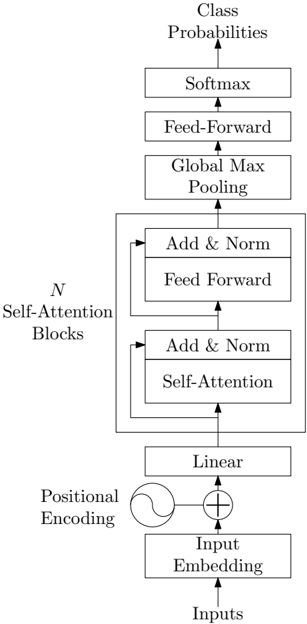
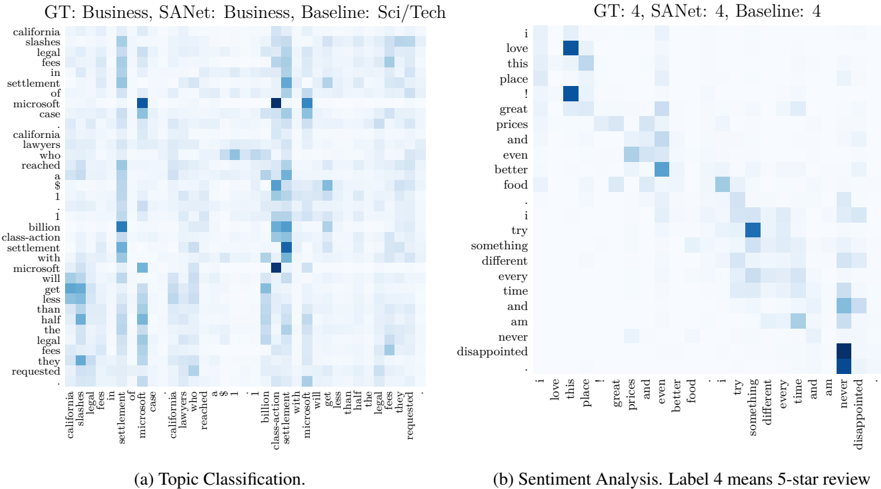
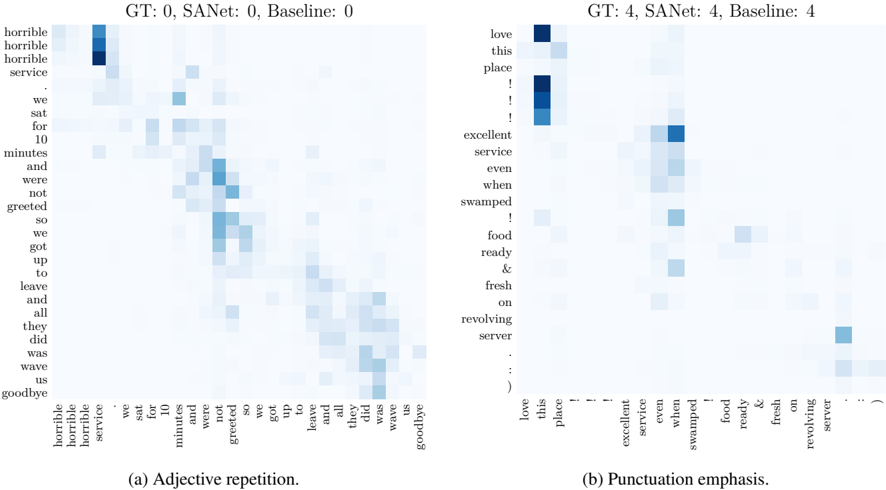
Despite their superior performance, deep learning models often lack interpretability.In this paper, we explore the modeling of insightful relations between words, in order to understand and enhance predictions.To this effect, we propose the Self-Attention Network (SANet), a flexible and interpretable architecture for text classification.Experiments indicate that gains obtained by self-attention is task-dependent.For instance, experiments on sentiment analysis tasks showed an improvement of around 2% when using selfattention compared to a baseline without attention, while topic classification showed no gain.Interpretability brought forward by our architecture highlighted the importance of neighboring word interactions to extract sentiment.
Overview
The claims and statistics of this paper haven’t been checked yet.
Run the check — free, no account needed. It reads the open-access text and checks the sources it cites.
Integrity signals
Registry
Cites
Statistics
Figures
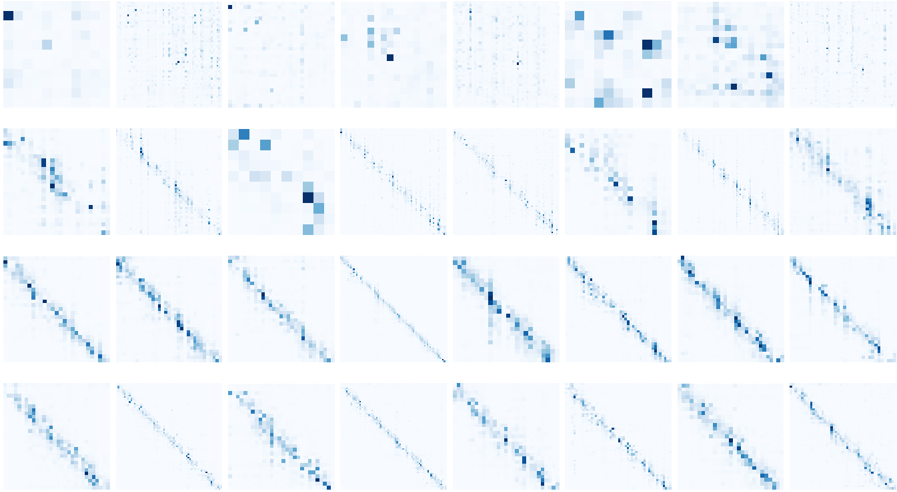
Verification
Claims the paper makes
The claims and statistics of this paper haven’t been checked yet.
Run the check — free, no account needed. It reads the open-access text and checks the sources it cites.
Claims other papers make about this one
Each is checked against this paper’s own text: does it say what the citing paper says it does?
In the citing paper
“Self-attention mechanisms are predominantly employed to enhance the representation of documents in these classification endeavors (Letarte et al. 2018; Shen et al. 2018; Lin et al. 2017).”
From Large language models (LLMs): survey, technical frameworks, and future challenges (2024) · cites this paper as Letarte et al. 2018
Self-check
Percentages, sums and reported differences re-computed from the paper’s own numbers.
The self-check needs the paper’s full text.
Citations
Cites
Bag of Tricks for Efficient Text Classification
Joulin, A., Grave, E., Bojanowski, P., & Mikolov, T. (2017) · Proceedings of the 15th Conference of the European Chapter of the Association for Computational Linguistics: Volume 2, Short Papers · doi:10.18653/v1/e17-2068 · Cited by 4,545
On Pixel-Wise Explanations for Non-Linear Classifier Decisions by Layer-Wise Relevance Propagation
Bach, S., Binder, A., Montavon, G., Klauschen, F., Müller, K.-R., & Samek, W. (2015) · PLOS ONE · doi:10.1371/journal.pone.0130140 · Cited by 4,524
Universal Language Model Fine-tuning for Text Classification
Howard, J., & Ruder, S. (2018) · Proceedings of the 56th Annual Meeting of the Association for Computational Linguistics (Volume 1: Long Papers) · doi:10.18653/v1/p18-1031 · Cited by 4,100
A Structured Self-attentive Sentence Embedding
Lin, Z., Feng, M., Santos, C. N. D., Yu, M., Xiang, B., Zhou, B., & Bengio, Y. (2017) · arXiv · doi:10.48550/arxiv.1703.03130 · Cited by 1,743 · cited 1×
“Lin et al. (2017) and Yang et al. (2016) both combined an attention mechanism with a recurrent neural network.”
BackgroundVery Deep Convolutional Networks for Text Classification
Conneau, A., Schwenk, H., Barrault, L., & Lecun, Y. (2017) · Proceedings of the 15th Conference of the European Chapter of the Association for Computational Linguistics: Volume 1, Long Papers · doi:10.18653/v1/e17-1104 · Cited by 1,046
Research works printed but not linked: 25
- Jimmy Lei Ba, Jamie Ryan Kiros, and Geoffrey E Hin- ton. 2016. Layer normalization. arXiv preprint arXiv:1607.06450. · arXiv
- Dzmitry Bahdanau, Kyunghyun Cho, and Yoshua Ben- gio. 2014. Neural machine translation by jointly learning to align and translate. arXiv preprint arXiv:1409.0473. · arXiv
- Steven Bird, Ewan Klein, and Edward Loper. 2009. Natural language processing with Python: analyz- ing text with the natural language toolkit. " O'Reilly Media, Inc.".
- Jianpeng Cheng, Li Dong, and Mirella Lapata. 2016. Long short-term memory-networks for machine reading. arXiv preprint arXiv:1601.06733. · arXiv
- Eunsol Choi, Daniel Hewlett, Jakob Uszkoreit, Illia Polosukhin, Alexandre Lacoste, and Jonathan Be- rant. 2017. Coarse-to-fine question answering for long documents. In Proceedings of the 55th Annual Meeting of the Association for Computational Lin- guistics (Volume 1: Long Papers), volume 1, pages 209-220.
- Ruth C Fong and Andrea Vedaldi. 2017. Interpretable explanations of black boxes by meaningful perturba- tion. arXiv preprint arXiv:1704.03296. · arXiv
- Jeremy Howard and Sebastian Ruder. 2018. Fine- tuned language models for text classification. arXiv preprint arXiv:1801.06146. · arXiv
- Gao Huang, Zhuang Liu, Kilian Q Weinberger, and Laurens van der Maaten. 2017. Densely connected convolutional networks. In Proceedings of the IEEE conference on computer vision and pattern recogni- tion, volume 1, page 3.
- Rie Johnson and Tong Zhang. 2016. Convolutional neural networks for text categorization: Shallow word-level vs. deep character-level. arXiv preprint arXiv:1609.00718. · arXiv
- Rie Johnson and Tong Zhang. 2017. Deep pyramid convolutional neural networks for text categoriza- tion. In Proceedings of the 55th Annual Meeting of the Association for Computational Linguistics (Vol- ume 1: Long Papers), volume 1, pages 562-570.
- Min Lin, Qiang Chen, and Shuicheng Yan. 2013. Net- work in network. arXiv preprint arXiv:1312.4400. · arXiv
- Maxime Oquab, Léon Bottou, Ivan Laptev, and Josef Sivic. 2015. Is object localization for free?-weakly- supervised learning with convolutional neural net- works. In Proceedings of the IEEE Conference on Computer Vision and Pattern Recognition, pages 685-694.
- Ankur P. Parikh, Oscar Täckström, Dipanjan Das, and Jakob Uszkoreit. 2016. A decomposable attention model for natural language inference. In Empiri- cal Methods in Natural Language Processing, pages 2249-2255.
- Jeffrey Pennington, Richard Socher, and Christopher Manning. 2014. Glove: Global vectors for word representation. In Proceedings of the 2014 confer- ence on empirical methods in natural language pro- cessing (EMNLP), pages 1532-1543.
- Marco Tulio Ribeiro, Sameer Singh, and Carlos Guestrin. 2016. Why should i trust you?: Explain- ing the predictions of any classifier. In Proceedings of the 22nd ACM SIGKDD International Conference on Knowledge Discovery and Data Mining, pages 1135-1144. ACM.
- Karen Simonyan, Andrea Vedaldi, and Andrew Zisser- man. 2013. Deep inside convolutional networks: Vi- sualising image classification models and saliency maps. arXiv preprint arXiv:1312.6034. · arXiv
- Sainbayar Sukhbaatar, Jason Weston, Rob Fergus, et al. 2015. End-to-end memory networks. In Advances in neural information processing systems, pages 2440-2448.
- Ashish Vaswani, Noam Shazeer, Niki Parmar, Jakob Uszkoreit, Llion Jones, Aidan N Gomez, Łukasz Kaiser, and Illia Polosukhin. 2017. Attention is all you need. In Advances in Neural Information Pro- cessing Systems, pages 6000-6010.
- Shiyao Wang, Minlie Huang, and Zhidong Deng. 2018. Densely connected cnn with multi-scale feature at- tention for text classification. In Proceedings of the Twenty-Seventh International Joint Conference on Artificial Intelligence, IJCAI-18.
- Sida Wang and Christopher D Manning. 2012. Base- lines and bigrams: Simple, good sentiment and topic classification. In Proceedings of the 50th Annual Meeting of the Association for Computational Lin- guistics: Short Papers-Volume 2, pages 90-94. As- sociation for Computational Linguistics.
- Kelvin Xu, Jimmy Ba, Ryan Kiros, Kyunghyun Cho, Aaron Courville, Ruslan Salakhudinov, Rich Zemel, and Yoshua Bengio. 2015. Show, attend and tell: Neural image caption generation with visual at- tention. In International Conference on Machine Learning, pages 2048-2057.
- Zichao Yang, Diyi Yang, Chris Dyer, Xiaodong He, Alex Smola, and Eduard Hovy. 2016. Hierarchi- cal attention networks for document classification. In Proceedings of the 2016 Conference of the North American Chapter of the Association for Computa- tional Linguistics: Human Language Technologies, pages 1480-1489.
- Matthew D Zeiler and Rob Fergus. 2014. Visualizing and understanding convolutional networks. In Eu- ropean conference on computer vision, pages 818- 833. Springer.
- Xiang Zhang, Junbo Zhao, and Yann LeCun. 2015. Character-level convolutional networks for text clas- sification. In Advances in neural information pro- cessing systems, pages 649-657.
- Yizhe Zhang, Dinghan Shen, Guoyin Wang, Zhe Gan, Ricardo Henao, and Lawrence Carin. 2017. Decon- volutional paragraph representation learning. In Ad- vances in Neural Information Processing Systems, pages 4172-4182.
Cited by
Sorted by citations
Large language models (LLMs): survey, technical frameworks, and future challenges
Kumar, P. (2024) · Artificial Intelligence Review · doi:10.1007/s10462-024-10888-y · Cited by 395
Metadata
- Authors
- Letarte, G., Paradis, F., Giguère, P., & Laviolette, F.
- Affiliations
- Université Laval (CA)
- Venue
- Proceedings of the 2018 EMNLP Workshop BlackboxNLP: Analyzing and Interpreting Neural Networks for NLP
- Published
- 2018
- Pages
- 267-275
- OpenAlex
- W2914713622
- Cited by
- 70
- References
- 5
- Citations by year
- 2026: 3 · 2025: 2 · 2024: 9 · 2023: 13 · 2022: 7 · 2021: 18 · 2020: 10 · 2019: 8
- FWCI
- 3.67
- Type
- conference paper
- Language
- en
- Open access
- hybrid
- doi.org
- Licence
- cc-by
- Locations
- BlackboxNLP Workshop on Analyzing and Interpreting Neural Networks for NLP (BlackboxNLP) (publishedVersion, cc-by)
- Funders
- Nvidia
- Natural Sciences and Engineering Research Council of Canada
- Topics
- Physical Sciences › Computer Science › Artificial Intelligence › Sentiment Analysis and Opinion Mining
- Physical Sciences › Computer Science › Artificial Intelligence › Topic Modeling
- Social Sciences › Decision Sciences › Management Science and Operations Research › Stock Market Forecasting Methods
- Keywords
- self-attention, sentiment analysis, self-attention network, explainable deep learning, text classification, topic classification
About these checks
Registry, retraction, Cites and statistics results are computed, not judged, with one exception: a printed reference that no index lists is read once by a model before it counts as a citation error. Claims are extracted by a model and kept only when their quote appears verbatim in the text; each cited source is then checked, with a model’s help, for whether it says what the claim relies on. Those verdicts can be wrong — read the claim’s quote and the cited source before relying on one.
Statistics and arithmetic are recomputed, not judged.
Confidence bands are shown only for fields calibrated on our annotated test set. None is calibrated yet, so no band is shown.
What counts as a claim ›How we measure confidence ›How we check this ›
Are you an author, or do you see a problem with this page? Request a review
