

AI Skills for College Graduates: Exploring How Instructors and Employers Prioritize AI Skills Differently
Open accessThe DOI matches its Crossref record; none of the 4 sources its claims cite is checked for support yet.
Abstract
Since the public release of ChatGPT in 2022, both higher education institutions and employers have been keenly focused on how to prepare college students, and ultimately graduates, for the new world of AI-inflected work. But what does it mean to be ready for the AI workplace? We embarked on one of the first major efforts to vet a comprehensive framework of what constitutes AI skills with college and university instructors as well as to understand how instructors prioritize these skills.
Overview
CoChat Summary
TL;DR
This Ithaka S+R report compares how college instructors and US employers prioritize 26 AI-related skills drawn from HiBob's AI Skills Framework, finding agreement on only one skill and the widest divergence in workflow evaluation/redesign and automation/technical integration. Instructors emphasize responsible, critical AI use while employers emphasize workflow, automation, and human-AI collaboration skills, and instructors report little institutional consensus or assessment infrastructure around AI skills.
Key findings
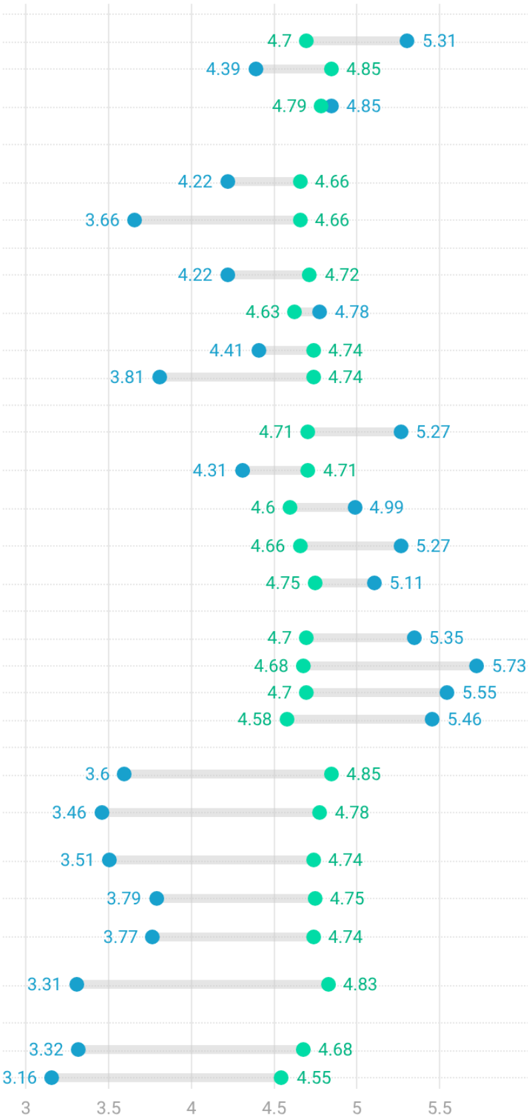
- Across the 26 skills, instructors and employers agreed on average on the importance of only one: setting realistic expectations for AI-augmented work. Instructors prioritized "uses AI responsibly," "reinforces human accountability," "transparency and attribution," "proactively reviews output quality," and "recognizes the limits of their own expertise"; employers prioritized workflow, automation, and human-to-human/human-to-machine skills.
- The largest instructor–employer divergence was in the workflow evaluation and redesign and automation and technical integration categories, which instructors valued well below employers and largely did not teach — described as "the strongest evidence that there is an AI skills gap between higher education and employers."
- Two-thirds of instructors reported teaching transparency and attribution; roughly half taught responsible use of AI, proactively reviewing output quality, and reinforcing human accountability. Only three of the 26 skills were taught by half or more instructors.
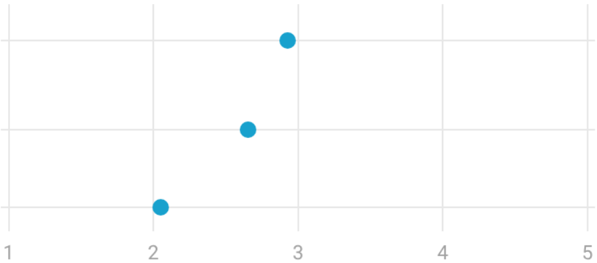
- Instructors slightly disagreed that their institutions expect undergraduates to acquire moderate AI proficiency, more strongly disagreed that their institutions had consensus on what AI skills are, and strongly disagreed that institutions had a shared framework for assessing students' AI skills.
Methods
- Ithaka S+R surveyed instructors at four-year, nonprofit colleges and universities, inviting 28,200 and closing at a pre-determined target of 500 respondents; invitations began April 13, 2026, one reminder went to 22,000 invitees, and data collection concluded April 24, 2026. All respondents were actively teaching undergraduates in Spring 2026.
- Respondents rated the importance of 26 AI-related skills for their graduates on a seven-point scale ("Not at All Important" to "Essential/Critical") and reported whether they personally taught each skill; open-response items covered personal AI use in teaching and institutional AI policy/practice.
- Comparison data came from a separate HiBob survey of a multi-national employer panel completed by 1,200 employers in February–March 2026, of which 200 operate in the United States; the US-based subsample is the comparison group. Sample composition: 214 tenured, 122 adjunct/contingent, 87 tenure-track, 71 other, 5 graduate student instructors; 299 doctoral, 132 master's, 58 baccalaureate, 11 special focus institutions; 315 public and 185 private not-for-profit.
Limitations
- Stated: closing the survey at 500 respondents may introduce early response bias, since early respondents may be more interested or engaged with the topic.
- Stated: reliance on individual data from a purchased marketing-agency email list limits reporting on institutional characteristics and disciplinary affiliation.
- Stated: some invited instructors replied declining on grounds of negative views about AI, and others voiced such views in open responses, so "the results reported throughout include some degree of a positive bias"; the report also excluded community college and vocational instructors and is "broad by design," leaving discipline-level analysis to further research.
Model-written summary. Check it against the paper before relying on it.
Integrity signals
Registry
Cites
Statistics
Figures
Verification
Claims the paper makes
0 Valid · 3 Not valid · 4 Not checked · 40 Own results and interpretations
A result the paper reports from its own data — it cites no other source for it, so there is none to check. The quote shows it is in the paper.
In the paper
“Instructors and employers are in closest agreement around the AI literacy skill of setting realistic expectations for AI-augmented work and directing AI toward reliable and relevant source material.”
§ AI Skills for College Graduates Exploring How Instructors and Employers Prioritize AI Skills Differently > Discussion
plainstates an association- Asserted: passes — The authors put it forward as true.
- Checkable: passes — It can be checked against evidence.
- Load-bearing: passes — The paper’s conclusions depend on it.
- Based: passes — The paper gives a reason why it holds.
A result the paper states — it cites no source for it, so there is none to check. The quote shows it is in the paper.
In the paper
“Further, employers highly value human-tohuman and human-to-machine skills more than instructors”
§ AI Skills for College Graduates Exploring How Instructors and Employers Prioritize AI Skills Differently > Skills alignment
plainstates an association- Asserted: passes — The authors put it forward as true.
- Checkable: passes — It can be checked against evidence.
- Load-bearing: passes — The paper’s conclusions depend on it.
- Based: passes — The paper gives a reason why it holds.
A result the paper reports from its own data — it cites no other source for it, so there is none to check. The quote shows it is in the paper.
In the paper
“Several recipients of the survey invitation email responded directly to express a negative opinion about AI in general, AI in higher education, or the survey itself.”
§ AI Skills for College Graduates Exploring How Instructors and Employers Prioritize AI Skills Differently > Notable resistance to AI
plain- Asserted: passes — The authors put it forward as true.
- Checkable: passes — It can be checked against evidence.
- Load-bearing: passes — The paper’s conclusions depend on it.
- Based: passes — The paper gives a reason why it holds.
A result the paper reports from its own data — it cites no other source for it, so there is none to check. The quote shows it is in the paper.
In the paper
“In most other cases, one group or the other believed the various skills to be of greater or lesser import.”
§ AI Skills for College Graduates Exploring How Instructors and Employers Prioritize AI Skills Differently > Skills alignment
plain- Asserted: passes — The authors put it forward as true.
- Checkable: passes — It can be checked against evidence.
- Load-bearing: passes — The paper’s conclusions depend on it.
- Based: passes — The paper gives a reason why it holds.
A result the paper reports from its own data — it cites no other source for it, so there is none to check. The quote shows it is in the paper.
In the paper
“The results of these two survey initiatives illustrate areas where instructors and employers differ and align in their priorities around AIrelated skills for recent college graduates.”
§ AI Skills for College Graduates Exploring How Instructors and Employers Prioritize AI Skills Differently > Discussion
plainstates an association- Asserted: passes — The authors put it forward as true.
- Checkable: passes — It can be checked against evidence.
- Load-bearing: passes — The paper’s conclusions depend on it.
- Based: passes — The paper gives a reason why it holds.
16 more claims
Create a free account to see all 47 claims and every source verdict.
- Probably not a substantial claim. 19
- It may state two separate claims as one. 14
Self-check
Percentages, sums and reported differences re-computed from the paper’s own numbers.
Each contradiction between two passages listed here was confirmed by an independent check.
Rated minor: it would not touch a result — a value no result rests on, a p-value that stays on the same side of the significance level, or a conflict that is clerical, resolved elsewhere in the paper, or outside its own findings.
In the paper
§ AI Skills for College Graduates Exploring How Instructors and Employers Prioritize AI Skills Differently > Methodology
“The majority of respondents self-reported as tenured or tenure-track instructors, with a substantial plurality indicating they held an adjunct or contingent position.”
§ AI Skills for College Graduates Exploring How Instructors and Employers Prioritize AI Skills Differently > Methodology
“Table 1 Instructor Status Number of Respondents Tenured 214 Adjunct/contingent 122 Tenure-track 87 Other 71”
Citations
Cites
Still being checked.
Cited by
Still being checked.
Metadata
- Authors
- Fried, M.
- Affiliations
- Ithaka S+R (US)
- Corresponding author
- Fried, Michael
- Publisher
- Ithaka S+R
- Published
- 2026-08-18
- OpenAlex
- W7203665774
- Cited by
- 0
- References
- 0
- Type
- report
- Language
- en
- Open access
- gold
- doi.org
- Licence
- cc-by-nc
- Topics
- Social Sciences › Education › Higher Education and Employability
- Physical Sciences › Computer Science › Information Systems › Information Systems Education and Curriculum Development
- Social Sciences › Education › Artificial Intelligence in Education
- Keywords
- AI competencies, university graduates, AI readiness, ChatGPT, higher education, employer expectations, skills framework, graduate preparedness
About these checks
Registry, retraction, Cites and statistics results are computed, not judged, with one exception: a printed reference that no index lists is read once by a model before it counts as a citation error. Claims are extracted by a model and kept only when their quote appears verbatim in the text; each cited source is then checked, with a model’s help, for whether it says what the claim relies on. Those verdicts can be wrong — read the claim’s quote and the cited source before relying on one.
A language model drew the claims from the paper on 2026-11-20, under version 3 of the claim definition (model deepseek-v4.1-flash, prompt extract-v3).
A second model labelled each claim on 2026-11-20 (model jev-1.13-20260917, definition revision gold-guideline-v0.2).
Statistics and arithmetic are recomputed, not judged.
Confidence bands are shown only for fields calibrated on our annotated test set. None is calibrated yet, so no band is shown.
What counts as a claim ›How we measure confidence ›How we check this ›
Are you an author, or do you see a problem with this page? Request a review
Data sources
Bibliographic data: Semantic Scholar, OpenAlex, Crossref.
Contains information from the Semantic Scholar Academic Graph Datasets, made available under the ODC Attribution License (ODC-BY 1.0).
Semantic Scholar’s data is described in: Kinney, R., et al. (2023). The Semantic Scholar Open Data Platform. arXiv:2301.10140.
