

The DOI matches its Crossref record.
Deciphering priority areas for improving project risk management through critical analysis of pertinent risks in the Zambian construction industry
Abstract
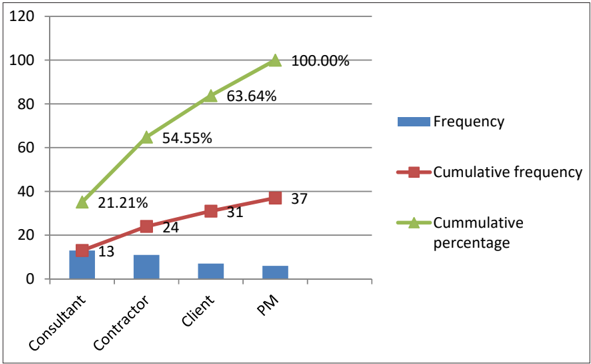
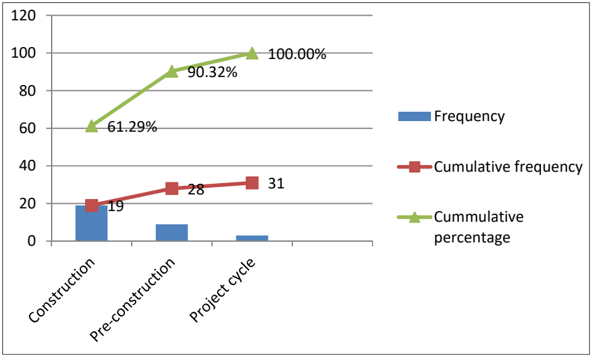
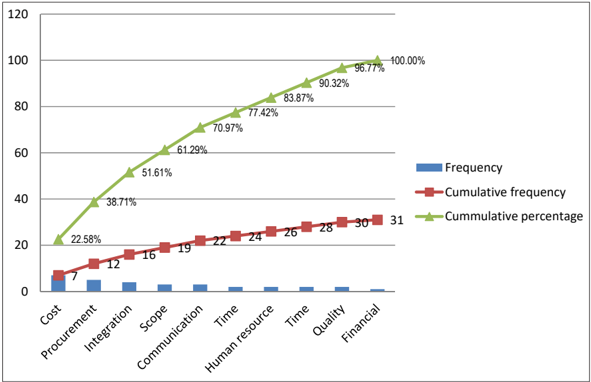
Risk identification is the first step in the risk-management process. A plethora of current studies in literature dwell overwhelmingly on risk identification much to the exclusion of the source, and the possible mitigation interventions. In a limited effort to address this deficiency in the body of knowledge, this article reports the results of a study conducted using 15 purposive semi-structured interviews and 198 questionnaires targeting clients, contractors and consultants in the building sector in Zambia. This study uses threats to identify improvement areas in the Zambian Construction Industry (ZCI). As a consequence, this research uses the pertinent risk factors as a point of critical analysis to recommend improvement areas for project risk management. Findings show that most of the risks could be categorised as managerial, technical and finance related and could severally be associated with clients, consultants, and contractors compared to project managers. These could be mitigated in the pre-contract phase and construction phase, with the most deficient knowledge areas being cost management, procurement management, integration management, communication man-age ment, and scope management. This article provides areas of focus for built environ ment professionals to improve project delivery and thereby enhance project execution efficiency.
Overview
The claims and statistics of this paper haven’t been checked yet.
Run the check — free, no account needed. It reads the open-access text and checks the sources it cites.
Integrity signals
Registry
Cites
Statistics
Figures
Verification
Claims the paper makes
The claims and statistics of this paper haven’t been checked yet.
Run the check — free, no account needed. It reads the open-access text and checks the sources it cites.
Claims other papers make about this one
Each is checked against this paper’s own text: does it say what the citing paper says it does?
The source backs part of the claim, not all of it — or backs it for a different population, condition or comparison.
In the citing paper
“risk mismanagement has led to delays and cost overruns”
From Examining the Effectiveness of Risk Management Processes in Enhancing Project Completion and Overall. Case Study of ZAMTEL 5G Digital Project (2026) · cites this paper as Tembo-Silungwe and Khatleli, 2017
Experimental — accuracy not yet measured
Self-check
Percentages, sums and reported differences re-computed from the paper’s own numbers.
The self-check needs the paper’s full text.
Citations
Cites
No references could be resolved yet.
Research works printed but not linked: 92
- Adams, J., Khan, H.T.A., Raeside, R. & White, D. 2012. Research methods for graduate business and social science students. 8th edition. Washingston DC: Sage.
- Agyakwa-Baah, A. & Chileshe, N. 2009. An empirical study of risk analysis and its impact on construction projects - the case of Ghana. Proceedings of the 6th International Conference on Innovation in Architecture, Engineering and Construction (AEC), 9-11 June 2009, State College, Pennsylvania (PA). Loughborough University, U.K., Pennsylvania State University, pp. 926-938.
- Aibinu, A. & Odeyinka, A. 2006. Construction delays and their causation factor in Nigeria. Journal of Construction Engineering and Management, 132(7), pp. 667-677. https://doi.org/10.1061/(ASCE)0733-9364(2006)132:7(667) · DOI
- Al-Bahar, J.F. & Crandall, K.C. 1990. Systematic risk management approach for construction project. Journal of Construction Engineering and Management, 116(3), pp. 533-546. https://doi.org/10.1061/(ASCE)0733-9364(1990)116:3(533) · DOI
- Alinaitwe, H.M. (Eds). Proceedings of the Second International Conference on Advances in Engineering and Technology, 31 January-1 February 2011, Entebbe, Uganda. Uganda: Macmillan, pp. 305-311.
- Amundurud, O. & Aven, T. 2015. On how to understand and acknowledge risk. Realibility Engineering and System Safety, 142, pp. 42-47. https://doi.org/10.1016/j.ress.2015.04.021 · DOI
- Apolot, R., Alinaitwe, H. & Tindiwensi, D. 2011. An investigation into the causes of delay and cost overruns in Uganda's public sector construction. In: Mwakali, J.A. & Alinaitwe, H.M. (Eds). Proceedings of the Second International Conference on Advances in Engineering and Technology, 31 January-1 February 2011, Entebbe, Uganda. Uganda: Macmillan, pp. 305-311.
- Ardeshir, A., Mohajeri, M. & Amiri, M. 2016. Evaluation of safety risks in construction using Fuzzy Failure Mode and Effect Analysis (FFMEA). Scientia Iranica. Transaction C, Chemistry, Chemical Engineering, 23(6), pp. 2546-2556. · DOI
- Babbie, E. 2013. The practice of social research. 13th international edition. Boston: Wadsworth Cengage learning.
- Baloi, D. & Price, A. 2003. Modelling global risk factors affecting construction cost performance. International Journal of Project Management, 21(4), pp. 261-269. https://doi.org/10.1016/S0263-7863(02)00017-0 · DOI
- Barlish, K., Marco, D. & Thaheem, A. 2013. Construction risk taxonomy: An international convergence of academic and industry perspectives. American Journal of Applied Sciences, 10(7), pp. 706-713. https://doi.org/10.3844/ajassp.2013.706.713 · DOI
- Belel, A.Z. & Mahmood, H. 2012. Risk management practices in the Nigerian construction industry - A case study of Yola. Continental Journal of Engineering Sciences, 7(3), pp. 1-6.
- Bryman, A. & Bell, E. 2015. Business research methods. International 4th edition. Oxford: Oxford University Press.
- Burnard, P. 1991. A method of analysising interview transcript in qualitative research. Nurse Education Today, 11(4), pp. 461-466. https://doi.org/10.1016/0260-6917(91)90009-Y · DOI · Paper page
- Cano, A. del & Cruz, M.P. de la. 2002. Integrated methodology for project risk management. Journal of Construction Engineering and Management, 128(6), pp. 473-485. https://doi.org/10.1061/(ASCE)0733-9364(2002)128:6(473) · DOI
- Chapman, C. & Ward, C. 2003. Project risk management: Processes, techniques and insights. Chester: Wiley.
- Charoenngam, C. & Yeh, C.-Y. 1999. Contractual risk and liability sharing in hydropower construction. International Journal of Project Management, 17(1), pp. 29-37. https://doi.org/10.1016/S0263-7863(97)00064-1 · DOI
- Chihuri, S. & Pretorius, L. 2010. Managing risk for success in South African engineering and construction project environment. South African Journal of Industrial Engineering, 21(2), pp. 63-77. https://doi.org/10.7166/21-2-50 · DOI
- Chileshe, N. & Kikwasi, G.J. 2014. Risk assessment and management practices (RAMP) within the Tanzanian construction industry: Implementation barriers and advocated solutions. International Journal of Construction Management, 14(4), pp. 239-254. https://doi.org/10.1080/15623599.2014.967927 · DOI
- Choudry, R., Aslam, M., Hinze, J. & Arain, F. 2014. Cost and schedule risk analysis of bridge construction in Pakistan: Establishing risk guidelines. Journal of Construction Engineering and Management, 140(7), pp.1-9. https://doi.org/10.1061/(ASCE)CO.1943-7862.0000857 · DOI
- Chung, D., Hansher, D.A. & Rose, J.M.R. 2010. Toward the betterment of risk allocation: Investigating risk perceptions of Australian stakeholders groups to PPP toll road projects. Research in Transportation Economics, 30(1), pp. 43-58. https://doi.org/10.1016/j.retrec.2010.10.007 · DOI
- Dey, K.P. 2001. Decision support system for risk management. Management Decision, 39(8), pp. 634-649. https://doi.org/10.1108/00251740110399558 · DOI
- Dikmen, I. & Birgnoul, M.T. 2006. Analytical hierarchy process based model for risk and opportunity assessment of international construction projects. Canadian Journal of Civil Engineering, 33(1), pp. 58-68. https://doi.org/10.1139/l05-087 · DOI
- Doloi, H., Sawhney, A., Iyer, K. & Rentala, S. 2012. Analysing factors affecting delays in India construction projects. International Journal of Project Management, 30(4), pp. 479-489. https://doi.org/10.1016/j.ijproman.2011.10.004 · DOI
- Ebrahimnejad, S., Mousav, S.M.I. & Seyrafianpour, H. 2010. Risk identification and assessment for BOT projects: A Fuzzy Multi-Attribute decision-making model. Expert Systems with Application, 37(1), pp. 575-586. https://doi.org/10.1016/j.eswa.2009.05.037 · DOI
- Enshassi, A., Al-Najjar, J. & Kumaraswamy, M. 2009. Delays and cost overruns in the construction projects in the Gaza strip. Journal of Financial Management of Property and Construction, 14(2), pp. 126-151. https://doi.org/10.1108/13664380910977592 · DOI
- Floricel, S., Bonneau, C., Aubry, M. & Sergi, V. 2014. Extending project management research: Insight from social theories. International Journal of Project Management, 32(7), pp. 1091-1107. https://doi.org/10.1016/j.ijproman.2014.02.008 · DOI
- Frimpong, Y., Oluwoye, J. & Crawford, L. 2003. Causes of delay and cost overruns in construction of groundwater projects in a developing country: Ghana as a case study. International Journal of Project Management, 21(5), pp. 321-326. [online]. Available at: <http://dx.doi.org/10.1016/S0263-7863(02)00055-8> [Accessed: 15 February 2017]. · DOI
- Ghosh, S. & Jintanapakanont, J. 2004. Identifying and assessing the critical risk factors in an underground rail project in Thailand: A factor analysis approach. International Journal of Project Management, 22(8), pp. 633-643. https://doi.org/10.1016/j.ijproman.2004.05.004 · DOI
- Goh, S.C. & Abul-Rahman, H. 2013. The identification and management of major risks in the Malaysian construction industry. Journal of Construction In Developing Countries, 18(1), pp. 19-32.
- He, Y. 2010. Environmental management on projects. International Journal of Business Management, 5(1), pp. 205-210. · DOI
- Hilson, D. 2002. Extending the risk process to manage opportunities. International Journal of Project Management, 20(3), pp. 235-240. https://doi.org/10.1016/S0263-7863(01)00074-6 · DOI
- Hwang, B., Xianbo, Z. & Li, T.P. 2014. Risk management in small construction projects in Singapore: Status, barriers and impact. International Journal of Project Management, 32(1), pp. 116-124. https://doi.org/10.1016/j.ijproman.2013.01.007 · DOI
- Iyer, K. & Jha, K.N. 2005. Factors affecting cost performance: Evidence from Indian construction projects. International Journal of Project Management, 23(4), pp. 283-295. https://doi.org/10.1016/j.ijproman.2004.10.003 · DOI
- Jafaari, A. 2001. Management of risks, uncertainties and opportunities on projects: Time for a fundamental shift. International Journal of Project Management, 19(2), pp. 89-101. https://doi.org/10.1016/S0263-7863(99)00047-2 · DOI
- Jarkas, A.M. & Haupt, C.T. 2015. Major construction risk factors considered by general contractors in Qatar. Journal of Engineering, Design and Technology, 13(1), pp. 165-194. https://doi.org/10.1108/JEDT-03-2014-0012 · DOI
- Kagioglou, M., Cooper, R., Aouad, G. & Sexton, M. 2000. Re-thinking construction: The generic design and construction process protocol. Engineering, Construction and Architectural Management, 7(2), pp. 141-153. https://doi.org/10.1108/eb021139 · DOI
- Kaliba, C.J., Muya, M. & Sichombo, B. 2009a. Cost escalation and schedule delays in road construction. International Journal of Project Management, 13(1), pp. 522-531. https://doi.org/10.1016/j.ijproman.2008.07.003 · DOI
- Kaliba, C.J., Muya, M. & Sichombo, B. 2009b. The need to reduce costs, schedule overruns and quality shortfalls in construction. Proceedings of the 4th Built Environment Conference 17-19 May 2009, Livingstone, Zambia. Bellville, South Africa: Association of Schools of Construction of Southern Africa, pp. 154-158.
- Kartam, N.A. & Kartam, S.A. 2001. Risk and its management in Kuwait construction industry: A contractor's perspective. International Journal of Project Management, 19(6), pp. 325-335. https://doi.org/10.1016/S0263-7863(00)00014-4 · DOI
- Kendrick, T. 2010. The project management tool kit: 100 tips and techniques for getting the job done right. 2nd edition. Washington DC: AMACOM. [online]. Available at: <www.questia.com> [Accessed: 15 January 2015].
- Krejcie, R.V. & Morgan, D.W. 1970. Determining sample size for research activities. Educational and Psychological Measurement, 30(3), pp. 607-610. https://doi.org/10.1177/001316447003000308 · DOI · Paper page
- Kuo, Y.C. & Lu, S.T. 2012. Using fuzzy multiple criteria decision making approach to enhance risk assessment for metropolitan construction projects. International Journal of Project Management, 31(4), pp. 602-614. https://doi.org/10.1016/j.ijproman.2012.10.003 · DOI
- Lam, K., Wang, P., Lee, T.K. & Tsang, Y.T. 2007. Modelling risk allocation decision in construction contracts. International Journal of Project Management, 25(5), pp. 485-493. https://doi.org/10.1016/j.ijproman.2006.11.005 · DOI
- Leedy, P.D. & Ormrod, J.E. 2014. Practical research planning and design. 10th edition. New York: Pearson.
- Le-Hoai, L., Lee, Y.D.L. & Lee, J.Y. 2008. Delay and cost overruns in Vietnam large construction projects. KSCE Journal of Civil Engineering, 12(6), pp. 367-377. https://doi.org/10.1007/s12205-008-0367-7 · DOI
- Lehtiranta, L. 2014. Risk perceptions and approaches in multi-organisations: A critical review 2000-2012. International Journal of Project Management, 32(4), pp. 640-653. https://doi.org/10.1016/j.ijproman.2013.09.002 · DOI
- Lehtiranta, L. & Juunonen, J.-M. 2014. Stretching risk management standards: Multi-organisational perspectives. Built Environment Project and Asset Management, 4(2), pp. 128-145. https://doi.org/10.1108/BEPAM-06-2013-0019 · DOI
- Lyons, T. & Skitmore, M. 2004. Project risk management in the Queensland engineering construction industry: A survey. International Journal of Project Management, 22(1), pp. 51-61. https://doi.org/10.1016/S0263-7863(03)00005-X · DOI
- Mahamid, I. 2011. Risk matrix for factors affecting time delay in road construction projects: Owner's perspectives. Engineering, Construction and Architectural Management, 18(6), pp. 609-617. https://doi.org/10.1108/09699981111180917 · DOI
- Mañelele, I. & Muya, M. 2008. Risk identification on community-based construction projects in Zambia. Journal of Engineering, Design and Technology, 6(2), pp.145-161. https://doi.org/10.1108/17260530810891289 · DOI
- Mbachu, J. & Taylor, S. 2014. Contractual risks in the New Zealand construction industry: Analysis and mitigation measures. International Journal of Construction Supply Chain, 4(2), pp. 22-33. · DOI
- Medda, F. 2007. A game theory approach for the allocation of risks in transport public private partnership. International Journal of Project Management, 25(3), pp. 213-218. https://doi.org/10.1016/j.ijproman.2006.06.003 · DOI
- Moyo, A. & Crafford, G. 2010. The impact of hyperinflation on the Zimbabwean construction industry. Acta Structilia, 17(2), pp. 53-83.
- Mu, S., Chen, H., Chohr, M. & Peng, W. 2014. Assessing risk management capabilities of contractors in subway projects in mainland China. International Journal of Project Management, 32(3), pp. 452-460. https://doi.org/10.1016/j.ijproman.2013.08.007 · DOI
- Muianga, D.A.E., Granja, A.D. & Ruiz, J.A. 2014. Influence factors on cost and time overruns in Mozambican construction projects: Preliminary findings. In: Tamosaitiene, J., Panuwatwanich, K., Mishima, N. & Ko, C.H. Proceedings of the 5th Conference on Engineering, Project and Production Management, 24-28 November 2014, Port Elizabeth, South Africa. Port Elizabeth, South Africa: Nelson Mandela Metropolitan University, Department of Construction Management, pp.10-21.
- Mukumbwa, B. & Muya, M. 2013. Ethics in the construction industry in Zambia. International Journal of Construction Management, 13(2), pp. 43-65. https://doi.org/10.1080/15623599.2013.10773211 · DOI
- Murdock, J. & Hughes, W. 2001. Construction contracts: Law and management. 3rd edition. London:Taylor and Francis.
- Muya, M., Kaliba, C., Sichombo, B. & Shakantu, W. 2013. Cost escalation, schedule overruns and quality shortfalls on construction projects: A case of Zambia. International Journal of Construction Management, 13(1), pp. 53-68. https://doi.org/10.1080/15623599.2013.10773205 · DOI
- Nieto-Morote, A. & Roz-Vila, F. 2011. A fuzzy approach to construction project risk assessment. International Journal of Project Management, 29(2), pp. 220-231. https://doi.org/10.1016/j.ijproman.2010.02.002 · DOI
- Odeh, A. & Battaineh, H.T. 2002. Causes of construction delay: Traditional contracts. International Journal of Project Management, 20(1), pp. 67-73. https://doi.org/10.1016/S0263-7863(00)00037-5 · DOI
- Osipova, E. & Eriksson, P.E. 2011. How procurement options influence risk management in construction projects. Construction Management and Economics, 29(11), pp. 1149-1158. https://doi.org/10.1080/01446193.2011.639379 · DOI
- Oztas, A. & Okmen, O. 2004. Risk analysis in fixed-price design construction projects. Building and Environment, 39(2), pp. 229-237. https://doi.org/10.1016/j.buildenv.2003.08.018 · DOI
- Perera, B., Dhanasinghe, I. & Rameezdeen, R. 2009. Risk management in road construction: The case of Sri Lanka. International Journal of Strategic Property Management, 13(2), pp. 87-102. https://doi.org/10.3846/1648-715X.2009.13.87-102 · DOI
- Perera, B., Rameezdeen, R., Chileshe, N. & Hosseini, R. 2014. Enhancing the effectiveness of risk management practices in Sri-Lankan road construction projects: A Delphi approach. International Journal of Construction Management, 14(1), pp. 1-19. https://doi.org/10.1080/15623599.2013.875271 · DOI
- Perez, D., Gray, J. & Martin, S. 2016. Perceptions of risk allocation methods and equitable risk distribution: A study of medium to large Southeast Queensland and commercial construction projects. International Journal of Construction Management, 17(2), pp. 1-11. · DOI
- PMBOK. 2008. Project Management Institute. A guide to the project management body of knowledge. 4th edition. Newtown Square, US: Project Management Institute.
- Reynold, J. & Santos, A. 1999. Cronbach's alpha: A tool for assessing the reliability of scales. The Journal of Extension, 37(7), pp. 35-36.
- Rezakhani, P. 2012. Classifying key risk factors in construction projects. Buletinul Institutului Politehnic din iasi, LVIII(LXII), pp. 27-38.
- Santoso, S.D., Ogunlana, S.O. & Minato, T. 2003. Assessment of risks in high-rise building construction in Jakarta. Engineering, Construction and Architectural Management, 10(1), pp. 43-55. https://doi.org/10.1108/09699980310466541 · DOI
- Saunders, M., Lewis, M. & Thornhill, A. 2012. Research methods for business students. 6th edition. London: Prentice Hall.
- Saunders, M., Lewis, M. & Thornhill, A. 2016. Research methods for business students. 7th edition. London: Prentice Hall.
- Serpella, A.F., Ferrada, X., Howard, R. & Rubio, L. 2014. Risk management in construction projects: A knowledge-based approach. Procedia Social and Behavioral Sciences, 119, pp. 653-662. https://doi.org/10.1016/j.sbspro.2014.03.073 · DOI
- Shehu, Z., Endut, I.R. & Akintoye, A. 2014. Factors contributing to project time and hence cost overrun in the Malaysian construction industry. Journal of Financial Management of Property and Construction, 19(1), pp. 55-75. https://doi.org/10.1108/JFMPC-04-2013-0009 · DOI
- Sibanyama, G., Muya, M. & Kaliba, C. 2012. An overview of construction claims: A case study of the Zambian construction industry. International Journal of Construction Management, 12(1), pp. 65-81. https://doi.org/10.1080/15623599.2012.10773185 · DOI
- Skorupka, D. 2008. Identification and intial risk assesssment of construction projects in Poland. Journal of Management Engineering, 24(3), pp. 120-127. https://doi.org/10.1061/(ASCE)0742-597X(2008)24:3(120) · DOI
- Smart market report. 2013. Safety management in the construction industry: Identifying risks and reducing accidents to improve site productivity and ROI. New York: McGraw Hill Construction.
- Smith, N., Merna, T. & Jobling, P. 2014. Management of risk in construction projects. 3rd edition. Oxford: Blackwell Publishing.
- Soepriyono, M.H. 2013. Risk analysis using state budget changes (APBN-P) in the implementation of construction projects in Indonesia. Journal of Basic and Applied Scientific Research, 3(10), pp. 465-472.
- Sweis, G., Sweis, R., Abu Hammad, A. & Shboul, A. 2008. Delays in construction projects: The case of Jordan. International Journal of Project Management, 26(6), pp. 665-674. https://doi.org/10.1016/j.ijproman.2007.09.009 · DOI
- Tadayon, M.A., Jaafar, M. & Nasri, E. 2012. An assessment of risk identification in large construction projects in Iran. Journal of Construction in Developing Countries, 17(1), pp. 57-69.
- Tah, J. & Carr, V. 2000. A proposal for construction risk assessment using fuzzy logic. Construction Management and Economics, 18(4), pp. 494-500. DOI: 10.1080/01446190050024905. https://doi.org/10.1080/01446190050024905 · DOI
- Tipili, L.G. & Ilyasu, M.S. 2014. Evaluating the impact of risk factors on construction project cost in Nigeria. The International Journal of Engineering and Science (IJES), 3(6), pp. 10-15.
- Tsai, T.-C. & Yen, C.-C. 2006. Risk allocation of interfaces between construction and core system contracts: A case study on Taiwan high-speed rail project. Proceedings of the 23rd International Symposium on Automation and Robotics in Construction, 3-5 October 2006, Tokyo, Japan. Tokyo: Japan Robot Association, pp. 394-399. https://doi.org/10.22260/ISARC2006/0076 · DOI
- Turkey, W. 2011. Risk factors leading to cost overrun in Ethiopian federal road construction projects and its consequences. Unpublished thesis, Addis Ababa University Repository. [online]. Available at: <http://hdl.handle.net/123456789/9965> [Accessed: 15 February 2017].
- Wang, J. & Yuan, H. 2011. Factors affecting contractors' risk attitudes in construction projects: Case study from China. International Journal of Project Management, 29(2), pp. 209-219. https://doi.org/10.1016/j.ijproman.2010.02.006 · DOI
- Wiguna, I.A. & Scott, S. 2006. Risk to project performance in Indonesian building contracts. Construction Management and Economics, 24(11), pp. 1125-1135. https://doi.org/10.1080/01446190600799760 · DOI
- Xu, Y., Chan, A. & Yeung, J. 2010. Developing a fuzzy risk allocation model for PPP projects in China. Journal of Construction Engineering Management, 136(8), pp. 894-903. https://doi.org/10.1061/(ASCE)CO.1943-7862.0000189 · DOI
- Zavadskas, E.K., Turskis, Z. & Tamoscitience, J. 2008. Construction risk assessment of small-scale objects by applying Topsis method with attribute values determined at intervals. In: Kabashkin, I.V. & Yatskiv, I.V. (Eds). Proceedings of the 8th International Conference Reliability and Statistics, 15-18 October 2008, Riga, Latvia. Latvia: Transport and Telecommunication Institute, pp 351-357.
- Zeng, J.A.M. & Smith, N.J. 2007. Application of a fuzzy based decision-making methodology to construction project risk assessment. International Journal of Project Management, 25(6), pp. 589-600. https://doi.org/10.1016/j.ijproman.2007.02.006 · DOI
- Zhi, H. 1995. Risk management for overseas construction. International Journal of Project Management, 13(4), pp. 231-237. https://doi.org/10.1016/0263-7863(95)00015-I · DOI
- Zou, P., Zhang, G. & Wang, J. 2007. Understanding the key risks in construction projects in China. International Journal of Project Management, 25(6), pp. 601-614. https://doi.org/10.1016/j.ijproman.2007.03.001 · DOI
Cited by
Sorted by citations
Samboko, R., & Kazembe, L. (2026) · International Journal of Innovative Science and Research Technology · doi:10.38124/ijisrt/26jan909
Metadata
- Authors
- Tembo-Silungwe, C. K., & Khatleli, N.
- Venue
- Acta Structilia
- Publisher
- University of the Free State
- Published
- 2017-12-31
- Volume
- 24
- Issue
- 2
- Pages
- 1-43
- ISSN
- 2415-0487
- 1023-0564
- Cited by
- 3
- References
- 0
About these checks
Registry, retraction, Cites and statistics results are computed, not judged, with one exception: a printed reference that no index lists is read once by a model before it counts as a citation error. Claims are extracted by a model and kept only when their quote appears verbatim in the text; each cited source is then checked, with a model’s help, for whether it says what the claim relies on. Those verdicts can be wrong — read the claim’s quote and the cited source before relying on one.
Statistics and arithmetic are recomputed, not judged.
Confidence bands are shown only for fields calibrated on our annotated test set. None is calibrated yet, so no band is shown.
What counts as a claim ›How we measure confidence ›How we check this ›
Are you an author, or do you see a problem with this page? Request a review
