

The DOI matches its Crossref record.
Learning needs analysis of collaborative e-classes in semi-formal settings: The REVIT example
Open accessAbstract
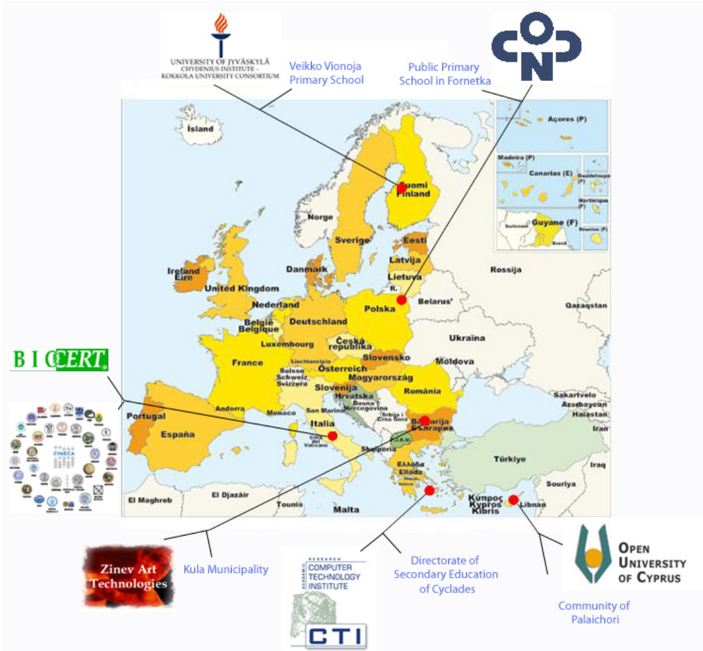
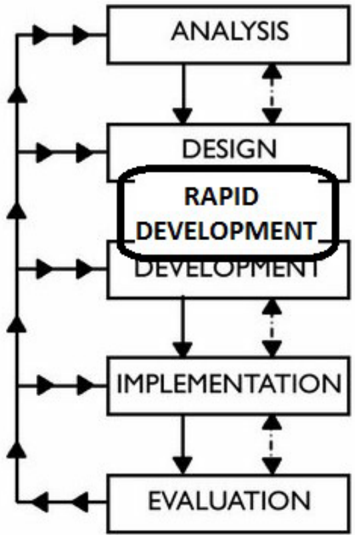
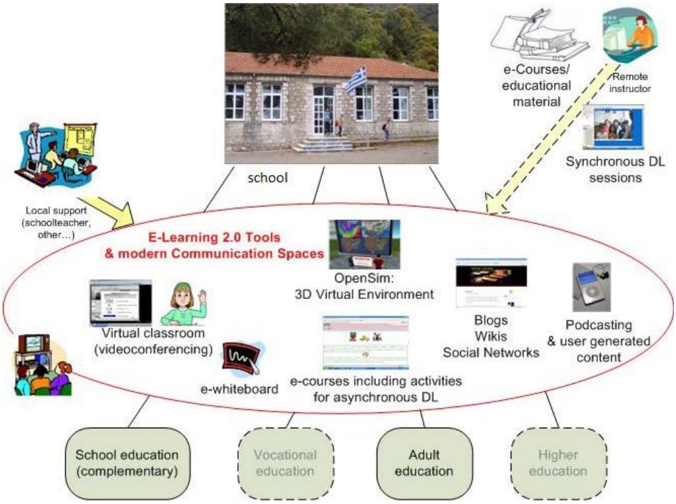
Analysis, the first phase of the typical instructional design process, is often downplayed. This paper focuses on the analysis concerning a series of e-courses for collaborative adult education in semi-formal settings by reporting and generalizing results from the REVIT project. REVIT, an EU-funded research project, offered custom e-courses to learners in several remote European areas and received a ‘best practice’ distinction in social inclusion. These e-courses were designed and developed for the purpose of providing training in aspects of the learners’ professional domains related to the utilization of information and communication technologies. The main challenge was to prove that it is possible and economically feasible to provide meaningful training opportunities via distance education, by utilizing existing infrastructure (“revitalizing schools”) and by making use of modern digital technology affordances coupled with suitable distance learning techniques and Web 2.0 tools. ADDIE, the generic instructional systems design model, enhanced with a rapid prototyping phase, was put forth in order to allow stakeholders to interact with a prototypical e-course, which served as an introductory lesson and as a reference point, since its evaluation informed the design choices of all subsequent e-courses. The learning needs approach adopted in REVIT combined learner analysis, context analysis, and needs analysis into a coherent analysis framework in which several methods (observation, estimation, document analysis, survey, and dialogue) were exploited. Putting emphasis on the analysis phase and decoupling the design from the delivery of the e-courses facilitated adaptation and localization. Adaptation and localization issues concerning the adoption of the REVIT distance learning framework, taking into account the socio-cultural and pedagogical context, are discussed. A central result reported is that the analysis phase was crucial for the success of the whole endeavour and that carrying it out properly is not straightforward or easy. The analysis framework presented in this paper could be useful in other similar e-learning situations whose “educational-identity” also involves distance and adult learning in a semi-formal setting.
Overview
The claims and statistics of this paper haven’t been checked yet.
Run the check — free, no account needed. It reads the open-access text and checks the sources it cites.
Integrity signals
Registry
Cites
Statistics
Figures


Verification
Claims the paper makes
The claims and statistics of this paper haven’t been checked yet.
Run the check — free, no account needed. It reads the open-access text and checks the sources it cites.
Claims other papers make about this one
Each is checked against this paper’s own text: does it say what the citing paper says it does?
The cited source says what the claim attributes to it.
In the citing paper
“Although the trainees stated that they preferred classes or activities organized in groups”
From A Comparative Study of the ADDIE Instructional Design Model in Distance Education (2022) · cites this paper as Mavroudi and Hadzilacos [57]
In the citing paper
“and, in fact, with an adaptation to the local culture (e.g., Manitsara [50]; Mavroudi and Hadzilacos [57]; and Nordin et al. [54])”
From A Comparative Study of the ADDIE Instructional Design Model in Distance Education (2022) · cites this paper as Mavroudi and Hadzilacos [57]
In the citing paper
“Thus, learners achieve higher levels of knowledge without engaging in repetitive, same-level exercises and losing interest in learning (e.g., Mavroudi and Hadzilacos [57]).”
From A Comparative Study of the ADDIE Instructional Design Model in Distance Education (2022) · cites this paper as Mavroudi and Hadzilacos [57]
In the citing paper
“Additionally, different interactions of exercises and interactive self-assessment exercises not only function as feedback, but also create the right conditions to achieve effective learning.”
From A Comparative Study of the ADDIE Instructional Design Model in Distance Education (2022) · cites this paper as Mavroudi and Hadzilacos [57]
In the citing paper
“Moreover, there was a strong preference of the trainees for the educational material to be available in various forms or in combination with tests and quizzes”
From A Comparative Study of the ADDIE Instructional Design Model in Distance Education (2022) · cites this paper as Mavroudi and Hadzilacos [57]
In the citing paper
“they expressed their satisfaction for a certain group size of 3-5 people (e.g., Hess and Greer [14] and Mavroudi and Hadzilacos [57]).”
From A Comparative Study of the ADDIE Instructional Design Model in Distance Education (2022) · cites this paper as Mavroudi and Hadzilacos [57]
Self-check
Percentages, sums and reported differences re-computed from the paper’s own numbers.
The self-check needs the paper’s full text.
Citations
Cites
No references could be resolved yet.
Research works printed but not linked: 38
- Allan, J., & Lawless, N. (2003). Stress caused by on-line collaboration in e-learning: A developing model. Education & Training, 45(8), 564-572.
- Allen, W. C. (2006). Overview and evolution of the ADDIE training system. Advances in Developing Human Resources, 8(4), 430-441.
- Bandura, A. (1978). The self-system in reciprocal determinism. The American Psychologist, 33(4), 344-358.
- Bishop, A. P., Bruce, B. C., & Jones, M. C. (2009). Community inquiry and informatics: Collaborative learning through ICT. In M. Carroll (Ed.), Learning in communities (pp. 3-5). London: Springer.
- Bruce, J. (2004). Emergence and e-learning design: From artificial to natural selection. In World Conference on E-Learning in Corporate, Government, Healthcare, and Higher Education ( pp. 1286-1289). Washington, DC, USA: AACE.
- Chen, I. (2011). Instructional design methodologies. In I. Association (Ed.), Instructional design: Concepts, methodologies, tools and applications (pp. 80- 94). Hershey, PA: Information Science Reference.
- Cook, S. (2005). Learning needs analysis: Part 1: What is learning needs analysis. Training Journal, 64-68.
- Edwards, R. (1995). Different discourses, discourses of difference: Globalisation, distance education and open learning. Distance Education, 16(2), 241-255. Learning Needs Analysis of Collaborative E-Classes in Semi-Formal Settings : The REVIT Example Mavroudi and Hadzilacos Vol 14 | No 5 Dec/13 232
- Forbes, A., While, A., & Ullman, R. (2006). Learning needs analysis: The development of a tool to support the on-going professional development of multiple sclerosis specialist nurses. Nurse Education Today, 26(1), 78-86.
- Hickman, L. A. (1990). John's Dewey's pragmatic technology. Bloomington, IN: Indiana University Press.
- Horton, W. (2003). E-learning tools and technologies: A consumer's guide for trainers, teachers, educators, and instructional designers. Hoboken, NJ: John Wiley & Sons.
- Jarvis, P., (2004). Adult education and lifelong learning: Theory and practice (3 rd ed.). London: Routledge Falmer
- Jones, P., & Davis, R. (2011). Instructional design methods integrating instructional technology. In I. Association (Ed.), Instructional design: Concepts, methodologies, tools and applications (pp. 101-113). Hershey, PA: Information Science Reference.
- Gagné, R. M., Briggs, L. J., & Wager, W. W. (1992). Principles of instructional design (4 th ed.). Wadsworth Pub.
- Frossard F., & Frutos M. B. (2011). Bridging the gap in rural life-long learning and digital development. In S. Sotiriou (Ed.), Proceedings of the European Distance and E-learning Network (EDEN) Open Classroom 2011 Conference (pp. 26- 31). Hungary: EDEN Publishing.
- Knowles, M. M. S. (1970). The modern practice of adult education (Vol. 41). New York: Association Press.
- MacCormack, A., Kemerer, C.F., Cusumano, M., & Crandall, B. (2003). Trade-offs between productivity and quality in selecting software development practices. Software(IEEE), 20(5), 78-85. Learning Needs Analysis of Collaborative E-Classes in Semi-Formal Settings : The REVIT Example Mavroudi and Hadzilacos Vol 14 | No 5 Dec/13 233
- Marcinkiewicz, H. R. (2011). Planning for integrating technology. In I. Association (Ed.), Instructional design: Concepts, methodologies, tools and applications (pp. 207-218). Hershey, PA: Information Science Reference.
- McDermott, F. M. (1982). Try brainstorming -a quick route to job analysis. Training/HRD, 19(3), 38-40.
- Miller, B. (1993). Rural distress and survival: The school and the importance of "community." Journal of Research in Rural Education, 9(2), 84-103.
- Moore, M., & Kearsley, G. (2005). Distance education: A systems view (2 nd ed.). USA:Wadsworth.
- Patterson, A. (2009). A needs analysis for information literacy provision for research: A case study in University College Dublin. Journal of Information Literacy, 3(1), 5-18.
- Parchoma G.(2003). Learner-centered instructional design and development: Two examples of success. Journal of Distance Education, 18(2), 35-60.
- Rodriguez, S. (1988). Needs assessment and analysis: Tools for change. Journal of Instructional Development, 11(1), 23-28.
- Rogers, A. (1996). Teaching adults (2 nd ed.). Buckingham: Open University Press.
- Rogers, A. (2005). Non-formal education: Flexible schooling or participatory education? USA: Springer.Science+Business Media.
- Rosemary, S., Caflarella, B., & Barnett, G. (2006). Characteristics of adult learners and foundations of experiential learning. New Directions for Adult and Continuing Education, 1994(62), 29-42.
- Rothwell ,W. J., & Kazanas, H. C. (2008). Mastering the instructional design process: A systematic approach (4 th ed.). Pfeiffer.
- Salmon, G. (2002). E-tivities: The key to active online learning. USA: Routledge. Learning Needs Analysis of Collaborative E-Classes in Semi-Formal Settings : The REVIT Example Mavroudi and Hadzilacos Vol 14 | No 5 Dec/13 234
- Schwen, T. (1973). Learner analysis: Some process and content concerns. AV Communication Review, 21(1), 44-72.
- Shelton, K., & Saltsman, G. (2011). Applying the ADDIE Model to online instruction. In I. Association (Ed.), Instructional design: Concepts, methodologies, tools and applications (pp. 566-582). Hershey, PA: Information Science Reference.
- Soloway, E., Guzdial, M., & Hay, K. E. (1994). Learner-centered design: The challenge for HCI in the 21st century. Interactions, 1(2), 36-48.
- Tessmer, M. (1990). Environment analysis: A neglected stage of instructional design. Educational Technology Research and Development, 38(1), 55-64.
- Tudge, J. R. H., & Scrimsher, S. (2003). Lev S. Vygotsky on education: A cultural- historical, interpersonal, and individual approach to development. In Educational psychology: A century of contributions (pp. 207-228).
- Tyler-Smith, K. (2006). Early attrition among first-time eLearners: A review of factors that contribute to drop-out, withdrawal and non-completion rates of adult learners undertaking eLearning programmes. MERLOT Journal of Online Learning and Teaching, 2(2), 73-85.
- Wang, G., & Wilcox, D. (2006). Training evaluation: Knowing more than is practiced. Advances in Developing Human Resources, 8(4), 528-539.
- Wang, J., Wu, E., & Wong, P.C. (2004). Strategies for reducing dropout from distance education courses. In J. Nall & R. Robson (Ed.), Proceedings of World Conference on E-Learning in Corporate, Government, Healthcare, and Higher Education (pp. 1705-1710). Chesapeake, VA: AACE.
- Visscher-Voerman, I., & Gustafson, K. L. (2004). Paradigms in the theory and practice of education and training design. Educational Technology Research and Development, 52(2), 69-91. Learning Needs Analysis of Collaborative E-Classes in Semi-Formal Settings : The REVIT Example Mavroudi and Hadzilacos Vol 14 | No 5 Dec/13 236
Cited by
Sorted by citations
A Comparative Study of the ADDIE Instructional Design Model in Distance Education
Spatioti, A. G., Kazanidis, I., & Pange, J. (2022) · Information · doi:10.3390/info13090402 · Cited by 689
Metadata
- Authors
- Mavroudi, A., & Hadzilacos, T.
- Affiliations
- Open University of Cyprus (CY)
- Computer Technology Institute and Press “DIOPHANTUS” (GR)
- Venue
- The International Review of Research in Open and Distributed Learning
- Publisher
- Athabasca University Press
- Published
- 2013-12-10
- Volume
- 14
- Issue
- 5
- ISSN
- 1492-3831 (ISSN-L)
- OpenAlex
- W1596830796
- Cited by
- 12
- References
- 0
- Citations by year
- 2025: 1 · 2023: 1 · 2022: 2 · 2020: 1 · 2019: 1 · 2018: 1 · 2017: 1 · 2016: 4
- FWCI
- 6.45
- Type
- journal article
- Language
- en
- Open access
- diamond
- doi.org
- Licence
- cc-by
- Locations
- The International Review of Research in Open and Distributed Learning (publishedVersion, cc-by)
- DOAJ (DOAJ: Directory of Open Access Journals) (submittedVersion, cc-by-sa)
- Érudit (Université de Montréal) (submittedVersion, cc-by)
- Funders
- University of Macedonia
- Education, Audiovisual and Culture Executive Agency
- Topics
- Social Sciences › Education › Online and Blended Learning
- Physical Sciences › Computer Science › Information Systems › Educational Technology and E-Learning
- Social Sciences › Education › Open Education and E-Learning
- Keywords
- learning needs assessment, online courses, online collaborative learning, adult education, distance education, ADDIE model, rapid prototyping, learner analysis, contextual analysis, Web 2.0 tools, ICT training, social inclusion
About these checks
Registry, retraction, Cites and statistics results are computed, not judged, with one exception: a printed reference that no index lists is read once by a model before it counts as a citation error. Claims are extracted by a model and kept only when their quote appears verbatim in the text; each cited source is then checked, with a model’s help, for whether it says what the claim relies on. Those verdicts can be wrong — read the claim’s quote and the cited source before relying on one.
Statistics and arithmetic are recomputed, not judged.
Confidence bands are shown only for fields calibrated on our annotated test set. None is calibrated yet, so no band is shown.
What counts as a claim ›How we measure confidence ›How we check this ›
Are you an author, or do you see a problem with this page? Request a review
