

The DOI matches its Crossref record; 15 of the 15 references it cites were found in a registry or an index; none of the 27 sources its claims cite is checked for support yet.
A divulgação significativa como estratégia de comunicação educativa
Open accessAbstract
A divulgação significativa é uma estratégia de educação patrimonial desenvolvida no México a partir da tradição da interpretação ambiental ou temática, nascida nos parques nacionais dos Estados Unidos e que, posteriormente, estendeu-se a muitos outros países do mundo. Essa linha considera importante fundamentar o discurso em um pequeno grupo de ideias centrais a ser comunicada, mas complementa essa estratégia com elementos pensados especificamente para o patrimônio cultural e provenientes das áreas da antropologia e da história. Propõe ainda a geração de uma cultura que exige um compromisso por parte dos públicos que se inicia quando se estabelece um vínculo emocional com o patrimônio. Neste artigo são explorados os seus fundamentos teóricos provenientes de quatro pilares nos quais se apóia. Como exemplo são utilizadas estratégias de aplicação recente vinculada ao contexto museológico mexicano.
Overview
CoChat Summary
Written by AI from the paper’s full text.
TL;DR
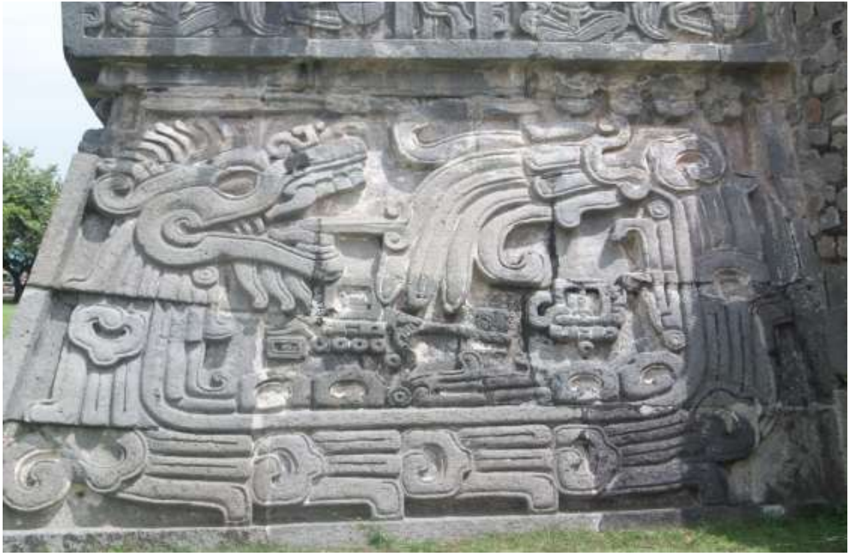
The paper proposes "divulgación significativa" (meaningful divulgation) as a heritage-education communication strategy developed in Mexico, combining Ham's thematic interpretation with visitor-centered museology, an anthropological celebration of cultural diversity, and historical materialism. It illustrates the approach with an in-progress divulgation plan for the archaeological site of Xochicalco.
Key findings
- The proposal rests on four pillars: Ham's thematic interpretation (the TORE model — theme, organized, relevant, entertaining), visitor-centered museology (Falk and Dierking's contextual learning model), an anthropological approach treating cultural diversity as "nuestra herencia como especie," and history/historical materialism, which adds explicit political and ethical commitments.
- It argues that generating a culture of conservation requires public commitment, which begins when visitors form an emotional link with heritage; relevance is built by bridging emotions and shared meanings ("hay que encontrar lo universal en lo particular").
- The Xochicalco example: a 2015 public study (PÉREZ, 2016) found the site's audience to be young, national, with mid-level education; fewer than 50% of visitors learn of the solar observatory's existence. The chosen narrative axis is conflict and its resolution, with the thesis that Xochicalco is objective proof that the common good can be achieved by putting it above differences.
- The author notes that which interpretation is chosen "tiene que ver con la postura ética y política del divulgador," and that the first draft of the new cedulario "parece lograr un balance."
Methods
- Conceptual/theoretical essay: the paper "explora sus fundamentos teóricos" of divulgación significativa, drawing on interpretation literature (Tilden, Ham, Brochu, Knudson et al.), museology (Falk and Dierking, McLean, Serrell), anthropology (Harris, Binford), and pedagogy (Ausubel, Freire).
- Case illustration: an ongoing "Plan de Divulgación" for Xochicalco, a pre-Hispanic city (600–1000 d.C.) south of Mexico City, using a 2015 visitor study and archaeological literature; the plan's first instrument is a new cedulario (label set) on suggested routes.
- No formal empirical analysis or evaluation of outcomes is reported; the Xochicalco section is described as "un ejemplo inicial" and "un proyecto en curso."
Limitations
- Stated: the proposal is "actualmente en construcción," presented to open a conversation; the author notes that space prevents covering dramatic theory, communication theory, and environmental design/"wayfinding" elements; the Xochicalco cedulario is only in first draft and its reception is anticipated, not measured.
- Evident from the text: no empirical evaluation of whether the strategy produces the claimed learning, reflection, or conservation commitment; the visitor data cited (2015 study, five World Heritage sites) are referenced to other reports rather than presented here; the author acknowledges the interpretation is shaped by his own ethical-political stance, which he frames as a deliberate choice rather than a limitation.
Model-written summary. Check it against the paper before relying on it.
Integrity signals
Registry
Cites
Statistics
Figures
Verification
Claims the paper makes
32 Own interpretation · 15 Sources not found · 5 No full text of the sources · 2 Not checked yet · 2 Own result · 1 No basis given
In the paper
“El a quién, se deriva de un estudio de públicos realizado en el sitio en 2015 (PÉREZ, 2016): público joven nacional con estudios de nivel medio.”
§ LA DIVULGACIÓN SIGNIFICATIVA COMO ESTRATEGIA DE COMUNICACIÓN EDUCATIVA > Additional information
What the sources say
- Not matchedcites PÉREZ, 2016
Couldn’t be matched to a paper in Crossref, so it can’t be checked.
plain- Asserted: passes — The authors put it forward as true.
- Checkable: passes — It can be checked against evidence.
- Load-bearing: unclear — It is unclear whether the paper’s conclusions depend on it.
- Based: passes — The paper gives a reason why it holds.
- Not matched
In the paper
“Cada práctica cultural, cada artefacto, cada creencia materializada en conducta no es sino una solución que cada grupo ha encontrado a problemas que, a nivel más profundo, son comunes a todas las culturas.”
§ LA DIVULGACIÓN SIGNIFICATIVA COMO ESTRATEGIA DE COMUNICACIÓN EDUCATIVA > 2.3 El enfoque antropológico: celebración de la diversidad cultural
What the sources say
- Not matchedcites BINFORD, 1972
Couldn’t be matched to a paper in Crossref, so it can’t be checked.
plain- Asserted: passes — The authors put it forward as true.
- Checkable: passes — It can be checked against evidence.
- Load-bearing: passes — The paper’s conclusions depend on it.
- Based: passes — The paper gives a reason why it holds.
- Not matched
In the paper
“En México, con un millar de arqueólogos, somos insuficientes para custodiar más de un millón de sitios arqueológicos (GÁNDARA, en prensa).”
§ LA DIVULGACIÓN SIGNIFICATIVA COMO ESTRATEGIA DE COMUNICACIÓN EDUCATIVA > 1 INTRODUCCION: EL PROBLEMA
What the sources say
- Not matchedcites GÁNDARA, en prensa
Couldn’t be matched to a paper in Crossref, so it can’t be checked.
plainstates a cause- Asserted: passes — The authors put it forward as true.
- Checkable: passes — It can be checked against evidence.
- Load-bearing: passes — The paper’s conclusions depend on it.
- Based: passes — The paper gives a reason why it holds.
- Not matched
A conclusion the paper draws from its own results — it cites no other source for it, so there is none to check. The quote shows it is in the paper.
In the paper
“En estas dimensiones se proyectan, reflejan o reconocen significados asociados a afectos o emociones.”
§ LA DIVULGACIÓN SIGNIFICATIVA COMO ESTRATEGIA DE COMUNICACIÓN EDUCATIVA > © ETD -Educação Temática Digital
plainstates an association- Asserted: passes — The authors put it forward as true.
- Checkable: passes — It can be checked against evidence.
- Load-bearing: passes — The paper’s conclusions depend on it.
- Based: passes — The paper gives a reason why it holds.
A conclusion the paper draws from its own results — it cites no other source for it, so there is none to check. The quote shows it is in the paper.
In the paper
“De esta manera, la posibilidad de generar compromiso con el patrimonio no serían resultados aleatorios o arbitrarios, sino el efecto de un programa exitoso de interpretación temática, centrado en los mensajes a comunicar, de entre los cuales, siempre debe haber un llamado a la conservación.”
§ LA DIVULGACIÓN SIGNIFICATIVA COMO ESTRATEGIA DE COMUNICACIÓN EDUCATIVA > 2.1 La interpretación temática de Ham
hedgedstates a cause- Asserted: passes — The authors put it forward as true.
- Checkable: passes — It can be checked against evidence.
- Load-bearing: passes — The paper’s conclusions depend on it.
- Based: passes — The paper gives a reason why it holds.
- It may state two separate claims as one. 26
- Probably not a substantial claim. 40
Create a free account to see these claims.
Create a free account to see these assumptions.
3 more claims
Create a free account to see all 57 claims and every source verdict.
Citations
Cites
The structure and function of communication in society
Lasswell, H. D. (2007) · Cited by 2,238
Tilden, F. (1957) · Project Muse (Johns Hopkins University) · Cited by 1,173
Falk, J. H., & Dierking, L. D. (2016) · Routledge eBooks · doi:10.4324/9781315417899 · Cited by 947
The Curse of Knowledge in Economic Settings: An Experimental Analysis
Camerer, C. F., Loewenstein, G. F., & Weber, M. (1989) · Journal of Political Economy · doi:10.1086/261651 · Cited by 754
The Museum Experience Revisited
Falk, J. H., & Dierking, L. D. (2016) · doi:10.4324/9781315417851 · Cited by 641
Exhibit Labels: An Interpretive Approach
Serrell, B. (1996) · Cited by 249
Interpretation of Cultural and Natural Resources
Knudson, D. M., Cable, T. T., & Beck, L. (1995) · Cited by 226
The museum experience revisited
(2013) · Choice Reviews Online · doi:10.5860/choice.50-6553 · Cited by 219
After Philosophy: End or Transformation?
Baynes, K., Bohman, J. F., & McCarthy, T. J. (1986) · Medical Entomology and Zoology · Cited by 153
Creating the Visitor-Centered Museum
Samis, P. S., & Michaelson, M. (2016) · Routledge eBooks · doi:10.4324/9781315531014 · Cited by 67
Research works printed but not linked: 1
- GÁNDARA, Manuel. En prensa. De la interpretación temática a la divulgación significativa, En: GÁNDARA, Manuel., JIMÉNEZ, M.A. (Ed.), Interpretación del patrimonio cultural: pasos hacia una divulgación significativa. México: INAH, en prensa, p. 19-82.
Cited by
Estudio del efecto boomerang en una comunidad digital entre jóvenes
Pedreño-Santos, A., García, S. C., & Abad, M. V. (2025) · Street Art & Urban Creativity · doi:10.62161/sauc.v11.5723 · Cited by 3
El modelo de comunicación por objetivos: aplicaciones en el diseño de programas interpretativos
Vázquez, M. G. (2021) · Complutum · doi:10.5209/cmpl.78569 · Cited by 2
Archaeological Heritage and Museum Interpretation
Pozzi-Escot, D., & Tafur-Sequera, M. (2023) · Elsevier eBooks · doi:10.1016/b978-0-323-90799-6.00126-9 · Cited by 1
Promotion campaign to raise awareness of law 675 of 2001, in Colsubsidio's social housing projects
Tirado Ávila, M. R., García López, J. R., & Corredor Vanegas, D. N. (2024) · Biblioteca Digital Minerva EAN
Critikián, D. M., Altaba, M. S., & Poch-Butler, S. L. (2025) · Editorial Comares eBooks · doi:10.55323/9788413804453
Metadata
- Authors
- Gándara Vázquez, M.
- Venue
- ETD - Educação Temática Digital
- Publisher
- Universidade Estadual de Campinas
- Published
- 2018-07-16
- Volume
- 20
- Issue
- 3
- Pages
- 662-679
- ISSN
- 1676-2592 (ISSN-L)
- OpenAlex
- W2884293322
- Semantic Scholar
- 7e7328c97490bf536aec35b4a1df0e973bef652f
- Cited by
- 4
- References
- 15
- Citations by year
- 2025: 2 · 2023: 1 · 2021: 1
- FWCI
- 3.79
- Type
- journal article
- Language
- pt
- Open access
- diamond
- doi.org
- Licence
- Locations
- ETD - Educação Temática Digital (publishedVersion, cc-by-nc-nd)
- Dialnet (Universidad de la Rioja) (submittedVersion)
- DOAJ (DOAJ: Directory of Open Access Journals) (submittedVersion, cc-by-sa)
- LA Referencia (Red Federada de Repositorios Institucionales de Publicaciones Científicas) (submittedVersion, cc-by-nc-nd)
- Topics
- Social Sciences › Arts and Humanities › Museology › Museums and Cultural Heritage
- Social Sciences › Arts and Humanities › Archeology (arts and humanities) › Archaeology and Cultural Heritage
- Social Sciences › Arts and Humanities › Archeology (arts and humanities) › Cultural Heritage Management and Preservation
- Keywords
- heritage education, environmental interpretation, thematic interpretation, heritage communication, Mexican museums
About these checks
Registry, retraction, Cites and statistics results are computed, not judged, with one exception: a printed reference that no index lists is read once by a model before it counts as a citation error. Claims are extracted by a model and kept only when their quote appears verbatim in the text; each cited source is then checked, with a model’s help, for whether it says what the claim relies on. Those verdicts can be wrong — read the claim’s quote and the cited source before relying on one.
A language model drew the claims from the paper on 2026-11-10, under version 3 of the claim definition (model deepseek-v4.1-flash, prompt extract-v3).
A second model labelled each claim on 2026-11-10 (model jev-1.13-20260917, definition revision gold-guideline-v0.2).
Statistics and arithmetic are recomputed, not judged.
Confidence bands are shown only for fields calibrated on our annotated test set. None is calibrated yet, so no band is shown.
What counts as a claim ›How we measure confidence ›How we check this ›
Are you an author, or do you see a problem with this page? Request a review
