

The DOI matches its Crossref record; 1 of the 1 references it cites were found in a registry or an index.
Peptide: N-Glycanase 1 and Its Relationship with Congenital Disorder of Deglycosylation
Open accessPreprint — published as 10.3390/nu14091690 · Paper page
Abstract
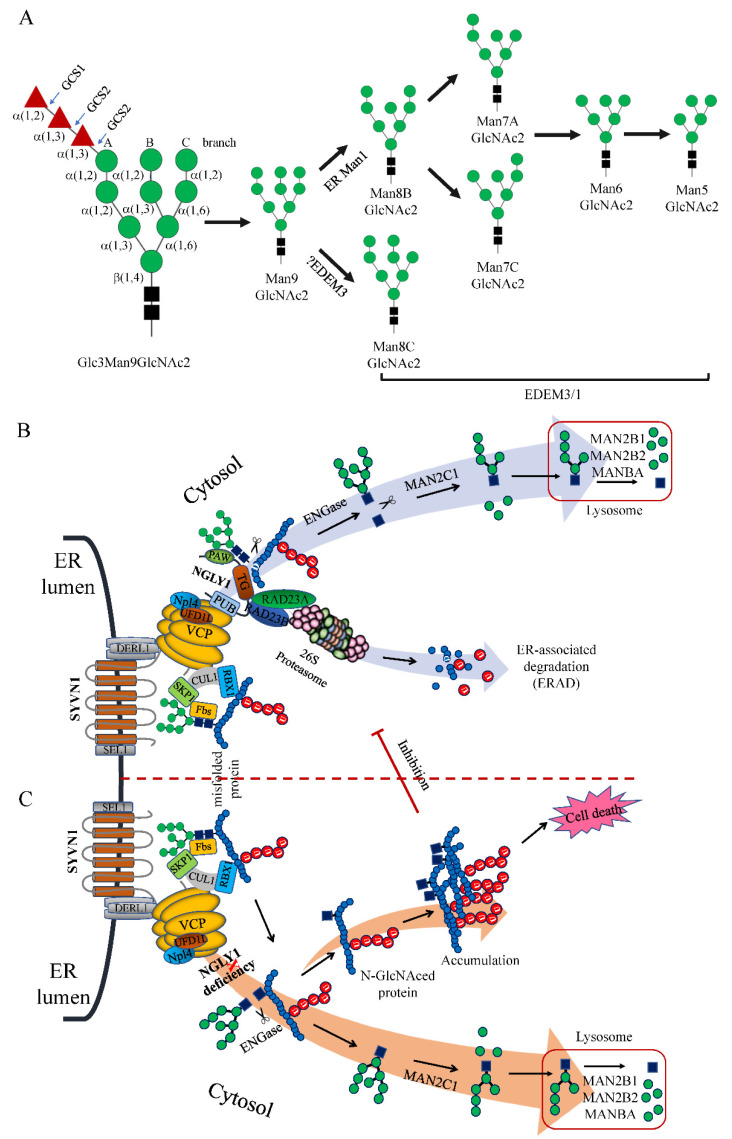
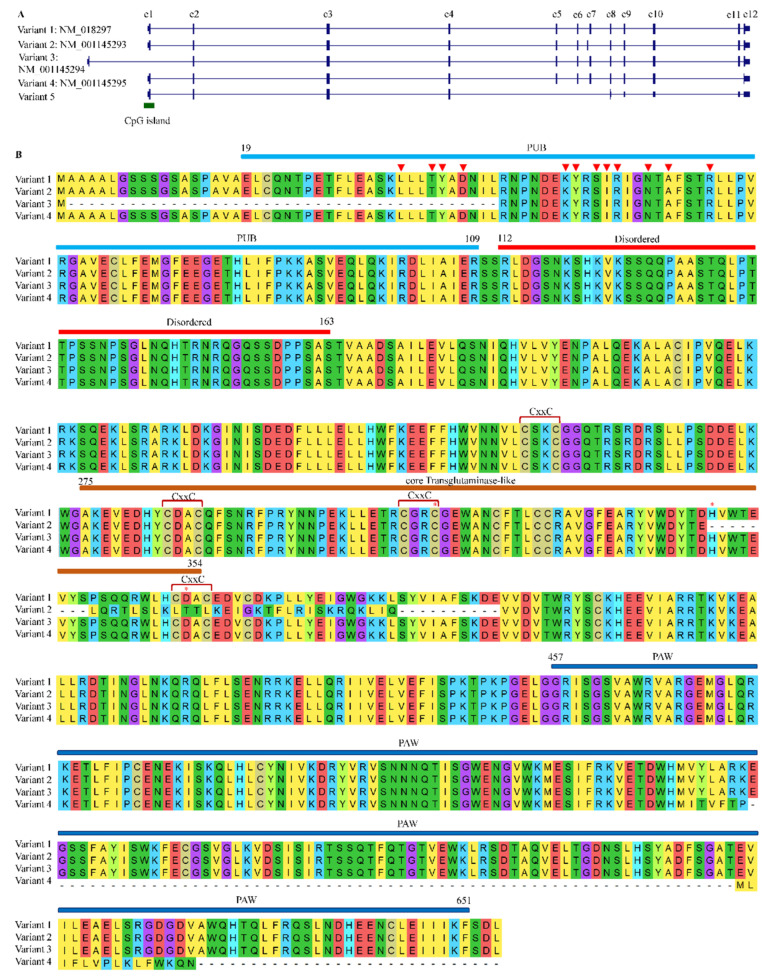
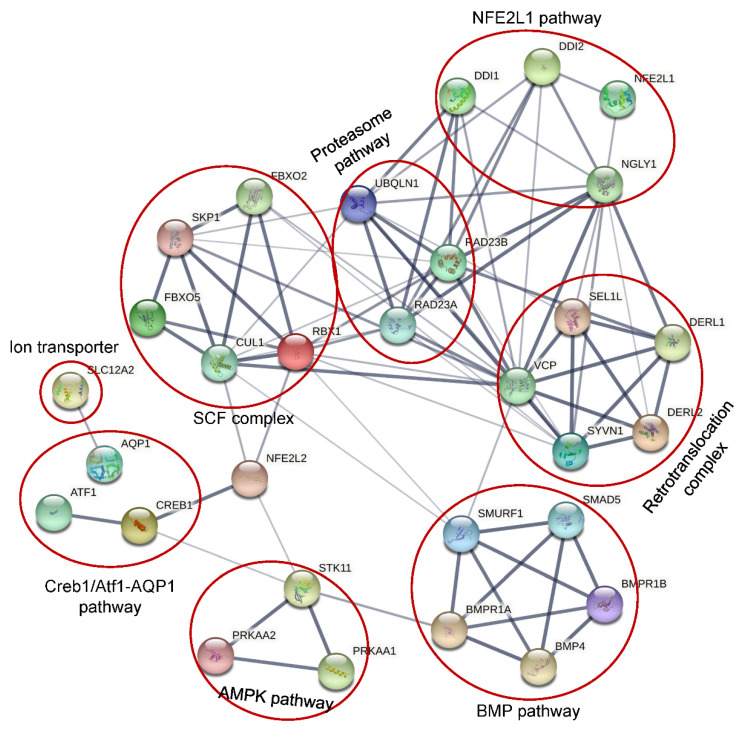
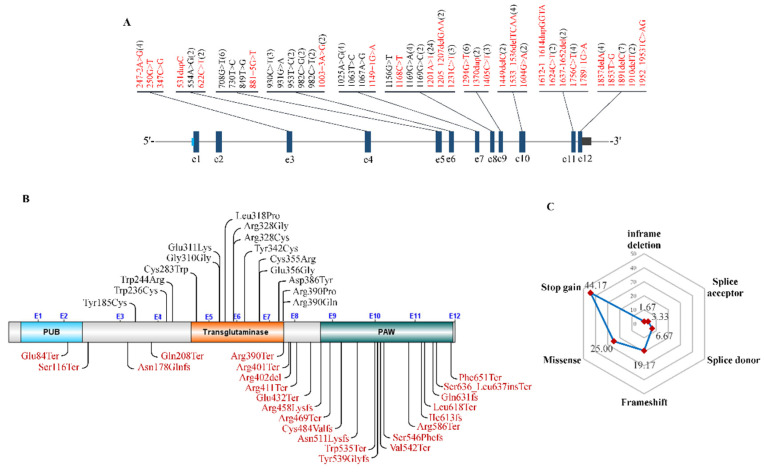
The cytosolic PNGase (peptide:N-glycanase; Png1 in yeast; NGLY1/Ngly1 in human/mice), also known as peptide-N4-(N-acetyl-beta-glucosaminyl)-asparagine ami-dase, is a well-conserved deglycosylation enzyme (EC 3.5.1.52) which catalyzes the non-lysosomal hydrolysis of an N(4)-(acetyl-β-D-glucosaminyl) asparagine residue into N-acetyl-β-D-glucosaminylamine and a peptide containing an aspartate residue. This enzyme (NGLY1) plays essential roles in clearance of misfolded or unassembled gly-coproteins through a process named ER-associated degradation (ERAD). Accumulating evidence also points out that NGLY1 deficiency can cause an autosomal recessive hu-man genetic disorder associated with abnormal development and congenital disorder of deglycosylation. In addition, the loss of NGLY1 can affect multiple cellular pathways, including but not limited to NFE2L1 pathway, Creb1/Atf1-AQP pathway, BMP path-way, AMPK pathway, and SLC12A2 ion transporter, which might be the underlying reasons for a constellation of clinical phenotypes of NGLY1 deficiency. The current comprehensive review indeed uncovers the detailed NGLY1’s structure and its im-portant roles for participation in ERAD, involvement in CDDG and potential treatment for NGLY1 deficiency.
Overview
The claims and statistics of this paper haven’t been checked yet.
Run the check — free, no account needed. It reads the open-access text and checks the sources it cites.
Integrity signals
Registry
Cites
Statistics
Figures
Verification
Claims the paper makes
The claims and statistics of this paper haven’t been checked yet.
Run the check — free, no account needed. It reads the open-access text and checks the sources it cites.
Self-check
Percentages, sums and reported differences re-computed from the paper’s own numbers.
The self-check needs the paper’s full text.
Citations
Cites
Highly accurate protein structure prediction with AlphaFold
Jumper, J., Evans, R., Pritzel, A., Green, T., Figurnov, M., Ronneberger, O., Tunyasuvunakool, K., Bates, R., Žídek, A., Potapenko, A., et al. (2021) · Nature · doi:10.1038/s41586-021-03819-2 · Cited by 43,764
Metadata
- Authors
- Miao, X., Wu, J., Chen, H., & Lu, G.
- Affiliations
- Nanchang University (CN)
- Roswell Park Comprehensive Cancer Center (US)
- Corresponding author
- Wu, Jin
- Chen, Hongping
- Lu, Guanting
- Venue
- Nutrients
- Publisher
- MDPI AG
- Published
- 2022-03-10
- Volume
- 14
- Issue
- 9
- Pages
- 1690-1690
- ISSN
- 2072-6643 (ISSN-L)
- PMC
- PMC9102325
- OpenAlex
- W4224244065
- Cited by
- 13
- References
- 1
- Citations by year
- 2026: 2 · 2025: 2 · 2024: 6 · 2023: 2 · 2022: 1
- FWCI
- 0.29
- Type
- journal article
- Language
- en
- Open access
- gold
- doi.org
- Locations
- Nutrients (publishedVersion, cc-by)
- Preprints.org (acceptedVersion, cc-by)
- PubMed Central (publishedVersion, cc-by)
- PubMed (publishedVersion)
- DOAJ (DOAJ: Directory of Open Access Journals) (submittedVersion, cc-by-sa)
- Topics
- Life Sciences › Biochemistry, Genetics and Molecular Biology › Molecular Biology › Glycosylation and Glycoproteins Research
- Life Sciences › Biochemistry, Genetics and Molecular Biology › Cell Biology › Endoplasmic Reticulum Stress and Disease
- Health Sciences › Medicine › Genetics (clinical) › Lysosomal Storage Disorders Research
- Keywords
- NGLY1, congenital disorders of glycosylation, ER-associated degradation, N-glycosylation, deglycosylation, BMP signaling, AMPK signaling, NKCC1, glycoprotein quality control, protein structure
- MeSH terms
- Asparagine, Humans, Peptides, Congenital Disorders of Glycosylation, Peptide-N4-(N-acetyl-beta-glucosaminyl) Asparagine Amidase, Solute Carrier Family 12, Member 2
About these checks
Registry, retraction, Cites and statistics results are computed, not judged, with one exception: a printed reference that no index lists is read once by a model before it counts as a citation error. Claims are extracted by a model and kept only when their quote appears verbatim in the text; each cited source is then checked, with a model’s help, for whether it says what the claim relies on. Those verdicts can be wrong — read the claim’s quote and the cited source before relying on one.
Statistics and arithmetic are recomputed, not judged.
Confidence bands are shown only for fields calibrated on our annotated test set. None is calibrated yet, so no band is shown.
What counts as a claim ›How we measure confidence ›How we check this ›
Are you an author, or do you see a problem with this page? Request a review
How to cite
Cite CoChat for the checks on this page, and the paper for its own findings.
- This page
- CoChat. (2026). Citation check: Peptide: N-Glycanase 1 and Its Relationship with Congenital Disorder of Deglycosylation. https://app.cochat.ai/papers/10.20944/preprints202203.0148.v1
- The paper
- Miao, X., Wu, J., Chen, H., & Lu, G. (2022). Peptide: N-Glycanase 1 and Its Relationship with Congenital Disorder of Deglycosylation. Nutrients. https://doi.org/10.20944/preprints202203.0148.v1
Data sources
Bibliographic data: Semantic Scholar, OpenAlex, Crossref.
Contains information from the Semantic Scholar Academic Graph Datasets, made available under the ODC Attribution License (ODC-BY 1.0).
Semantic Scholar’s data is described in: Kinney, R., et al. (2023). The Semantic Scholar Open Data Platform. arXiv:2301.10140.
