

The DOI matches its Crossref record; 1 of the 1 references it cites were found in a registry or an index.
Auxin Signaling in Potato: Canonical and Alternative Pathways and Their Variations Among Mono-, Di-, and Tetraploid Cultivars
Open accessPreprint — published as 10.3390/ijms241411408 · Paper page
Abstract
It has long been known that auxins play a promoting role in tuber formation and stress tolerance in potatoes. Our study aimed to identify and characterize the complete sets of auxin-related genes that presumably constitute the entire auxin signaling system in potato (Solanum tuberosum L.). The corresponding genes were retrieved from sequenced genomes of the doubled monoploid S. tuberosum DM1-3-516-R44 (DM) of the Phureja group, the heterozygous diploid line RH89-039-16 (RH), and the autotetraploid cultivar Otava. Both canonical and noncanonical auxin signaling pathways were considered. Phylogenetic and domain analyzes of deduced proteins were supplemented by their expression profiling and 3D molecular modeling. Total number of potato genes/proteins involved in canonical auxin signaling is 43and 100 for monoploid DM and tetraploid Otava, respectively. Among studied potatoes, spectra of expressed genes associated with auxin signaling were partly cultivar-specific and quite different from analogous spectrum in Arabidopsis. Orthologs of noncanonical auxin signaling genes have also been identified and characterized in detail. Results show that some known noncanonical pathways are low probable in potato. Thus, according to cumulative data, potatoes use a variety of pathways for auxin signaling, where some important features of these pathways may be variable and even species-specific.
Overview
The claims and statistics of this paper haven’t been checked yet.
Run the check — free, no account needed. It reads the open-access text and checks the sources it cites.
Integrity signals
Registry
Cites
Statistics
Figures
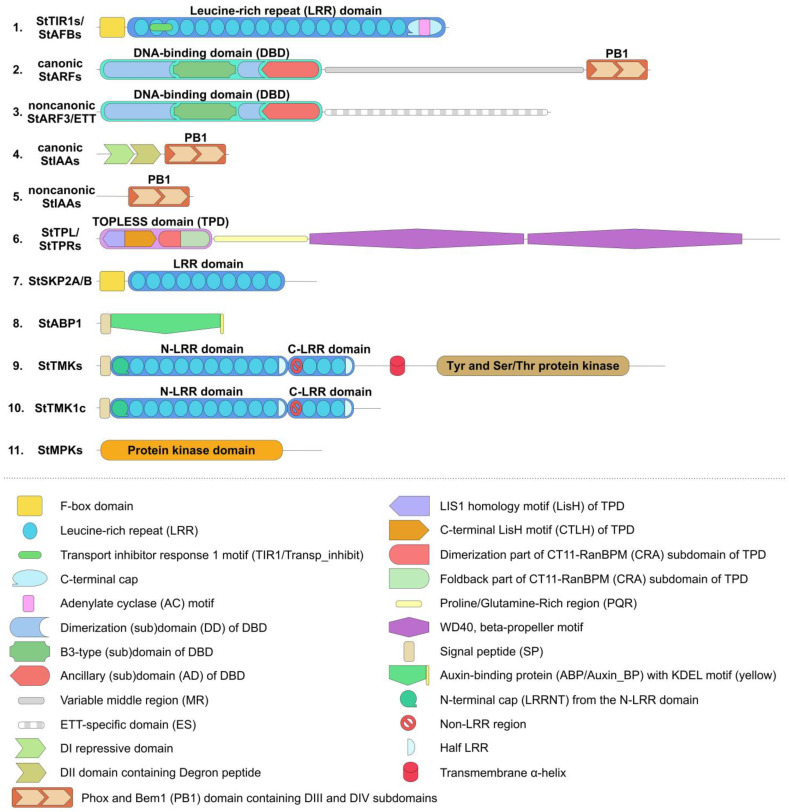
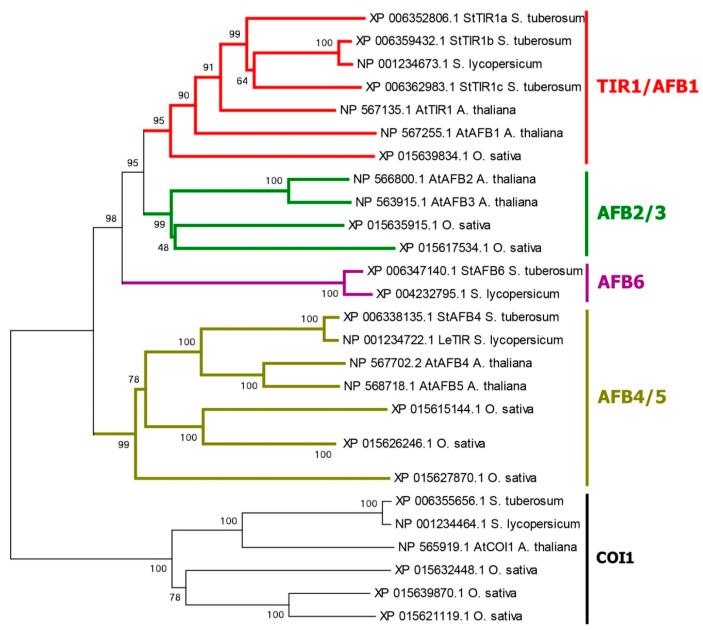
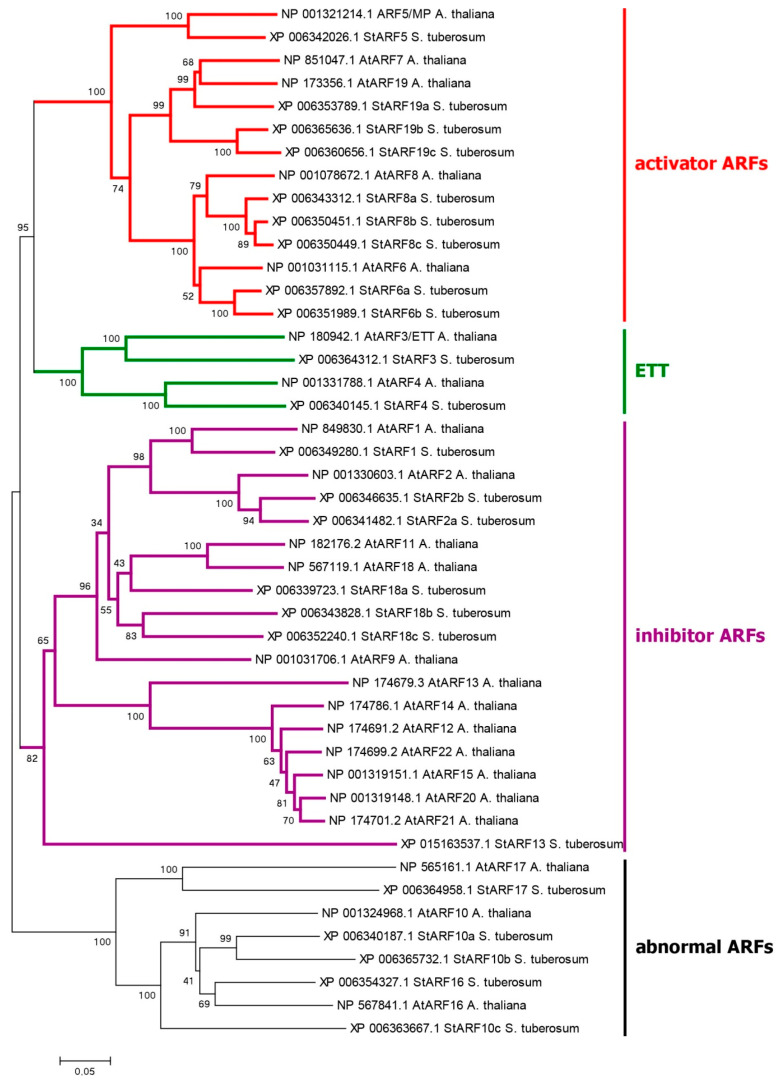
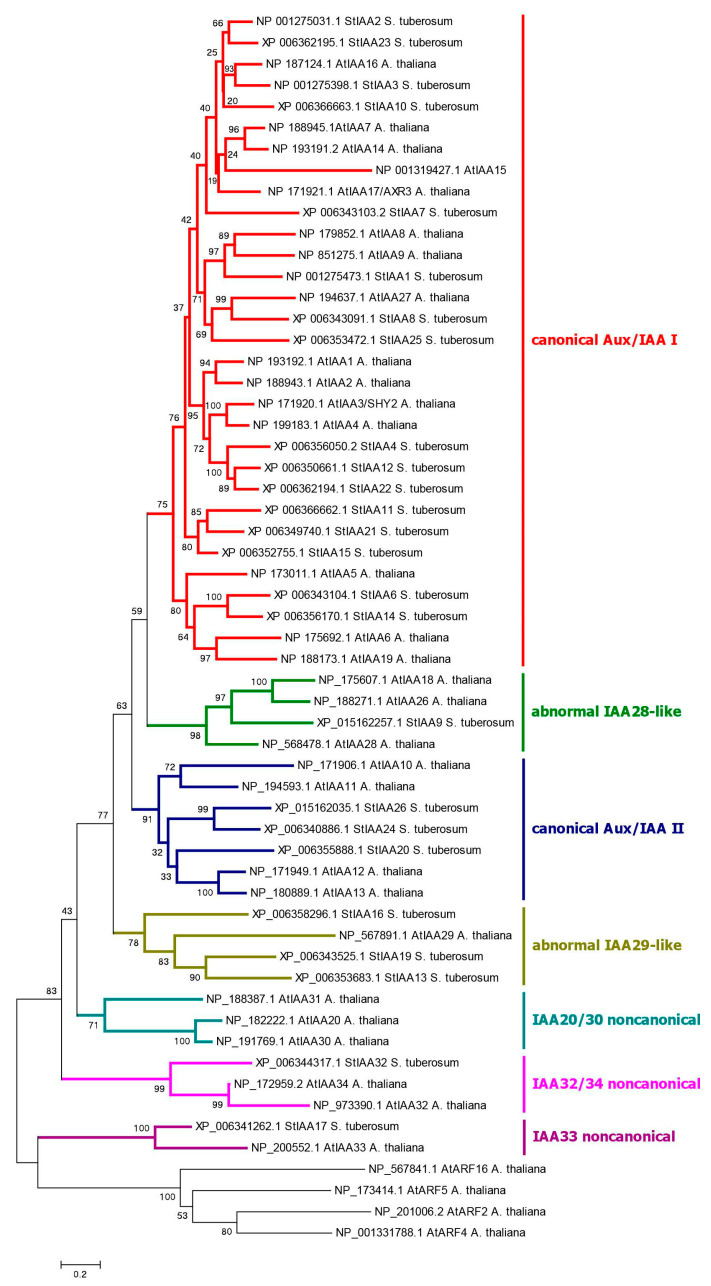
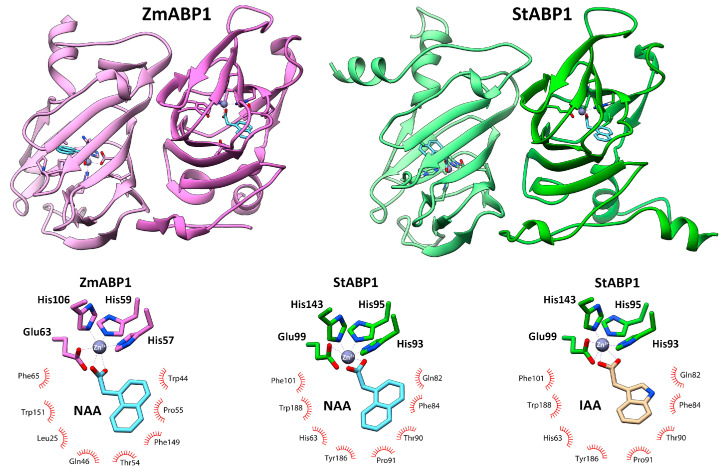
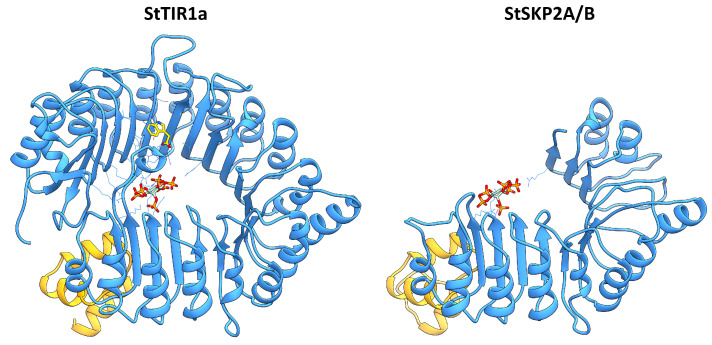
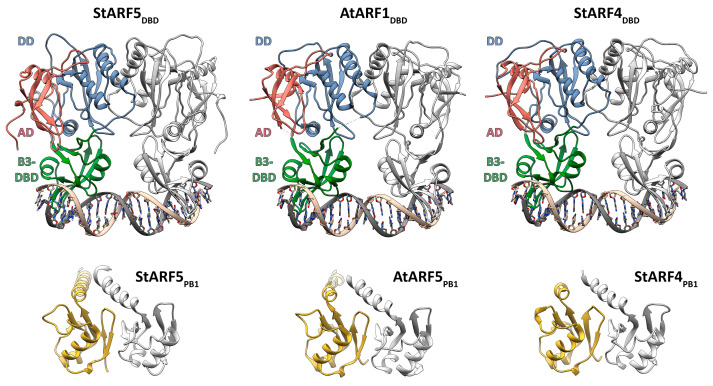
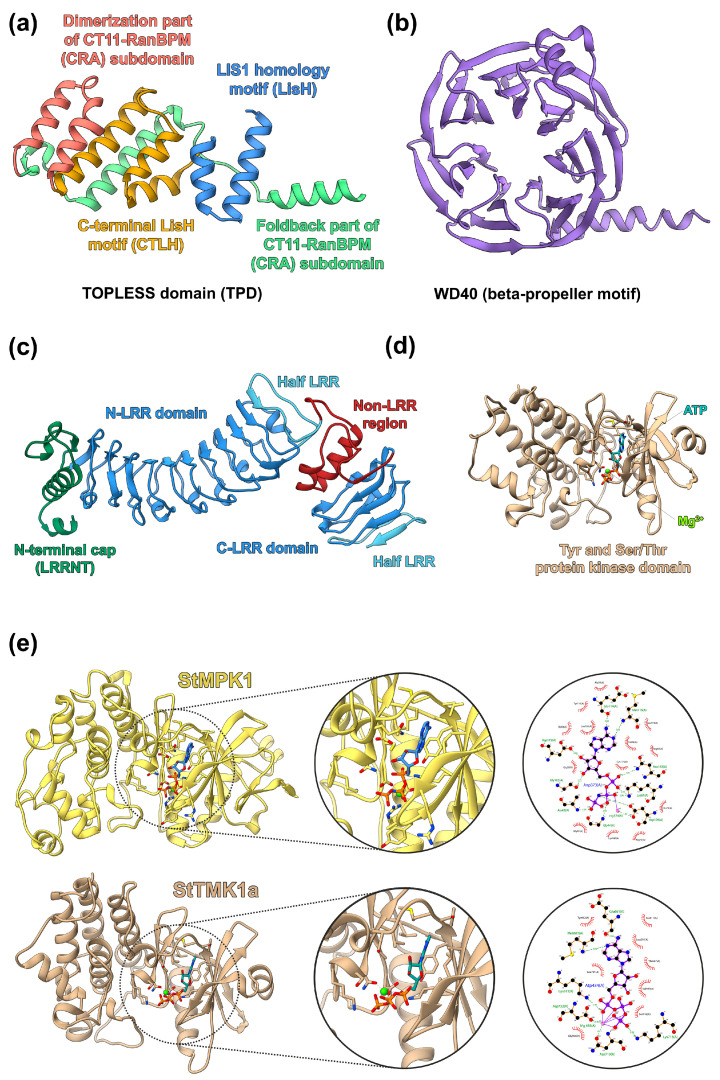
Verification
Claims the paper makes
The claims and statistics of this paper haven’t been checked yet.
Run the check — free, no account needed. It reads the open-access text and checks the sources it cites.
Self-check
Percentages, sums and reported differences re-computed from the paper’s own numbers.
The self-check needs the paper’s full text.
Citations
Cites
Highly accurate protein structure prediction with AlphaFold
Jumper, J., Evans, R., Pritzel, A., Green, T., Figurnov, M., Ronneberger, O., Tunyasuvunakool, K., Bates, R., Žídek, A., Potapenko, A., et al. (2021) · Nature · doi:10.1038/s41586-021-03819-2 · Cited by 43,764
Metadata
- Authors
- Lomin, S. N., Kolachevskaya, O. O., Arkhipov, D. V., & Romanov, G. A.
- Affiliations
- Russian Academy of Sciences (RU)
- Corresponding author
- Romanov, Georgy A.
- Venue
- International Journal of Molecular Sciences
- Publisher
- MDPI AG
- Published
- 2023-05-15
- Volume
- 24
- Issue
- 14
- Pages
- 11408-11408
- ISSN
- 1422-0067 (ISSN-L)
- PMC
- PMC10380454
- OpenAlex
- W4384341506
- Cited by
- 3
- References
- 1
- Citations by year
- 2026: 1 · 2024: 1 · 2023: 1
- FWCI
- 0.47
- Type
- journal article
- Language
- en
- Open access
- gold
- doi.org
- Locations
- International Journal of Molecular Sciences (publishedVersion, cc-by)
- Preprints.org (acceptedVersion, cc-by)
- PubMed Central (publishedVersion, cc-by)
- PubMed (publishedVersion)
- Funders
- Russian Science Foundation (17-74-20181)
- Ministry of Science and Higher Education of the Russian Federation (121033000137–1, theme No. 122042700043-9, No. 122042700043-9, 122042700043-9)
- Topics
- Life Sciences › Agricultural and Biological Sciences › Plant Science › Plant Molecular Biology Research
- Life Sciences › Agricultural and Biological Sciences › Plant Science › Plant Parasitism and Resistance
- Life Sciences › Agricultural and Biological Sciences › Plant Science › Light effects on plants
- Keywords
- auxin signaling, potato, ploidy, autotetraploids, diploids, ABP1, tuberization, gene expression profiling, species specificity, Arabidopsis comparison
- MeSH terms
- Indoleacetic Acids, Phylogeny, Solanum tuberosum, Arabidopsis, Gene Expression Regulation, Plant, Tetraploidy
About these checks
Registry, retraction, Cites and statistics results are computed, not judged, with one exception: a printed reference that no index lists is read once by a model before it counts as a citation error. Claims are extracted by a model and kept only when their quote appears verbatim in the text; each cited source is then checked, with a model’s help, for whether it says what the claim relies on. Those verdicts can be wrong — read the claim’s quote and the cited source before relying on one.
Statistics and arithmetic are recomputed, not judged.
Confidence bands are shown only for fields calibrated on our annotated test set. None is calibrated yet, so no band is shown.
What counts as a claim ›How we measure confidence ›How we check this ›
Are you an author, or do you see a problem with this page? Request a review
How to cite
Cite CoChat for the checks on this page, and the paper for its own findings.
- This page
- CoChat. (2026). Citation check: Auxin Signaling in Potato: Canonical and Alternative Pathways and Their Variations Among Mono-, Di-, and Tetraploid Cultivars. https://app.cochat.ai/papers/10.20944/preprints202305.1005.v1
- The paper
- Lomin, S. N., Kolachevskaya, O. O., Arkhipov, D. V., & Romanov, G. A. (2023). Auxin Signaling in Potato: Canonical and Alternative Pathways and Their Variations Among Mono-, Di-, and Tetraploid Cultivars. International Journal of Molecular Sciences. https://doi.org/10.20944/preprints202305.1005.v1
Data sources
Bibliographic data: Semantic Scholar, OpenAlex, Crossref.
Contains information from the Semantic Scholar Academic Graph Datasets, made available under the ODC Attribution License (ODC-BY 1.0).
Semantic Scholar’s data is described in: Kinney, R., et al. (2023). The Semantic Scholar Open Data Platform. arXiv:2301.10140.
