

The DOI matches its Crossref record; 1 of the 1 references it cites were found in a registry or an index.
Origin and early diversification of the papain family of cysteine peptidases
Open accessPreprint — published as 10.3390/ijms241411761 · Paper page
Abstract
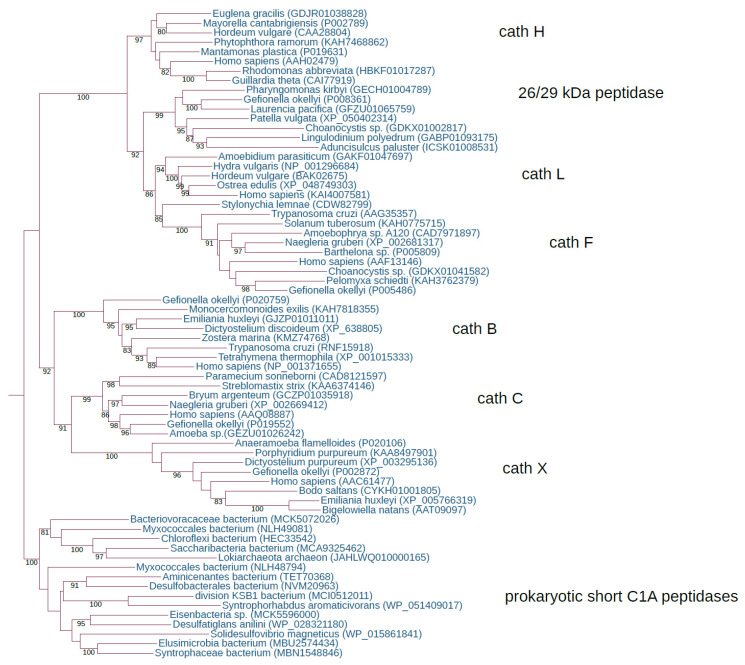
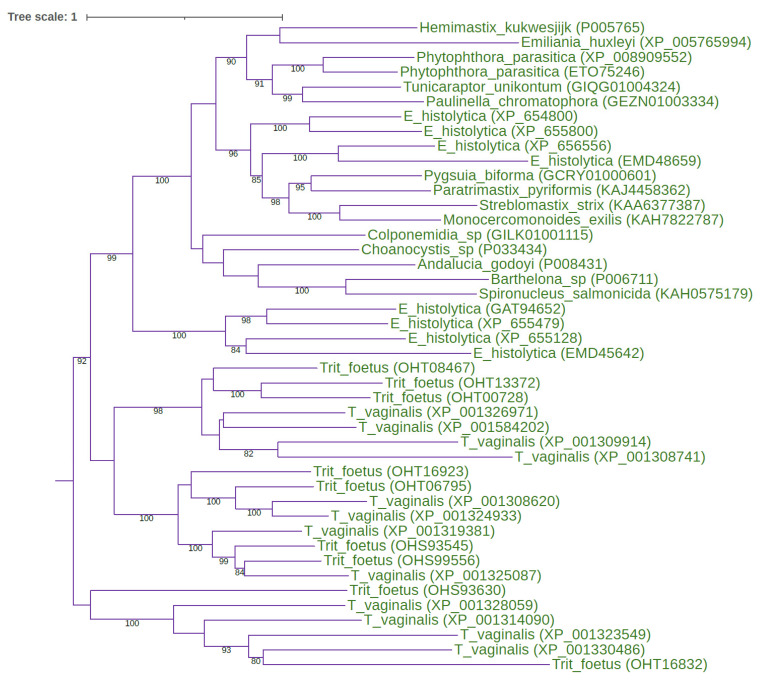
Peptidases of the papain family play a key role in protein degradation, regulated proteolysis, and the host-pathogen arms race. Although the papain family has been the subject of many studies, knowledge about its diversity, origin, and evolution in Eukaryota, Bacteria, and Archaea is limited; thus, we aimed to answer these long-standing questions. We traced the origin and expansion of the papain family through phylogenomic analysis, using sequence data from numerous prokaryotic and eukaryotic proteomes, transcriptomes, and genomes. We identified the full complement of the papain family in all prokaryotic and eukaryotic lineages. Analysis of the papain family provided strong evidence for its early diversification in the ancestor of eukaryotes. We found that the papain family has undergone complex and dynamic evolution through numerous gene duplications, which produced eight eukaryotic ancestral paralogous C1A lineages during eukaryogenesis. Different evolutionary forces operated on C1A peptidases, including gene duplication, horizontal gene transfer, and gene loss. This study challenges the current understanding of the origin and evolution of the papain family and provides valuable insights into their early diversification. The findings of this comprehensive study provide guidelines for future structural and functional studies of the papain family.
Overview
The claims and statistics of this paper haven’t been checked yet.
Run the check — free, no account needed. It reads the open-access text and checks the sources it cites.
Integrity signals
Registry
Cites
Statistics
Figures
Verification
Claims the paper makes
The claims and statistics of this paper haven’t been checked yet.
Run the check — free, no account needed. It reads the open-access text and checks the sources it cites.
Self-check
Percentages, sums and reported differences re-computed from the paper’s own numbers.
The self-check needs the paper’s full text.
Citations
Cites
Highly accurate protein structure prediction with AlphaFold
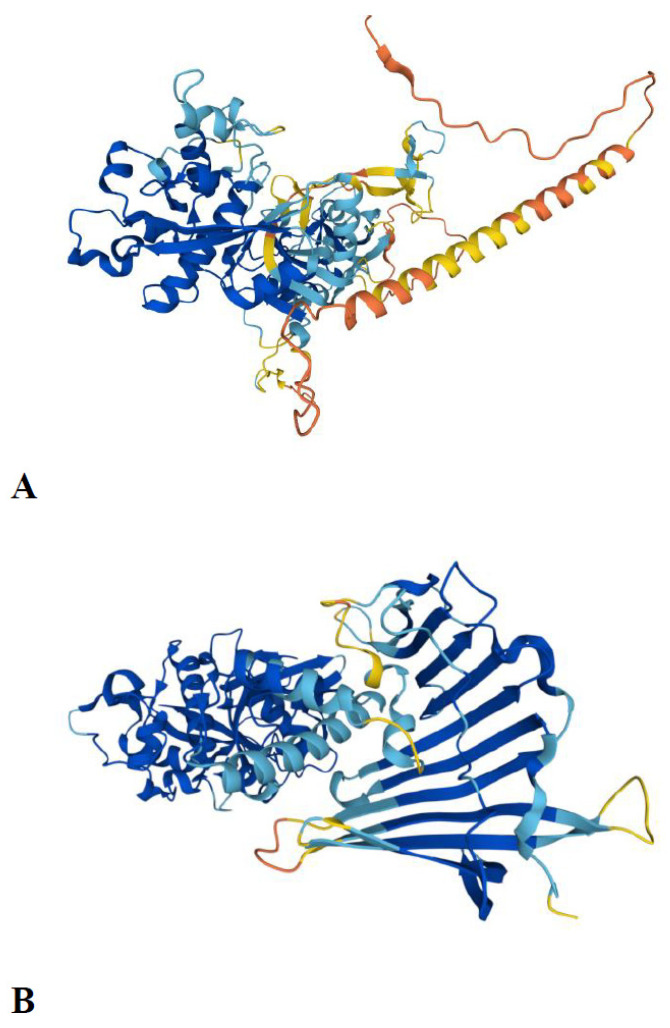
Jumper, J., Evans, R., Pritzel, A., Green, T., Figurnov, M., Ronneberger, O., Tunyasuvunakool, K., Bates, R., Žídek, A., Potapenko, A., et al. (2021) · Nature · doi:10.1038/s41586-021-03819-2 · Cited by 43,764
Metadata
- Authors
- Kordiš, D., & Turk, V.
- Affiliations
- Jožef Stefan Institute (SI)
- Venue
- International Journal of Molecular Sciences
- Publisher
- MDPI AG
- Published
- 2023-06-22
- Volume
- 24
- Issue
- 14
- Pages
- 11761-11761
- ISSN
- 1422-0067 (ISSN-L)
- PMC
- PMC10380794
- OpenAlex
- W4385172689
- Cited by
- 8
- References
- 1
- Citations by year
- 2025: 2 · 2024: 3 · 2023: 3
- FWCI
- 1.01
- Type
- journal article
- Language
- en
- Open access
- gold
- doi.org
- Locations
- International Journal of Molecular Sciences (publishedVersion, cc-by)
- Preprints.org (acceptedVersion, cc-by)
- PubMed Central (publishedVersion, cc-by)
- PubMed (publishedVersion)
- Funders
- Javna Agencija za Raziskovalno Dejavnost RS (P1-0207, P1-0140, J1-2473)
- Topics
- Life Sciences › Biochemistry, Genetics and Molecular Biology › Cancer Research › Protease and Inhibitor Mechanisms
- Life Sciences › Biochemistry, Genetics and Molecular Biology › Molecular Biology › Genomics and Phylogenetic Studies
- Life Sciences › Biochemistry, Genetics and Molecular Biology › Genetics › Chromosomal and Genetic Variations
- Keywords
- papain family, cysteine peptidases, protein evolution, eukaryotic origin, gene duplication, horizontal gene transfer, gene loss, host-pathogen arms race, protein degradation
- MeSH terms
- Archaea, Cysteine, Papain, Peptide Hydrolases, Phylogeny, Evolution, Molecular, Eukaryota, Cysteine Proteases
About these checks
Registry, retraction, Cites and statistics results are computed, not judged, with one exception: a printed reference that no index lists is read once by a model before it counts as a citation error. Claims are extracted by a model and kept only when their quote appears verbatim in the text; each cited source is then checked, with a model’s help, for whether it says what the claim relies on. Those verdicts can be wrong — read the claim’s quote and the cited source before relying on one.
Statistics and arithmetic are recomputed, not judged.
Confidence bands are shown only for fields calibrated on our annotated test set. None is calibrated yet, so no band is shown.
What counts as a claim ›How we measure confidence ›How we check this ›
Are you an author, or do you see a problem with this page? Request a review
