

Integrating Computational Design and Experimental Approaches for Next-Generation Biologics
Open accessPreprint — published as 10.3390/biom14091073 · Paper page
The DOI matches its Crossref record; 1 of the 1 references it cites were found in a registry or an index.
Abstract
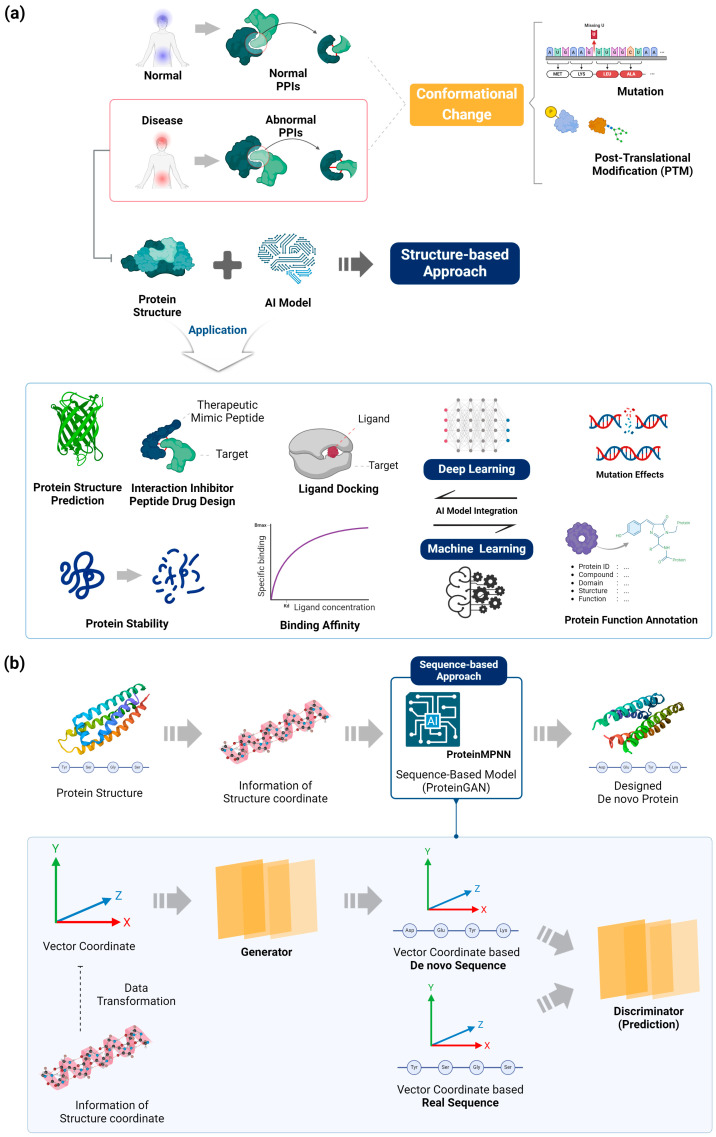
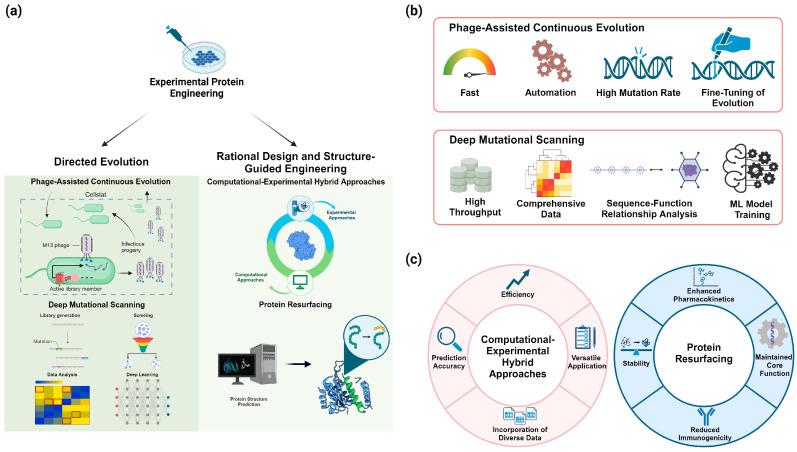
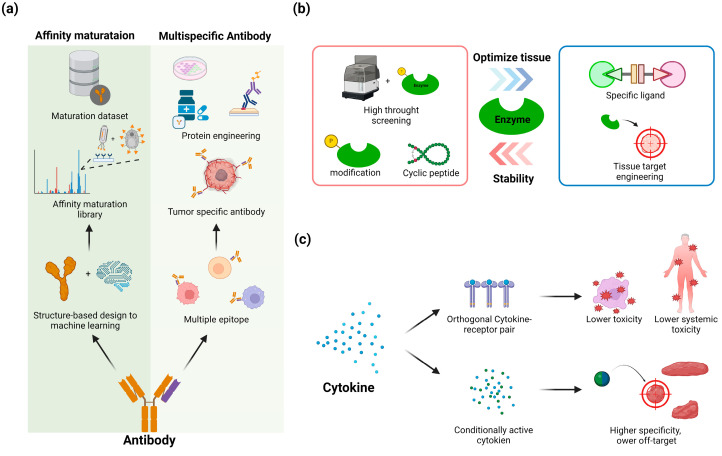
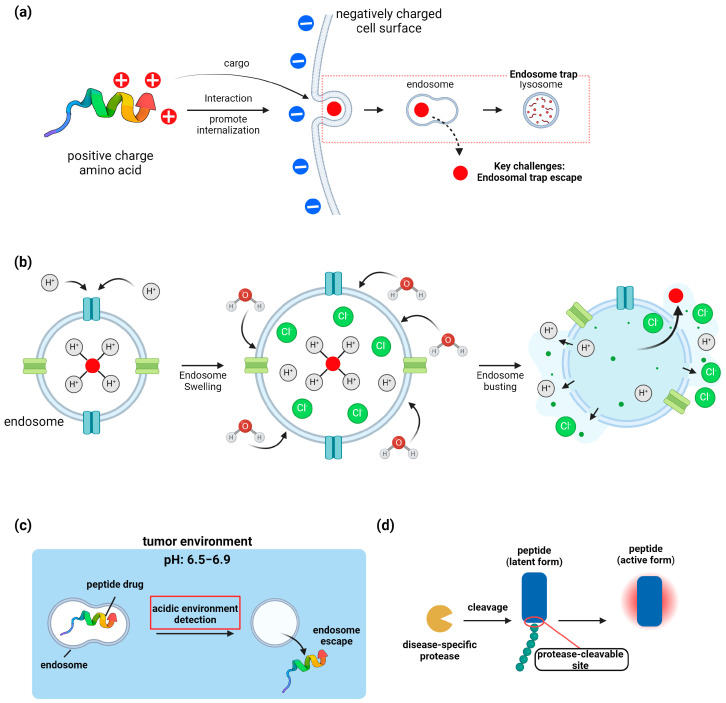
Therapeutic protein engineering has revolutionized medicine by enabling the development of highly specific and potent treatments for a wide range of diseases. This review examines recent advances in computational and experimental approaches for engineering improved protein therapeutics. Key areas of focus include antibody engineering, enzyme replacement therapies, and cytokine-based drugs. Computational methods like structure-based design, machine learning integration, and protein language models have dramatically enhanced our ability to predict protein properties and guide engineering efforts. Experimental techniques such as directed evolution and rational design approaches continue to evolve, with high-throughput methods accelerating the discovery process. Applications of these methods have led to breakthroughs in affinity maturation, bispecific antibodies, enzyme stability enhancement, and the development of conditionally active cytokines. Emerging approaches like intracellular protein delivery, stimulus-responsive proteins, and de novo designed therapeutic proteins offer exciting new possibilities. However, challenges remain in predicting in vivo behavior, scalable manufacturing, immunogenicity mitigation, and targeted delivery. Addressing these challenges will require continued integration of computational and experimental methods, as well as a deeper understanding of protein behavior in complex physiological environments. As the field advances, we can anticipate increasingly sophisticated and effective protein therapeutics for treating human diseases.
Overview
The claims and statistics of this paper haven’t been checked yet.
Free: it reads the open-access text and checks the first 5 claims that cite a source we can check. Create a free account to check every claim.
Integrity signals
Registry
Cites
Statistics
Figures
Verification
Claims the paper makes
The claims and statistics of this paper haven’t been checked yet.
Free: it reads the open-access text and checks the first 5 claims that cite a source we can check. Create a free account to check every claim.
Self-check
Percentages, sums and reported differences re-computed from the paper’s own numbers.
The self-check needs the paper’s full text.
Citations
Cites
Highly accurate protein structure prediction with AlphaFold
Jumper, J., Evans, R., Pritzel, A., Green, T., Figurnov, M., Ronneberger, O., Tunyasuvunakool, K., Bates, R., Žídek, A., Potapenko, A., et al. (2021) · Nature · doi:10.1038/s41586-021-03819-2 · Cited by 43,764
Metadata
- Authors
- Son, A., Park, J., Kim, W., Lee, W., Yoon, Y., & Kim, H.
- Affiliations
- Scripps Research Institute (US)
- Chungnam National University (KR)
- Corresponding author
- Kim, Hyunsoo
- Venue
- Biomolecules
- Publisher
- MDPI AG
- Published
- 2024-07-24
- Volume
- 14
- Issue
- 9
- Pages
- 1073-1073
- ISSN
- 2218-273X (ISSN-L)
- PMC
- PMC11430650
- OpenAlex
- W4401906740
- Cited by
- 29
- References
- 1
- Citations by year
- 2026: 18 · 2025: 11
- FWCI
- 1.89
- Type
- journal article
- Language
- en
- Open access
- gold
- doi.org
- Locations
- Biomolecules (publishedVersion, cc-by)
- Preprints.org (acceptedVersion, cc-by)
- PubMed Central (publishedVersion, cc-by)
- PubMed (publishedVersion)
- DOAJ (DOAJ: Directory of Open Access Journals) (submittedVersion, cc-by-sa)
- Funders
- National Research Foundation (BK21 FOUR)
- Chungnam National University (RS-2022-00155857)
- Korea Basic Science Institute (RS-2023-00209456, RS-2022-00155857, RS-2024-00402298)
- National Research Foundation of Korea (BK 21 four, RS-2023-00209456, RS-2022-00155857, RS-2024-00402298)
- Ministry of Science and ICT, South Korea (RS-2024-00402298, RS‐2022‐00155857, RS-2023-00209456, RS-2023, RS-2022-)
- Institute for Information and Communications Technology Promotion (2022-, RS-2022-00155857)
- Topics
- Life Sciences › Immunology and Microbiology › Immunology › Monoclonal and Polyclonal Antibodies Research
- Life Sciences › Biochemistry, Genetics and Molecular Biology › Molecular Biology › Protein purification and stability
- Life Sciences › Biochemistry, Genetics and Molecular Biology › Molecular Biology › Protein Structure and Dynamics
- Keywords
- antibody engineering, enzyme replacement therapy, structure-based design, protein language models, directed evolution, rational protein design, affinity maturation, bispecific antibodies, enzyme stability, intracellular protein delivery, de novo protein design, immunogenicity, targeted delivery, biopharmaceutical manufacturing
- MeSH terms
- Animals, Biological Products, Humans, Drug Design, Protein Engineering, Antibodies, Bispecific, Computational Biology
About these checks
Registry, retraction, Cites and statistics results are computed, not judged, with one exception: a printed reference that no index lists is read once by a model before it counts as a citation error. Claims are extracted by a model and kept only when their quote appears verbatim in the text; each cited source is then checked, with a model’s help, for whether it says what the claim relies on. Those verdicts can be wrong — read the claim’s quote and the cited source before relying on one.
Statistics and arithmetic are recomputed, not judged.
Confidence bands are shown only for fields calibrated on our annotated test set. None is calibrated yet, so no band is shown.
What counts as a claim ›How we measure confidence ›How we check this ›
Are you an author, or do you see a problem with this page? Request a review
How to cite
Cite CoChat for the checks on this page, and the paper for its own findings.
- This page
- CoChat. (2026). Citation check: Integrating Computational Design and Experimental Approaches for Next-Generation Biologics. https://app.cochat.ai/papers/10.20944/preprints202407.1917.v1
- The paper
- Son, A., Park, J., Kim, W., Lee, W., Yoon, Y., & Kim, H. (2024). Integrating Computational Design and Experimental Approaches for Next-Generation Biologics. Biomolecules. https://doi.org/10.20944/preprints202407.1917.v1
Data sources
Bibliographic data: Semantic Scholar, OpenAlex, Crossref.
Contains information from the Semantic Scholar Academic Graph Datasets, made available under the ODC Attribution License (ODC-BY 1.0).
Semantic Scholar’s data is described in: Kinney, R., et al. (2023). The Semantic Scholar Open Data Platform. arXiv:2301.10140.
