

Effects of once-daily oral orforglipron on weight and metabolic markers: a systematic review and meta-analysis of randomized controlled trials
Open accessThe DOI matches its Crossref record; 35 of the 35 references it cites were found in a registry or an index.
Abstract
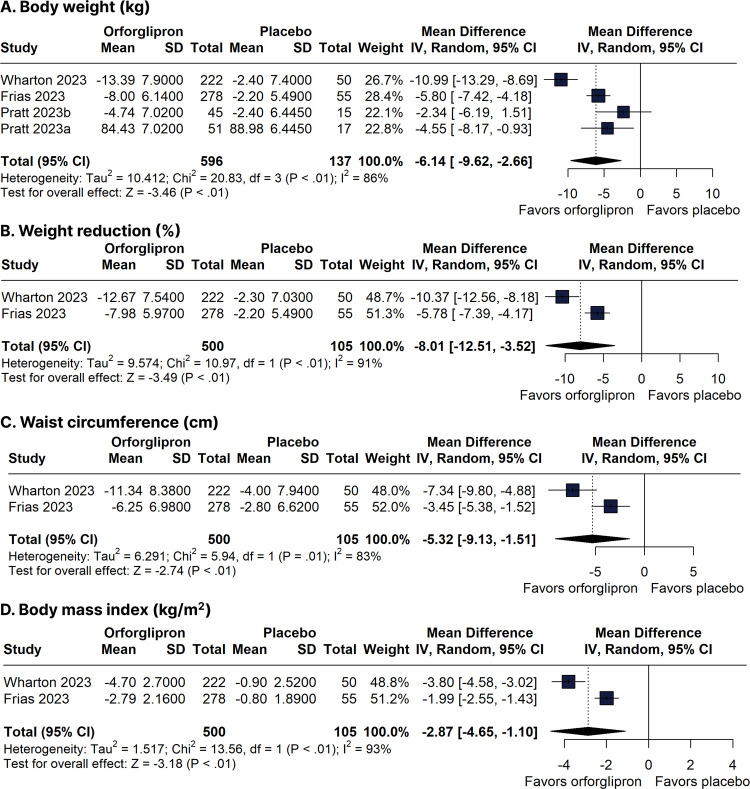
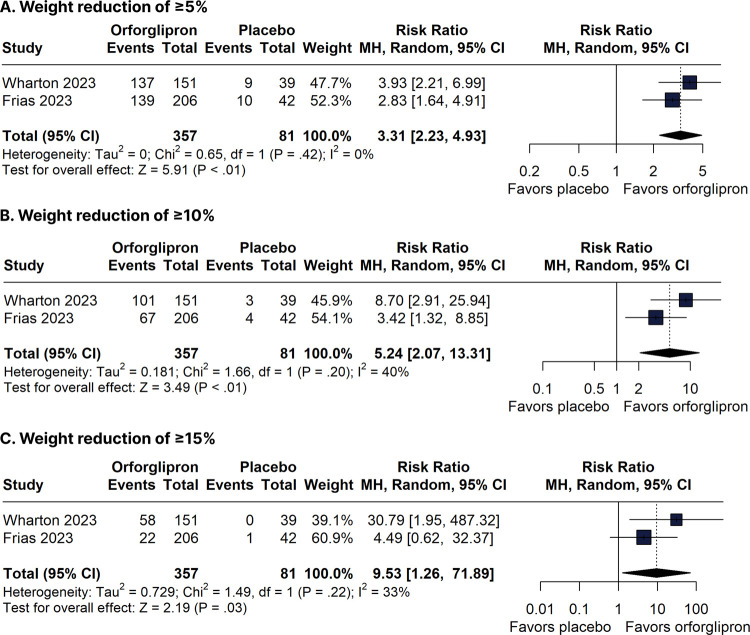
), and waist circumference (WMD -5.32 cm, 95% CI -9.13 to -1.51 cm). More patients treated with orforglipron than placebo achieved a weight loss of ≥ 5% (RR 3.31, 95% CI 2.23-4.93), ≥ 10% (RR 5.24, 95% CI 2.07-13.31), and ≥ 15% (RR 9.53, 95% CI 1.26-71.89). The most common adverse events were related to the gastrointestinal tract. In this meta-analysis, the use of once-daily oral orforglipron by adult patients was associated with a significant decrease in body weight, as compared with placebo, with an increase in non-severe gastrointestinal adverse events. Phase 3 RCTs are expected to shed further light on the efficacy and safety of once-daily oral orforglipron over the long term.
Overview
The claims and statistics of this paper haven’t been checked yet.
Free: it reads the open-access text and checks the first 5 claims that cite a source we can check. Create a free account to check every claim.
Integrity signals
Registry
Cites
Statistics
Figures
Verification
Claims the paper makes
The claims and statistics of this paper haven’t been checked yet.
Free: it reads the open-access text and checks the first 5 claims that cite a source we can check. Create a free account to check every claim.
Claims other papers make about this one
Each is checked against this paper’s own text: does it say what the citing paper says it does?
The source backs part of the claim, not all of it — or backs it for a different population, condition or comparison.
In the citing paper
“Meta-analyses of randomized controlled trials corroborate these findings, demonstrating pooled weight reductions of 9–12% relative to placebo at 26–72 weeks [49,50].”
From Orforglipron: A Comprehensive Review of an Oral Small-Molecule GLP-1 Receptor Agonist for Obesity and Type 2 Diabetes (2026) · cites this paper as [50]
Experimental — accuracy not yet measured
Self-check
Percentages, sums and reported differences re-computed from the paper’s own numbers.
The self-check needs the paper’s full text.
Citations
Cites
1 retracted
Shi, Q., Wang, Y., Hao, Q., Vandvik, P. O., Guyatt, G., Li, J., Chen, Z., Xu, S., Shen, Y., Ge, L., et al. (2022) · The Lancet · doi:10.1016/s0140-6736(21)01640-8 · Cited by 279
RetractedThe PRISMA 2020 statement: An updated guideline for reporting systematic reviews
Page, M. J., McKenzie, J. E., Bossuyt, P. M., Boutron, I., Hoffmann, T. C., Mulrow, C. D., Shamseer, L., Tetzlaff, J. M., Akl, E. A., Brennan, S. E., et al. (2021) · BMJ · doi:10.1136/bmj.n71 · Cited by 108,283
Measuring inconsistency in meta-analyses
Higgins, J. P. T., Thompson, S. G., Deeks, J. J., & Altman, D. G. (2003) · BMJ · doi:10.1136/bmj.327.7414.557 · Cited by 63,139
Meta-analysis in clinical trials
DerSimonian, R., & Laird, N. (1986) · Controlled Clinical Trials · doi:10.1016/0197-2456(86)90046-2 · Cited by 39,552 · cited 1×
“DerSimonian and Laird random-effects models were used for all endpoints (16).”
RoB 2: a revised tool for assessing risk of bias in randomised trials
Sterne, J. A. C., Savović, J., Page, M. J., Elbers, R. G., Blencowe, N. S., Boutron, I., Cates, C. J., Cheng, H.-Y., Corbett, M. S., Eldridge, S. M., et al. (2019) · BMJ · doi:10.1136/bmj.l4898 · Cited by 34,787 · cited 12×
“The main domains responsible for reducing the quality of evidence of the outcomes were risk of bias, inconsistency of results due to heterogeneity, and imprecision due to the small number of RCTs included in the statistical analysis.”
InfluentialGRADE guidelines: 3. Rating the quality of evidence
Balshem, H., Helfand, M., Schünemann, H. J., Oxman, A. D., Kunz, R., Brozek, J., Vist, G. E., Falck-Ytter, Y., Meerpohl, J., & Norris, S. (2011) · Journal of Clinical Epidemiology · doi:10.1016/j.jclinepi.2010.07.015 · Cited by 8,285 · cited 1×
“The quality of evidence was assessed according to the Grading of Recommendations, Assessment, Development, and Evaluation (GRADE) guidelines (18,19).”
Cholesterol Treatment Trialists' (CTT) Collaboration (2010) · The Lancet · doi:10.1016/s0140-6736(10)61350-5 · Cited by 6,550
The PRISMA 2020 statement: An updated guideline for reporting systematic reviews
Page, M. J., McKenzie, J. E., Bossuyt, P. M., Boutron, I., Hoffmann, T. C., Mulrow, C. D., Shamseer, L., Tetzlaff, J. M., Akl, E. A., Brennan, S. E., et al. (2021) · PLoS Medicine · doi:10.1371/journal.pmed.1003583 · Cited by 5,148 · cited 1×
“This systematic review followed the Preferred Reporting Items for Systematic Reviews and Meta-Analysis (PRISMA) guidelines (12).”
Prospective Studies Collaboration (2009) · The Lancet · doi:10.1016/s0140-6736(09)60318-4 · Cited by 4,807
Tirzepatide Once Weekly for the Treatment of Obesity
Jastreboff, A. M., Aronne, L. J., Ahmad, N. N., Wharton, S., Connery, L., Alves, B., Kiyosue, A., Zhang, S., Liu, B., Bunck, M. C., et al. (2022) · New England Journal of Medicine · doi:10.1056/nejmoa2206038 · Cited by 3,838 · cited 3×
“Recently introduced as an anti-obesity medication, semaglutide 2.4 mg demonstrated a placebo-adjusted weight reduction of 12.4%, with almost one-third of individuals achieving a weight loss of 20% or more (21,22).”
InfluentialSemaglutide and Cardiovascular Outcomes in Obesity without Diabetes
Lincoff, A. M., Brown-Frandsen, K., Colhoun, H. M., Deanfield, J., Emerson, S. S., Esbjerg, S., Hardt-Lindberg, S., Hovingh, G. K., Kahn, S. E., Kushner, R. F., et al. (2023) · New England Journal of Medicine · doi:10.1056/nejmoa2307563 · Cited by 3,236 · cited 2×
“However, the results of the SELECT trial highlight the importance of treating obesity to reduce cardiovascular risk (38).”
Years of Life Lost Due to Obesity
Fontaine, K. R., Redden, D. T., Wang, C., Westfall, A. O., & Allison, D. B. (2003) · JAMA · doi:10.1001/jama.289.2.187 · Cited by 2,495
Sattar, N., Lee, M. M. Y., Kristensen, S. L., Branch, K. R. H., Del Prato, S., Khurmi, N. S., Lam, C. S. P., Lopes, R. D., McMurray, J. J. V., Pratley, R. E., et al. (2021) · The Lancet Diabetes & Endocrinology · doi:10.1016/s2213-8587(21)00203-5 · Cited by 1,599
Anti-obesity drug discovery: advances and challenges
Müller, T. D., Blüher, M., Tschöp, M. H., & DiMarchi, R. D. (2022) · Nature Reviews Drug Discovery · doi:10.1038/s41573-021-00337-8 · Cited by 1,021 · cited 6×
“Additionally, tirzepatide, a glucose-dependent insulinotropic polypeptide (GIP)/ GLP-1 dual agonist, has proven efficacy in weight reduction and was recently approved by the Food and Drug Administration (FDA) for treating type 2 diabetes (T2D) and obesity (5,23,24).”
InfluentialWeight Loss and Improvement in Comorbidity: Differences at 5%, 10%, 15%, and Over
Ryan, D. H., & Yockey, S. R. (2017) · Current Obesity Reports · doi:10.1007/s13679-017-0262-y · Cited by 831 · cited 1×
“Clinical benefits of weight reduction require a sustained loss of 3%-5% of body weight, with additional impacts when higher percentage losses are achieved (21,22,25).”
Adherence to Therapies in Patients with Type 2 Diabetes
García-Pérez, L.-E., Álvarez, M., Dilla, T., Gil-Guillén, V., & Orozco-Beltrán, D. (2013) · Diabetes Therapy · doi:10.1007/s13300-013-0034-y · Cited by 726 · cited 1×
“However, subcutaneous administration presents challenges in use and treatment maintenance (9).”
Glucagon-like peptide 1 receptor agonists: cardiovascular benefits and mechanisms of action
Ussher, J. R., & Drucker, D. J. (2023) · Nature Reviews Cardiology · doi:10.1038/s41569-023-00849-3 · Cited by 577 · cited 1×
“In patients with T2D, GLP-1 RAs have proven cardiovascular benefits (35-37).”
PROSPERO: an international prospective register of systematic reviews
Wright, K. E. (2014) · Cited by 568
Aroda, V. R., Rosenstock, J., Terauchi, Y., Altuntas, Y., Lalic, N. M., Morales Villegas, E. C., Jeppesen, O. K., Christiansen, E., Hertz, C. L., Haluzík, M., et al. (2019) · Diabetes Care · doi:10.2337/dc19-0749 · Cited by 493 · cited 1×
“In contrast, orforglipron, lacking a peptide in its chemical formulation, does not require such precautions to enhance absorption and may be a potential alternative in obesity treatment (7,11,29).”
Daily Oral GLP-1 Receptor Agonist Orforglipron for Adults with Obesity
Wharton, S., Blevins, T., Connery, L., Rosenstock, J., Raha, S., Liu, R., Ma, X., Mather, K. J., Haupt, A., Robins, D., et al. (2023) · New England Journal of Medicine · doi:10.1056/nejmoa2302392 · Cited by 478 · cited 7×
“In contrast, orforglipron, lacking a peptide in its chemical formulation, does not require such precautions to enhance absorption and may be a potential alternative in obesity treatment (7,11,29).”
InfluentialPharmacotherapy of obesity: an update on the available medications and drugs under investigation
Chakhtoura, M., Haber, R., Ghezzawi, M., Rhayem, C., Tcheroyan, R., & Mantzoros, C. S. (2023) · eClinicalMedicine · doi:10.1016/j.eclinm.2023.101882 · Cited by 462 · cited 3×
“Recently, glucagon-like peptide-1 receptor agonists (GLP-1 RAs), a class of antidiabetic and anti-obesity medications, have gained growing emphasis in the management of obesity and overweight, as well as coexisting weight-related conditions (5-7).”
Knop, F. K., Aroda, V. R., do Vale, R. D., Holst-Hansen, T., Laursen, P. N., Rosenstock, J., Rubino, D. M., & Garvey, W. T. (2023) · The Lancet · doi:10.1016/s0140-6736(23)01185-6 · Cited by 431 · cited 1×
“Similar results were reported in previous meta-analyses with weekly subcutaneous semaglutide and once-daily oral semaglutide (21,28).”
Bariatric surgery and cardiovascular disease: a systematic review and meta-analysis
van Veldhuisen, S. L., Gorter, T. M., van Woerden, G., de Boer, R. A., Rienstra, M., Hazebroek, E. J., & van Veldhuisen, D. J. (2022) · European Heart Journal · doi:10.1093/eurheartj/ehac071 · Cited by 304 · cited 1×
“Recently, comparable weight losses have been achieved in studies of anti-obesity drugs (26,27).”
Giugliano, D., Scappaticcio, L., Longo, M., Caruso, P., Maiorino, M. I., Bellastella, G., Ceriello, A., Chiodini, P., & Esposito, K. (2021) · Cardiovascular Diabetology · doi:10.1186/s12933-021-01366-8 · Cited by 263 · cited 1×
“In patients with T2D, GLP-1 RAs have proven cardiovascular benefits (35-37).”
Frias, J. P., Hsia, S., Eyde, S., Liu, R., Ma, X., Konig, M., Kazda, C., Mather, K. J., Haupt, A., Pratt, E., et al. (2023) · The Lancet · doi:10.1016/s0140-6736(23)01302-8 · Cited by 184
Iqbal, J., Wu, H., Hu, N., Zhou, Y., Li, L., Xiao, F., Wang, T., Jiang, H., Xu, S., Huang, B., et al. (2022) · Obesity Reviews · doi:10.1111/obr.13435 · Cited by 179 · cited 2×
“In a previous meta-analysis evaluating the effect of GLP-1 RAs in individuals with obesity without T2D, weekly administration of subcutaneous semaglutide led to a 12.4 kg reduction in body weight, whereas liraglutide, another GLP-1 RA, resulted in a 5.3 kg weight reduction (30).”
InfluentialAlkhezi, O. S., Alahmed, A. A., Alfayez, O. M., Alzuman, O. A., Almutairi, A. R., & Almohammed, O. A. (2023) · Obesity Reviews · doi:10.1111/obr.13543 · Cited by 139 · cited 2×
“Furthermore, daily semaglutide and liraglutide, in contrast to their weekly regimens, had higher withdrawal rates due to adverse events when these drugs were compared with placebo (6).”
Heuvelman, V. D., Van Raalte, D. H., & Smits, M. M. (2020) · Cardiovascular Research · doi:10.1093/cvr/cvz323 · Cited by 106 · cited 1×
“Although GLP-1 RAs have been documented to lead to an increase in heart rate, this effect has not been associated with increased cardiovascular or arrhythmia risk (34).”
Efficacy and safety of once-weekly semaglutide in adults with overweight or obesity: a meta-analysis
Zhong, P., Zeng, H., Huang, M., Fu, W., & Chen, Z. (2022) · Endocrine · doi:10.1007/s12020-021-02945-1 · Cited by 74 · cited 4×
“Recently introduced as an anti-obesity medication, semaglutide 2.4 mg demonstrated a placebo-adjusted weight reduction of 12.4%, with almost one-third of individuals achieving a weight loss of 20% or more (21,22).”
InfluentialThe evolution of GRADE (part 3): A framework built on science or faith?
Mercuri, M., & Gafni, A. (2018) · Journal of Evaluation in Clinical Practice · doi:10.1111/jep.13016 · Cited by 65 · cited 1×
“The quality of evidence was assessed according to the Grading of Recommendations, Assessment, Development, and Evaluation (GRADE) guidelines (18,19).”
Pratt, E., Ma, X., Liu, R., Robins, D., Haupt, A., Coskun, T., Sloop, K. W., & Benson, C. (2023) · Diabetes, Obesity and Metabolism · doi:10.1111/dom.15184 · Cited by 62 · cited 3×
“Overall, all studies were deemed to have a moderate risk of bias (7,8,11,20).”
Pratt, E., Ma, X., Liu, R., Robins, D., Coskun, T., Sloop, K. W., Haupt, A., & Benson, C. (2023) · Diabetes, Obesity and Metabolism · doi:10.1111/dom.15150 · Cited by 60 · cited 3×
“Overall, all studies were deemed to have a moderate risk of bias (7,8,11,20).”
Updated Meta-Analysis Assessing the Cardiovascular Efficacy of Tirzepatide
Patoulias, D., Papadopoulos, C. E., Fragakis, N., & Doumas, M. N. (2022) · The American Journal of Cardiology · doi:10.1016/j.amjcard.2022.07.003 · Cited by 28
Obesity drug shortages are symptomatic of wider malaise
Sumithran, P., Finucane, F. M., & Cohen, R. V. (2024) · The Lancet · doi:10.1016/s0140-6736(23)01963-3 · Cited by 16
Halpern, B., Mancini, M. C., van de Sande‐Lee, S., & Miranda, P. A. C. (2023) · Archives of Endocrinology and Metabolism · doi:10.20945/2359-4292-2023-0174 · Cited by 9
Self-citation
Research works printed but not linked: 3
- World Obesity Federation World Obesity Atlas 2023 https://data.worldobesity.org/publications/WOF-Obesity-Atlas-V5.pdf Accessed in: November 8, 2023
- Higgins JP Higgins JPT Thomas J Chandler J et al Cochrane Handbook for Systematic Reviews of Interventions version 6.3 (updated February 2022) Cochrane 2022 www.training.cochrane.org/ handbook
- Eli Lilly and Company FDA Approves Lilly's ZepboundTM (tirzepatide) for Chronic Weight Management, a Powerful New Option for the Treatment of Obesity or Overweight with Weight-Related Medical Problems https://investor.lilly.com/news-releases/news-release-details/fda-approves-lillys-zepboundtm-tirzepatide-chronic-weight Accessed in: November 11, 2023
Cited by
Gaggini, M., Sabatino, L., Suman, A. F., Chatzianagnostou, K., & Vassalle, C. (2025) · Cells · doi:10.3390/cells14050387 · Cited by 35
“…meta-analysis investigated the effects of once-daily oral orforglipron on weight and metabolic markers in adults; the results showed the efficacy of this drug on body weight, as compared with placebo, although an increase in non-severe gastrointestinal adverse events was also observed [127].”
Saldívar-Cerón, H. I., Vargas-Camacho, J. A., León‐Cabrera, S., Briseño-Díaz, P., Castañeda-Ramírez, A. E., Muciño-Galicia, A. E., & Díaz-Domínguez, M. R. (2025) · Scientia Pharmaceutica · doi:10.3390/scipharm93020026 · Cited by 25
Kansakar, U., Jankauskas, S. S., Pande, S., Mone, P., Varzideh, F., & Santulli, G. (2026) · International Journal of Molecular Sciences · doi:10.3390/ijms27031409 · Cited by 22
“Meta-analyses of randomized controlled trials corroborate these findings, demonstrating pooled weight reductions of 9–12% relative to placebo at 26–72 weeks [49,50].”
Efficacy and safety of incretin co-agonists: Transformative advances in cardiometabolic healthcare
Bhat, S., Fernandez, C. J., Lakshmi, V., & Pappachan, J. M. (2025) · World Journal of Cardiology · doi:10.4330/wjc.v17.i8.107991 · Cited by 9
Zhou, J., Wang, F., & Li, S. (2025) · Frontiers in Endocrinology · doi:10.3389/fendo.2025.1646956 · Cited by 3
Metadata
- Authors
- Lütkemeyer, C., Pasqualotto, E., Ferreira, R. O. M., Chavez, M. P., Petris, I., Santos, H. V. D., Wille, J. M., Hohl, A., Ronsoni, M. F., & Sande-Lee, S. V. D.
- Affiliations
- Universidade Federal de Santa Catarina (BR)
- Universidade Federal do Paraná (BR)
- ORCID
- Venue
- Archives of Endocrinology and Metabolism
- Published
- 2024
- Volume
- 68
- Pages
- e230469-e230469
- ISSN
- 2359-3997 (ISSN-L)
- 2359-4292
- PMC
- PMC11460968
- OpenAlex
- W4403180344
- Cited by
- 10
- References
- 35
- Citations by year
- 2026: 5 · 2025: 5
- FWCI
- 0.63
- Type
- journal article
- Language
- en
- Open access
- diamond
- doi.org
- Licence
- other-oa
- Locations
- Archives of Endocrinology and Metabolism (publishedVersion, other-oa)
- PubMed Central (publishedVersion, cc-by)
- PubMed (publishedVersion)
- DOAJ (DOAJ: Directory of Open Access Journals) (submittedVersion, cc-by-sa)
- Topics
- Health Sciences › Medicine › Pharmacology (medical) › Pharmacology and Obesity Treatment
- Health Sciences › Medicine › Endocrinology, Diabetes and Metabolism › Diabetes Treatment and Management
- Life Sciences › Neuroscience › Endocrine and Autonomic Systems › Regulation of Appetite and Obesity
- Keywords
- orforglipron, GLP-1 receptor agonists, weight loss, body weight, waist circumference, metabolic biomarkers, gastrointestinal adverse effects, obesity treatment
- MeSH terms
- Administration, Oral, Body Weight, Drug Administration Schedule, Humans, Obesity, Oxadiazoles, Biomarkers, Body Mass Index, Randomized Controlled Trials as Topic, Fluorine Compounds, Anti-Obesity Agents
About these checks
Registry, retraction, Cites and statistics results are computed, not judged, with one exception: a printed reference that no index lists is read once by a model before it counts as a citation error. Claims are extracted by a model and kept only when their quote appears verbatim in the text; each cited source is then checked, with a model’s help, for whether it says what the claim relies on. Those verdicts can be wrong — read the claim’s quote and the cited source before relying on one.
Statistics and arithmetic are recomputed, not judged.
Confidence bands are shown only for fields calibrated on our annotated test set. None is calibrated yet, so no band is shown.
What counts as a claim ›How we measure confidence ›How we check this ›
Are you an author, or do you see a problem with this page? Request a review
Data sources
Bibliographic data: Semantic Scholar, OpenAlex, Crossref.
Contains information from the Semantic Scholar Academic Graph Datasets, made available under the ODC Attribution License (ODC-BY 1.0).
Semantic Scholar’s data is described in: Kinney, R., et al. (2023). The Semantic Scholar Open Data Platform. arXiv:2301.10140.
