

Comprehensive analysis of DNA damage repair deficiency in 10,284 pan–cancer study
Open accessThe DOI matches its Crossref record; 45 of the 45 references it cites were found in a registry or an index.
Abstract
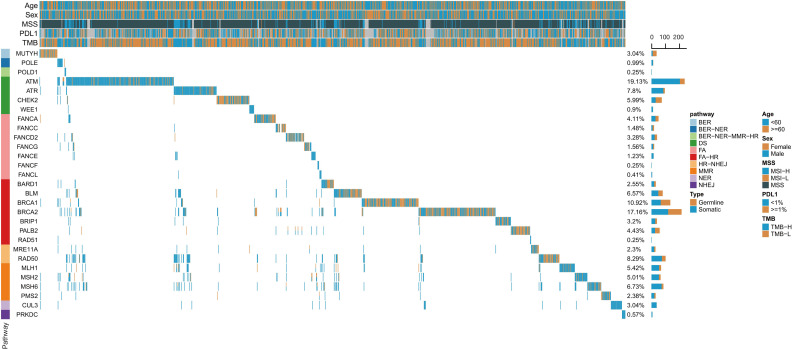
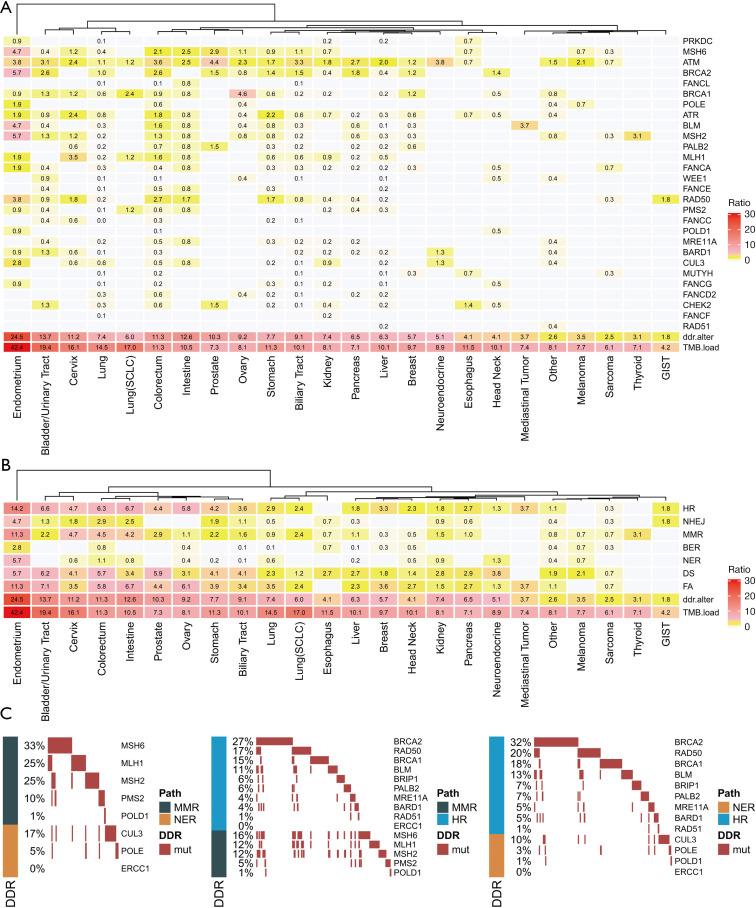
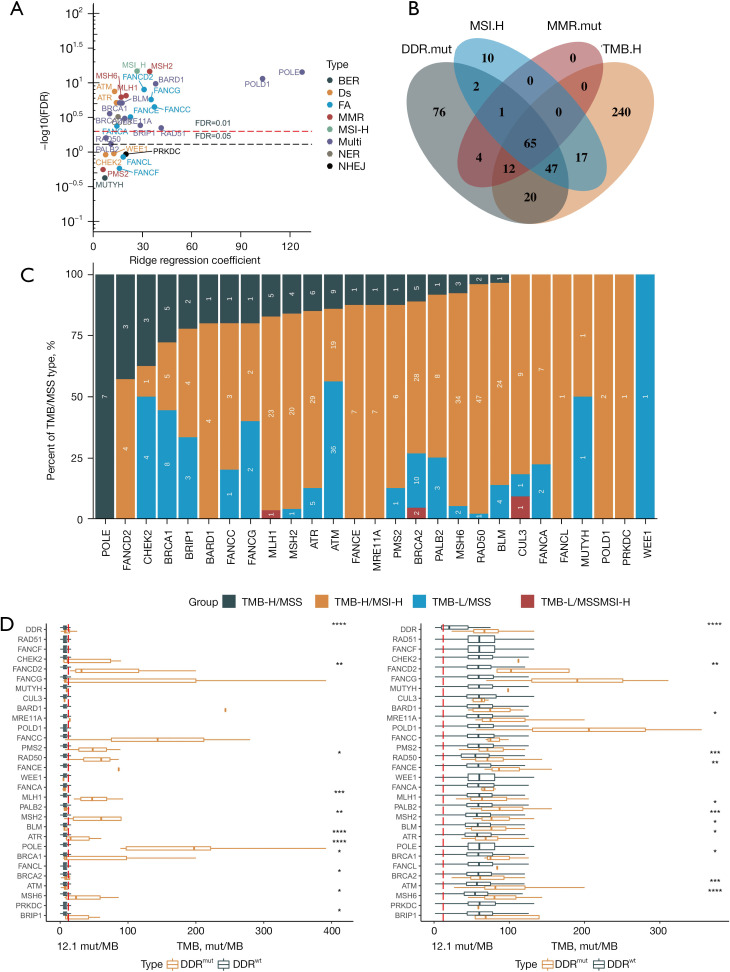
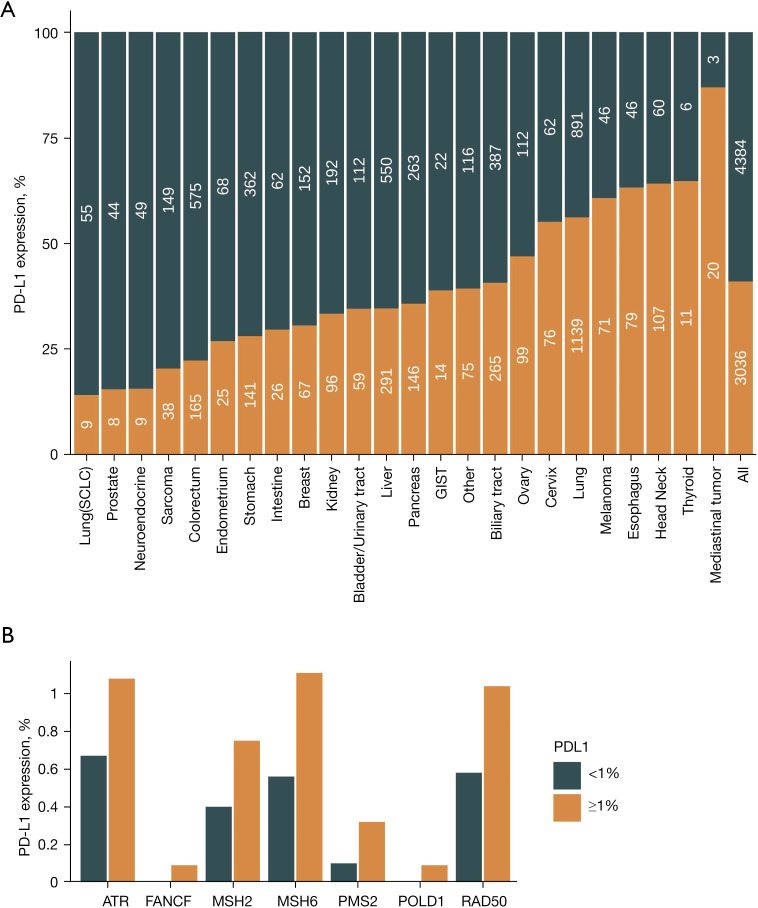
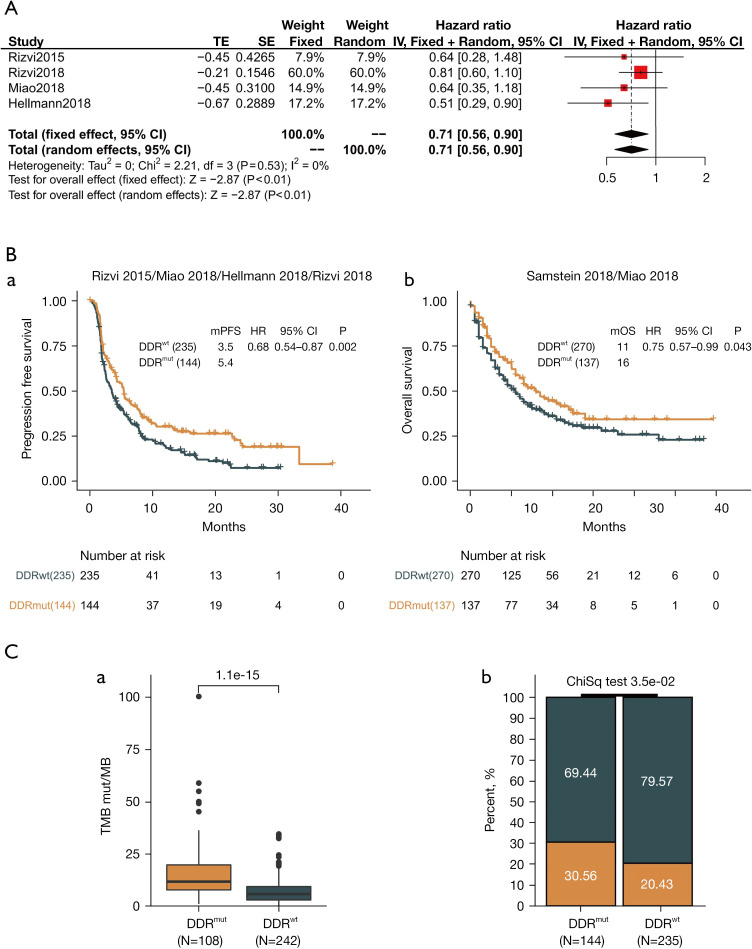
Background: Disruption of the DNA damage repair (DDR) gene is related to cancer progression, treatment selection, and is subjected to radiation and targeted therapies with limited success. This paper conducted a comprehensive analysis to explore the distribution of DDR mutations in Chinese pan-cancer patients. Methods: A total of 10,284 consecutive cases were analyzed in 24 cancer types [non-small cell lung cancer (NSCLC) 29.0%, liver 12.0%, colorectum 10.7%, etc.]. Tumor tissue samples were subjected to next generation sequencing (NGS) using a 381 gene panel incorporating 100 microsatellite loci. The association of deleterious somatic DDR mutation (del-sDDRmut) with tumor mutational burden (TMB), microsatellite instability (MSI), programmed cell death-ligand 1 (PD-L1) expression of pan-cancers was evaluated. Genomic and clinical data from public cohorts of immunotherapy were analyzed to demonstrate the association between del-sDDRmut and clinical survival. Results: Del-sDDRmut were found in 802 (7.6%) of all cases, and were most common in cancers of the endometrium, prostate, bladder, etc. cancer with a higher TMB also had a higher prevalence of mutations in DDR pathways. The results of the ridge regression analysis showed that 20 DDR genes were significantly associated with TMB [false discovery rate (FDR) <0.01]. A total of 8,899 patients had both TMB and MSI-data in pan-cancers. Seventy-four percent of patients with MSI-high (MSI-H) were accompanied by del-sDDRmut/TMB-high (TMB-H). The largest proportion of patients with microsatellite stability (MSS) with DDR mutations were classified as TMB-H. The top 6 tumors (NSCLC, melanoma, esophagus, head and neck, thyroid, and mediastinal) had the highest prevalence of PD-L1 ≥1%, and DDR mutations were significantly associated with a higher percent of PD-L1 positive (P<0.05). Furthermore, in the immune cohort analysis of NSCLC, patients with del-sDDRmut significantly improved median progression-free survival (mPFS) and median overall survival (mOS) compared to wild-type DDR patients (P=0.002 and P=0.043), with higher TMB observed (P<0.001). Conclusions: This study explored the association of DDR mutations with TMB, MSI-H, and PD-L1 expression, and revealed that patients with DDR mutations have a significantly improve prognosis than wild-type patients on immunotherapy.
Overview
The claims and statistics of this paper haven’t been checked yet.
Free: it reads the open-access text and checks the first 5 claims that cite a source we can check. Create a free account to check every claim.
Integrity signals
Registry
Cites
Statistics
Figures
Verification
Claims the paper makes
The claims and statistics of this paper haven’t been checked yet.
Free: it reads the open-access text and checks the first 5 claims that cite a source we can check. Create a free account to check every claim.
Claims other papers make about this one
Each is checked against this paper’s own text: does it say what the citing paper says it does?
The source backs part of the claim, not all of it — or backs it for a different population, condition or comparison.
In the citing paper
“Cutaneous melanoma tumors contain somatic mutations in the genes that are associated with the DNA damage response, particularly in repair genes, in addition to an abundance of C > T transitions [ 45 , 46 ].”
From Differential Induction of Reactive Oxygen Species and Expression of Antioxidant Enzymes in Human Melanocytes Correlate with Melanin Content: Implications on the Response to Solar UV and Melanoma Susceptibility (2022) · cites this paper as [45]
Experimental — accuracy not yet measured
Self-check
Percentages, sums and reported differences re-computed from the paper’s own numbers.
The self-check needs the paper’s full text.
Citations
Cites
Fast and accurate short read alignment with Burrows-Wheeler transform
Li, H., & Durbin, R. (2009) · Bioinformatics · doi:10.1093/bioinformatics/btp324 · Cited by 58,607
Richards, S., Aziz, N., Bale, S., Bick, D., Das, S., Gastier-Foster, J., Grody, W. W., Hegde, M., Lyon, E., Spector, E., et al. (2015) · Genetics in Medicine · doi:10.1038/gim.2015.30 · Cited by 32,594 · cited 1×
“Pathogenic and possible pathogenic mutations were explained by bioinformatics experts according to the consensus of previous reports and the recommendations of the American College of Medical Genetics and Genomics and the Association of Molecular Pathology (18).”
PD-1 and PD-L1 Immune Checkpoint Blockade to Treat Breast Cancer
Hartkopf, A. D., Taran, F.-A., Wallwiener, M., Walter, C. B., Krämer, B., Grischke, E.-M., & Brucker, S. Y. (2016) · Breast Care · doi:10.1159/000453569 · Cited by 30,845
Siegel, R. L., Miller, K. D., Fuchs, H. E., & Jemal, A. (2021) · CA: A Cancer Journal for Clinicians · doi:10.3322/caac.21654 · Cited by 16,522 · cited 1×
“The coefficients were determined by the method developed by Cule and De Iorio (19 ).”
Mutational landscape determines sensitivity to PD-1 blockade in non–small cell lung cancer
Rizvi, N. A., Hellmann, M. D., Snyder, A., Kvistborg, P., Makarov, V., Havel, J. J., Lee, W., Yuan, J., Wong, P., Ho, T. S., et al. (2015) · Science · doi:10.1126/science.aaa1348 · Cited by 7,802
Mismatch repair deficiency predicts response of solid tumors to PD-1 blockade
Le, D. T., Durham, J. N., Smith, K. N., Wang, H., Bartlett, B. R., Aulakh, L. K., Lu, S., Kemberling, H., Wilt, C., Luber, B. S., et al. (2017) · Science · doi:10.1126/science.aan6733 · Cited by 6,645 · cited 1×
“Deficient MMR (dMMR)/MSI-high (MSI-H), mainly caused by mutations in the MMR pathway genes, has been approved by the FDA to guide ICIs in pan-cancer (14,15).”
Tumor mutational load predicts survival after immunotherapy across multiple cancer types
Samstein, R. M., Lee, C.-H., Shoushtari, A. N., Hellmann, M. D., Shen, R., Janjigian, Y. Y., Barron, D. A., Zehir, A., Jordan, E. J., Omuro, A., et al. (2019) · Nature Genetics · doi:10.1038/s41588-018-0312-8 · Cited by 4,071 · cited 2×
“Five independent cohorts (Rizvi 2015, Rizvi 2018, Miao 2018, Samstein 2019, and Hellmann 2018; study cohort) (20-24) with data from patients with advanced NSCLC were used to analyze the correlation of del-sDDR and immunotherapy.”
Inhibition of Poly(ADP-Ribose) Polymerase in Tumors from BRCA Mutation Carriers
Fong, P. C., Boss, D. S., Yap, T. A., Tutt, A., Wu, P., Mergui-Roelvink, M., Mortimer, P., Swaisland, H., Lau, A., O'Connor, M. J., et al. (2009) · New England Journal of Medicine · doi:10.1056/nejmoa0900212 · Cited by 3,634 · cited 1×
“Furthermore, germline mutations in DDR genes cause sensitivity to PARP inhibitors in advanced solid tumors, including ovarian, pancreatic, and breast cancer (34,35).”
Genomic and Transcriptomic Features of Response to Anti-PD-1 Therapy in Metastatic Melanoma
Hugo, W., Zaretsky, J. M., Sun, L., Song, C., Moreno, B. H., Hu-Lieskovan, S., Berent-Maoz, B., Pang, J., Chmielowski, B., Cherry, G., et al. (2016) · Cell · doi:10.1016/j.cell.2016.02.065 · Cited by 3,448
Mok, T. S. K., Wu, Y.-L., Kudaba, I., Kowalski, D. M., Cho, B. C., Turna, H. Z., Castro, G., Srimuninnimit, V., Laktionov, K. K., Bondarenko, I., et al. (2019) · The Lancet · doi:10.1016/s0140-6736(18)32409-7 · Cited by 3,303 · cited 1×
“Apart from MSI status and TMB, PD-L1 expression by IHC has been related to responses to ICI, and the pembrolizumab monotherapy has been approved for patients with PD-L1 expression ≥1% (29).”
Self-citation
Cited by
The role of DNA damage repair (DDR) system in response to immune checkpoint inhibitor (ICI) therapy
Shi, C., Qin, K., Lin, A., Jiang, A., Cheng, Q., Liu, Z., Zhang, J., & Luo, P. (2022) · Journal of Experimental & Clinical Cancer Research · doi:10.1186/s13046-022-02469-0 · Cited by 85
“For example, PARPi promotes CAR-T infiltration in the TME via the cGAS-STING pathway.”
BackgroundInfluentialOpportunities and challenges of targeting cGAS–STING in cancer
Lu, C., Wang, W., & Fu, Y. (2026) · Nature reviews. Cancer · doi:10.1038/s41568-025-00894-9 · Cited by 79
Upadhyay, P. R., Starner, R. J., Swope, V. B., Wakamatsu, K., Ito, S., & Abdel-Malek, Z. A. (2022) · Antioxidants · doi:10.3390/antiox11061204 · Cited by 30
“Cutaneous melanoma tumors contain somatic mutations in the genes that are associated with the DNA damage response, particularly in repair genes, in addition to an abundance of C > T transitions [45,46].”
BackgroundFu, H., Fu, Z., Mao, M., Si, L., Bai, J., Wang, Q., & Guo, R. (2023) · Critical Reviews in Oncology/Hematology · doi:10.1016/j.critrevonc.2023.104084 · Cited by 33
Yu, X., Zhu, L., Wang, T., Li, L., Liu, J., Che, G., & Zhou, Q. (2023) · Biochimica et Biophysica Acta (BBA) - Reviews on Cancer · doi:10.1016/j.bbcan.2023.188910 · Cited by 16
You, Z., Lv, M., He, X., Pan, Y., Ge, J., Hu, X., Zheng, Y., Huang, M., Zhou, C., & You, C. (2022) · Frontiers in Immunology · doi:10.3389/fimmu.2022.871756 · Cited by 14
Self-citationMicrosatellite instability states serve as predictive biomarkers for tumors chemotherapy sensitivity
Ye, T., Lin, A., Qiu, Z., Hu, S., Zhou, C., Liu, Z., Cheng, Q., Zhang, J., & Luo, P. (2023) · iScience · doi:10.1016/j.isci.2023.107045 · Cited by 13
“In addition, GSEA DDR pathway enrichment in the two groups of PRAD may be due to DDR pathway mutations.(106) Although this mechanism is different from that in OV and CRC, it nonetheless leads to high sensitivity to various chemotherapeutic drugs in PRAD.”
BackgroundLiu, W., Cheng, H., Huang, Z., Li, Y., Zhang, Y., Yang, Y., Jin, T., Sun, Y., Deng, Z., Zhang, Q., et al. (2023) · Molecular Oncology · doi:10.1002/1878-0261.13526 · Cited by 9
“Numerous reports have revealed that DDR mutations are associated with high TMB in various malignancies [30,31], whereas the relationship between TMB and DDR mutations is unclear in OS.”
BackgroundKulkarni, A., Zhou, J., Biyani, N., Kathad, U., Banerjee, P. P., Srivastava, S., Prucsi, Z., Solarczyk, K. J., Bhatia, K. G., Ewesuedo, R. B., et al. (2024) · Cancer Research Communications · doi:10.1158/2767-9764.crc-23-0554 · Cited by 8
“PTGR1 levels are often elevated in solid tumors (23) and in general up to 25% of solid tumors have been analyzed to have some level of DDR deficiency (40, 41).”
BackgroundZhao, J., Tang, B., Shen, P., Zeng, H., & Wei, Q. (2025) · Critical Reviews in Oncology/Hematology · doi:10.1016/j.critrevonc.2025.104698 · Cited by 8
Self-citationMolecular imaging of PARP in cancer: state-of-the-art
Filippi, L., Urso, L., Frantellizzi, V., Marzo, K., Marzola, M. C., Schillaci, O., & Evangelista, L. (2023) · Expert Review of Molecular Diagnostics · doi:10.1080/14737159.2023.2287503 · Cited by 7
“…recently published analysis of DDR deficiency carried out on more than 10,000 cancer specimens, the most commonly mutated DDR genes were ATM (19.13%), BRCA2 (17.16%), BRCA1 (10.92%), RAD50 (8.92%), and ATR (7.8%), which were more frequently detected in endometrium, prostate, and bladder cancer [4].”
BackgroundInfluentialHu, Z., Liu, Z., Zheng, J., Peng, Y., Lu, X., Li, J., Tan, K., & Cui, H. (2023) · Frontiers in Genetics · doi:10.3389/fgene.2023.1061002 · Cited by 6
“Loss of MMR results in inherited cancer susceptibility, such as Lynch syndrome, as well as an increased incidence of sporadic cancers (Knijnenburg et al., 2018; Xiao et al., 2021).”
BackgroundComprehensive molecular findings in primary malignant melanoma of the esophagus: A multicenter study
Deng, L., Wang, H., Hu, C., Liu, X., Jiang, K., Yong, J., Wu, X., Guo, K., & Wang, F. (2023) · Pigment Cell & Melanoma Research · doi:10.1111/pcmr.13157 · Cited by 4
“ICIs have become the preferred treatment in patients with various malignant tumors, including metastatic cutaneous melanoma.”
BackgroundInfluentialTatin, X., Muggiolu, G., Libert, S., Beal, D. M., Maillet, T., Breton, J., & Sauvaigo, S. (2022) · Scientific Reports · doi:10.1038/s41598-022-23819-0 · Cited by 4
Targeting DNA Damage Response Deficiency in Thoracic Cancers
Bzura, A., Spicer, J. B., Dulloo, S., Yap, T. A., & Fennell, D. A. (2024) · Drugs · doi:10.1007/s40265-024-02066-9 · Cited by 5
“[10].”
Clinical relevance of ORCs in predicting prognosis and immunotherapy outcomes: A pan-cancer analysis
Zhao, Y., Wang, J., Liang, X., & Wang, C. (2024) · Immunobiology · doi:10.1016/j.imbio.2024.152783 · Cited by 3
Self-citationThe DNA damage response and cancer immunotherapy
Sheng, H., & Li, G. (2026) · Nature reviews. Cancer · doi:10.1038/s41568-026-00958-4 · Cited by 6
“A genomic analysis of 102,284 consecutive cases across 24 cancer types revealed that specific DDR gene alterations, particularly in ATR , BLM , CHEK2 , MSH6 and PMS2 , are associated with elevated PDL1 expression levels 104 .”
Prevalence of homologous recombination biomarkers in multiple tumor types: an observational study
Chen, C., Dettman, E. J., Zhou, W., Gozman, A., Jin, F., Lee, L. C., Ren, Y., Zhou, H., Cristescu, R., & Shao, C. (2024) · Future Oncology · doi:10.1080/14796694.2024.2367957 · Cited by 2
Liu, Q., Zhang, C., Gao, Y., Feng, D., Deng, D., & Pan, Y. (2025) · Advanced Biology · doi:10.1002/adbi.202400720 · Cited by 3
Clinical significance of DNA damage response mutations in stage I and stage IIIa NSCLC
Zhang, H., Zhang, D., Liu, J., Shi, Y., Liu, X., Chen, M., Zhong, W., Zhao, J., Xu, Y., & Wang, M. (2023) · Thoracic Cancer · doi:10.1111/1759-7714.15109
Self-citationDamage and Misrepair Signatures: Compact Representations of Pan-cancer Mutational ProcessesPreprint
Harrigan, C. F., Campbell, K. R., Morris, Q., & Funnell, T. (2025) · bioRxiv (Cold Spring Harbor Laboratory) · doi:10.1101/2025.05.29.656360
“Clinically, DDR mutations are signi fi cantly associated with survival 38 .”
Zhu, W., Li, X., Chen, S., Wang, F., Chen, X., & Wang, D. (2026) · Gastrointestinal Tumors · doi:10.48130/git-0026-0005
Metadata
- Authors
- Xiao, Y., Lu, D., Lei, M., Xie, W., Chen, Y., Zheng, Y., Wang, C., Zhao, J., Zhu, Z., Zhao, X., Huang, M., Lin, Y., Li, Z., & Yang, L.
- Affiliations
- Army Medical University (CN)
- Nanfang Hospital (CN)
- Chongqing University (CN)
- 3D Medicines, Inc. (China) (CN)
- Traditional Chinese Medicine Hospital of Kunshan (CN)
- Jieyang People's Hospital (CN)
- Corresponding author
- Lin, Youen
- Li, Zhongjun
- ORCID
- Venue
- Annals of Translational Medicine
- Publisher
- AME Publishing Company
- Published
- 2021-11
- Volume
- 9
- Issue
- 22
- Pages
- 1661-1661
- ISSN
- 2305-5839 (ISSN-L)
- 2305-5847
- PMC
- PMC8667116
- OpenAlex
- W3217378264
- Cited by
- 22
- References
- 45
- Citations by year
- 2026: 3 · 2025: 3 · 2024: 4 · 2023: 8 · 2022: 4
- FWCI
- 1.59
- Type
- journal article
- Language
- en
- Open access
- diamond
- doi.org
- Licence
- cc-by-nc-nd
- Locations
- Annals of Translational Medicine (publishedVersion, cc-by-nc-nd)
- PubMed Central (publishedVersion, cc-by-nc-nd)
- PubMed (publishedVersion)
- Topics
- Life Sciences › Biochemistry, Genetics and Molecular Biology › Cancer Research › Cancer Genomics and Diagnostics
- Health Sciences › Medicine › Oncology › Cancer Immunotherapy and Biomarkers
- Life Sciences › Biochemistry, Genetics and Molecular Biology › Molecular Biology › DNA Repair Mechanisms
- Keywords
- DNA repair, somatic mutations, tumor mutational burden, microsatellite instability, PD-L1 expression, pan-cancer, non-small cell lung cancer, immunotherapy response, progression-free survival, overall survival, Chinese patients, endometrial cancer, prostate cancer, bladder cancer, melanoma, esophageal cancer, head and neck cancer, thyroid cancer, mediastinal cancer
About these checks
Registry, retraction, Cites and statistics results are computed, not judged, with one exception: a printed reference that no index lists is read once by a model before it counts as a citation error. Claims are extracted by a model and kept only when their quote appears verbatim in the text; each cited source is then checked, with a model’s help, for whether it says what the claim relies on. Those verdicts can be wrong — read the claim’s quote and the cited source before relying on one.
Statistics and arithmetic are recomputed, not judged.
Confidence bands are shown only for fields calibrated on our annotated test set. None is calibrated yet, so no band is shown.
What counts as a claim ›How we measure confidence ›How we check this ›
Are you an author, or do you see a problem with this page? Request a review
Data sources
Bibliographic data: Semantic Scholar, OpenAlex, Crossref.
Contains information from the Semantic Scholar Academic Graph Datasets, made available under the ODC Attribution License (ODC-BY 1.0).
Semantic Scholar’s data is described in: Kinney, R., et al. (2023). The Semantic Scholar Open Data Platform. arXiv:2301.10140.
