

Mutation of PD‐1 immune receptor tyrosine‐based switch motif (ITSM) enhances the antitumor activity of cytotoxic T cells
Open accessThe DOI matches its Crossref record; 26 of the 27 references it cites were found in a registry or an index.
Abstract
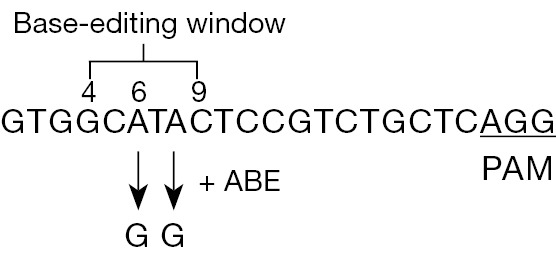
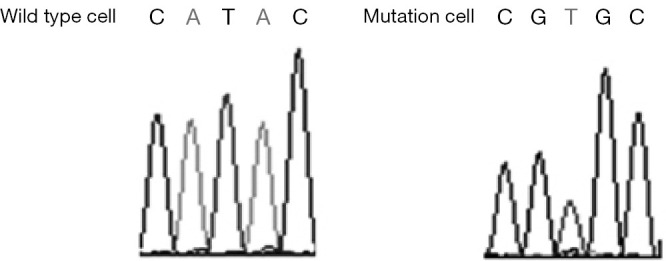
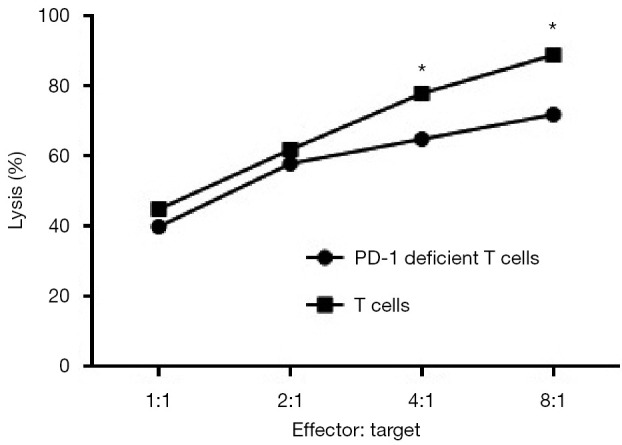
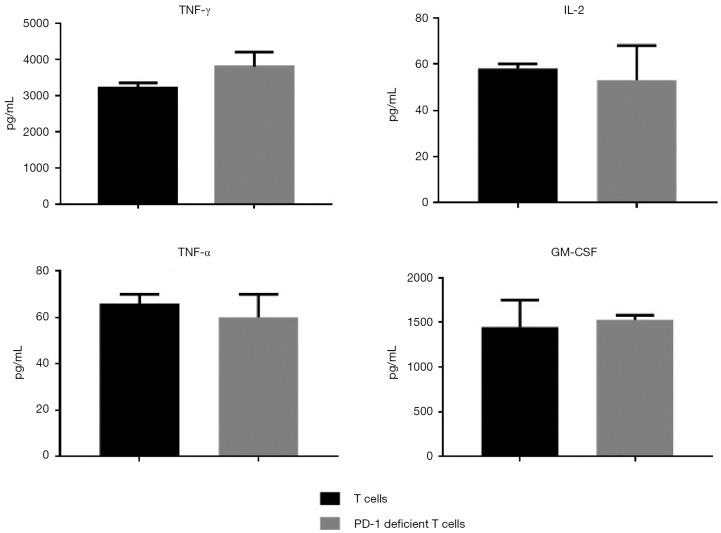
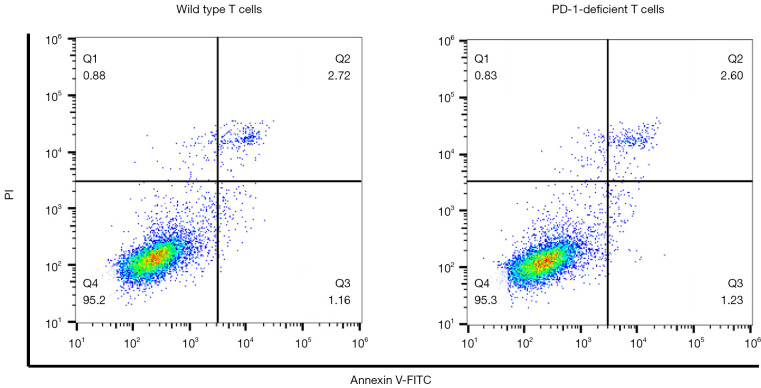
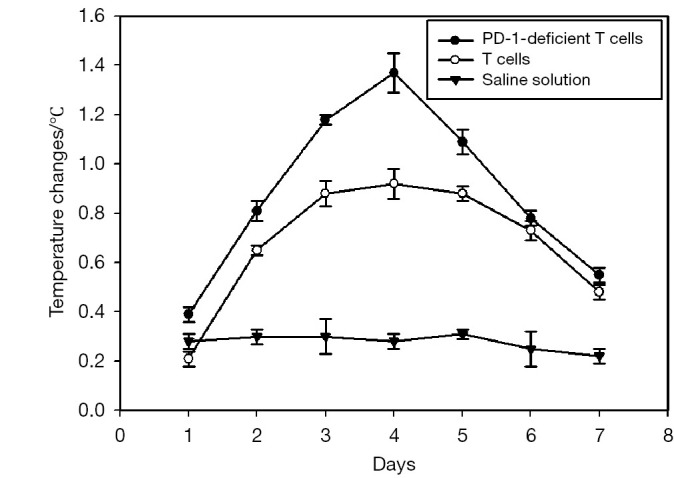
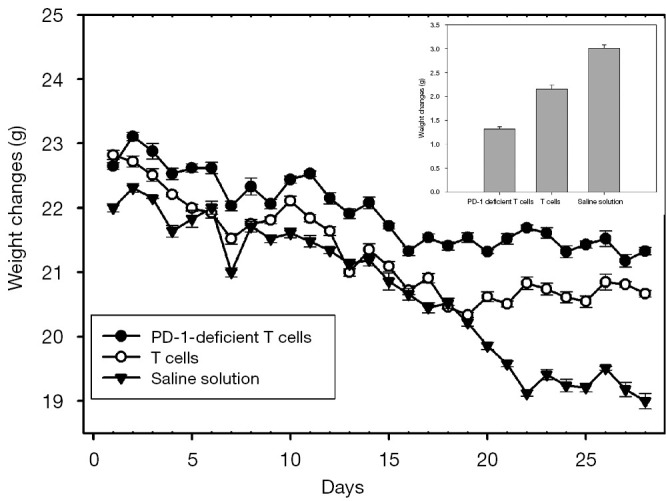
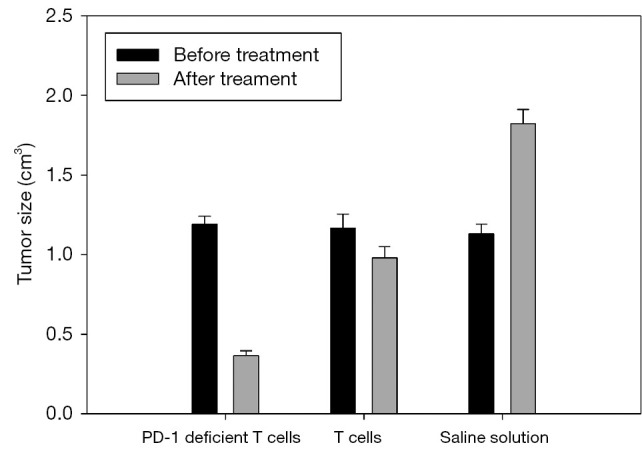
Background: Programmed cell death protein 1 (PD-1), as an immune checkpoint cell membrane receptor, negatively regulates T cell activation via its immune receptor, the tyrosine-based switch motif (ITSM). The purpose of this research was to evaluate the antitumor activity T cells with the ITSM mutation of PD-1 on non-small cell lung cancer (NSCLC) in vitro and in vivo. Methods: In this study, the tyrosine of ITSM in cytotoxic T cells was mutated using the adenine base editor (ABE)-xCas9 system to evaluate its effect on the antitumor activity of T cells against NSCLC. Results: Results showed that the PD-1-deficient T cells enhanced the death of the cocultured NSCLC cells compared with the normal T cells and saline solution. PD-1-deficient T cells also changed the interleukin 2(IL-2), interferon γ (IFN-γ), tumor necrosis factor α (TNF-α), and granulocyte-macrophage colony-stimulating factor (GM-CSF) secretion of T cells compared with those of the normal T cells. The effectiveness of ITSM mutation in enhancing the antitumor activity of PD-1-deficient T cells was verified in vivo by using a mouse xenograft model. The xenografted mice treated with PD-1-deficient T cells demonstrated repressed tumor growth of the NSCLC cells compared with those treated with normal T cells and saline solution. Conclusions: The mutation of ITSM in cytotoxic T cell via the ABE-xCas9 system can significantly enhance the antitumor activity of T cells.
Overview
The claims and statistics of this paper haven’t been checked yet.
Free: it reads the open-access text and checks the first 5 claims that cite a source we can check. Create a free account to check every claim.
Integrity signals
Registry
Cites
Statistics
Figures
Verification
Claims the paper makes
The claims and statistics of this paper haven’t been checked yet.
Free: it reads the open-access text and checks the first 5 claims that cite a source we can check. Create a free account to check every claim.
Claims other papers make about this one
Each is checked against this paper’s own text: does it say what the citing paper says it does?
The source backs part of the claim, not all of it — or backs it for a different population, condition or comparison.
In the citing paper
“In contrast, ligand involvement with PD‐1 causes a mutation in immunoreceptor tyrosine‐based switch motif (ITSM) in cytotoxic T cells, which significantly abolishes tumor growth in the Non‐small cell lung cancer (NSCLC) model [280, 281].”
From Tumor microenvironment signaling and therapeutics in cancer progression (2023) · cites this paper as [280]
Experimental — accuracy not yet measured
Self-check
Percentages, sums and reported differences re-computed from the paper’s own numbers.
The self-check needs the paper’s full text.
Citations
Cites
Programmable editing of a target base in genomic DNA without double-stranded DNA cleavage
Komor, A. C., Kim, Y. B., Packer, M. S., Zuris, J. A., & Liu, D. R. (2016) · Nature · doi:10.1038/nature17946 · Cited by 5,437 · cited 1×
“Target base-editing technology can offer 70–80% editing efficiency (21,22).”
BackgroundProgrammable base editing of A•T to G•C in genomic DNA without DNA cleavage
Gaudelli, N. M., Komor, A. C., Rees, H. A., Packer, M. S., Badran, A. H., Bryson, D. I., & Liu, D. R. (2017) · Nature · doi:10.1038/nature24644 · Cited by 4,184 · cited 1×
“Target base-editing technology can offer 70–80% editing efficiency (21,22).”
BackgroundNovel immune checkpoint targets: moving beyond PD-1 and CTLA-4
Qin, S., Xu, L., Yi, M., Yu, S., Wu, K., & Luo, S. (2019) · Molecular Cancer · doi:10.1186/s12943-019-1091-2 · Cited by 1,145 · cited 1×
“21037/tcr-20-2118 in the clinical trials of various cancers (2,3).”
BackgroundCRISPR/Cas9 β-globin gene targeting in human haematopoietic stem cells
Dever, D. P., Bak, R. O., Reinisch, A., Camarena, J., Washington, G., Nicolas, C. E., Pavel-Dinu, M., Saxena, N., Wilkens, A. B., Mantri, S., et al. (2016) · Nature · doi:10.1038/nature20134 · Cited by 864
Sheppard, K.-A., Fitz, L. J., Lee, J. M., Benander, C., George, J. A., Wooters, J., Qiu, Y., Jussif, J. M., Carter, L. L., Wood, C. R., et al. (2004) · FEBS Letters · doi:10.1016/j.febslet.2004.07.083 · Cited by 791
Rupp, L. J., Schumann, K., Roybal, K. T., Gate, R. E., Ye, C. J., Lim, W. A., & Marson, A. (2017) · Scientific Reports · doi:10.1038/s41598-017-00462-8 · Cited by 757
Lu, Y., Xue, J., Deng, T., Zhou, X., Yu, K., Deng, L., Huang, M., Yi, X., Liang, M., Wang, Y., et al. (2020) · Nature Medicine · doi:10.1038/s41591-020-0840-5 · Cited by 539
A versatile system for rapid multiplex genome-edited CAR T cell generation
Ren, J., Zhang, X., Liu, X., Fang, C., Jiang, S., June, C. H., & Zhao, Y. (2017) · Oncotarget · doi:10.18632/oncotarget.15218 · Cited by 397 · cited 1×
“PD-1-defective CAR T cell therapy has significantly enhanced the T cell antitumor activator (8,9).”
BackgroundStructural Biology of the Immune Checkpoint Receptor PD-1 and Its Ligands PD-L1/PD-L2
Zak, K. M., Grudnik, P., Magiera, K., Dömling, A., Dubin, G., & Holak, T. A. (2017) · Structure · doi:10.1016/j.str.2017.06.011 · Cited by 388 · cited 1×
“21037/tcr-20-2118 in the clinical trials of various cancers (2,3).”
BackgroundImmunoreceptor tyrosine‐based inhibition motifs: a quest in the past and future
Daëron, M., Jaeger, S., Du Pasquier, L., & Vivier, E. (2008) · Immunological Reviews · doi:10.1111/j.1600-065x.2008.00666.x · Cited by 370
CRISPR-Cas9 mediated efficient PD-1 disruption on human primary T cells from cancer patients
Su, S., Hu, B., Shao, J., Shen, B., Du, J., Du, Y., Zhou, J., Yu, L., Zhang, L., Chen, F., et al. (2016) · Scientific Reports · doi:10.1038/srep20070 · Cited by 305 · cited 1×
“In addition, this kind of cell is characterized by upregulated interferon γ (IFN-γ) production and enhanced cytotoxicity (4).”
BackgroundChoi, B. D., Yu, X., Castano, A. P., Darr, H., Henderson, D. B., Bouffard, A. A., Larson, R. C., Scarfò, I., Bailey, S. R., Gerhard, G. M., et al. (2019) · Journal for ImmunoTherapy of Cancer · doi:10.1186/s40425-019-0806-7 · Cited by 290 · cited 1×
“The PD-1 knockout or knockdown in T cells or CAR T cells can enhance T cell-mediated cytotoxicity, and less adverse reactions are observed (10,24,25).”
BackgroundHu, W., Zi, Z., Jin, Y., Li, G., Shao, K., Cai, Q., Ma, X., & Wei, F. (2019) · Cancer Immunology, Immunotherapy · doi:10.1007/s00262-018-2281-2 · Cited by 265 · cited 1×
“The PD-1 knockout or knockdown in T cells or CAR T cells can enhance T cell-mediated cytotoxicity, and less adverse reactions are observed (10,24,25).”
BackgroundCurrent issues and perspectives in PD-1 blockade cancer immunotherapy
Chamoto, K., Hatae, R., & Honjo, T. (2020) · International Journal of Clinical Oncology · doi:10.1007/s10147-019-01588-7 · Cited by 181 · cited 1×
“Monoclonal antibodies targeting PD-1 or PD-L1/L2, such as nivolumab, pembrolizumab, and atezolizumab, have been developed and used in clinical trials (1).”
MethodZhao, Z., Shi, L., Zhang, W., Han, J., Zhang, S., Fu, Z., & Cai, J. (2017) · Oncotarget · doi:10.18632/oncotarget.23730 · Cited by 116 · cited 1×
“Further studies have shown that PD-1 knockout T cells exert an impressive antitumor effect in a xenograft mouse model (5-7).”
BackgroundSelf-citationSu, S., Zou, Z., Chen, F., Ding, N., Du, J., Shao, J., Li, L., Fu, Y. S., Hu, B., Yang, Y., et al. (2016) · OncoImmunology · doi:10.1080/2162402x.2016.1249558 · Cited by 112 · cited 1×
“Further studies have shown that PD-1 knockout T cells exert an impressive antitumor effect in a xenograft mouse model (5-7).”
BackgroundEfficient Gene Silencing by Adenine Base Editor-Mediated Start Codon Mutation
Wang, X., Liu, Z., Li, G., Dang, L., Huang, S., He, L., Ma, Y., Li, C., Liu, M., Yang, G., et al. (2020) · Molecular Therapy · doi:10.1016/j.ymthe.2019.11.022 · Cited by 89 · cited 2×
“The genome base-editing technology has higher editing efficiency and less damage on the PD-1 protein structure and other functions than the universal CRIPSR/Cas9 technology (17-20).”
BackgroundMethodMcGrath, E., Shin, H., Zhang, L., Phue, J.-N., Wu, W. W., Shen, R.-F., Jang, Y.-Y., Revollo, J., & Ye, Z. (2019) · Nature Communications · doi:10.1038/s41467-019-13342-8 · Cited by 62 · cited 2×
“The genome base-editing technology has higher editing efficiency and less damage on the PD-1 protein structure and other functions than the universal CRIPSR/Cas9 technology (17-20).”
BackgroundMethodBorkner, L., Kaiser, A., van de Kasteele, W., Andreesen, R., Mackensen, A., Haanen, J. B. A. G., Schumacher, T. N., & Blank, C. U. (2010) · Cancer Immunology Immunotherapy · doi:10.1007/s00262-010-0842-0 · Cited by 58
Cytosine base editor 4 but not adenine base editor generates off-target mutations in mouse embryos
Lee, H. K., Smith, H. E., Liu, C., Willi, M., & Hennighausen, L. (2020) · Communications Biology · doi:10.1038/s42003-019-0745-3 · Cited by 56 · cited 2×
“The genome base-editing technology has higher editing efficiency and less damage on the PD-1 protein structure and other functions than the universal CRIPSR/Cas9 technology (17-20).”
BackgroundMethodStrategies for the CRISPR-Based Therapeutics
Li, B., Niu, Y., Ji, W., & Dong, Y. (2020) · Trends in Pharmacological Sciences · doi:10.1016/j.tips.2019.11.006 · Cited by 50
Phosphorylation of PD-1-Y248 is a marker of PD-1-mediated inhibitory function in human T cells
Bardhan, K., Aksoylar, H., Bourgeois, T. L., Strauss, L., Weaver, J. D., Delcuze, B., Charest, A., Patsoukis, N., & Boussiotis, V. A. (2019) · Scientific Reports · doi:10.1038/s41598-019-53463-0 · Cited by 46 · cited 2×
“PD-1 consists of a single N-terminal immunoglobulin variable region (IGV)-like domain, a stem region that separates the IGV domain from the plasma membrane and contains about 20 amino acids, a transmembrane region, and a cytoplasmic tail region that contains a tyrosine signal motif [immune receptor tyrosine-based inhi…”
BackgroundCRISPR/Cas9 technology: towards a new generation of improved CAR-T cells for anticancer therapies
Ureña-Bailén, G., Lamsfus‐Calle, A., Daniel-Moreno, A., Raju, J., Schlegel, P., Seitz, C. M., Atar, D., Antony, J. S., Handgretinger, R., & Mezger, M. (2019) · Briefings in Functional Genomics · doi:10.1093/bfgp/elz039 · Cited by 24 · cited 1×
“Therefore, the ability of precise gene editing needs to be improved (16).”
BackgroundStadtmauer, E. A., Cohen, A. D., WEBER, K. L., Lacey, S. F., Gonzalez, V. E., Melenhorst, J. J., Fraietta, J. A., Plesa, G., Shea, J., Matlawski, T., et al. (2019) · Blood · doi:10.1182/blood-2019-122374 · Cited by 13
Huang, K., Sun, B., Luo, N., Guo, H., Hu, J., & Peng, J. (2018) · Medical Science Monitor · doi:10.12659/msm.910903 · Cited by 12 · cited 1×
“Further studies have shown that PD-1 knockout T cells exert an impressive antitumor effect in a xenograft mouse model (5-7).”
BackgroundOff-target effects of cytidine base editor and adenine base editor: What can we do?
Liang, P., Wen, J., & Huang, J. (2019) · Journal of genetics and genomics/Journal of Genetics and Genomics · doi:10.1016/j.jgg.2019.09.004 · Cited by 2 · cited 2×
“The genome base-editing technology has higher editing efficiency and less damage on the PD-1 protein structure and other functions than the universal CRIPSR/Cas9 technology (17-20).”
BackgroundMethod
Cited by
Tumor microenvironment signaling and therapeutics in cancer progression
Goenka, A., Khan, F., Verma, B., Sinha, P., Dmello, C. C., Jogalekar, M. P., Gangadaran, P., & Ahn, B. (2023) · Cancer Communications · doi:10.1002/cac2.12416 · Cited by 323
Ortega, M. A., Boaru, D. L., León-Oliva, D. D., Fraile‐Μartinez, O., Montero, C. G., Rios, L., Garrido-Gil, M. J., Barrena-Blázquez, S., Minaya‐Bravo, A., Rios‐Parra, A., et al. (2024) · Journal of Molecular Medicine · doi:10.1007/s00109-024-02463-3 · Cited by 77
“Tyrosine residues in the PD-1 cytoplasmatic tail ITIM and ITSM [39] motifs get phosphorylated upon TCR stimulation [40].”
Petri, K., D’Ippolito, E., Künkele, A., Koehl, U., Busch, D. H., Einsele, H., & Hudecek, M. (2025) · Nature Reviews Clinical Oncology · doi:10.1038/s41571-025-01072-4 · Cited by 36
Geng, P., Chi, Y., Yuan, Y., Yang, M., Zhao, X., Liu, Z., Liu, G., Liu, Y., Zhu, L. W., & Wang, S. (2023) · Frontiers in Cell and Developmental Biology · doi:10.3389/fcell.2023.1158539 · Cited by 18
“The mutation of PD-1 immune receptor tyrosine-based switch motif (ITSM) significantly inhibited the growth of xenograft tumors by enhancing the antitumor activity of cytotoxic T cells, and did not affect the secretion of cytokines by T cells, nor did it induce T cell apoptosis (Qi et al., 2020).”
BackgroundYan, X., Sun, J., Yang, W., Li, X., Yang, Q., Li, Y., Wu, W., Wei, P., Wang, L., & Song, L. (2023) · Developmental & Comparative Immunology · doi:10.1016/j.dci.2023.104708 · Cited by 15
Metadata
- Authors
- Qi, T., Fu, J., Zhang, W., Cui, W., Xu, X., Yue, J., Wang, Q., & Tian, X.
- Affiliations
- Qilu Medical University (CN)
- Central Hospital of Zibo (CN)
- Shandong Sport University (CN)
- Corresponding author
- Wang, Qinglu
- Tian, Xuewen
- Venue
- Translational Cancer Research
- Publisher
- AME Publishing Company
- Published
- 2020-11
- Volume
- 9
- Issue
- 11
- Pages
- 6811-6819
- ISSN
- 2218-676X (ISSN-L)
- 2219-6803
- PMC
- PMC8798335
- OpenAlex
- W3105360470
- Cited by
- 10
- References
- 27
- Citations by year
- 2026: 1 · 2025: 2 · 2024: 2 · 2023: 3 · 2022: 1 · 2020: 1
- FWCI
- 0.45
- Type
- journal article
- Language
- en
- Open access
- diamond
- doi.org
- Licence
- cc-by-nc-nd
- Locations
- Translational Cancer Research (publishedVersion, cc-by-nc-nd)
- PubMed Central (publishedVersion, cc-by-nc-nd)
- PubMed (publishedVersion)
- Topics
- Health Sciences › Medicine › Oncology › Cancer Immunotherapy and Biomarkers
- Health Sciences › Medicine › Oncology › CAR-T cell therapy research
- Life Sciences › Immunology and Microbiology › Immunology › T-cell and B-cell Immunology
- Keywords
- PD-1, immune checkpoint, cytotoxic T lymphocytes, non-small cell lung cancer, anticancer activity, cytokine production, tumor growth inhibition, adoptive T cell therapy
About these checks
Registry, retraction, Cites and statistics results are computed, not judged, with one exception: a printed reference that no index lists is read once by a model before it counts as a citation error. Claims are extracted by a model and kept only when their quote appears verbatim in the text; each cited source is then checked, with a model’s help, for whether it says what the claim relies on. Those verdicts can be wrong — read the claim’s quote and the cited source before relying on one.
Statistics and arithmetic are recomputed, not judged.
Confidence bands are shown only for fields calibrated on our annotated test set. None is calibrated yet, so no band is shown.
What counts as a claim ›How we measure confidence ›How we check this ›
Are you an author, or do you see a problem with this page? Request a review
Data sources
Bibliographic data: Semantic Scholar, OpenAlex, Crossref.
Contains information from the Semantic Scholar Academic Graph Datasets, made available under the ODC Attribution License (ODC-BY 1.0).
Semantic Scholar’s data is described in: Kinney, R., et al. (2023). The Semantic Scholar Open Data Platform. arXiv:2301.10140.
