

The DOI matches its Crossref record; 1 of the 1 references it cites were found in a registry or an index.
New carbohydrate binding domains identified by phage display based functional metagenomic screens of human gut microbiota
Open accessPreprint — published as 10.1038/s42003-023-04718-0 · Paper page
Abstract
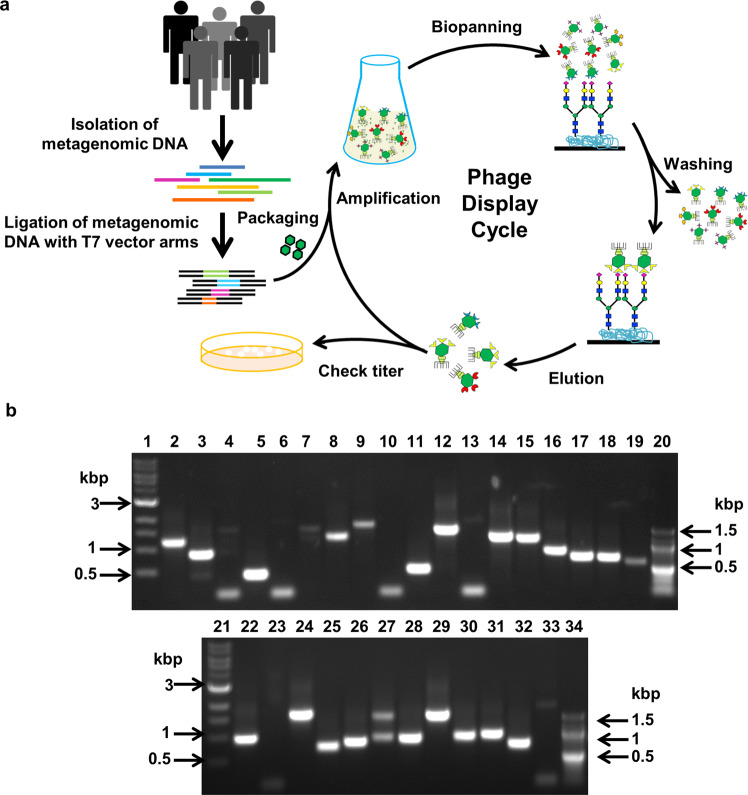
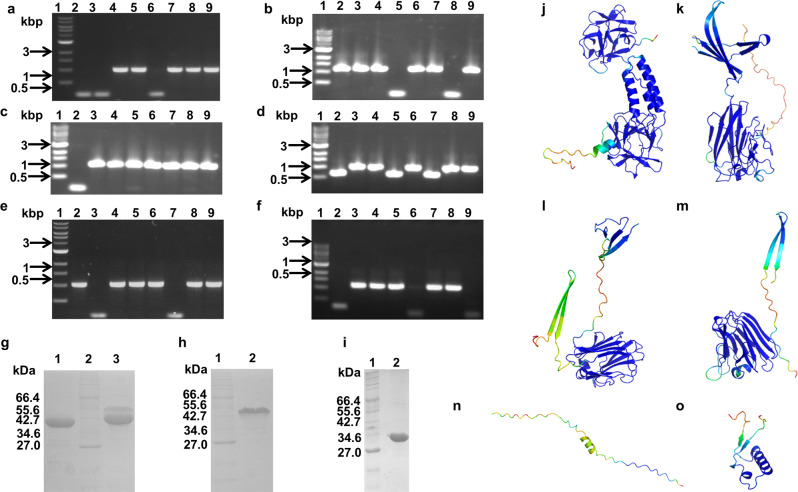
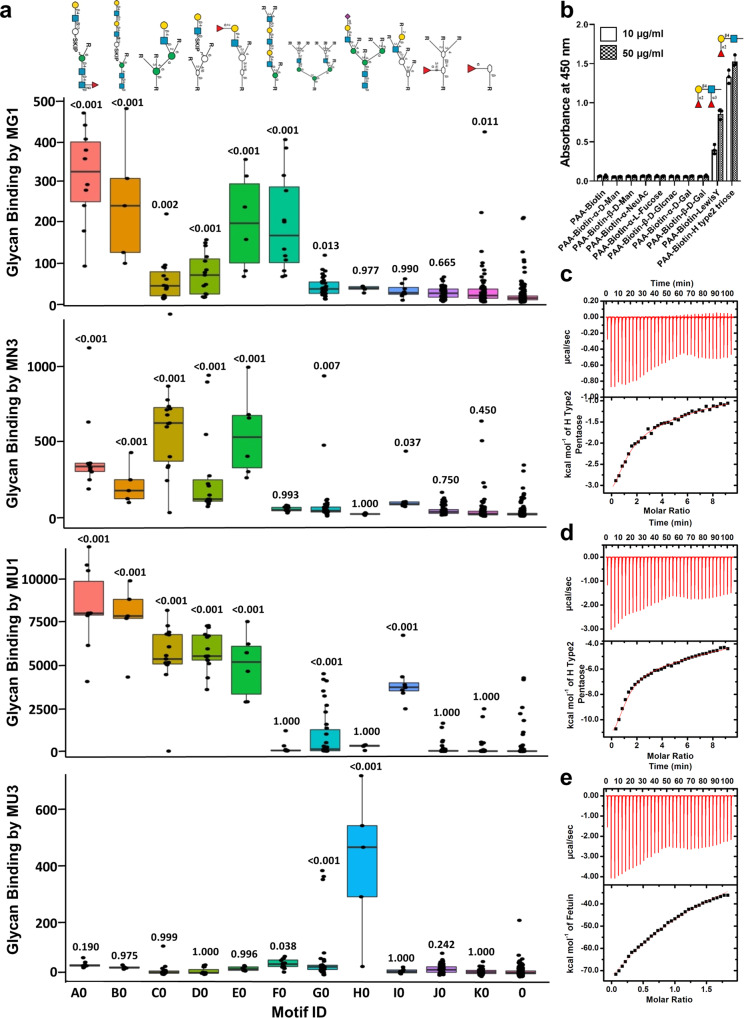
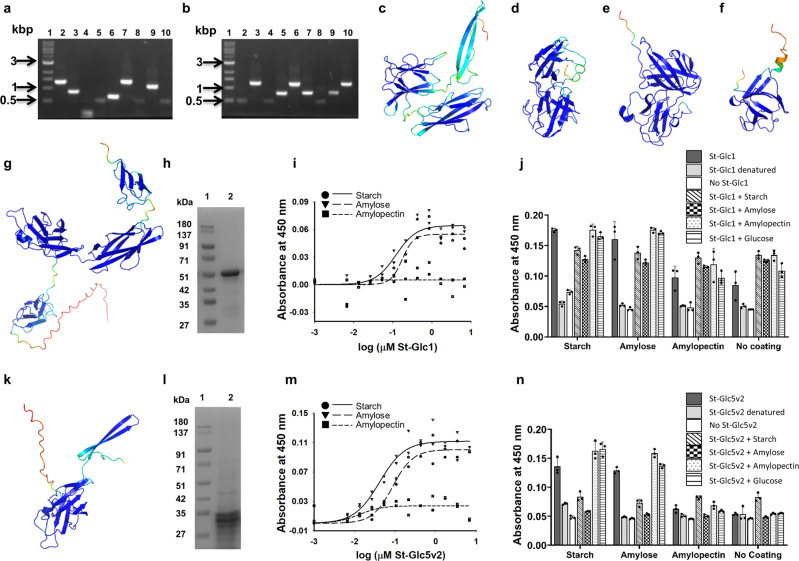
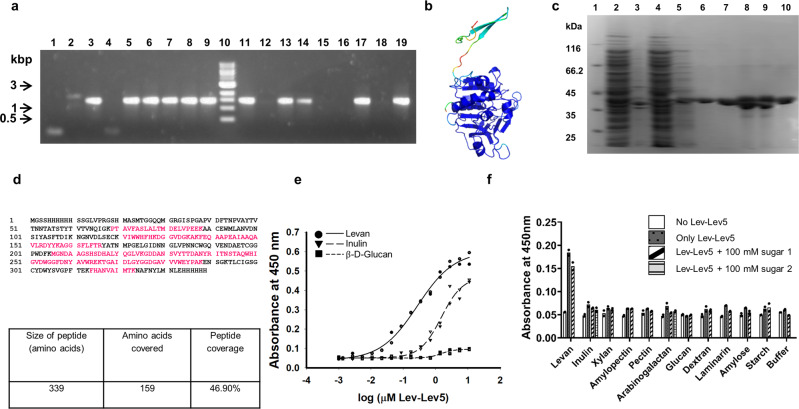
Uncultured microbes represent a huge untapped biological resource of novel genes and gene products. Although recent genomic and metagenomic sequencing efforts have led to the identification of numerous genes that are homologous to existing annotated genes, there remains, yet, an enormous pool of unannotated genes that do not find significant sequence homology to existing annotated genes. Functional metagenomics offers a way to identify and annotate novel gene products. Here, we have constructed a metagenomic phage display library from healthy human fecal samples, and performed functional carbohydrate binding screens against dietary, microbial and host polysaccharides/glycoconjugates in order to mine novel carbohydrate binding domains that might aid gut commensals in the metabolism of complex carbohydrates and in adherence and colonization of the gut. We obtained several protein sequences that do not find a hit to any known Pfam domain but show carbohydrate binding module-like folds as per Alphafold2 prediction. We heterologously expressed, purified and biochemically characterized some of these protein domains and demonstrated their carbohydrate-binding function. Our study reveals several previously unannotated carbohydrate-binding domains, including a levan binding domain and four complex N-glycan binding domains that might be useful for the labeling, visualization, and isolation of these glycans.
Overview
The claims and statistics of this paper haven’t been checked yet.
Run the check — free, no account needed. It reads the open-access text and checks the sources it cites.
Integrity signals
Registry
Cites
Statistics
Figures
Verification
Claims the paper makes
The claims and statistics of this paper haven’t been checked yet.
Run the check — free, no account needed. It reads the open-access text and checks the sources it cites.
Self-check
Percentages, sums and reported differences re-computed from the paper’s own numbers.
The self-check needs the paper’s full text.
Citations
Cites
Highly accurate protein structure prediction with AlphaFold
Jumper, J., Evans, R., Pritzel, A., Green, T., Figurnov, M., Ronneberger, O., Tunyasuvunakool, K., Bates, R., Žídek, A., Potapenko, A., et al. (2021) · Nature · doi:10.1038/s41586-021-03819-2 · Cited by 43,764
Metadata
- Authors
- Akhtar, A., Lata, M., Sunsunwal, S., Yadav, A., LNU, K., subramanian, S., & Ramya, T. N. C.
- Affiliations
- Emory University (US)
- Institute of Microbial Technology (IN)
- CSIR-Institute of Microbial Technology
- Corresponding author
- Ramya, T.N.C.
- Venue
- Communications Biology
- Published
- 2022-09-22
- Volume
- 6
- Issue
- 1
- Pages
- 371-371
- ISSN
- 2399-3642 (ISSN-L)
- PMC
- PMC10076258
- OpenAlex
- W4362634303
- Cited by
- 9
- References
- 1
- Citations by year
- 2026: 1 · 2025: 5 · 2023: 3
- FWCI
- 0.80
- Type
- journal article
- Language
- en
- Open access
- gold
- doi.org
- Locations
- Communications Biology (publishedVersion, cc-by)
- Research Square (acceptedVersion, cc-by)
- PubMed Central (publishedVersion, cc-by)
- PubMed (publishedVersion)
- DOAJ (DOAJ: Directory of Open Access Journals) (submittedVersion, cc-by-sa)
- Funders
- Department of Biotechnology, Ministry of Science and Technology, India
- Council of Scientific and Industrial Research, India (BSC0119)
- University Grants Commission
- National Institute of General Medical Sciences (R24GM098791, P41GM103694)
- CSIR - Institute of Microbial Technology
- Brookhaven National Laboratory
- Topics
- Life Sciences › Biochemistry, Genetics and Molecular Biology › Molecular Biology › Gut microbiota and health
- Life Sciences › Biochemistry, Genetics and Molecular Biology › Molecular Biology › Glycosylation and Glycoproteins Research
- Life Sciences › Biochemistry, Genetics and Molecular Biology › Molecular Biology › Genomics and Phylogenetic Studies
- Keywords
- carbohydrate-binding domain, human gut microbiome, functional metagenomics, unannotated genes, polysaccharide binding, glycoconjugates, intestinal colonization, heterologous expression
- MeSH terms
- Gastrointestinal Microbiome, Bacteriophages, Carbohydrates, Humans, Genomics, Metagenomics
About these checks
Registry, retraction, Cites and statistics results are computed, not judged, with one exception: a printed reference that no index lists is read once by a model before it counts as a citation error. Claims are extracted by a model and kept only when their quote appears verbatim in the text; each cited source is then checked, with a model’s help, for whether it says what the claim relies on. Those verdicts can be wrong — read the claim’s quote and the cited source before relying on one.
Statistics and arithmetic are recomputed, not judged.
Confidence bands are shown only for fields calibrated on our annotated test set. None is calibrated yet, so no band is shown.
What counts as a claim ›How we measure confidence ›How we check this ›
Are you an author, or do you see a problem with this page? Request a review
Data sources
Bibliographic data: Semantic Scholar, OpenAlex, Crossref.
Contains information from the Semantic Scholar Academic Graph Datasets, made available under the ODC Attribution License (ODC-BY 1.0).
Semantic Scholar’s data is described in: Kinney, R., et al. (2023). The Semantic Scholar Open Data Platform. arXiv:2301.10140.
